Search results
Search for "signal-to-noise ratio" in Full Text gives 179 result(s) in Beilstein Journal of Nanotechnology.
Mapping of integrated PIN diodes with a 3D architecture by scanning microwave impedance microscopy and dynamic spectroscopy
Beilstein J. Nanotechnol. 2020, 11, 1764–1775, doi:10.3762/bjnano.11.159
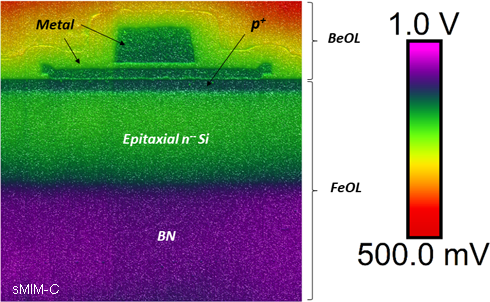
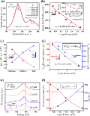
- vertical PIN diode with the associated metallic contacts of the anode. Although the sMIM-R signal shows a low signal-to-noise ratio, it is still possible to differentiate metallic materials from semiconductor layers. Also, the conductivity continuity between the metallic contact and the p+ anode can be
- seen. The sMIM-C map clearly shows the complete architecture of the PIN structure with details of the anode contact and with very clear differences (in terms of contrast, layer location, and signal-to-noise ratio) between the P (p+ anode), I (lightly doped n-type epitaxial silicon), and N (n-type doped
- that the depth profile has a good signal-to-noise ratio for the sMIM-C signal for each layer. This first analysis demonstrates the capability of the sMIM methodology to distinguish, localize, and determine both p-type and n-type semiconductors as well as lightly doped layers, metallic contacts, and


Design of V-shaped cantilevers for enhanced multifrequency AFM measurements
Beilstein J. Nanotechnol. 2020, 11, 1525–1541, doi:10.3762/bjnano.11.135
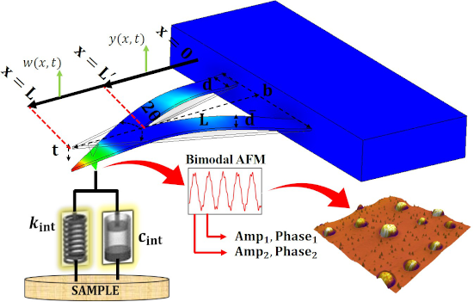
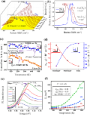
- focused on finding the optimum for these geometrical dimensions of a V-shaped cantilever with the aim to enhance the signal-to-noise ratio (SNR) and, consequently, to enhance the second eigenmode phase signal. A numerical study is carried out to model the V-shaped cantilevers given the abovementioned


![[Graphic 4]](/bjnano/content/inline/2190-4286-11-135-i26.svg?max-width=637&scale=1.18182) = 15 µm, bref = 8...
= 15 µm, bref = 8...


![[Graphic 17]](/bjnano/content/inline/2190-4286-11-135-i39.svg?max-width=637&scale=1.18182) ) of V-shaped cantilevers for...
) of V-shaped cantilevers for...


A wideband cryogenic microwave low-noise amplifier
Beilstein J. Nanotechnol. 2020, 11, 1484–1491, doi:10.3762/bjnano.11.131
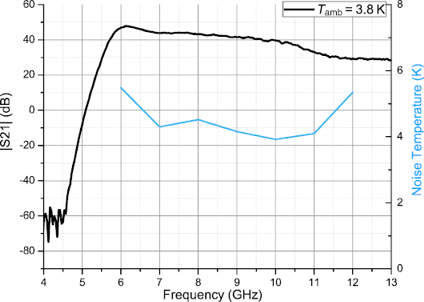
- sensitivity and measurement speed of the full measurement setup is obviously defined by the signal-to-noise ratio and, thus, by the gain and the noise temperature of the cLNA. The sample under study contained superconducting X-mon qubits coupled to coplanar quarter wavelength resonators. Each resonator was
- microwave amplifier (marked as rLNA in Figure 5) was used. It was dedicated to increasing the signal level at the output of cLNA before data acquisition. The rLNA did not influence the signal-to-noise ratio of the measurement system since this parameter is mainly defined by the cLNA output noise. The rLNA




Wafer-level integration of self-aligned high aspect ratio silicon 3D structures using the MACE method with Au, Pd, Pt, Cu, and Ir
Beilstein J. Nanotechnol. 2020, 11, 1439–1449, doi:10.3762/bjnano.11.128
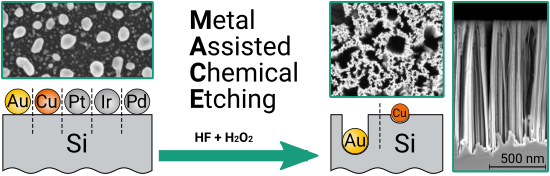
- metal–insulator–semiconductor or metal–insulator–metal capacitors with a high effective area on a small footprint. The high surface area of a silicon nanowire array can be used to fabricate ion-sensitive field-effect transistors (ISFETs) with a high signal-to-noise ratio. An ISFET is a pH sensing


Magnetic-field-assisted synthesis of anisotropic iron oxide particles: Effect of pH
Beilstein J. Nanotechnol. 2020, 11, 1230–1241, doi:10.3762/bjnano.11.107
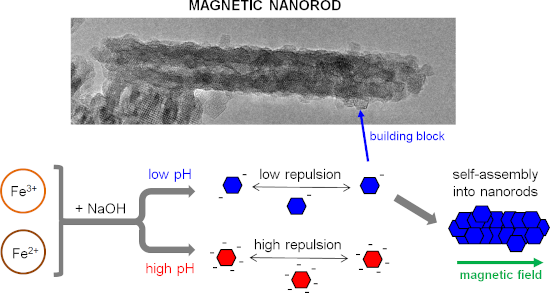
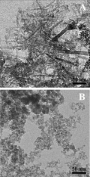
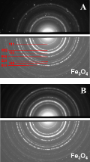
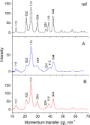
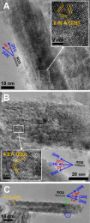
- sufficient to avoid any structural changes or phase degradation in the samples. Under these conditions, the typical total acquisition time to obtain a spectrum with good signal-to-noise ratio was several hours. Temporal variation of pH when 2 mL of the ion mixture (1 M FeCl3 + 0.5 M FeSO4 in 0.1 M HCl) is





Hybridization vs decoupling: influence of an h-BN interlayer on the physical properties of a lander-type molecule on Ni(111)
Beilstein J. Nanotechnol. 2020, 11, 1168–1177, doi:10.3762/bjnano.11.101
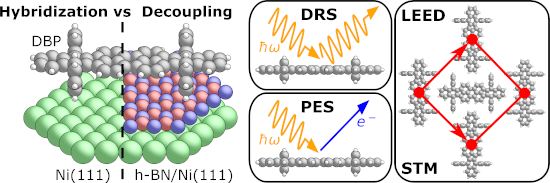
- , respectively, and d being the film thickness. Each reflectance spectrum was accumulated over 30 s to increase the signal-to-noise ratio. Furthermore, we used the difference of consecutive reflectance spectra to calculate the ΔDRS intensity using the following formula: The lateral structure of the DBP films was


Uniform Fe3O4/Gd2O3-DHCA nanocubes for dual-mode magnetic resonance imaging
Beilstein J. Nanotechnol. 2020, 11, 1000–1009, doi:10.3762/bjnano.11.84
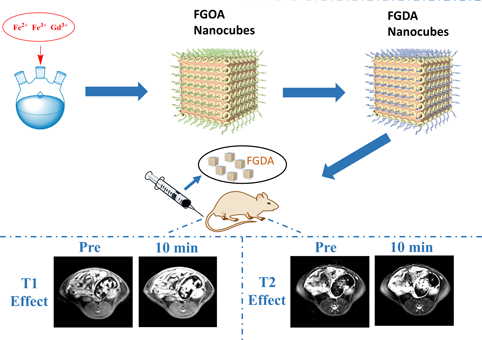
- imaging (T1WI) and T2-weighted imaging (T2WI) were performed in Sprague Dawley (SD) rats. After intravenous injection of a 0.8 mg Fe/kg dose, FGDA nanocubes spread systemically through the bloodstream. The lumbar muscle was chosen as the MRI region of interest and the signal-to-noise ratio (ΔSNR) was



Measurement of electrostatic tip–sample interactions by time-domain Kelvin probe force microscopy
Beilstein J. Nanotechnol. 2020, 11, 911–921, doi:10.3762/bjnano.11.76
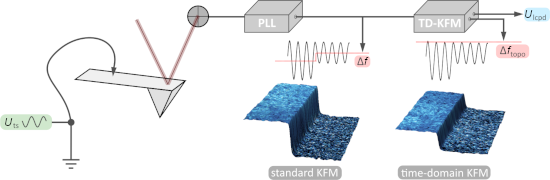
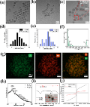
- effect is amplified when a significant change in the capacitance gradient is present. To reduce the impact of this component onto the height measurement, the modulation amplitude Uac must be minimized. Since the signal-to-noise ratio (SNR) scales with Uac, this is only possible to a certain extent


Light–matter interactions in two-dimensional layered WSe2 for gauging evolution of phonon dynamics
Beilstein J. Nanotechnol. 2020, 11, 782–797, doi:10.3762/bjnano.11.63
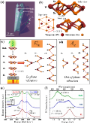
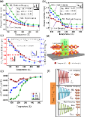
- a function of P at T = 298 K. In order to minimize the laser-induced effects on the crystallinity and structural changes in the WSe2, a laser P ≤ 3.35 mW was used. It was also found that the minimum P required to get a good signal-to-noise ratio for the Raman and PL data was when P ≥ 0.31 mW
- cell allowed the temperature to reach 523 K. During the cooling process, it was found that the signal to noise ratio was very poor when both the T and P became very low, particularly in case of PL measurements. The best signal to noise ratio in both the Raman and PL measurements was found for P = 3.35
Current measurements in the intermittent-contact mode of atomic force microscopy using the Fourier method: a feasibility analysis
Beilstein J. Nanotechnol. 2020, 11, 453–465, doi:10.3762/bjnano.11.37
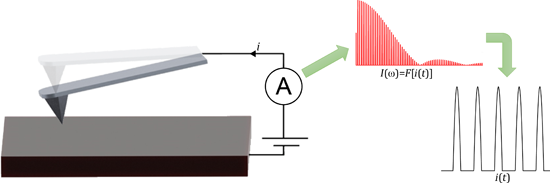
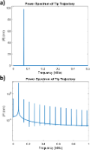
- trend. Reconstruction of the tip–sample current should be possible if one can record its power spectrum. It is of course desirable to be able to record as many harmonics as possible, although this may not always be possible, in part due to signal-to-noise ratio limitations for very high frequencies or
- -conductive tip. Electrical noise is anticipated to also introduce challenges. Although classical C-AFM can be affected by noise as well, the expected current magnitude in this mode of imaging should be larger than for ICM-AFM for the reasons described above, such that the current signal-to-noise ratio for




An advanced structural characterization of templated meso-macroporous carbon monoliths by small- and wide-angle scattering techniques
Beilstein J. Nanotechnol. 2020, 11, 310–322, doi:10.3762/bjnano.11.23
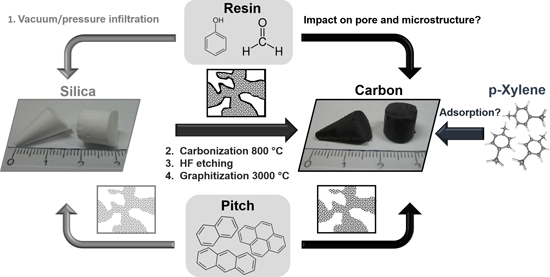
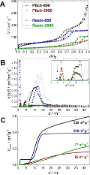
- templates were infiltrated by two different carbon precursors, namely a mesophase pitch and a formaldehyde resole. The template was removed with hydrofluoric acid. Further information can be found in a recent study [41]. SANS data with a very good signal-to-noise ratio were acquired utilizing the V16




Self-assembly of a terbium(III) 1D coordination polymer on mica
Beilstein J. Nanotechnol. 2019, 10, 2440–2448, doi:10.3762/bjnano.10.234
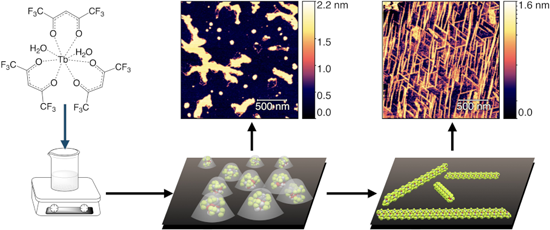
- it is. The static magnetic measurements of [Tb(hfac)3·2H2O]n and [Tb(hfac)3·2H2O]n@mica have been performed at 1.8 K using a conventional SQUID magnetometer (Figure S2, Supporting Information File 1). A very good signal-to-noise ratio is observed on the deposits, which validates the use of TbIII as a




A novel method to remove impulse noise from atomic force microscopy images based on Bayesian compressed sensing
Beilstein J. Nanotechnol. 2019, 10, 2346–2356, doi:10.3762/bjnano.10.225
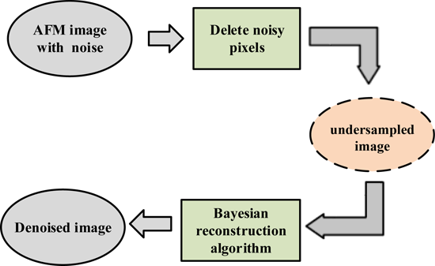
- images used in the paper is 256 × 256 pixels. The proposed method, median filter (window size: 7 × 7 pixels) and adaptive median filter (maximum window size: 7 × 7 pixels, minimum window: 3 × 3 pixels) are used separately to remove the impulse noise. The peak signal-to-noise ratio (PSNR) [35] and the


Nitrogen-vacancy centers in diamond for nanoscale magnetic resonance imaging applications
Beilstein J. Nanotechnol. 2019, 10, 2128–2151, doi:10.3762/bjnano.10.207
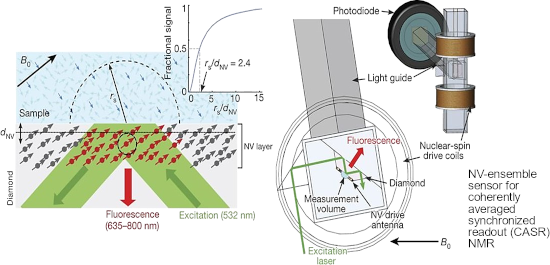
- technique that can dramatically increase the signal-to-noise ratio (SNR) in traditional MRI. The method is being applied to small injectable endogenous molecules, which can be used to monitor transient in vivo metabolic events in real time. Among all methodologies, the emergence of hyperpolarized 13C


Review of advanced sensor devices employing nanoarchitectonics concepts
Beilstein J. Nanotechnol. 2019, 10, 2014–2030, doi:10.3762/bjnano.10.198

- solution. Ultrasensitive sensors for mercury ions were prepared by Li et al. who engineered suspended atomically thin black phosphorus between the source and drain electrodes [94]. Due to the avoidance of substrate scattering, the sensors with bridged black phosphorus exhibit a much improved signal-to
- -noise ratio in mercury ion detection with a detection limit of 0.01 ppb and a very short detection time constant of 3 s. This nanoarchitectonic design can maximize the intrinsic potential of black phosphorus and other materials. Sensors for physical conditions Not limited to particular chemicals, the





Optimization and performance of nitrogen-doped carbon dots as a color conversion layer for white-LED applications
Beilstein J. Nanotechnol. 2019, 10, 2004–2013, doi:10.3762/bjnano.10.197
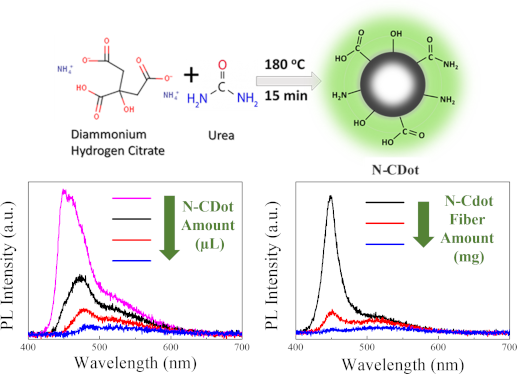
- ratio approaches unity while the overall emission reaches the lowest level, the resulting LER is reduced again to only 196 lm/W. The reason for this decrease may be the very low PL intensity (blue line in Figure 3a), which results in a low signal-to-noise ratio (S/N). The low S/N possibly causes an


Magnetic properties of biofunctionalized iron oxide nanoparticles as magnetic resonance imaging contrast agents
Beilstein J. Nanotechnol. 2019, 10, 1964–1972, doi:10.3762/bjnano.10.193
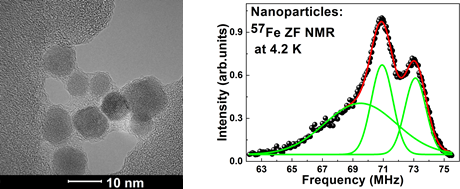
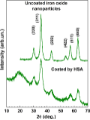
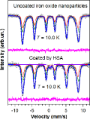
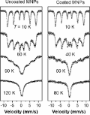
- core–shell structure iron oxide nanoparticles of the same size has already been described and calculated based on magnetic measurements. In the HSA-coated sample, we also succeeded to observe the ZF-NMR signal, despite the very low iron content per unit volume and the resulting low signal-to-noise
- ratio. As evident from Figure 9, at least at 4.2 K, there is no significant difference in the NMR spectra of the HSA-coated and uncoated samples. Conclusion In this work, we studied and compared the structural and magnetic properties of uncoated and functionalized (HSA-coated) iron oxide nanoparticles




Development of a new hybrid approach combining AFM and SEM for the nanoparticle dimensional metrology
Beilstein J. Nanotechnol. 2019, 10, 1523–1536, doi:10.3762/bjnano.10.150
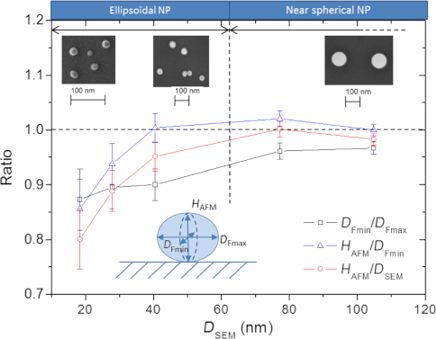
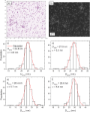
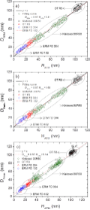
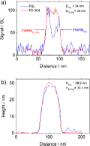
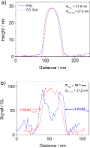
- to take the full width at half maximum (FWHM) [19]. The profile FWHM depends on the accelerating voltage (or EHT) corresponding to the primary electron energy as shown in Figure 1. Above 4 kV, the signal-to-noise ratio, corresponding to the difference in grey level between the NP and the substrate




Fabrication of phase masks from amorphous carbon thin films for electron-beam shaping
Beilstein J. Nanotechnol. 2019, 10, 1290–1302, doi:10.3762/bjnano.10.128
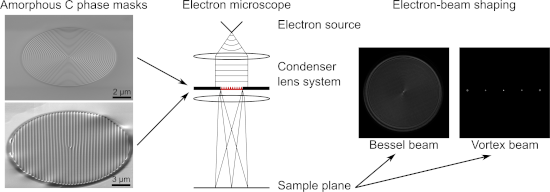
- the central lobe [26]. In practice, this may result in a reduced signal-to-noise ratio and a compromise has to be found between a large kρ and sufficient intensity in the central lobe [25]. While the radial beam profile in form of a Bessel function is preserved upon propagation up to zmax, the



Fe3O4 nanoparticles as a saturable absorber for giant chirped pulse generation
Beilstein J. Nanotechnol. 2019, 10, 1065–1072, doi:10.3762/bjnano.10.107
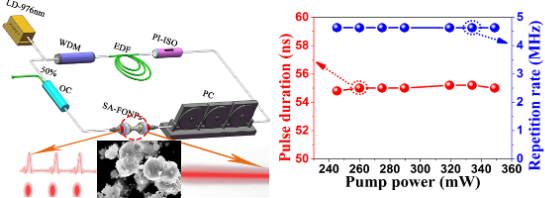
- analyzer (Rohde & Schwarz FSC6) is used to measure the signal-to-noise ratio of the pulse. There are many methods that can be employed for the synthesis of NPs, such as sol–gel, sol–hydrothermal, co-precipitate, or dry methods. Due to the homogeneity and the versatility of the product, a sol–hydrothermal
- smooth shape with a center wavelength of 1560.6 nm and 3 dB bandwidth of 0.8 nm at a pump power of 245.2 mW [41]. As shown in Figure 5b and 5c, the RPR of 4.63 MHz corresponds to a laser cavity length of about 43 m, which is verified by the time interval of the output pulse train. The signal-to-noise
- ratio (SNR) of 63 dB indicates that the fiber laser operates in a stable state. In Figure 5c, the evolution diagram of SNR intensity with the change of RPR (range about 0–40 MHz) is given, and the repetition interval between them is also 4.63 MHz. The output pulse can be well fit with a Gaussian profile


Influence of dielectric layer thickness and roughness on topographic effects in magnetic force microscopy
Beilstein J. Nanotechnol. 2019, 10, 1056–1064, doi:10.3762/bjnano.10.106
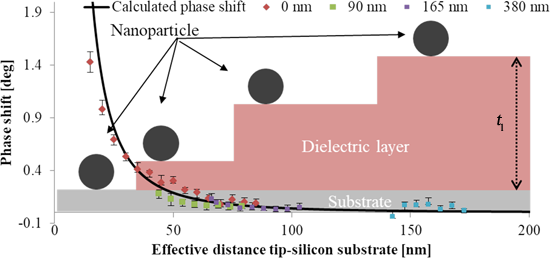
- increase the signal-to-noise ratio. The resolution of the images is 254 measuring points per line, and the scan speed is 0.9 Hz. The force gradient is detected by phase shifts in interleave mode. A magnetic ASYMFM-HM tip was used for all measurements in order to assure a high magnetic sensitivity. The


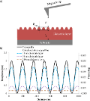


![[Graphic 2]](/bjnano/content/inline/2190-4286-10-106-i7.svg?max-width=637&scale=1.18182) ; black line) and measured phase shift for single nanoparticles with 10 ± 2 nm diameter...
; black line) and measured phase shift for single nanoparticles with 10 ± 2 nm diameter...


Correlation of surface-enhanced Raman scattering (SERS) with the surface density of gold nanoparticles: evaluation of the critical number of SERS tags for a detectable signal
Beilstein J. Nanotechnol. 2019, 10, 1016–1023, doi:10.3762/bjnano.10.102
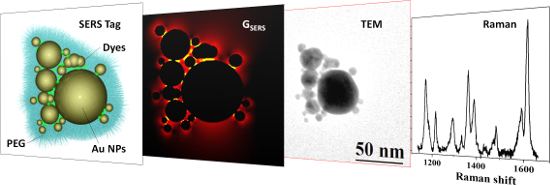
- linear response, it was found that 10 SERS AuNTs inside the probed area are required. These findings indicate that a better signal-to-noise ratio requires high-magnification optics, while linearity versus tag number can be improved by using low-magnification optics or a high tag density. In general the
- inside the probed area is required to obtain a linear response, that is, on the order of 10 tags. Overall, these results suggest that a better signal-to-noise ratio requires optics with a high numerical aperture, while linearity versus tags number is improved by using low-magnification optics. However


Fabrication of silver nanoisland films by pulsed laser deposition for surface-enhanced Raman spectroscopy
Beilstein J. Nanotechnol. 2019, 10, 882–893, doi:10.3762/bjnano.10.89
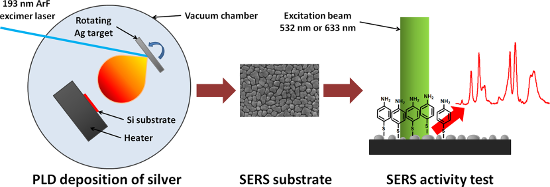
- single point were 1 s, 5 s and 0.5 s for 532 nm, 633 nm, and 785 nm excitation wavelengths, respectively. The measurement parameters were adjusted to different nominal output power values of the lasers to obtain a good signal-to-noise ratio for a single measuring point. SERS measurements were made for
- the EF of the Raman signal, the Raman measurements of the pMA adsorbed on the surface of the platinum film were also done. Compared to SERS substrates, obtaining a spectrum with the appropriate signal-to-noise ratio required increasing the laser power and extended measurement time. For the 532 nm




Commercial polycarbonate track-etched membranes as substrates for low-cost optical sensors
Beilstein J. Nanotechnol. 2019, 10, 677–683, doi:10.3762/bjnano.10.67
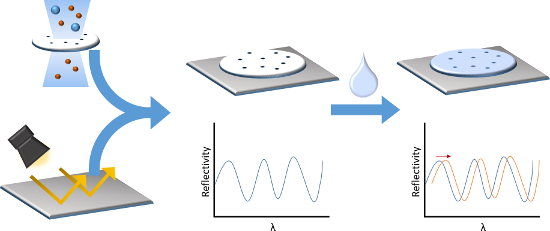
- the spectrum was notably noisy, with a signal-to-noise ratio (SNR) value of 3.52 (see Figure 2b). All these issues are disadvantageous for the future employment of these membranes as optical sensing structures for two reasons. First, the noise can hide tiny displacements of the spectra that could


Review of time-resolved non-contact electrostatic force microscopy techniques with applications to ionic transport measurements
Beilstein J. Nanotechnol. 2019, 10, 617–633, doi:10.3762/bjnano.10.62
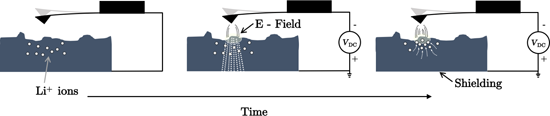
- larger number of averages, the same signal-to-noise ratio can be achieved, however the cantilever resonance frequency will ultimately determine the minimum τPLL. Empirically we have found that the minimum PLL response time achievable is τPLLmin ≈ 10 × 1/f0. The highest resonance frequency cantilevers
- sample is metallic (see discussion below). The authors also derived similar ratios for both the sub-resonant and super-resonant schemes, allowing them to directly compare the time resolution and signal-to-noise ratio of each. Validation measurement As a validation measurement, they applied electrical
- the IMP spacing (δ). The signal-to-noise ratio is significantly lower in this case, requiring a much smaller value of δ and, in turn, longer averaging times. Note that since the time resolution is proportional to δ (Equations 15 and 16 in [20]), using a smaller δ values actually results in better time