Search results
Search for "surface" in Full Text gives 2438 result(s) in Beilstein Journal of Nanotechnology. Showing first 200.
From shield to spear: Charge-reversible nanocarriers in overcoming cancer therapy barriers
Beilstein J. Nanotechnol. 2026, 17, 159–175, doi:10.3762/bjnano.17.10
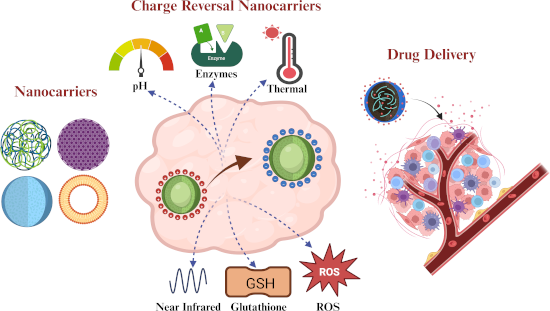
- outcomes over traditional approaches. Among these innovations, charge-reversible nanocarriers have attracted considerable attention due to their ability to overcome physiological and pathological barriers in the tumour microenvironment (TME) by altering their surface charge in response to specific stimuli
- the crucial role of surface charge in cellular uptake and intracellular transport, highlighting recent advances that demonstrate improved targeting, reduced systemic toxicity, enhanced cellular internalisation, and the potential for integrated approaches, including combination therapies and
- advancements in nanocarrier-based cancer therapy, recent research has increasingly emphasised refining their physicochemical traits, especially surface charge, to boost therapeutic outcomes. A notable development in this context is the emergence of charge-reversible nanoscale drug delivery systems (CR-NDDSs


Influence of surface characteristics on the in vitro stability and cell uptake of nanoliposomes for brain delivery
Beilstein J. Nanotechnol. 2026, 17, 139–158, doi:10.3762/bjnano.17.9
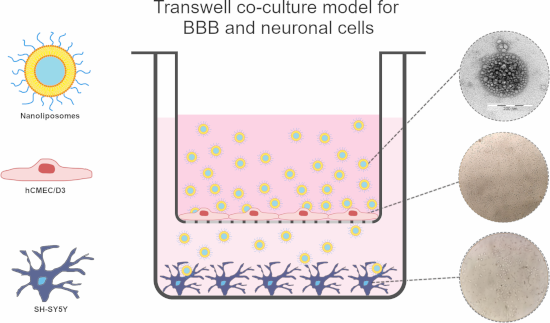
- evolution of physicochemical characteristics and surface properties of NLs in biorelevant media. Additionally, in order to point out the influence of specific characteristics on the brain targeting potential of these formulations, we investigated interactions between NLs and blood–brain barrier (BBB, hCMEC
- showed a time- and concentration-dependent internalization pattern, with high impact of the surface characteristics of the different formulations. In addition, transport studies on hCMEC/D3/SH-SY5Y co-cultures confirmed the successful transport of NLs across the BBB cells and their subsequent uptake by
- neurons (ranging from 25.17% to 27.54%). Fluorescence and confocal microscopy micrographs revealed that, once internalized, NLs were concentrated in the perinuclear cell regions. Keywords: blood–brain barrier; cell co-culture; cell uptake; internalization; nanoliposomes; stability; surface
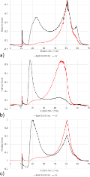


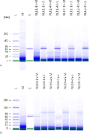
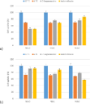


Development and in vitro evaluation of liposomes and immunoliposomes containing 5-fluorouracil and R-phycoerythrin as a potential phototheranostic system for colorectal cancer
Beilstein J. Nanotechnol. 2026, 17, 97–121, doi:10.3762/bjnano.17.7
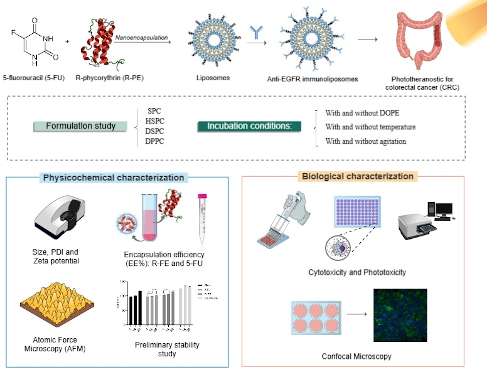
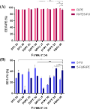
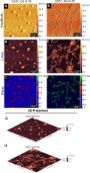
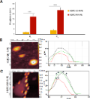
- ± 1.81 nm), negative zeta potential (−14.8 ± 0.81 mV) and antibody conjugation efficiency of 34.4%. Topographical AFM analysis showed that HSPC-IM-R-PE presented significantly higher surface roughness and viscoelastic contrast, indicating successful antibody anchoring. For cell viability in the HCT-116
- lipophilic substances. Furthermore, liposomes can also act as a protein delivery system, reducing enzymatic degradation of proteins and enhancing their stability and their permeability through cell membranes [7]. Immunoliposomes provide many advantages by surface functionalization with targeting biomolecules
- drying for 15 min at room temperature. The analyses were conducted in air, using the tapping mode to prevent damage to the sample surface, by using a PPP-NCSTAu probe (Nanosensors®, Switzerland), with frequency resonance of 125 kHz and spring constant of 5.0 N/m. The scan rate was 1.5 s per line. The



Functional surface engineering for cultural heritage protection: the role of superhydrophobic and superoleophobic coatings – a comprehensive review
Beilstein J. Nanotechnol. 2026, 17, 63–96, doi:10.3762/bjnano.17.6
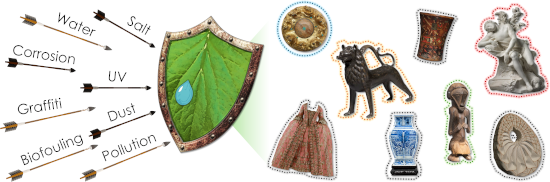
- the head and deliberate surface abrasion, caused the partial loss of this piece of art. Discovered in a well, its context suggests intentional removal in ancient times, possibly linked to regime change or iconoclastic acts. These findings support the view that the statue’s destruction was not
- protect the surface [20]. In the contemporary era, starting in the second half of the 20th century, the concern about safety of the cultural heritage has become increasingly prominent. An example of modern protective coating is represented by shellac, the only resin derived from animals, more precisely
- stone sculptures and building protection, silicone-based consolidants and acrylic resins were adopted [25], offering resistance by penetrating in the porous structure of the artwork surface. As an alternative, together with the protection of stone structures, the path of restoration was also considered




Microscopic study of the intermediate mixed state in intertype superconductors
Beilstein J. Nanotechnol. 2026, 17, 57–62, doi:10.3762/bjnano.17.5
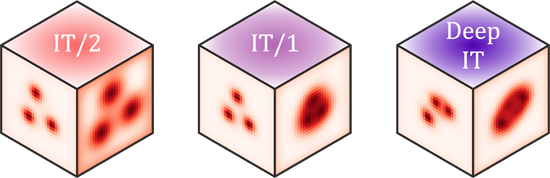
- infinite degeneracy of the superconducting state at the so-called Bogomolnyi (ℬ) point (κ0, Tc) with Tc being the critical temperature [21][22]. At this point, the surface energy between the superconducting and normal phases vanishes, allowing for a continuum of flux–condensate configurations with equal
- increases, shrinking to a single point at Tc. Based on these findings, we construct a phase diagram of the IT regime, which appears qualitatively consistent with that obtained earlier from perturbation theory for the conventional BCS model with a spherical Fermi surface. Results and Discussion Model and


Subdigital integumentary microstructure in Cyrtodactylus (Squamata: Gekkota): do those lineages with incipiently expressed toepads exclusively exhibit adhesive setae?
Beilstein J. Nanotechnol. 2026, 17, 38–56, doi:10.3762/bjnano.17.4
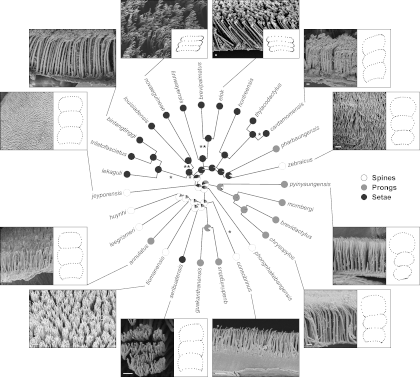
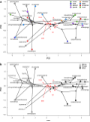
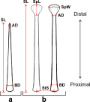
- for SEM to characterize and measure the microstructures of the ventral scale surface. Six morphometric traits of the epidermal microstructures were quantified using ImageJ, and effective bending stiffness was estimated. To explore evolutionary and ecological patterns, phylogenetic comparative analyses
- the saxicoline habitat might be explained by the extensive spectrum of this very variable habitat category that includes karst, granite, cave, and intertidal ecotypes. For example, granite and karst have different structures [90][91]. Importantly, fine-scale data on the surface properties such as
- surface roughness at a scale pertinent to the size and interactions of the epidermal microstructures are generally scarce [30][31][33][80][83][92] and non-existent for arboreal Cyrtodactylus. Among all ecotypes analysed, the crown habitat of trees apparently imposes the strongest selective pressure on


Reduced graphene oxide paper electrode for lithium-ion cells – towards optimized thermal reduction
Beilstein J. Nanotechnol. 2026, 17, 24–37, doi:10.3762/bjnano.17.3
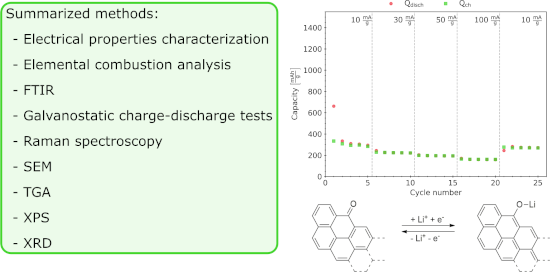
- specific surface area, and low bulk density [3][4]. The role of rGO in electrode materials can be considered in two ways. It can be applied as a conductive additive, improving transport properties and, as a result, enhancing capacity [5]. It can also be the active material itself [6][7]. To mention just a
- illustration of these functional epoxide, ketone, hydroxy, and carboxyl groups on the surface of a rGO flake is shown in Figure 1a. In addition, the adjustability of lateral size and thickness of the rGO flakes, which influence functional parameters [23], is another advantage of these materials. According to
- [31] and flake edge exposition on the rGO paper surface, improving accessibility of the redox sites for electrolyte and lithium ions. Microwave methods, which also lead to changes in morphology (i.e., expansion) of the material, require thermal pre-treatment since GO weakly absorbs incident microwaves



Competitive helical bands and highly efficient diode effect in F/S/TI/S/F hybrid structures
Beilstein J. Nanotechnol. 2026, 17, 15–23, doi:10.3762/bjnano.17.2
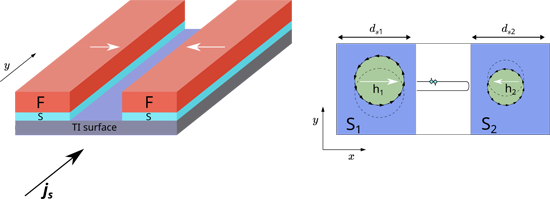
- the diode efficiency is due to competing contributions of the two superconducting islands to the supercurrent with single helical bands linked through the topological insulator surface. Keywords: hybrid structures; proximity effect; superconducting diode effect; superconductivity; topological
- based on topological insulators (TIs) are interesting since they offer strongest SOC rendering linear spin-polarized dispersion for the surface states [73]. The diode effect in TI-based structures has been reported in Josephson junctions, as well as in hybrid structures. In practice, when producing
- superconducting regions with a proximity-induced in-plane exchange field on top of the TI. The Fermi contour of the TI surface states is usually represented by the Dirac spectrum, that is, a single helical band, which is characterized by the strongest spin-momentum locking effect. Here, we consider the F/S/TI/S/F


![[Graphic 16]](/bjnano/content/inline/2190-4286-17-2-i31.svg?max-width=637&scale=1.18182)
![[Graphic 17]](/bjnano/content/inline/2190-4286-17-2-i32.svg?max-width=637&scale=1.18182)


Quantitative estimation of nanoparticle/substrate adhesion by atomic force microscopy
Beilstein J. Nanotechnol. 2026, 17, 1–14, doi:10.3762/bjnano.17.1

- various fields such as energy storage [1], electronics [2], and catalysis [3]. These tiny particles, with sizes typically ranging from 1 to 100 nm, have fundamentally different properties compared to their bulk counterparts because of their large surface-to-volume ratio [4], as well as unique electronic
- [15][16][17]. However, achieving consistently accurate manipulation of NPs has inherent limitations due to limited knowledge of the exact geometry of the AFM tip as well as the complex interactions involving surface contact area and interfacial friction between the AFM tip, NPs, and the substrate [18
- utilized as a tool for the manipulation of the NPs in order to determine the adhesion forces. The NPs were pushed in normal direction to the AFM cantilever’s long axis by scanning the surface with the AFM tip in contact mode. The corresponding lateral forces necessary to move NPs were determined. The



Internal 3D temperature mapping in biological systems using ratiometric light-sheet imaging and lipid-coated upconversion nanothermometers
Beilstein J. Nanotechnol. 2025, 16, 2306–2316, doi:10.3762/bjnano.16.159
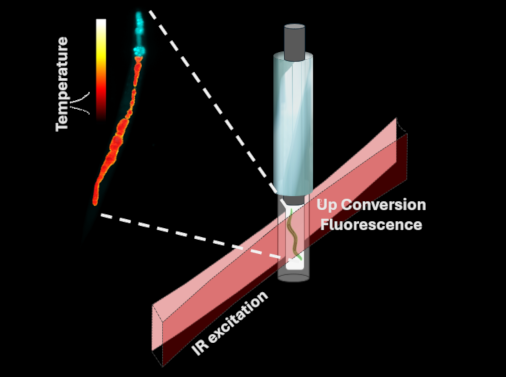
- devices with several disadvantages, including limited sensitivity and low accuracy, and are generally restricted to contact surface measurements [2]. Beyond fundamental processes, temperature also serves as a key biomarker for pathological conditions such as cancer. Localized hyperthermia often arises
- and particle retention [57]. Figure 5b–d shows the fluorescence emission throughout the intestinal structure post-ingestion, indicating UCNP accumulation within the lumen. This localization is strongly influenced by surface chemistry. The anionic character of our DOPS-rich lipid coating likely leads
- to the luminal environment rather than intracellular regions, indicating that surface chemistry governs not only nanoparticle uptake but also the spatial interpretation of the thermal maps. This distinction is crucial, as it means our thermal maps report on the temperature within the digestive tract


Terahertz-range on-chip local oscillator based on Josephson junction arrays for superconducting quantum-limited receivers
Beilstein J. Nanotechnol. 2025, 16, 2296–2305, doi:10.3762/bjnano.16.158
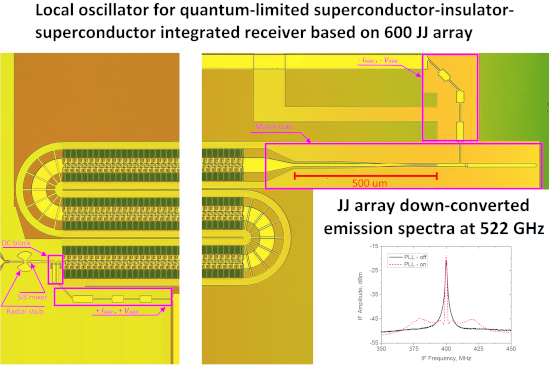
- ]. Nontheless, the use of Nb alloys will only partially solve the problem of high-frequency generation due to high surface losses in NbN and NbTiN [18][25][26]. Note that the use of Nb–Al/AlN–NbN allows for the fabrication of tunnel junctions with a tunnel current density of up to 100 kA/cm2 with a quality
- technological cycle, the molybdenum film with a thickness of 100 nm (surface resistance of approx. 1 Ω/square) is used. A shunt is crucial for reducing the McCumber parameter to the value of ≈0.3 in order to provide a hysteresis-free current–voltage characteristic (IVC) [3]. The parameters of the single


Improving magnetic properties of Mn- and Zn-doped core–shell iron oxide nanoparticles by tuning their size
Beilstein J. Nanotechnol. 2025, 16, 2285–2295, doi:10.3762/bjnano.16.157
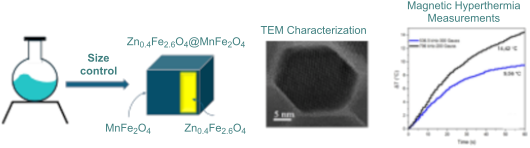
- magnetic performance due to their reduced surface spin disorder [7]. Polyhedral NPs exhibit higher magnetic saturation, less spin canting, and higher SAR values than spherical NPs. For instance, Kasparis et al. demonstrated that polyhedral Zn0.4Fe2.6O4 NPs exhibited SAR values more than double those of
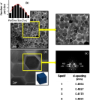
- is critical as polyhedral-shaped NPs have been shown to exhibit superior magnetic properties compared to spherical particles due to increased surface area and facet effects [17]. High-resolution TEM images (Figure 1a) reveal well-defined, monodisperse polyhedral Zn0.4Fe2.6O4 nanoparticles with an
- observed peak positions and their shift, highlighting the impact of lattice distortions, bond strengthening, and interfacial interactions on the vibrational properties of the material [18]. The presence of peaks at ≈2850 cm−1 and ≈2920 cm−1 is associated with the C–H stretching vibrations from surface



Visualizing nanostructures in supramolecular hydrogels: a correlative study using confocal and cryogenic scanning electron microscopy
Beilstein J. Nanotechnol. 2025, 16, 2274–2284, doi:10.3762/bjnano.16.156
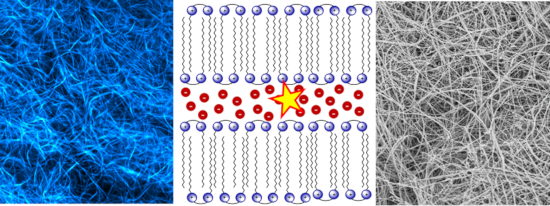
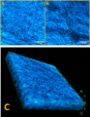
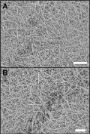
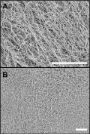
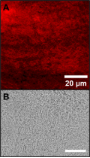
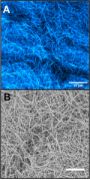
- crystals form, the presence of the ethanol and/or the mechanical strength of the gel are believed to obviate the problem here). The subsequent sublimation of surface ice exposes the underlying fibres. This allows for high-resolution imaging without the extensive drying that can collapse fibrous networks



Geometry-controlled engineering of the low-temperature proximity effect in normal metal–superconductor junctions
Beilstein J. Nanotechnol. 2025, 16, 2265–2273, doi:10.3762/bjnano.16.155
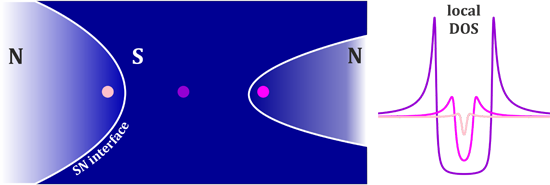
- hybrid devices by enhancing normal quasiparticle scattering at the expense of Cooper pair transport [42]. Although interface transparency can be tuned by chemical surface treatments or in situ growth [43], an alternative and less explored approach is to control the proximity effect via the geometry of
- one takes into account that GI is proportional to the transmission probability T across the interface. This quantity depends on both the transmission probability of the individual conduction channels near the Fermi surface and on the total number of such channels. Both contributions are expected to


Chiral plasmonic nanostructures fabricated with circularly polarized light
Beilstein J. Nanotechnol. 2025, 16, 2245–2264, doi:10.3762/bjnano.16.154
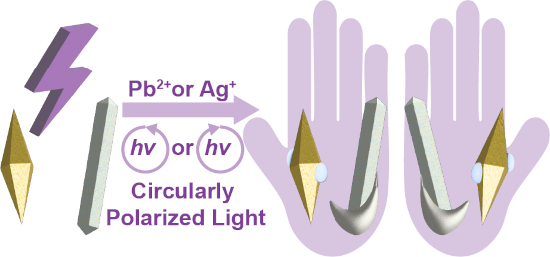
- that templated the growth of quasihelical shells on the NC surface (Figure 1e). These seeded-growth methods have several advantages, namely, ease of synthesis, homogeneity and large optical dissymmetry of the product, scalability, and relatively low cost. Therefore, much effort has been devoted on
- detail due to the focus here on structurally intrinsic chiral plasmonic nanostructures (cPNSs). 2 Constructing chiral plasmonic nanostructures using CPL Light can drive the collective oscillation of the free electrons in metals, known as surface plasmons in a plasmonic metal nanostructure. Part of the
- space and localizing photochemical reactions. At the diffraction limit, light cannot be focused into a spot smaller than half its wavelength. However, waves of electrons on a metal surface can be compressed into space a tiny fraction of the wavelength of light. This allows visible and infrared light to





Optical bio/chemical sensors for vitamin B12 analysis in food and pharmaceuticals: state of the art, challenges, and future outlooks
Beilstein J. Nanotechnol. 2025, 16, 2207–2244, doi:10.3762/bjnano.16.153
- Seyed Mohammad Taghi Gharibzahedi Zeynep Altintas Division of Bioinspired Materials and Biosensor Technologies, Institute of Materials Science, Faculty of Engineering, Kiel University, 24143, Kiel, Germany Kiel Nano, Surface and Interface Science (KiNSIS), Kiel University, 24118, Kiel, Germany
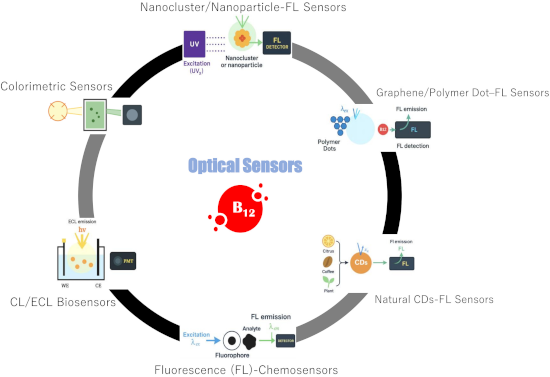
- biosensing platforms in detecting Co2+ ions and VB12 using RNA aptamer–gold nanoparticles colorimetric sensors, surface plasmon resonance sensors, chemiluminescence and electrochemiluminescence biosensors, and fluorescence biosensors (i.e., chemosensors, nanoclusters/nanoparticles-based sensors, and carbon
- different food and pharma formulations include high-performance liquid chromatography (HPLC) [14], HPLC coupled with inductively coupled plasma-mass spectrometry (ICP-MS) [15], and a diode array detector [16], atomic absorption spectroscopy [17], surface-enhanced Raman spectroscopy [18][19], capillary


Ultrathin water layers on mannosylated gold nanoparticles
Beilstein J. Nanotechnol. 2025, 16, 2183–2198, doi:10.3762/bjnano.16.151
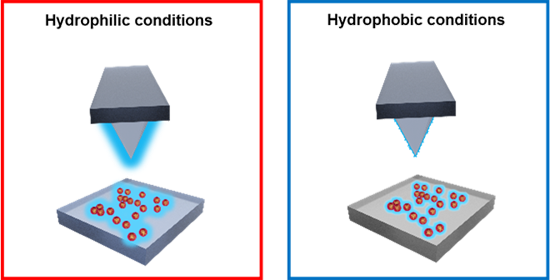
- nanoparticle systems, one functionalized with an oligo(ethylene glycol) ligand, and one functionalized with a mixture of the same with a dimannoside ligand. The dimannoside ligand was chosen to mimic the surface chemistry of viral spike proteins. We characterized the particles by electron microscopy, dynamic
- high and the shape cannot be identical (hemagglutinin is roughly a triangular 7 nm prism of 15 nm length), the size is in the typical NP range, and a dense coating with oligomannoside should mimic surface physics. Accordingly, we note that the adsorption of AuNPs on surfaces would mimic the survival of
- and stability in solution, in terms of hydrodynamic diameter and NP surface charge, respectively. Spectroscopy techniques were used to analyze the chemical composition of the organic ligands locally. We used FTIR for the molecular fingerprint infrared region to find the characteristic peaks of the



Missing links in nanomaterials research impacting productivity and perceptions
Beilstein J. Nanotechnol. 2025, 16, 2168–2176, doi:10.3762/bjnano.16.149
- Santosh K. Tiwari Nannan Wang Centre for New Materials and Surface Engineering, Department of Chemistry, NMAM Institute of Technology (NMAMIT), Nitte (Deemed to be University), Nitte 574110, Karnataka, India State Key Laboratory of Featured Metal Materials and Life-cycle Safety for Composite
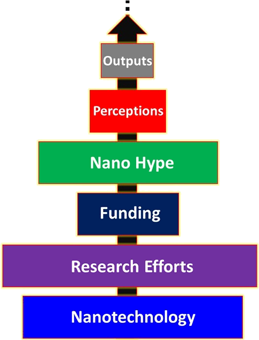
- nanomaterials becomes a tedious and expensive task, often more so than for advanced bulk materials. It is indispensable to acknowledge that even after detailed characterization, warranting that even 90% of the nanoparticles have uniform size and identical surface characteristics is difficult. This is largely
- due to the inherent instability of 0D, 1D, and 2D nanomaterials [23]. That is why, in most cases, nanomaterials require a specific medium and controlled environment for stability. In the same line, due their high surface energy, large surface area, and small size, nanomaterials naturally tend to
Microplastic pollution in Himalayan lakes: assessment, risks, and sustainable remediation strategies
Beilstein J. Nanotechnol. 2025, 16, 2144–2167, doi:10.3762/bjnano.16.148
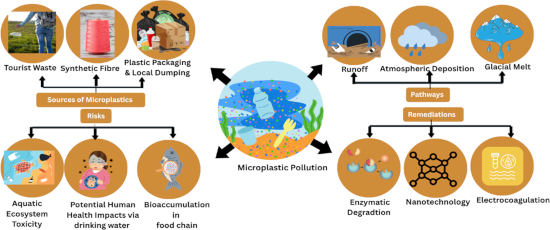
- due to surface runoff from tourist activities, plastic trash, and unregulated effluent. For instance, Jain et al. reported a MP density of 110–370 particles/m3 in the Nainital Lake, Uttarakhand, which was highest during the tourist season. The outcomes confirm that human accessibility and lake
- influence the food web structure [4]. For instance, a study in Dal Lake recorded MP concentrations of 2450 particles/m2 in sediments and 9.8 particles/L in surface water [11], indicating significant ecological exposure. 3.3 Global comparison with other sensitive aquatic ecosystems Across the globe, MPs have
- . provided a comprehensive historical analysis of water and emerging pollutants, specifically microplastics, in the Indian Himalayas, highlighting how such pollutants have progressively affected surface and groundwater as a result of unregulated use of plastic and a lack of waste management infrastructure


Electron transport through nanoscale multilayer graphene and hexagonal boron nitride junctions
Beilstein J. Nanotechnol. 2025, 16, 2132–2143, doi:10.3762/bjnano.16.147
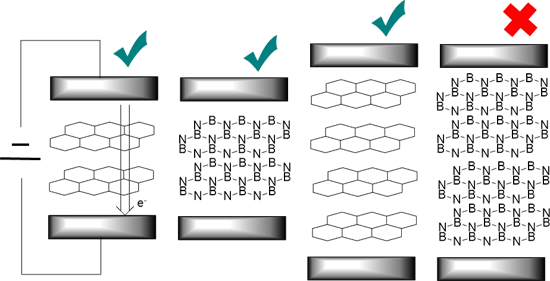
- Pt(111) surface, graphene, and h-BH using the QuantumWise ATK interface builder. The process involves strain minimization in the lattice mismatch by symmetry multiplication of the unit cells. The junctions shown in Figure 4 and Figure 5 have 1.06% distributed strain over Pt and graphene or h-BN. The
- distance between graphene or h-BN and the Pt surface is set to 3.2 Å. The central region includes six layers of the source electrode and six layers of the drain electrode. The electrode supercells are 3 × 3 × 3 Pt unit cells. The (I/V) curves are computed using the methodology described in Equations 2–10
- energy of pristine graphene and graphene with Stone–Wales defect to the Pt(111) surface. In those calculations, we use two graphene layers with a 4 × 4 × 1 supercell. The Stone–Wales defect is in the layer facing the Pt surface. Pt is modeled by six layers where the bottom three layers have the atomic


Quality by design optimization of microemulsions for topical delivery of Passiflora setacea seed oil
Beilstein J. Nanotechnol. 2025, 16, 2116–2131, doi:10.3762/bjnano.16.146
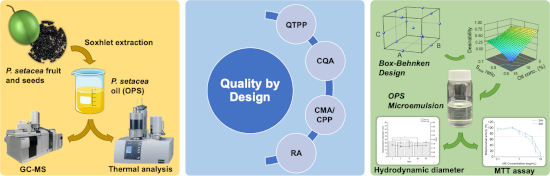
- response surface plots for each response, as shown in Figure 6. The axes were selected based on the most significant interactions identified through ANOVA, while the third factor was held constant at its central level. The resulting plots provide a visual representation of the individual and interactive
- other components such as NaCMC and vitamin E [44][45]. Surface tension The surface tension of the microemulsion was characterized through six replicates, yielding an average value of 40.27 ± 0.22 mN·m−1. Similar surface tension values have been reported for microemulsions in the literature [46][47
- ]. This range is considerably favorable for topical formulations, as lower surface tension enhances spreadability and promotes interaction with the stratum corneum and its lipidic barrier. Due to instrumental limitations associated with the high viscosity resulting from NaCMC addition, the surface tension


Rapid synthesis of highly monodisperse AgSbS2 nanocrystals: unveiling multifaceted activities in cancer therapy, antibacterial strategies, and antioxidant defense
Beilstein J. Nanotechnol. 2025, 16, 2105–2115, doi:10.3762/bjnano.16.145
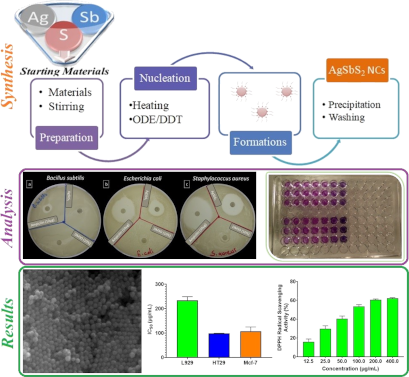
- mg/mL) NCs were placed on the surface of MHA plates inoculated with 100 μL of a suspension comprising 108–109 CFU/mL of microorganisms and incubated for 24 h at 37 °C. In addition, ampicillin (10 mg/disc) and 10% DMSO were used as control for comparative effect. The zone of inhibition (ZOI) was
- in this study, it is generally accepted that the surface charge of NCs plays a critical role in their colloidal stability, dispersion behavior, and biological interactions [22][32]. In cubic cuboargyrite phase, there are 14 polyhedra with antimony and silver at the center (Figure 1c). Herein, a
- infections dominated by this pathogen. However, their relatively weaker activity against E. coli and B. subtilis suggests that optimization may be necessary to broaden their spectrum through surface modification, particle size reduction, or combination with other antibacterial agents. Cytotoxicity of AgSbS2


Toward clinical translation of carbon nanomaterials in anticancer drug delivery: the need for standardisation
Beilstein J. Nanotechnol. 2025, 16, 2092–2104, doi:10.3762/bjnano.16.144

- nanotubes, and carbon dots, have attracted considerable interest as nanocarriers for drug delivery due to their unique physicochemical properties. Their high surface area, biocompatibility, and modifiable surface chemistry make them highly attractive for a range of biomedical applications. However, concerns
- nanomaterials (CNMs) have been largely developed as nanocarriers for drug delivery due to their biocompatibility, high surface area, tuneable physicochemical properties, and targeting capabilities [13][14]. However, CNMs also present a subset of challenges, including toxicity concerns, expensive and time
- affairs. Achieving these key milestones is critical to developing a safe and effective drug delivery system that can improve the treatment of cancer. The process begins with the synthesis of CNMs tailored to specific size and surface chemistry requirements, using methods such as chemical vapour deposition




Multifrequency AFM integrating PeakForce tapping and higher eigenmodes for heterogeneous surface characterization
Beilstein J. Nanotechnol. 2025, 16, 2077–2085, doi:10.3762/bjnano.16.142
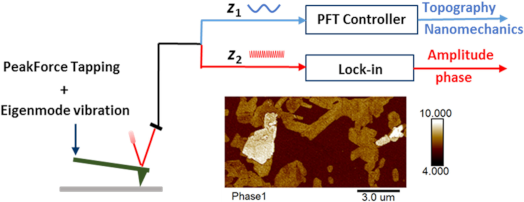
- . Keywords: atomic force microscopy (AFM); high eigenmodes; multifrequency AFM; nanoscale material analysis; surface characterization; Introduction Atomic force microscopy (AFM) has become an indispensable tool for characterizing the morphology and surface properties of materials at the micro- and the
- interacting intermittently with the sample surface. By monitoring and controlling the cantilever’s amplitude and phase, topographical and phase images can be generated, providing insights into material properties and enabling the differentiation of regions or components within heterogeneous samples [7][8][9
- overcome these challenges. This configuration harnesses the mechanical precision of quasi-static force control and the sensitivity of eigenmode signals to variations in surface properties and enables simultaneous topographical, mechanical, and compositional mapping. We apply this technique to


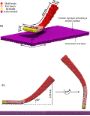
Molecular and mechanical insights into gecko seta adhesion: multiscale simulations combining molecular dynamics and the finite element method
Beilstein J. Nanotechnol. 2025, 16, 2055–2076, doi:10.3762/bjnano.16.141
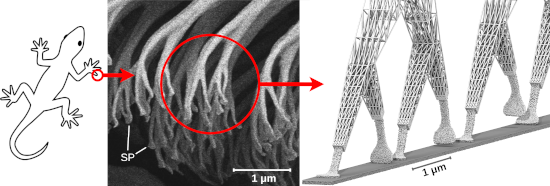
- microscopy (AFM) experiments. Our investigation into how gecko keratin interacts with hydrophilic and hydrophobic substrates [12] supported the importance of the water-mediating effect [10] and elucidated mechanistic differences depending on surface chemistry. A particle-based mesoscale model of a single
- surface, and a 13 nm thick amorphous bulk below, which matched the same bead density as our previous random-substrate model. All substrate beads had identical interactions with the spatula, and both layers were held fixed in space. Since the regular top monolayer differed from the fully random arrangement
- used previously, we re-parameterized the spatula–substrate Lennard-Jones interactions: so that the new surface would have the same pull-off (adhesion) pressure as before. Specifically, several parameter combinations were tested in pull-off simulations against our reference data for gecko keratin [12