


Search results
Search for "texture" in Full Text gives 138 result(s) in Beilstein Journal of Nanotechnology.
Magnetic segregation effect in liquid crystals doped with carbon nanotubes
Beilstein J. Nanotechnol. 2019, 10, 1464–1474, doi:10.3762/bjnano.10.145
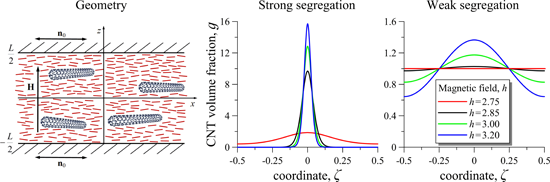
- the initial homogeneous planar texture of the liquid crystal–carbon nanotubes mixture is disturbed in a threshold manner (Fréedericksz transition). The orientational and concentration distributions of the suspension are studied for different values of the magnetic field strength and segregation


Magnetic field-assisted assembly of iron oxide mesocrystals: a matter of nanoparticle shape and magnetic anisotropy
Beilstein J. Nanotechnol. 2019, 10, 894–900, doi:10.3762/bjnano.10.90
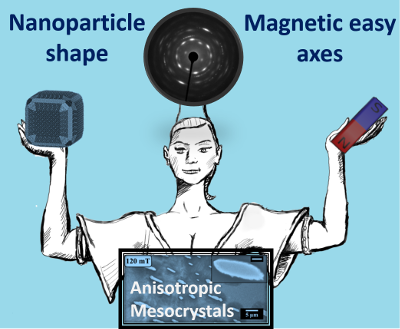
- symmetry of packing arrangement and orientational order in 2D and 3D superlattices. The 3D structures of the self-assembled nanocubes can be approximated by a slightly distorted fcc superlattice, thereby the texture-like wide-angle diffraction pattern indicates the formation of mesocrystals with a
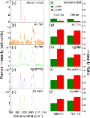
- single crystal-like fast Fourier transforms (FFTs) and texture-like EDs are shown in Figure 3. The large yellow circles indicate the position from which the FFTs and EDs are obtained. The symmetry of the projected mesocrystal surface, which is parallel to the substrate can be described either in p4mm
- FFTs were taken. The zone axes contributing to the ED patterns are noted and some diffraction reflections are highlighted and colour coded. (a) A directed mesocrystal with a projected p4mm layer symmetry (inset: 200 1/µm). (b) The ED pattern of the directed mesocrystal shown in (a). The texture-like


On the transformation of “zincone”-like into porous ZnO thin films from sub-saturated plasma enhanced atomic layer deposition
Beilstein J. Nanotechnol. 2019, 10, 746–759, doi:10.3762/bjnano.10.74
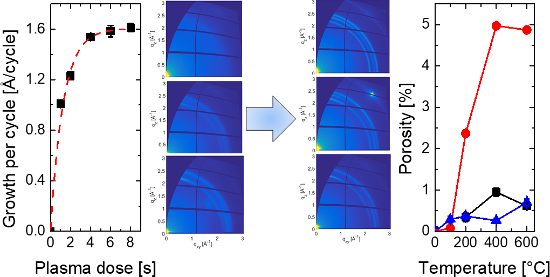
- is targeted, since its crystal growth and texture affect the optical and (piezo)electrical properties of the material [64][65][66]. The crystallinity of the pristine zincone-like layers and its evolution during and after calcination were monitored using in situ X-ray diffraction (XRD) and grazing
- . Both confirms a preferential out-of-plane texture of the crystallites in the [100] direction for longer plasma exposure times during deposition. For the calcined samples, in the literature major changes are reported in the optical and morphological properties of pure ZnO thin films deposited with
- index as measured with SE. It can therefore be concluded that the combination of plasma exposure time and annealing allows for the tuning of the final texture of the resulting ZnO. Furthermore, the temperature range of 350–450 °C would be crucial in the formation and the clogging of porosity. Liang et


Quantification and coupling of the electromagnetic and chemical contributions in surface-enhanced Raman scattering
Beilstein J. Nanotechnol. 2019, 10, 549–556, doi:10.3762/bjnano.10.56
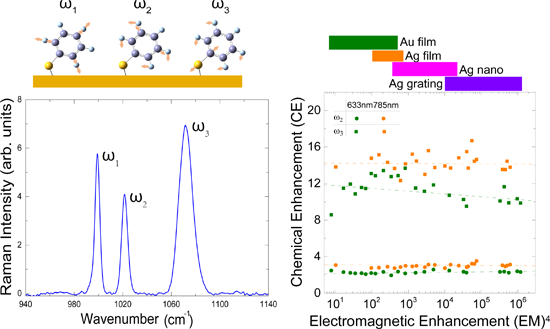
- were prepared and chemically functionalized with benzenethiol. Planar Au and Ag films were prepared by metal evaporation, with minimal grain texture and boundaries providing for the smallest EM enhancement of the samples investigated. Nanostructured Ag substrates were fabricated by interference


Biocompatible organic–inorganic hybrid materials based on nucleobases and titanium developed by molecular layer deposition
Beilstein J. Nanotechnol. 2019, 10, 399–411, doi:10.3762/bjnano.10.39
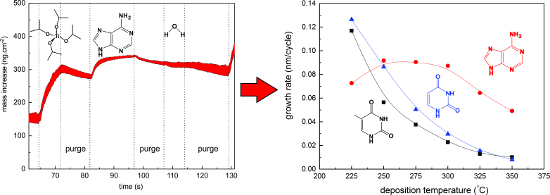
- campaign of a material with known growth rate and density, as measured by X-ray reflectivity (XRR). This procedure calibrated for possible variations in surface area of the QCM crystal due to evolution of texture during growth. The growth rate was measured as a function of deposition temperature for each




One-step nonhydrolytic sol–gel synthesis of mesoporous TiO2 phosphonate hybrid materials
Beilstein J. Nanotechnol. 2019, 10, 356–362, doi:10.3762/bjnano.10.35
- organosilsesquioxane (O1.5Si–R–O1.5). These hybrids are usually prepared by conventional sol–gel processing, i.e., by hydrolysis and condensation of alkoxysilane precursors, which offers an excellent control over composition and homogeneity, while texture can be tuned using various templating approaches [9]. In the
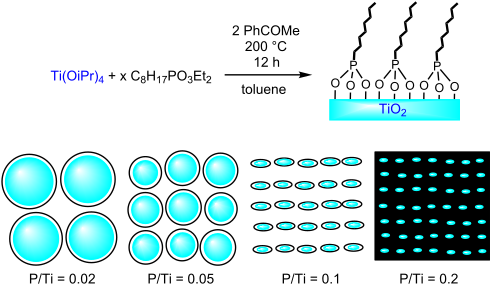
- use an excess of metal precursor in order to form a metal oxide–phosphonate hybrid material. There are very few examples of the preparation of such materials by sol–gel methods [15][16], and the texture of these materials has not been reported. Actually, most metal oxide–phosphonate-based porous


pH-mediated control over the mesostructure of ordered mesoporous materials templated by polyion complex micelles
Beilstein J. Nanotechnol. 2019, 10, 144–156, doi:10.3762/bjnano.10.14
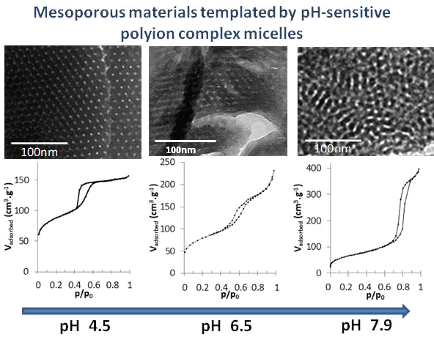
- oligomers, inducing sudden macroscopic precipitation in less than 3 min. Two different mass concentrations of the reaction medium, expressed by the wt % of DHBC, were used. The 3.9 wt % concentration was aimed at evaluating the influence of the pH on the texture, structure and chemical composition of the


Amorphous NixCoyP-supported TiO2 nanotube arrays as an efficient hydrogen evolution reaction electrocatalyst in acidic solution
Beilstein J. Nanotechnol. 2019, 10, 62–70, doi:10.3762/bjnano.10.6
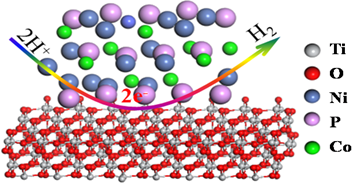
- crystallographic texture, scanning electron microscopy (SEM, JSM-5900 LV, JEOV) for micro-morphology, transmission electron microscopy (TEM, Tecnai G2 F20 S-TWIN) for microstructure, UV–vis diffuse reflectance spectroscopy (UV2100) for photoabsorption properties, X-ray photoelectron spectroscopy (XPS, Escalab
- crystallographic texture of the electrode samples was not altered by the electrodeposition of Ni–P or NiCoP. The intensity of the diffraction peaks follow the order: TNAs > Ni–P/TNAs > NixCoyP/TNAs. It is suggested that after electrodeposition, there was an amorphous deposit covering the TiO2 surface to dampen the




A comparison of tarsal morphology and traction force in the two burying beetles Nicrophorus nepalensis and Nicrophorus vespilloides (Coleoptera, Silphidae)
Beilstein J. Nanotechnol. 2019, 10, 47–61, doi:10.3762/bjnano.10.5
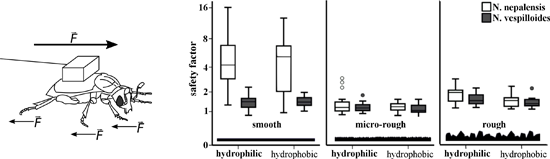
- texture, the calculated surface free energies of 33.3 mN·m−1 (micro-rough surface) and 42.2 mN·m−1 (rough surface) (Table 2 in [19]), respectively, should not be considered as absolute values, which can only be determined for ideal, perfectly smooth surfaces [20]. The plasma-treated Al2O3 grinding disc




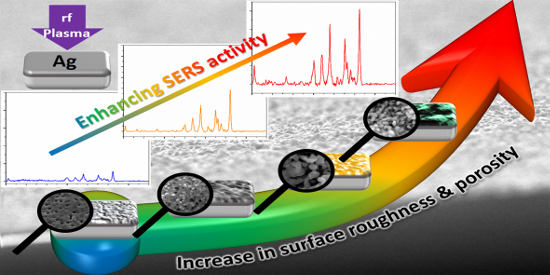
Controlling surface morphology and sensitivity of granular and porous silver films for surface-enhanced Raman scattering, SERS
Beilstein J. Nanotechnol. 2018, 9, 2813–2831, doi:10.3762/bjnano.9.263
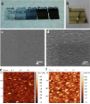
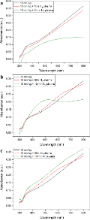
- show a dependence of the significant and most prominent reflexes on the film texture (Figure 4b). As can be seen from Figure 4b and Figure 4c the preferential orientation of the crystallites is different from that of bulk silver (JCPDS file No. 04-0783). In case of the as-sputtered silver film the





Friction reduction through biologically inspired scale-like laser surface textures
Beilstein J. Nanotechnol. 2018, 9, 2561–2572, doi:10.3762/bjnano.9.238
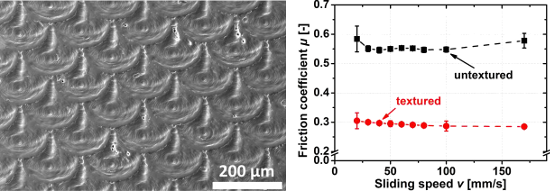
- ][8][9], and the morphological texturing of the sliding surfaces themselves [10][11]. The latter has attracted a lot of attention in the last two decades, even though first experiments demonstrating the potential of a morphological surface texture go back to the 1960s [11]. Among the different
- . In contrast, our own previous work aimed at retaining the advantages of using laser light to generate a morphological scale-like surface texture [23]. We successfully textured bearing steel surfaces with scale-like morphological patterns and were able to reduce dry friction forces by more than 40
- the testing of a possible size effect under dry sliding conditions, a different scale-like surface morphology was chosen. Here, the scales were organized with an offset between each row, resulting in a surface texture as presented in Figure 1c and 1d. This surface morphology was created for four


High-throughput micro-nanostructuring by microdroplet inkjet printing
Beilstein J. Nanotechnol. 2018, 9, 2372–2380, doi:10.3762/bjnano.9.222
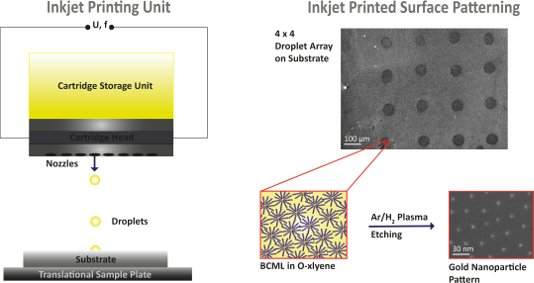
- droplets. The broad distribution of droplet diameter on the NiTi foil might also be due to dirt particles on the surface as shown by the bright spots in the AFM image in Figure 5D. Another factor that might also influence the droplet diameter is the surface texture of NiTi on copper (Figure 3E). There is a
- ), the gold nanoparticles arrange themselves in the grooves of the material texture (see Figure 3B1–E1). The NND of these samples, shown in Figure 6, is given for the gold nanoparticles at the boundaries. For better comparison of nanopatterned surfaces with established techniques, the NND for spin-coated
- result of the distinct arrangement of the gold nanodots in the texture-induced grooves on these samples. The distribution for the sputtered NiTi thin film differs from the other samples. The mean NND here is about 27 nm and 50% of the data set for this sample has a small variation of 10 nm. However, the


Performance analysis of rigorous coupled-wave analysis and its integration in a coupled modeling approach for optical simulation of complete heterojunction silicon solar cells
Beilstein J. Nanotechnol. 2018, 9, 2315–2329, doi:10.3762/bjnano.9.216
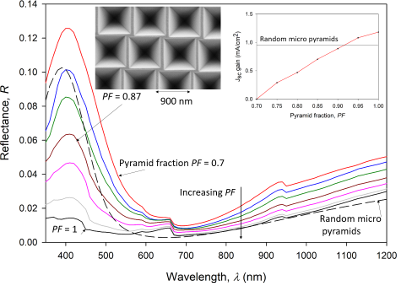
- substructure of the solar cell, including the texture, thin passivation and contact layers. Inverted pyramidal textures of different sizes were included in the simulations. The simulations rapidly converge as long as the textures are small (in the (sub)micrometer range), while for larger microscale textures
- (feature sizes of a few micrometers), this is not the case. Small textures were optimized to decrease the reflectance, and consequently, increase the absorption in the active layers of the solar cell. Decreasing the flat parts of the texture was shown to improve performance. For simulations of structures
- our previous work presented in [20] and to other coupling approaches such as the OPTOS matrix formulation [21], our CMA was used for the simulation of the solar cell structure including a double (nano + micro) texture. Modeling Rigorous coupled-wave analysis method RCWA, also called the Fourier modal


Induced smectic phase in binary mixtures of twist-bend nematogens
Beilstein J. Nanotechnol. 2018, 9, 1297–1307, doi:10.3762/bjnano.9.122
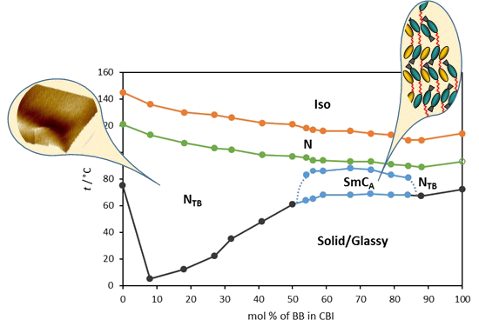
- ]. The N–NTB phase transition has been confirmed observing characteristic blocky texture from which polygon and rope textures developed. The X-ray diffraction (XRD) measurements in both nematic phases show that the d value for the maxima of the inner scattering in the nematic phase is at about 1.4 nm for
- characteristic texture. As can be seen in Figure 2, upon addition of BB to CBI, the Iso–N, as well as the N–NTB transition temperatures, decrease linearly with increasing BB content. In terms of a molecular field theory developed to predict phase diagrams for binary mixtures of nematics [19], this suggests that
- with BB. On cooling from the isotropic liquid, mixtures containing less than 50 mol % of BB show the nematic and the NTB phase identified by marble (Figure 3a) and polygonal texture (Figure 3b), respectively. Further cooling resulted in increased viscosity and vitrification with no change in texture




Formation and development of nanometer-sized cybotactic clusters in bent-core nematic liquid crystalline compounds
Beilstein J. Nanotechnol. 2018, 9, 1288–1296, doi:10.3762/bjnano.9.121
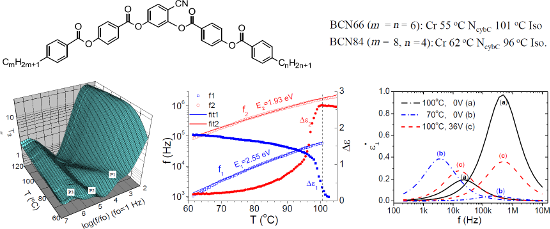
- homogeneously planar texture using polarized optical microscopy (POM). Figure 4 shows POM textures with different applied AC and DC voltages. An application of a 100 Hz square wave voltage above an amplitude of 10 V causes turbulent convection with domains of different shapes appearing in the cell. A study of
- clusters (open black squares) in the bulk nematic phase, FC. Polarized optical microscopy (POM) texture of a 7.8 µm BCN66 cell with an applied peak voltage of an AC square wave of 100 Hz. The original left-most texture is not affected by the AC voltage applied up to 10 V. Other textures were taken at the


Understanding the performance and mechanism of Mg-containing oxides as support catalysts in the thermal dry reforming of methane
Beilstein J. Nanotechnol. 2018, 9, 1162–1183, doi:10.3762/bjnano.9.108
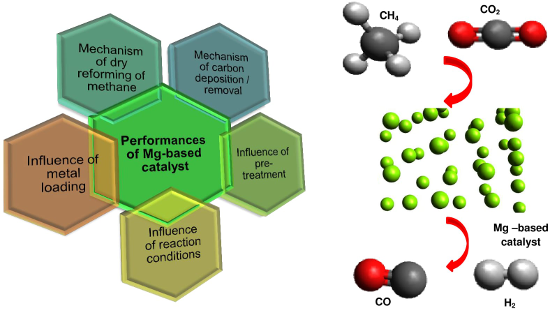
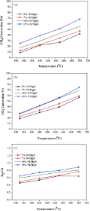
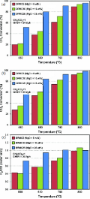
- alkaline properties and thermal stability of MgO, which is more suitable for CO2 and CH4 adsorption. In fact, MgO offers low surface area, which could further be improved, and yields optimum texture properties with a combination of alumina [45][114][115][116][117]. Based on the investigation of the






An implementation of spin–orbit coupling for band structure calculations with Gaussian basis sets: Two-dimensional topological crystals of Sb and Bi
Beilstein J. Nanotechnol. 2018, 9, 1015–1023, doi:10.3762/bjnano.9.94
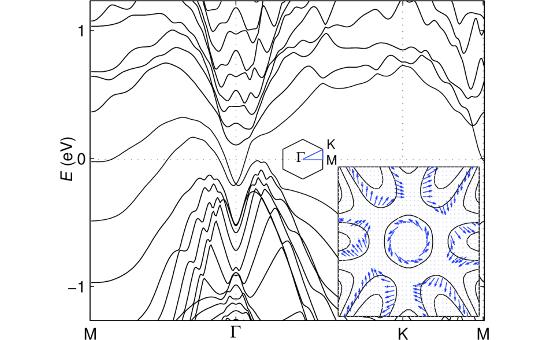
- antimonene including SOC, as obtained with the small-core pseudopotential basis set and the same enhancement factor as in the previous section. The results compare rather well down to any practical detail with those reported in the literature. In the inset of Figure 5 we show that the spin texture of the
- reference, thin gray curves indicate the bands before adding SOC. The same lattice structure relaxed with VASP has been used for all cases. Band structure of 9 layers, ABC stacking Sb(111) films as obtained from small core pseudopotential basis. The spin texture around the Γ point is presented in the inset


Comparative study of sculptured metallic thin films deposited by oblique angle deposition at different temperatures
Beilstein J. Nanotechnol. 2018, 9, 954–962, doi:10.3762/bjnano.9.89
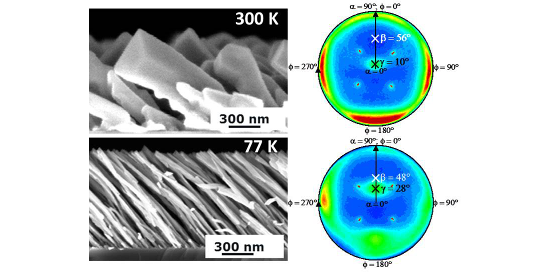
- temperature affect the columnar tilt angles and the porosity of the sculptured thin films. Exemplarily for tilted Al columns deposited at 77 K and at 300 K, in-plane pole figure measurements are carried out. A tendency to form a biaxial texture as well as a change in the crystalline structure depending on the
- substrate temperature is found for those films. Keywords: biaxial texture; metallic tilted columns; oblique angle deposition; porosity; shadowing; thin films; Introduction The ability to produce highly porous metallic thin films is a substantial issue for a large number of applications [1]. For instance
- columnar morphology, the relation between tilt angle β, porosity P and incidence angle θ is in focus of this paper. Further, the influence of surface diffusion and changes in the crystalline structure are studied. Results and Discussion Morphology and texture Figure 1 shows tilted Al columns that are



A review of carbon-based and non-carbon-based catalyst supports for the selective catalytic reduction of nitric oxide
Beilstein J. Nanotechnol. 2018, 9, 740–761, doi:10.3762/bjnano.9.68

Synthesis and characterization of two new TiO2-containing benzothiazole-based imine composites for organic device applications
Beilstein J. Nanotechnol. 2018, 9, 721–739, doi:10.3762/bjnano.9.67
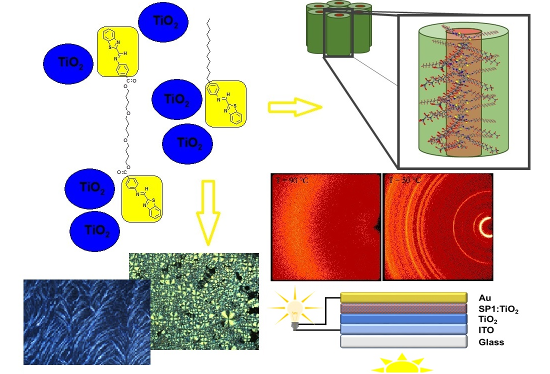
- intense peak at lower temperature is connected with the transition between two crystalline phases. For SP1 there is only one texture and one peak at 66.31 °C in the DSC curve on heating with the rate of 10 °C/min. Additionally, SP1 was measured during heating and cooling with increasing rates, because at
- temperatures of both imines addition of TiO2 to SP2 imine significantly changed the POM texture of imine values of the energy gap and HOMO–LUMO levels of both imines decreased with increasing addition of titanium dioxide TiO2 has an influence on the structural properties of SP1 and SP2 imines the imine:TiO2






Cyclodextrin-assisted synthesis of tailored mesoporous silica nanoparticles
Beilstein J. Nanotechnol. 2018, 9, 693–703, doi:10.3762/bjnano.9.64
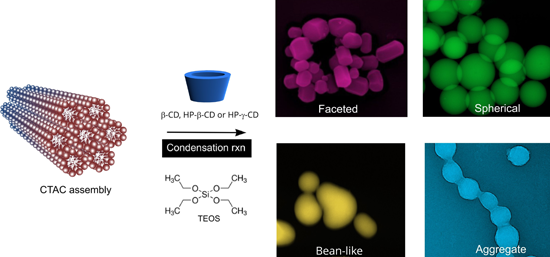
- with a size of about 170 nm were produced. A further increase in the CTAC concentration led to smaller, connected nanoparticles in the range of 110–130 nm. A similar change in particle morphology was reported for the CD-free MSN samples synthesized at various CTAB contents, where the sample texture


Engineering of oriented carbon nanotubes in composite materials
Beilstein J. Nanotechnol. 2018, 9, 415–435, doi:10.3762/bjnano.9.41
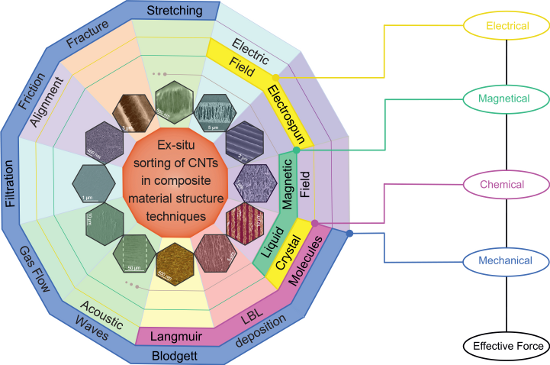
- hard, solid or powder, biological, and organic or inorganic surfaces. This device can measure geometric morphology, adhesion distribution, friction, surface impurities, texture, elasticity, magnetism, chemical bonding forces, distribution of electric charges and electric polarization in different parts


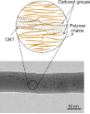
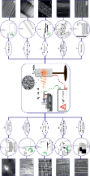


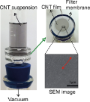


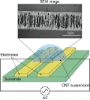


Photocatalytic and adsorption properties of TiO2-pillared montmorillonite obtained by hydrothermally activated intercalation of titanium polyhydroxo complexes
Beilstein J. Nanotechnol. 2018, 9, 364–378, doi:10.3762/bjnano.9.36
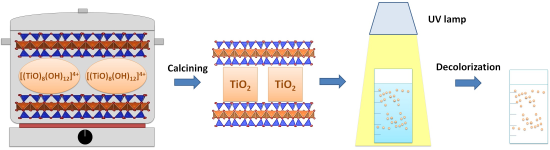
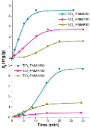
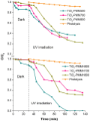
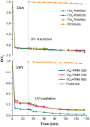
- and temperature on structural, textural, and adsorption properties and UV photocatalytic activity of the produced TiO2-pillared MM samples is assessed. Results and Discussion Structure and texture of TiO2-pillared materials Figure 1 shows small-angle diffractograms for the initial MM sample and that






Periodic structures on liquid-phase smectic A, nematic and isotropic free surfaces
Beilstein J. Nanotechnol. 2018, 9, 342–352, doi:10.3762/bjnano.9.34
- directly after the stripe formation. Generally, the stripe texture becomes smoother. Figure 8 shows the stripe formation on the free surface of the nematic phase at T = 38 °C. Directly after heating to 38 °С, the surface structure is homogeneous. Shortly after, a periodic striped structure perpendicular to
- . Figure 9 shows the stripe structure formation on the surface of the isotropic liquid, 8CB, at 46 °С. The contrast of this stripe texture is weaker than in the SmA phase. The stripe periodicity in the isotropic liquid is approximately the same as in the nematic phase. Discussion The comparison of optical
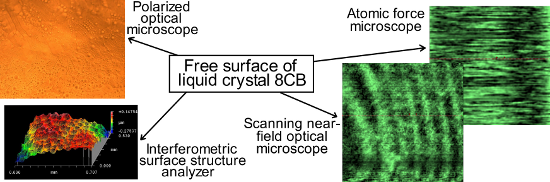
- , ISSA, SNOM, AFM. The applicability of surface-sensitive tools for liquid crystals was reviewed. We observed a periodic order of FCDs in one-dimensional chains. A periodic stripe texture is observed in SmA, nematic phases and isotropic liquid in 8CB. The periodic images of the probe depend on the









Design of polar self-assembling lactic acid derivatives possessing submicrometre helical pitch
Beilstein J. Nanotechnol. 2018, 9, 333–341, doi:10.3762/bjnano.9.33
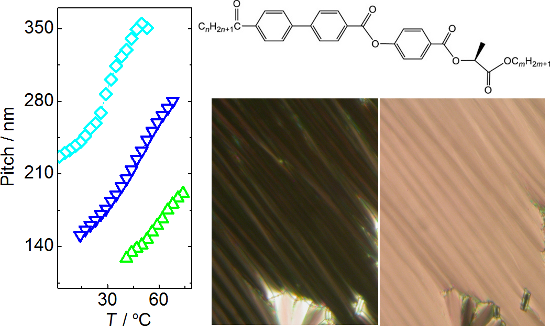
- and the same length of non-chiral terminal chain. For all compounds the SmC* phase remains quite stable also at its supercooled state, i.e., below the melting point; the crystallisation does not occur even under an applied electric field. Moreover, the uniform alignment of the SmC* phase texture is





