Search results
Search for "trapping" in Full Text gives 185 result(s) in Beilstein Journal of Nanotechnology.
Unravelling the interfacial interaction in mesoporous SiO2@nickel phyllosilicate/TiO2 core–shell nanostructures for photocatalytic activity
Beilstein J. Nanotechnol. 2020, 11, 1834–1846, doi:10.3762/bjnano.11.165
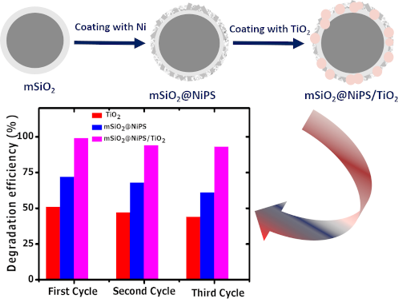
- electron in the CB of TiO2 can be transferred to the CB of mSiO2@NiPS, whereby the latter acts as an electron trap (Figure 6b). The electron traps create more free holes that can form reactive hydroxyl radicals, which further degrade the MV dye [52]. The electron trapping process could also increase the


Nanocasting synthesis of BiFeO3 nanoparticles with enhanced visible-light photocatalytic activity
Beilstein J. Nanotechnol. 2020, 11, 1822–1833, doi:10.3762/bjnano.11.164
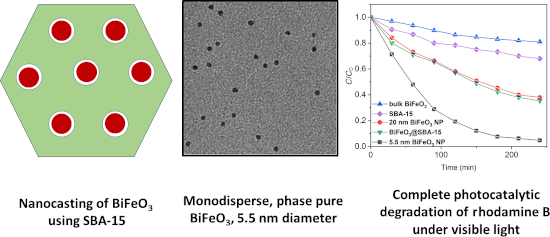
- radical trapping experiments. Keywords: bismuth ferrite (BiFeO3); dye; nanocasting; nanoparticles; photocatalysis; rhodamine B; SBA-15; Introduction In the face of a continuously growing demand, the production of safe and readily available water is one of the biggest challenges humanity is facing
- photocatalytic activity almost ceased entirely under basic conditions at pH 9 due to the repulsive interactions of the formed carboxylate anions of the dye molecule with the catalyst surface (see above). We then investigated the reaction mechanism by determining the active species. A series of trapping




Absorption and photoconductivity spectra of amorphous multilayer structures
Beilstein J. Nanotechnol. 2020, 11, 1757–1763, doi:10.3762/bjnano.11.158
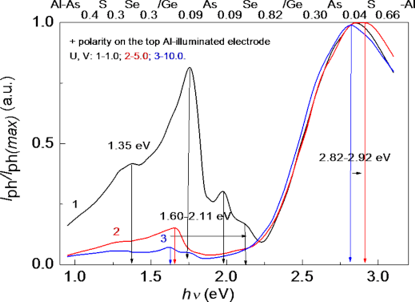
- mono- and bimolecular and that the transport is controlled through multiple trapping processes with exponential distribution of the localized states in the bandgap. Regarding the physics and applications of chalcogenide materials, multilayered amorphous thin-film structures are especially interesting


Seebeck coefficient of silicon nanowire forests doped by thermal diffusion
Beilstein J. Nanotechnol. 2020, 11, 1707–1713, doi:10.3762/bjnano.11.153
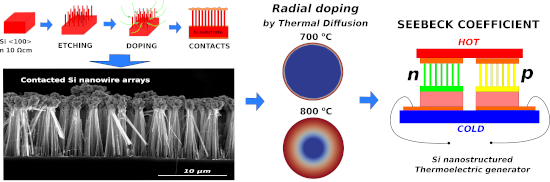
- require an oxidation of the surface for the trapping of the doping species. However, the reduction of the thermal conductivity, which is the aim of the nanoscale structuring, relies on the roughness of the nanowire surfaces, and the smoothing produced by the oxide growth would heavily reduce this effect


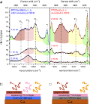
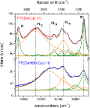
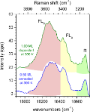
The influence of an interfacial hBN layer on the fluorescence of an organic molecule
Beilstein J. Nanotechnol. 2020, 11, 1663–1684, doi:10.3762/bjnano.11.149





Electrokinetic characterization of synthetic protein nanoparticles
Beilstein J. Nanotechnol. 2020, 11, 1556–1567, doi:10.3762/bjnano.11.138
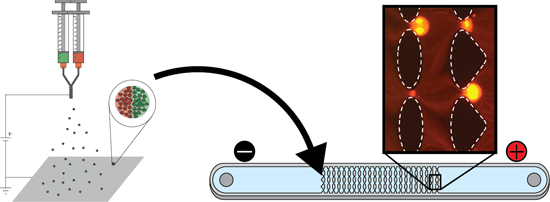
- separation experiments. The unique particle-dependent parameter EEEC can predict the required particle trapping voltage in any insulator-based EK device. A modified version of the EEEC, called empirical EEEC (eEEEC) can be obtained with a less labor-intensive procedure by employing devices with insulating
- studies [36][37][38] have demonstrated the potential of DEP for macromolecule manipulation. However, EK microscale techniques for protein manipulation are still being developed. The Ros group has reported both the trapping and streaming of protein particles with devices containing insulating posts on the
- voltage at which SPNPs will become trapped in an insulator-based EK device. Moreover, homogeneous particles with a higher content of BSA showed lower trapping voltage values. The results also indicate that particle anisotropy plays an important role in determining the trapping voltage, as 50:50



Wafer-level integration of self-aligned high aspect ratio silicon 3D structures using the MACE method with Au, Pd, Pt, Cu, and Ir
Beilstein J. Nanotechnol. 2020, 11, 1439–1449, doi:10.3762/bjnano.11.128
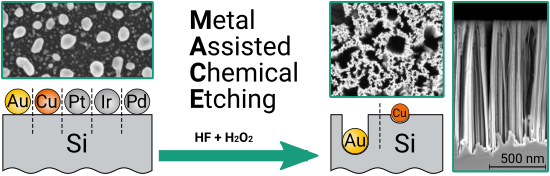
- random structures are typically vertically aligned nanowires, also called nanorods. Silicon nanowire arrays can be designed to have a low reflectance of about 1% in a broad spectral range, depending on their geometry. These silicon structures exhibit efficient light trapping because photons are scattered


Thermophoretic tweezers for single nanoparticle manipulation
Beilstein J. Nanotechnol. 2020, 11, 1126–1133, doi:10.3762/bjnano.11.97
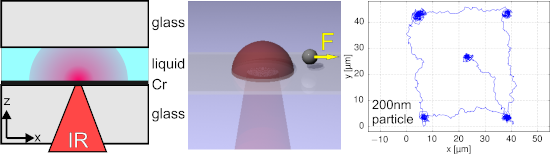
- Jost Stergar Natan Osterman Faculty of Mathematics and Physics, University of Ljubljana, Jadranska 19, Ljubljana, Slovenia J. Stefan Institute, Jamova 39, Ljubljana, Slovenia 10.3762/bjnano.11.97 Abstract We present the trapping and manipulation of a single nano-object in an aqueous medium by
- modeling gives a quantitative prediction of the effect. Traps can be dynamically created and relocated, which we demonstrate by the controlled independent manipulation of two nanoparticles. Keywords: laser; microfluidics; nano-manipulation; thermophoresis; trapping; tweezers; Introduction In science and
- technology, there is an incessant need, or at least a desire, for a (contactless) manipulation of small objects, such as nanoparticles, molecules, or even single atoms. In this work we present an approach to the thermophoretic trapping of particles in dynamic temperature gradients induced through laser


Highly sensitive detection of estradiol by a SERS sensor based on TiO2 covered with gold nanoparticles
Beilstein J. Nanotechnol. 2020, 11, 1026–1035, doi:10.3762/bjnano.11.87
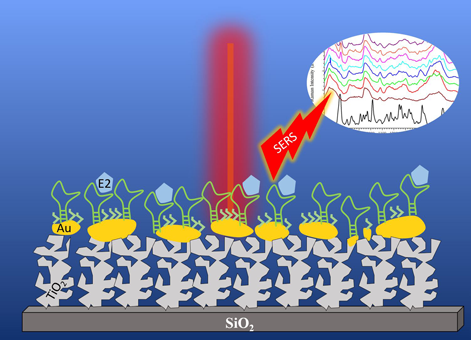
- use of composite systems of dielectrics (TiO2, ZnO) and metallic NPs has gathered increasing attention regarding SERS applications, because the plasmonic enhancement provided by metallic NPs can be combined with the optical properties of the semiconductor such as light trapping, scattering, and
- abovementioned influence of the TiO2 surface on the size of the Au NPs (and consequently their plasmonic properties), a first hint can be found in the optical properties of semiconductor nanostructured materials. Their light-scattering, light-trapping and antireflection abilities, have already been reported to



Integrated photonics multi-waveguide devices for optical trapping and Raman spectroscopy: design, fabrication and performance demonstration
Beilstein J. Nanotechnol. 2020, 11, 829–842, doi:10.3762/bjnano.11.68
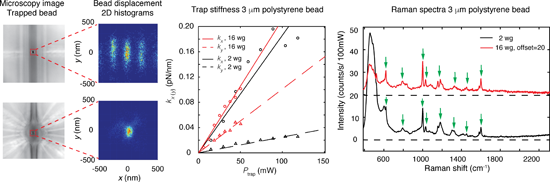
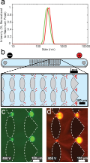
- International B.V., P.O. Box 456, 7500 AL, Enschede, Netherlands 10.3762/bjnano.11.68 Abstract We realized integrated photonics multi-waveguide devices for optical trapping and Raman spectroscopy of particles in a fluid. In these devices, multiple beams directed towards the device center lead to a local field
- enhancement around this center and thus counteract the effect of light concentration near the facets, which is a disadvantage of dual-waveguide traps. Thus, a trapping region is created around the center, where a single particle of a size in a wide range can be trapped and studied spectroscopically, free from
- the influence of surfaces. We report the design (including simulations), fabrication and performance demonstration for multi-waveguide devices, using our Si3N4 waveguiding platform as the basis. The designed ridge waveguides, optimized for trapping and Raman spectroscopy, emit narrow beams. Multiple


Hexagonal boron nitride: a review of the emerging material platform for single-photon sources and the spin–photon interface
Beilstein J. Nanotechnol. 2020, 11, 740–769, doi:10.3762/bjnano.11.61
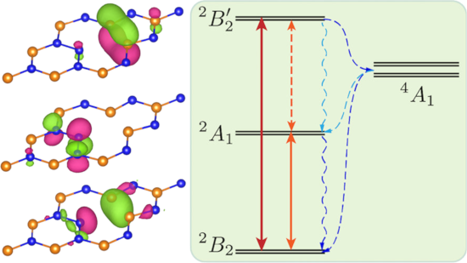
- nanopillars on Si substrates [124]. In this case, the SPEs are activated due to potential wells induced by material deformation trapping carrier, localized near the points where the h-BN film reaches the highest curvature (see Figure 4). Here the emission has PL mostly in the 540 nm region with more




Multilayer capsules made of weak polyelectrolytes: a review on the preparation, functionalization and applications in drug delivery
Beilstein J. Nanotechnol. 2020, 11, 508–532, doi:10.3762/bjnano.11.41
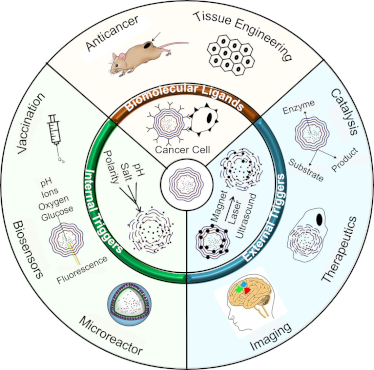
- thickening at elevated temperatures was responsible for trapping the macromolecules inside the capsules. The hydrophobic molecules could be loaded into multilayer capsules by changing the state of the capsules from open to closed via a polarity change [73]. Alternatively, water soluble, positively charged
- polymeric structure [87]. The pH control helped the self-assembled capsules in precipitation and dissolution by trapping of guest molecules inside. Furthermore, it led to a new strategy involving hydrogen bonding and carbamate chemistry (between carbon dioxide and amines) which resulted in supramolecular



Synthesis and enhanced photocatalytic performance of 0D/2D CuO/tourmaline composite photocatalysts
Beilstein J. Nanotechnol. 2020, 11, 407–416, doi:10.3762/bjnano.11.31
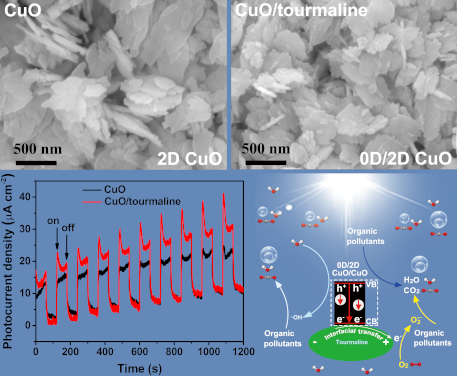
- ability. Trapping experiments were carried out to verify the predominant reactive species that participated in the photocatalytic organic oxidation reactions. •OH, O2•−, and h+ were trapped by TBA, BQ, and EDTA, respectively [40][41]. Judging from Figure 6d, the addition of TBA, BQ, and EDTA resulted in a
- reactive species in the CuO/tourmaline composite aqueous suspensions by using DMPO as a trapping agent. As shown in Figure 6e and 6f, no EPR signals were observed in the absence of light irradiation. When exposed to light irradiation, the intensity of both DMPO-O2•− and DMPO-•OH adducts for the CuO


Implementation of data-cube pump–probe KPFM on organic solar cells
Beilstein J. Nanotechnol. 2020, 11, 323–337, doi:10.3762/bjnano.11.24
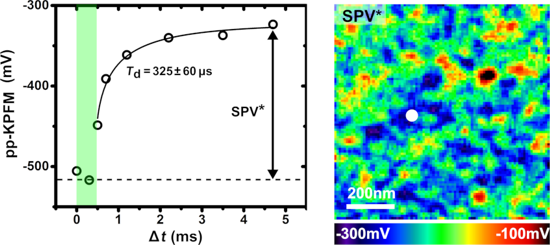
- compositional and/or morphological heterogeneities generating the dark-state SP and SPV contrast play also a key role in the photocarrier trapping process. A reasonable (yet to be definitely confirmed) scenario could invoke the existence of non-percolating PC71BM clusters acting as trapping centers. Such an





Improved adsorption and degradation performance by S-doping of (001)-TiO2
Beilstein J. Nanotechnol. 2019, 10, 2116–2127, doi:10.3762/bjnano.10.206
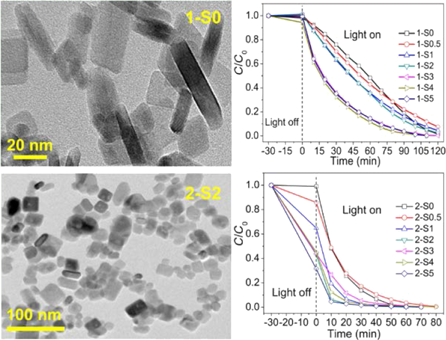
- concentration, because S has more outer shell electrons than Ti. If the electrons and holes were both transferred to the surface of the TiO2 particles, the •O2− signal would be stronger than the •OH signal; however, this is not the case, which could be due to trapping of electrons by impurities or defects




Long-term entrapment and temperature-controlled-release of SF6 gas in metal–organic frameworks (MOFs)
Beilstein J. Nanotechnol. 2019, 10, 1851–1859, doi:10.3762/bjnano.10.180
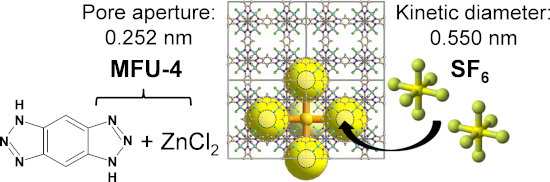
- temperature, vacuum and acid-induced framework decomposition was also investigated. The controlled gas release using elevated temperature has the additional benefit that the host MOF can be reused for further gas capture cycles. Keywords: benzobistriazole; gas storage; kinetic trapping; metal–organic
- include tuning the pore properties, such as polarity, or introducing open metal sides for a better interaction between the guest and host material [5][7][11]. Recently, we reported on an alternative approach which dealt with kinetic trapping of gas molecules in MOFs [12]. This approach is based on using
- cubic crystal system and contains two types of cavities with diameters of 3.88 and 11.94 Å, which are connected by narrow (only 2.52 Å) pore apertures. This made the MOF a promising candidate for kinetic trapping of gases. In our recent work we were able to show that it was possible to trap over 40 wt


Unipolar magnetic field pulses as an advantageous tool for ultrafast operations in superconducting Josephson “atoms”
Beilstein J. Nanotechnol. 2019, 10, 1548–1558, doi:10.3762/bjnano.10.152
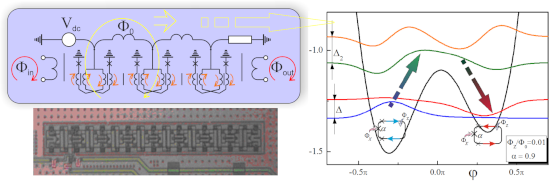
- regime when the population of the upper level is explicitly equal to zero because of the coherent trapping of population in the two qubit states due to the Raman Λ-type transitions induced by the magnetic field pulse. Results and Discussion Ultrafast operations in the case of blocked direct transitions
- when the whole population is trapped in the qubit states and the population of the upper state |φ3⟩ is equal to zero. Such a regime is referred to as a coherent population trapping known for real atomic systems in optical electromagnetic pulses [29]. If such state is chosen as the initial state, no


Construction of a 0D/1D composite based on Au nanoparticles/CuBi2O4 microrods for efficient visible-light-driven photocatalytic activity
Beilstein J. Nanotechnol. 2019, 10, 1360–1367, doi:10.3762/bjnano.10.134
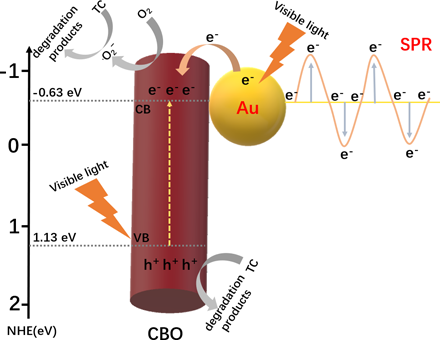
- , and the electron trapping also increases leading to a decreased photocatalytic activity [37][38]. Figure 6b shows the absorption of TC under the visible-light irradiation. When the solution is irradiated with visible light, the absorption of TC decreases faster. Figure 6c shows the apparent rate
- ). Thus, O2 can be captured and reduced to •O2− to degrade TC, while the holes in the VB of CBO can directly oxidize TC [10], which is consistent with the results of the trapping experiments (Figure 8). To sum up, the construction of 0D/1D heterojunction is conducive to the effective separation of
- visible-light irradiation. Trapping of reactive species during the photodegradation of TC over 2.5 wt % Au/CBO composite under visible-light irradiation. Possible photocatalytic reaction mechanism of the 0D/1D Au/CBO heterojunction photocatalyst during TC degradation under visible-light irradiation


Quantitative analysis of annealing-induced instabilities of photo-leakage current and negative-bias-illumination-stress in a-InGaZnO thin-film transistors
Beilstein J. Nanotechnol. 2019, 10, 1125–1130, doi:10.3762/bjnano.10.112
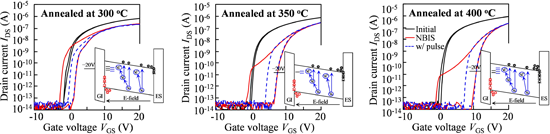
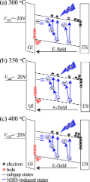
- is applied, the hysteresis values are 1.58, 2.75, and 2.66 V corresponding for the devices treated at 300, 350, and 400 °C, respectively. The total hysteresis induced by NBIS consists of defect-state generation in the bulk and hole trapping at the interface. The contribution of excited defect states


Trapping polysulfide on two-dimensional molybdenum disulfide for Li–S batteries through phase selection with optimized binding
Beilstein J. Nanotechnol. 2019, 10, 774–780, doi:10.3762/bjnano.10.77
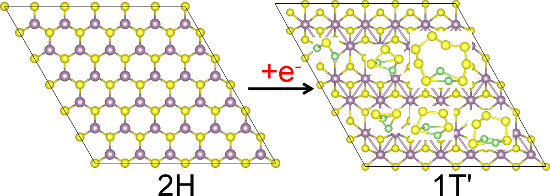
- energies of Li2Sx absorbed on 1T'-MoS2 monolayer are in the range of 0.31–2.94 eV, which is much higher than on the 2H-phase. The 1T'-MoS2 monolayer shows stronger trapping ability for Li2Sx than the 2H-MoS2 monolayer. The 1T'-MoS2 monolayer can be used as effective anchoring material in cathodes for Li–S
- 2.082, 2.213, 2.307, 2.333, 2.359, 2.354, and 2.330 Å for Li2S, Li2S2, Li2S3, Li2S4, Li2S5, Li2S6, and Li2S8, respectively. Li2S and Li2S2 have C2v symmetry, Li2Sx (x = 3–8) has C2 symmetry, and S8 with a puckered ring structure has a D4d symmetry. The trapping of Li2Sx on 2H-MoS2 and 1T'-MoS2
- , the binding energy decreases from 2.94 to 0.64 eV. The 1T'-MoS2 monolayer shows stronger trapping ability for Li2Sx than the 2H-MoS2 monolayer. The orbital-decomposed band structures of 2H-MoS2 and 1T'-MoS2 monolayers are shown in Figure 1c and Figure 1d, respectively. The unoccupied lowest conduction


Features and advantages of flexible silicon nanowires for SERS applications
Beilstein J. Nanotechnol. 2019, 10, 725–734, doi:10.3762/bjnano.10.72

- poly(methyl methacrylate) (PMMA) [14]. However, apart from the flexible substrates, also flexible nanostructures are reported on conventional, solid SERS substrates [19][20][21]. In these reports, vertically oriented silicon nanopillars in contact with a liquid would lean towards each other, trapping


Ceria/polymer nanocontainers for high-performance encapsulation of fluorophores
Beilstein J. Nanotechnol. 2019, 10, 522–530, doi:10.3762/bjnano.10.53
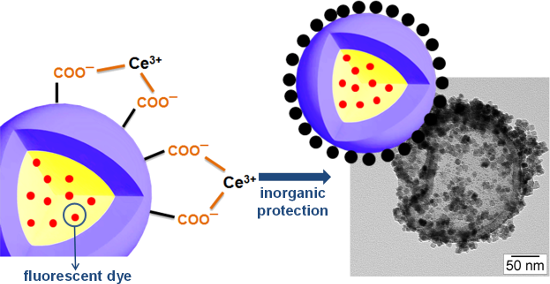
- atmosphere. The enhancement effect can be explained by the trapping of the quenching oxygen molecules on the metal oxide surface, which results in a reduction of the photo-oxidation. Schematic representation of the formation of cerium(IV) oxide on the surface of carboxylate functionalized fluorescent


Polymorphic self-assembly of pyrazine-based tectons at the solution–solid interface
Beilstein J. Nanotechnol. 2019, 10, 494–499, doi:10.3762/bjnano.10.50
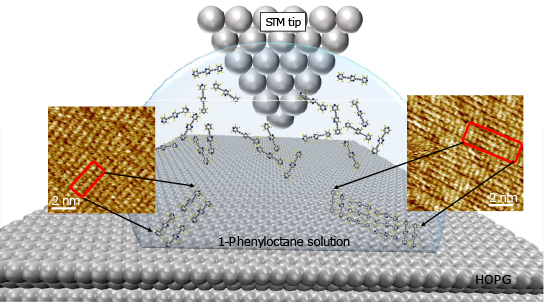
- stabilization energies for the two polymorphs, or kinetic trapping effects. Results and Discussion 2,5-Bis(pyridin-4-ylethynyl)pyrazine (1) reported here were newly synthesized using 2,5-dibromopyrazine as the starting material. The molecule consists of two pyridyl groups covalently connected to a central
- observed polymorphs. Observation of two equally distributed polymorphs may be ascribed to their nearly equal stabilization energies, or kinetic trapping effects. These pyrazine-based molecules have shown immense potential as building blocks to several two- and three-dimensional supramolecular architectures


Ultraviolet patterns of flowers revealed in polymer replica – caused by surface architecture
Beilstein J. Nanotechnol. 2019, 10, 459–466, doi:10.3762/bjnano.10.45
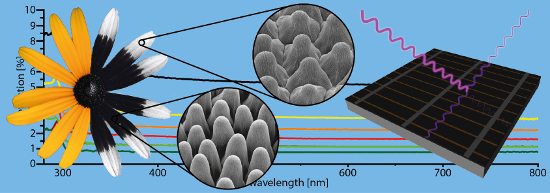
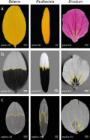
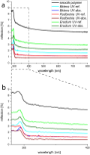
- and Exner [26] suspect that flowers with a saturated color have a better chance of being seen and therefore have higher reproduction success. It can be assumed that conical papillate cells (for the definition see [21]) increase the amount of light absorbed by the petal (light trapping), reaching the


Nanocomposite–parylene C thin films with high dielectric constant and low losses for future organic electronic devices
Beilstein J. Nanotechnol. 2019, 10, 428–441, doi:10.3762/bjnano.10.42
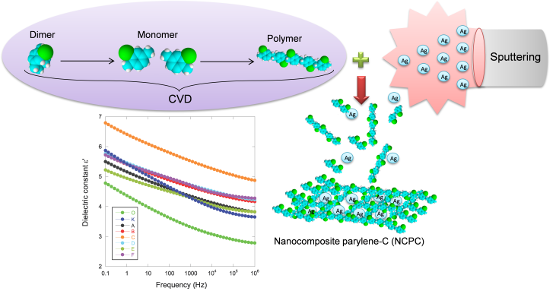
- gate dielectric, which is a crucial requirement for the performance of the OFETs and for the device reliability. Charge-carrier mobility is improved in the presence of this polymer [17]. PPXC is also an appropriate hydroxyl-free gate dielectric and prevents trapping of electrons at the semiconductor
- –dielectric interface in contrast to polymers containing hydroxyl groups such as poly(vinyl phenol) and polyimides (due to residual COOH groups) [18][19][20]. The stability of the devices, which is impacted by this charge trapping at the interfaces, is improved when parylene C is integrated in the device [21