Search results
Search for "ultrasonication" in Full Text gives 108 result(s) in Beilstein Journal of Nanotechnology.
Magnetism and magnetoresistance of single Ni–Cu alloy nanowires
Beilstein J. Nanotechnol. 2018, 9, 2345–2355, doi:10.3762/bjnano.9.219
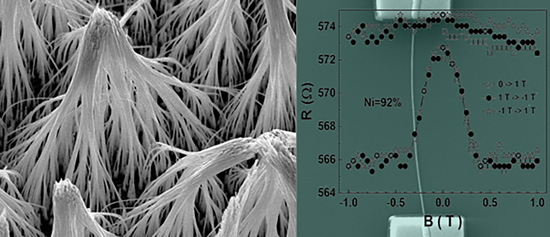
- successively in chloroform and dichloromethane. Further, by ultrasonication, the nanowires were transferred in ultrapure isopropanol and placed on n++-doped SiO2/Si substrates having interdigitated metallic electrodes of Ti/Au (10/90 nm). The electrodes were obtained combining photolithography (using an EVG


SO2 gas adsorption on carbon nanomaterials: a comparative study
Beilstein J. Nanotechnol. 2018, 9, 1782–1792, doi:10.3762/bjnano.9.169
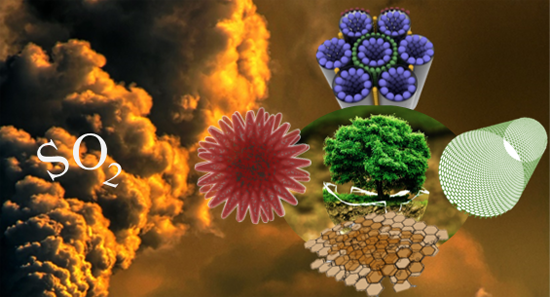
- the study: a) CNHs, b) MWNTs, c) high-magnification image of MWNTs revealing their unordered, felt-like structure, d) VACNTs revealing their alignment, e) unordered SWNTs, f) Norit R1 Extra. a) TEM image of VACNTs obtained after unhinging from the substrate and dispersed in ethanol by ultrasonication


Electrodeposition of reduced graphene oxide with chitosan based on the coordination deposition method
Beilstein J. Nanotechnol. 2018, 9, 1200–1210, doi:10.3762/bjnano.9.111
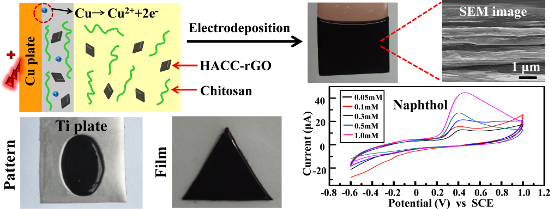
- of modified rGO HACC-rGO was prepared using a previously reported method [29]. Briefly, 100 mg of GO was dispersed in 30 mL of 0.05 M NaOH solution by ultrasonication, and the GO dispersion was added in 100 mL of HACC aqueous solution (0.1% w/v) to generate HACC-GO. Then the pH of the solution was
- obtain HACC-rGO. Preparation of HACC-rGO and chitosan deposition solution The HACC-rGO dispersion (0.6% w/v) was prepared by adding the above described HACC-rGO powder in distilled water, followed by ultrasonication for 20 min. The chitosan solution (2.0% w/v) was prepared by dissolving the chitosan


Understanding the performance and mechanism of Mg-containing oxides as support catalysts in the thermal dry reforming of methane
Beilstein J. Nanotechnol. 2018, 9, 1162–1183, doi:10.3762/bjnano.9.108
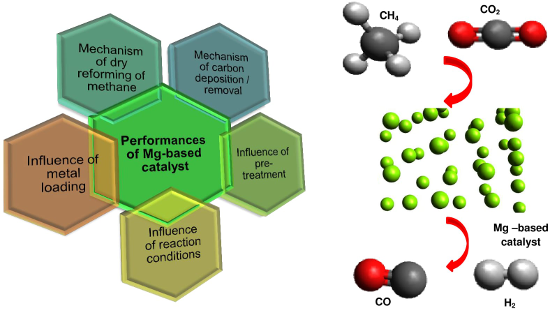
- ] studied the synthesis of Ce in Ni–Mg–Al layered double hydroxides by co-precipitation using ultrasonication. Sonication significantly increased not only the specific surface area but also the incorporation of Ce in the structure. In fact, the ultrasonication method guarantees a uniform distribution of






Synthesis and characterization of two new TiO2-containing benzothiazole-based imine composites for organic device applications
Beilstein J. Nanotechnol. 2018, 9, 721–739, doi:10.3762/bjnano.9.67
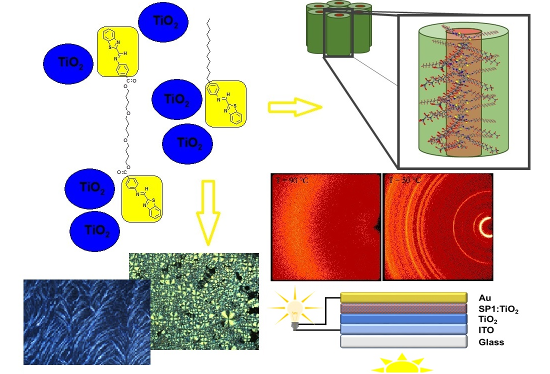
- )/Au multilayer structures. First, the ITO-coated glass substrate was cleaned by ultrasonication in acetone and isopropanol for ≈20 min and oxygen plasma for 30 s. TiO2 (3Dnano P25, average particle size 21 ± 5 nm, mixed rutile (20%)/anatase (80%) phases, and a surface area of 50 m2/g) was mixed with






Perovskite-structured CaTiO3 coupled with g-C3N4 as a heterojunction photocatalyst for organic pollutant degradation
Beilstein J. Nanotechnol. 2018, 9, 671–685, doi:10.3762/bjnano.9.62
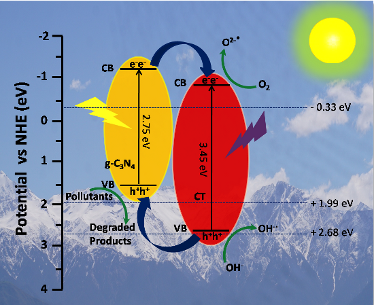
- CT flakes, the BET surface area of the resulting CTCN composite was enhanced to 50.7 m2g−1, which is larger in comparison to that of bare samples. This enhancement could be due to the exfoliation of g-C3N4 nanosheets and CT nanoflakes due to the ultrasonication process adopted in the synthesis of the


Tuning adhesion forces between functionalized gold colloidal nanoparticles and silicon AFM tips: role of ligands and capillary forces
Beilstein J. Nanotechnol. 2018, 9, 660–670, doi:10.3762/bjnano.9.61
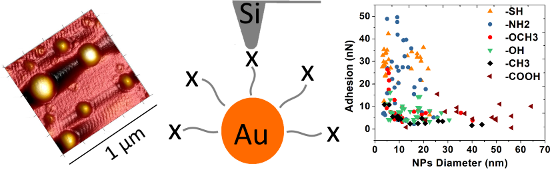
- ethanol (for hydrophilic coating) or cyclohexane (for partially and hydrophobic coating) as well as 10 μL of thiol molecules were added under ultrasonication at room temperature for 15 min. The centrifugation first enables to reduce the concentration of citrate molecules (stabilizer agent surrounding the


Anchoring Fe3O4 nanoparticles in a reduced graphene oxide aerogel matrix via polydopamine coating
Beilstein J. Nanotechnol. 2018, 9, 591–601, doi:10.3762/bjnano.9.55
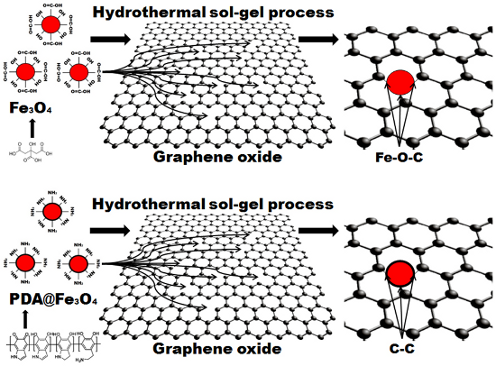
- was diluted with 500 mL of DI-H2O under stirring and 4.6 mL of 30% H2O2 was added to complete the reaction. The as prepared mixture was washed with HCl and DI-H2O and purified via multiple ultrasonication/ultracentrifugation cycles in DI-H2O. Finally, samples were centrifuged in 96% C2H5OH, decanted


Green synthesis of fluorescent carbon dots from spices for in vitro imaging and tumour cell growth inhibition
Beilstein J. Nanotechnol. 2018, 9, 530–544, doi:10.3762/bjnano.9.51
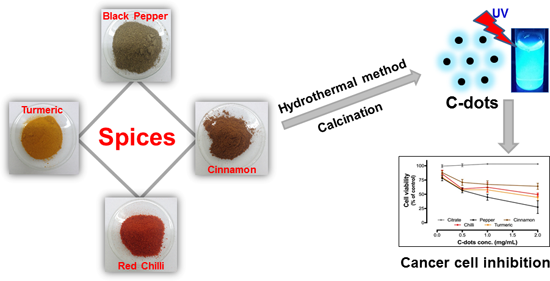
- diluted in 10 mL of ultrapure water and sonicated for 30 min at 80 kHz, 25% ultrasonication power at 30 °C temperature (Elmasonic P 30 H ultrasonicator, Elma Schmidbauer GmbH, Germany). Afterwards the mixture was stirred for 15 min followed by a hydrothermal treatment at 200 °C for 12 h using Teflon


Ultralight super-hydrophobic carbon aerogels based on cellulose nanofibers/poly(vinyl alcohol)/graphene oxide (CNFs/PVA/GO) for highly effective oil–water separation
Beilstein J. Nanotechnol. 2018, 9, 508–519, doi:10.3762/bjnano.9.49
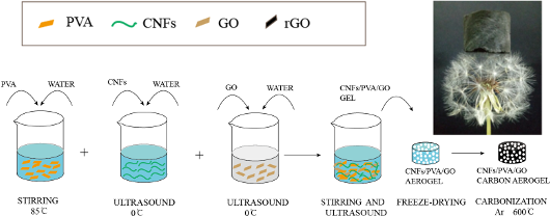
- recorded in detail in our previous research paper [40]. Then, we obtained exfoliated single-layered GO sheets in GO aqueous dispersions under ultrasonication at 80 kHz for 2 h. Preparation of poly(vinyl alcohol) solution PVA (5.0 g) was dissolved in deionized water (100 mL) with continuous stirring for 4 h


Facile synthesis of silver/silver thiocyanate (Ag@AgSCN) plasmonic nanostructures with enhanced photocatalytic performance
Beilstein J. Nanotechnol. 2017, 8, 2781–2789, doi:10.3762/bjnano.8.277
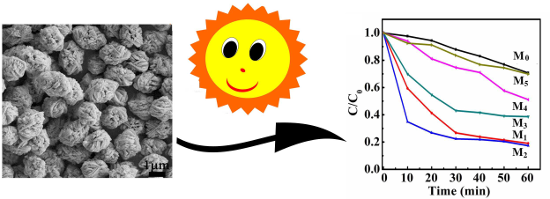
- in a vacuum drying box. Next, 0.1 g of the above-described nanostructures was dispersed in 50 mL deionized water by ultrasonication. To establish the adsorption–desorption equilibrium, the dispersion was stirred for 30 min under dark prior to the light irradiation. Then the production was performed


Impact of titanium dioxide nanoparticles on purification and contamination of nematic liquid crystals
Beilstein J. Nanotechnol. 2017, 8, 2766–2770, doi:10.3762/bjnano.8.275
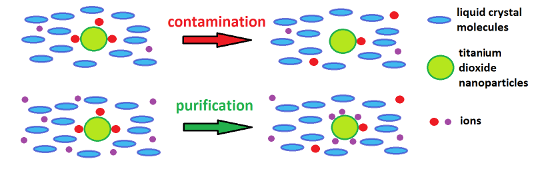
- by plasma synthesis and were not covered with any ligands. Dry NPs were added to LCs at a concentration of 0.25, 0.5 and 1 wt %. The composites were prepared in isotropic phase over one hour by ultrasonication. To estimate ion density (c) and average diffusion coefficient (D) in LC1, LC2 and their
Freestanding graphene/MnO2 cathodes for Li-ion batteries
Beilstein J. Nanotechnol. 2017, 8, 1932–1938, doi:10.3762/bjnano.8.193
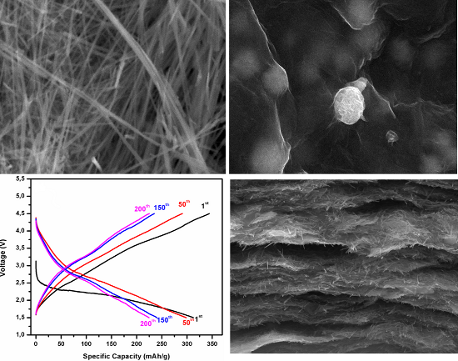
- starting material, as explained in a previous study [17]. The freestanding graphene/MnO2 cathodes were prepared via a vacuum filtration technique. Firstly, 30 mg of GO was dissolved in 50 mL distilled water by ultrasonication for 1 h to obtain GO. Then 30 mg of as-synthesized MnO2 was added to the solution


Carbon nano-onions as fluorescent on/off modulated nanoprobes for diagnostics
Beilstein J. Nanotechnol. 2017, 8, 1878–1888, doi:10.3762/bjnano.8.188
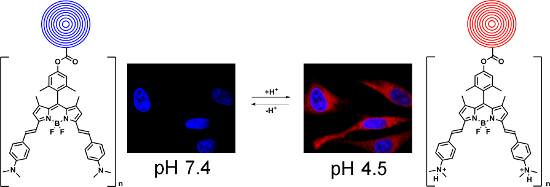
- -NDs) of 5 nm average particle diameter in a tube furnace under a positive pressure of helium at 1650 °C. oxi-CNOs A dispersion of p-CNOs (50 mg) was prepared by ultrasonication (20 min at 37 kHz) in 30 mL of a 3 M solution of nitric acid (HNO3). The solution was stirred under reflux conditions for 48
- A dispersion of oxi-CNOs (10 mg) was prepared by ultrasonication (30 min at 37 kHz) in 10 mL of anhydrous DMF. To the mixture 9.2 mg (0.08 mmol) of NHS, 12 mg (0.01 mmol) of DMAP and 14 µL of EDC were added consecutively. The reaction mixture was briefly sonicated and after the addition of 4 mg


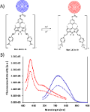


Application of visible-light photosensitization to form alkyl-radical-derived thin films on gold
Beilstein J. Nanotechnol. 2017, 8, 1863–1877, doi:10.3762/bjnano.8.187
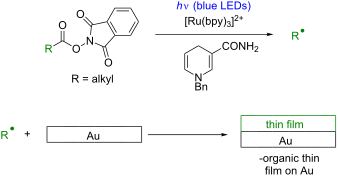
- from the photosensitized thin film deposition. Subsequent removal of the mesospheres with ultrasonication in ethanol results in the formation of nanopores with exposed substrate at the bottom. We have previously demonstrated the utility of nanopores for the measurement of film thickness using AFM
- irradiation, the reaction mixture was decanted. The Au(111) substrate was washed twice with 2 mL deionized water and twice with 2 mL 99.5% ethanol. The substrate was then ultrasonicated for 2 min in 99.5% ethanol followed by ultrasonication for 2 min in deionized water before imaging. These samples were also
- deposited on Au using the respective phthalimide esters. To accomplish thin film growth, Au(111) surfaces masked with mesospheres were immersed in solutions of phthalimide ester, benzyl nicotinamide, and the photosensitizer Ru(bpy)3Cl2 in CH3CN and irradiated for 30 min before rinsing/ultrasonication



Evaluation of preparation methods for suspended nano-objects on substrates for dimensional measurements by atomic force microscopy
Beilstein J. Nanotechnol. 2017, 8, 1774–1785, doi:10.3762/bjnano.8.179
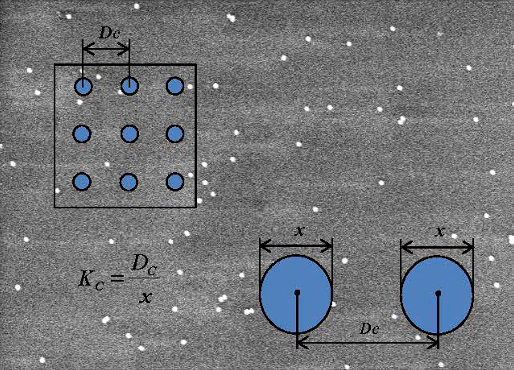
- ., cleaning) application of conditioned sample on the conditioned substrate post-conditioning of sample/substrate (e.g., sputtering) During the pre-conditioning of the sample each suspension was dispersed by ultrasonication (US bath, model SONOREX RK100, Bandelin electronic, Berlin, Germany) for between five


Nanotopographical control of surfaces using chemical vapor deposition processes
Beilstein J. Nanotechnol. 2017, 8, 1250–1256, doi:10.3762/bjnano.8.126
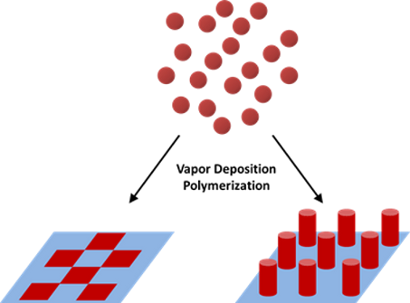
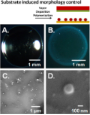
- . The colloidal template was removed by ultrasonication after deposition. Structures derived from a broad range of polymers and across a variety of length scales (down to 25 nm) could be fabricated. Selective deposition A straightforward method to selectively deposit polymers on prepatterned substrates




Surface-enhanced Raman spectroscopy of cell lysates mixed with silver nanoparticles for tumor classification
Beilstein J. Nanotechnol. 2017, 8, 1183–1190, doi:10.3762/bjnano.8.120
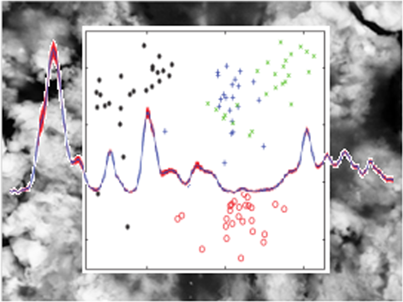
- demonstrate the principle, cell lysates were prepared by ultrasonication that disrupts the cell membrane and enables interaction of released cellular biomolecules to nanoparticles. This approach was applied to distinguish four cell lines – Capan-1, HepG2, Sk-Hep1 and MCF-7 – using SERS at 785 nm excitation
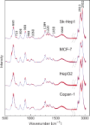
- human tumor cell lines, Capan-1, HepG2, Sk-Hep1 and MCF-7, were lysed using ultrasonication and then mixed with aggregated silver nanoparticles. The reproducibility of SERS spectra was demonstrated by preparing six batches and measuring them under the same conditions. The values of standard deviation


High photocatalytic activity of Fe2O3/TiO2 nanocomposites prepared by photodeposition for degradation of 2,4-dichlorophenoxyacetic acid
Beilstein J. Nanotechnol. 2017, 8, 915–926, doi:10.3762/bjnano.8.93
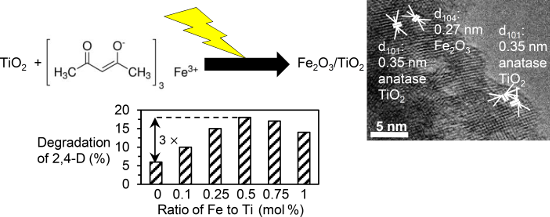
- %) were firstly dissolved in mixed solvents of water and ethanol (20 mL) by ultrasonication for few minutes. Then, the commercial Hombikat UV100 TiO2 (1 g) was dispersed in the Fe(III) acetylacetonate solution by ultrasonic mixing for 10 min. The mixture was then stirred and irradiated under a 200 W Hg−Xe


Formation and shape-control of hierarchical cobalt nanostructures using quaternary ammonium salts in aqueous media
Beilstein J. Nanotechnol. 2017, 8, 494–505, doi:10.3762/bjnano.8.53
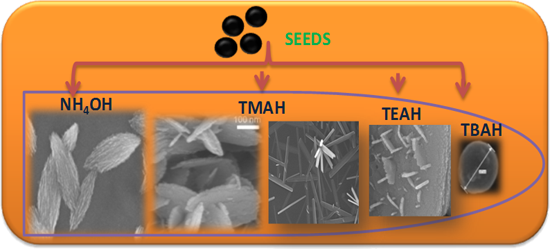
- mixture, followed by magnetic decantation and ultrasonication in the presence of either TMAH, TEAH, TBAH or NH4OH. A detailed description can be found in Supporting Information File 1. Figure S1 (Supporting Information File 1) shows the presence of cobalt in the energy dispersive X-ray spectrum. The high
- misleading conclusions and often SEM micrographs may be required for more accurate interpretation. As discussed above, the nanoplates here were formed by aging the Co-TMAH sample under zero shear. A controlled experiment was performed by allowing the growth of seeds treated with TMAH in an ultrasonication
- bath held at a temperature of 30 °C. The ultrasonication reduces the interlocking of the nanoplates (Figure 4). The typical size of the nanoplates is 260 ± 5 diameter and 34 ± 5 nm thickness. The reduced interlocking can be explained by the efficient dispersion of the nanoplates under sonication. The


The longstanding challenge of the nanocrystallization of 1,3,5-trinitroperhydro-1,3,5-triazine (RDX)
Beilstein J. Nanotechnol. 2017, 8, 452–466, doi:10.3762/bjnano.8.49
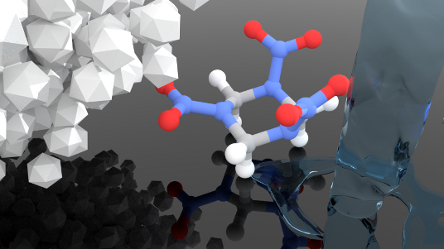
- four times by cooling from 60 to 0 °C. Pant et al. [12] used all standard techniques available to recrystallize RDX into sub-micrometer crystals in a beaker. The smallest size was obtained when the antisolvent was added to a cooled, highly supersaturated solution, while applying ultrasonication and


Nanocrystalline ZrO2 and Pt-doped ZrO2 catalysts for low-temperature CO oxidation
Beilstein J. Nanotechnol. 2017, 8, 264–271, doi:10.3762/bjnano.8.29
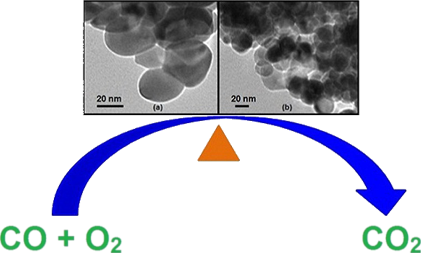
- on Tecnai G2-20 Twin (FEI) transmission electron microscope operated at 200 kV. The prepared samples were dispersed in ethanol, and after 30 min of ultrasonication they were deposited and dried on carbon-coated Cu grids. The FTIR spectra of the ZrO2 samples were recorded on a Nicolet iS50 FT-IR


From iron coordination compounds to metal oxide nanoparticles
Beilstein J. Nanotechnol. 2016, 7, 2074–2087, doi:10.3762/bjnano.7.198
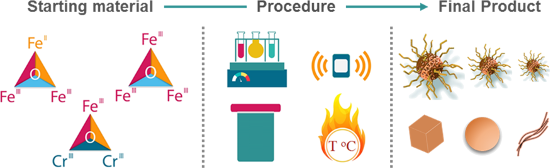
- . The bands detected in the spectra at 223, 290, 406, 609 and 659 cm−1 are similar for all samples NPM0–NPM2 and were assigned to α-Fe2O3 (hematite) [30]. Ultrasonication Iron oxide nanoparticles (NPU1–NPU2) were obtained using a similar reaction mixture as for preparation of the NPM series but
- ultrasonication. Taking into consideration the scientific and industrial interest in controlling the morphology of nanoparticles, the influence of reaction parameters on the final products was studied. With the use of thermal decomposition, we show the possibility to obtain nanoparticles of desired shape (cubic
- shown that the microwave irradiation and ultrasonication times of μ3-oxo trinuclear iron(III) acetate influences both the crystallinity and shape of nanoparticles. As a result of this apparently wide and heterogeneous investigation, we are able to design and prepare nanoparticles with well-defined shape


A dioxaborine cyanine dye as a photoluminescence probe for sensing carbon nanotubes
Beilstein J. Nanotechnol. 2016, 7, 1991–1999, doi:10.3762/bjnano.7.190
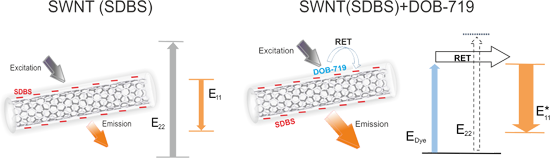
- ) water in the presence of 6.5 mg sodium dodecylbenzene sulfonate (SDBS). We selected SDBS among other ionic surfactants because of its high efficiency in dispersing SWNTs [27][28]. The above dispersions were exposed to ultrasonication (NanoRuptor, Diagenode) for 1 h at 21 kHz and 250 W. Then, the


Role of RGO support and irradiation source on the photocatalytic activity of CdS–ZnO semiconductor nanostructures
Beilstein J. Nanotechnol. 2016, 7, 1684–1697, doi:10.3762/bjnano.7.161
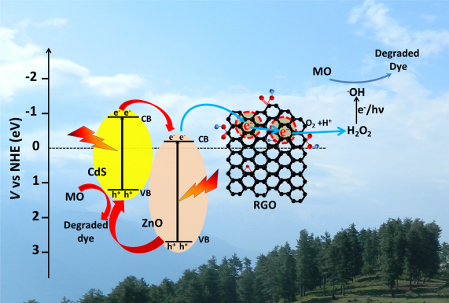
- washed with 10% HCl and then with deionized water until pH value of the filtrate was neutral. Obtained graphite oxide was subjected to ultrasonication for its exfoliation followed by centrifugation at 4500 rpm for 15 min. The final product was obtained by drying with rotary evaporator at 40 °C followed
- nanocomposite For the synthesis of the CdS–ZnO–RGO ternary nanocomposite, about 0.01 g of as prepared GO was dispersed in ethanol by ultrasonication. Then, 0.2 g of previously prepared CdS–ZnO was added to the GO solution under vigorous stirring for 2 h to obtain homogenous suspension. Once homogenization is