


Search results
Search for "vacancies" in Full Text gives 248 result(s) in Beilstein Journal of Nanotechnology. Showing first 200.
A TiO2@MWCNTs nanocomposite photoanode for solar-driven water splitting
Beilstein J. Nanotechnol. 2022, 13, 1520–1530, doi:10.3762/bjnano.13.125
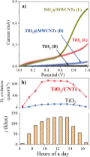
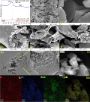
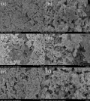
- non-smooth walls of the MWCNTs indicates the presence of defects such as vacancies, dangling bonds, interstitials, and pentagons [14]. Figure 3b shows the irregular shape of TiO2 particles smaller than 20 nm and their non-uniform distribution. In Figure 3c, some MWCNTs link with TiO2 clusters as
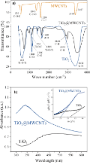
- calculated as 3.14 and 2.51 eV, respectively. The results show that the lower bandgap of TiO2@MWCNTs catalyst could derive from vacancies on the MWCNTs or the interaction between TiO2 and MWCNTs [25]. Moreover, the C–O–Ti linkages on the TiO2@MWCNs contribute to the extension of the absorption of light at a
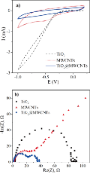
- transforms into rutile. This could be due to the carbon components on the MWCNTs acting as a robust reducing agent for facilitating the transformation from anatase to rutile TiO2 by forming oxygen vacancies [30]. Generally, the capacitance of the photoelectrochemical electrode is associated with the



Structural studies and selected physical investigations of LiCoO2 obtained by combustion synthesis
Beilstein J. Nanotechnol. 2022, 13, 1473–1482, doi:10.3762/bjnano.13.121
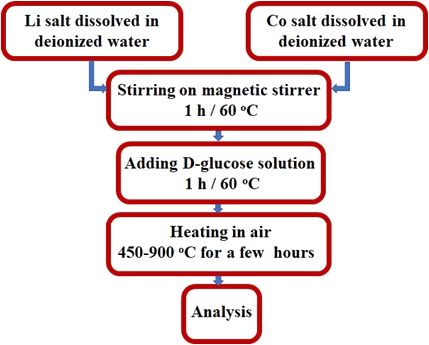
- given in the literature on the layered structure. The lattice constants depend on the fraction of vacancies and the mixing of Li/Co positions. There were no significant changes of the lattice constants a and c as functions of the temperature and size of the crystallites. Specific surface area




LED-light-activated photocatalytic performance of metal-free carbon-modified hexagonal boron nitride towards degradation of methylene blue and phenol
Beilstein J. Nanotechnol. 2022, 13, 1380–1392, doi:10.3762/bjnano.13.114
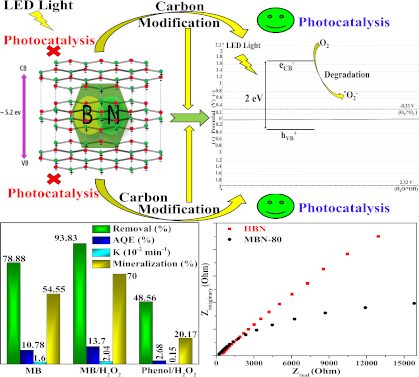
- nitrogen vacancies and formation of energy sub-bands which help in overall reduction of the bandgap energy (Eg) [14]. At the same time, the incorporation of carbon into the HBN lattice results in the delocalization of electrons with simultaneous reduction in bandgap and is directly dependent upon the


Recent trends in Bi-based nanomaterials: challenges, fabrication, enhancement techniques, and environmental applications
Beilstein J. Nanotechnol. 2022, 13, 1316–1336, doi:10.3762/bjnano.13.109
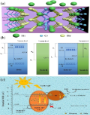
- type of halogen used. The activation of otherwise inert CO2 and H2O molecules is greatly aided by the ease with which photoinduced oxygen vacancies (OVs) are produced on the surface [25]. The excellent photocatalytic performance can be attributed to the layered crystal structures and small bandgap
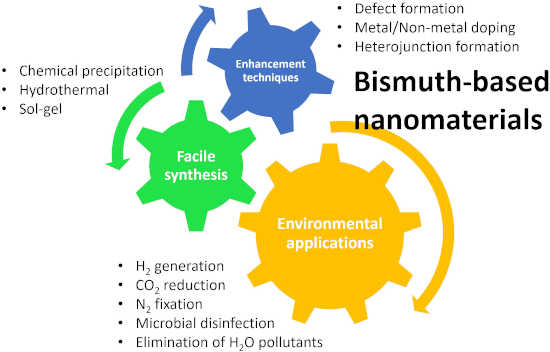
- , heterostructure formation, interface modification, and Bi-content enhancement, have been employed. Defect formation Vacancies and defects affect the electrical properties of Bi-based semiconductor photocatalysts and, hence, govern the photocatalytic efficacy. Rao et al. reported an N2-assisted heat treatment
- vacancies in monolayered Bi2WO6 nanosheets with a thickness of 1.0 nm have recently been shown [82]. The Bi defects were shown to promote the adsorption and activation of reactant molecules, which reduced the energy barrier even more. The photocatalytic performance corroborated this. The presence of




Rapid fabrication of MgO@g-C3N4 heterojunctions for photocatalytic nitric oxide removal
Beilstein J. Nanotechnol. 2022, 13, 1141–1154, doi:10.3762/bjnano.13.96
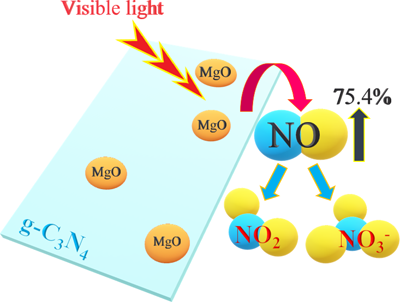
- atoms [64][65][66]. Also, Liang and co-workers reported that the recombination of the e−–h+ pairs could be inhibited by doping MgO into g-C3N4 [32]. When MgO is added, the defect concentration increases and Mg and O vacancies are generated in MgO@g-C3N4. These defects work as the electron traps, which
- and 5% MgO@g-C3N4 in the visible and UV range, which increased the photocatalytic performance under visible light irradiation. The PL results confirmed the presence of vacancies in the MgO@g-C3N4 heterojunctions. MgO@g-C3N4 is promising for large-scale fabrication via this simple and fast method. This





Theoretical investigations of oxygen vacancy effects in nickel-doped zirconia from ab initio XANES spectroscopy at the oxygen K-edge
Beilstein J. Nanotechnol. 2022, 13, 975–985, doi:10.3762/bjnano.13.85
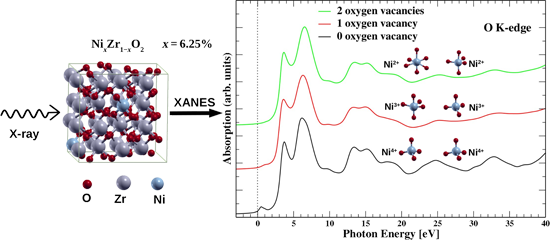
- Nanotechnologies, Institut National de Recherche en Sciences Exactes et Naturelles (IRSEN), Brazzaville, Congo 10.3762/bjnano.13.85 Abstract In this study, we present theoretical X-ray absorption near-edge structure (XANES) spectra at the K-edge of oxygen in zirconia containing Ni dopant atoms and O vacancies at
- vacancies. In this system, each Ni atom is surrounded by two shells of O with tetrahedral geometry, in a similar way as in bulk cubic zirconia. The oxygen K-edge XANES spectrum of this configuration shows a pre-edge peak, which is attributable to dipole transitions from O 1s to O 2p states that are
- one remains in a tetrahedral geometry. Furthermore, the introduction of two vacancies in the 2Ni-doped zirconia results in the two Ni atoms having distorted octahedral and trigonal bipyramidal geometries and being coupled antiferromagnetically in the ground state. Additionally, the oxygen K-edge XANES


Hierarchical Bi2WO6/TiO2-nanotube composites derived from natural cellulose for visible-light photocatalytic treatment of pollutants
Beilstein J. Nanotechnol. 2022, 13, 745–762, doi:10.3762/bjnano.13.66
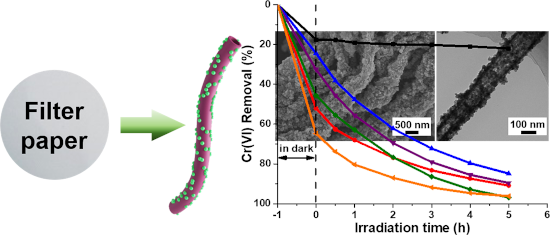
- three weak peaks at 448, 479, and 490 nm, which are indexed to the recombination of photoinduced electron−hole pairs, freely excited electrons, surface defects, and oxygen vacancies on the band edges, respectively [36][61]. It is apparent that the PL intensities of the Bi2WO6/TiO2-NT nanocomposites at


Sodium doping in brookite TiO2 enhances its photocatalytic activity
Beilstein J. Nanotechnol. 2022, 13, 599–609, doi:10.3762/bjnano.13.52
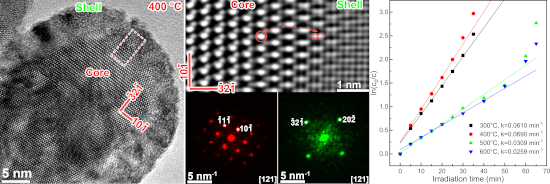
- structure and produce microstructures such as the core–shell structure, local lattice distortion, interstitial atoms, and atomic vacancies, which are critical to its excellent photocatalytic activity. Keywords: brookite titanium dioxide; core–shell structure; photocatalytic activity; sodium doping; twins
- atomic pair distribution function based on electron diffraction. High-resolution transmission electron microscopy results revealed the existence of a core–shell structure, lattice distortion, interstitial atoms, and atomic vacancies in NaxTi1−xO2, which is critical for an excellent photocatalytic
- including the core–shell structure, the nanodomain, interstitial atoms, atomic vacancies, and complex defects can be frequently observed in the samples calcinated at 300 and 400 °C but rarely for other samples calcinated at higher temperatures. Since the higher calcinating temperature can improve the atomic


Revealing local structural properties of an atomically thin MoSe2 surface using optical microscopy
Beilstein J. Nanotechnol. 2022, 13, 572–581, doi:10.3762/bjnano.13.49
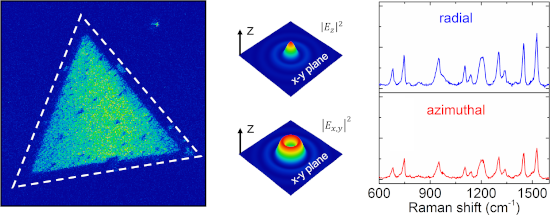
- effects strongly influence the optical and electronic properties of 2D-TMDC materials. Optical second harmonic generation (SHG) spectroscopy has been recently used to study the presence of mid-gap states in the electronic band structure of WS2 flakes, which are induced by sulfur vacancies [14]. In


Zinc oxide nanostructures for fluorescence and Raman signal enhancement: a review
Beilstein J. Nanotechnol. 2022, 13, 472–490, doi:10.3762/bjnano.13.40
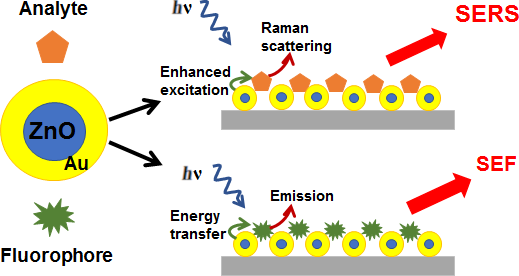
- a long time. It was assumed that zinc vacancies, oxygen vacancies, and other defects are candidates for recombination centres involved in the visible luminescence [78]. Studies concerning the green luminescence of ZnO in the past few years assumed that the oxygen vacancies are the most likely
- candidates for recombination centres involved in the visible luminescence of ZnO [77][79]. Thus, the electrical and luminescence characteristics of zinc oxide could be changed by the number of oxygen vacancies or other point defects (vacancies, atom substitutions, and interstitial atoms). Moreover
- also benefits the SERS enhancement. Doping zinc oxide–Ag nanoparticles with magnesium also introduces defect sites (surface defects and oxygen vacancies), which form new energy levels below the conduction band of zinc oxide, facilitating the charge transfer mechanism. In this case, besides the charge




Tin dioxide nanomaterial-based photocatalysts for nitrogen oxide oxidation: a review
Beilstein J. Nanotechnol. 2022, 13, 96–113, doi:10.3762/bjnano.13.7
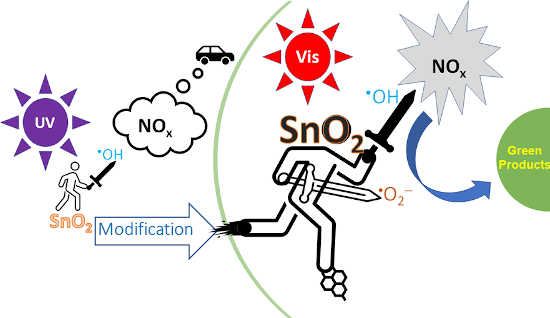
- predominantly point defects, that is, defects associated with one lattice point, such as cation or oxygen ion vacancies. OVs determine the physical and chemical properties of metal oxides. Figure 4a shows the natural crystal structure of SnO2 synthesized by vapor transport [48]. The (110) plane of rutile SnO2
- and acetone [75]. The presence of graphene induces the formation of SnO2 and introduces Sn vacancies, which supports the electron transfer from the CB of Zn2SnO4 to oxygen under visible light irradiation (Figure 12). The authors only used a visible light LED with low power (3 W) and obtained a high


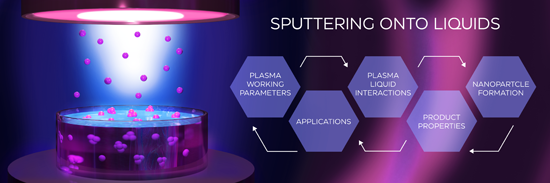
Sputtering onto liquids: a critical review
Beilstein J. Nanotechnol. 2022, 13, 10–53, doi:10.3762/bjnano.13.2






Topographic signatures and manipulations of Fe atoms, CO molecules and NaCl islands on superconducting Pb(111)
Beilstein J. Nanotechnol. 2022, 13, 1–9, doi:10.3762/bjnano.13.1
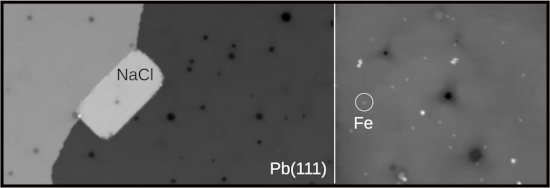
- Cu(111) [62]. Occasionally, even a trilayer phase appears within the NaCl bilayer (Figure 3a and Figure 3b). Note also that dark protrusions originating from trapped Ar atoms are still visible through the NaCl island by STM as well as point defects. We do not exclude that these might be Cl vacancies


Measurement of polarization effects in dual-phase ceria-based oxygen permeation membranes using Kelvin probe force microscopy
Beilstein J. Nanotechnol. 2021, 12, 1380–1391, doi:10.3762/bjnano.12.102
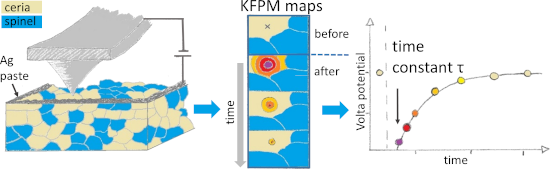
- time dependence was shown to vary with dopant concentration (e.g., abundance of oxygen vacancies in ceria) and also depends on the ratio of grain boundary/grain bulk [22][23][24][25]. Single ceria grains in a mixed ion/electron-conductive composite have so far not been addressed by AFM-based
- in this study strongly depended on the surrounding. In single-phase ceria materials, oxygen is incorporated into oxygen vacancies in the structure at high temperatures [4][30]: Previous studies showed that at temperatures below 400 °C the concentration of defect associates in ceria increases because
- electrons are trapped at oxygen vacancy sites, allowing also for singly charged () or uncharged (VO) oxygen vacancies in close vicinity to Ce3+ ions [31][32], which show a strongly lowered mobility. For low temperatures, the common electroneutrality equation for acceptor-doped ceria can be shortened, as


Is the Ne operation of the helium ion microscope suitable for electron backscatter diffraction sample preparation?
Beilstein J. Nanotechnol. 2021, 12, 965–983, doi:10.3762/bjnano.12.73
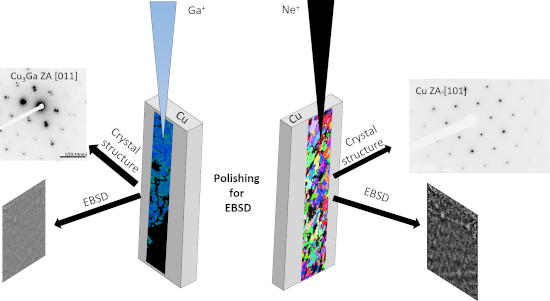
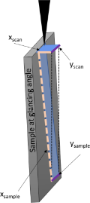
- , defects such as interstitials or vacancies can be created [23]. This can induce a significant amount of crystal structure alterations in a sample and thus artefacts. While these artefacts are well recognized for transmission electron microscopy (TEM) lamella preparation, in which the lamella preparation
- produce artefacts that would compromise the TEM analysis. Monte Carlo simulations were performed using the program Stopping and Range of Ions in Matter (SRIM) to better understand the underpinning ion–solid interactions for the different settings [22]. The extent of created dislocations, vacancies as well
- (Figure 2) obtained using SRIM shows that the interaction volume depth of the 30 keV Ga ions in Cu is ≈25 nm and is in the same range as the EBSD signal information depth of 20 nm. Throughout the interaction depth, 786 vacancies are created per incident ion while ten atoms are sputtered. The total number



Prediction of Co and Ru nanocluster morphology on 2D MoS2 from interaction energies
Beilstein J. Nanotechnol. 2021, 12, 704–724, doi:10.3762/bjnano.12.56
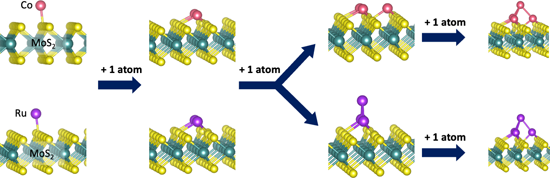
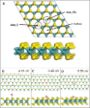
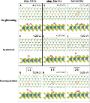
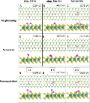
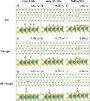
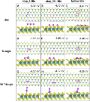
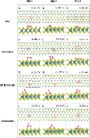
- Supporting Information File 1. A brief analysis of the magnetism of Co structures is given in section S5 of Supporting Information File 1. Adsorption of Co and Ru clusters on defective MoS2 It is well known from both theoretical and experimental studies, that the MoS2 ML easily forms S vacancies. To get a
- adsorption. Using the formation of H2S from H2, we computed a vacancy formation energy of −6.16 eV, which confirms that defects are easily formed. Furthermore, our results showed that the presence of an S vacancy (giving a concentration of 2% vacancies per supercell) improved Cu adhesion and promoted the
- S atom from the ML onto the Co structure to create a Co4S cluster, which was also the most favourable Co4 structure on the defective ML. This shows that, in the presence of Co, further vacancies can be formed through the transfer of S atoms onto the metal cluster. In contrast, the presence of the



Electromigration-induced formation of percolating adsorbate islands during condensation from the gaseous phase: a computational study
Beilstein J. Nanotechnol. 2021, 12, 694–703, doi:10.3762/bjnano.12.55
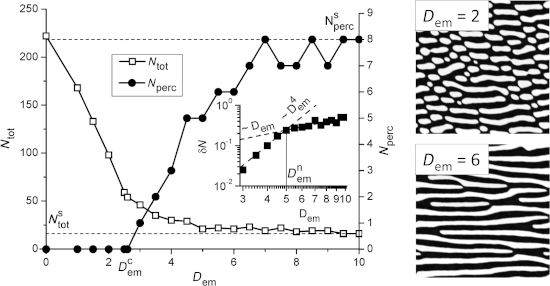
- neighboring vacancies in the direction of electron flow leading to an accumulation of atoms at the anode and vacancies at the cathode [1][2]. Current trends in computer technology, namely, reducing the size of integrated circuits, increasing their power, and increasing the density of elements, have led to an


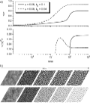


![[Graphic 29]](/bjnano/content/inline/2190-4286-12-55-i36.svg?max-width=637&scale=1.18182) on the adsorption coefficient α ...
on the adsorption coefficient α ...

A review of defect engineering, ion implantation, and nanofabrication using the helium ion microscope
Beilstein J. Nanotechnol. 2021, 12, 633–664, doi:10.3762/bjnano.12.52
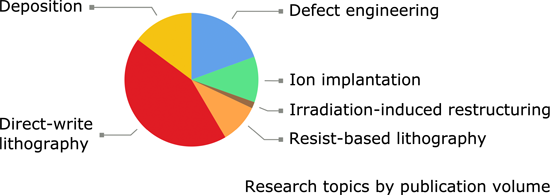
- the introduction of lattice defects has been demonstrated in a variety of nanoengineering applications. The generation of vacancies, preferential sputtering of one atomic species over another, and the introduction of increasing amounts of disorder leading to eventual amorphization of a crystalline
- . investigated the nature of the ion-induced defects further, and determined that after irradiation, the ion-induced vacancies become saturated with oxygen [20]. The authors of the latter thus proposed that the mechanism behind the irradiation-induced insulating behavior involved oxygen groups acting as charge
- nitrogen, the focused helium ion beam was used to create lattice vacancies at predefined locations (in a similar manner to the related electron beam-based methods). After annealing to allow for diffusion of the vacancies, the presence of nitrogen-vacancy centers was confirmed by photoluminescence


Impact of GaAs(100) surface preparation on EQE of AZO/Al2O3/p-GaAs photovoltaic structures
Beilstein J. Nanotechnol. 2021, 12, 578–592, doi:10.3762/bjnano.12.48
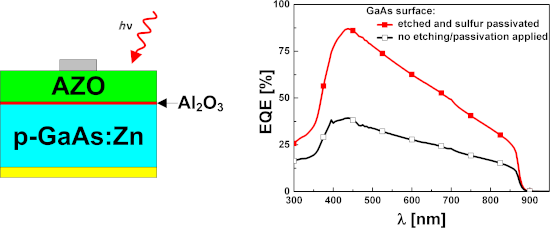
- luminescence characteristic for zinc substituted by aluminum and accompanied by vacancies. The AZO layers are found to be point defected depending on the surface preparation of the substrate. Also, the INBE/IDLE ratio depends on the GaAs surface etching procedure before the ALD process. Detailed sequence of




Properties of graphene deposited on GaN nanowires: influence of nanowire roughness, self-induced nanogating and defects
Beilstein J. Nanotechnol. 2021, 12, 566–577, doi:10.3762/bjnano.12.47
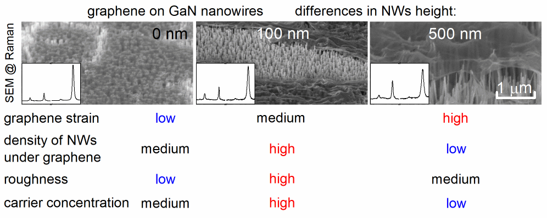
- contact with graphene. The lowest concentration of defects is observed for graphene deposited on nanowires with the lowest density. The contact between graphene and densely arranged nanowires leads to a large density of vacancies. On the other hand, grain boundaries are the main type of defects in
- distribution in the layer. Coulomb interaction between GaN NWs and graphene could also create vacancies in graphene and, consequently, increase the density of defects. In turn, as reported recently, strain and carrier concentration can be influenced and modified by graphene defects as well [27][28][29][30
- impact of the defects on graphene strain and carrier concentration. Experimental studies have shown that some kinds of defects distort the graphene lattice and, consequently, increase graphene strain [46][47]. For example, the vacancies elongate graphene lattice and induce tensile strain, while Stone




The preparation temperature influences the physicochemical nature and activity of nanoceria
Beilstein J. Nanotechnol. 2021, 12, 525–540, doi:10.3762/bjnano.12.43
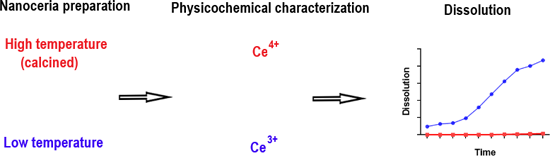
- fewer oxygen vacancies and exhibits, therefore, a predominance of surface Ce+4, compared to a solvothermally synthesized nanoceria material with more oxygen vacancies, which produce a preponderance of surface Ce+3, it was hypothesized the NM-212 would have less catalytic activity. Another nanoscale
- +. Increased Ce3+ is accompanied by an increase in oxygen vacancies that weaken the crystal lattice [14]. According to the dissolution framework by Gray and co-workers, Ce3+ can follow more dissolution pathways (including oxidative dissolution) than Ce4+ [59]. The much greater percentage of Ce3+ on the surface




Interface interaction of transition metal phthalocyanines with strontium titanate (100)
Beilstein J. Nanotechnol. 2021, 12, 485–496, doi:10.3762/bjnano.12.39
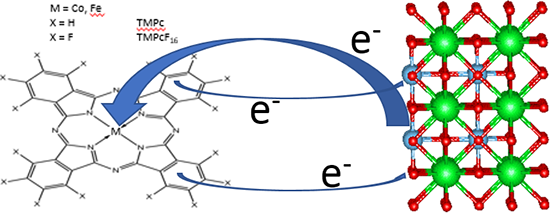
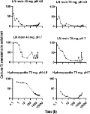
- increased by introducing oxygen vacancies into the crystal structure or by doping (e.g., n-type doping with niobium, Nb5+). Generally, two different terminations of STO(100) are known, that is, the surface can be either TiO2- or SrO-terminated. The TiO2 termination can be achieved by (ex situ) acid


Nickel nanoparticle-decorated reduced graphene oxide/WO3 nanocomposite – a promising candidate for gas sensing
Beilstein J. Nanotechnol. 2021, 12, 343–353, doi:10.3762/bjnano.12.28
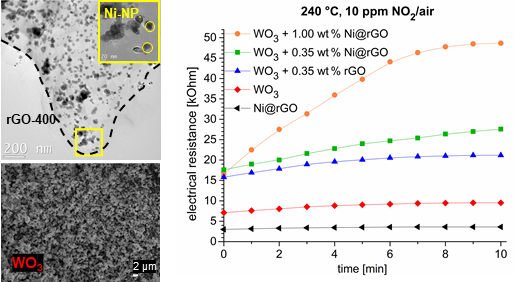
- graphene oxide, rGO) chemically or thermally. Through the partial removal of oxygen groups, the conductivity can be restored. Additionally, defects and vacancies are created [26]. Because of the ultra-high surface area per atom and the high electron transport along the graphene plane, rGO has a rapid and


Exploring the fabrication and transfer mechanism of metallic nanostructures on carbon nanomembranes via focused electron beam induced processing
Beilstein J. Nanotechnol. 2021, 12, 319–329, doi:10.3762/bjnano.12.26
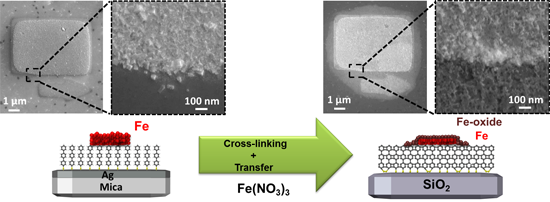
- ) [13], thin layers of porphyrin molecules [14][15], and surface-anchored metal-organic frameworks (SURMOFs) [16][17]. For oxide surfaces it is known that the activation mechanism is based on reactive oxygen vacancies, which are locally created by electron-stimulated oxygen desorption [18][19]. Whereas


Extended iron phthalocyanine islands self-assembled on a Ge(001):H surface
Beilstein J. Nanotechnol. 2021, 12, 232–241, doi:10.3762/bjnano.12.19
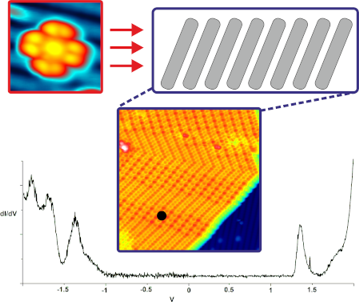
- defects could be identified within the surface [61][62][63][64][65]. These are mainly single or double hydrogen vacancies. This means that within a Ge dimer either one hydrogen atom is missing, this is called a single dangling bond (DB), or the dimer lacks both hydrogen atoms and the so-called dangling



