Search results
Search for "vesicles" in Full Text gives 104 result(s) in Beilstein Journal of Nanotechnology.
Molecular architectonics of DNA for functional nanoarchitectures
Beilstein J. Nanotechnol. 2020, 11, 124–140, doi:10.3762/bjnano.11.11
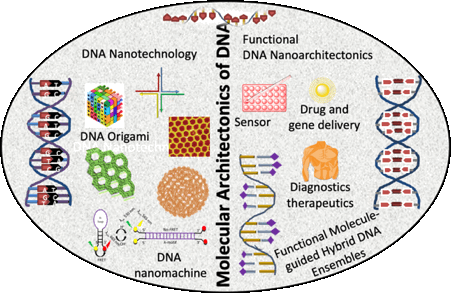
- beacon) state to an open (A-motif) state in a pH-responsive manner within artificial vesicles and living cells. The DNA device was made up of 24 nucleobases, of which 12 adenine nucleobases were present within the loop region, and a closed molecular beacon structure was formed via two stretches of five
- altered the FRET response, which was exploited for sensing of acidic pH (3–5.5) with a low step size (0.2–0.3) within synthetic vesicles that mimicked the intracellular environment. The in cellulo study in HeLa cells demonstrated the efficient cellular uptake of the DNA device without the need for a
- data (Figure 8c) showed the movement of ions through the lipid–nanopore interface via the formation of a toroidal pore. The binding of porphyrin-tethered nanopores with giant unilamellar vesicles was analyzed by confocal microscopy (Figure 8d). The inherent fluorescent signal of porphyrin showed their


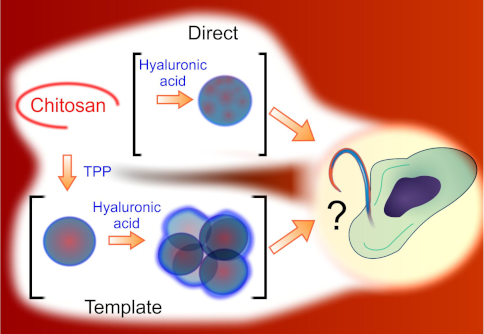
The different ways to chitosan/hyaluronic acid nanoparticles: templated vs direct complexation. Influence of particle preparation on morphology, cell uptake and silencing efficiency
Beilstein J. Nanotechnol. 2019, 10, 2594–2608, doi:10.3762/bjnano.10.250
- for a hard, uniform sphere, 1.0 for vesicles with thin walls (hollow spheres), close to 1.5 for random polymer coil conformations [23][24]. Fractal dimension (D). When applied to particulates, the fractal geometry analysis is another important morphological indicator. For example, aggregation of



Bombesin receptor-targeted liposomes for enhanced delivery to lung cancer cells
Beilstein J. Nanotechnol. 2019, 10, 2553–2562, doi:10.3762/bjnano.10.246
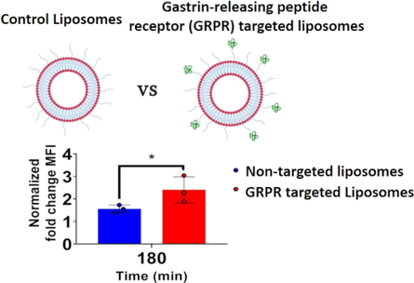
- formulations were prepared using the thin-film technique to yield small and monodisperse vesicles as judged by dynamic light scattering (DLS) analysis (Table 1). The colloidal properties of both liposomal formulations were highly similar in terms of size, polydispersity and zeta potential and consistent with
- those reported for other pegylated liposomes by others [27]. The vesicles were colloidally stable in PBS over 72 h at temperatures of 4, 25 and 37 °C with no significant changes in size, PDI or zeta potential observed (Figure 3a,b). It was noted that the diameter of both liposome formulations was larger
- than the 50 nm pore diameter of the terminal extrusion membrane. This is likely due to the deformation of the vesicles under pressure during extrusion and subsequent expansion after emergence from the pore. Commercial realisation of targeted nanomedicines is contingent upon the development of platforms

Small protein sequences can induce cellular uptake of complex nanohybrids
Beilstein J. Nanotechnol. 2019, 10, 2477–2482, doi:10.3762/bjnano.10.238
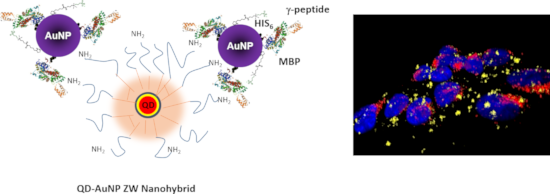
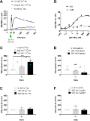
- reported that a sizable fraction of the delivered nanoparticles can end up in the cytoplasm, by either circumventing endocytosis through the use of virus-derived peptide sequences, or non-disruptively penetrating the cellular membranes [13]. Escape from endosomal vesicles of once endocytosed nanoparticles
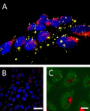
- that distribution of the internalized nanohybrids (yellow staining) is distinct from that of the endosomes (counterstained in red). This provides further confirmation of the data shown in Figure 1E, demonstrating that the nanohybrids are not trapped within endocytic vesicles. The respective signals

Mannosylated brush copolymers based on poly(ethylene glycol) and poly(ε-caprolactone) as multivalent lectin-binding nanomaterials
Beilstein J. Nanotechnol. 2019, 10, 2192–2206, doi:10.3762/bjnano.10.212
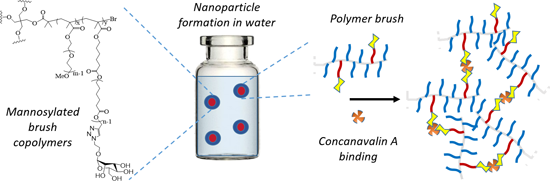
- aggregates (e.g., micelles and vesicles) above their critical aggregation concentration (CAC). The resulting self-assembled nanoparticles can act as drug carriers and delivery systems, being able to accommodate a hydrophobic drug within their hydrophobic core [22], or chemically bind bioactive agents [23][24
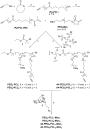

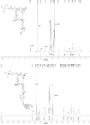


Synthesis and potent cytotoxic activity of a novel diosgenin derivative and its phytosomes against lung cancer cells
Beilstein J. Nanotechnol. 2019, 10, 1933–1942, doi:10.3762/bjnano.10.189
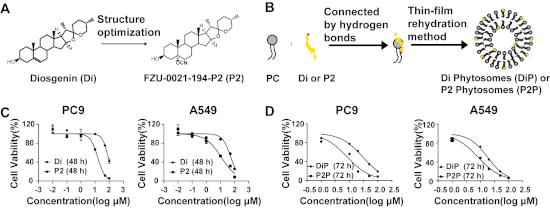
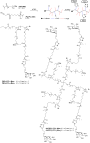
- ingredients could undergo self-assembly into stable vesicles in aqueous solution, which could act as a vehicle to facilitate membrane transport [29]. Compared to liposomes, phytosomes can load more drug molecules, and showed enhanced stability in the lyophilization and reconstitution processes prior to use
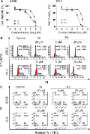
- film. Before hydration, the lipid film was dried in a vacuum drying chamber at 27 °C for 12 h. The hydrated multilamellar vesicles were sonicated by a sonicator for 20 min. Blank lipid nanoparticles (P) were also prepared with the same process without adding Di or P2. Characterization of phytosomes



Lipid nanostructures for antioxidant delivery: a comparative preformulation study
Beilstein J. Nanotechnol. 2019, 10, 1789–1801, doi:10.3762/bjnano.10.174
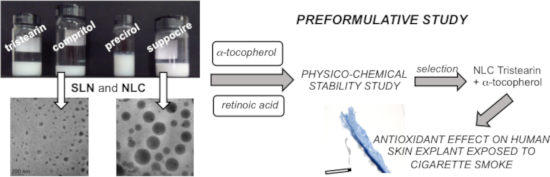
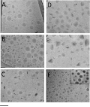
- triangular structures were observed. At last, in the case of suppocire NLCs, besides the presence of some irregular structures (Figure 2F), spherical structures were detected (inset of Figure 2F), resembling vesicles rather than to solid particles. The inner morphology of the NLCs was further characterized
- an ordered structural organization inside the NLC, while suppocire is not able to preserve such an organization. According to the cryo-TEM findings, vesicles rather than nanoparticles probably form in this condition. The analysis of the position of the peaks observed in tristearin-based NLCs allowed
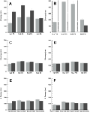
- values were found in the case of NLC S10-TOC and NLC T10-RA. In the case of suppocire, TOC EE values decreased from 88 to 60% by doubling the lipid phase concentration, suggesting that the presence of vesicles instead of nanoparticles prevented high loading of the antioxidant within their structure

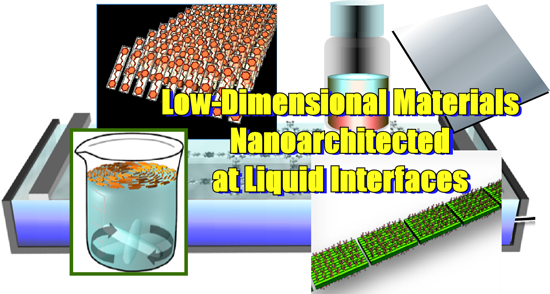
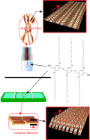
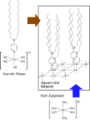
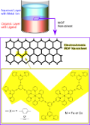
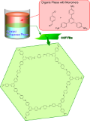
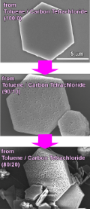
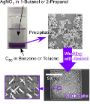
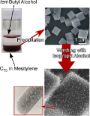
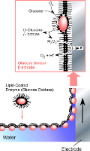
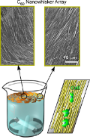
Materials nanoarchitectonics at two-dimensional liquid interfaces
Beilstein J. Nanotechnol. 2019, 10, 1559–1587, doi:10.3762/bjnano.10.153













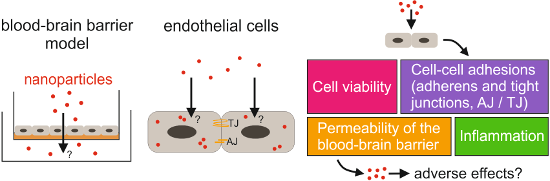
Effects of gold and PCL- or PLLA-coated silica nanoparticles on brain endothelial cells and the blood–brain barrier
Beilstein J. Nanotechnol. 2019, 10, 941–954, doi:10.3762/bjnano.10.95
- -like cells in membrane-surrounded vesicles and the cytoplasm. Studies in organotypic brain slices revealed that NPs were only taken up by microglial cells but not by astrocytes or neurons [9]. NPs were taken up in a time- and concentration-dependent manner and were found in the endoplasmic reticulum
- these three NP types. Both PLLA- and PCL-NPs were taken up to a high extent after 2 and 24 h of exposure, respectively. They tended to form clusters and were detected freely in the cytosol or in membrane-bound vesicles (Figure 2A,D and Figure 2B,E). On the other hand, Au-NPs could not be found inside
- , B, C) and higher magnification (D, E, F); analyzed by TEM. PLLA- and PCL-NPs were found in clusters inside the cells (arrows) (A, B; scale bar: 5 µm) and were present freely in the cytoplasm (arrows) or in membrane-bound vesicles (arrow head) (D, E; scale bar: 1 µm). Single Au-NPs were taken up by



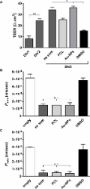
The nanoscaled metal-organic framework ICR-2 as a carrier of porphyrins for photodynamic therapy
Beilstein J. Nanotechnol. 2018, 9, 2960–2967, doi:10.3762/bjnano.9.275
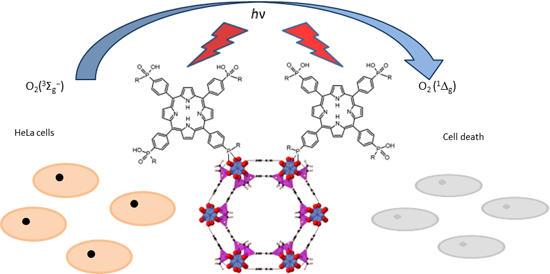
- using confocal microscopy. Figure 7 clearly shows that the nanoparticles accumulate in intracellular vesicles, which strongly co-localize with the fluorescent marker of lysosomes. This is similar to the results of a previous study performed with PCN-222 nanoparticles [22]. Toxicity and phototoxicity


Enhanced antineoplastic/therapeutic efficacy using 5-fluorouracil-loaded calcium phosphate nanoparticles
Beilstein J. Nanotechnol. 2018, 9, 2499–2515, doi:10.3762/bjnano.9.233
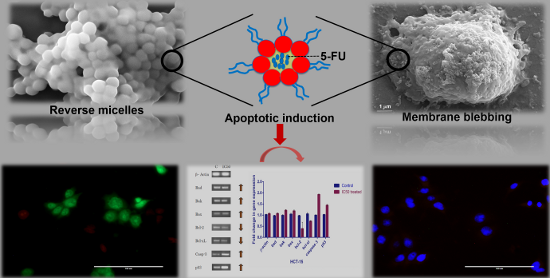
- track the morphological changes occurring in the cells after treatment with CaP@5-FU NPs in a time-dependent manner. Hoechst 33342 can effectively stain the nucleic acid and specifically identify changes in the nucleus, whereas rhodamine B stains the cytoplasmic vesicles uniformly, enabling the


Block copolymers for designing nanostructured porous coatings
Beilstein J. Nanotechnol. 2018, 9, 2332–2344, doi:10.3762/bjnano.9.218
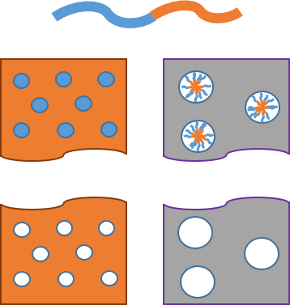
- micelles, reverse micelles as well as worm-like structures, lamellar sheets, and vesicles (Figure 5). As mentioned previously, the thermodynamic incompatibility between the blocks forming the polymer chains is the driving force behind the formation of such nanostructures [4][35]. In this context, this


The structural and chemical basis of temporary adhesion in the sea star Asterina gibbosa
Beilstein J. Nanotechnol. 2018, 9, 2071–2086, doi:10.3762/bjnano.9.196
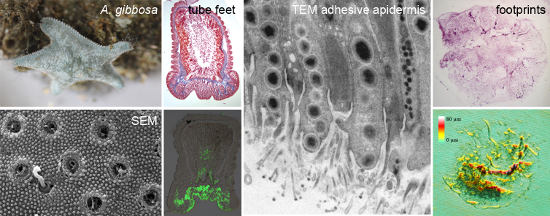
- adhesive vesicles was found to react with the lectin PNA, indicating the presence of galactose(ß 1-3) N-acetylgalactosamine [44]. In contrast to A. gibbosa, galactose(ß 1-3) N-acetylgalactosamine residues were also detected in M. lignano footprints (Lengerer pers. observation). Many known proteins involved


The nanofluidic confinement apparatus: studying confinement-dependent nanoparticle behavior and diffusion
Beilstein J. Nanotechnol. 2018, 9, 301–310, doi:10.3762/bjnano.9.30
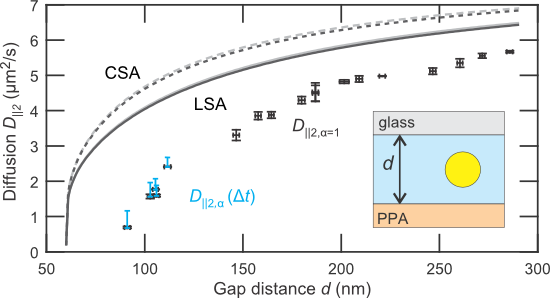
- nanoparticles and vesicles in nanofluidic systems [13]. In a follow-up experiment, it was shown that crucial information on the trapping potential can be gained by using an AFM-type system and a micro-capillary to adjust the gap distance [14]. Another example of a strongly gap-dependent behavior is the lateral



Involvement of two uptake mechanisms of gold and iron oxide nanoparticles in a co-exposure scenario using mouse macrophages
Beilstein J. Nanotechnol. 2017, 8, 2396–2409, doi:10.3762/bjnano.8.239
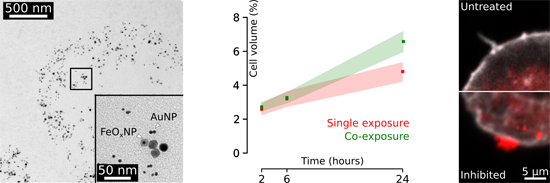
- , and clathrin- and caveolin-independent endocytosis, involving the ingestion of fluid, molecules, and NPs via small vesicles (<0.15 µm in diameter) [9]. Although NPs have been shown to be taken up by the cells mainly by pinocytotis [9], many factors have been shown to influence the interaction with
- experiments revealed that the AuNPs were localised in their membranes rather than in the cores of the vesicles [21][22]. However, indications exist of alternative pathways for particles to enter cells, as studies have reported intracellular NPs of diverse materials lacking surrounding membranes [23][24
- observed. Colocalisation of both particle types in intracellular compartments 24 h after exposure was confirmed by TEM (Figure 4). Intracellular particles were found only in vesicles and in the co-exposure experiments, both particle types were observed in the same vesicle. In the immediate extracellular



Self-assembly of chiral fluorescent nanoparticles based on water-soluble L-tryptophan derivatives of p-tert-butylthiacalix[4]arene
Beilstein J. Nanotechnol. 2017, 8, 1825–1835, doi:10.3762/bjnano.8.184
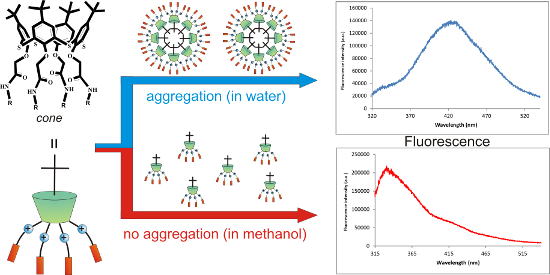
- solution. The conformers of the 1,3-alternate (the compounds 9 and 11) have a fundamentally different structure with hydrophilic fragments located on both sides of the macrocyclic system (Figure 1). As a result, they form extended vesicles with a hydrophobic part disposed between two layers of polar



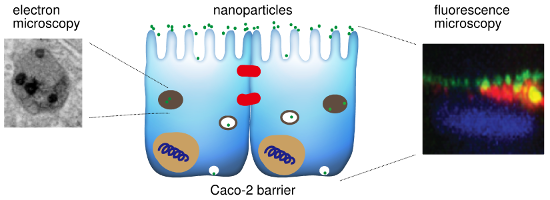
Low uptake of silica nanoparticles in Caco-2 intestinal epithelial barriers
Beilstein J. Nanotechnol. 2017, 8, 1396–1406, doi:10.3762/bjnano.8.141
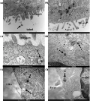
- in vesicles along the endo-lysosomal pathways, including in endosomes (Figure 3c) and lysosomes (Figure 3d and f). Furthermore, Figure 3e shows a single nanoparticle within a vesicle close to the basolateral membrane, where another vesicle has docked. Although rare, we occasionally made such
- events may occur. Some internalisation events were also seen for 150 nm SiO2-NPs (Figure 4), with particles found in vesicles and lysosomes in both 0 and 10% serum (Figure 4b and d, respectively) as described for the smaller nanoparticles (Figure 3). Finally, we performed transport studies to determine
- in different vesicles along the endolysosomal pathway. Abbreviations: E, endosome; L, lysosome; V, vesicle. Transmission electron micrographs of Caco-2 barriers after exposure to 150 nm SiO2-NPs. Caco-2 barriers cultured for 21 days were exposed for 9 h to 100 µg/mL 150 nm SiO2-NPs dispersed in (a,b



Bright fluorescent silica-nanoparticle probes for high-resolution STED and confocal microscopy
Beilstein J. Nanotechnol. 2017, 8, 1283–1296, doi:10.3762/bjnano.8.130
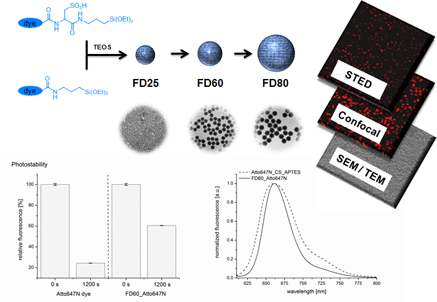
- suitable for biological nanoparticle uptake experiments and have been used to determine the intracellular migration and nuclear penetration after uptake into Caco-2 cells [44]. They have also been used to analyse their intracellular agglomeration and their association with intracellular vesicles in living


Nano-engineered skin mesenchymal stem cells: potential vehicles for tumour-targeted quantum-dot delivery
Beilstein J. Nanotechnol. 2017, 8, 1218–1230, doi:10.3762/bjnano.8.123
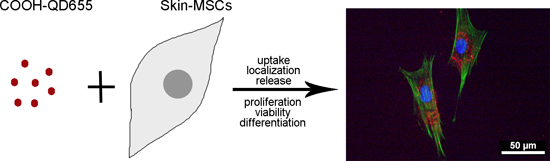
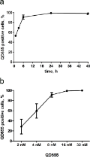
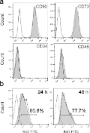
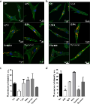
- ]. Lourenco et al. showed that MSC migration towards cancer cells is induced by MIF–CXCR4 chemotaxis [29]. Moreover, in close proximity of the tumour, cancer-associated fibroblast formation is induced by the release of vesicles containing miRNA from cancer cells. This leads to melanoma growth and invasion [30





Nanoscale isoindigo-carriers: self-assembly and tunable properties
Beilstein J. Nanotechnol. 2017, 8, 313–324, doi:10.3762/bjnano.8.34
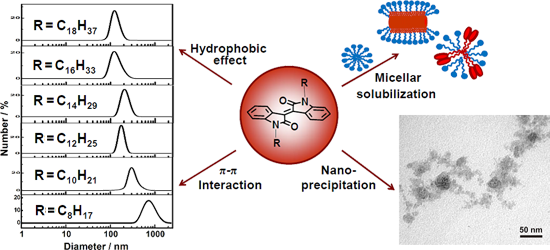
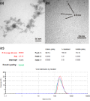
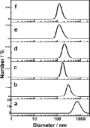
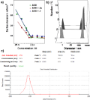
- . This is observed in the case of typical surfactants bearing relative large polar fragment and single alkyl chain. If 1/2 < P ≤ 1, the formation of bilayers is predicted, including closed structures, i.e., vesicles. The polar head surface area was calculated as the sum of the area of hexagons and




Surface-enhanced Raman scattering of self-assembled thiol monolayers and supported lipid membranes on thin anodic porous alumina
Beilstein J. Nanotechnol. 2017, 8, 74–81, doi:10.3762/bjnano.8.8
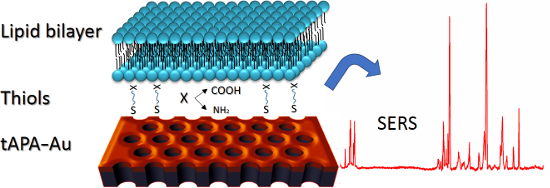
- ), and then with phospholipid vesicles of different composition to form a supported lipid bilayer (SLB). At each step, the SERS substrate functionality was assessed, demonstrating acceptable enhancement (≥100×). The chemisorption of thiols during the first step and the formation of SLB from the vesicles
- was obtained by scanning electron microscope (SEM) imaging with a JSM-7500F (Jeol, Japan) and subsequent grain analysis carried out with Igor 6.22 (Wavemetrics, OR, USA). Incubation of thiols and fabrication of lipid vesicles Different thiols were used in combination with the different lipids to be
- unilamellar vesicles. Preparation of the Raman target analytes: SLBs The lipid vesicles were diluted to 0.5 g/L in the PBS buffer and vortexed immediately before use. The thiol SAM was incubated overnight with the lipid vesicle dispersion, to allow vesicle physisorption and fusion onto the substrate. The



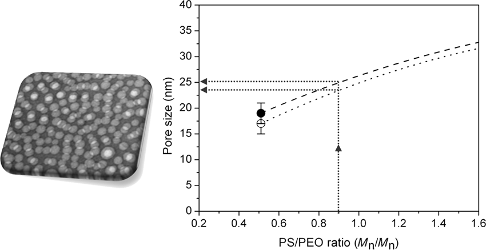
Polystyrene-block-poly(ethylene oxide) copolymers as templates for stacked, spherical large-mesopore silica coatings: dependence of silica pore size on the PS/PEO ratio
Beilstein J. Nanotechnol. 2016, 7, 1454–1460, doi:10.3762/bjnano.7.137
- critical micellar concentration, CMC) amphiphiles can spontaneously self-organize into well-defined supramolecular aggregates (host) which can be classified as normal and reverse micelles, emulsions, vesicles or liquid crystal phases and can shape or pattern other materials (guest), forming spherical


On the pathway of cellular uptake: new insight into the interaction between the cell membrane and very small nanoparticles
Beilstein J. Nanotechnol. 2016, 7, 1296–1311, doi:10.3762/bjnano.7.121
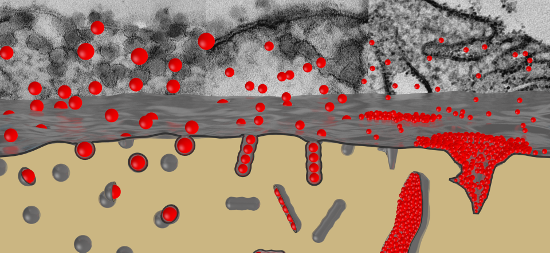
- methods, the respective endolysosomal vesicles frequently have been shown to contain SiNPs, whereas the cell nucleus is only occasionally reported to have engulfed nanoparticles [5][7]. On the contrary, there are observations corroborating the hypothesis of the SiNPs’ ability to passively pass through
- . Looking at the TEM micrographs of the endosomal vesicles it could be speculated that shortly after incorporation the cell collects several of these NPs in early endosome-like structures and fuses those to a larger endocytic structure (Supporting Information File 1, Figure S8). The observation of




Functional diversity of resilin in Arthropoda
Beilstein J. Nanotechnol. 2016, 7, 1241–1259, doi:10.3762/bjnano.7.115


Improved biocompatibility and efficient labeling of neural stem cells with poly(L-lysine)-coated maghemite nanoparticles
Beilstein J. Nanotechnol. 2016, 7, 926–936, doi:10.3762/bjnano.7.84
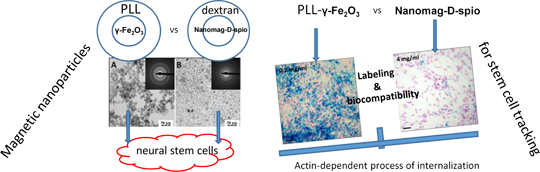
- micrographs demonstrated that PLL-γ-Fe2O3 or nanomag®-D-spio labeling did not affect the NSC ultrastructure and that both types of the nanoparticles were internalized into the cell vesicles rather than adhering to the cell surface (Figure 6). To determine the mechanism of the uptake of PLL-γ-Fe2O3 and nanomag
- . Transmission electron micrographs of NSCs labeled with PLL-γ-Fe2O3 (PLL, A, B) and nanomag®-D-spio (NM, C, D) nanoparticles, and unlabeled controls (E, F). Arrows indicate the macropinocytotic vesicles. Insets show macropinocytotic vesicles. Scale bar: 1 µm. Macropinocytosis is the mechanism of cellular uptake