


Search results
Search for "water splitting" in Full Text gives 82 result(s) in Beilstein Journal of Nanotechnology.
Evaluating the toxicity of TiO2-based nanoparticles to Chinese hamster ovary cells and Escherichia coli: a complementary experimental and computational approach
Beilstein J. Nanotechnol. 2017, 8, 2171–2180, doi:10.3762/bjnano.8.216
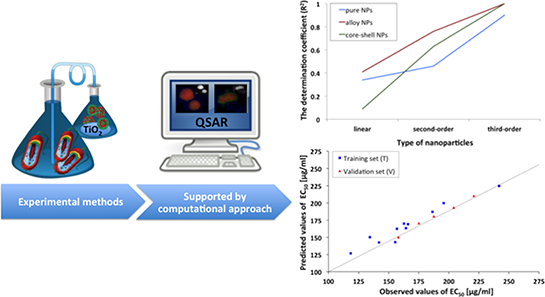
- alters the rate of chemical reactions, when exposed to light (photocatalyst) [1]. TiO2-based NPs have already found wide applications as efficient photocatalysts for sterilization, sanitation, air and water purification systems, hydrogen production by water splitting, and dye-sensitized solar cells [1


Two-dimensional carbon-based nanocomposites for photocatalytic energy generation and environmental remediation applications
Beilstein J. Nanotechnol. 2017, 8, 1571–1600, doi:10.3762/bjnano.8.159
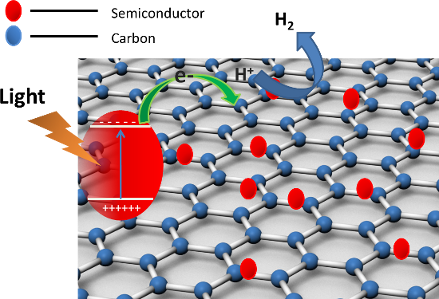
- sustainable source for energy generation and environmental remediation, photocatalytic water splitting and photocatalytic pollutant degradation have recently gained significant importance. Research in this field is aimed at solving the global energy crisis and environmental issues in an ecologically-friendly
- properties, carbon-based nanocomposites have made a substantial contribution towards the generation of clean, renewable and viable forms of energy from light-based water splitting and pollutant removal. This review article provides a comprehensive overview of the recent research progress in the field of
- energy generation and environmental remediation using two-dimensional carbon-based nanocomposites. It begins with a brief introduction to the field, basic principles of photocatalytic water splitting for energy generation and environmental remediation, followed by the properties of carbon-based


Metal oxide nanostructures: preparation, characterization and functional applications as chemical sensors
Beilstein J. Nanotechnol. 2017, 8, 1205–1217, doi:10.3762/bjnano.8.122
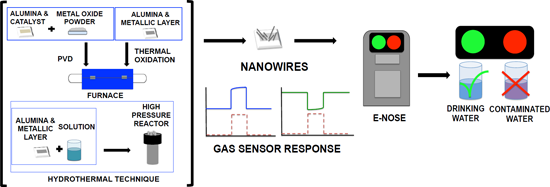
- separate the contribution of pure Nb2O5 from K4Nb6O17. In literature, there are no reports on the sensing performance of this ternary compound as chemical sensor. However, it is a promising material for water splitting applications [12][13]. Functional tests After morphological and structural analysis, we


Growth, structure and stability of sputter-deposited MoS2 thin films
Beilstein J. Nanotechnol. 2017, 8, 1115–1126, doi:10.3762/bjnano.8.113
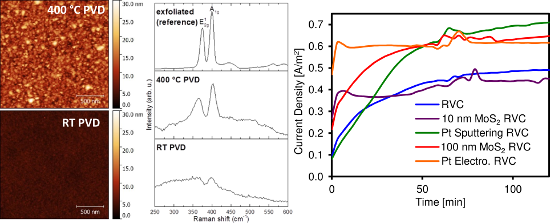
- electrochemical processes such as the hydrogen evolution reaction (HER) in electrochemical water splitting. For both types of applications, industrially scalable fabrication methods with good control over the MoS2 film properties are crucial. Here, we investigate scalable physical vapour deposition (PVD) of MoS2
- noble metal-free catalytic material for the hydrogen evolution reaction (HER) in electrochemical water splitting, which is fundamental to a hydrogen-based energy economy [14]. Density function theory showed the feasibility of MoS2 supported on graphite to catalyse electrochemical hydrogen evolution at a
- applications. The advantage of the RVC electrodes used for the experiments is the high available surface area of 249.6 cm2 compared to its volume of 3.84 cm3 [52]. For electrochemical water splitting RVC foams coated with Pt are often investigated [53]. The particular electrochemical two-terminal setup


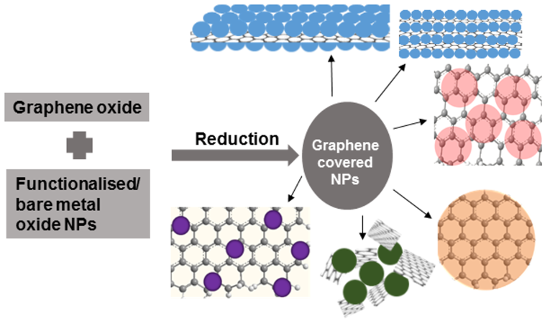
Synthesis of graphene–transition metal oxide hybrid nanoparticles and their application in various fields
Beilstein J. Nanotechnol. 2017, 8, 688–714, doi:10.3762/bjnano.8.74
- ) [118] and applications in energy storage [119]. ORR is the key step of renewable energy technologies including fuel cells and water splitting. For excellent electrocatalysts, one of the most important factors is long-term running stability. The long term running stability of the Cr2O3–rGO hybrid makes






Impact of air exposure and annealing on the chemical and electronic properties of the surface of SnO2 nanolayers deposited by rheotaxial growth and vacuum oxidation
Beilstein J. Nanotechnol. 2017, 8, 514–521, doi:10.3762/bjnano.8.55
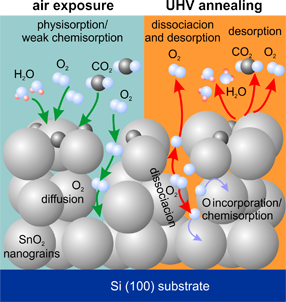
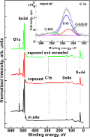
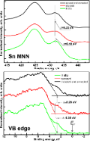
- . This water splitting was theoretically predicted by Xu at al. [29] to have an impact on both the chemical and electronic structure of the examined films. (This is to be discussed below). Of course one can state that the irreversibility of contamination is only a matter of annealing temperature but we



Laser irradiation in water for the novel, scalable synthesis of black TiOx photocatalyst for environmental remediation
Beilstein J. Nanotechnol. 2017, 8, 196–202, doi:10.3762/bjnano.8.21
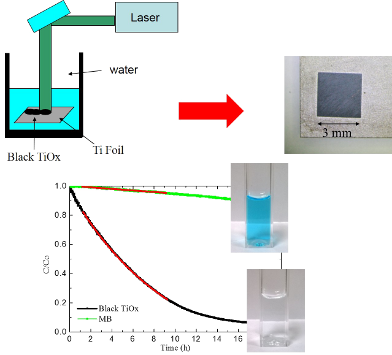
- widely used for both water splitting and mineralization of organic contaminants in solution [2]. The applications range from third generation solar cells [3] to material for air or water purification [4] to antifogging and self-cleaning surfaces [5][6]. The main advantage of this material is its high


Nanostructured TiO2-based gas sensors with enhanced sensitivity to reducing gases
Beilstein J. Nanotechnol. 2016, 7, 1718–1726, doi:10.3762/bjnano.7.164
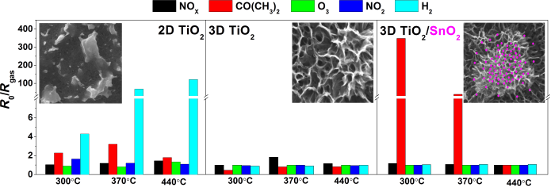
- cells, photocatalytic water purification, and hydrogen generation by water splitting [3][4][5]. In sensor technology this n-type semiconductor is frequently considered as a promising material for gas detection applications [6]. It has excellent sensitivity and selectivity for many different gases such


Selective photocatalytic reduction of CO2 to methanol in CuO-loaded NaTaO3 nanocubes in isopropanol
Beilstein J. Nanotechnol. 2016, 7, 776–783, doi:10.3762/bjnano.7.69
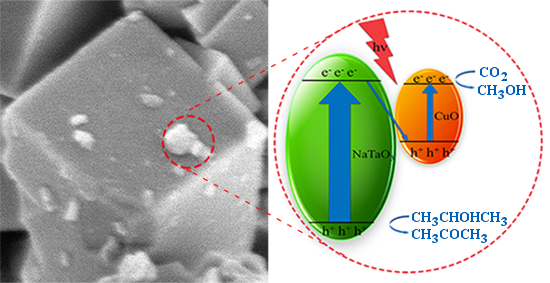
- SiC), producing CH3OH, HCOOH, HCHO and trace amounts of CH4. In the 1990s, Ta oxide photocatalysts began to draw attention in the field of water splitting. A series of Ta catalysts, such as LiTaO3 [9], NaTaO3 [10], KTaO3 [11], AgTaO3 [12], CaTa2O6 [13], SrTa2O6 [13], KBa2Ta3O10 [14], were proved to


Surfactant-controlled composition and crystal structure of manganese(II) sulfide nanocrystals prepared by solvothermal synthesis
Beilstein J. Nanotechnol. 2015, 6, 2319–2329, doi:10.3762/bjnano.6.238
- electrodes for photoelectrochemical water splitting), Regione Lombardia in the framework of the Second Agreement with CNR (RSPPTECH project), and the Italian MIUR under grant FIRB RBAP115AYN (Oxides at the nanoscale: multifunctionality and applications).


Possibilities and limitations of advanced transmission electron microscopy for carbon-based nanomaterials
Beilstein J. Nanotechnol. 2015, 6, 1541–1557, doi:10.3762/bjnano.6.158
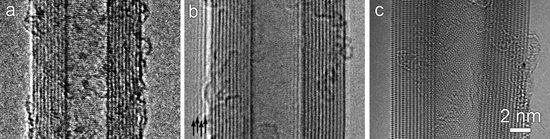
- frequently employed as hosts for various catalysts [34]. We can demonstrate this using the example of functionalized graphene anchored by a water-splitting catalyst based on polyoxometalates (POMs). By imaging the nanohybrids at 80 kV, the supporting graphene is protected to a large degree and remains stable


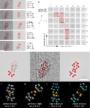
High photocatalytic activity of V-doped SrTiO3 porous nanofibers produced from a combined electrospinning and thermal diffusion process
Beilstein J. Nanotechnol. 2015, 6, 1281–1286, doi:10.3762/bjnano.6.132
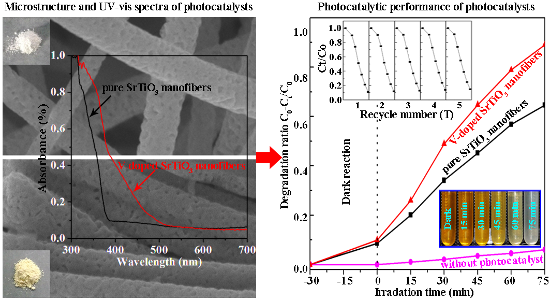
- species, such as hydroxyl radicals (·OH) and superoxide anions (O2−). Since Fujishima and Honda first reported photo-electrochemical water splitting using a TiO2 electrode [7], many studies have been carried out on photocatalytic pollutant removal and electronic structures of semiconductors containing d0
- metal ions [8][9][10][11], such as Ti4+, Zr4+, Ta5+, Nb5+ and V5+, as well as the development of new photocatalysts. Strontium titanate (SrTiO3), an important multifunctional semiconductor, has been applied in photocatalysis technology for water splitting and organic contaminant degradation [12][13


Electrocatalysis on the nm scale
Beilstein J. Nanotechnol. 2015, 6, 1008–1009, doi:10.3762/bjnano.6.103

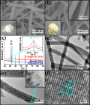
- theoretical description of important electrocatalytic reactions, such as hydrogen evolution/water splitting [4][5] or electrocatalytic ammonia synthesis [6]. Additionally, mechanistic studies of electrocatalytic reactions, such as O2 reduction [7], CO oxidation [8] or the electrooxidation of small organic
Palladium nanoparticles anchored to anatase TiO2 for enhanced surface plasmon resonance-stimulated, visible-light-driven photocatalytic activity
Beilstein J. Nanotechnol. 2015, 6, 428–437, doi:10.3762/bjnano.6.43
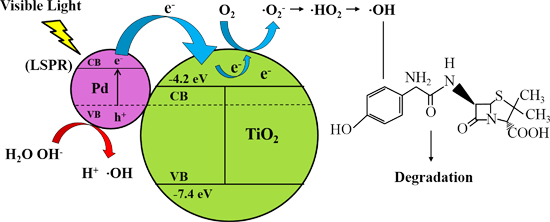
- the electron and hole recombination rates drastically [5][10][11]. Ingram et al. have shown that the use of noble metals to synthesize Au/TiO2 and Ag/TiO2 NPs for water splitting increased absorption of visible light by a factor of 10 as compare to N-TiO2 [25]. Jiang et al. successfully fabricated one


Enhanced photocatalytic hydrogen evolution by combining water soluble graphene with cobalt salts
Beilstein J. Nanotechnol. 2014, 5, 1167–1174, doi:10.3762/bjnano.5.128
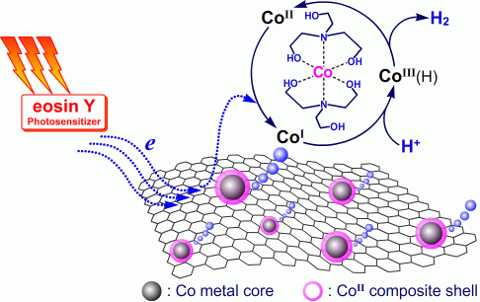
- Photocatalytic hydrogen evolution from water-splitting is a long-standing goal for researchers since it can help to supply the growing worldwide energy demand not only environmentally friendly but also sustainably [1][2][3][4]. Platinum, the most efficient hydrogen evolution co-catalyst, is rare and expensive


Photocatalysis
Beilstein J. Nanotechnol. 2014, 5, 1071–1072, doi:10.3762/bjnano.5.119
- complex process of solar energy driven water splitting and carbon dioxide reduction. Nanotechnology certainly plays a pivotal role in enabling a rational design of the structures, interfaces and surfaces with controllable features at a length scale comparable to chemical reactions. In this Thematic Series
Functionalized nanostructures for enhanced photocatalytic performance under solar light
Beilstein J. Nanotechnol. 2014, 5, 994–1004, doi:10.3762/bjnano.5.113
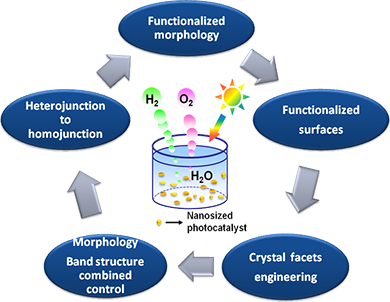
- hydrogen and oxygen from water splitting has a standard Gibbs free energy (ΔG) of 237 kJ/mol and is therefore an uphill reaction. Energy input is therefore indispensible for this reaction to proceed. In principle, the photocatalytic reaction over semiconductors is triggered by the direct absorption of a
- photon by the band gap of semiconductor materials (Figure 1). Upon photon excitation, the photogenerated charges move to the surface of semiconductor particles where photocatalytic reactions occur. Consequently, the efficiency of photocatalytic water splitting is closely affected by the band structure of
- the semiconductors [8]. The band gap of semiconductor photocatalysts must be larger than the potential of water electrolysis to meet the energetic requirement for overall water splitting (1.23 eV, corresponding to an absorption threshold of 1000 nm). In particular, the bottom level of the conduction


Enhancement of photocatalytic H2 evolution of eosin Y-sensitized reduced graphene oxide through a simple photoreaction
Beilstein J. Nanotechnol. 2014, 5, 801–811, doi:10.3762/bjnano.5.92
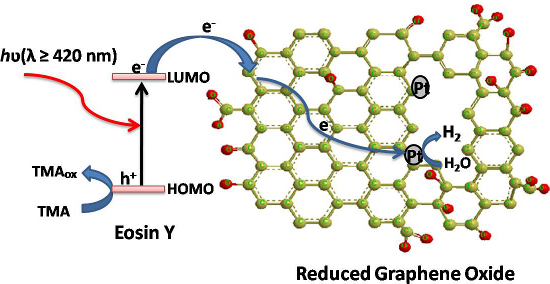
- ; graphene oxide; H2 evolution; photocatalysis; photoreduction; sp2 conjugated domains; Introduction Hydrogen is an efficient and green energy carrier. Photocatalytic water splitting into hydrogen by means of solar energy and semiconductor photocatalysts is a environmentally friendly way to produce storable



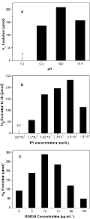


Visible light photooxidative performance of a high-nuclearity molecular bismuth vanadium oxide cluster
Beilstein J. Nanotechnol. 2014, 5, 711–716, doi:10.3762/bjnano.5.83

- photocatalysts and is employed in photochemical and photoelectrochemical visible-light-driven water splitting systems [37][38][39][40][41]. At the start of our studies, no molecular bismuth vanadium oxides were known in the literature. We thus developed a synthetic approach to bismuth vanadate clusters based on


Nanostructure sensitization of transition metal oxides for visible-light photocatalysis
Beilstein J. Nanotechnol. 2014, 5, 696–710, doi:10.3762/bjnano.5.82
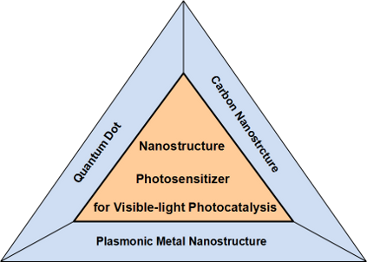
- water splitting in order to produce hydrogen [35][38][39][41][45] and the photocatalytic reduction of CO2 were reported [51]. In addition to the applications in photocatalysis, quantum dots are often used as photosensitizer to sensitize the mesoporous TiO2 photoelectrode as the photoanode in quantum
- [59][60][61][62][63], photocatalytic water splitting [64][65] photoelectrochemical water splitting [66][67][68][69][70][71][72], photocatalytic conversion of CO2 with H2O to hydrocarbon fuels [73], and degradation of organic molecules [74]. In 2004, Tatsuma et al. reported that nanoporous TiO2 films
- irradiation [65]. Ingram et al. employed plasmonic Ag nanocubes as building blocks to fabricate silver nanocube-N doped TiO2 photoelectrocatalysts for PEC water splitting [67]. An investigation of the relationship between the photocurrent and light intensity by Ingram et al. revealed that N-doped TiO2


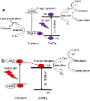


A visible-light-driven composite photocatalyst of TiO2 nanotube arrays and graphene quantum dots
Beilstein J. Nanotechnol. 2014, 5, 689–695, doi:10.3762/bjnano.5.81
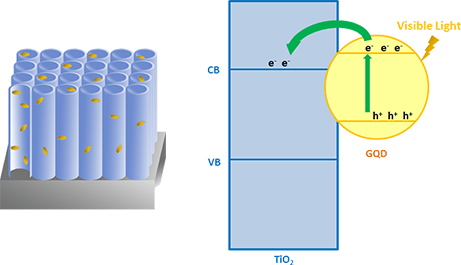
- photoelectrochemical water splitting [38]. In the present work, a composite photocatalyst of graphene quantum dots and TiO2 nanotube arrays (GQDs/TNAs) was fabricated by the coupling reaction between carboxyl-containing GQDs and amine-functionalized TNAs (Scheme 1). The experimental data revealed that sensitization of


Dye-sensitized Pt@TiO2 core–shell nanostructures for the efficient photocatalytic generation of hydrogen
Beilstein J. Nanotechnol. 2014, 5, 360–364, doi:10.3762/bjnano.5.41
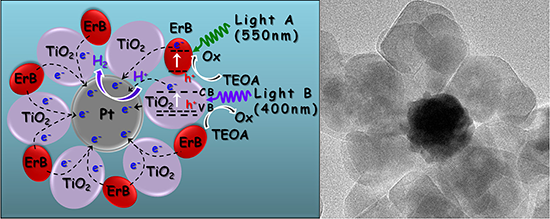
- particle bridge. Keywords: charge transfer; dye-sensitization; photocatalysis; photocatalyst; solar fuels; water splitting; Introduction Since Honda and Fujishima reported the effective hydrogen evolution from water splitting by a TiO2 and Pt electrode in a photoelectrochemical cell in the early 1970s [1
- and Pt/TiO2 for water splitting under irridiation with the given for 2 h while using TEOA as the sacrificial reagent. Schematic illustration of the photocatalytic H2 generation by ErB-sensitized Pt@TiO2 core–shell nanostructures under irradiation of light A (550 ± 20 nm) and/or light B (400 ± 10 nm


Confinement dependence of electro-catalysts for hydrogen evolution from water splitting
Beilstein J. Nanotechnol. 2014, 5, 195–201, doi:10.3762/bjnano.5.21
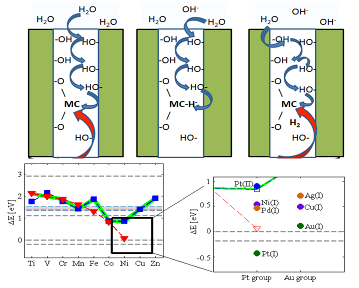
- assembly for the cathode process during water splitting. A computational model was designed to determine how alloying elements control the fraction of H2 released during zirconium oxidation by water relative to the amount of hydrogen picked up by the corroding alloy. This model is utilized to determine the
- ; Introduction Molecular hydrogen produced by water splitting constitutes the archetypical energy carrier in chemistry and is a main target process for the future harvesting of solar energy. Today, water splitting represents large economical values, i.e., it comprises a significant fraction of the total
- hydrogen evolution activity in water splitting by tailoring TM(OH)2-Pt electro-catalyst/electrode assemblies, where TM represents Mn2+, Fe2+, Co2+ and Ni2+. The role of these hydroxides was to catalyze water dissociation. In this context, the objective of the present study is to contribute a novel


Quantum size effects in TiO2 thin films grown by atomic layer deposition
Beilstein J. Nanotechnol. 2014, 5, 77–82, doi:10.3762/bjnano.5.7
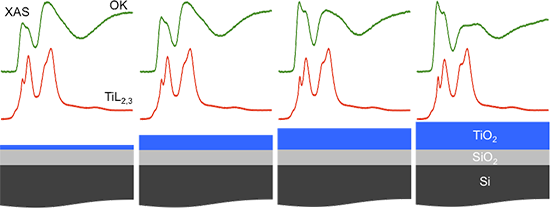
- size effects; titanium dioxide (TiO2); water splitting; X-ray absorption spectroscopy (XAS); Introduction Titanium dioxide (TiO2) is an important material for the photoelectrolysis of water [1] and for many other photocatalytic reactions [2]. Its effective conversion of solar light, although limited


Preparation of NiS/ZnIn2S4 as a superior photocatalyst for hydrogen evolution under visible light irradiation
Beilstein J. Nanotechnol. 2013, 4, 949–955, doi:10.3762/bjnano.4.107
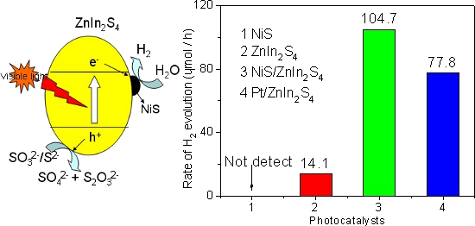
- ; Introduction Hydrogen is a clean and green fuel. The conversion and store of solar energy in the form of hydrogen by photocatalytic water splitting holds great promise to meet the future energy and environment requirements [1][2][3]. Ever since the pioneering work of a photo-electrochemical cell using Pt-TiO2
- electrodes for water splitting by Fujishima and Honda in 1972, great efforts have been devoted to the development of highly efficient semiconductor photocatalysts for hydrogen production [4]. So far, a variety of active photocatalysts for hydrogen production, including metal oxides [5][6][7][8], sulfides [9





