


Search results
Search for "wetting" in Full Text gives 182 result(s) in Beilstein Journal of Nanotechnology.
Pure and mixed ordered monolayers of tetracyano-2,6-naphthoquinodimethane and hexathiapentacene on the Ag(100) surface
Beilstein J. Nanotechnol. 2019, 10, 1188–1199, doi:10.3762/bjnano.10.118
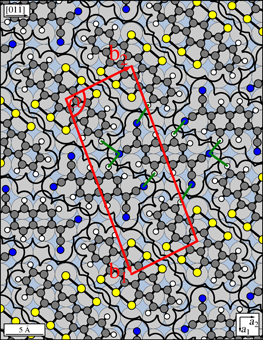
- that no de-wetting from the Ag(100) surface by formation of small three-dimensional clusters occurred over time. HTPEN forms two different structures on Ag(100) depending on the coverage. The predominantly observed phase has a slightly larger unit cell (ca. 10%) than the second phase with a more


Porous N- and S-doped carbon–carbon composite electrodes by soft-templating for redox flow batteries
Beilstein J. Nanotechnol. 2019, 10, 1131–1139, doi:10.3762/bjnano.10.113
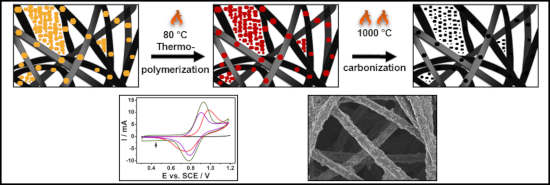
- (H2SO4, for analysis, 96%) was utilized from Acros Organics. Prior to each measurement the electrolyte was purged with nitrogen for at least 15 min to make sure that there was no remaining dissolved oxygen in the solution. The homogeneous wetting of the felts was ensured by dipping them into the



CuInSe2 quantum dots grown by molecular beam epitaxy on amorphous SiO2 surfaces
Beilstein J. Nanotechnol. 2019, 10, 1103–1111, doi:10.3762/bjnano.10.110
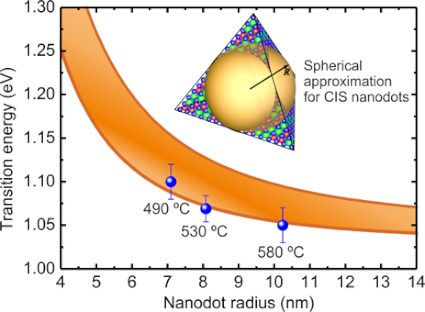
- called Cu-poor CIS composition, CIS is capable of maintaining its crystalline structure as well as its optoelectronic properties [39]. We interpret this thin layer as a 2D wetting layer (WL) formed during the first steps of growth that transits to 3D nanodots as the growth continues. This WL also appears
- could also be expected from the Cu-poor CIS wetting layer. We would expect the WL to behave as a thin (ca. 1.3 nm) quantum well with a narrow PL emission. However, the TEM analysis is highly localized, and the thickness of the layer could vary in other regions of the sample. To analyse the PL emissions
- in more detail, simple quantum confinement calculations were carried out considering a hard wall spherical QD of radius R and the wetting layer as a hard wall quantum well (QW) of thickness L. The calculations consider the free exciton emission for the QD and QW, respectively. The first transition


Concurrent nanoscale surface etching and SnO2 loading of carbon fibers for vanadium ion redox enhancement
Beilstein J. Nanotechnol. 2019, 10, 985–992, doi:10.3762/bjnano.10.99
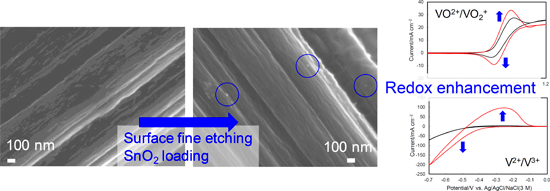
- , 100B/W (BAS). An Au wire as a lead was connected to the upper side of the 1 cm2 sample to form the working electrode. The electrode was immersed in ethanol and then rinsed with high-purity water to fully wet the electrode and to minimize the influence of wetting [7][30]. The counter electrode was



Novel reversibly switchable wettability of superhydrophobic–superhydrophilic surfaces induced by charge injection and heating
Beilstein J. Nanotechnol. 2019, 10, 840–847, doi:10.3762/bjnano.10.84
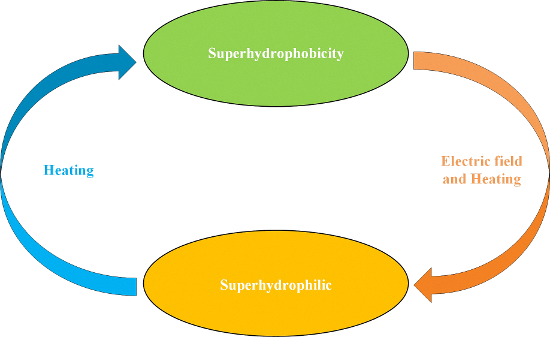
- termed electrowetting [19]. The equilibrium morphology under electrical wetting conditions is determined by the equilibrium of Maxwell stress and Laplace pressure [20][21]. Verplanck et al. [22] reported the reversible electrical wetting of droplets on superhydrophobic silicon nanowires in air and oil
- environments. At 150 V, the maximum contact angle could be reduced by 23° by electrical wetting in a reversible manner. Li et al. [23] studied the diffusion of droplets of ionic liquids on an insulating electrode subjected to an external voltage. The catalytic effect of a vertical electric field on the
- different sizes using a voltage of 3 V and a 25 V electrical wetting. The maximum contact angle decreased from 150 ± 0.1° to 20° and the contact-angle saturation conditions changed with droplet size. Zahiri et al. [27] reported the reversible active control of surface wettability of copper electrodeposition


Features and advantages of flexible silicon nanowires for SERS applications
Beilstein J. Nanotechnol. 2019, 10, 725–734, doi:10.3762/bjnano.10.72
- strong enough to overcome the stiffening caused by sputtering. Another significant substrate feature is surface wetting. Unlike vertical SiNWs [38], horizontal SiNWs are hydrophilic, as freshly prepared SiNW substrate as well as after Ag sputtering (Supporting Information File 1, Figure S12). The reasons


Self-assembly and wetting properties of gold nanorod–CTAB molecules on HOPG
Beilstein J. Nanotechnol. 2019, 10, 696–705, doi:10.3762/bjnano.10.69
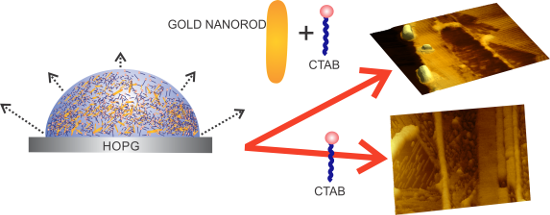
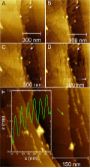
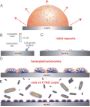
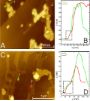
- such studies could be relevant especially in those areas where conversion of a nonwetting surface (or some particular regions of a surface) to a wetting ones is desired. Also, the presence of such CTAB layers (which cannot be observed using scanning electron microscopy (SEM)) between the substrate and


Topochemical engineering of composite hybrid fibers using layered double hydroxides and abietic acid
Beilstein J. Nanotechnol. 2019, 10, 589–605, doi:10.3762/bjnano.10.60
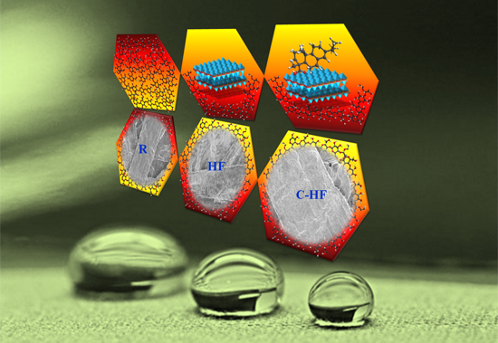
- beginning and subsequently at 1 s and 2 s intervals until either the water droplet was absorbed or no changes during wetting occurred. The results were analyzed and interpreted with Attention Theta software (Biolin Scientific, Sweden) based on the Young-Laplace function for iterative CA calculation. Oil




Biological and biomimetic surfaces: adhesion, friction and wetting phenomena
Beilstein J. Nanotechnol. 2019, 10, 481–482, doi:10.3762/bjnano.10.48

- Keywords: adhesion; air retention; contact mechanics; fluid transport; friction; functional gradients; wetting; This Thematic Series is the continuation of the previous series on the broad topic of biological and bioinspired materials and surfaces [1][2][3]. This collection of articles displays a current
- cross section of recent developments in this highly diverse and interdisciplinary field of research. The articles highlight recent achievements in the understanding of animal and plant surfaces in the broadest context of adhesion, friction, and wetting phenomena on one hand. On the other hand, they
Ultraviolet patterns of flowers revealed in polymer replica – caused by surface architecture
Beilstein J. Nanotechnol. 2019, 10, 459–466, doi:10.3762/bjnano.10.45
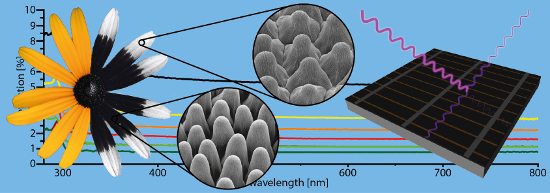
- also be considered that the cuticle will interact with many different environmental influences, for example, wetting, contamination, and electromagnetic radiation [3][4] as well. Ultraviolet (UV) radiation in the wavelength range 280–380 nm is particularly crucial for plants, for example, when


Interaction of Te and Se interlayers with Ag or Au nanofilms in sandwich structures
Beilstein J. Nanotechnol. 2019, 10, 238–246, doi:10.3762/bjnano.10.22
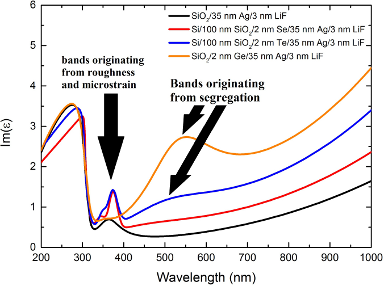
- the silver towards its surface, which they interpreted as segregation. In 2001, a similar discovery was made for Ag layers grown on Cu [24]. Since then, the effects of this phenomenon have attracted little attention. In 2014, Stefaniuk et al. [14] observed that Ag thin layers on top of Ge wetting
- are good wetting films for silver and gold. Although the plasmonic layers deposited on Te films have their grains size decreased, the XRR extracted layer density profiles show that the density of a layer increases with increasing distance from the SiO2/metal interface, which is the opposite of the
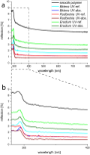
- have segregated to the surface. The poor wetting (or even dewetting) of silver by Se and Te has one more attribute. The intensity of the modified Lorentz band [37] centered at 275–300 nm decreased while the intensity of the bands from 325 to 400 nm increased. The latter are connected to the roughness


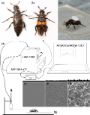
A comparison of tarsal morphology and traction force in the two burying beetles Nicrophorus nepalensis and Nicrophorus vespilloides (Coleoptera, Silphidae)
Beilstein J. Nanotechnol. 2019, 10, 47–61, doi:10.3762/bjnano.10.5
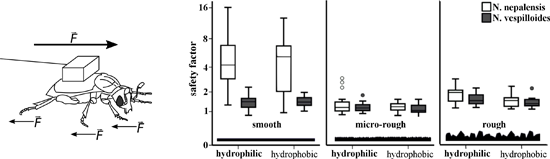
- smooth surfaces, possibly being connected to the improved yield stress and slip resistance in this species. On the other hand, under certain conditions, more viscous fluids might also be able to reduce friction (e.g., because of reduced wetting properties). Hence, our conclusion remains a matter of



A new bioinspired method for pressure and flow sensing based on the underwater air-retaining surface of the backswimmer Notonecta
Beilstein J. Nanotechnol. 2018, 9, 3039–3047, doi:10.3762/bjnano.9.282
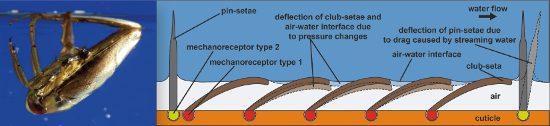
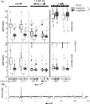
- high adhesive forces, in turn indicating that the pins became stuck inside the droplet. When the droplet lies on the surface, the clubs support the droplet and prevent surface wetting of the hemelytron (Figure 6b). The results so far suggest that Notonecta uses air layers in combination with


Femtosecond laser-assisted fabrication of chalcopyrite micro-concentrator photovoltaics
Beilstein J. Nanotechnol. 2018, 9, 3025–3038, doi:10.3762/bjnano.9.281
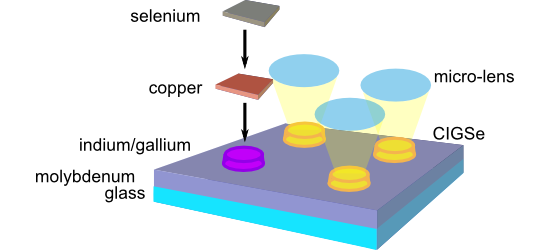
- deposition conditions, such that a significant wetting layer formed in addition to gallium islands. Due to the different temperature dependence of surface mobility and adsorption–desorption equilibria, a sequential PVD process turned out necessary for the growth of (In,Ga) islands, whereby indium islands
- were grown first, onto which gallium was subsequently deposited. Optimum gallium deposition conditions were found to be a substrate temperature of ca. 400 °C and a deposition rate of 0.15 Å/s. Despite preferential aggregation of gallium at the existing indium islands, an additional gallium wetting
- layer was always observed. In order to avoid the undesired formation of a thin CuGaSe2 layer connecting the separate CIGSe islands after processing, this gallium wetting layer was removed by a mild reactive ion etching step in Ar+ plasma. LIFT approach The second approach presented here for the


In situ characterization of nanoscale contaminations adsorbed in air using atomic force microscopy
Beilstein J. Nanotechnol. 2018, 9, 2925–2935, doi:10.3762/bjnano.9.271
- contamination; tip cleaning; tip–sample interaction; van der Waals interaction; Introduction Surface science is fundamental to understand many processes in industrial applications, environmental science, biology, medicine and phenomena such as self-assembly [1], friction [2][3] and wetting [4]. In any study
- . In ambient air, surfaces are covered by a variety of molecules and nanoparticles that drastically modify its properties as compared to ideal and clean surfaces. Quite a few fields ranging from fundamental studies of wetting phenomena [6] to semiconductor industry [7] are very aware of the importance


Controlling surface morphology and sensitivity of granular and porous silver films for surface-enhanced Raman scattering, SERS
Beilstein J. Nanotechnol. 2018, 9, 2813–2831, doi:10.3762/bjnano.9.263
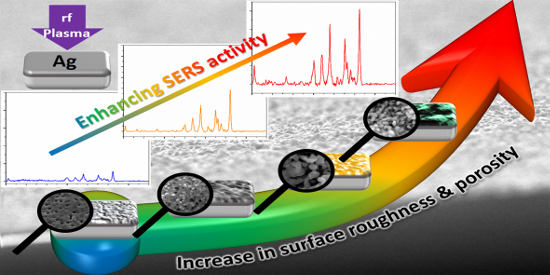
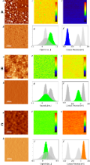
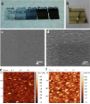
- silver crystallites in the films. With the systematic combination of oxidizing and reducing rf plasmas and a variation of the different plasma parameters, complex 3D silver nanostructures with tunable surface roughness and nanoporosity can be obtained. Optical behavior and surface wetting of differently
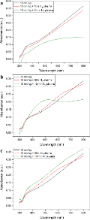
- well-known for silver nanoparticles. In case of argon plasma treatment (Figure 9c) increasing plasma treatment time results in an increase of absorption of the silver film over the whole UV–vis spectrum indicating some sort of densification of the silver film [87]. The wetting behavior was analyzed by





Biomimetic surface structures in steel fabricated with femtosecond laser pulses: influence of laser rescanning on morphology and wettability
Beilstein J. Nanotechnol. 2018, 9, 2802–2812, doi:10.3762/bjnano.9.262
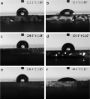
- objective to reproduce not only the geometry and morphology of structures found in natural systems, but – most importantly – their specific functionality. Biomimetic applications that aim to control the wetting properties of a material surface must take into account the surface topography, since it strongly
- influences the surface energy and thus the wetting behavior [5][6][7][8][9][10]. A particular kind of controllable surface modification induced by pulsed lasers was discovered in 1965 by Milton Birnbaum [11] – upon irradiation of a germanium wafer with multiple laser pulses, self-organized periodic surface
- wetting and friction properties of a material for numerous applications [5][6][8][23][24]. Yet the type of LIPSSs investigated so far for these applications was mostly limited to those mentioned above (ripples, groves and spikes), and less so the more complex structures that are accessible by exploring a



Variation of the photoluminescence spectrum of InAs/GaAs heterostructures grown by ion-beam deposition
Beilstein J. Nanotechnol. 2018, 9, 2794–2801, doi:10.3762/bjnano.9.261
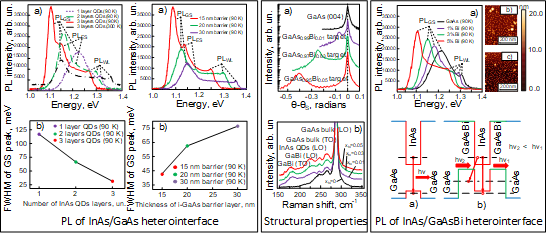
- : the top with a GaAs strain-reducing layer; the bottom with a strained buffer layer (wetting layer) [15][16][17][18][19]. Thus, the simplified energy band diagram of the active region of an InAs/GaAs heterostructure is an InAs quantum dot built into a GaAs matrix in the form of a quantum well. It
- quantum dot. In the case of using the third method, other mechanisms of optical transitions are possible. The growth of QDs occurs in the Stranski–Krastanov mode, when the substrate wetting layer is elastically stressed. An InAs/GaAs heteropair is ideal for creating conditions for a transition from 2D to
- QD or in the wetting layer. Therefore, the photoluminescence in the grown samples can go through the ground (PLGS) and excited (PLES) states of the electrons at the QDs and also through the energy levels in the wetting layer (PLWL). The measured PL spectra of the vertically stacked QD arrays are


Characterization of the microscopic tribological properties of sandfish (Scincus scincus) scales by atomic force microscopy
Beilstein J. Nanotechnol. 2018, 9, 2618–2627, doi:10.3762/bjnano.9.243
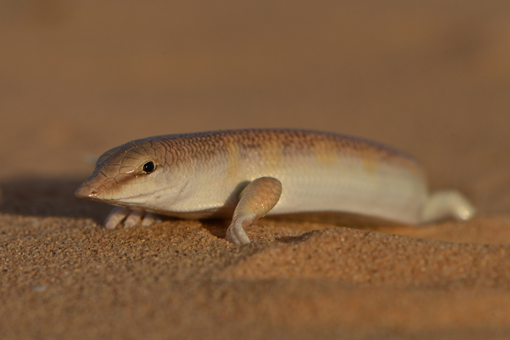
- . Nonetheless, larger images frequently reveal very fine groves, which might originate from scratches. A cross section of a dorsal scale imaged by electron microscopy is displayed in Figure 3c and shows an inner structure that suggest that the scale consists of several thin layers. Wetting properties Some


ZnO-nanostructure-based electrochemical sensor: Effect of nanostructure morphology on the sensing of heavy metal ions
Beilstein J. Nanotechnol. 2018, 9, 2421–2431, doi:10.3762/bjnano.9.227
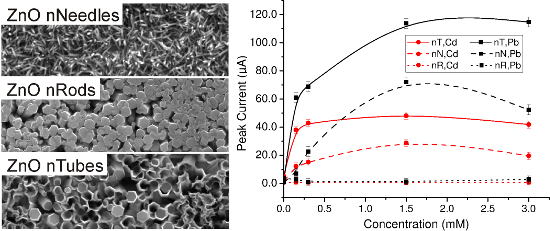
- chemically pure: no other elements other than Zn and O were detected. Cyclic voltammetry studies Prior to the CV measurements, 250 μL of distilled water was pipetted into each cell, left for ten minutes to ensure the complete wetting of the nanostructured surface, and then the CV curves were recorded. It was


Spin-coated planar Sb2S3 hybrid solar cells approaching 5% efficiency
Beilstein J. Nanotechnol. 2018, 9, 2114–2124, doi:10.3762/bjnano.9.200
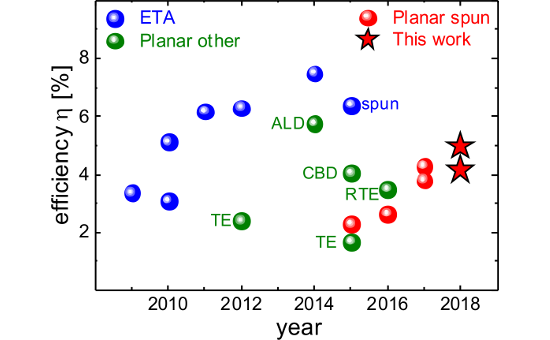
- File 1. In the relevant temperature range of 265 °C to 300 °C, the Sb2S3 domains tend towards a droplet-like morphology with increasing temperature which can be interpreted as an on-going de-wetting of the substrate. The issue of de-wetting was reported for the transition from the amorphous to the
- . For the Sb-TU process, higher crystallization temperatures cause a de-wetting of the substrate. New features arise on top of the Sb2S3 film in the Sb-BDC process for longer crystallization times and crystallization at 300 °C. At the same time significantly increased defect formation was observed. The


A visible-light-controlled platform for prolonged drug release based on Ag-doped TiO2 nanotubes with a hydrophobic layer
Beilstein J. Nanotechnol. 2018, 9, 1793–1801, doi:10.3762/bjnano.9.170
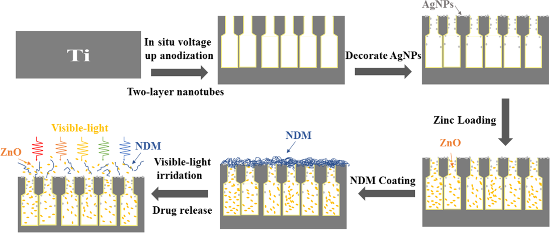
- their well-defined geometry, stable structure [1], high surface-to-volume ratio, highly hydrophilic wetting characteristic [2][3], and remarkable photocatalysis properties [4]. However, the traditional drug delivery systems still exhibit many obvious drawbacks such as low drug solubility, uncontrolled





Preparation and morphology-dependent wettability of porous alumina membranes
Beilstein J. Nanotechnol. 2018, 9, 1423–1436, doi:10.3762/bjnano.9.135
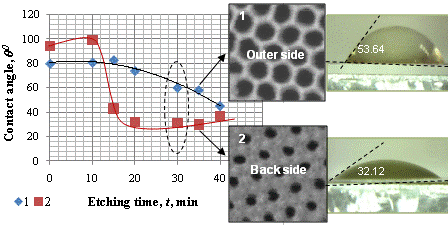
- University, Mira 19, Yekaterinburg 620002, Russia 10.3762/bjnano.9.135 Abstract This article presents the preparation and study of the wetting properties of porous alumina membranes (PAMs) with a thickness of 25 to 75 μm and with a different pore sizes. The fabrication process features, scanning electron
- microscopy and atomic force microscopy characterization results are presented. The comparative analysis of PAM surfaces (outer and inner) and the effect of morphology of these surfaces on the wetting properties are discussed. Both alumina surfaces show significant morphology-dependent wettability
- of the pores as well as the physical and chemical properties of the surface and walls of the PAM pores is a very urgent task. No less important is the process of wetting the membrane with the depositing material (or its solution), depending on the variation of the template synthesis [27][28


Theoretical study of strain-dependent optical absorption in a doped self-assembled InAs/InGaAs/GaAs/AlGaAs quantum dot
Beilstein J. Nanotechnol. 2018, 9, 1075–1084, doi:10.3762/bjnano.9.99
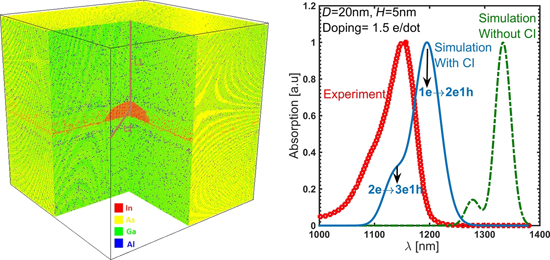
- nm. The wetting layer is two monolayers. The measured system has been doped with sheet doping of two electrons per dot. The strain controlling layer is made of In0.15Ga0.85As and is sandwiched between two layers of GaAs each with a thickness of 1 nm. Next, there are two layers of Al0.22Ga0.78As, each
- with a base diameter of 20 nm and a height of 5 nm, with a wetting layer of two monolayers. The strain control layer of In0.15Ga0.85As is sandwiched between two 1 nm layers of GaAs, and two 2 nm layers of Al0.22Ga0.78As. The rest of the structure is made of Al0.07Ga0.93As. The atomistic grid of the




Review on nanoparticles and nanostructured materials: history, sources, toxicity and regulations
Beilstein J. Nanotechnol. 2018, 9, 1050–1074, doi:10.3762/bjnano.9.98

- their weightless wing material [220][221][222]. Insect wing surfaces demonstrate a rough and highly ordered structure comprised of micro- and nanoscale properties to minimize their mass and protect them against wetting and pollutants. A methodical terminology to explain the structural properties of





