Search results
Search for "zinc oxide" in Full Text gives 128 result(s) in Beilstein Journal of Nanotechnology.
Novel reversibly switchable wettability of superhydrophobic–superhydrophilic surfaces induced by charge injection and heating
Beilstein J. Nanotechnol. 2019, 10, 840–847, doi:10.3762/bjnano.10.84
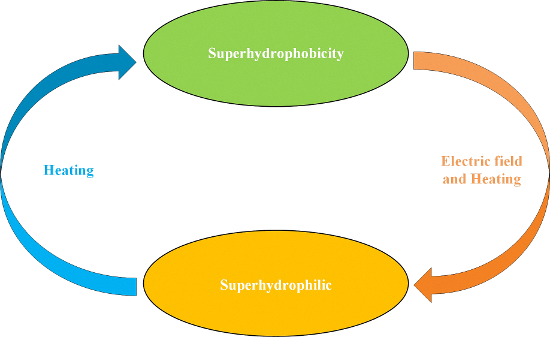
- contact angle of 0°. Li et al. [8] prepared a superhydrophobic and superhydrophilic zinc oxide film on a bamboo surface. The surface was irradiated by ultraviolet radiation/darkroom for 12 h. A storage period of ten days induced the reversible switching between superhydrophilicity and superhydrophobicity


Geometrical optimisation of core–shell nanowire arrays for enhanced absorption in thin crystalline silicon heterojunction solar cells
Beilstein J. Nanotechnol. 2019, 10, 322–331, doi:10.3762/bjnano.10.31
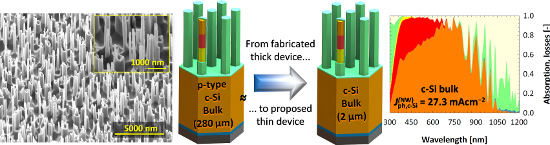
- . Multiple studies of nanowire solar cells can be found in literature, using different materials: indium phosphide [18][19], gallium arsenide [20][21], zinc oxide [15][22], crystalline silicon [6][8][11][12][13][16][17][23][24][25][26][27][28][29][30][31][32][33][34], amorphous silicon alloys [35][36][37


Site-specific growth of oriented ZnO nanocrystal arrays
Beilstein J. Nanotechnol. 2019, 10, 274–280, doi:10.3762/bjnano.10.26
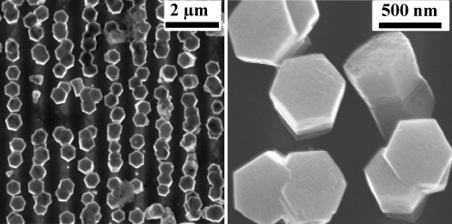
- ; growth kinetics; nanocrystals; nucleation; twinning; zinc oxide; Introduction Metal oxide semiconductor nanostructures are quite interesting not only in terms of the basic growth mechanism involved in their fabrication, but also due to the large number of applications based on them in the field of


Graphene-enhanced metal oxide gas sensors at room temperature: a review
Beilstein J. Nanotechnol. 2018, 9, 2832–2844, doi:10.3762/bjnano.9.264
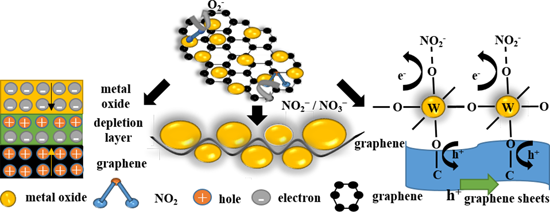
- achieved at all [19][20]. Metal-oxide semiconductors (MOS), including tin oxide (SnO2), titanium dioxide (TiO2), zinc oxide (ZnO), copper oxide (CuO), tungsten oxide (WO3), indium oxide (In2O3), ferric oxide (Fe2O3) and cobalt oxide (Co3O4) are important materials for gas sensors [21][22][23][24][25][26



Near-infrared light harvesting of upconverting NaYF4:Yb3+/Er3+-based amorphous silicon solar cells investigated by an optical filter
Beilstein J. Nanotechnol. 2018, 9, 2788–2793, doi:10.3762/bjnano.9.260
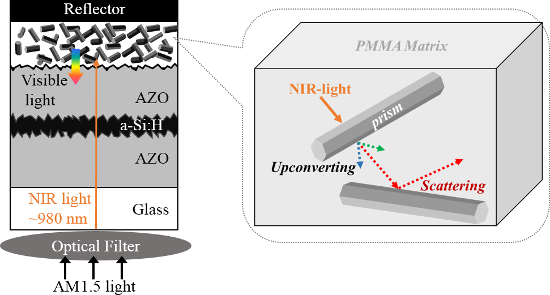
- prepared (Figure 3a). One a-Si:H layer of ca. 350 nm is sandwiched between two aluminum-doped zinc oxide (AZO) contacts. The thickness of the AZO contacts is approximately 1.5 μm. From Figure 3b, the photoelectric conversion efficiency of the a-Si:H solar cell is calculated to be 6.68% at the maximum power


Oriented zinc oxide nanorods: A novel saturable absorber for lasers in the near-infrared
Beilstein J. Nanotechnol. 2018, 9, 2730–2740, doi:10.3762/bjnano.9.255
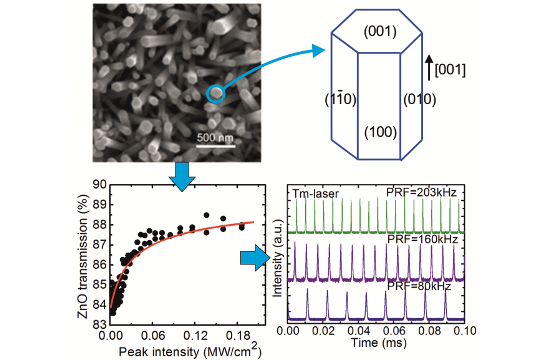
- , Applied Physics Department, School of Engineering Sciences, KTH Royal Institute of Technology, Isafjordsgatan 22, SE-164 40 Kista Stockholm, Sweden 10.3762/bjnano.9.255 Abstract Zinc oxide (ZnO) nanorods (NRs) oriented along the crystallographic [001] axis are grown by the hydrothermal method on glass
- nanorods; Q-switching; saturable absorption; solid-state lasers; zinc oxide; Introduction Zinc oxide (ZnO) is a well-known II–IV group wide-bandgap semiconductor (Eg = 3.37 eV), possessing a hexagonal wurtzite-type (sp. gr. P63mc) structure with unit cell parameters a = 3.25 Å, c = 5.20 Å. In recent years




Exploring the photoleakage current and photoinduced negative bias instability in amorphous InGaZnO thin-film transistors with various active layer thicknesses
Beilstein J. Nanotechnol. 2018, 9, 2573–2580, doi:10.3762/bjnano.9.239
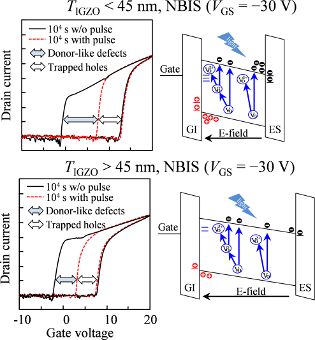
- to their outstanding properties such as high electron mobility, good transparency to visible light, and low process temperature with good uniformity [1][2][3][4]. Among the numerous AOS materials, indium gallium zinc oxide (IGZO) is one of the most promising candidates used as the active layer


ZnO-nanostructure-based electrochemical sensor: Effect of nanostructure morphology on the sensing of heavy metal ions
Beilstein J. Nanotechnol. 2018, 9, 2421–2431, doi:10.3762/bjnano.9.227
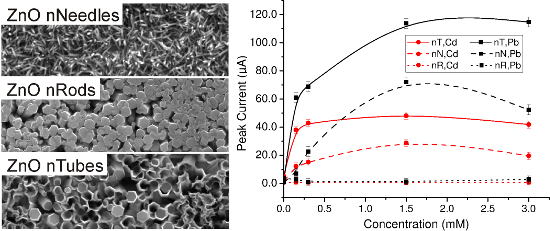
- stream of dry nitrogen and thermally treated at 350 °C for 30 min in air, such that zinc acetate was completely converted into zinc oxide. Subsequently, the samples were slowly cooled to room temperature. The nanostructured layer of the electrode was obtained by the hydrothermal synthesis method using an


Electrospun one-dimensional nanostructures: a new horizon for gas sensing materials
Beilstein J. Nanotechnol. 2018, 9, 2128–2170, doi:10.3762/bjnano.9.202

- ], Co3O4 [113][114], iron oxide (Fe2O3) [115][116], tin dioxide (SnO2) [76][117][118][119][120][121][122][123], zinc oxide (ZnO) [124][125][126][127][128][129][130], and indium oxide (In2O3) [78][80][131][132][133][134][135][136][137][138]. Table S2 in Supporting Information File 1 summarizes the sensing






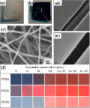
Fabrication of photothermally active poly(vinyl alcohol) films with gold nanostars for antibacterial applications
Beilstein J. Nanotechnol. 2018, 9, 2040–2048, doi:10.3762/bjnano.9.193
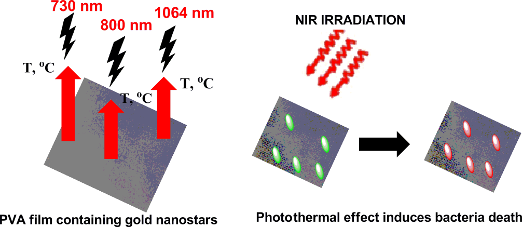
- studies have reported the preparation and the antibacterial efficacy of PVA films containing plant extracts, silver nanoparticles or zinc oxide nanoparticles [17][18][19][20][21][22]. However, when bacteria start to form biofilms they become resistant and conventional antibiotics do not eradicate biofilms


Nonlinear effect of carrier drift on the performance of an n-type ZnO nanowire nanogenerator by coupling piezoelectric effect and semiconduction
Beilstein J. Nanotechnol. 2018, 9, 1917–1925, doi:10.3762/bjnano.9.183
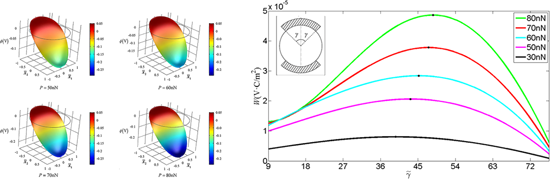
- -axis; piezoelectric potential; semiconductor; zinc oxide (ZnO); Introduction An acoustic wave propagating in piezoelectric semiconductors usually stimulates electric fields that bring charge carriers into motion, and conversely, the carrier motion will produce an opposite effect on the electric fields


![[Graphic 46]](/bjnano/content/inline/2190-4286-9-183-i59.svg?max-width=637&scale=1.18182) and (b) boundary electric displacement Dr at Ω for different end f...
and (b) boundary electric displacement Dr at Ω for different end f...


Nitrogen-doped carbon nanotubes coated with zinc oxide nanoparticles as sulfur encapsulator for high-performance lithium/sulfur batteries
Beilstein J. Nanotechnol. 2018, 9, 1677–1685, doi:10.3762/bjnano.9.159
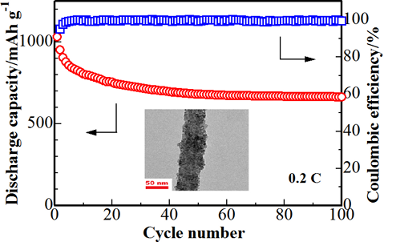
- carbon nanotubes coated with zinc oxide nanoparticles (ZnO@NCNT) were prepared via a sol–gel route as sulfur encapsulator for lithium/sulfur (Li/S) batteries. The electrochemical properties of the S/ZnO@NCNT composite cathode were evaluated in Li/S batteries. It delivered an initial capacity of 1032
- providing pathways for ion and electron transport. The as-prepared S/ZnO@NCNT composite is a promising cathode material for Li/S batteries. Keywords: batteries; nanocomposites; sol–gel processes; sulfur; zinc oxide (ZnO); Introduction Due to its high theoretical specific capacity of 1672 mAh·g−1 and
- this work, we synthesized nanocomposites of zinc oxide-coated nitrogen-doped carbon nanotubes with sulfur (S/ZnO@NCNT). ZnO was chosen because it is cheap, non-toxic and stable [14][15]. More importantly, ZnO demonstrates a strong affinity to polysulfides. In addition, NCNT was used due to its good


Light extraction efficiency enhancement of flip-chip blue light-emitting diodes by anodic aluminum oxide
Beilstein J. Nanotechnol. 2018, 9, 1602–1612, doi:10.3762/bjnano.9.152
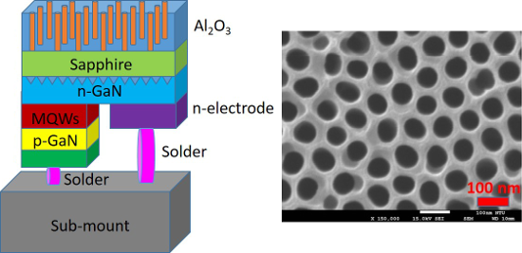
- with Ga-doped zinc oxide (GZO)/GaN as the base layer and then reducing the total reflectivity by changing the shape, thickness, and density of the microstructure through dry etching [12]. Li et al. increased the LEE of an InGaN-monolayer quantum-well LED by 1.8–1.9 times relative to that of a


Room-temperature single-photon emitters in titanium dioxide optical defects
Beilstein J. Nanotechnol. 2018, 9, 1085–1094, doi:10.3762/bjnano.9.100
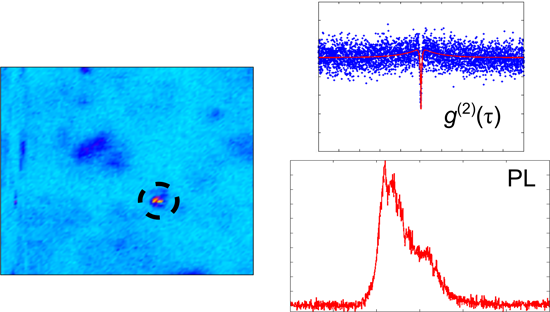
- types of single-photon emitters that include molecules [3], trapped atoms [4], quantum dots [5] and defects in diamond [6]. More recently point defects of wide-bandgap semiconductors, such as zinc oxide (ZnO) [7][8][9] and silicon carbide [10], were shown to exhibit room-temperature single-photon


Cyclodextrin inhibits zinc corrosion by destabilizing point defect formation in the oxide layer
Beilstein J. Nanotechnol. 2018, 9, 936–944, doi:10.3762/bjnano.9.86
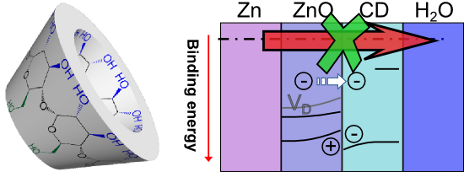
- reactions, forming precipitates such as hydrated zinc oxide [15]. ZnO is naturally an n-type semiconductor with a band gap of 3.4 eV [20]. Oxides formed in an aerated corrosion process are typically defect-rich oxides [21], especially in the presence of Cl− [15]. Consequently, the products remain initially


Facile synthesis of a ZnO–BiOI p–n nano-heterojunction with excellent visible-light photocatalytic activity
Beilstein J. Nanotechnol. 2018, 9, 789–800, doi:10.3762/bjnano.9.72
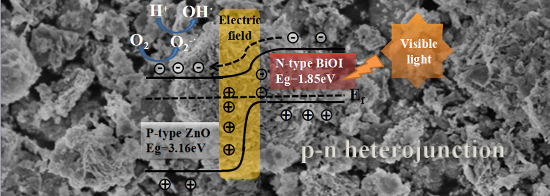
- degradation [3][4][5][6], nitrogen fixation [7][8], to solar fuel production [9]. The metal oxides, such as CdO [10], Al2O3 [11], and CuO [12][13], has attracted a lot of interest in photocatalytic applications. And among all of these metal oxides, it is titanium dioxide and zinc oxide (TiO2 and ZnO) that are


Mechanistic insights into plasmonic photocatalysts in utilizing visible light
Beilstein J. Nanotechnol. 2018, 9, 628–648, doi:10.3762/bjnano.9.59

- , the carrier concentration of aluminium-doped zinc oxide (AZO) can be shifted from 0.5 to 10 × 1020 cm–3 by varying the concentration of Al, thus contributing to the wide-range SPR (2200–880 nm) [144]. Despite the tunable plasmonic features of semiconductors, some plasmonic semiconductors are





Facile synthesis of ZnFe2O4 photocatalysts for decolourization of organic dyes under solar irradiation
Beilstein J. Nanotechnol. 2018, 9, 436–446, doi:10.3762/bjnano.9.42
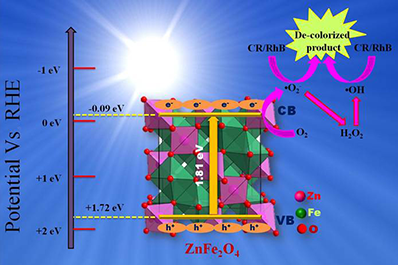
- fabrication cost [14]. ZnFe2O4 is an n-type semiconductor having a direct band gap with suitable band edge positions for various photocatalytic processes. It is a solid solution of ferric oxide and zinc oxide, which greatly enhances the charge carrier separation. To date, various methods such as refluxing


Sugarcane juice derived carbon dot–graphitic carbon nitride composites for bisphenol A degradation under sunlight irradiation
Beilstein J. Nanotechnol. 2018, 9, 353–363, doi:10.3762/bjnano.9.35
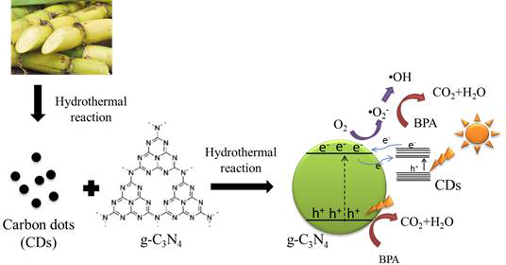
- -driven photocatalysis. Prasannan and Imae reported a simple and facile one-pot synthesis of fluorescent CDs from orange waste peels using the hydrothermal carbonization method. As prepared CDs were combined with zinc oxide (ZnO) to degrade naphthol blue–black azo dye under UV irradiation, and the


Gas-sensing behaviour of ZnO/diamond nanostructures
Beilstein J. Nanotechnol. 2018, 9, 22–29, doi:10.3762/bjnano.9.4
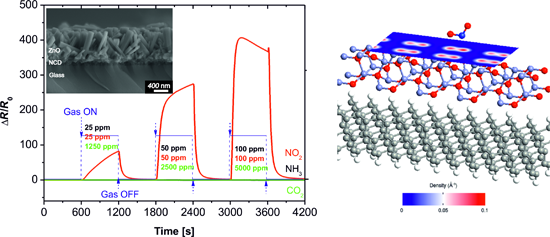
- : density functional theory (DFT); gas sensor; interdigital electrodes; nanocrystalline diamond; sensitivity; zinc oxide (ZnO); Introduction Currently, a number of studies have been focused on developing gas sensors based on nanomaterials and/or nanostructures. Metal oxides are the most common sensing


Low uptake of silica nanoparticles in Caco-2 intestinal epithelial barriers
Beilstein J. Nanotechnol. 2017, 8, 1396–1406, doi:10.3762/bjnano.8.141
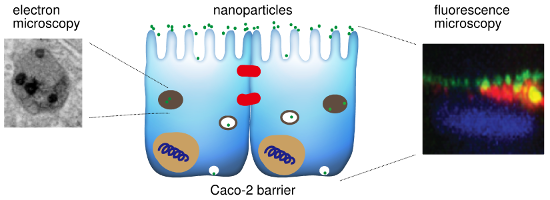
- been achieved [19][20][21]. Caco-2 cells have been used in the literature to investigate the potential toxic effects of a range of nanoparticles, including microporous silicon [22], silica [23][24][25][26][27][28] and zinc oxide [25]. Though such studies have mainly been performed on undifferentiated



Metal oxide nanostructures: preparation, characterization and functional applications as chemical sensors
Beilstein J. Nanotechnol. 2017, 8, 1205–1217, doi:10.3762/bjnano.8.122
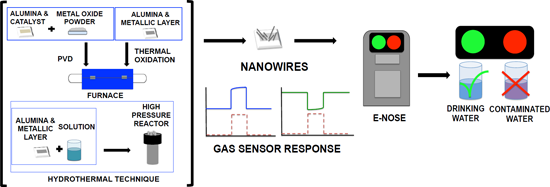
- conventional thin film counterparts, to see if the discerning ability of the electronic nose is affected by the integration of nanostructured active materials. In particular, we decided to integrate tin dioxide and zinc oxide devices, since these are the most widely used and studied materials for chemical
- ), tin dioxide (SnO2) and zinc oxide (ZnO) nanowires was performed by evaporation–condensation on alumina substrates [50]. It consists of a controlled evaporation of metal oxide powder followed by a condensation of vapor on a catalyzing substrate. The main parameters to optimize during evaporation


ZnO nanoparticles sensitized by CuInZnxS2+x quantum dots as highly efficient solar light driven photocatalysts
Beilstein J. Nanotechnol. 2017, 8, 1080–1093, doi:10.3762/bjnano.8.110
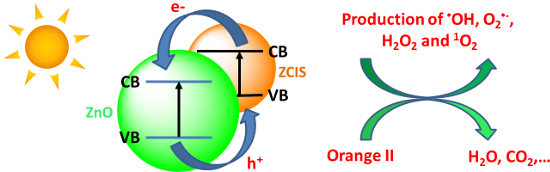
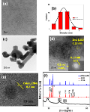
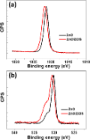
- acetate (Zn(OAc)2, 99.99%, Sigma), copper iodide (CuI, 99.999%, Sigma), dodecanethiol (DDT, >98%, Sigma), oleylamine (OA, 70%, Sigma), 1-octadecene (ODE, 90%, Sigma), zinc oxide (ZnO, 99%, Alfa Aesar), disodium terephthalate (DST, 99+%, Alfa), nitrotetrazolium blue chloride (NBT, >98%, Sigma), leuco





Synthesis of graphene–transition metal oxide hybrid nanoparticles and their application in various fields
Beilstein J. Nanotechnol. 2017, 8, 688–714, doi:10.3762/bjnano.8.74
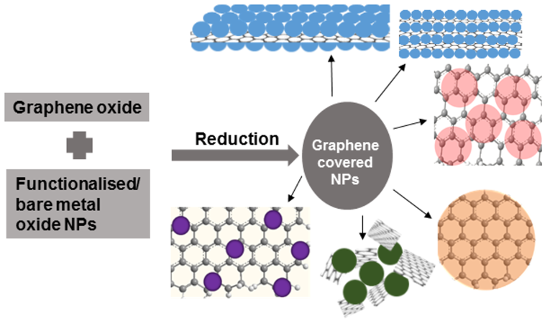
- scalable and relatively cost effective [14][15][16]. In particular, among all the TMO NPs, titanium dioxide [17], manganese oxide [18], iron oxide [19] and zinc oxide [20] have attracted the most attention due to their particular interesting and advantageous properties. By changing the reaction conditions
- hybrids by a rapid, facile microwave-assisted hydrothermal method for LIB applications [218]. CuO–graphene nanostructures were used as nonenzymatic glucose sensors [219], humidity sensors [220], for CO2 mineralisation [221], as supercapacitors [222], and as pseudo-capacitor electrode materials [223]. Zinc
- oxide (ZnO)–graphene hybrids Most of the reports of graphene hybrid systems are related to ZnO NPs, as it is very easy to control the size and morphology of ZnO NPs as well as the properties of the material. ZnO is an important II–VI semiconductor with large direct band gap of 3.37 eV and large exciton






Study of the surface properties of ZnO nanocolumns used for thin-film solar cells
Beilstein J. Nanotechnol. 2017, 8, 446–451, doi:10.3762/bjnano.8.48
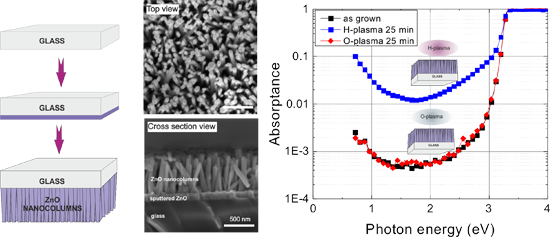
- -Si) solar cells, used for mass production, is composed of a transparent conductive oxide with roughness at the nanoscale on the front (TCO), e.g., tin oxide (SnO2) or zinc oxide (ZnO), followed by p–i–n Si layers (amorphous and/or nanocrystalline) in the cell and a back reflector [1][2]. In such a
- developed solar cells based on a three dimensional (3-D) design, in which periodically ordered zinc oxide nanocolumns (ZnO NCs) are used as a front electrode, have been of great interest, because they would exceed in the ultimate light trapping and provide excellent charge separation [5][6][7]. Due to the