Search results
Search for "aqueous solution" in Full Text gives 455 result(s) in Beilstein Journal of Nanotechnology. Showing first 200.
Hierarchical Bi2WO6/TiO2-nanotube composites derived from natural cellulose for visible-light photocatalytic treatment of pollutants
Beilstein J. Nanotechnol. 2022, 13, 745–762, doi:10.3762/bjnano.13.66
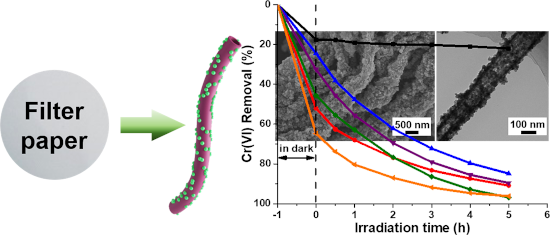
- × 1.0 cm2) and saturated calomel electrode (SCE) were used as the reference and counter electrodes, respectively. The Na2SO4 aqueous solution (0.5 M) was employed as the electrolyte and a xenon lamp with a 420 nm cutoff filter was used as the light source. The corresponding sample (5.0 mg) was
- pollutant solution was taken out at set intervals to determine the concentration variation of the pollutant solution. Cr(VI) and RhB were chosen as pollutant representatives, and the concentration of the RhB aqueous solution was measured by the absorbance at λ = 553 nm, analyzed through a Shimadzu UV-2450
- spectrophotometer. The concentration of the Cr(VI) aqueous solution was determined by the diphenylcarbazide colorimetric method as follows. 1,5-diphenylcarbazide (0.2 g) was dissolved in acetone/water (100.0 mL, v/v = 1:1) to form solution A, while H3PO4 (20.0 mL) and H2SO4 (20.0 mL) were homogeneously mixed in


Antibacterial activity of a berberine nanoformulation
Beilstein J. Nanotechnol. 2022, 13, 641–652, doi:10.3762/bjnano.13.56
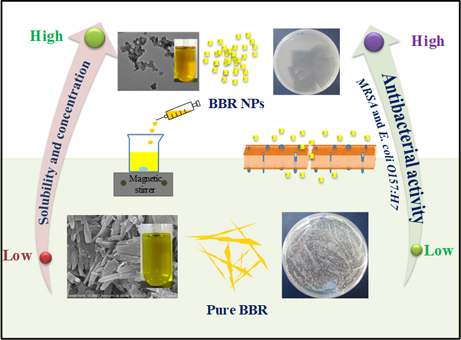
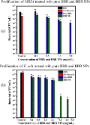
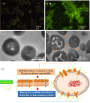
- BBR was significantly enhanced. The concentration of BBR NPs in aqueous solution (3.0 mg/mL) was higher than the saturation concentration of the precursor BBR (lower than 2.0 mg/mL). A notable increase in the antibacterial activity of BBR NPs against representative Gram-positive (MRSA) and Gram
- transmission electron microscopy (TEM, JEM1010, JEOL). The dynamic average size distribution and the stability of the prepared BBR NPs in aqueous solution were evaluated by dynamic light scattering (DLS) using a Zetasizer Nano ZS, Malvern Instruments. Antibacterial activity of BBR NPs The antibacterial



Fabrication and testing of polymer microneedles for transdermal drug delivery
Beilstein J. Nanotechnol. 2022, 13, 629–640, doi:10.3762/bjnano.13.55
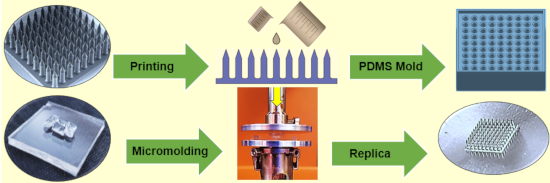
- to remove the fat layer to the thickness of 3 ± 0.1 mm [31], and thawed before insertion testing on a 3D printed stretching mechanism to mimic skin in vivo conditions (Figure 2a). The MN arrays were initially oxygen plasma cleaned for 1 minute before dip coating with a concentrated aqueous solution



Comparative molecular dynamics simulations of thermal conductivities of aqueous and hydrocarbon nanofluids
Beilstein J. Nanotechnol. 2022, 13, 620–628, doi:10.3762/bjnano.13.54
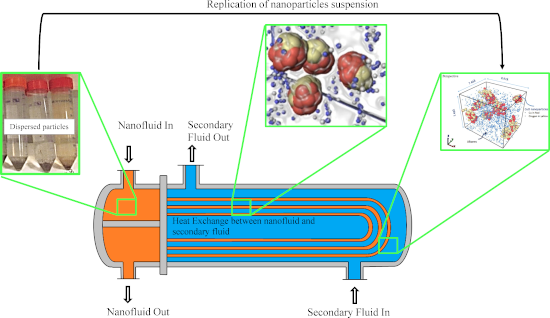
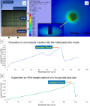
- constructed with 36 CuO molecules bonded by the COMPASS force field. This constructed nanoparticle size was 0.4 nm, as shown in Figure 1b. A molecular dynamics simulation of paraffin (i.e., eicosane C20H42) was also conducted for comparison with the aqueous solution. In the alkane/CuO nanofluid simulation
- thermal properties of the studied systems. The thermal conductivity of water/CuO nanofluids is significantly higher than that of nonpolar nanofluids. It was also found that due to higher velocities, intermolecular collisions and high kinetics of metal oxide atoms happen in aqueous solution, which results


A new method for obtaining the magnetic shape anisotropy directly from electron tomography images
Beilstein J. Nanotechnol. 2022, 13, 590–598, doi:10.3762/bjnano.13.51
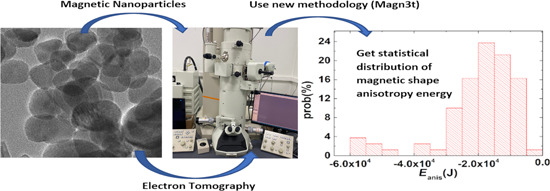
- analysis, 28–30 wt % solution of NH3 in water, Acros Organics). The preparation of the MNPs was performed by reverse precipitation, in which an aqueous solution (50 mL) of FeSO4 with the surfactant CTAB (2:1, mass ratio) was slowly dripped into a 50 mL basic solution of NaOH and NH4OH. The solution turned


Stimuli-responsive polypeptide nanogels for trypsin inhibition
Beilstein J. Nanotechnol. 2022, 13, 538–548, doi:10.3762/bjnano.13.45
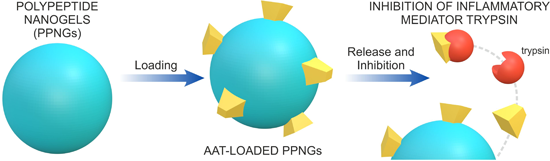
- solution. The surfactants SPAN 80 (0.855 g) and TWEEN 85 (0.045 g) were dissolved in CHX (20.4 g) and mixed with the aqueous solution of PHEG-Tyr with HRP. This two-phase system was cooled to 0 °C and dispersed using a UP200Ht ultrasonic processor equipped with a sonotrode S26d7 (Hielscher Ultrasonics GmbH
- crosslinking in inverse miniemulsion by modification of an earlier procedure [24]. Briefly, PHEG-Tyr (0.18 g) was dissolved in Q-H2O (4 g) in a round-bottom glass flask for 24 h at room temperature under magnetic stirring. Then, HRP (0.450 mg) was dissolved in Q-H2O (0.32 g) and added to the PHEG-Tyr aqueous


Design and characterization of polymeric microneedles containing extracts of Brazilian green propolis
Beilstein J. Nanotechnol. 2022, 13, 503–516, doi:10.3762/bjnano.13.42
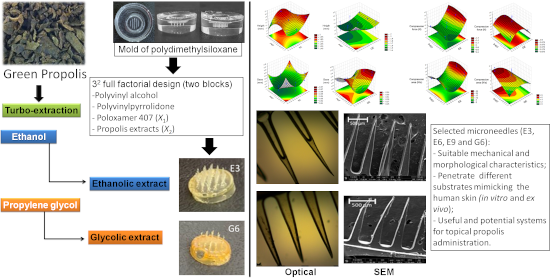
- extraction. The ethanolic extract (EE) was obtained using ethanol 96° GL and the comminuted drug with a drug/solvent (w/w) ratio of 3:7. The glycolic extract (GE) was prepared using the comminuted drug and an aqueous solution of propylene glycol 50% (w/w) and the same drug/solvent (w/w) ratio of 3:7. The


The role of sulfonate groups and hydrogen bonding in the proton conductivity of two coordination networks
Beilstein J. Nanotechnol. 2022, 13, 437–443, doi:10.3762/bjnano.13.36
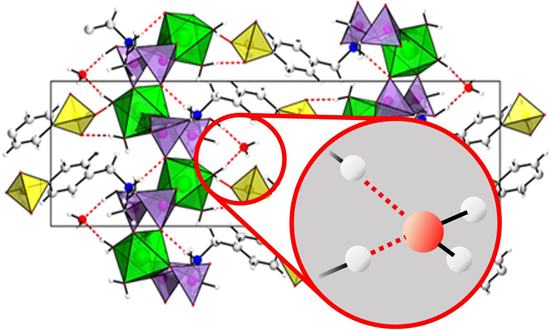
- , followed by phosphonomethylation of the amino group using phosphonic acid, formaldehyde, and hydrochloric acid. The synthesis of the compounds [Mg(H2O)2(H3L)]·H2O and [Pb2(HL)]·H2O was achieved following published procedures [17]. For [Mg(H2O)2(H3L)]·H2O, an aqueous solution of MgCl2 (6 mmol, 1218 mg in 2
- mL H2O) was added to a mixture of the linker molecule (564 mg, 1.5 mmol), 1.5 mL of an aqueous solution of NaOH (c = 2 mol/L), 6.5 mL water, and 10 mL ethanol in a 30 mL Teflon insert, which was placed into a steel autoclave. For [Pb2(HL)]·H2O, Pb(OAc)3 (0.5 mmol, 189 mg in 2 mL H2O) was added to a


Interfacial nanoarchitectonics for ZIF-8 membranes with enhanced gas separation
Beilstein J. Nanotechnol. 2022, 13, 313–324, doi:10.3762/bjnano.13.26
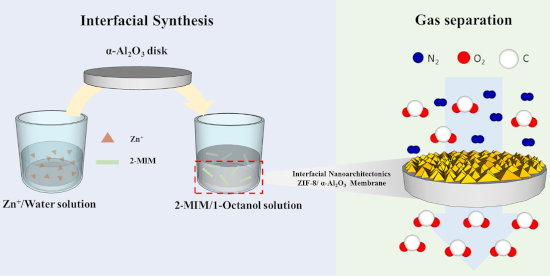
- aqueous solution (50 mL) in an Erlenmeyer flask. The flask was connected to an aspirator to provide a vacuum to remove the air inside the pores of the disk. Then, the disk was kept in the aqueous solution for another 30 min until the porous support was fully filled with zinc nitrate. The α-Al2O3 disk was
- increased to 50 mM, a continuous ZIF-8 film with a high surface coverage was obtained (Figure 5b). In this case, the diffusion rate of 2-methylimidazole from 1-octanol solution into aqueous solution was relatively slow. As a result, homogeneous crystal formation was suppressed through the small number of


Coordination-assembled myricetin nanoarchitectonics for sustainably scavenging free radicals
Beilstein J. Nanotechnol. 2022, 13, 284–291, doi:10.3762/bjnano.13.23
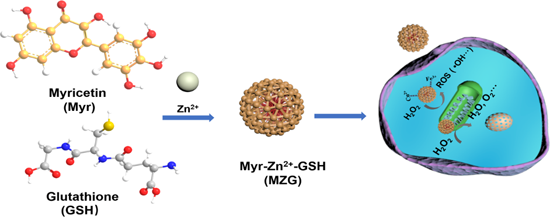
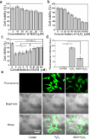
- ) FTIR spectra of MZG, GSH, and Myr. (e) Stability evaluation of MZG nanoparticles during incubation in aqueous solution at 37 °C for 24 h. (f) Stability evaluation of MZG nanoparticles during incubation in the mixture medium of PBS containing 9% DMEM and 1% FBS (v/v) at 37 °C for 24 h (equivalent


Photothermal ablation of murine melanomas by Fe3O4 nanoparticle clusters
Beilstein J. Nanotechnol. 2022, 13, 255–264, doi:10.3762/bjnano.13.20
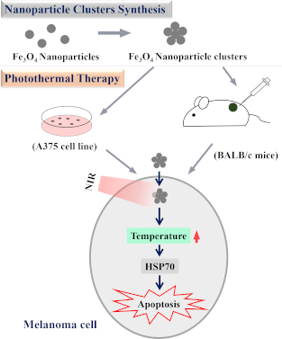
- with the oleic acid and oleylamine ligands present on the surface of Fe3O4 nanoparticles through van der Waals forces to facilitate the dispersion of nanoparticles in aqueous solution. Further addition of ethylene glycol weakened the van der Waals interaction, causing decomposition of nanoparticle
- ) Magnetic hysteresis curves of individual Fe3O4 nanoparticles as well as NPCs. The insert shows aggregation of NPCs dispersed in aqueous solution by a magnet. (d) DLS characterization of NPCs dispersed in cell culture medium. (e) DLS results of NPCs suspension after five heating/cooling cycles. Photothermal


Self-assembly of amino acids toward functional biomaterials
Beilstein J. Nanotechnol. 2021, 12, 1140–1150, doi:10.3762/bjnano.12.85
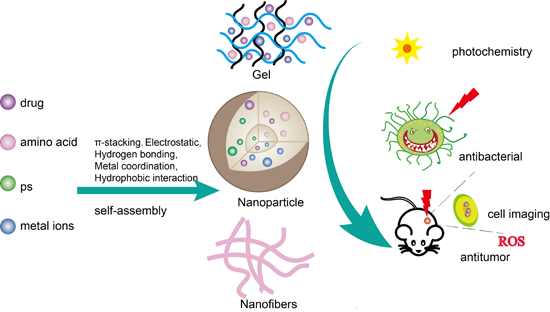
- and composition of nanostructures, the assembling behavior and stability in aqueous solution, the loading/encapsulation ratio of drugs, and the toxicity of nanostructures to living organisms still need to be overcome by researchers. Moreover, little research has been done on the biocompatibility of

pH-driven enhancement of anti-tubercular drug loading on iron oxide nanoparticles for drug delivery in macrophages
Beilstein J. Nanotechnol. 2021, 12, 1127–1139, doi:10.3762/bjnano.12.84
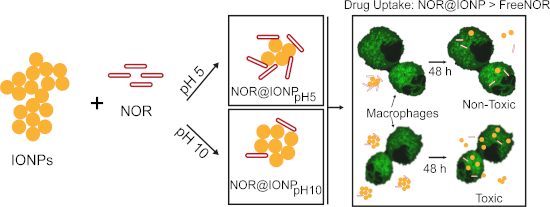
- aqueous solution to Fe present on the surface of the nanoparticles. Such Fe–OH associations are often found on iron oxide nanoparticles due to their high reactivity [28][35]. Characteristic peaks for NOR observed at 1258 cm−1, 1615 cm−1, 1734 cm−1, 2852 cm−1 and 3418 cm−1 in Figure 2f are indicative of
- synthesized by co-precipitation of ferrous and ferric chloride salts [47]. An aqueous solution of Fe2+:Fe3+, taken in the molar ratio of 1:2, was stirred at 700 rpm with nitrogen purging, for 10 min, at 80 °C. The reduction to Fe3O4 was carried out with the addition of 15 mL of 25% ammonia solution. Stirring



Use of nanosystems to improve the anticancer effects of curcumin
Beilstein J. Nanotechnol. 2021, 12, 1047–1062, doi:10.3762/bjnano.12.78
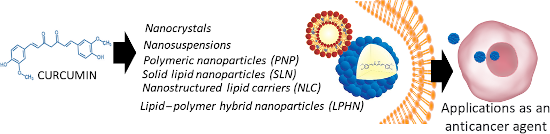
- ) and with a dissolution capacity of 98% at 4 h (aqueous solution with 1% SDS, at 37 °C, and 100 rpm). Regarding their pharmacokinetics in vivo (rabbits, 25 mg/kg), it was observed that when the nanocrystal was administered via endotracheal insufflation, the average maximum concentration (Cmax) and the


Progress and innovation of nanostructured sulfur cathodes and metal-free anodes for room-temperature Na–S batteries
Beilstein J. Nanotechnol. 2021, 12, 995–1020, doi:10.3762/bjnano.12.75
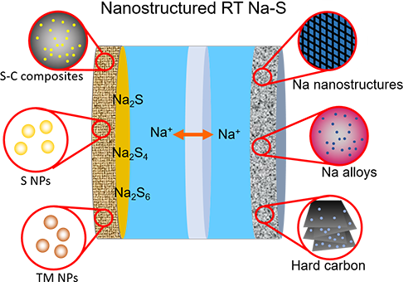
- to be highly underinvestigated despite the advantages an aqueous solution-based synthesis route can offer. Instead, commercial S NPs are increasingly employed in cathodes, for instance, by Chen et al. [58], who wrapped reduced graphene oxide sheets around such NPs (Figure 7B). In this case, the




Comprehensive review on ultrasound-responsive theranostic nanomaterials: mechanisms, structures and medical applications
Beilstein J. Nanotechnol. 2021, 12, 808–862, doi:10.3762/bjnano.12.64


High-yield synthesis of silver nanowires for transparent conducting PET films
Beilstein J. Nanotechnol. 2021, 12, 624–632, doi:10.3762/bjnano.12.51
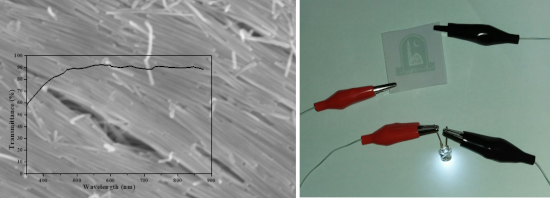
- schematically in Figure 1 and produces about 270 mg of AgNWs, which could be considered a high-yield synthesis. Formulation of AgNW ink and fabrication of transparent conducting films A facile method was chosen for synthesizing the AgNW ink, which involved the mixing of an aqueous solution of the adhesive agent
- morphology of the Ag NWs was best at a reaction temperature of 160 °C and a 1:4 ratio of AgNO3/PVP. The XRD analysis confirmed the crystallinity of the AgNWs structures. The aqueous solution of the AgNWs exhibited a broad PL emission band in the red region. The SEM images confirmed that the final product was
- free from impurities, that is, silver nanoparticles. No other nanostructures could affect the optical and conduction properties, or the roughness of the film. A silver nanowire ink formulated by adding HEC to an aqueous solution of silver nanowires, was then loaded onto the surface of PET films by


Impact of GaAs(100) surface preparation on EQE of AZO/Al2O3/p-GaAs photovoltaic structures
Beilstein J. Nanotechnol. 2021, 12, 578–592, doi:10.3762/bjnano.12.48
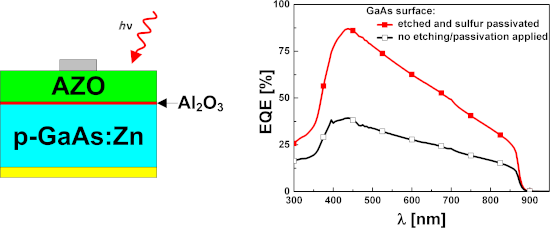
- ) properties and bandgap measurements of the deposited layers were also reported. The highest EQE value was obtained for the samples initially etched with a citric acid-based etchant and, in the last preparation step, either passivated with ammonium sulfide aqueous solution or treated with ammonium hydroxide
- surface with an acidic/base aqueous solution (e.g., HCl/H2O, NH4OH/H2O) [16]. If not only the oxide layer but also the suboxide layer of GaAs need to be etched, different methods can be utilized which combine both processes: semiconductor surface oxidation and etching. In this case, also acidic and basic
- (ending with the same suffix) but with an extra sulfur-passivation step utilizing a 10% ammonium sulfide (NH4)2S aqueous solution (SA10). The passivation was conducted within a separate additional stage just before the ALD process. Thus, the numerical suffixes in both groups denote the specific path of




On the stability of microwave-fabricated SERS substrates – chemical and morphological considerations
Beilstein J. Nanotechnol. 2021, 12, 541–551, doi:10.3762/bjnano.12.44
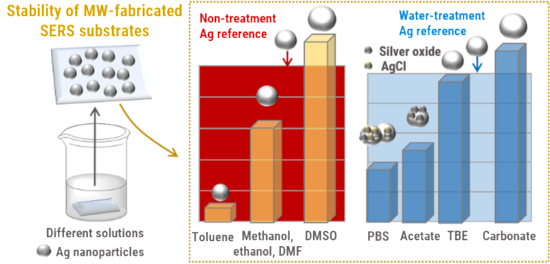
- -mode microwave (Initiator, Biotage) was employed. In a typical batch synthesis of the SERS substrate, 12 mM of an aqueous solution of silver acetate was mixed with ethanol in a 2:1 ratio. Three substrates were placed in a 5 mL microwave vial which was filled up to 3 mL with water/ethanol/precursor


Nickel nanoparticle-decorated reduced graphene oxide/WO3 nanocomposite – a promising candidate for gas sensing
Beilstein J. Nanotechnol. 2021, 12, 343–353, doi:10.3762/bjnano.12.28
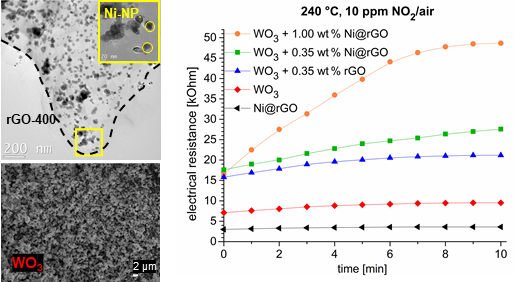
- prepared according to [52] using the sol–gel method. A 1.23 mol/L aqueous solution of sodium tungstate dihydrate (Na2WO3⋅2H2O) was added into a 12 mol/L aqueous solution of nitric acid under constant rapid stirring. The prepared sol of tungstic acid was washed in distilled water using multiple


Doxorubicin-loaded gold nanorods: a multifunctional chemo-photothermal nanoplatform for cancer management
Beilstein J. Nanotechnol. 2021, 12, 295–303, doi:10.3762/bjnano.12.24
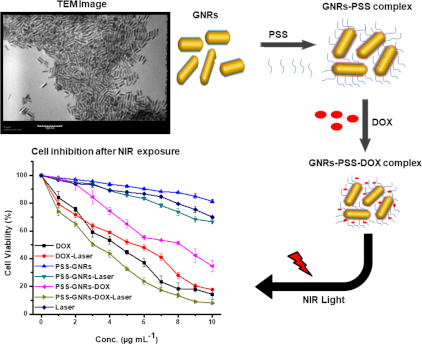
- characterization of PSS-GNRs showed that the LSPR peak of GNRs strongly depends on their aspect ratio. Hence, the LSPR peak position is an excellent indicator for any shape changes of GNRs. An aqueous solution of PSS-GNRs after laser exposure for 2 min (power density = 1.5 W/cm2) remained stable. The LSPR peak
- -suspended in 2 mL deionized water and stored at 4 °C. Doxorubicin-loaded PSS-GNRs The anticancer drug DOX was loaded onto the surface of PSS-GNRs by a previously reported simple stirring method with slight modifications [30]. PSS-GNRs (40 µg/mL, 2 mL) were added to an aqueous solution of DOX at a final
- efficiency (DLE) was calculated using the formula given below: Photothermal stability of PSS-GNRs The photothermal stability of PSS-GNRs was measured using a previously described method [23]. Briefly, the aqueous solution of PSS-GNRs was irradiated with NIR laser (power density = 1.5 W/cm2) for 2 min and


A review on the green and sustainable synthesis of silver nanoparticles and one-dimensional silver nanostructures
Beilstein J. Nanotechnol. 2021, 12, 102–136, doi:10.3762/bjnano.12.9


Atomic layer deposited films of Al2O3 on fluorine-doped tin oxide electrodes: stability and barrier properties
Beilstein J. Nanotechnol. 2021, 12, 24–34, doi:10.3762/bjnano.12.2
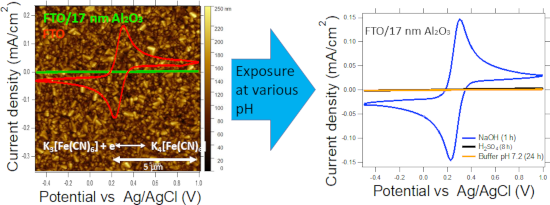
- ) to a redox couple in aqueous solution. ALD Al2O3 films on FTO dissolved rapidly in a 1 M NaOH solution. After 1 h of exposure, a CV curve with the ferricyanide/ferrocyanide couple approached that for uncovered FTO. This corresponded to a dissolution rate of ≈100 nm/h. The films dissolved slower in 1


Nanocasting synthesis of BiFeO3 nanoparticles with enhanced visible-light photocatalytic activity
Beilstein J. Nanotechnol. 2020, 11, 1822–1833, doi:10.3762/bjnano.11.164
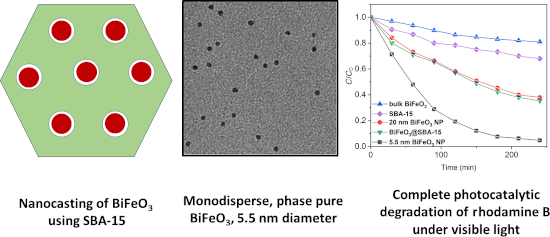
- wet impregnation process and a calcination procedure with intermediate plateaus, monodisperse 5.5 nm BiFeO3 nanoparticles were successfully obtained. Furthermore, the nanoparticles were applied in photodegradation reactions of rhodamine B in aqueous solution under visible-light irradiation. Notably




Self-standing heterostructured NiCx-NiFe-NC/biochar as a highly efficient cathode for lithium–oxygen batteries
Beilstein J. Nanotechnol. 2020, 11, 1809–1821, doi:10.3762/bjnano.11.163
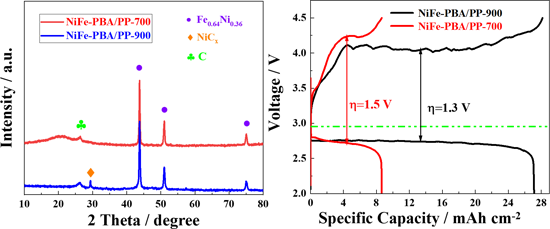
- based on [40][41][42]. Several pieces of NiFe-PBA/PP precursors were immersed in a NaOH solution containing anhydrous ethanol (20 mL) and 0.025 mol·L−1 NaOH aqueous solution (30 mL). The obtained solution was transferred to a Teflon-lined autoclave and heated to 100 °C for 30 min. The obtained products