


Search results
Search for "biosensors" in Full Text gives 151 result(s) in Beilstein Journal of Nanotechnology.
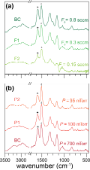
The effect of atmospheric doping on pressure-dependent Raman scattering in supported graphene
Beilstein J. Nanotechnol. 2018, 9, 704–710, doi:10.3762/bjnano.9.65
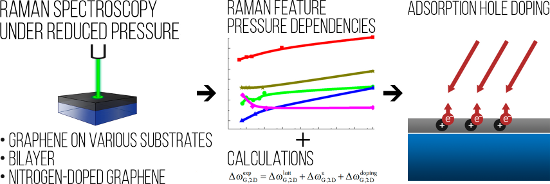
- a huge number of potential graphene applications in biosensors [2]. Atmospheric adsorption is known to affect graphene charge carrier density, leading to gradual self-sustained hole doping [3]. On one hand, adsorption can thus be an extremely undesirable effect when a nanoelectronic device is
- results can be taken into account during the development of any graphene-related devices, either specifically involving graphene adsorption properties (for example, biosensors) or assuming exposure of air to the device functional elements. Conclusion Pressure-dependent Raman spectroscopy studies in the


Anchoring Fe3O4 nanoparticles in a reduced graphene oxide aerogel matrix via polydopamine coating
Beilstein J. Nanotechnol. 2018, 9, 591–601, doi:10.3762/bjnano.9.55
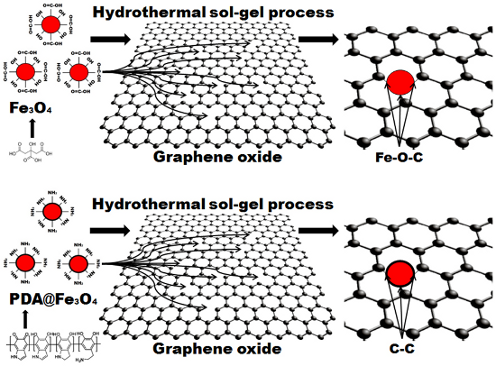
- batteries [8][9][10][11], supercapacitors [12][13][14][15][16]), sensors (gas sensors [17][18][19], biosensors [20][21]) and adsorbers (oil pollution [22][23], organic contaminants [24][25]). Moreover, the properties of GO-based aerogels can be modified by addition of various functional additives, e.g


Al2O3/TiO2 inverse opals from electrosprayed self-assembled templates
Beilstein J. Nanotechnol. 2018, 9, 216–223, doi:10.3762/bjnano.9.23
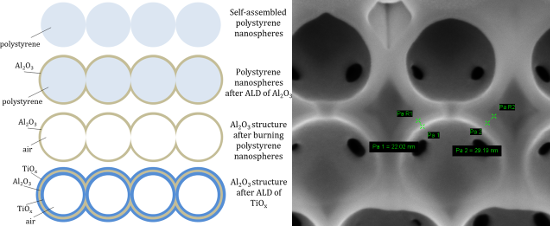
- several optoelectronic devices such as dichroic mirrors, optical switches, lasers, biosensors or strain sensors [1][2][3][4][5]. The performance of these devices is mainly related to the lattice periodicity, the quality and the size of the ordered structure and the refractive index contrast. The


Liquid-crystalline nanoarchitectures for tissue engineering
Beilstein J. Nanotechnol. 2018, 9, 205–215, doi:10.3762/bjnano.9.22
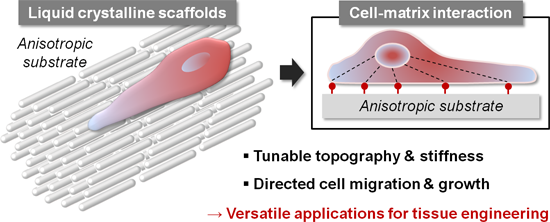
- striving for decades to invent biocompatible LC nanostructures for biomedical applications [6][7]. These works cover medical imaging and spectroscopy instruments [8][9], diagnostic biosensors [10], microlens devices [11], soft actuators [12][13], and drug delivery systems [14][15]. On the other hand, LCs
- phase or in a 3D orthorhombic phase. Examples of bioengineered materials displaying LC phases DNA is one of the most frequently used biomolecules in the field of biomedical engineering and bioinspired technology [35]. The DNA mesophase has been exploited for several applications, including biosensors


Advances in nanocarbon composite materials
Beilstein J. Nanotechnol. 2018, 9, 20–21, doi:10.3762/bjnano.9.3

- then expanded to the area of two-dimensional materials. This Thematic Series contains reviews and articles spanning diverse areas of research and highlights promising applications for energy transfer composites, coatings, biosensors, diagnostics, biomedicine and advanced nanocarbon materials. Many of
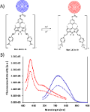
Carbon nano-onions as fluorescent on/off modulated nanoprobes for diagnostics
Beilstein J. Nanotechnol. 2017, 8, 1878–1888, doi:10.3762/bjnano.8.188
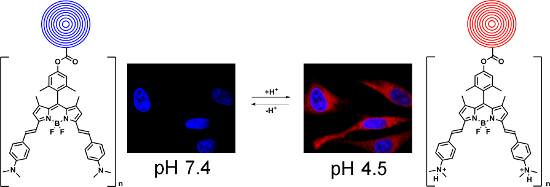
- interact with disease markers or capable of sensing physiological changes in cells are widely used in diagnostic applications. In particular, fluorescent nano-probes are a relatively inexpensive platform compared to other biosensors and are capable of generating an optical output in response to a specific




Synthesis and functionalization of NaGdF4:Yb,Er@NaGdF4 core–shell nanoparticles for possible application as multimodal contrast agents
Beilstein J. Nanotechnol. 2017, 8, 1815–1824, doi:10.3762/bjnano.8.183
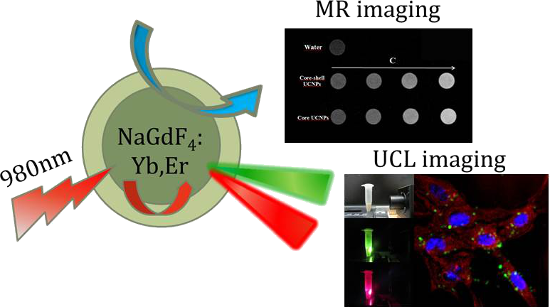
- stability, high resistance to photobleaching, and long emission lifetime [2][3]. As a unique class of luminescent phosphors, UCNPs show great promise in a broad range of applications ranging from bioimaging, biosensors, drug delivery, to photodynamic therapy [4][5][6][7][8]. Through combination with


Near-infrared-responsive, superparamagnetic Au@Co nanochains
Beilstein J. Nanotechnol. 2017, 8, 1680–1687, doi:10.3762/bjnano.8.168
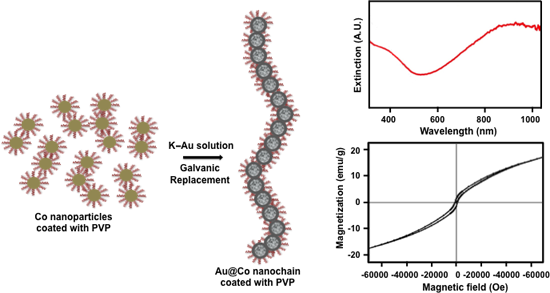
- unique properties of magnetic nanoparticles have led to diverse applications in the fields of magnetic data storage, catalysis, magnetic fluids, biosensors, drug delivery, and magnetic imaging [1][2][3][4][5][6]. Considerable efforts have been taken to tailor the magnetic properties to suit specific


Two-dimensional carbon-based nanocomposites for photocatalytic energy generation and environmental remediation applications
Beilstein J. Nanotechnol. 2017, 8, 1571–1600, doi:10.3762/bjnano.8.159
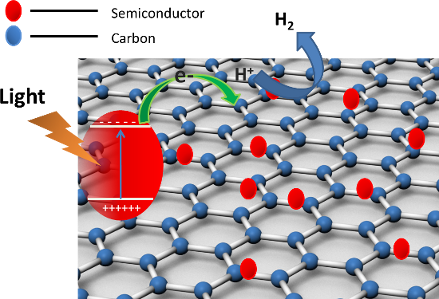
- ], biosensors [25], molecular imaging [26], fuel cells [27] and catalysis [28]. The non-toxicity, abundance and the environmentally benign nature of these carbon-based materials makes them a remarkable class of materials with unique electrical and optical properties for diverse applications. In recent times


Luminescent supramolecular hydrogels from a tripeptide and nitrogen-doped carbon nanodots
Beilstein J. Nanotechnol. 2017, 8, 1553–1562, doi:10.3762/bjnano.8.157
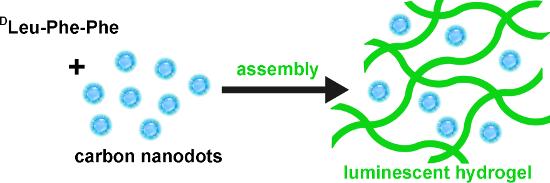
- . Their properties allow them to have an important impact in biological and environmental applications as alternatives to traditional, toxic, semiconductor-based quantum dots (QDs). They can be employed as biosensors in bioimaging, drug delivery, and in the photoreduction of metals, since they have


Nanostructures for sensors, electronics, energy and environment III
Beilstein J. Nanotechnol. 2017, 8, 1530–1531, doi:10.3762/bjnano.8.154
- Nunzio Motta School of Chemistry, Physics and Mechanical Engineering and Institute for Future Environments, Queensland University of Technology, 2 George St., Brisbane 4001, Australia 10.3762/bjnano.8.154 Keywords: biosensors; electronics; energy; environment; gas sensors; solar cells; This
A biofunctionalizable ink platform composed of catechol-modified chitosan and reduced graphene oxide/platinum nanocomposite
Beilstein J. Nanotechnol. 2017, 8, 1508–1514, doi:10.3762/bjnano.8.151
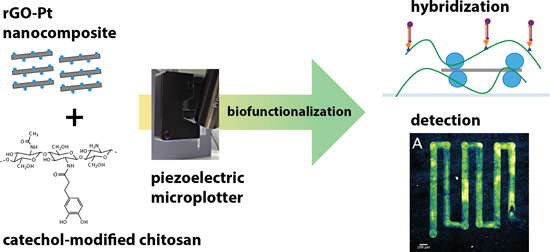
- , Szczecin, Poland 10.3762/bjnano.8.151 Abstract We present an ink platform for a printable polymer–graphene nanocomposite that is intended for the development of modular biosensors. The ink consists of catechol-modified chitosan and reduced graphene oxide decorated with platinum nanoparticles (rGO–Pt). We
- ; catechol; chitosan; graphene; piezoelectric printing; Introduction Biosensors are a key enabling technology for the paradigm shift towards decentralized, personalized and targeted medicine. They offer the potential to utilize the wealth of information provided by modern molecular biology (genomics and
- proteomics, in particular) during the crucial process of diagnosis. Importantly, an ideal biosensor platform needs to not only be sensitive and specific, but also flexible and affordable [1]. The past ten years have seen the growth of several technologies that hold much promise for the field of biosensors


Oxidative chemical vapor deposition of polyaniline thin films
Beilstein J. Nanotechnol. 2017, 8, 1266–1276, doi:10.3762/bjnano.8.128
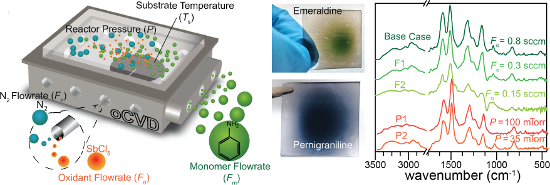
- in recent years for their use in solar cells [1][2][3][4][5][6], batteries [7], supercapacitors [8][9][10][11][12], sensors [13], biosensors [14], and microelectronics [15][16]. As devices continue to decrease in size, the integration of conducting polymers within nanomaterials using conventional




A top-down approach for fabricating three-dimensional closed hollow nanostructures with permeable thin metal walls
Beilstein J. Nanotechnol. 2017, 8, 1231–1237, doi:10.3762/bjnano.8.124
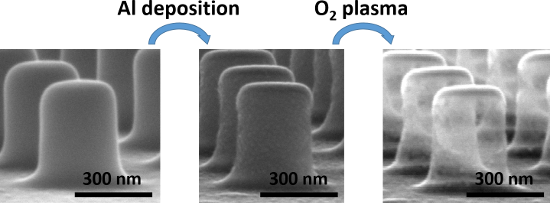
- flexibility and controllability offered by top-down nanofabrication techniques opens the door to the possibility of massive integration of these hollow 3D nano-objects on a chip for applications such as nanocontainers, nanoreactors, nanofluidics, nano-biosensors and photonic devices. Keywords: nanocages


Selective detection of Mg2+ ions via enhanced fluorescence emission using Au–DNA nanocomposites
Beilstein J. Nanotechnol. 2017, 8, 762–771, doi:10.3762/bjnano.8.79
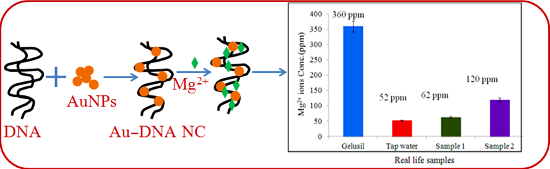
- the change in fluorescence quenching due to the interaction of the DNA–Ag nanocluster with Hg2+ ions in water. Also, Ma and co-workers reported the emission modulation of DNA-templated fluorescent Ag nanocomposites by divalent Mg2+ ions in 2011 [7]. Presently, there are many biosensors which are based




Dispersion of single-wall carbon nanotubes with supramolecular Congo red – properties of the complexes and mechanism of the interaction
Beilstein J. Nanotechnol. 2017, 8, 636–648, doi:10.3762/bjnano.8.68
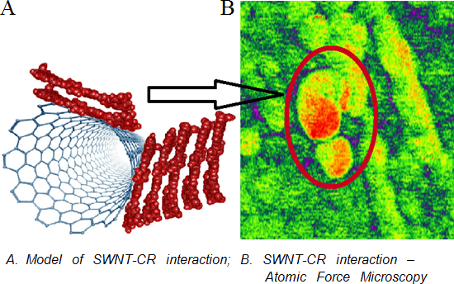
- ; Introduction Carbon nanotubes (CNTs) present enormous application potential in many areas of chemistry, technology and medicine and are currently one of the most intensely studied nanomaterials. Biomedical use of CNTs includes biosensors [1], bioimaging [2][3], drug delivery [4][5][6][7][8][9] and tissue


Fabrication of black-gold coatings by glancing angle deposition with sputtering
Beilstein J. Nanotechnol. 2017, 8, 434–439, doi:10.3762/bjnano.8.46
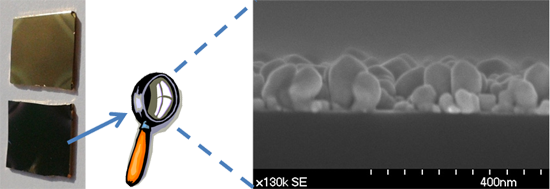
- , separators to avoid cross effects in optical devices, thermal light emitters and electrodes of sensor or biosensors. In particular, gold is frequently used due to its high resistance to oxidation. As the spectrum of the solar radiation exhibits maximum irradiance in the visible range, finding a suitable


Comparison of four methods for the biofunctionalization of gold nanorods by the introduction of sulfhydryl groups to antibodies
Beilstein J. Nanotechnol. 2017, 8, 372–380, doi:10.3762/bjnano.8.39
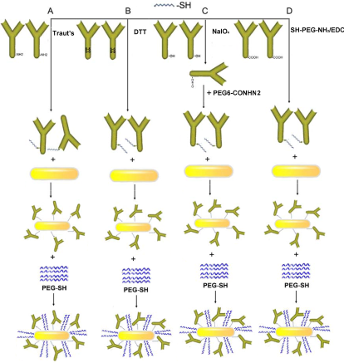
- GNR biofunctionalization developed in this work. They can be extended to other Au nanostructures (e.g., spheres, cages) to develop new protein-based applications for biosensors and multiplexed biosensing by immobilization of different-sized nanorods. Experimental Materials Hydrogen tetrachloroaurate


Tailoring bifunctional hybrid organic–inorganic nanoadsorbents by the choice of functional layer composition probed by adsorption of Cu2+ ions
Beilstein J. Nanotechnol. 2017, 8, 334–347, doi:10.3762/bjnano.8.36
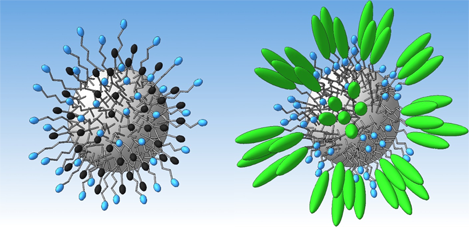
- promising materials for the application in a wide range of areas (chromatography, controlled drug delivery, bioseparation, chemo- and biosensors, biocatalysis). Naturally, there arose a question about the possibility of synthesis for such particles with bi- and multi-functional surface layers. The synthesis


Functionalized TiO2 nanoparticles by single-step hydrothermal synthesis: the role of the silane coupling agents
Beilstein J. Nanotechnol. 2017, 8, 304–312, doi:10.3762/bjnano.8.33
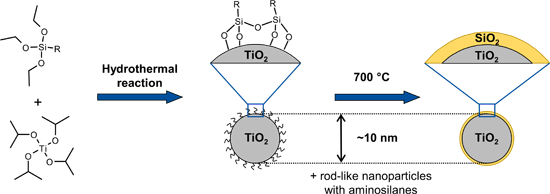
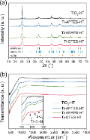
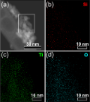
- –shell structures or grafted nanoparticles [8], has resulted in new applications such as nanofiller for polymer nanocomposites [9][10], coatings [11], and biosensors [3][12]. Classical synthesis routes for surface-functionalized particles are following two steps: particles synthesis followed by a post



Surface-enhanced Raman scattering of self-assembled thiol monolayers and supported lipid membranes on thin anodic porous alumina
Beilstein J. Nanotechnol. 2017, 8, 74–81, doi:10.3762/bjnano.8.8
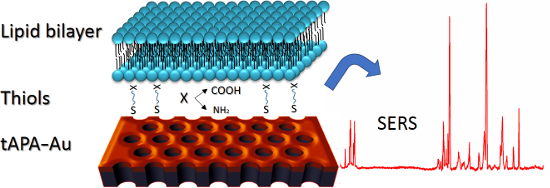
- of the use of tAPA–Au substrates as a platform for the development of surface-enhanced Raman spectroscopy (SERS) biosensors on living cells. In the future, these tAPA–Au-SLB substrates will be investigated also for drug delivery of bioactive agents from the APA pores. Keywords: anodic porous alumina
- surface roughness [3][4], the latter of which can play an important role in the adhesion and proliferation of cells [5][6][7]. The self-ordered nano-structured APA, also demonstrated recently as a possible nanolithographic mask [8][9] and for chemical sensors and biosensors [10], after coating with noble
- confirmed on quartz-Au by QCM-D technique. The present results point to the possible future use of the tAPA–Au surfaces as disposable substrates for assessing the cell functionality in biosensors/bioassays. SEM images (20,000× magnification, scale bar 1 µm) of tAPA substrates (thickness ≈500 nm), a) as



Streptavidin-coated gold nanoparticles: critical role of oligonucleotides on stability and fractal aggregation
Beilstein J. Nanotechnol. 2017, 8, 1–11, doi:10.3762/bjnano.8.1
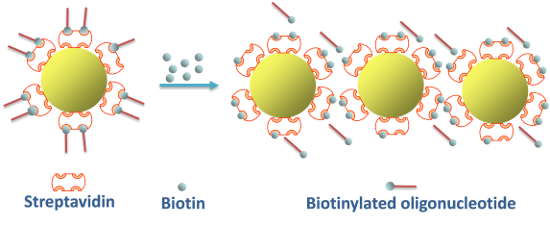
- thorough understanding of the fundamental properties of bioconjugated AuNPs is of great importance for the design of highly sensitive and reliable functionalized AuNP-based assays. Keywords: biosensors; DNA; gold nanoparticles; nanoparticles aggregation; plasmonics; streptavidin; Introduction Gold




A novel electrochemical nanobiosensor for the ultrasensitive and specific detection of femtomolar-level gastric cancer biomarker miRNA-106a
Beilstein J. Nanotechnol. 2016, 7, 2023–2036, doi:10.3762/bjnano.7.193
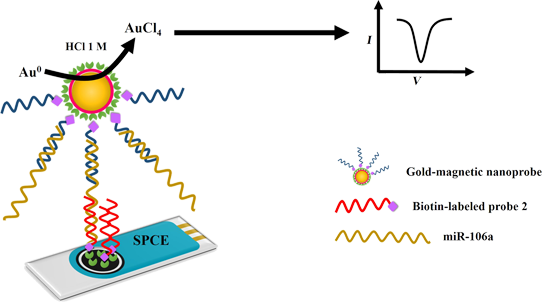
- method for sensitive, specific and non-invasive miRNA detections in early cancer diagnosis [8]. Biosensors are commonly defined as devices composed of recognition elements interfaced with a transducer, which finally transform a capture process into a detectable output signal. This signal, which is almost
- always the result of a specific bio-interaction, could be received as an evident change in color, pH value, or electrochemical properties of the microenvironment [17][18]. Among all types of biosensors, electrochemical sensors have been of great interest particularly because they are simple, portable
- been recently employed to improve the detection sensitivity and also the stability of the electrochemical biosensors. It has been shown that these approaches can strongly amplify the signal, extend the linear detection range, and lower the detection limit of the assay [19]. Nowadays, electrochemical


Layered composites of PEDOT/PSS/nanoparticles and PEDOT/PSS/phthalocyanines as electron mediators for sensors and biosensors
Beilstein J. Nanotechnol. 2016, 7, 1948–1959, doi:10.3762/bjnano.7.186
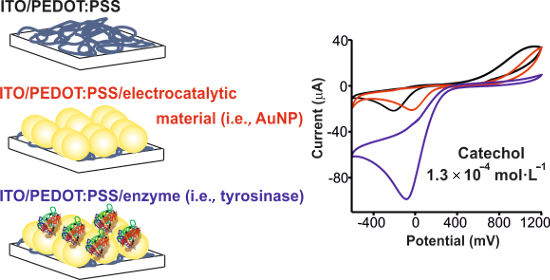
- biosensors containing tyrosinase and laccase, and they combine the recognition and biocatalytic properties of biomolecules with the unique catalytic features of composite materials. The observed increase in the intensity of the responses allowed detection limits of 1 × 10⁻⁷ mol·L−1 to be attained. Keywords
- character which is an intrinsic semiconductor) [9][16][17][18]. On the other hand, enzymatic electrochemical biosensors based on phenol oxidases are a good alternative to analyze phenols due to their high sensitivity and selectivity. Tyrosinase oxidizes monophenols and o-diphenols to the corresponding
- electron mediators to facilitate the transfer of electrons from the enzyme to the electrode [20]. PEDOT/PSS is becoming popular as an electron mediator in biosensing [21][22]. Gold nanoparticles and phthalocyanines have also been positively demonstrated as electron mediators in tyrosinase biosensors [16


Low temperature co-fired ceramic packaging of CMOS capacitive sensor chip towards cell viability monitoring
Beilstein J. Nanotechnol. 2016, 7, 1871–1877, doi:10.3762/bjnano.7.179
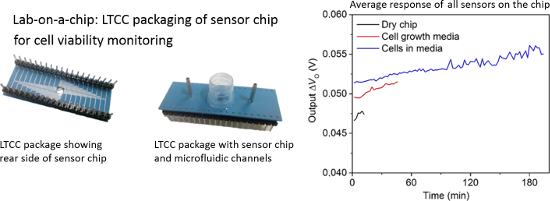
- Eitel reported a LTCC material as a substrate for biosensors that is regarded as biocompatible [22]. Also, from our experience, cell growth, at least over 24 h, seems to be fully compatible with the LTCC material [23]. We suggest that the previous statement about LTCC material being non-biocompatible





