Search results
Search for "contamination" in Full Text gives 325 result(s) in Beilstein Journal of Nanotechnology. Showing first 200.
Combining physical vapor deposition structuration with dealloying for the creation of a highly efficient SERS platform
Beilstein J. Nanotechnol. 2023, 14, 83–94, doi:10.3762/bjnano.14.10
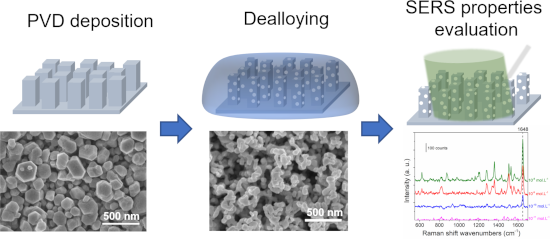
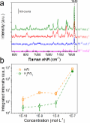
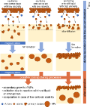
- resulting signal intensity tends to strongly vary due to surface contamination [30]. In this paper, a simple synthesis method to design bimodal porous silver substrate for SERS is reported. Magnetron co-sputtering of a silver and aluminum target was used for the deposition of the precursor alloy thin film
- on a metal surface induces hydrophobicity which can also affect the bonding with RhB molecules [30]. The carbon observed on the surface of the different samples is the result of the contamination of the substrate during wet etching and by the environment during storage [46]. Overall, the good
- performance of the AlAg30 sample dealloyed for 60 min in HCl results from a compromise between a small size of ligaments and the lowest amount of contamination together with the highest amount of silver on the surface. Influence of the dealloying media Finally, the influence of the dealloying media was




Electrical and optical enhancement of ITO/Mo bilayer thin films via laser annealing
Beilstein J. Nanotechnol. 2022, 13, 1589–1595, doi:10.3762/bjnano.13.133
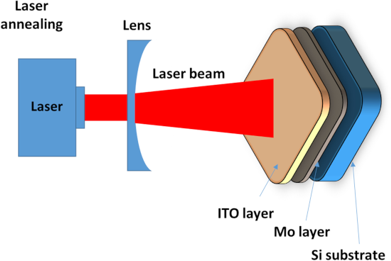
- and a repetition rate of 1 Hz. Different energies from 80 to 240 mJ with a step of 40 mJ were used. The samples were placed in a closed metal cube under nitrogen during annealing to avoid contamination and interaction with particles. A converging lens was placed between the laser and the sample, and


Non-stoichiometric magnetite as catalyst for the photocatalytic degradation of phenol and 2,6-dibromo-4-methylphenol – a new approach in water treatment
Beilstein J. Nanotechnol. 2022, 13, 1531–1540, doi:10.3762/bjnano.13.126
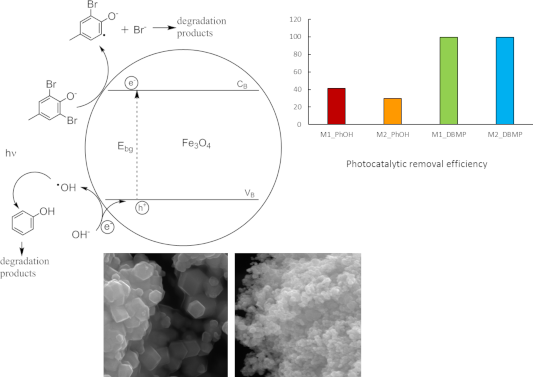
- , BFRs), wood preservatives, and components in the polymer industry [4][5]. Bromophenols from various industries can cause severe contamination of soil, sediment, and water [6][7]. The United States Environmental Protection Agency (US EPA) has listed BPs as hazardous waste with strict environmental


Rapid and sensitive detection of box turtles using an electrochemical DNA biosensor based on a gold/graphene nanocomposite
Beilstein J. Nanotechnol. 2022, 13, 1458–1472, doi:10.3762/bjnano.13.120
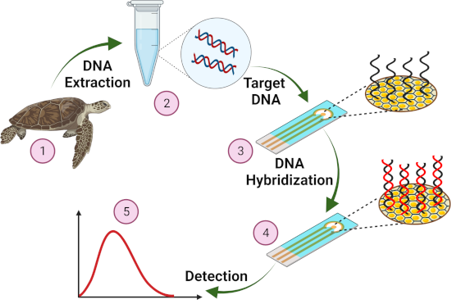
- ], are cost-intensive [16], and cannot be used onsite. In addition, hazardous chemicals are frequently employed to PCR-based assays [25]. There is also a concern about PCR product carryover contamination due to the 108-fold amplification of the target [26]. Finally, shorter DNA targets would be
- environmentally friendly, contamination-free, and shorter DNA-target-based devices are demanded for species screening. That is why the emphasis has been attributed to developing a DNA-based electrochemical biosensor comprising all the qualities mentioned above [29][30]. There are few reports available concerning



Effects of focused electron beam irradiation parameters on direct nanostructure formation on Ag surfaces
Beilstein J. Nanotechnol. 2022, 13, 1004–1010, doi:10.3762/bjnano.13.87
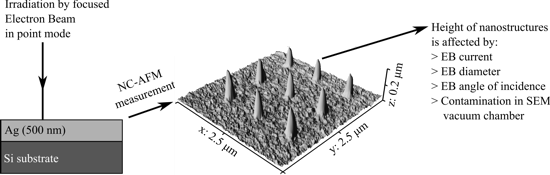
- residual hydrocarbons by electron irradiation in scanning electron microscopy (SEM) vacuum chambers have been reported in several studies [12][13][14][15]. Hydrocarbon contamination from samples and vacuum pump oils is known to be ever present in vacuum chambers of electron microscopes [16][17][18]. The
- and prevent a buildup of carbon in the irradiated area. Baking can be used to desorb light molecules with a high vapour pressure at the baking temperature; however, it is a slow process. Plasma cleaning procedures can rapidly remove contamination; however, they can damage some sensitive samples [24
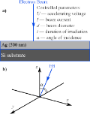
- values of α along the x axis. The EB was refocused on the surface of the sample every time α was changed. For this experiment, I, d, and t were respectively set to 42 pA, 14 nm, and 60 s. The fourth and last experiment considered the effects of hydrocarbon contamination in the vacuum chamber on the




Influence of water contamination on the sputtering of silicon with low-energy argon ions investigated by molecular dynamics simulations
Beilstein J. Nanotechnol. 2022, 13, 986–1003, doi:10.3762/bjnano.13.86
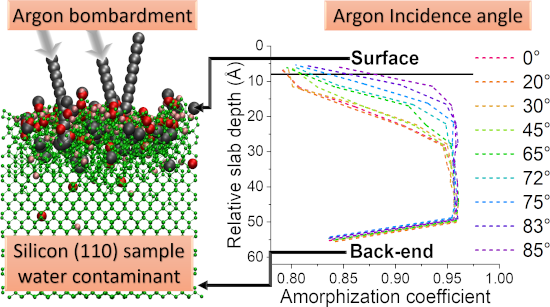
- simulation conditions used in this work, the adsorption of water favours the formation of defects in silicon by mixing hydrogen and oxygen atoms into the substrate. The sputtering yield of silicon is not significantly changed by the contamination, but the fraction of hydrogen and oxygen atoms that is
- sputtered largely depends on the incidence angle. This fraction is the largest for incidence angles between 70 and 80° defined with respect to the sample surface. Overall, it changes from 25% to 65%. Keywords: angle dependency; argon ions; contamination; focused ion beams; ion bombardment; low energy
- simulations to study the sputtering of a surface with water contamination by sub-500 eV ions. The information of interest is the chemical reactions occurring at and below the sample surface, as well as the mixing of the contaminant layer into the sample. The ReaxFF reactive force field is used in this work




Interaction between honeybee mandibles and propolis
Beilstein J. Nanotechnol. 2022, 13, 958–974, doi:10.3762/bjnano.13.84
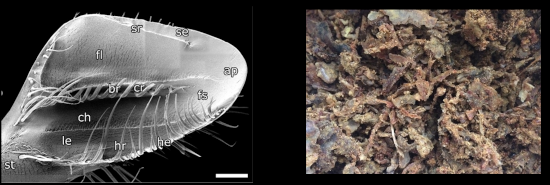
- understand the interaction between honeybee mandibles and propolis. The hypothesis is that beneficial anti-adhesive properties have evolved to handle propolis without being hindered by resin contamination. Possibly, these anti-adhesive properties could serve as an inspiration to help solve problems such as
- extract [21]. To prevent contamination, propolis was only handled wearing gloves cleaned with ethanol (Rotipuran®, ≥99.8%, p.a., Carl Roth GmbH & Co. KG, Karlsruhe, Germany). Insects Adult worker bees (Apis mellifera) were collected in gardens in Kiel (Germany) in July 2019 and immediately used for
- collected bees were prepared under binoculars by carefully separating them from the insect’s head with a scalpel (Figure 2). General morphology, structures, and contamination of every prepared mandible were studied with a binocular microscope (Leica M205 A, Leica Microsystems GmbH, Wetzlar, Germany


Design of a biomimetic, small-scale artificial leaf surface for the study of environmental interactions
Beilstein J. Nanotechnol. 2022, 13, 944–957, doi:10.3762/bjnano.13.83
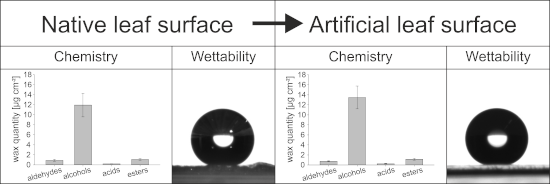
- not roll off even at a TA of 90°. In such samples, the wax layer was probably damaged or contaminated. Both wax alteration and contamination can lead to a change in wettability [75][79]. No damage or contamination was visible to the naked eye in the leaves used. SEM images of the leaves from the field
Temperature and chemical effects on the interfacial energy between a Ga–In–Sn eutectic liquid alloy and nanoscopic asperities
Beilstein J. Nanotechnol. 2022, 13, 817–827, doi:10.3762/bjnano.13.72
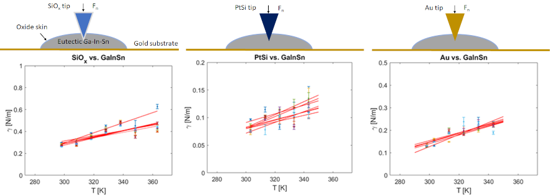
- 1s orbital of carbon. We attribute these contributions (CO32−, C–C/C–H, and C–O) to contamination from the ambient. As mentioned above, we performed the XPS measurements on these liquid samples without prior Ar+-ion sputtering or further heating inside the vacuum chamber of the XPS instrument. Given
- that these contributions arose from contamination by the ambient, we excluded them from our calculations of the surface chemical composition. Figure 6 shows that the surface oxide on the melt mainly consists of gallium and tin oxides, with a minor contribution from indium oxide. After heating at 100 °C



Hierachical epicuticular wax coverage on leaves of Deschampsia antarctica as a possible adaptation to severe environmental conditions
Beilstein J. Nanotechnol. 2022, 13, 807–816, doi:10.3762/bjnano.13.71
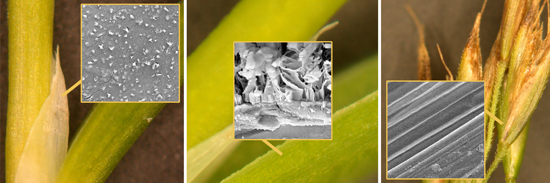
- . macrophylla Jebb and Cheek, N. mirabilis (Lour.) Druce, and N. rafflesiana Jack [16][17]. The waxy (slippery) zone located inside the pitchers is highly specialized for trapping and retaining of insect prey mainly due to contamination of attachment organs of insects [16], reduction of the real contact area




Optimizing PMMA solutions to suppress contamination in the transfer of CVD graphene for batch production
Beilstein J. Nanotechnol. 2022, 13, 796–806, doi:10.3762/bjnano.13.70
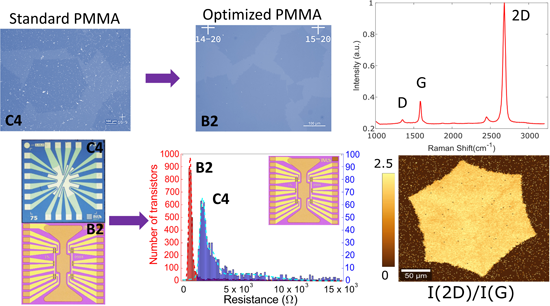
- as a supporting layer to (i) retain the integrity of graphene during the wet-etching bath required to dissolve the metallic substrate and (ii) provide mechanical stability when transferring graphene to the target substrates. During this process, two primary external sources of contamination need to
- metallic contamination from etchants such as FeCl3 can be substantially reduced by rinsing PMMA-coated graphene in DI water solution with 1–2% HCl [12]. Concerning the PMMA residues, several approaches were implemented to dissolve them, primarily by disrupting their chemical bonds. The chemical bond
- reliable transfer at a negligible contamination level, even without any post-treatment at high temperature. The supporting layer formed by spin coating presents high mechanical flexibility and strength for the transfer process and appears easy to dissolve afterward. We validated the impact of the optimized




Fabrication and testing of polymer microneedles for transdermal drug delivery
Beilstein J. Nanotechnol. 2022, 13, 629–640, doi:10.3762/bjnano.13.55
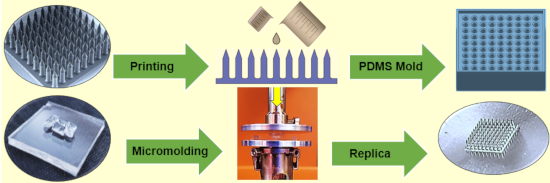
- required depth [18]. There should be no MN-induced skin contamination, for example, due to breakage of the tips, and zero toxicity demands medical-grade materials. Evaluation of MN mechanical strength requires an investigation of MN insertion characteristics and possible failure scenarios. During the



Detection and imaging of Hg(II) in vivo using glutathione-functionalized gold nanoparticles
Beilstein J. Nanotechnol. 2022, 13, 549–559, doi:10.3762/bjnano.13.46
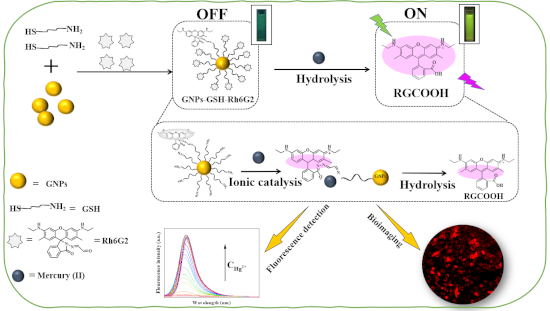
- +, Co2+, Cu2+, Fe2+, Mg2+, Mn2+, Pb2+, Zn2+, Al3+, and Fe3+ (0.75 mM). Each solution of GNPs-GSH-Rh6G2/ion was prepared in spectral cuvettes that were carefully cleaned to avoid contamination. Fluorescence spectra were measured after mixing well to fully interact with the GNPs-GSH-RH6G2. All tests were


A non-enzymatic electrochemical hydrogen peroxide sensor based on copper oxide nanostructures
Beilstein J. Nanotechnol. 2022, 13, 424–436, doi:10.3762/bjnano.13.35
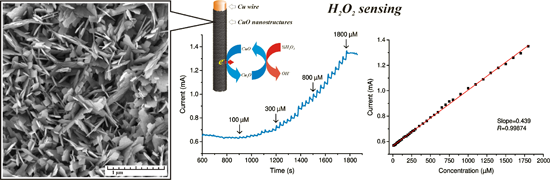
- obtained in the laboratory. CuO layer synthesis on copper wires A smooth film coating of copper oxide was obtained by annealing the copper wire in an oxygen atmosphere. Before annealing, the copper wire was washed several times with water and ethanol to clean the surface of possible contamination. The wire
- obtained by a one-step chemical hydrothermal oxidation. For this, copper wire was rinsed with water and ethanol in order to clean the surface of possible contamination. To prepare the working solution, 10 mL of a 10 M NaOH solution, 5 mL of a 1 M (NH4)2S2O8 solution and 26 mL of H2O were combined. The wire




Thermal oxidation process on Si(113)-(3 × 2) investigated using high-temperature scanning tunneling microscopy
Beilstein J. Nanotechnol. 2022, 13, 172–181, doi:10.3762/bjnano.13.12
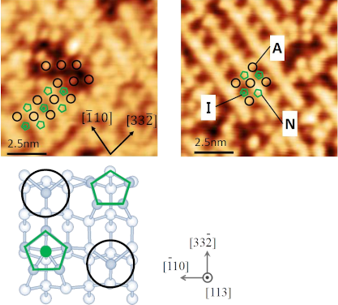
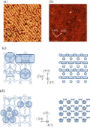
- was degassed over 12 h at 870 K and then cleaned by flashing to 1370 K for 10 s several times. The sample was observed at both room temperature (RT) and high temperatures. To reduce contamination effectively, we used a tip made of PtIr or Nb for the measurement at RT and a tip made of W for the


A comprehensive review on electrospun nanohybrid membranes for wastewater treatment
Beilstein J. Nanotechnol. 2022, 13, 137–159, doi:10.3762/bjnano.13.10
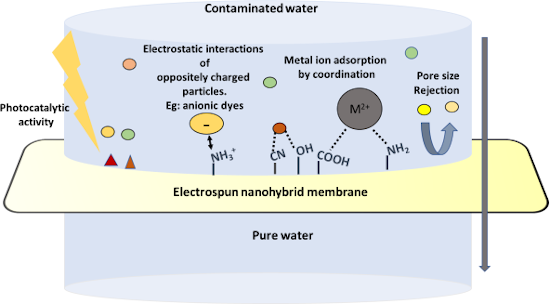
- limitations of the conventional membranes have been overcome by electrospun membranes due to their high porosity, interconnected pores, high surface area, narrow pore size distribution, and due to membrane modification possibilities. The solvent evaporation during spinning also prevents the contamination of




Bacterial safety study of the production process of hemoglobin-based oxygen carriers
Beilstein J. Nanotechnol. 2022, 13, 114–126, doi:10.3762/bjnano.13.8
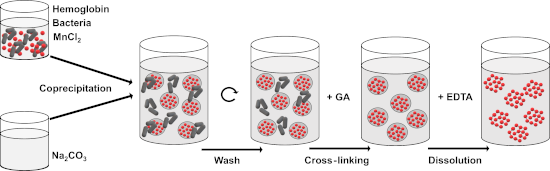
- final particle suspensions. Therefore, we conclude that the HbMP fabrication procedure is safe in respect of bacterial contamination. Keywords: bacterial safety; EDTA; glutaraldehyde; hemoglobin; microparticles; Introduction Artificial oxygen carriers used as red blood cell (RBC) substitutes have
- animals are declared fit for human consumption after a post-mortem inspection. In the geographical area where the blood is collected, many critical viral pathogens do not occur [10]. Nevertheless, the blood is tested for viral contamination. In terms of bacterial safety, the blood and the hemoglobin
- hemoglobin is to sterile filter it after production and test it for endotoxin content and bioburden. This way, bacterial contamination is relatively unlikely. Nevertheless, it is conceivable that a minimal amount of bacteria will not be detected by the tests. In this case, it would be advantageous if any


Sputtering onto liquids: a critical review
Beilstein J. Nanotechnol. 2022, 13, 10–53, doi:10.3762/bjnano.13.2
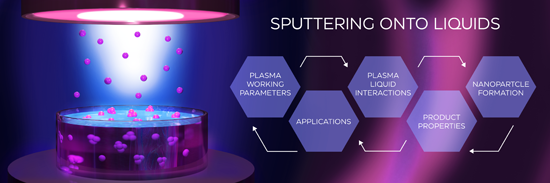
- solvent contamination [16]. However, the production rate is relatively low, and the cost of production is very high, mainly due to the massive waste produced during the synthesis [22]. A further drawback is the large consumption of energy to maintain the required pressure and temperature conditions used
- aggregation of NPs in the reaction mixture. Generally, the chemical methods are low-cost and allow one to produce large quantities of NPs; however, a couple of drawbacks can be highlighted and include contamination from precursor chemicals, use of solvents, and generation of sometimes hazardous by-products






Chemical vapor deposition of germanium-rich CrGex nanowires
Beilstein J. Nanotechnol. 2021, 12, 1365–1371, doi:10.3762/bjnano.12.100
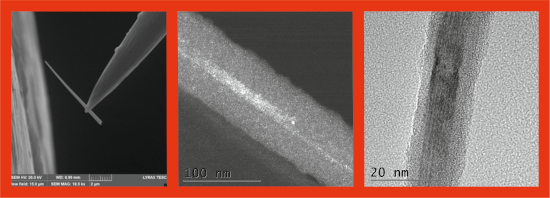
- with the database PDF (00-004-0545) for cubic germanium (d111 = 0.3266 nm). The atomic elemental ratio [Cr]/[Ge] in the coating was in the range of 1:(6–7) (Supporting Information File 1, Figure S8). XP spectra showed the presence of Ge, Cr, and O. In order to reduce surface contamination and oxidized



Two dynamic modes to streamline challenging atomic force microscopy measurements
Beilstein J. Nanotechnol. 2021, 12, 1226–1236, doi:10.3762/bjnano.12.90
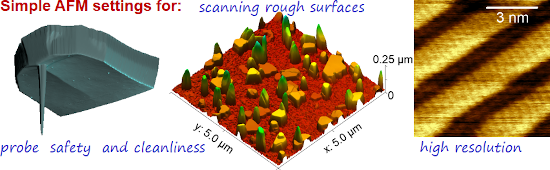
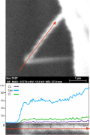
- step edge is also accompanied by an error in measuring the profile, and it often occurs also at zero amplitude, which means a pretty hard contact of the probe with the surface. This can lead to damage and contamination of the tip, as well as to the deformation of soft or poorly fixed objects on the
- and accordingly select Asp. Factors to consider are the risk of tip wear, sample deformation, and tip contamination. The most important parameter here is the tip–sample force at the turn-around point of the oscillation cycle. Note that this force Fp can be repulsive even in net-attractive regime. In
- tip and to visualize the contamination there. Such a sample is available in any AFM laboratory and allows one to demonstrate some of the features that make it difficult to work in standard modes. On the one hand, next to the scan area, there is a high console of the cantilever; on the other hand


Revealing the formation mechanism and band gap tuning of Sb2S3 nanoparticles
Beilstein J. Nanotechnol. 2021, 12, 1021–1033, doi:10.3762/bjnano.12.76
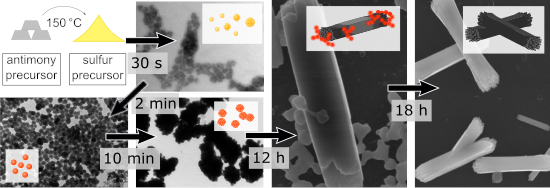
- aluminum holder, explaining the detection of these elements. Oxygen may have been detected due to contamination of the sample, the grid, or the holder. Measurement results of the white product obtained by the direct injection of the Sb precursor into oleylamine at 150 °C without the addition of sulfur: (a


A review of defect engineering, ion implantation, and nanofabrication using the helium ion microscope
Beilstein J. Nanotechnol. 2021, 12, 633–664, doi:10.3762/bjnano.12.52


High-yield synthesis of silver nanowires for transparent conducting PET films
Beilstein J. Nanotechnol. 2021, 12, 624–632, doi:10.3762/bjnano.12.51
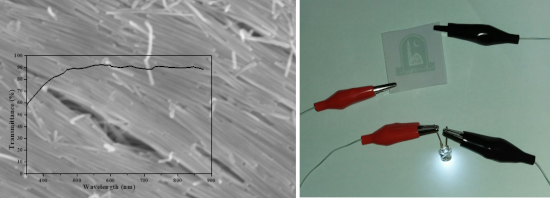
- second peak at 373 nm is attributed to the longitudinal plasmon resonance of AgNWs. It is also noted that no other peak was observed, which shows that the final product was free from contamination of any other nanostructures, such as silver nanoparticles or nanocubes. The SEM results also confirm the


Influence of electrospray deposition on C60 molecular assemblies
Beilstein J. Nanotechnol. 2021, 12, 552–558, doi:10.3762/bjnano.12.45
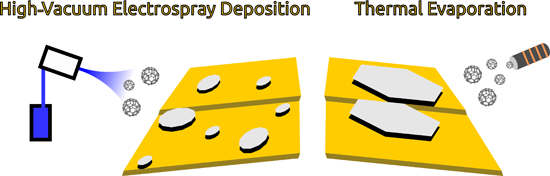
- the sample. Nevertheless, the contamination from solvent introduction can be reduced down to conditions compatible with high-resolution scanning probe microscopy (SPM) techniques [10][12]. Buckminsterfullerene C60, scheme in Figure 1b, is among the most extensively studied molecules in surface science


The preparation temperature influences the physicochemical nature and activity of nanoceria
Beilstein J. Nanotechnol. 2021, 12, 525–540, doi:10.3762/bjnano.12.43
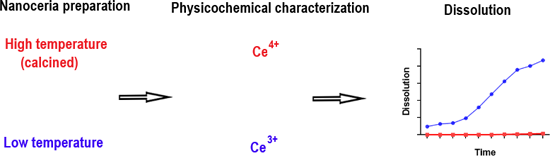
- energies suggested the contamination could be an ester with a long alkyl chain. The contamination was a very thin, homogeneous layer [7]. TGA conducted in the present study showed an average weight loss of 1.3% (Figure 3) which can be attributed to a small amount of surface contamination. The comparison