Search results
Search for "deconvolution" in Full Text gives 95 result(s) in Beilstein Journal of Nanotechnology.
Enhanced photocatalytic hydrogen evolution by combining water soluble graphene with cobalt salts
Beilstein J. Nanotechnol. 2014, 5, 1167–1174, doi:10.3762/bjnano.5.128
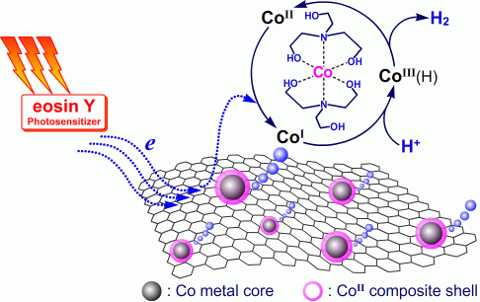
- ]. X-ray photoelectron spectroscopy (XPS) measurements were performed to confirm the differences between GO and G-SO3. Five different peaks centered at 284.5, 285.9, 286.6, 287.7 and 288.9 eV appear in the C1s deconvolution spectrum of GO, corresponding to C=C/C–C in aromatic rings, C–OH (hydroxy), C–O


Carbon dioxide hydrogenation to aromatic hydrocarbons by using an iron/iron oxide nanocatalyst
Beilstein J. Nanotechnol. 2014, 5, 760–769, doi:10.3762/bjnano.5.88
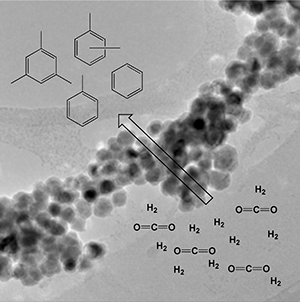
- appears again in the sample that was reduced by H2. This indicates that the surface layer of the as-synthesized particles contains a small amount of Fe0 in addition to the Fe2+ and Fe3+, which is in agreement with the literature [54]. However, deconvolution of the Fe 2p region is rather difficult due to


Cyclodextrin-poly(ε-caprolactone) based nanoparticles able to complex phenolphthalein and adamantyl carboxylate
Beilstein J. Nanotechnol. 2014, 5, 651–657, doi:10.3762/bjnano.5.76
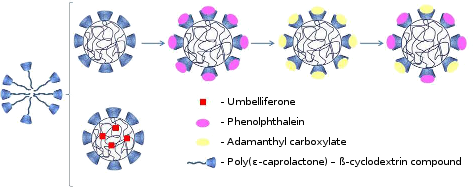
- (DLS) experiments were carried out with a Malvern Zetasizer Nano ZS ZEN 3600 at a temperature of 25 °C. The particle size distribution is derived from a deconvolution of the measured intensity autocorrelation function of the sample by a general purpose method, i.e., the non-negative least squares


One pot synthesis of silver nanoparticles using a cyclodextrin containing polymer as reductant and stabilizer
Beilstein J. Nanotechnol. 2014, 5, 380–385, doi:10.3762/bjnano.5.44
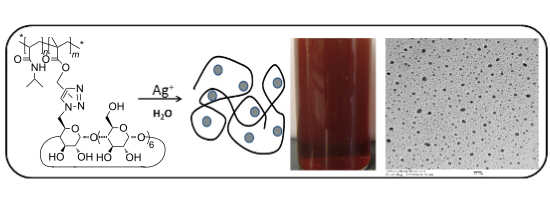
- temperature of 20 °C. The particle size distribution is derived from a deconvolution of the measured intensity autocorrelation function of the sample by a general purpose method (non-negative least squares) algorithm included in the DTS software. Transmission electron microscopy (TEM) images were recorded on


Thermal stability and reduction of iron oxide nanowires at moderate temperatures
Beilstein J. Nanotechnol. 2014, 5, 323–328, doi:10.3762/bjnano.5.36
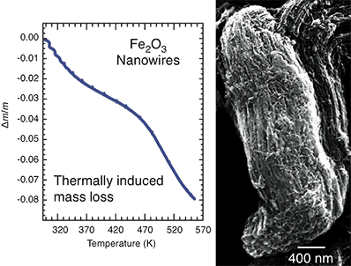
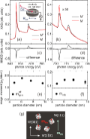
- fitting curves (red continuous lines), along with the deconvolution with contributions associated to the Fe3+ (light color curves) and Fe2+ (darker color curves) manifold components. Right panel: relative intensity estimations of the Fe3+ (red dots) and Fe2+ (black triangles) content in the NWs as a


Study of mesoporous CdS-quantum-dot-sensitized TiO2 films by using X-ray photoelectron spectroscopy and AFM
Beilstein J. Nanotechnol. 2014, 5, 68–76, doi:10.3762/bjnano.5.6
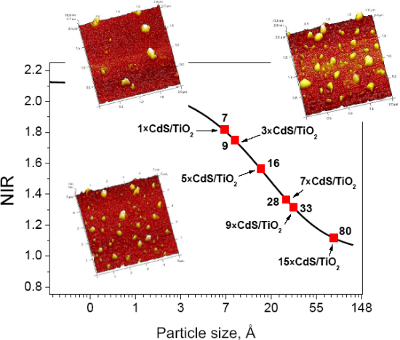
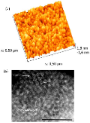
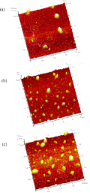
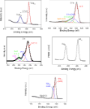
- Scofield cross-sections [6] and the mean free path varying according to the 0.7th power of the photoelectron kinetic energy. Peak deconvolution was performed by using curves with a 70% Gaussian type and a 30% Lorentzian type, and a Shirley non-linear sigmoid-type baseline. The following peaks were used for
- . The deconvolution of C 1s peak results in four peaks. The one centered at 284.8 and attributed to hydrocarbon is related to the residual carbon coming from the decomposition of the titanium(IV) tetraethoxide precursor and some surface pollution during the XPS analysis. The other peaks are attributed


Dynamic nanoindentation by instrumented nanoindentation and force microscopy: a comparative review
Beilstein J. Nanotechnol. 2013, 4, 815–833, doi:10.3762/bjnano.4.93
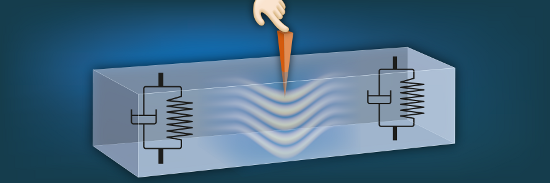
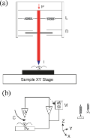
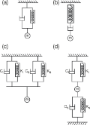
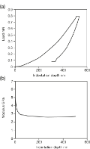
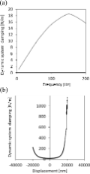
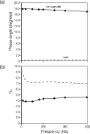
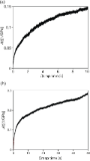
- entire force profile while starting at noncontact positions. The deconvolution implemented to convert the experimentally observed frequency shift/amplitude change to a force can also introduce some uncertainty [91]. Single-frequency techniques are still more readily accessible in most laboratories




Modulation of defect-mediated energy transfer from ZnO nanoparticles for the photocatalytic degradation of bilirubin
Beilstein J. Nanotechnol. 2013, 4, 714–725, doi:10.3762/bjnano.4.81
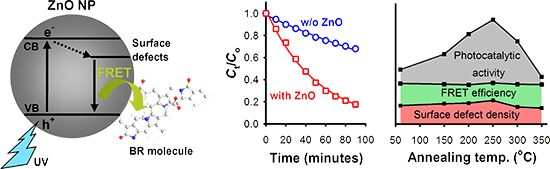
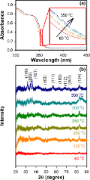
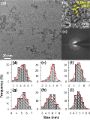
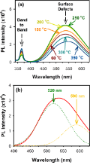
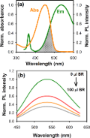
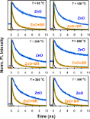
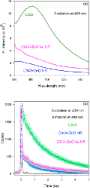
- various decay transients of the ZnO nanoparticles in the presence and absence of BR, obtained after the deconvolution of the fluorescence decay curves with the instrumental response function (IRF, fitted globally by keeping the time scale fixed) are tabulated in Table 1. In case of the as-synthesized ZnO


Catalytic activity of nanostructured Au: Scale effects versus bimetallic/bifunctional effects in low-temperature CO oxidation on nanoporous Au
Beilstein J. Nanotechnol. 2013, 4, 111–128, doi:10.3762/bjnano.4.13
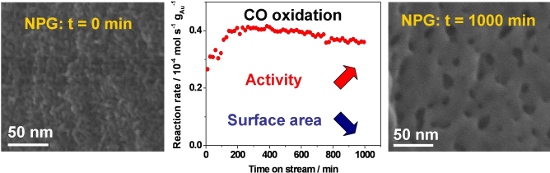
- slightly higher than that for metallic Au0 (84.0 eV) [47][48]. The shoulder at higher BE can be assigned to Au3+ (Au2O3) species, following previous assignments [48]; it contributes about 21% to the total Au(4f) intensity based on a deconvolution of the peaks. Similar spectra were also obtained on the NPG


Sub-10 nm colloidal lithography for circuit-integrated spin-photo-electronic devices
Beilstein J. Nanotechnol. 2012, 3, 884–892, doi:10.3762/bjnano.3.98
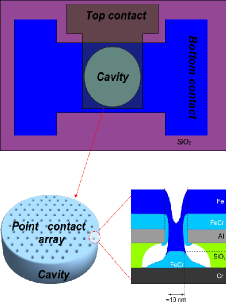
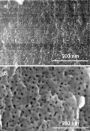
- , for the etching time of 2 min 45 s (Figure 3a) the particle diameter is reduced to 10–15 nm (measured by AFM with particle–tip deconvolution). For 3 min etching time the average diameter is below 10 nm (Figure 3b). Etching for 3 min 15 s reduces the average size further but induces some perturbations
- , determined from scanning calibration samples to be approximately 50 nm. Therefore, a deconvolution procedure was used to obtain the particle sizes stated above, which compare well with those obtained by SEM (see below). The AFM height is a more direct measurement and shows approximately 30 nm for 2 min 45 s
- three samples shown in (a–c): raw data, without deconvolution. SEM images of a typical colloidal-monolayer mask, shown on four scales in (a–d). The average interdot distance is 200 nm (c,d), corresponding to the original polystyrene particle diameter. The average dot size is variable by adjustment of


Mapping mechanical properties of organic thin films by force-modulation microscopy in aqueous media
Beilstein J. Nanotechnol. 2012, 3, 464–474, doi:10.3762/bjnano.3.53
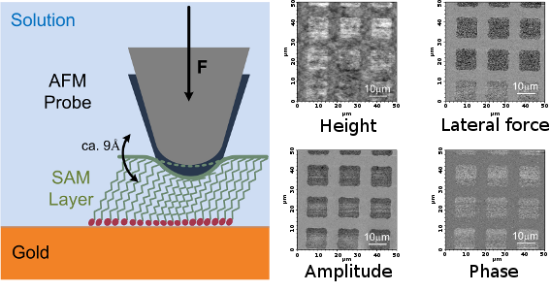
- from the surface-topography-induced deflection response of the cantilever, thus precluding clear signal deconvolution [29]. Both the first and second harmonics, however, do not interfere with the feedback loop and can be detected by lock-in techniques. At low forces, the second-harmonic factor (β
- not only on fluid loading but also on the details of the applied force (see above), needs to be captured adequately first, before a meaningful deconvolution of the contact stiffness is possible. Another issue concerns the selection of the actuation frequency in FMM. Force–distance curves recorded at



Colloidal lithography for fabricating patterned polymer-brush microstructures
Beilstein J. Nanotechnol. 2012, 3, 397–403, doi:10.3762/bjnano.3.46
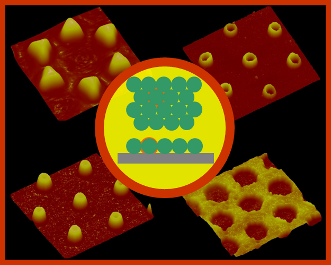
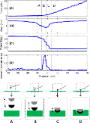
- deconvolution to account for tip-induced broadening of the feature dimensions [32]. Schematic illustration and AFM images showing the use of CL in the fabrication of patterned polymer-brush microstructures. (A) SMM on a silica wafer serves as a template for gold deposition. (B) Removal of the microspheres by


Nano-FTIR chemical mapping of minerals in biological materials
Beilstein J. Nanotechnol. 2012, 3, 312–323, doi:10.3762/bjnano.3.35
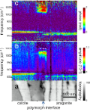
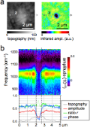
- protein (collagen) or carbonate distributions, usually revealing considerable spatial variation. Moreover, the apatite band exhibits a weak spectral substructure, evident from Fourier self-deconvolution [1]. It reveals relative weights of apatite species that are assigned, with the help of chemical and X





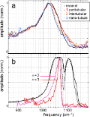
Analysis of force-deconvolution methods in frequency-modulation atomic force microscopy
Beilstein J. Nanotechnol. 2012, 3, 238–248, doi:10.3762/bjnano.3.27
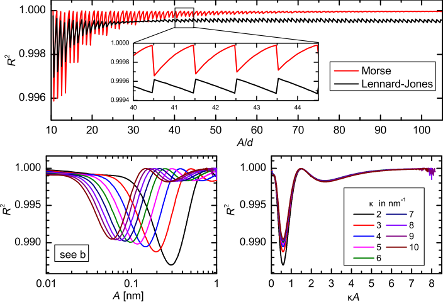
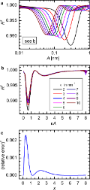
- the frequency shift of an oscillating cantilever in a force field. This frequency shift is not a direct measure of the actual force, and thus, to obtain the force, deconvolution methods are necessary. Two prominent methods proposed by Sader and Jarvis (Sader–Jarvis method) and Giessibl (matrix method
- ) are investigated with respect to the deconvolution quality. Both methods show a nontrivial dependence of the deconvolution quality on the oscillation amplitude. The matrix method exhibits spikelike features originating from a numerical artifact. By interpolation of the data, the spikelike features can
- be circumvented. The Sader–Jarvis method has a continuous amplitude dependence showing two minima and one maximum, which is an inherent property of the deconvolution algorithm. The optimal deconvolution depends on the ratio of the amplitude and the characteristic decay length of the force for the


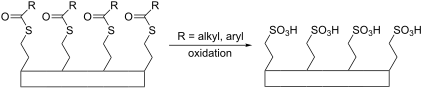
Variations in the structure and reactivity of thioester functionalized self-assembled monolayers and their use for controlled surface modification
Beilstein J. Nanotechnol. 2012, 3, 213–220, doi:10.3762/bjnano.3.24
- , merged signal (Figure 4B and Figure 4C). Deconvolution reveals the thiophene sulfurs at 164.5 ± 0.2 eV and 165.6 ± 0.2 eV. The overlap among the four peaks in the spectra, together with their inherently problematic signal-to-noise ratio, leads to a situation in which the expected 2:1 peak intensity ratio


Mesoporous MgTa2O6 thin films with enhanced photocatalytic activity: On the interplay between crystallinity and mesostructure
Beilstein J. Nanotechnol. 2012, 3, 123–133, doi:10.3762/bjnano.3.13
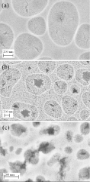
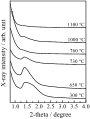
- crystalline standard. The standard was also used for the deconvolution of the instrumental-broadening contribution. Since the initial refinement gave rather high disagreement between the experimental and calculated curves, particularly in the [103] direction, an anisotropic broadening with a larger






Highly efficient ZnO/Au Schottky barrier dye-sensitized solar cells: Role of gold nanoparticles on the charge-transfer process
Beilstein J. Nanotechnol. 2011, 2, 681–690, doi:10.3762/bjnano.2.73
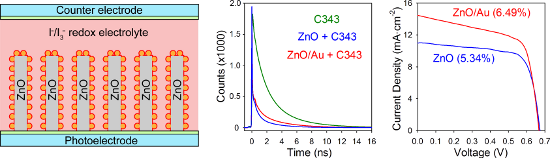
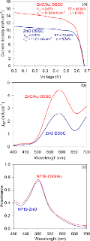
- (nonradiative path), observed here, indicates an efficient electron transfer from the sensitizer to the semiconductor system. The various decay time constants obtained after deconvolution of the fluorescence decay curves (Figure 5b) with the instrument response function (IRF) are given in Table 3. The fraction



How to remove the influence of trace water from the absorption spectra of SWNTs dispersed in ionic liquids
Beilstein J. Nanotechnol. 2011, 2, 653–658, doi:10.3762/bjnano.2.69
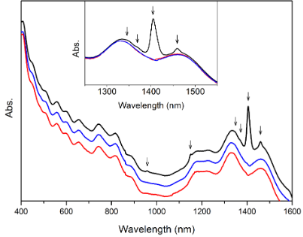
- introduced in the absorption spectra of IL-dispersed SWNTs and cause problems in spectral deconvolution and further analysis. In order to remove this influence, a quantitative characterization of the trace water in [BMIM]+[PF6]− and [BMIM]+[BF4]− was carried out by means of UV–vis-NIR absorption spectroscopy
- and 600–800 nm, respectively, while the E11 transitions of the metallic nanotubes are of 400–650 nm [23]. As the E11 transitions of semiconducting nanotubes are of the lowest energy and do not overlap with higher energy transitions, the deconvolution of the absorption bands in this region with respect
- in the SWNTs absorption spectra, which will affect the deconvolution and quantitative analysis significantly. Therefore, treatment of the ILs under high vacuum, immediately before taking the spectra, is necessary to reduce the peaks introduced by the trace amount of water. Even so, the water bands




Deconvolution of the density of states of tip and sample through constant-current tunneling spectroscopy
Beilstein J. Nanotechnol. 2011, 2, 607–617, doi:10.3762/bjnano.2.64
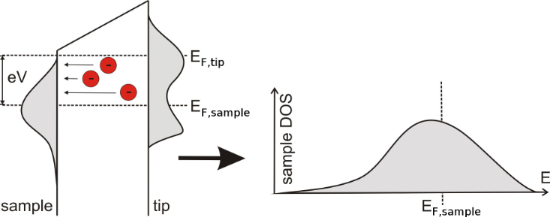
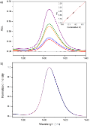
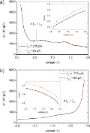
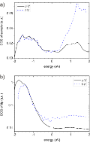
- of characteristic DOS features change depending on parameters such as the energy position, width, barrier height, and the tip–sample separation. Then it is shown that the deconvolution scheme is capable of recovering the original DOS of tip and sample with an accuracy of better than 97% within the
- one-dimensional WKB approximation. Application of the deconvolution scheme to experimental data obtained on Nb(110) reveals a convergent behavior, providing separately the DOS of both sample and tip. In detail, however, there are systematic quantitative deviations between the DOS results based on z–V
- developing a reliable deconvolution scheme shifts the focus towards how to access the actual transmission probability function. Keywords: deconvolution; Nb DOS; STM; STS; Introduction Undoubtedly, the power of scanning tunneling microscopy (STM) is based on its capability to map the surface topology of a




Structure, morphology, and magnetic properties of Fe nanoparticles deposited onto single-crystalline surfaces
Beilstein J. Nanotechnol. 2011, 2, 47–56, doi:10.3762/bjnano.2.6
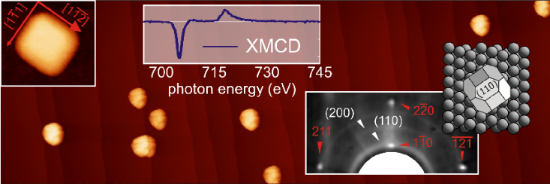
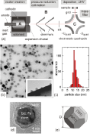
- convolution effects in the STM which become important when the particle size is comparable or larger than the tip diameter [63]. The tip convolution in general also superimposes details of the particle shape as, e.g., surface facets. Numerical deconvolution of the STM images has been shown to provide a tool
- deconvolution as shown in Figure 4d, Figure 4e and Figure 4f. The remaining particles appear rounder or show stronger irregular tip features. The particles in Figure 4d, Figure 4e and Figure 4f show edges along certain crystallographic directions of the W(110) substrate as denoted in the figures. Thus, we
- deconvolution of the STM images reveals surface facets consistent with the random orientation as found by means of RHEED. (d)–(f): At smaller sizes (D < 4 nm) some particles show edges along different crystallographic directions of the substrate. These directions do not correspond to the simple model discussed