Search results
Search for "electrode" in Full Text gives 612 result(s) in Beilstein Journal of Nanotechnology. Showing first 200.
Humidity-dependent electrical performance of CuO nanowire networks studied by electrochemical impedance spectroscopy
Beilstein J. Nanotechnol. 2023, 14, 683–691, doi:10.3762/bjnano.14.54
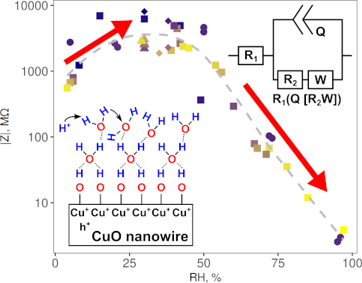
- electrode interconnects for nanoelectronics. Specifically, they can be used to transduce electric signals in nanoelectromechanical system (NEMS) switches [5], which concerns the development of nanoelectronics capable to operate in harsh environments [17]. Additionally, the excellent thermal stability of CuO
- %, the Nyquist plots can be described as parts of ideal circles with large radii, which correspond to the well-known circuit of a polarized electrode R1(R2C), where R1 is the resistance of a metallic electrode, R2 is the load resistance from the CuO nanowire interconnects, and C is the capacitance, which
- contains contributions from the water layer adsorbed on the nanowires, as well as from nanowire–nanowire and nanowire–electrode junctions (Figure 2b). The plots above RH 50% have the shapes of distorted circle parts, which denotes the presence of constant phase elements Q in the equivalent circuits (Figure


Metal-organic framework-based nanomaterials as opto-electrochemical sensors for the detection of antibiotics and hormones: A review
Beilstein J. Nanotechnol. 2023, 14, 631–673, doi:10.3762/bjnano.14.52
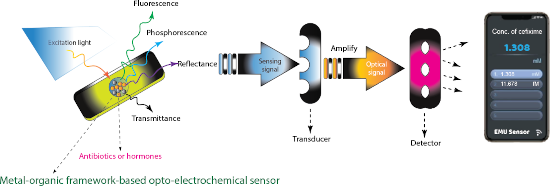
- materials as potent analytical tools because of their advantages in terms of portability, affordability, high sensitivity, and ease of fabrication. Through functions such as active large surface area, rapid electrode kinetics, and efficient catalytic activity, the amplification of electrochemical signals
- 100 nm are the main choice for the design of electrochemical sensors. These characteristics all combine to improve the electrochemical process. A sensing or working electrode that acts as a transducer, an electrolyte, a diffusion barrier, and a reference counter electrode are the common components of
- electrochemical sensors (Figure 10). The target analyte interacts with the recognition layer at the sensing electrode surface to produce an electrical signal that contains the analytical information. Chemical reactions (redox reactions) on the electrode surface are converted by the physicochemical transducer into


Evaluation of electrosynthesized reduced graphene oxide–Ni/Fe/Co-based (oxy)hydroxide catalysts towards the oxygen evolution reaction
Beilstein J. Nanotechnol. 2023, 14, 420–433, doi:10.3762/bjnano.14.34
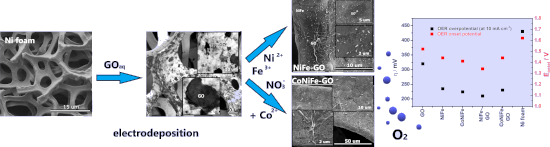
- process is primarily the oxygen evolution reaction (OER) due to its sluggish kinetics resulting in a high overpotential and low efficiency [4]. To overcome this problem, robust anode electrode catalyst materials are required. Since the Ru- and Pt-based catalysts used so far for OER are made using limited
- electrode can also be improved by choosing a conductive and/or high surface area substrate, such as porous nickel foam [22][23]. In the literature, some research has been performed to evaluate the OER electrocatalytic performance of hybrid materials of Ni-, Fe- and/or Co-based oxides/(oxy)hydroxides and Gr
- and/or GO. For example, Wu et al. [13] chemically fabricated metal alloys and their oxides (NiCo, CoFe) with nitrogen-doped graphene (N-rGO/NiCo-NiO-CoO, N-rGO/CoFe-Co2FeO4) on a glassy carbon electrode (GCE). The N-rGO/NiCo-NiO-CoO and N-rGO/CoFe-Co2FeO4 catalysts revealed an OER overpotential (η) of




A novel approach to pulsed laser deposition of platinum catalyst on carbon particles for use in polymer electrolyte membrane fuel cells
Beilstein J. Nanotechnol. 2023, 14, 190–204, doi:10.3762/bjnano.14.19
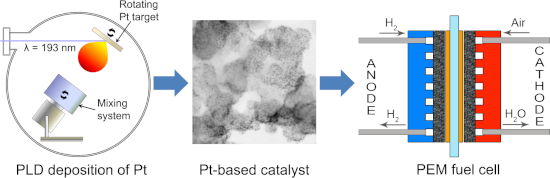
- graphitization were used as carbon supports. The best electrochemical measurement results were obtained for Pt deposited on Vulcan XC-72R. The peak power density measured for this material in a membrane electrode assembly (MEA) of a PEMFC (fed with H2/Air) was 0.41 W/cm2, which is a good result compared to 0.57
- ; ORR; PEMFCs; PLD deposition; Pt catalyst; rotating ring-disk electrode (RRDE); SEM; TEM; XPS; Introduction Fuel cells, which cleanly and efficiently convert the chemical energy of hydrogen or other fuels to electrical energy, are a good alternative to dirty and wasteful combustion engines for
- was initially assessed under well-defined rotating ring-disk electrode (RRDE) conditions. The ORR activity of Pt-based catalysts was evaluated in O2-saturated 0.5 M H2SO4 solution (Figure 5, Table 2, and Supporting Information File 1, Figure S3). Figure 5 allows for a quick comparison of the



A distributed active patch antenna model of a Josephson oscillator
Beilstein J. Nanotechnol. 2023, 14, 151–164, doi:10.3762/bjnano.14.16
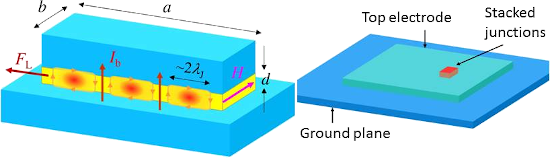
- oscillator (JPO). Here, small junctions (red) are acting as an excitation source for a superconducting patch antenna. The bottom junction electrode (blue) forms the ground plane, and the top electrode (cyan) creates the patch antenna with sizes (a, b), comparable to λ0. In principle, the JPO can be driven by
- = b/2. The position x of the stack affects the effective input resistance of the antenna and provides another adjustable parameter for patch antenna operation, along with the shape of the top electrode [35][36][46]. The FFO input resistance, Equation 33, is not relevant for JPOs, because it describes
- , a small stack of Josephson junctions (red) is sandwiched between two large superconducting electrodes, namely the ground plane (blue) and the top electrode (light blue). The stack is acting as a source of microwave current (feed-in) for the patch antenna formed by the electrodes. Estimation of


Batch preparation of nanofibers containing nanoparticles by an electrospinning device with multiple air inlets
Beilstein J. Nanotechnol. 2023, 14, 141–150, doi:10.3762/bjnano.14.15
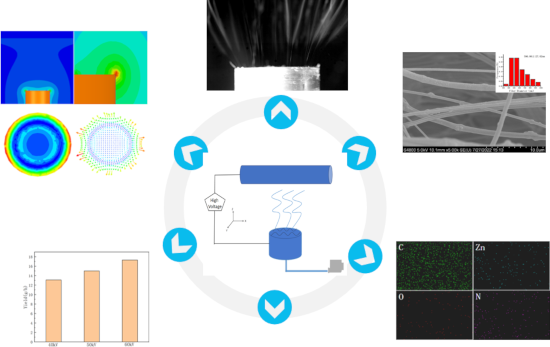
- conductivity, stable physical and chemical properties, as well as fast charge and discharge, the application of electrospun nanofiber-based materials in supercapacitor electrode materials has attracted great attention [1][2]. Although traditional single-needle electrospinning (SNE) devices are widely used and


Cooper pair splitting controlled by a temperature gradient
Beilstein J. Nanotechnol. 2023, 14, 61–67, doi:10.3762/bjnano.14.7
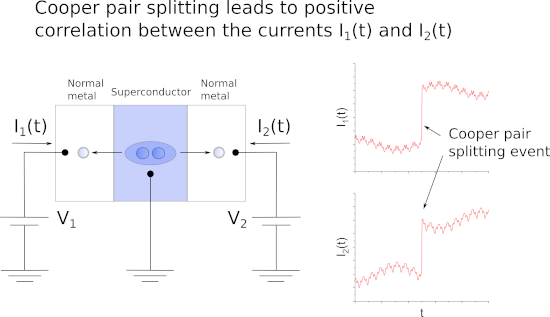
- projection α at a point x, m is the electron mass, and μ is the chemical potential, is the Hamiltonian of a superconducting electrode with the order parameter Δ and the terms account for electron transfer through the junctions between the superconductor and the normal leads. In Equation 4, the surface
- electrode is assumed to be thinner than the superconducting coherence length ξ. Non-local noise S12 (Equation 26) in the tunneling limit (Equation 25). Left panel: T = 0; middle panel: T = 0.1Δ, δT = 0; right panel: |δT| = T = 0.1Δ. Non-local noise S12 (Equation 27) in the case of fully transparent


Observation of collective excitation of surface plasmon resonances in large Josephson junction arrays
Beilstein J. Nanotechnol. 2022, 13, 1578–1588, doi:10.3762/bjnano.13.132
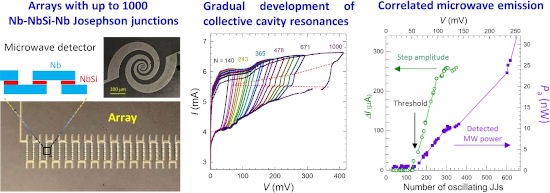
- formation of standing waves at the electrode/substrate interface. We observe that resonant steps in the current–voltage characteristics appear above some threshold number of junctions, Nth ≈ 100, and then progressively enhance in amplitude with further increment of the number of junctions in the resistive
- profound step structure in the current–voltage (I–V) characteristics. The resonances are caused by the formation of surface plasmon-type standing waves at the electrode–substrate interface [34]. Thus, the electrodes themselves act as a common external resonator, facilitating the effective indirect coupling
- interconnecting Nb electrodes, acting as a travelling wave antenna for surface plasmons at the electrode–substrate interface [9][34]. The linear array contains also two extra Nb lines (without JJs) on each side of the array forming a slot waveguide, which may act as an additional external resonator. However




Utilizing the surface potential of a solid electrolyte region as the potential reference in Kelvin probe force microscopy
Beilstein J. Nanotechnol. 2022, 13, 1558–1563, doi:10.3762/bjnano.13.129
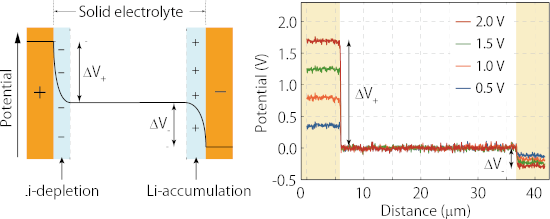
- Nobuyuki Ishida National Institute for Materials Science, Sengen 1-2-1, Tsukuba, Ibaraki 305-0047, Japan 10.3762/bjnano.13.129 Abstract In electrochemical measurements, monitoring the electrode potential using a stable reference is essential for controlling the redox reactions that occur at the
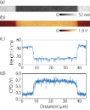
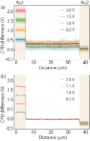
- the electrolyte region, is consistent with the changes in the electrode potential measured using a voltmeter relative to a reference electrode. These results demonstrate that the surface potential in the electrolyte region can be utilized as a stable potential reference when analyzing KPFM data
- . Keywords: electrochemistry; Kelvin probe force microscopy (KPFM); reference electrode; solid electrolyte; Introduction Kelvin probe force microscopy (KPFM) is a scanning probe technique for imaging surface potentials on the nanometer scale [1][2][3][4]. Its operating principle is based on detecting the




Induced electric conductivity in organic polymers
Beilstein J. Nanotechnol. 2022, 13, 1551–1557, doi:10.3762/bjnano.13.128
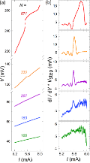
- characteristics of each lead electrode separately. To measure differential characteristics dI/dV(V), modulation technique and phase-sensitive lock-in detection were used. To suppress the negative effect of stray electromagnetic pickups, a multistage RLC filter system was used [17]. While R(T) measurements at
- side view microphotographs made by high-resolution transmission electron microscopy occasionally reveal some macroscopic features such as lead electrode shortcuts through the polymer film (Figure 2c). These defects are episodic, and their character does not resemble the ‘melting through’ of the PDP


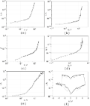

Photoelectrochemical water oxidation over TiO2 nanotubes modified with MoS2 and g-C3N4
Beilstein J. Nanotechnol. 2022, 13, 1541–1550, doi:10.3762/bjnano.13.127
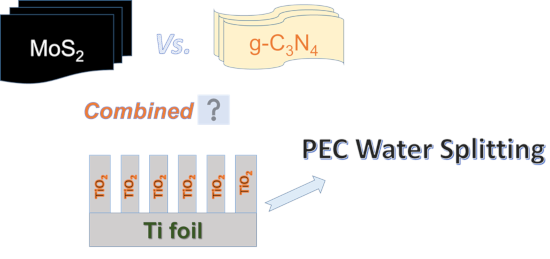
- , the electrode material must be extremely durable and nearly chemically inert to be able to withstand highly acidic or basic environments. Therefore, noble metals such as Pt, Pd, Au and Ag with suitable chemical properties, such as inertness, good resistance against corrosion and good electrical
- conductivity have been widely used in water splitting reactions [10][11]. However, noble metals are still rare and expensive materials, and their application as electrode materials is considered to be not optimal [10]. Therefore, the study of a materials with high-performance in PEC water splitting, which
- solution. Next, 0.2 mL of either of these solutions was used to coat the surface of TNAs via spin coating. The samples were denoted as MoS2/TNAs and g-C3N4/TNAs. Then, the samples were annealed in nitrogen gas at 60 °C for 12 h to obtain a stable electrode for the investigation processes. Characterization


Non-stoichiometric magnetite as catalyst for the photocatalytic degradation of phenol and 2,6-dibromo-4-methylphenol – a new approach in water treatment
Beilstein J. Nanotechnol. 2022, 13, 1531–1540, doi:10.3762/bjnano.13.126
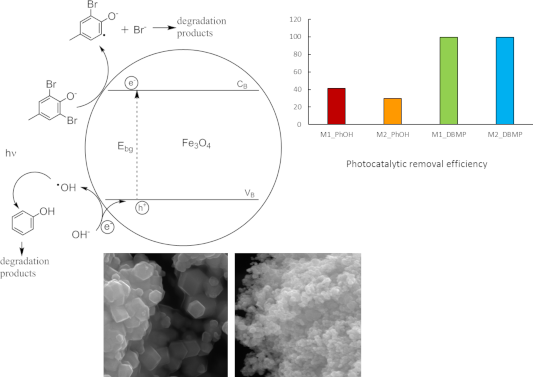
- 1 × 10⁻⁴ to 1 × 10⁻² mol·L−1 were used to quantify PhOH and DBMP. The concentration of dissolved bromide ions was determined potentiometrically with a bromide ion-selective electrode (EBr-01, Hydromet, Poland) with a silver chloride electrode (RL-100, Hydromet, Poland) as a reference electrode and a


A TiO2@MWCNTs nanocomposite photoanode for solar-driven water splitting
Beilstein J. Nanotechnol. 2022, 13, 1520–1530, doi:10.3762/bjnano.13.125
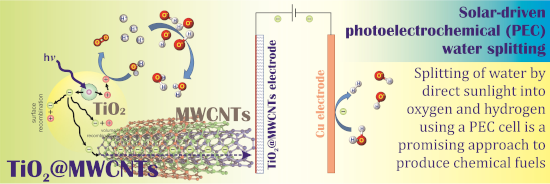
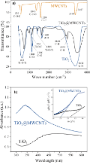
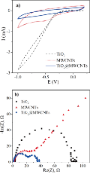
- cyclic voltammograms show that incorporating TiO2 with the MWCNTs leads to a decrease in the electrical double layer, thereby facilitating the electron transfer rate in the TiO2@MWCNTs electrode. Moreover, the current density of the photoelectrochemical electrode formed by TiO2@MWCNTs under solar
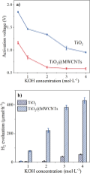
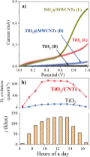
- irradiation is significantly higher than that prepared by TiO2 (vs Ag/AgCl). The low charge capacity of the TiO2@MWCNTs electrode–electrolyte interface hinders the recombination of the photogenerated electrons and holes, which contributes to the enhancement of the solar-to-hydrogen (STH) conversion efficiency
- . The average STH conversion efficiency of the TiO2@MWCNTs electrode under solar exposure from 6 AM to 5 PM is 11.1%, 8.88 times higher than that of a TiO2 electrode. The findings suggested TiO2@MWCNTs is a feasible nanomaterial to fabricate the photoanode using photoelectrochemical water splitting



Structural studies and selected physical investigations of LiCoO2 obtained by combustion synthesis
Beilstein J. Nanotechnol. 2022, 13, 1473–1482, doi:10.3762/bjnano.13.121
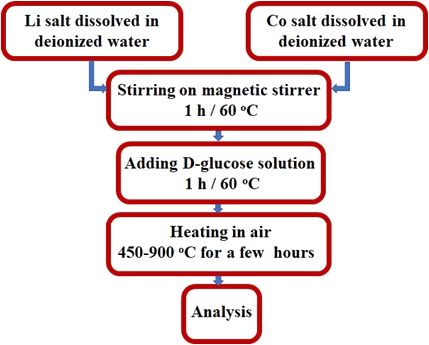
- lithium cells in 1979 by researchers from Oxford University [1]. The cell consisted of LCO, which was used as the cathode material, and metallic lithium, which was used as the anode material. In 1985, it was proposed to replace the Li metal in the negative electrode with the carbonaceous material graphite




Rapid and sensitive detection of box turtles using an electrochemical DNA biosensor based on a gold/graphene nanocomposite
Beilstein J. Nanotechnol. 2022, 13, 1458–1472, doi:10.3762/bjnano.13.120
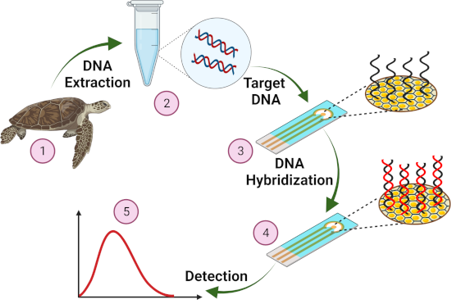
- probe using bioinformatics tools, and it was also validated in wet-lab experiments. As a detection platform, a screen-printed carbon electrode (SPCE) enhanced with a nanocomposite containing gold nanoparticles and graphene was used. The morphology of the nanoparticles was analysed by field-emission
- their mismatches, noncomplementary, and nontarget species DNA measured by DPV. The developed biosensor exhibited a selective response towards reverse complementary DNAs and was able to discriminate turtles from other species. The modified electrode displayed good linearity for reverse complementary DNAs
- carbon electrode; Introduction The Southeast Asian box turtle (BT), Cuora amboinensis, is an endangered and protected turtle species. Due to its high value as an exotic food item and in traditional medicine, it ends up being a profitable item in the illicit wildlife trade [1]. Turtles contain active



Coherent amplification of radiation from two phase-locked Josephson junction arrays
Beilstein J. Nanotechnol. 2022, 13, 1445–1457, doi:10.3762/bjnano.13.119
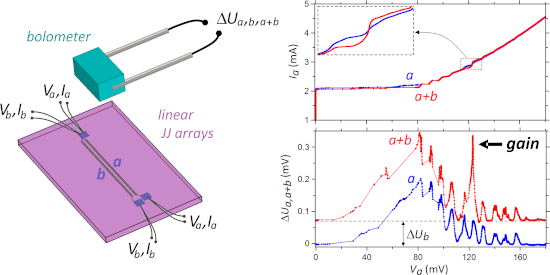
- working similar to lasers is discussed in more detail in [8]. The resonator can be a cavity of the JJs itself [2], an electrode with embedded JJs [9], or the dielectric substrate on which the JJ array is arranged [10]. Coherent superradiant amplification of emitted power is caused by a constructive
- factor well above a factor of two. The goal of our work is to study inter-array coupling and its manifestations. In this work we study the interaction between two linear arrays of Nb/NbSi/Nb JJs. The arrays have a single-line geometry with 332 or 380 JJs embedded in a straight electrode. We analyze the
- make a vanishingly small contribution to the radiation power (see Appendix). Therefore, the overall emission spectrum remains very sharp and is practically not influenced by the voltage/frequency deviation at nodal JJs. In fact, it is the cavity mode in the electrode, rather than individual junctions


Density of states in the presence of spin-dependent scattering in SF bilayers: a numerical and analytical approach
Beilstein J. Nanotechnol. 2022, 13, 1418–1431, doi:10.3762/bjnano.13.117
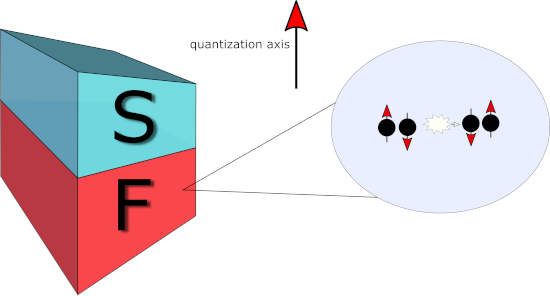
- structure under consideration is depicted in Figure 1. It consists of a ferromagnetic layer with thickness df and a superconducting electrode along the x direction. The SF interface is characterized by the dimensionless parameter γB = RBσn/ξf, where RB is the resistance of the SF interface in units Ω·m2, σn


LED-light-activated photocatalytic performance of metal-free carbon-modified hexagonal boron nitride towards degradation of methylene blue and phenol
Beilstein J. Nanotechnol. 2022, 13, 1380–1392, doi:10.3762/bjnano.13.114
- utilizing an EMX micro A200-9.5/12/S/W, Bruker Biospin, Germany. Photoelectrochemical study The photoelectrochemical properties of the studied materials were evaluated through a CHI 650 electrochemical workstation comprising a three-electrode system with Pt and Ag/AgCl as counter and reference electrodes
- , respectively. The setup consists of a 0.5 M Na2SO4 electrolyte/hole-scavenger solution along with LED lamps as a visible light source. The working electrode was fabricated through an ITO-PTFE electrode (dimensions: 1 cm × 1 cm) drop casted with a slurry of the studied materials, isopropanol and Nafion solution
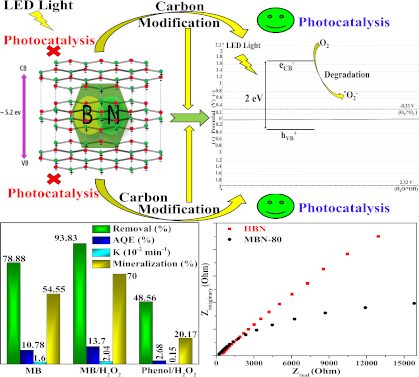
- MBN-80 by providing in-depth information on the charge transfer kinetics, and the obtained Nyquist plots are depicted in Figure 6a. The charge transfer resistance at the electrode–electrolyte interface can be interpreted through the arc radius from the Nyquist plot [30]. The lower Nyquist radius for



Near-infrared photoactive Ag-Zn-Ga-S-Se quantum dots for high-performance quantum dot-sensitized solar cells
Beilstein J. Nanotechnol. 2022, 13, 1337–1344, doi:10.3762/bjnano.13.110
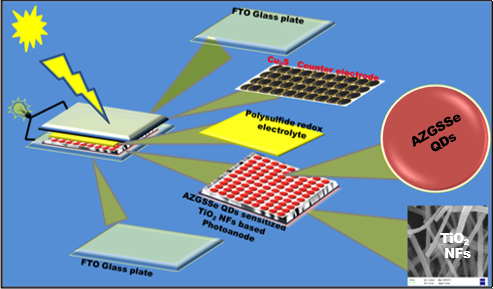
- blade method, which was followed by sintering at 450 °C for 30 min as described earlier [8][9][10]. The glass plate was dipped in 0.12 M of titanium tetrachloride solution at 70 °C for 30 min and was then rinsed with distilled water thoroughly and dried at 60 °C. After that, the electrode was soaked for
- 24 h with a MPA/acetonitrile solution 3:7 (v/v). This substrate was then immersed into the colloidal AZGSSe QD solution for 48 h to obtain the AZGSSe-sensitized TiO2 NF-based photoanode. Assembly of QDSCs Earlier reports revealed that Cu2S is a low-cost and efficient counter electrode (CE) for QDSCs
- ) that appears at the interface of electrolyte and counter electrode. The low-frequency region hemisphere is attributed to the charge transfer resistance (R2) appearing at the interface of electrolyte and photoanode. The sheet resistance (Rs) is the resistance of the intercept of the real axis. Similarly


Laser-processed antiadhesive bionic combs for handling nanofibers inspired by nanostructures on the legs of cribellate spiders
Beilstein J. Nanotechnol. 2022, 13, 1268–1283, doi:10.3762/bjnano.13.105
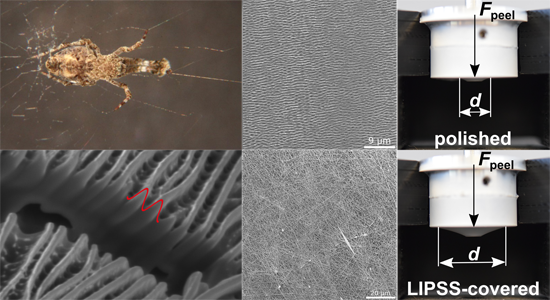
- opposite to the needle at a distance of about 10 cm. The positive electrode of a high-voltage generator (HCP 35 – 35 000, FuG Elektronik GmbH, Schechen, Germany) was clamped onto the needle and the ground electrode was clamped onto the aluminium sample carrier. The corresponding voltage was set to 20 kV







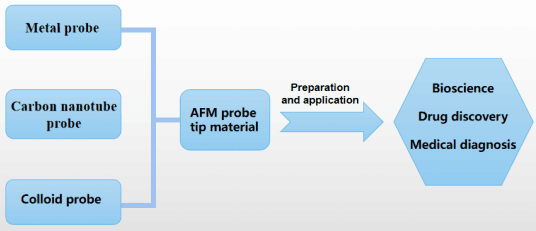
Studies of probe tip materials by atomic force microscopy: a review
Beilstein J. Nanotechnol. 2022, 13, 1256–1267, doi:10.3762/bjnano.13.104
- combine the versatility of electrochemistry and CP technology. They are more accessible in terms of samples, either as a second electrode under open circuit conditions, under double constant potential control or as an insulating surface. In the future, there is excellent scope for eCPs in applications
Design of surface nanostructures for chirality sensing based on quartz crystal microbalance
Beilstein J. Nanotechnol. 2022, 13, 1201–1219, doi:10.3762/bjnano.13.100
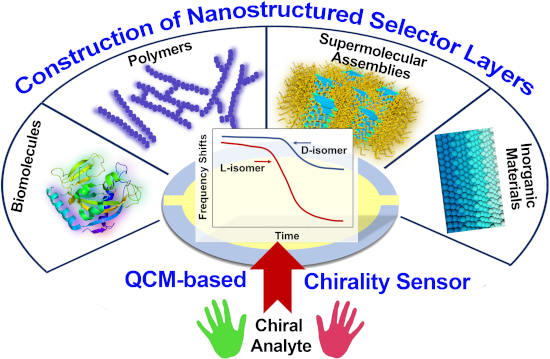
- induced by external stimulus. As there are almost no limitations for the receptor layers in QCM sensor systems, various materials and nanostructures have been developed for constructing sensing layers on the surface of the electrode. The sensing process may also be implemented in the liquid and gas phases
- recognition of biomolecules (Figure 2) [38]. The sensing films of poly(EDOT-OH) with either R or S chirality were directly synthesized on the surface of the QCM electrode and engineered with different morphologies of nanotubular arrays and smooth membranes. The binding effects of fetal bovine serum, RGD
- -coated poly(ethylene terephthalate) (PET) layer on the surface of an electrode [48]. By controlling the deposition conditions, a stable layer with a high loading amount of MIP nanoparticles could be obtained, which would allow for the detection limit of propranolol to be 2 nmol·cm−2 or approx. 1 × 10¹⁵


Application of nanoarchitectonics in moist-electric generation
Beilstein J. Nanotechnol. 2022, 13, 1185–1200, doi:10.3762/bjnano.13.99
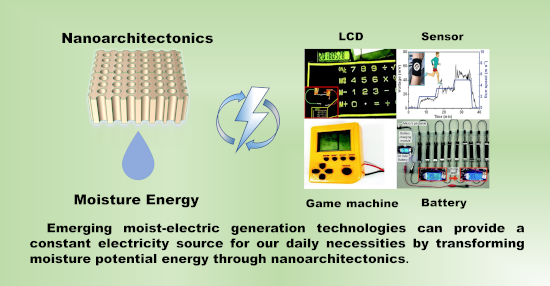
- energy from the movement of water droplets and provides a 3 V, 2 μA instantaneous electrical output. It is designed as a hydrophobic layer plus a polymeric dielectric layer with an electrode layer for electron flow at the bottom [78]. As shown in Figure 6e and f, the effects of different ions on the
- electrode materials to collect the electric energy, wearable MEG textiles still need require further investigation. MEGs also have potential in other research fields. In micro/nano-driven devices [92], a hygro-responsive layer can use ambient humidity to provide a continuous power supply for the device
- Elsevier (2017). This content is not subject to CC BY 4.0. d) The device is designed through the interface to increase the output power. (e) Voltage and current output of the device. (f) Device configurations with different electrode designs. (g, h) Voltage and current output of three generators with


Recent advances in green carbon dots (2015–2022): synthesis, metal ion sensing, and biological applications
Beilstein J. Nanotechnol. 2022, 13, 1068–1107, doi:10.3762/bjnano.13.93




Electrocatalytic oxygen reduction activity of AgCoCu oxides on reduced graphene oxide in alkaline media
Beilstein J. Nanotechnol. 2022, 13, 1020–1029, doi:10.3762/bjnano.13.89
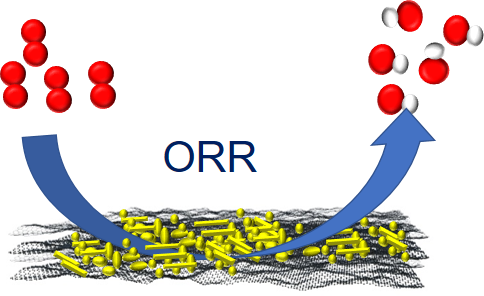
- environmentally friendly with zero emissions at the time of use. These systems have the ability to convert chemical energy into electric energy with the highest conversion possible [1][2]. The active electrode reactions include the hydrogen oxidation reaction (HOR) and the oxygen reduction reaction (ORR). The
- slow reaction rates of the electrode processes impede the efficiency and, thus, require innovative catalyst designs. The ORR is an irreversible, complex (involving multiple steps and intermediates O, OH−, O2−, HO2− and H2O2) and kinetically slow process (via two- or four-electron transfer) dominating
- ][13][14]. In particular, the ORR in alkaline environments with faster kinetics and lower over potential requires stable transition metal-derived electrocatalysts [15]. The major hurdles for Pt-based ORR electrode catalysts in alkaline media include high cost, low operational stability, fuel crossover