Search results
Search for "gain" in Full Text gives 466 result(s) in Beilstein Journal of Nanotechnology. Showing first 200.
Straight roads into nowhere – obvious and not-so-obvious biological models for ferrophobic surfaces
Beilstein J. Nanotechnol. 2022, 13, 1345–1360, doi:10.3762/bjnano.13.111
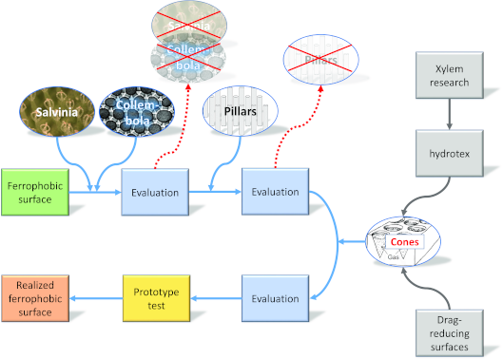
- intended technical application. Considering these difficulties, it appears to be desirable to obtain information on the state of the “biomimetic practice”. This is generally recognised, with various attempts to gain insight into how “biomimetic procedures” are conducted. As an example, one approach is to


Role of titanium and organic precursors in molecular layer deposition of “titanicone” hybrid materials
Beilstein J. Nanotechnol. 2022, 13, 1240–1255, doi:10.3762/bjnano.13.103
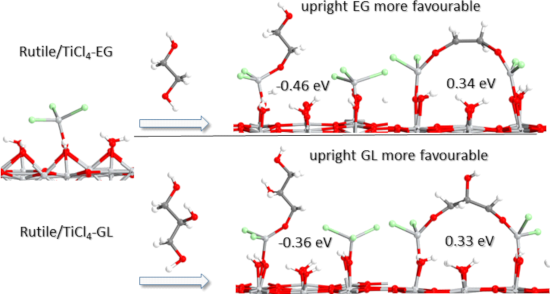
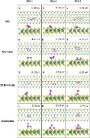
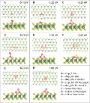
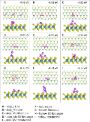
- calculations we have calculated the interaction energies of the TiCl4 molecule on the selected surfaces. These energies are −0.29 eV for the anatase TiO2, −0.22 eV for the rutile TiO2 and 0.87 eV for the Al2O3. These energies indicate that TiCl4 will adsorb favourably, although with a small energy gain, on the
- a further gain in energy of −0.55 eV for EG and −0.33 eV for GL when the molecules change their configuration from upright to flat lying, and a second HCl molecule is released. These energies show that EG and GL could also undergo double reactions on the anatase TiO2 surface, although for GL this
- of EG and GL. A negative energy gain was calculated for all reactions when EG and GL change their configuration from upright to flat lying and one H–DMA molecule is released, regardless of the surface. Calculated energetics show that while the EG and GL can bind to the Ti sites via formation of Ti–O


Application of nanoarchitectonics in moist-electric generation
Beilstein J. Nanotechnol. 2022, 13, 1185–1200, doi:10.3762/bjnano.13.99
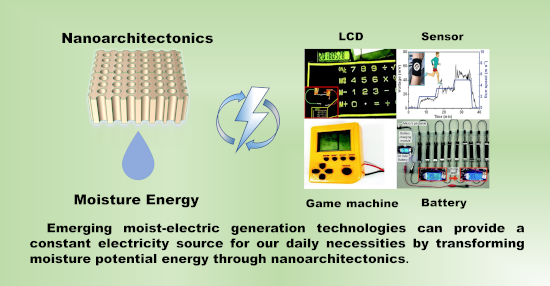
- in practical applications and provide green energy for more electronic devices. (a) The water flow is driven by an external electric field in the “motor” part, so the water molecules gain kinetic energy, and then an electromotive force is generated in the "Generator" part. (b) A scanning electron


Numerical study on all-optical modulation characteristics of quantum cascade lasers
Beilstein J. Nanotechnol. 2022, 13, 1011–1019, doi:10.3762/bjnano.13.88
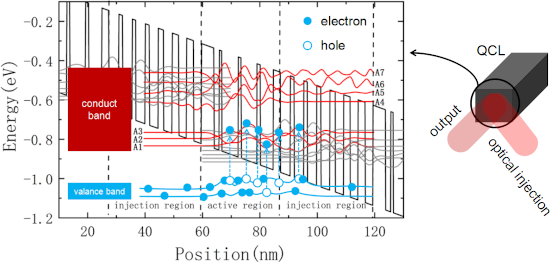
- physics in QCL’s gain medium which consists of multiple of dielectric nanostructures with high refractive index under light injection, we modified the 1½-period model to calculate values of electron population and lifetime in each subband which is separated by the nanostructures, optical gain, current and
- number of photons in the cavity of a mid-infrared QCL modulated with near-infrared optical injection. The results were consistent with an experiment, where the injected light increases the electron population and lifetime, but does not affect the optical gain obviously. Our study can be helpful for
- equations (FRE) [18] as Equations 1–4 shows, where n0 is the cavity index, gc is the gain cross section, c is the speed of light. ΓP is the optical confinement factor per stage, α is the laser total loss. NP the total number of stages, 1/τk,i is the rate of electron scattered from subband k to subband i, 1


Comparing the performance of single and multifrequency Kelvin probe force microscopy techniques in air and water
Beilstein J. Nanotechnol. 2022, 13, 922–943, doi:10.3762/bjnano.13.82
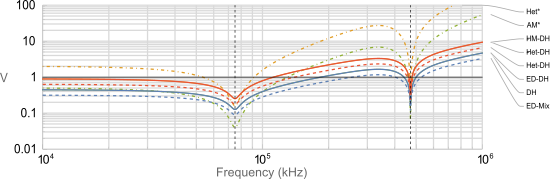
- environments by Collins et al. [81]. This technique exhibits a similar cantilever capacitive contribution to VCPD as AM-KPFM and is only quantitative if the relative gain of the two measured frequencies is known either through an additional measurement or through modelling [29]. Since the electrostatic
- function of the cantilever. This frequency-dependent gain, XGain, represents the sensitivity ratio of the cantilever at the two frequencies of interest. XGain is relatively stable for a given tip–sample distance in a given environment and, as such, can be approximated mathematically [29]. However, changes
- constant, T is the temperature, Nd is the detector noise, and ωn, kn, and Qn are, respectively, the resonance frequency, spring constant, and quality factor of the n-th eigenmode (n = 1, 2). The corresponding gain at a given frequency is then defined as We note that more complex expressions for the
Ideal Kerker scattering by homogeneous spheres: the role of gain or loss
Beilstein J. Nanotechnol. 2022, 13, 828–835, doi:10.3762/bjnano.13.73
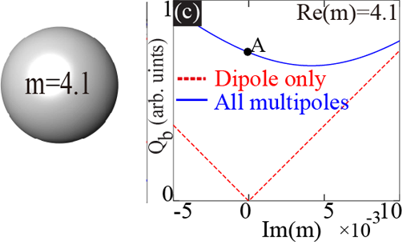
- . China College for Advanced Interdisciplinary Studies, National University of Defense Technology, Changsha, Hunan 410073, P. R. China 10.3762/bjnano.13.73 Abstract We investigate how the optical gain or loss (characterized by isotropic complex refractive indexes) influence the ideal Kerker scattering of
- exactly zero backward scattering. It was previously shown that, for non-magnetic homogeneous spheres with incident plane waves, either gain or loss prohibit ideal Kerker scattering, provided that only electric and magnetic multipoles of a specific order are present and contributions from other multipoles
- produce ideal Kerker scattering. Moreover, we further demonstrate that, when multipoles of different orders are simultaneously taken into consideration, loss or gain can serve as helpful rather than harmful contributing factors, for the elimination of backward scattering. Keywords: gain and loss; Kerker


Temperature and chemical effects on the interfacial energy between a Ga–In–Sn eutectic liquid alloy and nanoscopic asperities
Beilstein J. Nanotechnol. 2022, 13, 817–827, doi:10.3762/bjnano.13.72
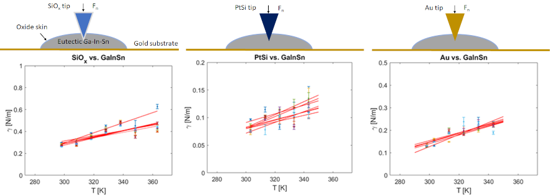
- energy of the system. The larger the individual free surface energies, the larger the energetic gain upon the formation of an interface. Above, we have related the temperature sensitivity of the surface energy κ to the surface entropy Ss. For most liquids, the value κ is negative, owing to an increase in



Reliable fabrication of transparent conducting films by cascade centrifugation and Langmuir–Blodgett deposition of electrochemically exfoliated graphene
Beilstein J. Nanotechnol. 2022, 13, 666–674, doi:10.3762/bjnano.13.58
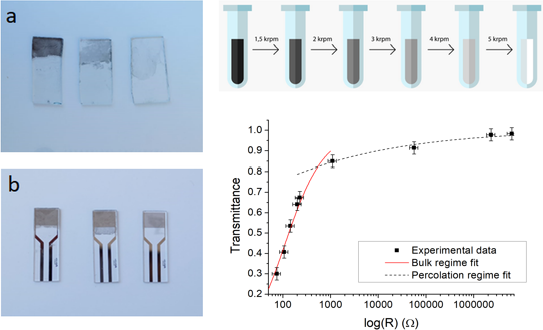
- visual inspection of the images in Figure 2 confirms that slower centrifugation rates (samples on the left) yield thicker films than faster centrifugation rates (samples on the right), which is expected because flakes are thicker and laterally larger when processed at slower rates. To gain further


Electrostatic pull-in application in flexible devices: A review
Beilstein J. Nanotechnol. 2022, 13, 390–403, doi:10.3762/bjnano.13.32
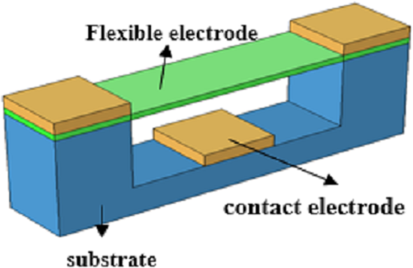
- microscale energy system. Triboelectric power generation: Two materials with different work functions will gain or lose electrons when they are in contact with each other, resulting in the triboelectric effect [90]. When the switch is closed, the electrode contact friction causes the surfaces to carry


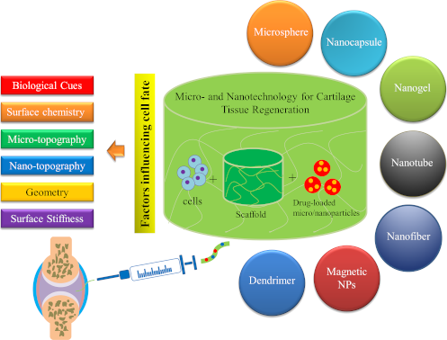
Micro- and nanotechnology in biomedical engineering for cartilage tissue regeneration in osteoarthritis
Beilstein J. Nanotechnol. 2022, 13, 363–389, doi:10.3762/bjnano.13.31


Controllable two- and three-state magnetization switching in single-layer epitaxial Pd1−xFex films and an epitaxial Pd0.92Fe0.08/Ag/Pd0.96Fe0.04 heterostructure
Beilstein J. Nanotechnol. 2022, 13, 334–343, doi:10.3762/bjnano.13.28
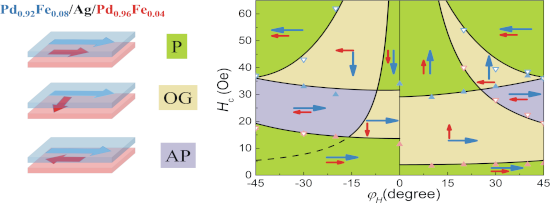
- behavior was proposed in [21]. It suggested the successive movements of two 90° domain walls. The values of the coercive fields are determined by the conditions when the energy gain due to a moment rotation overcomes the wall pinning energy: For the Pd0.92Fe0.08 film, this model describes well the


Thermal oxidation process on Si(113)-(3 × 2) investigated using high-temperature scanning tunneling microscopy
Beilstein J. Nanotechnol. 2022, 13, 172–181, doi:10.3762/bjnano.13.12
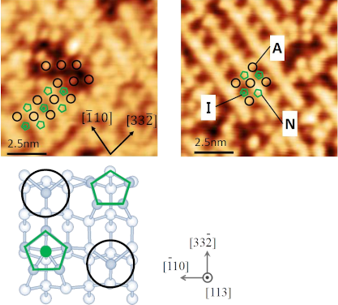
- ) substrate dramatically, so that it was close to that of Si(001) [1]. To gain insight into the origin of this remarkable reduction in Dit, it is necessary to understand the dynamic processes that occur during thermal oxidation more precisely. To this end, we observed the reaction dynamics during thermal



Biocompatibility and cytotoxicity in vitro of surface-functionalized drug-loaded spinel ferrite nanoparticles
Beilstein J. Nanotechnol. 2021, 12, 1339–1364, doi:10.3762/bjnano.12.99


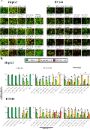
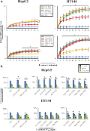
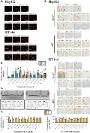

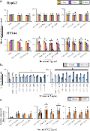


Nonmonotonous temperature dependence of Shapiro steps in YBCO grain boundary junctions
Beilstein J. Nanotechnol. 2021, 12, 1279–1285, doi:10.3762/bjnano.12.95
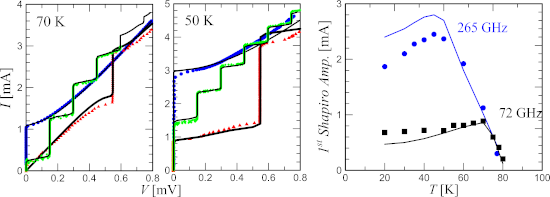
- , maxΔI1 ≈ 5 mA × 72 GHz/560 GHz = 0.64 mA. For 265 GHz signal, the step height almost reaches the limit ≈Ic at 50 K, while at 20 K, ωmw is still far from ωc. Summarizing, for low-gigahertz radiation frequencies, lowering the temperature does not gain the response magnitude due to the non-optimal frequency


Plasmon-enhanced photoluminescence from TiO2 and TeO2 thin films doped by Eu3+ for optoelectronic applications
Beilstein J. Nanotechnol. 2021, 12, 1271–1278, doi:10.3762/bjnano.12.94
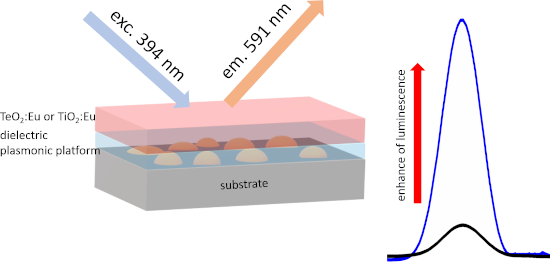
- TiO2 or TeO2 film are responsible for the emission of light. The intensity of the luminescence can be enhanced by the plasmon resonance from Au nanostructures. The gain is tunable by the thickness of a Al2O3 thin film deposited as a separator between metallic nanostructures and the luminescent layer


Two dynamic modes to streamline challenging atomic force microscopy measurements
Beilstein J. Nanotechnol. 2021, 12, 1226–1236, doi:10.3762/bjnano.12.90
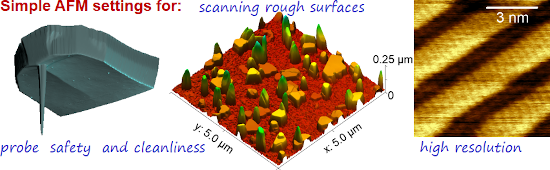
- point. For high quality images, a correct feedback gain setting is required. We will not consider this issue in detail, since it is sufficiently general for all systems with negative feedback; the specificity associated with the operation of a scanning probe microscope can be found in [11]. We only note
- comparison with AM-AFM, the loss of the scanning speed in the VM is compensated by the gain in the ease of the AFM set up and the overall time required for collecting a high-quality image. There is no need for a test scan, it is easier to process collected images; due to the dramatic reduction of tip


Morphology-driven gas sensing by fabricated fractals: A review
Beilstein J. Nanotechnol. 2021, 12, 1187–1208, doi:10.3762/bjnano.12.88
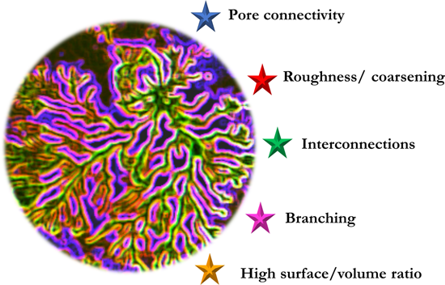
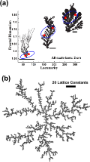
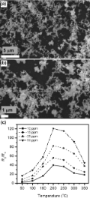
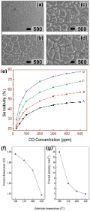
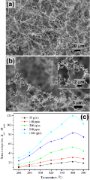
- a response time of 140 s. The fractal dimensions of the investigated samples ranged from 1.4 to 1.6. The authors did not observe any dependence on D, but a dependence on grain size was reported. These results indicate that a fractal geometry alone is not sufficient to gain better gas sensitivity










The effect of cobalt on morphology, structure, and ORR activity of electrospun carbon fibre mats in aqueous alkaline environments
Beilstein J. Nanotechnol. 2021, 12, 1173–1186, doi:10.3762/bjnano.12.87
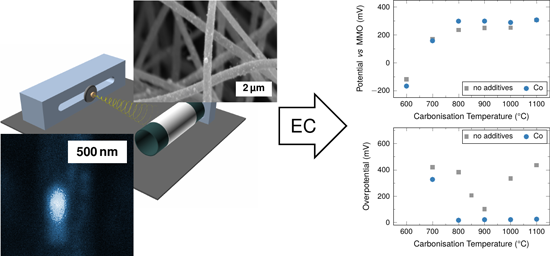
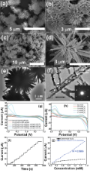
- temperature to gain a more detailed understanding of the interactions of the cobalt additive and the carbon framework, as well as the formation and location of cobalt–nitrogen species. The changes in graphitisation, fibre chemistry, and electrochemical ORR performance are studied in depth using scanning


Open-loop amplitude-modulation Kelvin probe force microscopy operated in single-pass PeakForce tapping mode
Beilstein J. Nanotechnol. 2021, 12, 1115–1126, doi:10.3762/bjnano.12.83
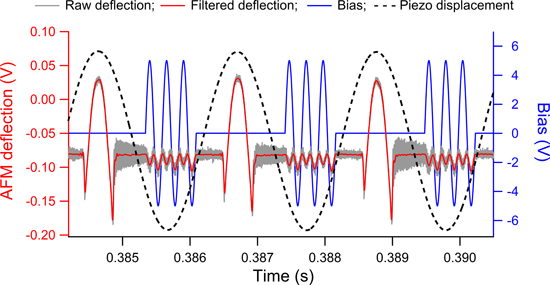
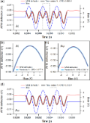
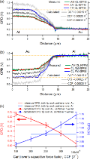
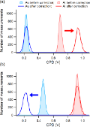
- calibration for the gain of the cantilever’s transfer function. DH-KPFM has found applications on sensitive materials and solid–liquid interfaces where conventional CL KPFM does not perform very well [43]. CPD measurements in an OL operation have also been demonstrated in more inclusive scanning probe modes





Revealing the formation mechanism and band gap tuning of Sb2S3 nanoparticles
Beilstein J. Nanotechnol. 2021, 12, 1021–1033, doi:10.3762/bjnano.12.76
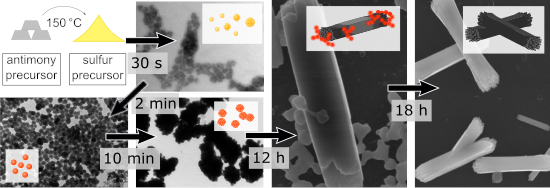
- crucial to adjust these parameters. Also, when aiming for continuous production by transferring the synthesis into a microreactor, it is necessary to know and control synthesis and particle parameters in a broader range [15]. Mainly two synthesis strategies to gain nanoparticles with uniform size and
- at 150 °C was revealed. In this way, we could gain a more in-depth insight into the kinetics of particle formation, while earlier studies by Abulikemu et al. and Li et al. were focusing on the temperature-dependent evolution of Sb2S3 particles. The suggested mechanism assumes that seeds (type 0


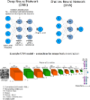
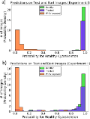
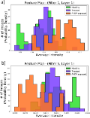
The role of convolutional neural networks in scanning probe microscopy: a review
Beilstein J. Nanotechnol. 2021, 12, 878–901, doi:10.3762/bjnano.12.66







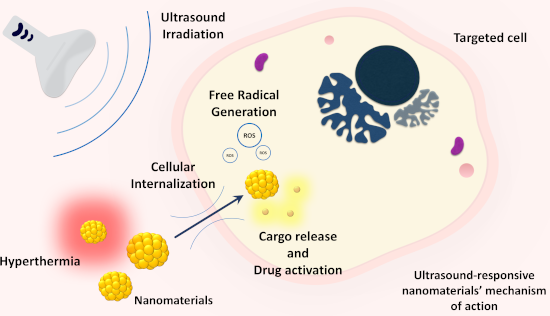
Comprehensive review on ultrasound-responsive theranostic nanomaterials: mechanisms, structures and medical applications
Beilstein J. Nanotechnol. 2021, 12, 808–862, doi:10.3762/bjnano.12.64


Recent progress in magnetic applications for micro- and nanorobots
Beilstein J. Nanotechnol. 2021, 12, 744–755, doi:10.3762/bjnano.12.58
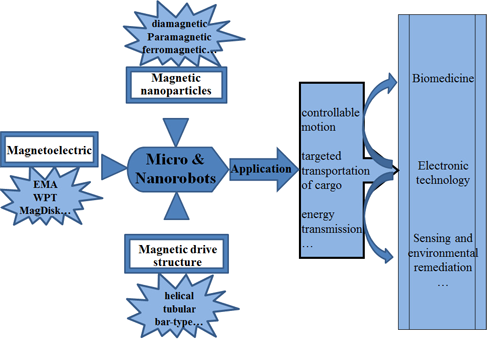
- nanoparticles gain magnetization against an applied external magnetic field. Paramagnetism is caused by spin angular momentum (i.e., spin magnetic moment). Under the action of an external magnetic field, the initially disordered magnetic moments will be reoriented, thereby exhibiting paramagnetism, while other


Prediction of Co and Ru nanocluster morphology on 2D MoS2 from interaction energies
Beilstein J. Nanotechnol. 2021, 12, 704–724, doi:10.3762/bjnano.12.56
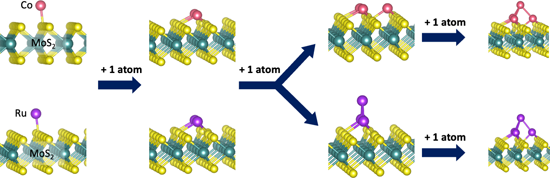
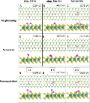
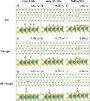
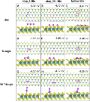
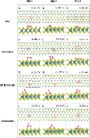
- charges. Single-atom adsorption Co and Ru atoms adsorb exothermically at all three adsorption sites. A single Co atom adsorbs most strongly at site atop_Mo, with an energy gain of −5.82 eV, followed by site hollow and site atop_S, with energy gains of −5.55 eV and −4.21 eV, respectively. A single Ru atom
- adsorbs preferentially at site atop_Mo with an energy gain of −3.92 eV, followed by site hollow and site atop_S, with energy gains of −3.40 eV and −2.47 eV, respectively. Similarly to Cu, for both Co and Ru, site atop_Mo is the most favourable adsorption site. This is likely due to the adatom position
- , (b) ML rearrangements including incorporation of metal atoms into the S layer and (c) formation of metal–S clusters. Incorporation of adatoms into the surface layer is known to increase the metal–substrate interaction, as is the lack of metal–metal bonds [48]. A gain in the metal–substrate


Nanogenerator-based self-powered sensors for data collection
Beilstein J. Nanotechnol. 2021, 12, 680–693, doi:10.3762/bjnano.12.54
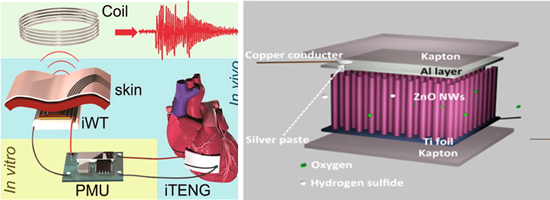
- deployment and maintenance of sensors will bring challenges for intelligent transportation systems. PENGs/TENGs can gain energy from vibrations without the need for an energy grid. In 2013, Lin et al. [3] proposed a transparent and flexible PENG (TFNG) based on a flexible polydimethylsiloxane (PDMS