Search results
Search for "isopropanol" in Full Text gives 141 result(s) in Beilstein Journal of Nanotechnology.
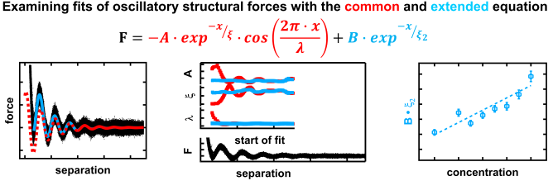
A simple extension of the commonly used fitting equation for oscillatory structural forces in case of silica nanoparticle suspensions
Beilstein J. Nanotechnol. 2018, 9, 1095–1107, doi:10.3762/bjnano.9.101
- (RCA method) [59]. The substrates were then rinsed extensively with water and dried in a nitrogen stream. Afterwards they were stored in a closed vessel in isopropanol (99.5% Geyer). Both, wafers and cantilevers were cleaned using an oxygen plasma (Diener electronics Femto) for 20 min immediately


Synthesis and characterization of two new TiO2-containing benzothiazole-based imine composites for organic device applications
Beilstein J. Nanotechnol. 2018, 9, 721–739, doi:10.3762/bjnano.9.67
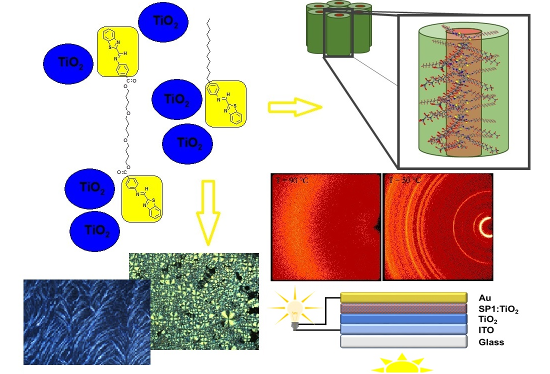
- )/Au multilayer structures. First, the ITO-coated glass substrate was cleaned by ultrasonication in acetone and isopropanol for ≈20 min and oxygen plasma for 30 s. TiO2 (3Dnano P25, average particle size 21 ± 5 nm, mixed rutile (20%)/anatase (80%) phases, and a surface area of 50 m2/g) was mixed with






Perovskite-structured CaTiO3 coupled with g-C3N4 as a heterojunction photocatalyst for organic pollutant degradation
Beilstein J. Nanotechnol. 2018, 9, 671–685, doi:10.3762/bjnano.9.62
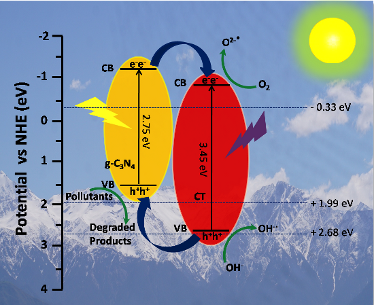
- under natural sunlight illumination using the CTCN heterojunction as the photocatalyst. In this study, benzoquinone (BQ), isopropanol (IPA) and triethanolamine (TEA) were used as scavengers for superoxide radicals (O2−•), hydroxyl radicals (•OH) and photoexcited holes (h+), respectively, and the


Optimisation of purification techniques for the preparation of large-volume aqueous solar nanoparticle inks for organic photovoltaics
Beilstein J. Nanotechnol. 2018, 9, 649–659, doi:10.3762/bjnano.9.60
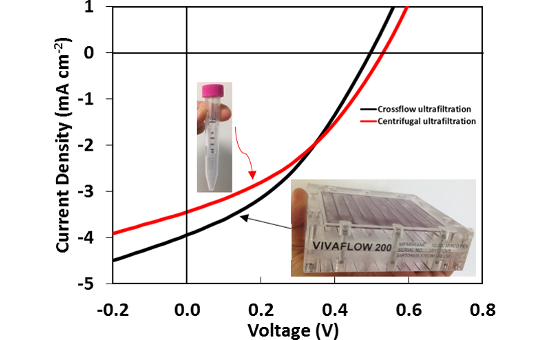
- with 112 rpm/s acceleration for 1 min. Device fabrication On pre-cleaned (water, acetone and isopropanol) patterned ITO glass substrates PEDOT:PSS (HTL Solar) films were spin-coated at 5000 rpm for 1 min and baked for 30 min at 140 °C (film thickness of 35 ± 5 nm). On top of the PEDOT:PSS layer, the


Wafer-scale bioactive substrate patterning by chemical lift-off lithography
Beilstein J. Nanotechnol. 2018, 9, 311–320, doi:10.3762/bjnano.9.31
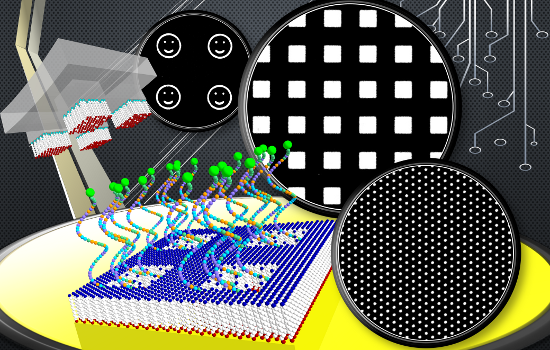
- , USA) was thoroughly mixed, degassed under vacuum, cast onto master molds, and cured on an aluminum-top hot plate at 100 °C overnight. The PDMS stamps were separated from the master molds, sequentially rinsed with acetone and isopropanol, and then blown dry with nitrogen gas. The prepared stamps were


Bombyx mori silk/titania/gold hybrid materials for photocatalytic water splitting: combining renewable raw materials with clean fuels
Beilstein J. Nanotechnol. 2018, 9, 187–204, doi:10.3762/bjnano.9.21
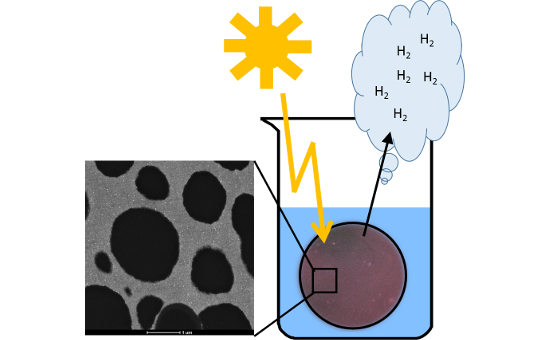
- authors also showed that methanol is the most efficient sacrificial agent when compared to isopropanol, glycerol, and glucose [25]. A further study by Jose et al. focused on the effect of TiO2 modification (anatase and/or rutile). These authors observed that TiO2 P25/Au mixed systems performed best in the
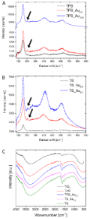
- , ethanol, ethylacetoacetate (EtAcAc), and possibly isopropanol from unreacted TiO2 precursors [82]. The PEO-containing hybrid materials TPS and TPS_Au2.5 essentially exhibit an identical thermal stability. The first weight loss of 9% below 120 °C can be assigned to water and ethanol evaporation. The second




Hydrothermal synthesis of ZnO quantum dot/KNb3O8 nanosheet photocatalysts for reducing carbon dioxide to methanol
Beilstein J. Nanotechnol. 2017, 8, 2264–2270, doi:10.3762/bjnano.8.226
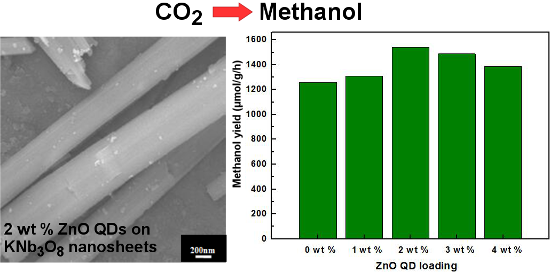
- , East China University of Science and Technology, Shanghai 200237, China 10.3762/bjnano.8.226 Abstract ZnO quantum dots and KNb3O8 nanosheets were synthesized by a two-step hydrothermal method for the photocatalytic reduction of CO2 to methanol where isopropanol is simultaneously oxidized to acetone
- by reducing CO2 in isopropanol to methanol under UV-light irradiation. Experimental Catalyst synthesis Niobium oxide (Nb2O5, 99.99 wt %) was purchased from Aladdin Industrial Corporation. Potassium hydroxide (KOH, 96 wt %), isopropanol (C3H8O, 99.9 wt %), hydrochloric acid (HCl, 36.5 wt %), zinc
- Raman system using a 325 nm laser. Photocatalytic reaction The photocatalytic reduction of CO2 to methanol was carried out at ambient conditions in a quartz container and batch operated slurry reactor with cooling jacket. 20 mg of the catalyst was added to 20 mL of isopropanol under magnetic stirring




Three-in-one approach towards efficient organic dye-sensitized solar cells: aggregation suppression, panchromatic absorption and resonance energy transfer
Beilstein J. Nanotechnol. 2017, 8, 1705–1713, doi:10.3762/bjnano.8.171
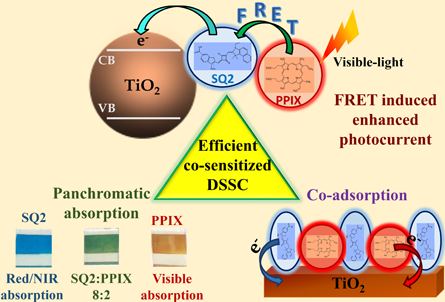
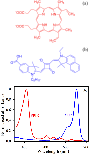
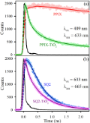
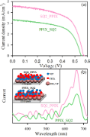
- substrates via thermal decomposition of 5 mM platinum chloride (in isopropanol) at 385 °C for 30 min. 60 μm thick Surlyn was used as a spacer between the active and counter electrodes. The I−/I3− redox couple, which was prepared by mixing iodine crystal (I2), lithium iodide (LiI), and 4-tert-butylpyridine



A top-down approach for fabricating three-dimensional closed hollow nanostructures with permeable thin metal walls
Beilstein J. Nanotechnol. 2017, 8, 1231–1237, doi:10.3762/bjnano.8.124
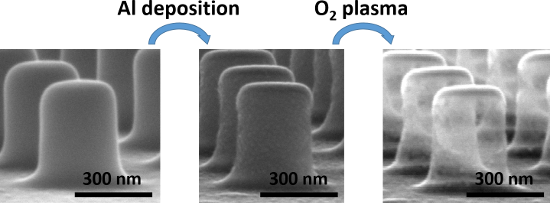
- , acetone, isopropanol, tetrahydrofuran and deionized water. The maximum peak wavelength red-shifts, approximately linearly, with the refractive index of the top cladding liquid, with a slope of 327 nm/refractive index unit (RIU), as depicted in Figure 5b. Although bulk sensitivity of refractometric sensors
- for different superstrate media: air, methanol (MeOH), acetone, isopropanol (IPA), tetrahydrofuran (THF) and deionized water (DIW). b) Spectral position of the reflectance maximum peak as a function of the liquid refractive index. Cross-section of the modelled hollow nanopillar array unit cell. White


Nano-engineered skin mesenchymal stem cells: potential vehicles for tumour-targeted quantum-dot delivery
Beilstein J. Nanotechnol. 2017, 8, 1218–1230, doi:10.3762/bjnano.8.123
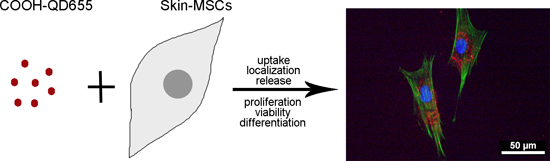
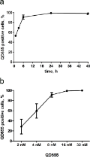
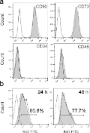
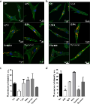
- evaluated using Oil Red O staining. Cells were washed with PBS and fixed with 4% formaldehyde for 30 min at room temperature. After fixation, cells were washed with distilled water. Prior to staining, cells were incubated for 5 min at room temperature with 60% isopropanol and subsequently stained with 180
- mg/L Oil Red O solution in isopropanol/water (3:2, v/v) for 15 min at room temperature. After staining, the cells were washed four to five times with distilled water and imaged. Chondrogenic differentiation was evaluated using Alcian Blue staining. Cells were washed once with PBS and fixed with 4





Growth, structure and stability of sputter-deposited MoS2 thin films
Beilstein J. Nanotechnol. 2017, 8, 1115–1126, doi:10.3762/bjnano.8.113
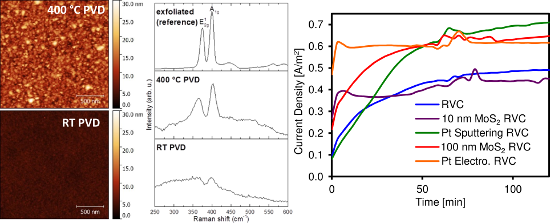
- ). As substrates silicon wafers (100) with ≈100 nm thermal SiO2 layer were used, which were cleaned with isopropanol and dried with nitrogen prior to deposition. The substrates were fixed on a static, floating potential substrate holding device kept at approximately ten centimetres away from the


Study of the correlation between sensing performance and surface morphology of inkjet-printed aqueous graphene-based chemiresistors for NO2 detection
Beilstein J. Nanotechnol. 2017, 8, 1023–1031, doi:10.3762/bjnano.8.103
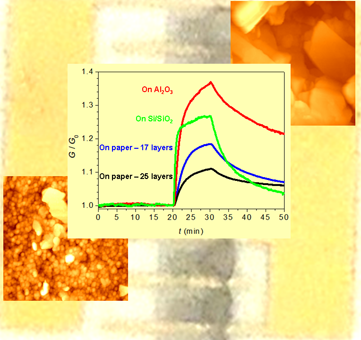
- deposition of small ink volumes and the versatility of the exploitable inks and substrates. Herein we present a feasibility study of chemiresistive gas sensors inkjet-printed onto paper substrates, in which a LPE graphene suspension dispersed in a water/isopropanol (H2O/IPA) mixture is used as sensing ink
- printing a LPE graphene suspension dispersed in a water/isopropanol (H2O/IPA) mixture as sensing ink onto paper substrates. Analogous paper-based graphene sensors, relying on different fabrication processes, such as CVD (chemical vapour deposition) grown transferred graphene [13] or inkjet-printed GO
- sonication-assisted liquid phase exfoliation of graphite in a mixture of water and isopropanol as described in details in the Experimental section and fully investigated in [8]. As already reported, the dispersed material consists of exfoliated flakes having less than five layers and a lateral size around


3D Nanoprinting via laser-assisted electron beam induced deposition: growth kinetics, enhanced purity, and electrical resistivity
Beilstein J. Nanotechnol. 2017, 8, 801–812, doi:10.3762/bjnano.8.83
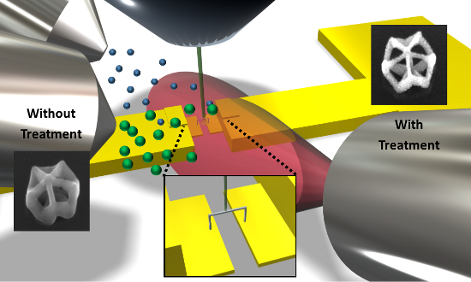
- using an FEI NOVA 600 dual-beam system equipped with multiple gas injection systems (GIS). Before loading the Si substrate, it was cleaned via sonication in acetone for 5 minutes and rinsed in isopropanol before drying. The precursor gas was injected using a FEI GIS and the temperature was held at 45 °C


Nanostructured carbon materials decorated with organophosphorus moieties: synthesis and application
Beilstein J. Nanotechnol. 2017, 8, 485–493, doi:10.3762/bjnano.8.52
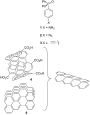
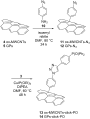
- 8 was more easily isolated by filtration and repeated washing for complete removal of the excess reagents while GPs-Nit-PO derivative 9 was recovered using cycles of centrifugation and re-dispersion of the carbon material in a 1:1 isopropyl ether-isopropanol solution. The decoration of the
- , entries 5 and 6). X-ray photoelectron spectroscopy analysis showed the presence of the P(V) atoms in all the samples considered. The samples for the analysis where prepared by dispersion of 1 mg of substance in 1 mL of isopropanol and the dispersion was drop casted on a cleaned glass support. The spectra
- DMF. The mixture was kept in an ultrasound bath for 10 min, under inert atmosphere, and 19.3 mg (0.165 mmol) of isopentyl nitrite were added. The mixture was stirred at 80 °C under nitrogen for 16 h. The dispersion was diluted a 1:1 solution of isopropanol/diisopropyl ether and centrifuged for 15 min



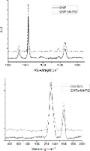
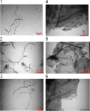


The longstanding challenge of the nanocrystallization of 1,3,5-trinitroperhydro-1,3,5-triazine (RDX)
Beilstein J. Nanotechnol. 2017, 8, 452–466, doi:10.3762/bjnano.8.49
- as the yield of about 25% and the importance of the residence time and the drying step. Liu et al. [34][35] studied the effect of drying n-RDX and HMX samples under various conditions. They first obtained n-RDX in solution from a mixture of water, ethanol, isopropanol and RDX. The suspension was put


Functionalized TiO2 nanoparticles by single-step hydrothermal synthesis: the role of the silane coupling agents
Beilstein J. Nanotechnol. 2017, 8, 304–312, doi:10.3762/bjnano.8.33
- background was collected under medium vacuum, without sample. Between each analysis, the ATR diamond was cleaned with isopropanol, for which vacuum provides fast evaporation and no specific adsorption bands of isopropanol were observed. A total of 128 scans were acquired for each sample at a resolution of 1
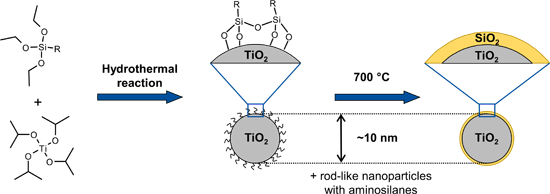
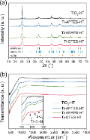
- -functionalized TiO2 nanoparticles are shown in Figure 5b (see Table S1 of Supporting Information File 1 for the assignments of the absorption bands). No specific bands from isopropanol were observed indicating full reaction of the TIP precursor and high purity of the nanoparticles. In the case of in situ surface



Colorimetric gas detection by the varying thickness of a thin film of ultrasmall PTSA-coated TiO2 nanoparticles on a Si substrate
Beilstein J. Nanotechnol. 2017, 8, 229–236, doi:10.3762/bjnano.8.25
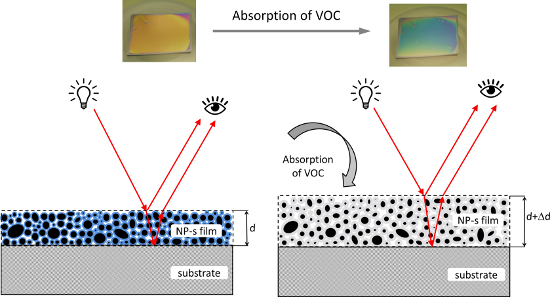
- shift of interference maxima and minima) to isopropanol. In the present work results obtained using one typical thin film are presented. However, experiments were repeated with several thin films all showing similar behavior. Experimental Titania NPs were synthesised using a method described by Scolan
- film-based sensor element is more responsive to isopropanol and toluene, and the response to hexane is much smaller. Toluene probably interacts strongly with the aromatic ring in PTSA, and isopropanol is probably more compatible with the polar part of the molecule, due to the ability to form hydrogen


Nanocrystalline TiO2/SnO2 heterostructures for gas sensing
Beilstein J. Nanotechnol. 2017, 8, 108–122, doi:10.3762/bjnano.8.12
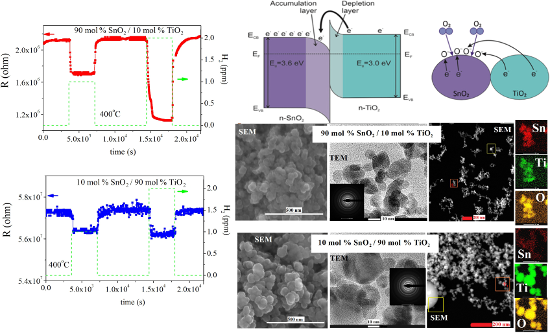
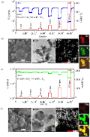
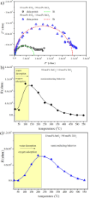
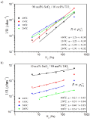
- heterostructures of 90 mol % SnO2/10 mol % TiO2 and 10 mol % SnO2/90 mol % TiO2 were synthesized as well. Titanium diisopropoxide bis(acetylacetonate) (TiC16H28O, 75 wt % in isopropanol, ABCR, CAS: 17927-72-9) and tetramethyltin (CAS: 594-27-4), dissolved in absolute ethanol (C2H5OH, 99%, Sigma Aldrich) were used




Effect of Anderson localization on light emission from gold nanoparticle aggregates
Beilstein J. Nanotechnol. 2016, 7, 2013–2022, doi:10.3762/bjnano.7.192
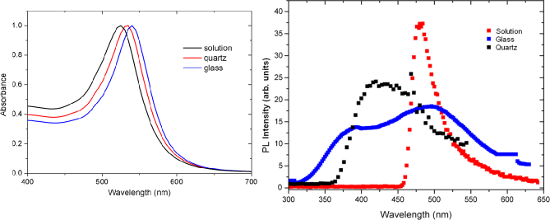
- commercial optical microscope slides (Menzel-Gläser, Germany) and pure fused silica (Heraeus, Germany), called quartz in the following. Before use, the substrates were cleaned by successive sonication (5 min at each step) in warm acetone, then isopropanol, then water, and finally blown dry under a nitrogen


Organoclay hybrid materials as precursors of porous ZnO/silica-clay heterostructures for photocatalytic applications
Beilstein J. Nanotechnol. 2016, 7, 1971–1982, doi:10.3762/bjnano.7.188
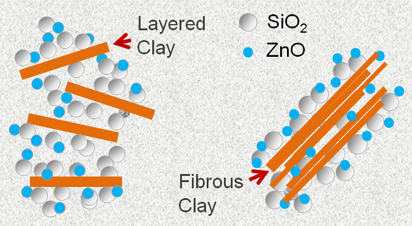
- ). This suspension was stirred at 50 °C to homogenize the system and then stoichiometric amounts of water and isopropanol (H2O/isopropanol/TMOS 4:2:1 molar ratio) is added to start the hydrolysis of TMOS. After the sol–gel transition the system was dried overnight at 50 °C. The final ZnO/SiO2-clay





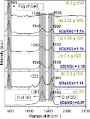
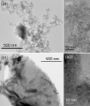
In situ formation of reduced graphene oxide structures in ceria by combined sol–gel and solvothermal processing
Beilstein J. Nanotechnol. 2016, 7, 1815–1821, doi:10.3762/bjnano.7.174
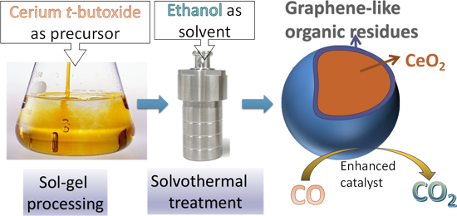
- . The mixture was stirred for 30 min, ultrasonically treated for at least 2 h and then deposited onto glass sheets (20 × 30 cm2), which had been cleaned with 10% KOH, isopropanol and acetone and dried at 100 °C. The deposited films were exposed to ambient humidity at room temperature for 24 h (for




Nanostructured TiO2-based gas sensors with enhanced sensitivity to reducing gases
Beilstein J. Nanotechnol. 2016, 7, 1718–1726, doi:10.3762/bjnano.7.164
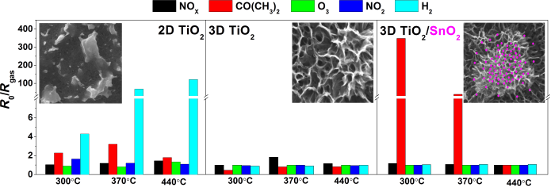
- × 20 mm squares and degreased in the ultrasonic cleaner with the use of acetone and isopropanol. The following samples were prepared: (A) T30 – prior to thermal treatment, the Ti foils were etched in concentrated hydrochloric acid HCl (35–38%, Avantor Performance Materials, Poland) at 55 °C for 30 min


Graphene-enhanced plasmonic nanohole arrays for environmental sensing in aqueous samples
Beilstein J. Nanotechnol. 2016, 7, 1564–1573, doi:10.3762/bjnano.7.150
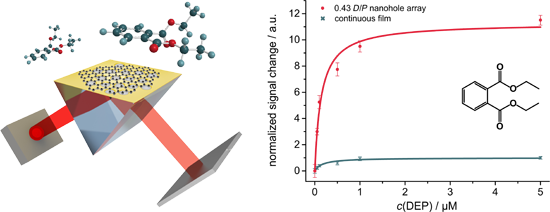
- graphite following a modified Hummers method and a subsequent chemical reduction [55]. To cover the substrates with a uniform layer of reduced graphene oxide 200 μL of a 0.25 μg·mL solution containing 1:1 (v/v) water and isopropanol was deposited in the middle on the surface and allowed to settle for 5 min




Mesoporous hollow carbon spheres for lithium–sulfur batteries: distribution of sulfur and electrochemical performance
Beilstein J. Nanotechnol. 2016, 7, 1229–1240, doi:10.3762/bjnano.7.114
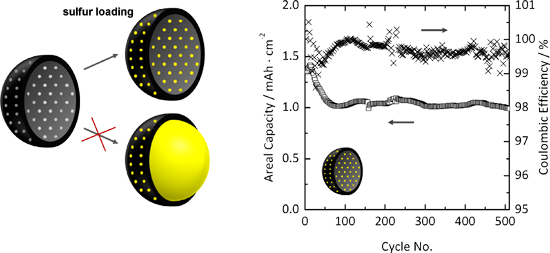
- electrochemical testing A mixture of the carbon/sulfur composite powder (83 wt %), Super C65 (Timcal, 6 wt %), Printex XE2 (Orion, 6 wt %) and poly(vinyl alcohol) Selvol 425 (Sekisui, 5 wt %) in water, isopropanol and 1-methoxy-2-propanol (65:30:5 weight ratio) was prepared to form a homogeneous slurry. The


Role of solvents in the electronic transport properties of single-molecule junctions
Beilstein J. Nanotechnol. 2016, 7, 1055–1067, doi:10.3762/bjnano.7.99
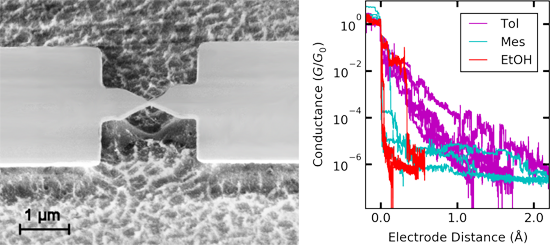
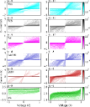
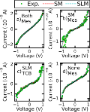
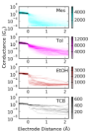
- solvents that are commonly used in the field of molecular electronics (ethanol, toluene, mesitylene, 1,2,4-trichlorobenzene, isopropanol, toluene/tetrahydrofuran mixtures) for the study of single-molecule contacts of functional molecules. We present measurements of the conductance as a function of gap
- -designed MCBJ system equipped with a pipette containing the solvent mesitylene (Mes), 1,2,4-trichlorobenzene (TCB), toluene (Tol), ethanol (EtOH), a mixture of 50% tetrahydrofuran and 50% toluene (Tol/THF) or isopropanol (IPA), see Figure 2c. The mixture Tol/THF has been chosen because with pure THF the