Search results
Search for "magnetic field" in Full Text gives 325 result(s) in Beilstein Journal of Nanotechnology. Showing first 200.
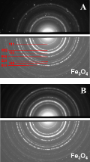
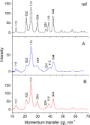
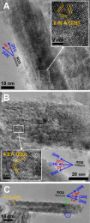
Differences in surface chemistry of iron oxide nanoparticles result in different routes of internalization
Beilstein J. Nanotechnol. 2021, 12, 270–281, doi:10.3762/bjnano.12.22
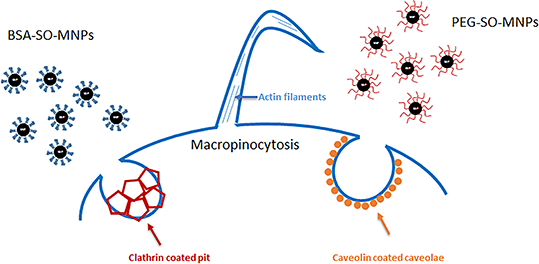
- eligible for the targeted delivery of the drug-loaded particles to the tumor mass via an external magnetic field [2]. Furthermore, MNPs are promising biosensors [3] and antimicrobial tools [4], and they play an important role in the development of multifunctional theranostics to combat cancer [5]. MNPs are


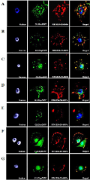

ZnO and MXenes as electrode materials for supercapacitor devices
Beilstein J. Nanotechnol. 2021, 12, 49–57, doi:10.3762/bjnano.12.4
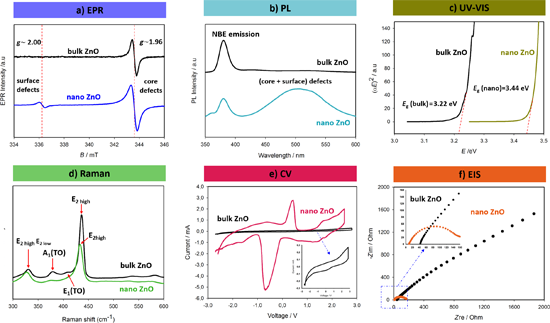
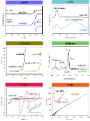
- the major defect centers and give an EPR signal around g ≈ 1.96 [2][3][4][5]. Compared to ge ≈ 2.0023, this resonance requires a higher magnetic field and, thus, a higher microwave frequency. In other words, higher microwave and Zeeman energy are required for this kind of allowed electronic transition
Free and partially encapsulated manganese ferrite nanoparticles in multiwall carbon nanotubes
Beilstein J. Nanotechnol. 2020, 11, 1891–1904, doi:10.3762/bjnano.11.170
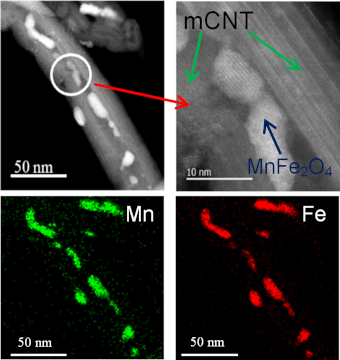
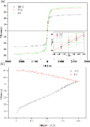
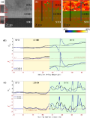
- of free MnFe2O4 nanoparticles at 300, 77, and 4 K. The inset shows as enlarged view of M–H loops. (b) Magnetization measurements under ZFC and FC conditions in an applied magnetic field of 50 Oe. (a) Dark-field STEM image. (b) Bright-field STEM image. (c) Annular dark-field image. EDS mapping of (d




Kondo effects in small-bandgap carbon nanotube quantum dots
Beilstein J. Nanotechnol. 2020, 11, 1873–1890, doi:10.3762/bjnano.11.169
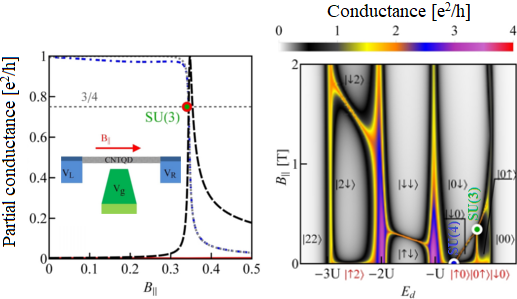
- quantum dots in the presence of spin–orbit coupling in the strong-correlations regime. A finite-U slave-boson mean-field approach is used to study many-body effects. Different degeneracies are restored in a magnetic field and Kondo effects of different symmetries arise, including SU(3) effects of
- resonances with effective spin, valley, or spin–valley fluctuations, the emergence of an exotic SU(3) Kondo resonance is foreseen even without mixing between shells or valleys, but simply due to the peculiarity of the band structure and a subtle interplay of magnetic field, spin–orbit interaction, and
- changes of the bandgap. In the following we show how, for a given nearly metallic nanotube, one can change the position of high-symmetry points by strain and a magnetic field. Our calculations also show that in a quantum dot formed in a small-bandgap nanotube electron and hole states can degenerate in

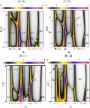
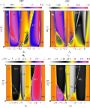


![[Graphic 37]](/bjnano/content/inline/2190-4286-11-169-i52.svg?max-width=637&scale=1.18182) as a functio...
as a functio...


Molecular dynamics modeling of the influence forming process parameters on the structure and morphology of a superconducting spin valve
Beilstein J. Nanotechnol. 2020, 11, 1776–1788, doi:10.3762/bjnano.11.160
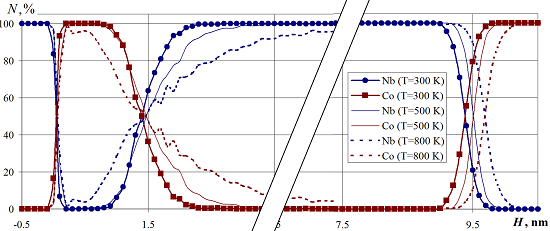
- films separated by a magneto-resistive layer. Due to the exchange interaction with the adjacent antiferromagnetic nanofilm, one of the layers has constant magnetization. For the adjacent nanofilm, the direction of magnetization can be controlled by an external magnetic field. The weak link of the
- structures are highly sensitivity to magnetic field switching and energy consumption is significantly reduced due to the absence of dissipation in such a valve in the ground (superconducting) state. Practice shows that the creation of multilayer S/F nanostructures with the required properties is an
- deposition process is simulated by the appearance of atoms in the evaporation zone above the substrate. In this case, the deposited atoms gained speed towards the substrate. The layers are sprayed in stages. During the formation of all layers, the magnetic field was absent in the nanosystem. The temperature


Imaging and milling resolution of light ion beams from helium ion microscopy and FIBs driven by liquid metal alloy ion sources
Beilstein J. Nanotechnol. 2020, 11, 1742–1749, doi:10.3762/bjnano.11.156
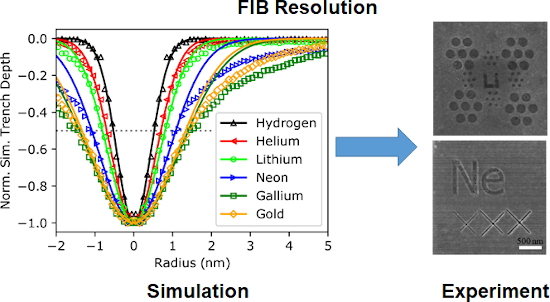
- of 10 kV scanned by the ExB voltage using a constant magnetic field. The numbers below the ion label specify the total ion mass m in u. Examples using different ions: a) 30 keV He+, field of view (FOV): 1.5 × 1.5 µm2, trench width: 4 nm, b) 40 keV Li+, FOV: 2.5 × 2.5 µm2, trench width: 6 nm, c) 25


Helium ion microscope – secondary ion mass spectrometry for geological materials
Beilstein J. Nanotechnol. 2020, 11, 1504–1515, doi:10.3762/bjnano.11.133
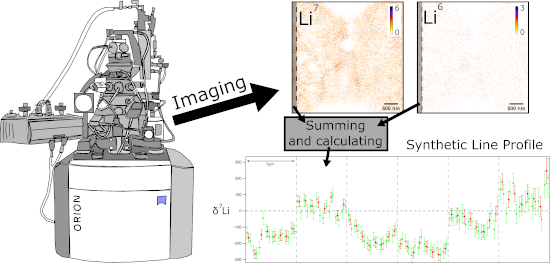
- value of m/z for which no secondary ions were expected, for the measurement of a “background count rate”, with a fixed, low magnetic field of around 100 mT. The primary beam was rastered over the sample to simultaneously map ion counts on each detector with a typical dwell time per pixel of 4 ms
- , in contrast, has its highest mass resolving power at low masses (around 400 M/ΔM) with a low magnetic field applied within the mass spectrometer, making it an ideal tool for mapping these elements. Lithium mapping Figure 7 shows a comparison of the SEM–EDS signal obtained from a sample of Li-bearing



A wideband cryogenic microwave low-noise amplifier
Beilstein J. Nanotechnol. 2020, 11, 1484–1491, doi:10.3762/bjnano.11.131
- frequency of f0 = 7.0554 GHz and experimentally characterized the qubit responce. First, one-tone spectroscopy was carried out. The transmission of a sweeping microwave signal through the sample in a frequency range of 7.05–7.06 GHz for different DC bias currents, producing an external magnetic field, was
- measured. The obtained curve is shown in Figure 6. Here, the horizontal axis is a sweeping DC magnetic field in current values, the vertical axis is the sweeping frequency of a probing microwave signal and the color intensity graph shows the normalized transmission amplitude |S21| in units of dB, where 0




Antimicrobial metal-based nanoparticles: a review on their synthesis, types and antimicrobial action
Beilstein J. Nanotechnol. 2020, 11, 1450–1469, doi:10.3762/bjnano.11.129

- , size and magnetic nature enables them to kill microorganisms through the application of an external magnetic field, resulting in an increase of the therapeutic antimicrobial properties, especially when compared to conventional antimicrobial compounds [136]. Ferromagnetic nanoparticles are probably the
- -volume ratio, increasing the surface of the atoms [19]. In addition, when a magnetic field is applied the magnetic moments of these ferromagnetic FeO NPs become aligned. The surface of the SPIONs can be modified to specifically improve their functionality as antimicrobial compounds by increasing their
- modification, intrinsic properties and the type of targeted microorganism [18]. A special category of metallic NPs is superparamagnetic iron-oxide nanoparticles (SPIONs) (e.g., magnetite (Fe3O4) and maghemite (γ-Fe2O3) NPs) whose antimicrobial activity increases upon the application of an external magnetic


Transient coating of γ-Fe2O3 nanoparticles with glutamate for its delivery to and removal from brain nerve terminals
Beilstein J. Nanotechnol. 2020, 11, 1381–1393, doi:10.3762/bjnano.11.122
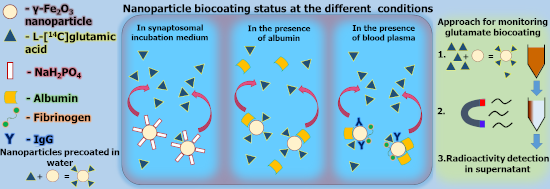
- identified. Glutamate-coated γ-Fe2O3 nanoparticles can be used for glutamate delivery to the nervous system or for glutamate adsorption (but with lower effectiveness) in stroke, brain trauma, epilepsy, and cancer treatment following by its subsequent removal using a magnetic field. γ-Fe2O3 nanoparticles with
- concentrations were mixed with abovementioned components along with different amounts of γ-Fe2O3 nanoparticles also added to the probe. The incubation time was 5 min in the salt solutions and 30 min in blood plasma or albumin. After that a magnetic field was applied or the nanoparticles were sedimented in a
- -[14C]glutamate, the γ-Fe2O3 nanoparticles were isolated from the incubation medium using a magnetic field (250 mT, gradient 5.5 Т/m). Alternatively, the nanoparticles were sedimented in a microcentrifuge (10 min at 13,000g). After removal of the nanoparticles from the incubation media, they were washed


Controlling the proximity effect in a Co/Nb multilayer: the properties of electronic transport
Beilstein J. Nanotechnol. 2020, 11, 1336–1345, doi:10.3762/bjnano.11.118
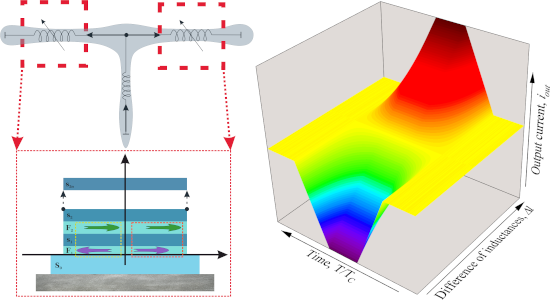
- distribution appears in the screening of F-layers in multilayer structures from an outer magnetic field due to the Meissner effect. The inner F-layers are strongly screened while the opposite is observed for the outer layers. This means that the remagnetization of the layers in an increasing homogeneous
- external magnetic field do not occur simultaneously, but instead gradually from the outer to the inner layers of the structure. The calculated distribution of the anomalous Green’s function, F, allows for the estimation of the screening properties of the hybrid structure. The spatial distribution of the
- changes in the temperature or in the applied magnetic field [9] can significantly change (from zero to relatively large values) the kinetic inductance of thin s-layers in the hybrid structures studied in this work. Experimental results The next step was to experimentally verify the significant changes



Magnetohydrodynamic stagnation point on a Casson nanofluid flow over a radially stretching sheet
Beilstein J. Nanotechnol. 2020, 11, 1303–1315, doi:10.3762/bjnano.11.114
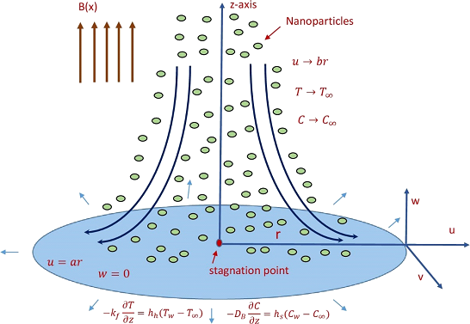
- article proposes a numerical model to investigate the impact of the radiation effects in the presence of heat generation/absorption and magnetic field on the magnetohydrodynamics (MHD) stagnation point flow over a radially stretching sheet using a Casson nanofluid. The nonlinear partial differential
- transfer are examined. The coordinate system is chosen such that the r-axis is along the direction of the flow whereas the z-axis is perpendicular to the flow direction (Figure 1). The velocity of the outer flow is designated as Ue and the direction of the uniform magnetic field is chosen to be normal to
- distributions. For high values for Ha, the fluid velocity decreases while the temperature and concentration of the fluid increase. This stems from the fact that an opposing force generated by the magnetic field, generally referred to as the Lorentz force, reduces the fluid motion, resulting in a reduction in


Proximity effect in [Nb(1.5 nm)/Fe(x)]10/Nb(50 nm) superconductor/ferromagnet heterostructures
Beilstein J. Nanotechnol. 2020, 11, 1254–1263, doi:10.3762/bjnano.11.109
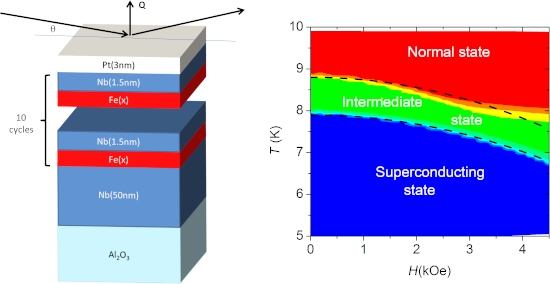
- experiments we applied a magnetic field in-plane and normal to the sample plane. Data were fitted to models using the exact solutions of the Schrödinger equation as described in our prior works [13][40][41]. For the transport experiment we used the device depicted in Figure 1b. The device consists of four
- in this work we used it ex situ. For the measurements we used an ac current with an amplitude of 100–200 μA. In the experiment we measured the resistance of the samples as a function of the temperature T and the magnetic field H, which was applied parallel to the sample surface. Before every H scan
- cooling to T = 8.2 K. Below this temperature a decrease of the magnetic moment due to the Meissner effect is observed. Polarized neutron reflectometry Figure 5a shows reflectivity curves measured on sample s3 at a temperature of T = 13 K in a magnetic field of H = 4.5 kOe. The curves are characterized by


![[Graphic 13]](/bjnano/content/inline/2190-4286-11-109-i17.svg?max-width=637&scale=1.18182) ) substrate, (b) the Pt cap layer, and the Nb buffer layer grown at...
) substrate, (b) the Pt cap layer, and the Nb buffer layer grown at...


![[Graphic 16]](/bjnano/content/inline/2190-4286-11-109-i20.svg?max-width=637&scale=1.18182) (T) for the samples s4 (black) and s3 (red) in the vicinity of the superconducting transition m...
(T) for the samples s4 (black) and s3 (red) in the vicinity of the superconducting transition m...
Ultrasensitive detection of cadmium ions using a microcantilever-based piezoresistive sensor for groundwater
Beilstein J. Nanotechnol. 2020, 11, 1242–1253, doi:10.3762/bjnano.11.108
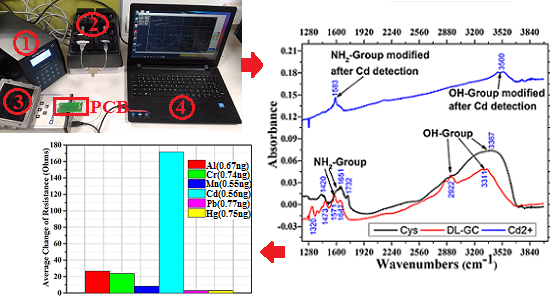
- only on absorption and fluorescence change and need dynamic acquisition [23]. A magnetic field powered pressure sensor proposed by Khan et al. [24] is capable of measuring pressure in the range of kilopascals but the suitability for the very low pressure caused by HMIs needs to be examined. A reduced




Magnetic-field-assisted synthesis of anisotropic iron oxide particles: Effect of pH
Beilstein J. Nanotechnol. 2020, 11, 1230–1241, doi:10.3762/bjnano.11.107
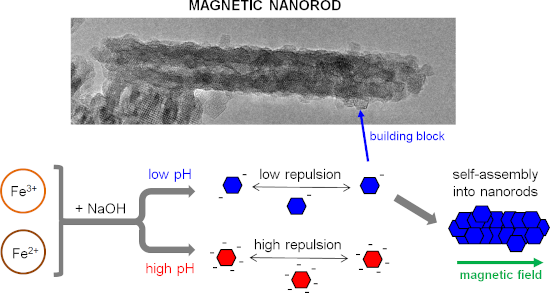
- University, Albert-Einstein-Allee 11, 89069 Ulm, Germany 10.3762/bjnano.11.107 Abstract The synthesis of magnetite (Fe3O4) nanorods using reverse co-precipitation of Fe3+ and Fe2+ ions in the presence of a static magnetic field is reported in this work. The phase composition and crystal structure of the
- properties and a larger length-scale of the locally induced magnetic field in comparison to nanospheres with a similar volume, providing an enhanced MRI contrast [11][19][23], higher specific adsorption rate in magnetic hyperthermia [13], and better separation efficiency in magnetic separation of immune
- oxide. It consists of co-precipitating Fe3+ and Fe2+ ions upon exposure to an external magnetic field, which is used as a template for directional nanoparticle growth. Note that in the absence of a magnetic field, the same reagents yield spherical nanoparticles [30]. Hence, one can conclude that the





Influence of the magnetic nanoparticle coating on the magnetic relaxation time
Beilstein J. Nanotechnol. 2020, 11, 1207–1216, doi:10.3762/bjnano.11.105
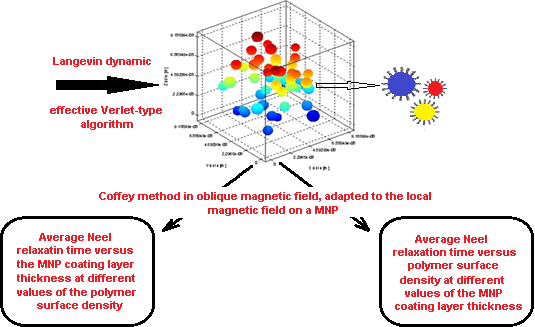
- Langevin dynamics method was applied based on the effective Verlet-type algorithm. The Néel magnetic relaxation time was obtained via the Coffey method in an oblique magnetic field, adapted to the local magnetic field on a nanoparticle. Keywords: colloidal system; effective Verlet-type algorithm; magnetic
- . Upon reaching the tumour, the magnetic nanoparticles are locally subjected to an alternating magnetic field, generating heat that kills the cancer cells [1]. The heat is generated due to two phenomena: Néel relaxation (an internal phenomenon driven by the rotation of the particle magnetic moment inside
- the particle) and Brown relaxation (an external phenomenon driven by the rotation of the nanoparticle along the magnetic moment). Both internal and external sources of friction lead to a delay in the orientation of the particle magnetic moment in the direction of the applied magnetic field, thus


3D superconducting hollow nanowires with tailored diameters grown by focused He+ beam direct writing
Beilstein J. Nanotechnol. 2020, 11, 1198–1206, doi:10.3762/bjnano.11.104
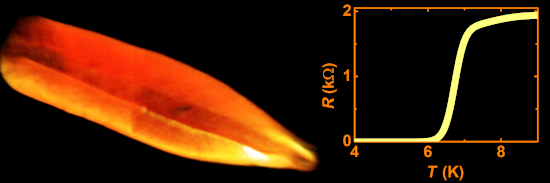
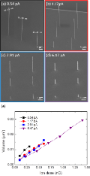
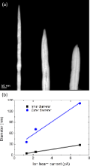
- is present along the whole nanowire length. Moreover, these nanowires become superconducting at 6.8 K and show high values of critical magnetic field and critical current density. Consequently, these 3D nano-objects could be implemented as components in the next generation of electronics, such as
- magnetic field (µ0Hc2(0)) up to 9.5 T [14][15][16]. Alternatively, in combination with Nb(NMe2)3(N-t-Bu), Ga+ FIBID yielded NbC wires with a broadened Tc range from 4 to 11 K [18]. One significant limitation is that 3D elements below 100 nm in diameter cannot be obtained with Ga+ FIBID, mainly due to the
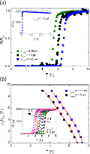
- Ti pads. Finally, we made four-point-probe electrical measurements at low temperature (down to 0.5 K) and under a magnetic field perpendicular to the substrate plane (up to 9 T). The NWs change from the normal to the superconducting state at Tc (0.5RN) values between 5.45 and 6.78 K (Figure 6a and



Applications of superparamagnetic iron oxide nanoparticles in drug and therapeutic delivery, and biotechnological advancements
Beilstein J. Nanotechnol. 2020, 11, 1092–1109, doi:10.3762/bjnano.11.94
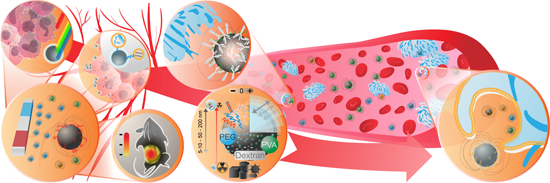
- behave like one magnetic unit, rotating in the presence of a magnetic field without retaining the magnetism after the magnetic field is removed [17]. This property makes SPIONs good candidates for MRI, and also for a type of thermic treatment of cancer, called localized hyperthermia. There are also other
- pool (ferritin and transferrin) for normal metabolic activities [20]. In localized hyperthermia, SPIONs generate heat by constantly aligning to an alternating magnetic field. This heat is rapidly transferred to the surrounding cancerous tissue in which proteins denature and, consequently, cells become
- alternating magnetic field [30]. Currently, it is used only as an alternative therapy and nearly always in combination with other therapies [34]. Results have shown that even non-magnetic hyperthermia (water-bath method) using SPIONs has cytotoxic effects [35]. Many studies focus on the potential of SPIONs as


Wet-spinning of magneto-responsive helical chitosan microfibers
Beilstein J. Nanotechnol. 2020, 11, 991–999, doi:10.3762/bjnano.11.83
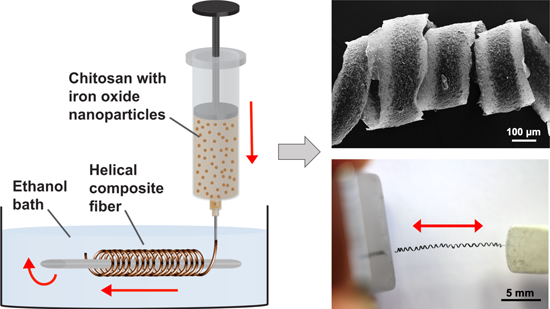
- . This strategy is based on wet-spinning of magnetic fibers, which are collected on a rotating needle controlled by an external magnetic field with a predefined helical geometry. The fibers were characterized regarding their morphology, microstructure, magnetization and mechanical characteristics. These
- flat as a result of their soft nature during the winding process (Figure 3A). This appearance resembled the morphology of helical alginate microfibers, where fiber shaping was achieved by micromanipulation in a magnetic field [47]. In comparison to the aforementioned work [47] and also to the 3D
- obtained at a magnetic field strength of 40 × 103 Gs using 72 points per loop with a scan speed of 10 s per point. The range covered during the hysteresis scan was between +22 × 103 Oe and −22 × 103 Oe. During the scans, the magnetic field was measured with a FCM-10 control module and the magnetization


Effect of magnetic field, heat generation and absorption on nanofluid flow over a nonlinear stretching sheet
Beilstein J. Nanotechnol. 2020, 11, 976–990, doi:10.3762/bjnano.11.82
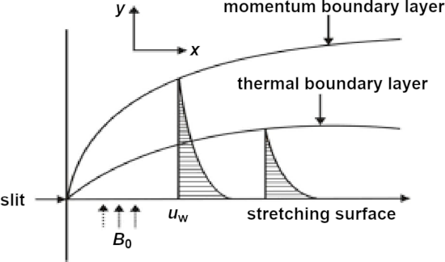
- the influence of varied dimensionless parameters has been the focus of research in contemporary times. This work models the effect of magnetic field, heat generation and absorption parameter in a steady, laminar, two-dimensional boundary layer flow of a nanofluid over a permeable stretching sheet at a
- –corrector method is employed to solve the equations. The impact of the dimensionless parameters, including the Brownian motion, thermophoresis, magnetic field, heat generation and absorption parameters, on the velocity, temperature and nanoparticle concentration of fluid flow are analysed systematically
- . Keywords: Brownian motion; heat generation and absorption; magnetic field; nanofluid; thermophoresis; Introduction The study of magnetohydrodynamic problems, such as nanofluid flow over a permeable stretching sheet, has recently become relevant due to potential applications in various fields of science


A Josephson junction based on a highly disordered superconductor/low-resistivity normal metal bilayer
Beilstein J. Nanotechnol. 2020, 11, 858–865, doi:10.3762/bjnano.11.71
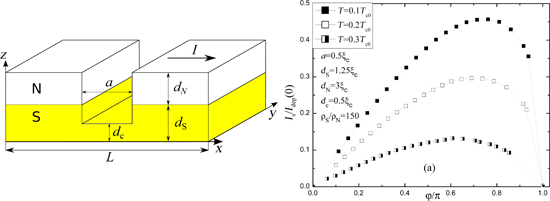
- NbN/Al, NbN/Ag and MoN/Ag bilayers. Namely, the suppression of the critical temperature of the SN bilayer is smaller while the change in magnetic field penetration depth of the SN bilayer is larger than the Usadel model predicts. Therefore, the present results should be considered only as a route for
- Equation 12). SN-S-SN junctions made of a NbN/Al bilayer have been fabricated recently [26] and indications of the Josephson effect (the presence of Shapiro steps and a Fraunhofer-like dependence of the critical current on the magnetic field) have been observed. But due to not optimized parameters (dS = dc


Epitaxial growth and superconducting properties of thin-film PdFe/VN and VN/PdFe bilayers on MgO(001) substrates
Beilstein J. Nanotechnol. 2020, 11, 807–813, doi:10.3762/bjnano.11.65
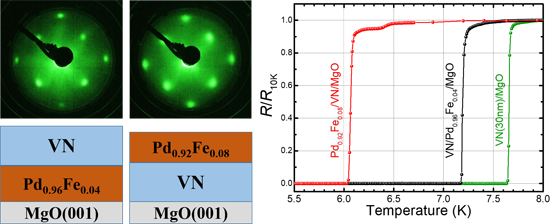
- . Saturation magnetization Ms(T) as a function of the temperature of the Pd0.96Fe0.04/VN (green symbols) and VN/Pd0.92Fe0.08 (red symbols) heterostructures measured in a magnetic field of 200 Oe. Temperature dependence of the electrical resistance of the VN film and the Pd0.96Fe0.04/VN and VN/Pd0.92Fe0.08


Hexagonal boron nitride: a review of the emerging material platform for single-photon sources and the spin–photon interface
Beilstein J. Nanotechnol. 2020, 11, 740–769, doi:10.3762/bjnano.11.61
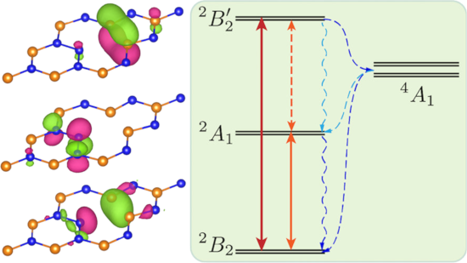
- ) characterization and generation using ions, electrons or other irradiation methods, the observation of ensemble paramagnetic properties and their optically detected magnetic resonance by applying a high magnetic field until the isolation of single defects and eventually their optical spin coherent control. Weber




Observation of unexpected uniaxial magnetic anisotropy in La2/3Sr1/3MnO3 films by a BaTiO3 overlayer in an artificial multiferroic bilayer
Beilstein J. Nanotechnol. 2020, 11, 651–661, doi:10.3762/bjnano.11.51
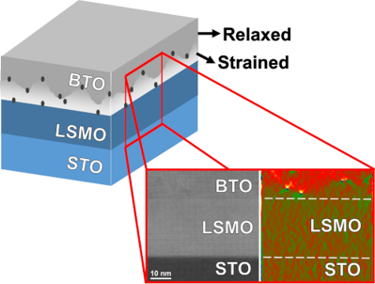
- using the pulsed-laser deposition technique. We analyzed the films structurally through X-ray reciprocal space maps and high-angle annular dark field microscopy, and magnetically via thermal demagnetization curves and in-plane magnetization versus applied magnetic field loops at room temperature. Our
- geometric phase analysis (GPA) method on HAADF-STEM images. We magnetically analyzed samples by performing room-temperature polar plots of the remnant field, where we applied magnetic field on the plane of the sample along different directions. Results and Discussion Figure 1 displays RSMs taken around the
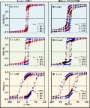
- each case. Figure 3 displays isothermal room temperature loops of the normalized magnetization (M(H)/Ms) as a function of the applied magnetic field for 27 nm thick LSMO films (plots to the left), and for BTO (140 nm)/LSMO (27 nm) bilayers (plots to the right) grown on STO (plots on the top), LSAT



Multilayer capsules made of weak polyelectrolytes: a review on the preparation, functionalization and applications in drug delivery
Beilstein J. Nanotechnol. 2020, 11, 508–532, doi:10.3762/bjnano.11.41
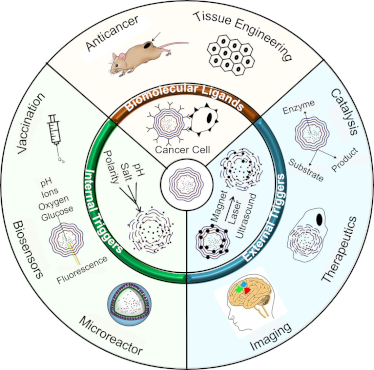
- efforts were also made to release the payload under the exposure of external (modern) triggers such as laser light, ultrasound, magnetic field, enzymatic deformation and mechanical deformation. In the latter cases, the capsules were irreversibly ruptured and released the loaded molecules either in a burst