


Search results
Search for "nanowires" in Full Text gives 335 result(s) in Beilstein Journal of Nanotechnology. Showing first 200.
Piezotronic effect in AlGaN/AlN/GaN heterojunction nanowires used as a flexible strain sensor
Beilstein J. Nanotechnol. 2020, 11, 1847–1853, doi:10.3762/bjnano.11.166
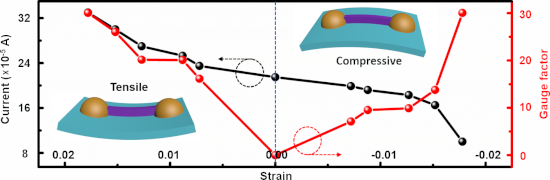
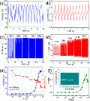
- semiconductor nanowires (NWs) have been extensively studied in recent years due to the predominant mechanical flexibility caused by a large surface-to-volume ratio and unique electrical and optical properties induced by the 1D quantum confinement effect. Herein, we use a top-down two-step preparation method to
- investigated and systematically analyzed under compressive and tensile strain. Here, we describe a strain sensor that shows a great application potential in wearable integrated circuits, in health-monitoring devices, and in artificial intelligence. Keywords: AlGaN/AlN/GaN nanowires; flexible; piezotronic
- polarization distribution inside the heterojunction [7][8]. The piezotronic effect, described first by Zhong Lin Wang in 2007, is a combination of the piezoelectric effect and the properties of non-centrosymmetric semiconductor materials [9]. 1D semiconductor nanowires (NWs) are more suitable candidates for


Direct observation of the Si(110)-(16×2) surface reconstruction by atomic force microscopy
Beilstein J. Nanotechnol. 2020, 11, 1750–1756, doi:10.3762/bjnano.11.157
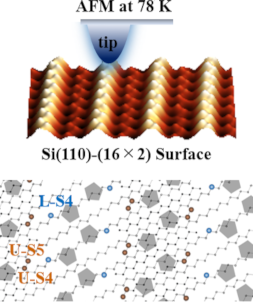
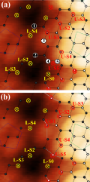
- high-performance metal–oxide–semiconductor field-effect transistors (p-MOSFETs) [1][2] because the hole mobility of Si(110) is twice that of the other Si planes [3]. For surface science research, Si(110) has been used as a template substrate for self-assembled nanowires [4][5][6], nanomeshes [7], and
- reliable production of nanowires and other nanostructures [7][10][11][12][13]. By annealing below 700 °C [14], the Si(110)-(16×2) reconstruction is formed over large areas on the Si(110) surface. It has been widely investigated by reflection high-energy electron diffraction (RHEED) analysis [14][15



Imaging and milling resolution of light ion beams from helium ion microscopy and FIBs driven by liquid metal alloy ion sources
Beilstein J. Nanotechnol. 2020, 11, 1742–1749, doi:10.3762/bjnano.11.156
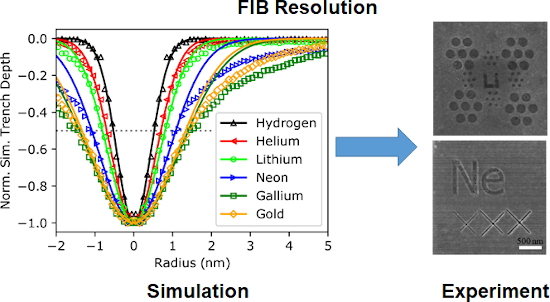
- ], the fabrication of graphene nanomeshes [8], the formation of single Si nanocrystals embedded in SiO2 for single-electron transistors [9], the spatially resolved engineering of the thermal conductivity in individual Si nanowires [10], as well as the creation of nano-Josephson superconducting tunnel
- mass-separated FIBs from a Co36Nd64 LMAIS to implant Co into Si at elevated temperatures, leading to metallic CoSi2 nanostructures down to 20 nm [13]. Ge nanowires could be grown by molecular beam epitaxy, via a vapor–liquid–solid process, on a Si substrate after formation of a regular seed array using


Seebeck coefficient of silicon nanowire forests doped by thermal diffusion
Beilstein J. Nanotechnol. 2020, 11, 1707–1713, doi:10.3762/bjnano.11.153
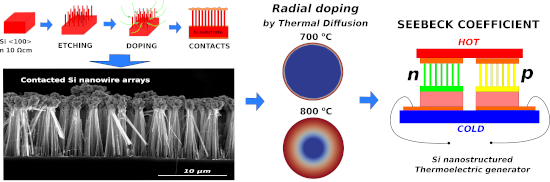
- Technological Applications (SRTA-City), New Borg El-Arab City, 21934, Alexandria, Egypt 10.3762/bjnano.11.153 Abstract Thermoelectric generators made by large arrays of nanowires perpendicular to a silicon substrate, that is, so-called silicon nanowire forests are fabricated on large areas by an inexpensive
- doping parameters. These results are in good agreement with numerical simulations of the doping process applied to silicon nanowires. These devices, based on doped nanowire forests, offer a possible route for the exploitation of the high power factor of silicon, which, combined with the very low thermal
- conductivity of nanostructures, will yield a high efficiency of the conversion of thermal to electrical energy. Keywords: nanowires; Seebeck coefficient; thermal conductivity; thermoelectricity; Introduction Thermoelectric generators for direct conversion of heat into electrical power will certainly play a


Functional nanostructures for electronics, spintronics and sensors
Beilstein J. Nanotechnol. 2020, 11, 1704–1706, doi:10.3762/bjnano.11.152

- coupled superconducting nanowires with quantum phase slips which may be used for interpretation of already existing experiments on meander-like nanowires and for the design of a novel set of superconducting sensors. Another very promising photon detector [16] was demonstrated for supersensitive detection
Out-of-plane surface patterning by subsurface processing of polymer substrates with focused ion beams
Beilstein J. Nanotechnol. 2020, 11, 1693–1703, doi:10.3762/bjnano.11.151
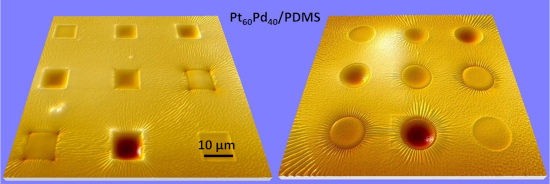
- ][16]. It has also been demonstrated that it acts as a type of ion-beam resist in the fabrication of micro- and nanopore membranes and templates for nanowires by chemical etching of through-holes along ion tracks produced by high-energy ions [17][18]. In contrast to PMMA and PC polymers, PDMS is a


A self-powered, flexible ultra-thin Si/ZnO nanowire photodetector as full-spectrum optical sensor and pyroelectric nanogenerator
Beilstein J. Nanotechnol. 2020, 11, 1623–1630, doi:10.3762/bjnano.11.145
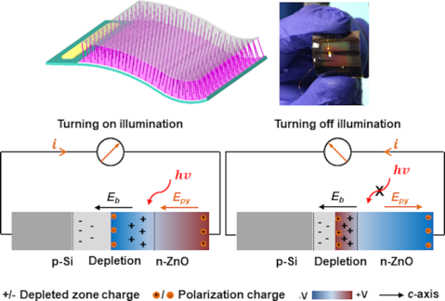
- can greatly improve the portability and durability of the flexible PDs. In this work, a new type of self-powered high-performance full-spectrum flexible PDs consisting of ultra-thin p-Si/n-ZnO nanowires (NWs) is fabricated. The working mechanism of PDs based on p-Si/n-ZnO heterojunctions for PENGs is


Walking energy harvesting and self-powered tracking system based on triboelectric nanogenerators
Beilstein J. Nanotechnol. 2020, 11, 1590–1595, doi:10.3762/bjnano.11.141
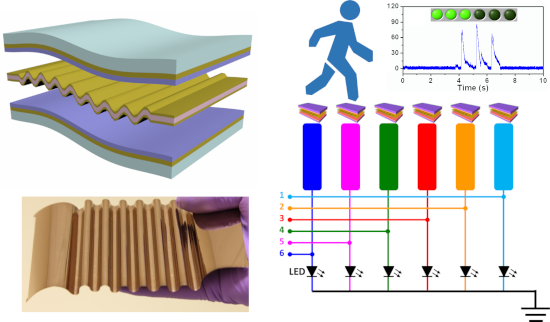
- transportation control, and for environmental monitoring. Experimental Surface modification of a PTFE film The surface modification of a PTFE film was performed in a similar manner as described previously [34]. Deep reactive ion etching was employed to construct PTFE nanowires aligned on the surface. Isopropyl
- electrode. Through deep reactive ion etching, polymer nanowires (average diameter of ≈150 nm and length values ranging from 410 to 680 nm) were created to vertically align on the surface of the PTFE film, as shown in Figure 1b. This modification on the PTFE surface not only enhances the effective contact




Optically and electrically driven nanoantennas
Beilstein J. Nanotechnol. 2020, 11, 1542–1545, doi:10.3762/bjnano.11.136
- revealing local structural properties is illustrated in [49], where crystalline and amorphous regions within core–shell silicon nanowires are discerned with an optical resolution of a few nanometers. This study further demonstrates that it is possible to combine polarization angle-resolved experiments with
Antimicrobial metal-based nanoparticles: a review on their synthesis, types and antimicrobial action
Beilstein J. Nanotechnol. 2020, 11, 1450–1469, doi:10.3762/bjnano.11.129

- -wrapped Ag nanowires using the chemical vapor deposition method in order to investigate their broad-spectrum and robust antimicrobial properties. The cryochemical synthesis method includes a simultaneous evaporation of a metallic and a volatile component (e.g., an organic monomer), followed by co


Wafer-level integration of self-aligned high aspect ratio silicon 3D structures using the MACE method with Au, Pd, Pt, Cu, and Ir
Beilstein J. Nanotechnol. 2020, 11, 1439–1449, doi:10.3762/bjnano.11.128
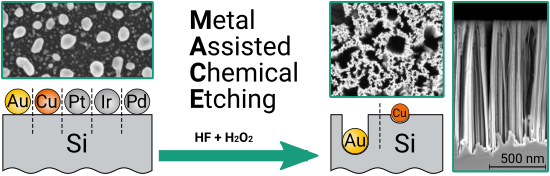
- Abstract The wafer-level integration of high aspect ratio silicon nanostructures is an essential part of the fabrication of nanodevices. Metal-assisted chemical etching (MACE) is a promising low-cost and high-volume technique for the generation of vertically aligned silicon nanowires. Noble metal
- with a reflectance below 0.3%. The demonstrated technology can be integrated into common fabrication processes for microelectromechanical systems. Keywords: black silicon; bottom-up; metal-assisted chemical etching (MACE); nanowires; wafer-level integration; Introduction Silicon nanostructures
- random structures are typically vertically aligned nanowires, also called nanorods. Silicon nanowire arrays can be designed to have a low reflectance of about 1% in a broad spectral range, depending on their geometry. These silicon structures exhibit efficient light trapping because photons are scattered


Superconductor–insulator transition in capacitively coupled superconducting nanowires
Beilstein J. Nanotechnol. 2020, 11, 1402–1408, doi:10.3762/bjnano.11.124
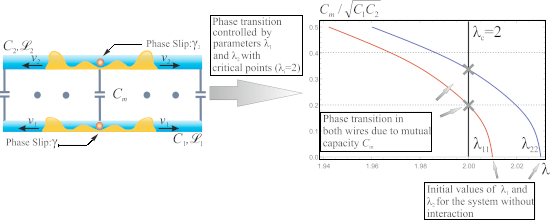
- Moscow, Russia Institute for Quantum Materials and Technologies, Karlsruhe Institute of Technology (KIT), 76021 Karlsruhe, Germany 10.3762/bjnano.11.124 Abstract We investigate superconductor–insulator quantum phase transitions in ultrathin capacitively coupled superconducting nanowires with
- superconductor–insulator phase transition in each of the wires is controlled not only by its own parameters but also by those of the neighboring wire as well as by mutual capacitance. We argue that superconducting nanowires with properly chosen parameters may turn insulating once they are brought sufficiently
- close to each other. Keywords: quantum phase slips; quantum phase transitions; RG equations; Introduction Quantum fluctuations dominate the physics of superconducting nanowires at sufficiently low temperatures making their behavior markedly different from that of bulk superconductors [1][2][3][4


Analysis of catalyst surface wetting: the early stage of epitaxial germanium nanowire growth
Beilstein J. Nanotechnol. 2020, 11, 1371–1380, doi:10.3762/bjnano.11.121
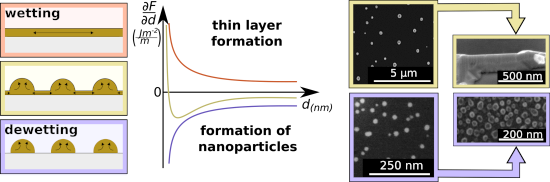
- grow germanium nanowires on different substrates is described. Keywords: dewetting; germanium; interfacial energy; Laplace pressure; nanostructure; nanowire; Ostwald ripening; wetting layer; Introduction Wetting phenomena as well as the formation and movement of droplets are essential for numerous
- chalcopyrites [11], or precursors for complex structures, such as nanowires [12]. Silicon, germanium and silicon oxide nanowires, for example, can be formed on different substrates by using metal catalysts in the form of tin, indium or gold nanodroplets [13][14][15]. Such nanometre-sized one-dimensional
- electron microscopy (TEM) images of gold particles formed on a silicon substrate at room temperature. Small gold clusters (<10 nm) are also seen between the droplets. Growth of germanium nanowires Figure 4 shows images of the resulting gold droplets on various substrates and the results after deposition of


Growth of a self-assembled monolayer decoupled from the substrate: nucleation on-command using buffer layers
Beilstein J. Nanotechnol. 2020, 11, 1291–1302, doi:10.3762/bjnano.11.113
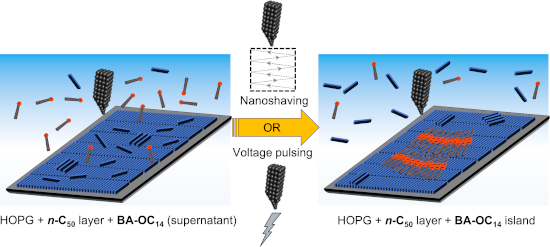
- controlled electrochemical polymerization of thiophene to produce polythiophene nanowires with tunable lengths [36][37]. In the context of their use for controlling surface architectures, insertion of the buffer layers between the assembling moiety and the solid substrate affects the assembly process via the


3D superconducting hollow nanowires with tailored diameters grown by focused He+ beam direct writing
Beilstein J. Nanotechnol. 2020, 11, 1198–1206, doi:10.3762/bjnano.11.104
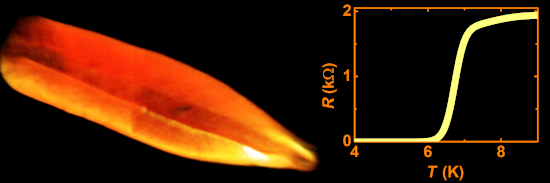
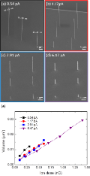
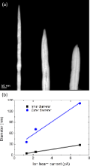
- tungsten carbide nanowires with tailored diameters by tuning two key growth parameters, namely current and dose of the ion beam. Our results show the control of geometry in 3D hollow nanowires, with outer and inner diameters ranging from 36 to 142 nm and from 5 to 28 nm, respectively; and lengths from 0.5
- to 8.9 µm. Transmission electron microscopy experiments indicate that the nanowires have a microstructure of large grains with a crystalline structure compatible with the face-centered cubic WC1−x phase. In addition, 3D electron tomographic reconstructions show that the hollow center of the nanowires
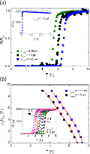
- is present along the whole nanowire length. Moreover, these nanowires become superconducting at 6.8 K and show high values of critical magnetic field and critical current density. Consequently, these 3D nano-objects could be implemented as components in the next generation of electronics, such as



Revealing the local crystallinity of single silicon core–shell nanowires using tip-enhanced Raman spectroscopy
Beilstein J. Nanotechnol. 2020, 11, 1147–1156, doi:10.3762/bjnano.11.99
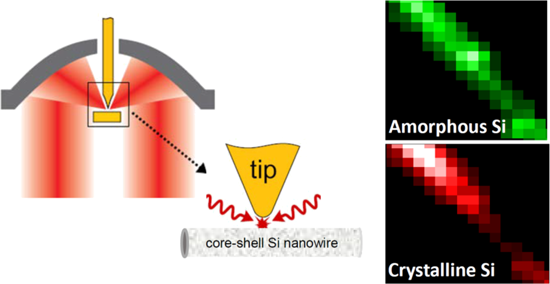
- , Germany 10.3762/bjnano.11.99 Abstract Tip-enhanced Raman spectroscopy is combined with polarization angle-resolved spectroscopy to investigate the nanometer-scale structural properties of core–shell silicon nanowires (crystalline Si core and amorphous Si shell), which were synthesized by platinum
- -catalyzed vapor–liquid–solid growth and silicon overcoating by thermal chemical vapor deposition. Local changes in the fraction of crystallinity in these silicon nanowires are characterized at an optical resolution of about 300 nm. Furthermore, we are able to resolve the variations in the intensity ratios
- local structural properties of Si nanomaterials at the sub-10 nanometer scale using tip-enhanced Raman techniques. Keywords: core–shell nanowires; local crystallinity; polarization angle-resolved spectroscopy; silicon; tip-enhanced Raman spectroscopy; Introduction The properties of silicon are long


Gas-sensing features of nanostructured tellurium thin films
Beilstein J. Nanotechnol. 2020, 11, 1010–1018, doi:10.3762/bjnano.11.85
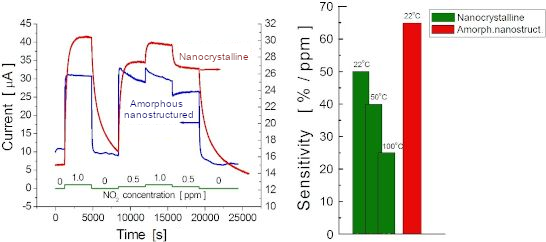
- grow Te nanoflakes. In order to synthesize Te nanowires, Liang and collaborators [13] performed chemical reactions of Na2TeO3, in aqueous solution, via hydrothermal treatment, whereas Ma and colleagues [14] used a solvothermal approach on glass substrates. To synthesize Te nanotubes, techniques such as
- galvanic displacement of sacrificial cobalt nanowires were employed [15]. Lastly, to grow one-dimensional nanostructures, either template-free electrodeposition of Te, from an ionic liquid binary mixture [16], or thermal evaporation in a furnace under argon gas flow [17] were strategies utilized. The
- nanotube-based sensors showed similar (or sometimes lower) numbers regarding sensitivity and response/recovery times in comparison to Te single-crystalline microtube-based gas sensors [7]. An increase in the gas-sensing performance was achieved by growing single-crystal Te-based nanotubes and nanowires via


Electrochemical nanostructuring of (111) oriented GaAs crystals: from porous structures to nanowires
Beilstein J. Nanotechnol. 2020, 11, 966–975, doi:10.3762/bjnano.11.81
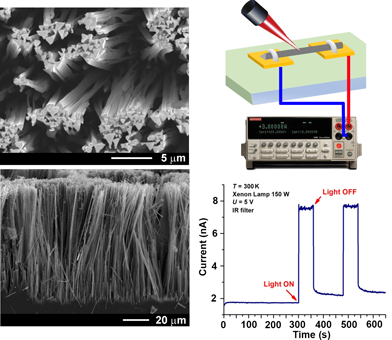
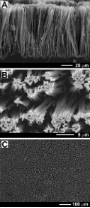
- . Possibilities to produce multilayer porous structures are demonstrated. At the same time, one-step anodization in a HNO3 electrolyte is shown to lead to the formation of GaAs triangular shape nanowires with high aspect ratio (400 nm in diameter and 100 µm in length). The new data are compared to those
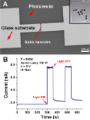
- previously obtained through anodizing GaAs(100) wafers in alkaline KOH electrolyte. An IR photodetector based on the GaAs nanowires is demonstrated. Keywords: anodization; crystallographically oriented pores; gallium arsenide (GaAs); nanowires; neutral electrolyte; photocurrent; porous GaAs; Introduction
- Electrochemical technology became an established and cost-effective approach for the preparation of porous semiconductor matrices and arrays of nanowires with tailored architecture at the submicrometer scale [1][2][3]. Semiconductor nanotemplates provide many possibilities for nanofabrication through





Transition from freestanding SnO2 nanowires to laterally aligned nanowires with a simulation-based experimental design
Beilstein J. Nanotechnol. 2020, 11, 843–853, doi:10.3762/bjnano.11.69

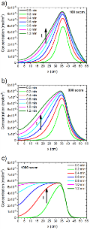
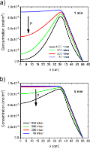
- volumetric flow leads to a higher species dilution. Based on our numerical results, we were able to successfully grow laterally aligned SnO2 nanowires out of gold film edges and gold nanoparticles on a-plane sapphire substrates. In our experiments a horizontal 2-zone tube furnace was used. The generation of
- laterally aligned nanowires, indicating that the nanowire growth takes place in a transient period of the gas exchange. Keywords: finite element method simulation; laterally aligned nanowires; planar growth; tin oxide; vapor–liquid–solid nanowire growth; Introduction Since the first reports in 1964 by
- Wagner and Ellis about the possibility to use a vapor–liquid–solid (VLS) process to grow semiconductor nanowires (NWs), significant work has been published on the production of nanowires [1][2]. It was demonstrated that NWs of different materials can be grown on different substrates and can be





Electromigration-induced directional steps towards the formation of single atomic Ag contacts
Beilstein J. Nanotechnol. 2020, 11, 680–687, doi:10.3762/bjnano.11.55
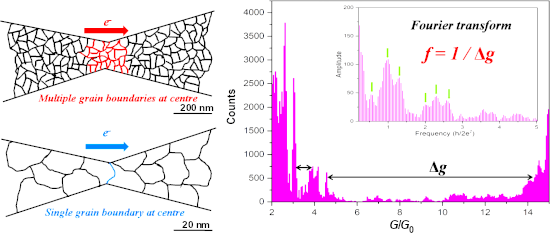
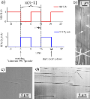
- to see that the contribution from 0.8, i.e., thinning in the [110] direction, is absent in these structures. This result contrasts with a MCBJ experiment using Au nanowires [21], in which all three frequencies were obtained. It matches, however, with the findings of mechanical stretching experiments
- of Ag nanowires, observed with HRTEM [32], where it was reported that Ag mostly forms rod-like structures along the [110] direction, which are unable to form wires. Atomic chains turned out to form only when at least one grain was oriented in the [100] direction. The dominant peak at 1 in Figure 3


Nanoarchitectonics: bottom-up creation of functional materials and systems
Beilstein J. Nanotechnol. 2020, 11, 450–452, doi:10.3762/bjnano.11.36
- , the chiral structure was found to control the self-assembly of nitrocinnamic amide amphiphiles [25]. Works related to the formation of higher-dimensional materials included, for example, the self-assembly of crystalline cellulose oligomers that resulted in nanoribbon networks [26], silicon nanowires

High dynamic resistance elements based on a Josephson junction array
Beilstein J. Nanotechnol. 2020, 11, 417–420, doi:10.3762/bjnano.11.32
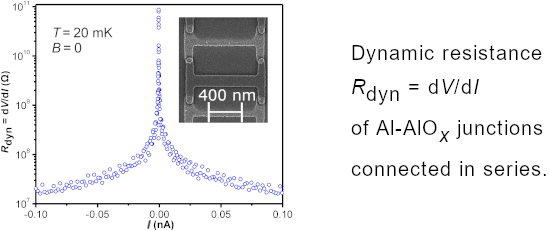
- field, the low current bias dynamic resistance can reach values of ≈1011 Ω. It was demonstrated that the system can provide a decent quality current biasing circuit, enabling the observation of Coulomb blockade and Bloch oscillations in ultra-narrow Ti nanowires associated with the quantum phase-slip
- effect. Keywords: dynamic resistance; Josephson junction array; nanoelectronics; quantum phase slip; superconductivity; Ti nanowires; Introduction The field of modern nanoelectronics is facing stagnation with respect to further miniaturization, deviating from Moore’s law [1]. Typically, two main reason
- . The SIS junction chain has been used to current bias narrow Ti nanowires [12], with cross sections demonstrating various phenomena attributed to the QPS effect [10][26][27][28][29][30][31][32][33]. The observation of Coulomb blockade and Bloch steps [12] confirms the usefulness of the suggested

Formation of nanoripples on ZnO flat substrates and nanorods by gas cluster ion bombardment
Beilstein J. Nanotechnol. 2020, 11, 383–390, doi:10.3762/bjnano.11.29
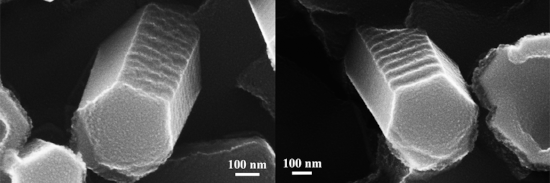
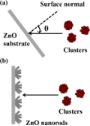
- of semiconductor quantum dots [2]. Arrays of metallic nanoparticles or nanowires aligned on dielectric surfaces with nanoripples are ideal for research on plasmonics [3]. Ag nanoparticle arrays created on rippled silicon surfaces have demonstrated excellent sensing of molecules through surface



Nonclassical dynamic modeling of nano/microparticles during nanomanipulation processes
Beilstein J. Nanotechnol. 2020, 11, 147–166, doi:10.3762/bjnano.11.13
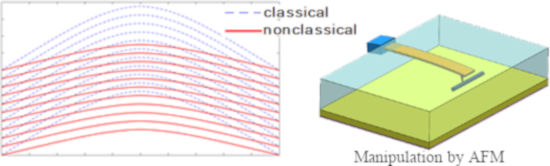
- experimental results were consistent with their proposed algorithm [21]. Wu et al. studied the automated manipulation of flexible nanowires using AFM. Although the automated manipulation of solid nanoparticles was already investigated, it was not generalizable to flexible nanowires due to the complexity of
- flexible behavior. Also, for manipulating multiple nanowires, they presented a method based on graph theory that saved significant time owing to being independent from intermediate scanning [22]. Mahdjour Firouzi et al. tried to simulate the manipulation of biological nanoparticles using molecular dynamics







Molecular architectonics of DNA for functional nanoarchitectures
Beilstein J. Nanotechnol. 2020, 11, 124–140, doi:10.3762/bjnano.11.11
- of ‘raspberry‐like’ particles with potential gene delivery application [99]. The novelty of the ‘raspberry-like’ structures lay in their biocompatible ‘shield’, which protected the capped DNA from enzymatic degradation. Gianneschi and co-workers documented the synthesis of crystalline gold nanowires





