


Search results
Search for "nickel" in Full Text gives 186 result(s) in Beilstein Journal of Nanotechnology.
Oblique angle deposition of nickel thin films by high-power impulse magnetron sputtering
Beilstein J. Nanotechnol. 2019, 10, 1914–1921, doi:10.3762/bjnano.10.186
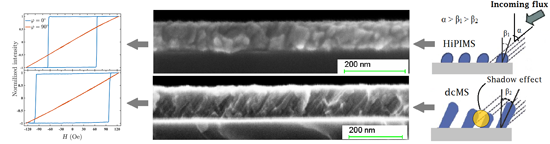
- anisotropy and coercivity fields than films deposited with dcMS. For the epitaxial films dcMS deposition gives biaxial anisotropy while HiPIMS deposition gives a well-defined uniaxial anisotropy. Results: We report on the deposition of 50 nm polycrystalline nickel thin films by dcMS and HiPIMS while the tilt
- sputtering; magnetic anisotropy; nickel; Introduction The realization of electronics based on utilizing the electron spin degree of freedom, commonly referred to as spintronics, requires the integration of ferromagnetic films with semiconductors [1]. Nickel is a ferromagnetic heavy 3d transition metal that
- crystallizes in the fcc structure. Because of the negative magnetostriction property of pure nickel, it is used as a magnetic material for certain applications, including ones that utilize magnetostriction. Thin nickel films have also found a wide range of other applications such as decorative coatings [2][3


Synthesis of nickel/gallium nanoalloys using a dual-source approach in 1-alkyl-3-methylimidazole ionic liquids
Beilstein J. Nanotechnol. 2019, 10, 1754–1767, doi:10.3762/bjnano.10.171
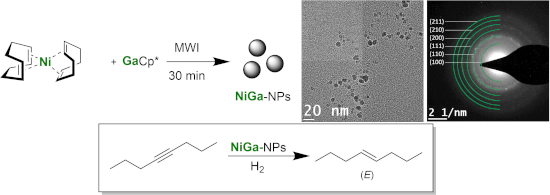
- conversion values. IL-free, precipitated NiGa nanoparticles achieve conversion values of over 90% and selectivity of 100% towards alkene over three runs. Keywords: ionic liquids; microwave decomposition; nickel/gallium nanoparticles; semihydrogenation catalysis; soft wet-chemical synthesis; Introduction
- weak magnetic features with saturation magnetization values below 1 emu/gNi at 300 K [15]. Ni nanoparticles can easily be prepared from bis(1,5-cyclooctadiene)nickel(0) (Ni(COD)2) in organic solvents [16] with the Ni atom already in the oxidation state zero and a low decomposition temperature of 60 °C
- -group metals such as gallium to transition metals can significantly improve the catalytic selectivity towards semihydrogenation reactions, e.g., PdGa [26][27][28] and RhGa [29]. Intermetallic nanoparticles of nickel and gallium have been proven as efficient catalysts in semihydrogenation reactions




Materials nanoarchitectonics at two-dimensional liquid interfaces
Beilstein J. Nanotechnol. 2019, 10, 1559–1587, doi:10.3762/bjnano.10.153
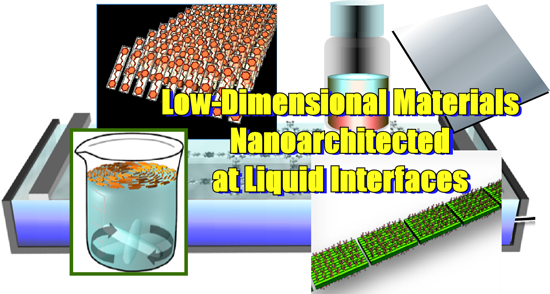
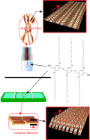
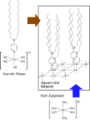
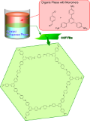
- -dimensional iron–nickel cyanide-bridged network at the air–water interface. A small amount of the amphiphilic pentacyanoferrate complex monomer was spread from a chloroform solution to form a monolayer in a LB trough, and was subsequently connected by introducing an aqueous solution of nickel nitrate into the
- water phase, yielding a monolayer sheet of the two-dimensional nickel–iron cyanide grid network. Characterizations of the extended network by X-ray photoelectron spectroscopy (XPS), FTIR spectroscopy, SQUID magnetometry, X-ray absorption fine structure (XAFS), and grazing incidence synchrotron X-ray
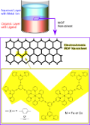
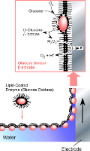
- . Because of the relatively dynamic nature of two liquids, the liquid–liquid interfaces are, in general, less well-defined than liquid-gas interfaces. Hence, the interfacial polymerizations tend to afford thicker films [220]. π‑conjugated nickel bis(dithiolene) complex nanosheets reported by Kambe and co













Hierarchically structured 3D carbon nanotube electrodes for electrocatalytic applications
Beilstein J. Nanotechnol. 2019, 10, 1475–1487, doi:10.3762/bjnano.10.146
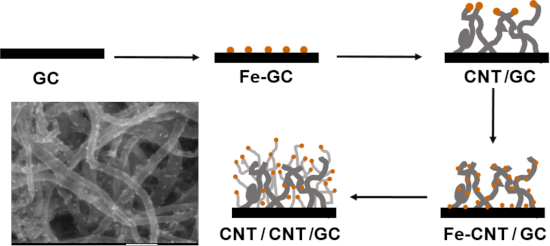
- that the density and diameter of CNTs synthesized on carbon cloth with ethylene as the carbon precursor over a nickel catalyst at 700 °C decrease with decreasing ratio of H2 to N2 [62], while CNTs grown on an Fe-decorated Si wafer at 825 °C using toluene increased in density and diameter with





The effect of magneto-crystalline anisotropy on the properties of hard and soft magnetic ferrite nanoparticles
Beilstein J. Nanotechnol. 2019, 10, 1348–1359, doi:10.3762/bjnano.10.133
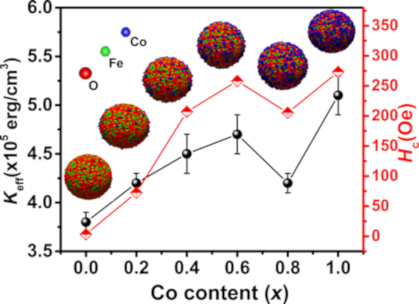
- applications, such as aggregation of nanoparticles in different parts of the body [9]. Hence, the study of this kind of interactions is of particular importance, both from a practical and a fundamental point of view. Recently, Muscas et al. [1] studied the magnetic behavior of mixed cobalt–nickel and pure


Alloyed Pt3M (M = Co, Ni) nanoparticles supported on S- and N-doped carbon nanotubes for the oxygen reduction reaction
Beilstein J. Nanotechnol. 2019, 10, 1251–1269, doi:10.3762/bjnano.10.125
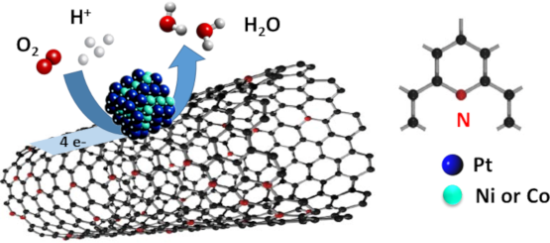
- ; nickel; oxygen reduction reaction; platinum; proton exchange membrane fuel cell (PEMFC); Introduction Proton exchange membrane fuel cells (PEMFCs) convert chemical energy from the hydrogen oxidation reaction (HOR) and the oxygen reduction reaction (ORR) into electrical energy. PEMFCs are one of the most
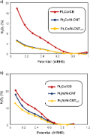
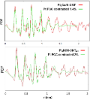
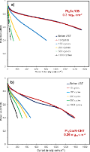
- cobalt and nickel salts. The HRTEM images of Co/N-CNT samples are depicted in Figure 6a,b. First, no residual IL can be observed. Surprisingly, despite a high cobalt loading (52% w/w), Co NPs were also not observed on the surface of the N-CNTs. Instead, Co atoms (Figure 6a,b) and a few non-crystallized
- also evidenced by STEM-HAADF images of Pt3Co/N-CNT (Figure 7b, 001 selected area). In the same way, the Pt3Ni composition was determine by EDX analysis for the sample Pt3Ni/N-CNTHT (Supporting Information File 1, Figure S9). This sample also displays some residual nickel atoms or clusters








Direct growth of few-layer graphene on AlN-based resonators for high-sensitivity gravimetric biosensors
Beilstein J. Nanotechnol. 2019, 10, 975–984, doi:10.3762/bjnano.10.98
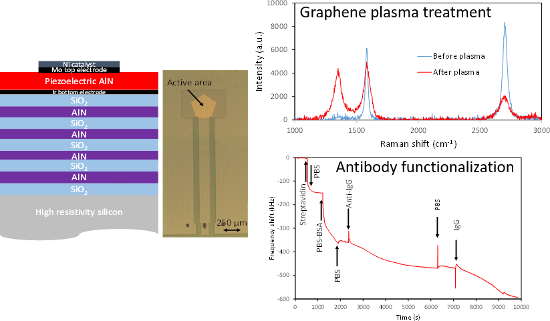
- nickel catalyst layers The thickness of the catalyst Ni layers was reduced to 100 nm, which was thin enough as not to compromise the resonator performance but sufficient to avoid the formation of Ni droplets on the surface of the SMRs during the heating processes due to dewetting [17]. However, the


Comparing a porphyrin- and a coumarin-based dye adsorbed on NiO(001)
Beilstein J. Nanotechnol. 2019, 10, 874–881, doi:10.3762/bjnano.10.88
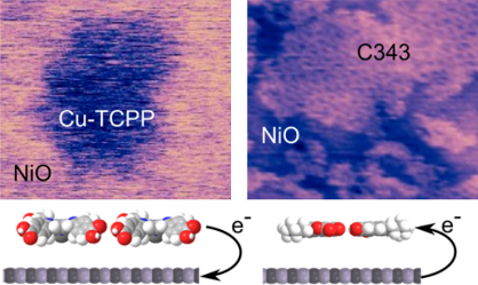
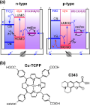
- Kelvin probe force microscopy measurements. Keywords: coumarin; Kelvin probe force microscopy; metal oxide; molecular resolution; nickel oxide (NiO); non-contact atomic force microscopy; porphyrin; Introduction With regard to its use in dye-sensitized solar cells (DSSCs), the wide-bandgap n-type



Tungsten disulfide-based nanocomposites for photothermal therapy
Beilstein J. Nanotechnol. 2019, 10, 811–822, doi:10.3762/bjnano.10.81
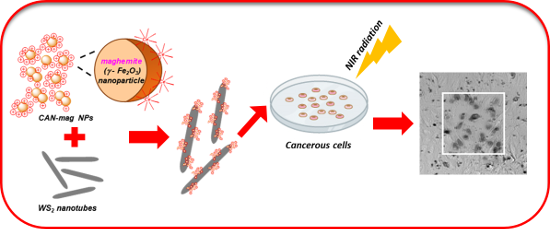
- , they reported a method based on a nickel–nitrotriacetic acid (Ni-NTA) complex as an anchoring group for different chemical functionalities [48][49][50]. Another study of the Tremel group involves terpyridine (TerPy) ligands [51]. NTA and TerPy are multi-dentate ligands, forming complexes with
- chalcophylic metal ions (nickel, iron, ruthenium) and leaving parts of the ion coordination sites free for docking to the chalcogen layer. The molecular structure of both NTA and TerPy enables performing versatile chemistry on the ligand. Cerium is a metal of the lanthanide series with versatile coordinative






Improving control of carbide-derived carbon microstructure by immobilization of a transition-metal catalyst within the shell of carbide/carbon core–shell structures
Beilstein J. Nanotechnol. 2019, 10, 419–427, doi:10.3762/bjnano.10.41
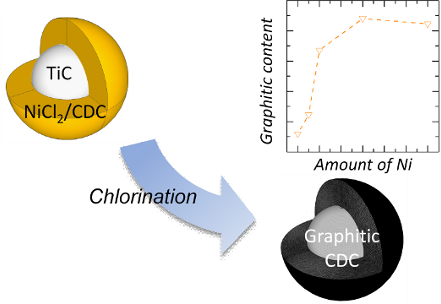
- the porous CDC was obtained by the partial chlorination of carbide. For more details, the pore textural parameters are summarized below in Table 1. To study whether the shell of partially converted carbide influences the distribution of the nickel precursor after the impregnation step, the
- impregnation of untreated titanium carbide was compared with the same loading (30 mg of nickel per gram of equivalent carbide). EDX mapping (see Figure S1 in Supporting Information File 1) of the impregnated core–shell material shows clearly the remaining core in the Ti K edge signal, while the Ni K and Cl K
- edges show that nickel chloride is homogeneously immobilized within the shell. A clustering on top of the particle seems not to take place. In contrast, the SEM image of the untreated titanium carbide shows nickel chloride crystals covering the particles. This is further corroborated through the EDS


A Ni(OH)2 nanopetals network for high-performance supercapacitors synthesized by immersing Ni nanofoam in water
Beilstein J. Nanotechnol. 2019, 10, 281–293, doi:10.3762/bjnano.10.27
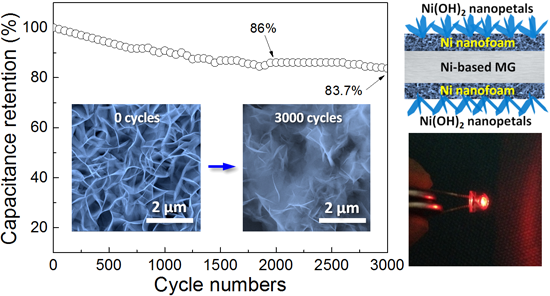
- shortcoming of bulk nickel hydroxide, various morphologies of Ni(OH)2 with a large specific surface area have been developed. The conventional preparation method of Ni(OH)2 composite electrodes is to press a slurry of nickel hydroxide, conductive agents and binders on a conductive substrate (Ni foam, usually
- nickel hydroxide without binders has become a hot topic in recent years. For instance, Ni(OH)2 active materials have been loaded on stainless steel [21], carbon foam [22] and three-dimensional (3D) graphite foam [23]. Furthermore, 3D porous nickel materials have been used extensively as conductive
- substrate for electroactive Ni(OH)2 in supercapacitors because of the large surface area, good conductivity and compatibility with nickel hydroxide. Yuan et al. synthesized porous Ni(OH)2/NiOOH net on Ni foam by a chemical bath deposition and the electrode showed good rate capability [24]. Ke et al




Amorphous NixCoyP-supported TiO2 nanotube arrays as an efficient hydrogen evolution reaction electrocatalyst in acidic solution
Beilstein J. Nanotechnol. 2019, 10, 62–70, doi:10.3762/bjnano.10.6
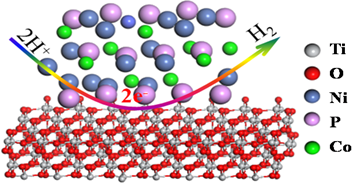
- radii of Co and Ni have been shown to be favorable to form ternary TMPs rather than secondary-metal doped phosphides [18][19][20]. As exemplified by Fu et al., hierarchical whisker-on-sheet nanostructures of NiCoP/nickel foam presented a superior performance, giving overpotentials of 59 mV and 220 mV to
- to large-scale industrial application. Amorphous catalysts intrinsically contain more defect sites which probably work as active centers compared to the crystalline counterparts. A representative work is that by Zhang et al. where they synthesized Ni–Co–P/nickel foam electrodes via a facile
- unstable under acidic conditions. One effective way to improve their stability is with an appropriate support material. Compared to the nickel foam or other substrates [19][23][24], TiO2 nanotube arrays prepared by anodization are favorable for the loading of catalysts and the fast transfer of electrons




Bidirectional biomimetic flow sensing with antiparallel and curved artificial hair sensors
Beilstein J. Nanotechnol. 2019, 10, 32–46, doi:10.3762/bjnano.10.4
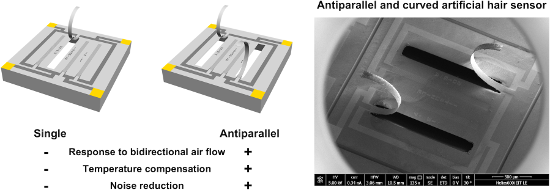
- × 100 μm × 0.7 μm) that demonstrated bidirectional sensitivity to nitrogen flow. Equipped with a 80 μm long nickel–chrome (80/20) piezoresistor (strain gauge), the artificial hair sensor was sensitive to nitrogen flow along both cantilever directions. However, the strain gauge resistance revealed an
- layer, and a 2 μm silicon device layer. The SOI substrate is coated with a 300 nm SiN layer on the bottom and top side. Depositing piezoresistors and contact pads: The actual fabrication process starts with a physical thermal evaporation of four nickel–chrome (NiCr) 80/20 (80% nickel, 20% chrome


Electrolyte tuning in dye-sensitized solar cells with N-heterocyclic carbene (NHC) iron(II) sensitizers
Beilstein J. Nanotechnol. 2018, 9, 3069–3078, doi:10.3762/bjnano.9.285
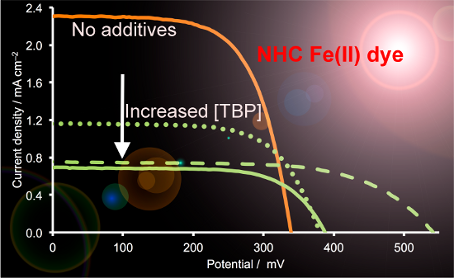
- the first row d-block metals, iron, cobalt, nickel, copper and zinc have Earth-crustal abundances of ≈41,000, 20, 80, 50 and 75 ppm, respectively. We and others [16][17][18][19] have realized the potential of DSCs sensitized by bis(diimine)copper(I) complexes, and both we [20] and Dragonetti et al



Hydrogen-induced plasticity in nanoporous palladium
Beilstein J. Nanotechnol. 2018, 9, 3013–3024, doi:10.3762/bjnano.9.280
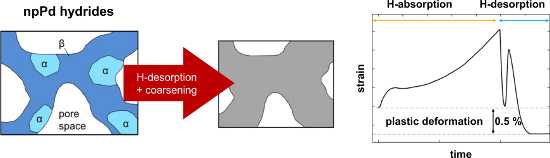
- , reversible expansion. This distinguishes palladium from other metals in the same group of the periodic table, such as platinum or nickel, which are only capable of adsorbing hydrogen mainly on their surfaces. In the literature, a solubility of hydrogen in palladium up to concentrations of about 0.7 (H/Pd


Nanocellulose: Recent advances and its prospects in environmental remediation
Beilstein J. Nanotechnol. 2018, 9, 2479–2498, doi:10.3762/bjnano.9.232
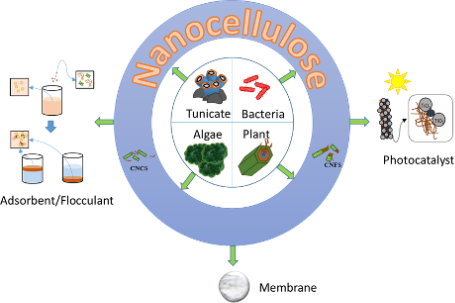
- adsorbents for the removal of cadmium and nickel ion from water [55]. In view of these recent developments, there is much that plant-based nanocellulose can offer to green chemistry and biomaterial sciences for environmental remediation. Tunicates Nanocellulose can also be obtained from tunicates (sea or


Hydrothermal-derived carbon as a stabilizing matrix for improved cycling performance of silicon-based anodes for lithium-ion full cells
Beilstein J. Nanotechnol. 2018, 9, 2381–2395, doi:10.3762/bjnano.9.223
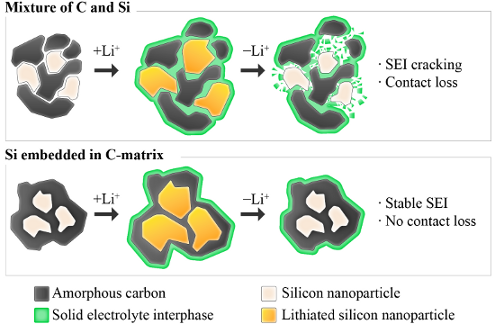
- containing the synthesized materials were used as working electrodes (WE), while lithium metal (Li; Albemarle Corporation) was used as counter and reference (RE) electrodes. In the full cell set-up, the Si/C composite electrodes were cycled vs lithium nickel manganese cobalt oxide (LiNi1/3Mn1/3Co1/3O2, NMC


High-throughput micro-nanostructuring by microdroplet inkjet printing
Beilstein J. Nanotechnol. 2018, 9, 2372–2380, doi:10.3762/bjnano.9.222
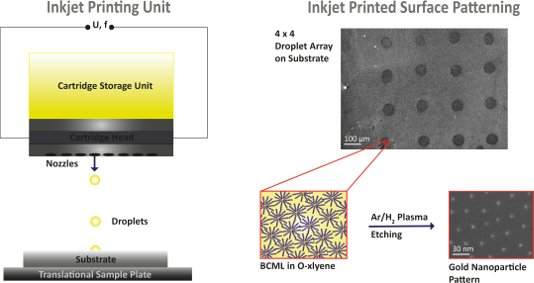
- in a high-throughput process. Inkjet printing was used to generate droplets of the micelle solution on surfaces, resulting in printed circles that contain patterns of gold nanoparticles with an interparticle spacing between 25 and 42 nm. We tested this method on different silicon and nickel–titanium
- generated on different types of silicon and nickel–titanium (NiTi) materials, thus providing a novel method to micro-nanostructure and functionalize materials, which are relevant in biomaterial and biosensor applications. Results and Discussion Inkjet printing for generating micelle solution droplets The
- nm thickness (prepared by Fraunhofer ISIT, Itzehoe), 200 nm thick nickel–titanium thin film sputtered on a 4 µm thick copper layer and glass substrate (prepared by Acquandas, Kiel) and free-standing nickel–titanium foil of 50 µm thickness (prepared by Acquandas, Kiel). Scanning electron microscopy


A variable probe pitch micro-Hall effect method
Beilstein J. Nanotechnol. 2018, 9, 2032–2039, doi:10.3762/bjnano.9.192
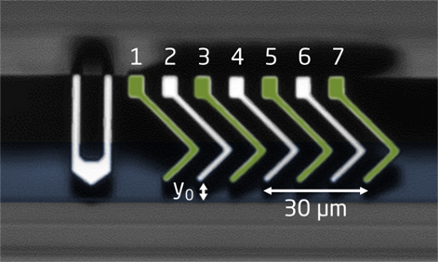
- microHall-A300 tool from CAPRES A/S and an M7PP with an electrode pitch of 10 μm. The M7PP used consisted of nickel-coated poly-silicon cantilever electrodes extending from the edge of a silicon die. A magnetic field with the flux density Bz = 600 mT was applied perpendicular to a boron-doped (1015 cm−2


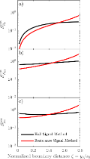
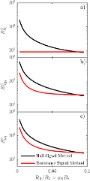
![[Graphic 11]](/bjnano/content/inline/2190-4286-9-192-i25.svg?max-width=637&scale=1.18182) for a) R0, b) NHS and c) μH when in- and off-line errors are present during ...
for a) R0, b) NHS and c) μH when in- and off-line errors are present during ...

![[Graphic 15]](/bjnano/content/inline/2190-4286-9-192-i29.svg?max-width=637&scale=1.18182) for the sheet resistance, Hall mobility and Hall sheet carrier density, due ...
for the sheet resistance, Hall mobility and Hall sheet carrier density, due ...
Electromigrated electrical optical antennas for transducing electrons and photons at the nanoscale
Beilstein J. Nanotechnol. 2018, 9, 1964–1976, doi:10.3762/bjnano.9.187
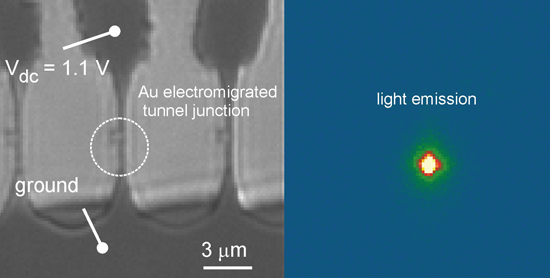
- . The thickness of the nanowire and electrodes is 50 nm, including a 5 nm Ti adhesion layer. The third step is the dry etching of the TiO2 layer. For that, we first create an etching mask by electron-beam lithography, thermal deposition of a 30 nm thick nickel layer and lift-off. Reactive ion etching is


![[Graphic 32]](/bjnano/content/inline/2190-4286-9-187-i38.svg?max-width=637&scale=1.18182) and
and ![[Graphic 33]](/bjnano/content/inline/2190-4286-9-187-i39.svg?max-width=637&scale=1.18182) are...
are...


Synthesis of carbon nanowalls from a single-source metal-organic precursor
Beilstein J. Nanotechnol. 2018, 9, 1895–1905, doi:10.3762/bjnano.9.181
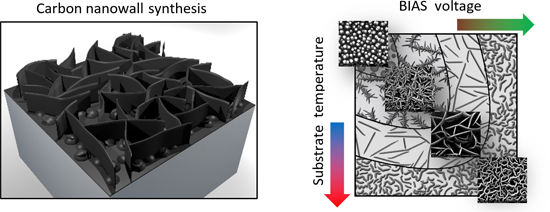
- the various deposition parameters on the growth. Silicon, stainless steel, nickel and copper are used as substrate materials. The CNWs deposited are characterized by scanning electron microscopy (SEM), Raman spectroscopy and Auger electron spectroscopy (AES). The combination of bias voltage, the
- substrate bias and the substrate temperature on the deposition process and on the structure of the synthesized CNWs. Four different kinds of substrates were chosen: stainless steel, aluminium, nickel and silicon. These materials were chosen because they differ significantly in essential properties such as
- values), on nickel and silicon no nanorods growth zones could be identified and only straight and curled CNWs were found. The explanation for this observation is possibly the difference in carbon bulk and surface diffusion for the given materials and the different affinities to form carbide at the


Synthesis of hafnium nanoparticles and hafnium nanoparticle films by gas condensation and energetic deposition
Beilstein J. Nanotechnol. 2018, 9, 1868–1880, doi:10.3762/bjnano.9.179

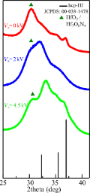
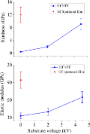
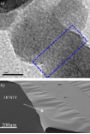
- demonstrate high catalytic activity during hydrogenation of levulinic acid [17], nickel NPs, which find application as electrochemical sensor [18], and cobalt NPs, which exhibit high magnetic anisotropy [19]. Recently, we have reported that hcp hafnium nanoparticles fabricated by inert-gas condensation, when






Cryochemical synthesis of ultrasmall, highly crystalline, nanostructured metal oxides and salts
Beilstein J. Nanotechnol. 2018, 9, 1755–1763, doi:10.3762/bjnano.9.166
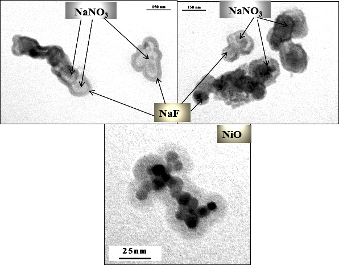
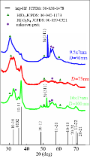
- , including a modified sol–gel synthesis of the colloids and their cryogenic processing, was used in the synthesis of nickel, iron and cerium oxide nanopowders. In this case, cerium, iron and nickel nitrates were used as metal sources for the synthesis of metal-containing sols. The sol synthesis was carried


Nitrogen-doped carbon nanotubes coated with zinc oxide nanoparticles as sulfur encapsulator for high-performance lithium/sulfur batteries
Beilstein J. Nanotechnol. 2018, 9, 1677–1685, doi:10.3762/bjnano.9.159
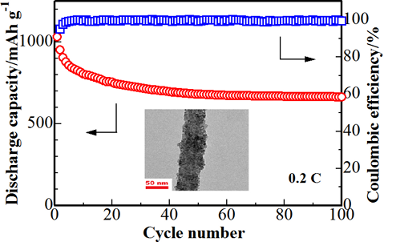
- wt % polyvinylidene fluoride (PVDF) in N-methyl-2-pyrrolidone (NMP). The resulting homogeneous slurry was coated on nickel foam and subsequently dried at 75 °C overnight. Metallic lithium foil served as a counter and reference electrode, and micro-porous polypropylene film (Cellgard 2300) was used as


Free-radical gases on two-dimensional transition-metal disulfides (XS2, X = Mo/W): robust half-metallicity for efficient nitrogen oxide sensors
Beilstein J. Nanotechnol. 2018, 9, 1641–1646, doi:10.3762/bjnano.9.156
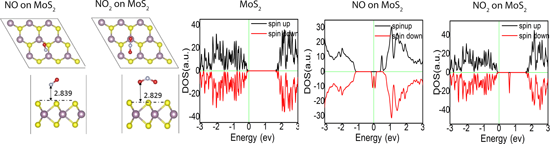
- and can cause serious health issues [1]. For a large-scale monitoring of NOx, it is highly essential to develop the techniques of toxic gas detection. Up to now, a number of three dimensional (3D) materials, such as nickel phthalocyanine (NiPc) [2], tungsten trioxide (WO3) [3], mesoporous silicate [4





