


Search results
Search for "optical absorption" in Full Text gives 137 result(s) in Beilstein Journal of Nanotechnology.
Fabrication and photoactivity of ionic liquid–TiO2 structures for efficient visible-light-induced photocatalytic decomposition of organic pollutants in aqueous phase
Beilstein J. Nanotechnol. 2018, 9, 580–590, doi:10.3762/bjnano.9.54
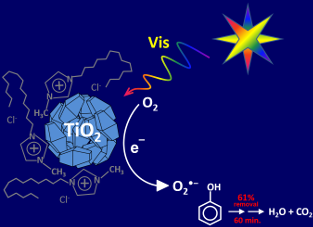
- absorption of the TiO2 photocatalysts appeared when the selected ionic liquids, [ODMIM][Cl] and [TDMIM][Cl], were applied in the TiO2 synthesis reaction. Moreover, with increasing IL:TBOT molar ratio, the optical absorption of the composites in the viible-light region was also greatly increased (compare for
- results the improvement of the optical absorption of the composites in the visible-light region could be associated with the synergic effect of its two main components, that is, TiO2 and ILs. Binetti et al. [42] stated that the absorbance of IL–TiO2 materials increased with the modification of TiO2 with 1
- absorption spectrum of the titanium dioxide in the visible region. Therefore, the enhanced photocatalytic activity of IL–TiO2 can be attributed to the improved optical absorption. Moreover, the XPS data showed that the amount of carbon, nitrogen and chlorine were higher for the samples with molar ratio 1:3




Colloidal solution of silver nanoparticles for label-free colorimetric sensing of ammonia in aqueous solutions
Beilstein J. Nanotechnol. 2018, 9, 499–507, doi:10.3762/bjnano.9.48
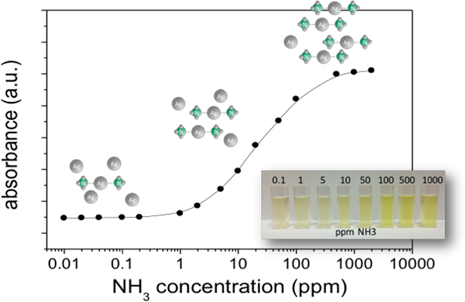
- sensors [14]. The optical properties of gold and silver nanoparticles in the UV–vis region (200–800 nm) are well known. As an example, the peak of the optical absorption SPR is a feature of the colloidal metal nanoparticle solutions. The exact position of the absorption maximum and the shape of the peak
- all experiments, ammonia was added to colloidal solutions within 60 min after seed formation. The final colloidal solution is very stable:The optical absorption curves can be reproduced without any significant differences for at least five days. Spectroscopic and morphologic characterisations



Influence of the preparation method on the photocatalytic activity of Nd-modified TiO2
Beilstein J. Nanotechnol. 2018, 9, 447–459, doi:10.3762/bjnano.9.43
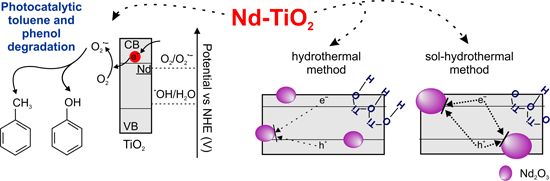
- that for photocatalysts obtained by the SHT method the agglomerates are a bit smaller. Optical and photoluminescence properties To study the optical absorption properties of the as-prepared photocatalysts, diffuse reflectance spectra (DRS) in the range of 200–850 nm were investigated, and the results
- are shown in Figure 3. The optical absorption of TiO2 in the UV region below 400 nm can be mainly attributed to the charge transfer, related to electron excitation from the valence band to the conduction band (band-to-band transition, O2p→Ti3d) [30]. Modification of TiO2 with neodymium significantly
- affected the light absorption of the photocatalysts. A redshift of the absorption edge toward the visible region was observed for the Nd-modified samples. The optical absorption edge was shifted further when the SHT method was applied. Nassuko et al. reported that the redshift can be ascribed to the new




Facile synthesis of ZnFe2O4 photocatalysts for decolourization of organic dyes under solar irradiation
Beilstein J. Nanotechnol. 2018, 9, 436–446, doi:10.3762/bjnano.9.42
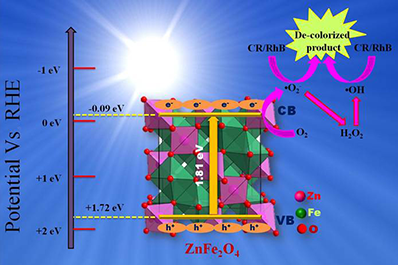
- analysis UV–vis diffuse reflectance spectra (DRS) were measured to determine the optical absorption properties of the ZFO samples. The samples show a wide absorption range from 200 to 700 nm as depicted in Figure 4a, and among them ZFO-500 shows the highest absorption. With increasing calcination


CdSe nanorod/TiO2 nanoparticle heterojunctions with enhanced solar- and visible-light photocatalytic activity
Beilstein J. Nanotechnol. 2017, 8, 2741–2752, doi:10.3762/bjnano.8.273
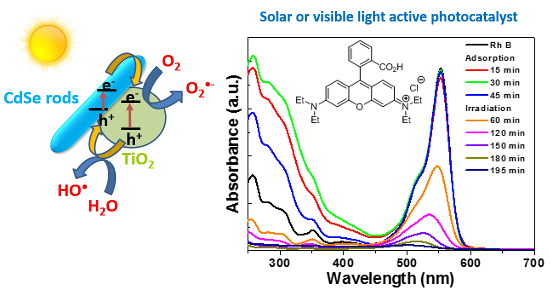
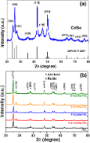
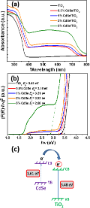
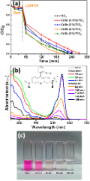
- separation. The interfacial electron transfer between two semiconductors has gained significant interest because the heterojunction improves both the optical absorption in the visible range and the charge separation yield and thus the charge carrier lifetime [3][4][5][6][7][8]. The photocatalytic activity is
- enhanced because oxidation of water by holes and reduction of oxygen by electrons are retained at two different sites. Recently, many groups demonstrated that the creation of a heterojunction between TiO2 and CdS, CdSe or alloyed CdSeS nanoparticles allows the optical absorption of TiO2 to be extended into
- high interest for use as sensitizers for photocatalytic applications due to their high surface area, higher optical absorption cross section (as compared to spherical particles) and easier charge carrier separation [38]. Only a couple of reports describe the association of CdSe NRs with TiO2. Luo et al






Changes of the absorption cross section of Si nanocrystals with temperature and distance
Beilstein J. Nanotechnol. 2017, 8, 2315–2323, doi:10.3762/bjnano.8.231
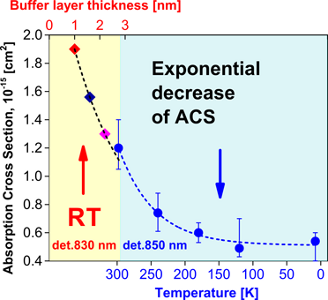
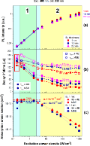
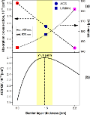
- the optical absorption coefficient [9]. The NC concentration is necessary for many scientific studies and practical applications such as biolabeling [3]. Besides this, the ACS is related to the transition oscillator strength and therefore, is a very useful parameter for a variety of theoretical


Synthesis and characterization of noble metal–titania core–shell nanostructures with tunable shell thickness
Beilstein J. Nanotechnol. 2017, 8, 2083–2093, doi:10.3762/bjnano.8.208
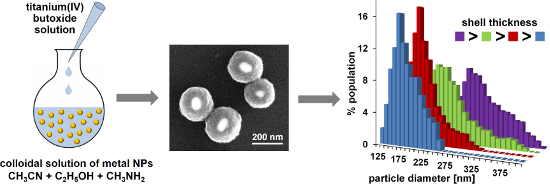
- great potential for use in these applications [18][19]. Surface plasmon resonance properties of gold and silver NPs can increase the optical absorption of titania and extend its absorption band to the visible light region. Such CSNs could allow one of the most important limitations in broader use of


Optical techniques for cervical neoplasia detection
Beilstein J. Nanotechnol. 2017, 8, 1844–1862, doi:10.3762/bjnano.8.186





Charge transfer from and to manganese phthalocyanine: bulk materials and interfaces
Beilstein J. Nanotechnol. 2017, 8, 1601–1615, doi:10.3762/bjnano.8.160
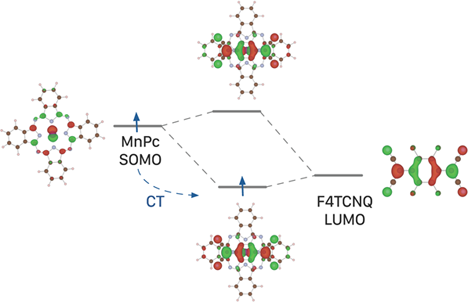
- reported [116]. Keeping this in mind, we present a comparison of our electronic excitation data obtained using EELS for MnPc, K1MnPc (MnPc−), and MnPc/F4TCNQ (MnPc+) in Figure 9. In addition, we also included the energies of optical absorption studies for oxidized and reduced MnPc in solution [117][118
- , K1MnPc and MnPc/F4TCNQ as measured using EELS. In the lower two panels, we compare these data to the optical absorption energies (denoted by vertical bars) as observed for (b) MnPc+ [117] and (c) MnPc− [118] in solution. In panel (b) we additionally show the optical absorption energy of F4TCNQ− radicals



Spin-chemistry concepts for spintronics scientists
Beilstein J. Nanotechnol. 2017, 8, 1427–1445, doi:10.3762/bjnano.8.143
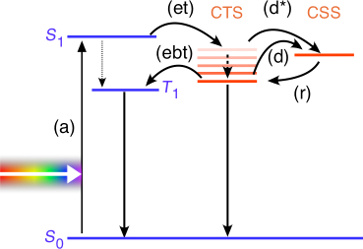
- the sum of the radical radii. MFEs can be studied using different techniques. The concentration of radicals, as well as the radical pair recombination yield can be traced by detecting optical absorption, luminescence, photocurrent, etc. These quantities can be monitored either in steady-state
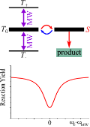
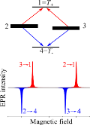
- RYDMR technique, which can be used for two purposes: (i) controlling the reactivity of radical pairs by using spin degrees of freedom and (ii) obtaining EPR parameters of short-lived radicals and radical pairs. RYDMR spectra can be obtained [95] by monitoring optical absorption, luminescence of the



Synthesis, spectroscopic characterization and thermogravimetric analysis of two series of substituted (metallo)tetraphenylporphyrins
Beilstein J. Nanotechnol. 2017, 8, 1191–1204, doi:10.3762/bjnano.8.121
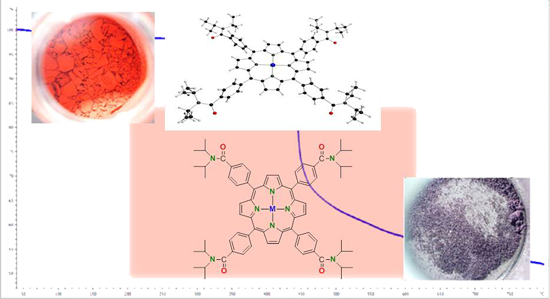
- concentration-dependent UV–vis measurements. According to [28] the nature (cofacial, face-to-face, tilted) and degree (dimer, oligomer, polymer) of mutual interactions between (metallo)phthalocyanine molecules might modify their optical absorption spectra [28]. However, the UV–vis studies of 2/2a–d and 3/3a–d


Surface-enhanced Raman spectroscopy of cell lysates mixed with silver nanoparticles for tumor classification
Beilstein J. Nanotechnol. 2017, 8, 1183–1190, doi:10.3762/bjnano.8.120

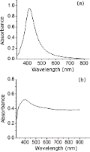
- become electronically coupled, which results in a change of the surface plasmon resonance compared to individual particles. Figure 1b shows the effect of adding KCl to Ag nanoparticles on the optical absorption characteristics. The aggregated nanoparticles have a broad absorption band that allowed for


High photocatalytic activity of Fe2O3/TiO2 nanocomposites prepared by photodeposition for degradation of 2,4-dichlorophenoxyacetic acid
Beilstein J. Nanotechnol. 2017, 8, 915–926, doi:10.3762/bjnano.8.93
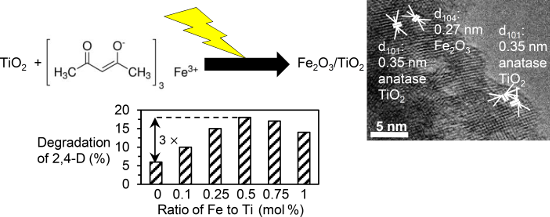
- the impregnation method. The optical absorption properties of the nanocomposites prepared by the impregnation method were investigated (see Supporting Information File 1, Figure S3). The TiO2 (NT) sample absorbs light in the UV region and exhibits a characteristic band for TiO2 at about 370 nm due to


Selective detection of Mg2+ ions via enhanced fluorescence emission using Au–DNA nanocomposites
Beilstein J. Nanotechnol. 2017, 8, 762–771, doi:10.3762/bjnano.8.79
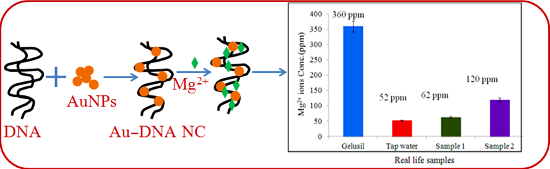
- from the observed changes in the optical absorption, plasmon band, zeta potential, DLS particle size distribution, as well as TEM and AFM surface morphology analysis. Circular dichroism studies also revealed that DNA-functionalized AuNP binding caused a conformational change in the DNA structure. Due
- of the metal ion interaction [16]. The Au–DNA NC was found to be fairly effective for the detection of Mg2+ ions as compared to Ca2+ and Fe2+ ions present in aqueous solution. The enhanced binding ability is likely due to the smaller size of the Mg2+ ions. Results and Discussion The optical
- absorption of different bare and DNA-modified AuNPs (AuNS-1, AuNS-2, AuNS-3 and AuNS-4) is shown in Supporting Information File 1, Figure S1. It was found that due to their size dependency [17], the plasmon band shift (summarized in Supporting Information File 1, Table S1) occurred towards longer wavelengths




Investigation of the photocatalytic efficiency of tantalum alkoxy carboxylate-derived Ta2O5 nanoparticles in rhodamine B removal
Beilstein J. Nanotechnol. 2017, 8, 604–613, doi:10.3762/bjnano.8.65
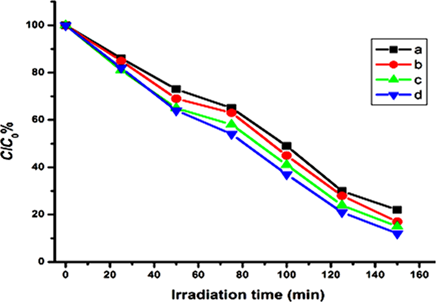
- gap energy [5][6][7][8], Ta2O5 nanoparticles are an open area for researchers. Tantalum pentoxide is an n-type semiconductor. It absorbs only UV light due to its wide band gap. Nevertheless, band gap modification through various methods has been proven to be successful for the red-shift of the optical
- absorption of these materials [9][10][11]. Tantalum(V) alkoxides are important precursors for materials based on tantalum oxide in sol–gel processes. The reactions involved in sol–gel processes can be written as: An inorganic network is formed during hydrolysis the ends of which are occupied either by –OH


Study of the surface properties of ZnO nanocolumns used for thin-film solar cells
Beilstein J. Nanotechnol. 2017, 8, 446–451, doi:10.3762/bjnano.8.48
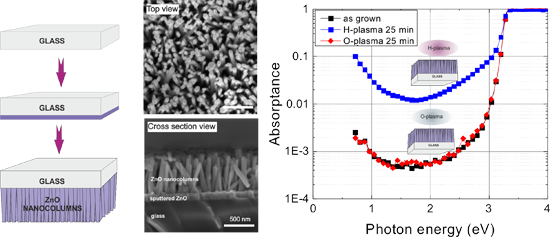
- were prepared before by DC reactive magnetron sputtering. The optical absorption of the pristine ZnO layers as well as that of the substrates bearing the dense ZnO NCs was investigated by photothermal deflection spectroscopy (PDS) [16][17]. Furthermore, we investigated the changes in the PDS spectrum
- -plasma for 1, 5, 10 and 25 min. The measured PDS absorptance spectra reflect the absorption edge, Urbach tail, absorption on defects and free-carrier absorption (proportional to the concentration of free carriers). All optical absorptance spectra show the optical absorption edge at a photon energy of 3.3
- eV and the free-carrier absorption in the red and the infrared part of the spectrum below photon energies of 2 eV. The infrared optical absorption increases with hydrogen plasma treatment indicating the increase of the free-carrier concentration as described in the Drude model. The increase of the



Laser irradiation in water for the novel, scalable synthesis of black TiOx photocatalyst for environmental remediation
Beilstein J. Nanotechnol. 2017, 8, 196–202, doi:10.3762/bjnano.8.21
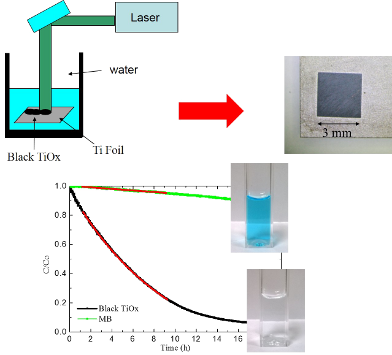
- its low band gap and large optical absorption [20][21] in the visible and IR spectral range. This material has also encouraged theoretical studies due to its peculiarities related to the hydrogen insertion. In the case of TiO2 nanoparticles, hydrogen induces the amorphization of a layer at the surface


Optical and photocatalytic properties of TiO2 nanoplumes
Beilstein J. Nanotechnol. 2017, 8, 190–195, doi:10.3762/bjnano.8.20
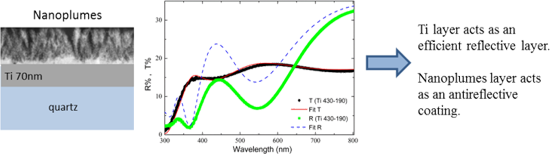
- synthesize black TiO2 with a large optical absorption in the visible and infrared region [15][16][17][18]. The amorphous shell on a crystalline nanoparticle core, causes the formation of intragap states [19], which are responsible for the high absorption of visible light (and consequently of the black color


Tandem polymer solar cells: simulation and optimization through a multiscale scheme
Beilstein J. Nanotechnol. 2017, 8, 123–133, doi:10.3762/bjnano.8.13
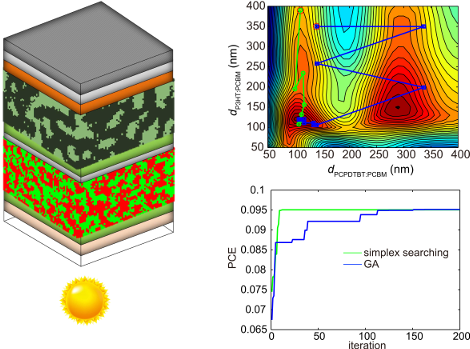
- the incident light achieves relatively better performance than the configuration with PCPDTBT/PCBM at the front. As a lower band gap, active material, PCPDTBT has considerably stronger optical absorption than P3HT. Thus, if the sub-cell with PCPDTBT is put first, a large portion of light energy will





Streptavidin-coated gold nanoparticles: critical role of oligonucleotides on stability and fractal aggregation
Beilstein J. Nanotechnol. 2017, 8, 1–11, doi:10.3762/bjnano.8.1
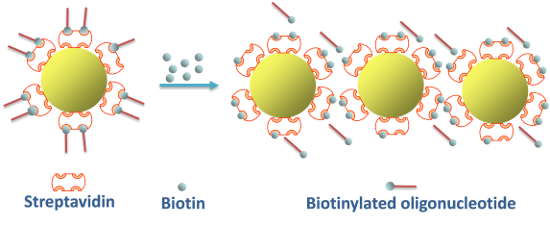
- was achieved by adding 10 µL of 100 μM BiotinDNA to the AuNPs water solutions. Characterization of nanoparticles Optical absorption measurements were performed with NanodropTM 1000 and Agilent 8453 spectrophotometers. Spectra were collected in the 200–800 nm range. Nanoparticles were analysed by using




Hydrophilic silver nanoparticles with tunable optical properties: application for the detection of heavy metals in water
Beilstein J. Nanotechnol. 2016, 7, 1654–1661, doi:10.3762/bjnano.7.157
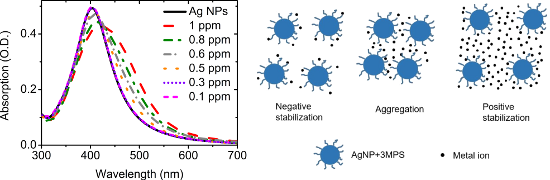
- was tested in water solution by monitoring the optical absorption changes in the presence of metal ions. A weak dependence of the peak wavelength as a function of the ion concentration was found. However, the large broadening of the SPR band and the high background of the absorption hindered the
- performed absorption measurements as a function of concentration of nickel ions. Figure 7a shows the optical absorption spectrum of the AgNP-3MPS solution with nickel for different ion concentrations in the range 1.0–0.1 ppm. Figure 7b presents the maximum wavelength of the absorption peak as a function of


Scanning probe microscopy studies on the adsorption of selected molecular dyes on titania
Beilstein J. Nanotechnol. 2016, 7, 1642–1653, doi:10.3762/bjnano.7.156
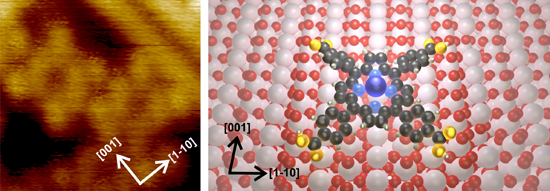
- low conversion efficiencies [1]. However, when the surface of a wide-band-gap material is covered with a sensitizer that absorbs light in the visible spectrum and enables charge transfer through the semiconductor–adsorbate interface, the situation changes dramatically. The optical absorption, and


High performance Ce-doped ZnO nanorods for sunlight-driven photocatalysis
Beilstein J. Nanotechnol. 2016, 7, 1338–1349, doi:10.3762/bjnano.7.125
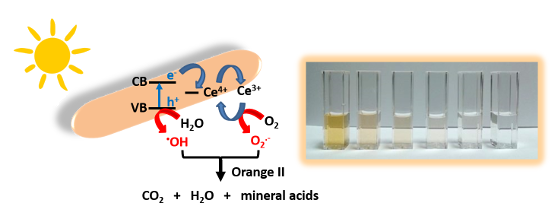
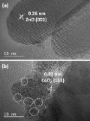
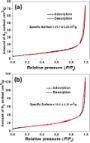
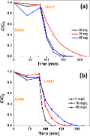
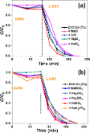
- , electronic and photocatalytic properties have been investigated. Our results demonstrate that Ce-doping improves the optical absorption ability toward visible light wavelengths and thus the photocatalytic performances. ZnO:Ce rods allow the complete degradation of the Orange II dye in ca. 80 min under solar







Photocurrent generation in carbon nanotube/cubic-phase HfO2 nanoparticle hybrid nanocomposites
Beilstein J. Nanotechnol. 2016, 7, 1075–1085, doi:10.3762/bjnano.7.101
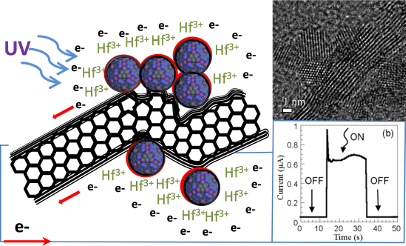
- means of optical absorption and photoluminescence spectroscopy [25]. We have already reported elsewhere that the free-standing cubic HfO2 nanoparticles are luminescent on their own with characteristic emission in the blue-green region of the visible spectra. This may be attributed to surface defects
- nanotube structure, thus optical absorption and emission spectroscopy allow identification of the CNT chirality and diameter as well as quality in terms of nontubular carbon content and structural defects. The characterization of multiwalled CNTs, however, is challenging because of the involvement of
- several shells with different structure and typically higher defect concentration compared to single-walled CNTs. The optical absorption properties of the hybrid MWCNT:HfO2 nanocomposites deduced from the room temperature transmittance measurements of a colloidal suspension in ethanol are summarized in


Sandwich-like layer-by-layer assembly of gold nanoparticles with tunable SERS properties
Beilstein J. Nanotechnol. 2016, 7, 1028–1032, doi:10.3762/bjnano.7.95
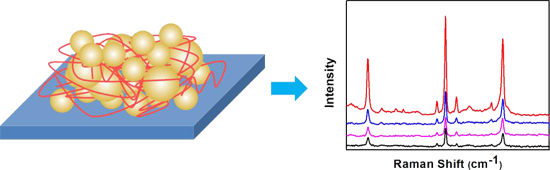
- sodium citrate solution was injected, as shown in Figure 1. The optical absorption peaks located at 520 and 532 nm indicate the strong surface plasmon resonance of the NPs. These uniform negatively charged citrate-protected Au NPs could be readily used in electrostatic LbL assembly. Typical sandwich-like





