Search results
Search for "organic molecules" in Full Text gives 221 result(s) in Beilstein Journal of Nanotechnology. Showing first 200.
Mechanism of silica–lysozyme composite formation unravelled by in situ fast SAXS
Beilstein J. Nanotechnol. 2019, 10, 182–197, doi:10.3762/bjnano.10.17
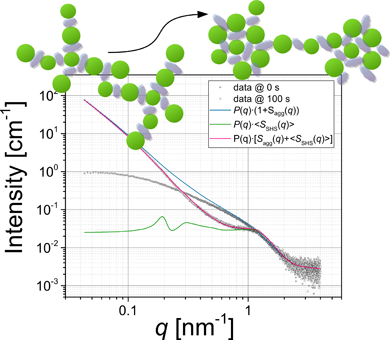
- of protein-sensitized biomedical devices and sensors [1][2][3][4][5][6]. In a broader perspective, many processes involving the assembly of nanoparticles to higher-level hierarchical structures are known to be directed by small organic molecules and macromolecules [7][8][9][10]. Such fundamental




New micro/mesoporous nanocomposite material from low-cost sources for the efficient removal of aromatic and pathogenic pollutants from water
Beilstein J. Nanotechnol. 2019, 10, 119–131, doi:10.3762/bjnano.10.11
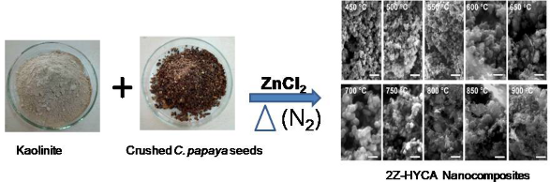
- are reports of the use of clay/carbon materials for the removal of toxic micropollutants from water. In some cases, sugars have been used as starting compounds [17][18], while in other cases, dyes and other organic molecules have been loaded into the clay interlayer and calcined together with the clay




A novel polyhedral oligomeric silsesquioxane-modified layered double hydroxide: preparation, characterization and properties
Beilstein J. Nanotechnol. 2018, 9, 3053–3068, doi:10.3762/bjnano.9.284
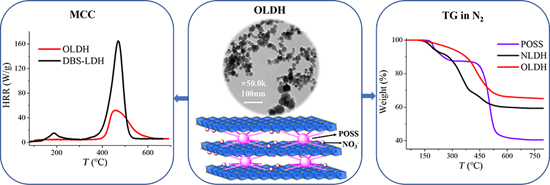
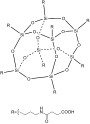
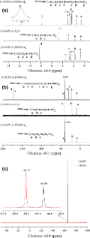
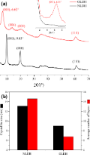
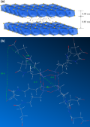
- . In contrast, the LDH modified with OCPS seems to have a denser interlayer packing. Previous literature suggests that the intercalation with linear organic molecules, e.g., surfactants, into pristine LDH can significantly weaken the hydrogen-bonding interactions between interlayer water, interlayer








Colloidal chemistry with patchy silica nanoparticles
Beilstein J. Nanotechnol. 2018, 9, 2989–2998, doi:10.3762/bjnano.9.278
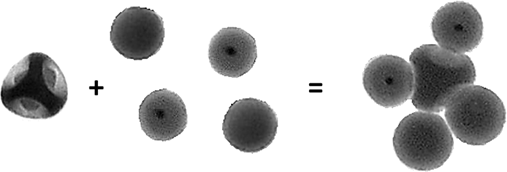
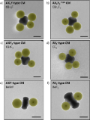
- CMs can be clearly seen on the scanning electron microscopy (SEM) images shown as inserts of Figure 3e,f. We also aimed to mimic at the colloidal scale the possible bonding of atoms of different natures to a same central atom, which is the source of the richness of the organic molecules. We focused on


Layered calcium phenylphosphonate: a hybrid material for a new generation of nanofillers
Beilstein J. Nanotechnol. 2018, 9, 2906–2915, doi:10.3762/bjnano.9.269
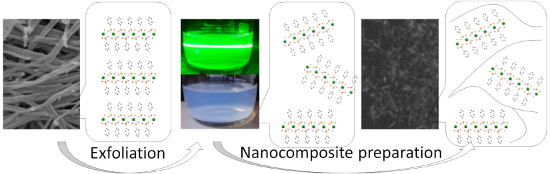
- order to achieve a homogenous distribution within the volume of the polymer matrix. This is a drawback for natural clays as they are usually hydrophilic, thus their application is more suitable for water-based systems. This limitation can be overcome by intercalation of organic molecules into the


Nanoantenna structures for the detection of phonons in nanocrystals
Beilstein J. Nanotechnol. 2018, 9, 2646–2656, doi:10.3762/bjnano.9.246
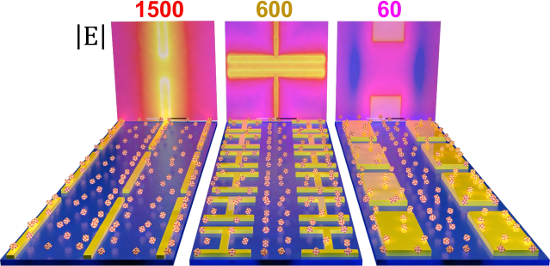
- metal surfaces proposed in [1] has been the subject of intensive research over the past years [2][3][4]. Several groups showed that the IR response by organic molecules can be significantly enhanced in a variety of organic systems by depositing the molecules on nanostructured surfaces of noble metals
- wavelength – appearing in the visible spectral range and of interest for optical spectroscopy [16]. It was shown that regular linear nanoantennas fabricated by nanolithography demonstrate enhancement of the SEIRA signal from vibrational modes in organic molecules such as octadecanethiol (ODT) [17] and 4,4
- fructose concentrations in solutions, including market beverages [20] with concentrations as low as 10 mg/dL. Despite the significant progress in SEIRA of organic molecules at ultra-low concentrations, the plasmonic enhancement of IR absorption by inorganic nanomaterials like nanocrystals (NCs) has not


Impact of the anodization time on the photocatalytic activity of TiO2 nanotubes
Beilstein J. Nanotechnol. 2018, 9, 2628–2643, doi:10.3762/bjnano.9.244
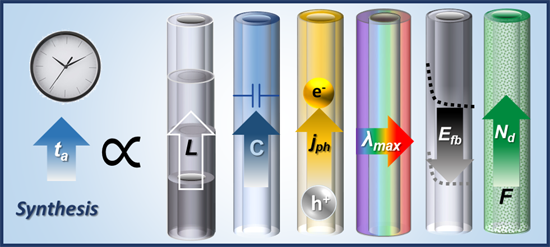
- free radicals that are responsible for the degradation of organic molecules. As the ta increased, the signal for surface OH groups was enhanced, suggesting a direct relationship with the fluorine content [34]. A third feature (O 1s III, 532 eV) was also present in the oxygen spectra and was ascribed to


SERS active Ag–SiO2 nanoparticles obtained by laser ablation of silver in colloidal silica
Beilstein J. Nanotechnol. 2018, 9, 2396–2404, doi:10.3762/bjnano.9.224
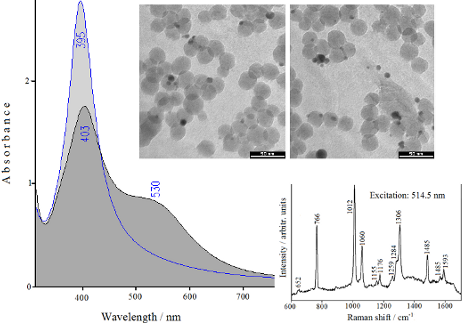
- several months. The TEM images show that nanometer-sized silver is deposited on the surface of silica nanoparticles, instead of forming isolated Ag nanoparticles in the aqueous medium. The Ag–SiO2 nanoparticles can effectively adsorb organic molecules such as 2,2'-bipyridine while maintaining their


Block copolymers for designing nanostructured porous coatings
Beilstein J. Nanotechnol. 2018, 9, 2332–2344, doi:10.3762/bjnano.9.218
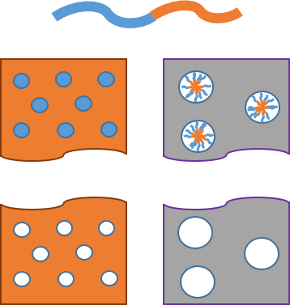
- one of the blocks, through the formation of hydrogen bonding between the small organic molecules and one of the copolymer blocks. This way, it is possible to favor the normal orientation of the cylindrical nanodomains [94]. In this paper, resorcinol is selected as the orienting molecule to direct the


Nanotribology
Beilstein J. Nanotechnol. 2018, 9, 2330–2331, doi:10.3762/bjnano.9.217

- “Understanding and Controlling Nano and Mesoscale Friction”, which ran from 2013 to 2017. Here the covered topics include but are not limited to controlled manipulation of nanoparticles, optically trapped colloidal and ionic systems, superlubricity of graphene, sliding friction of organic molecules, charge
Quantitative comparison of wideband low-latency phase-locked loop circuit designs for high-speed frequency modulation atomic force microscopy
Beilstein J. Nanotechnol. 2018, 9, 1844–1855, doi:10.3762/bjnano.9.176
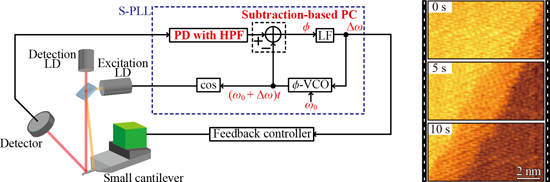
- [1]. It has been used under ultrahigh vacuum conditions for high-resolution imaging of various materials, including metals, semiconductors, metal oxides, and organic molecules [2][3][4][5]. Furthermore, recent advances in FM-AFM have enabled atom manipulation and identification at room temperature [6




Photoluminescence of CdSe/ZnS quantum dots in nematic liquid crystals in electric fields
Beilstein J. Nanotechnol. 2018, 9, 1544–1549, doi:10.3762/bjnano.9.145
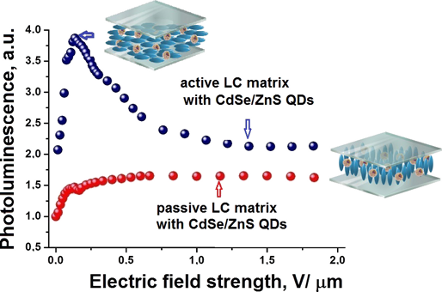
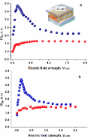
- between CdSe/ZnS and organic molecules can lead to extinction or enhancement of the QD luminescence. Figure 2a shows the relative intensity (I/I0) of the QD luminescence as a function of the electric field strength. The relative PL intensity of the QDs increased by four times when an electric field



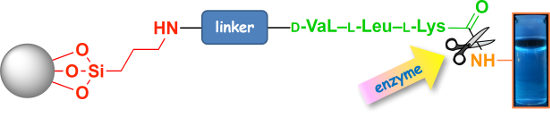
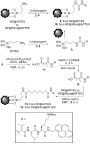
Enzymatically promoted release of organic molecules linked to magnetic nanoparticles
Beilstein J. Nanotechnol. 2018, 9, 986–999, doi:10.3762/bjnano.9.92




Electro-optical interfacial effects on a graphene/π-conjugated organic semiconductor hybrid system
Beilstein J. Nanotechnol. 2018, 9, 963–974, doi:10.3762/bjnano.9.90
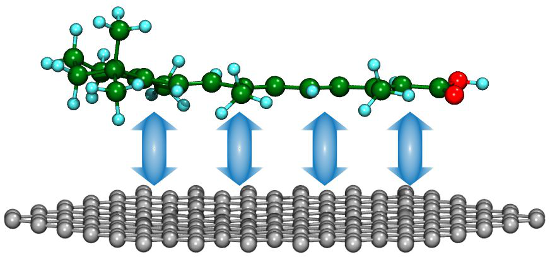
- packing and/or ordering [7]. Previous works have demonstrated that intermolecular interactions can dramatically reduce the luminescence quantum yield in solid-state devices [8][9][10][11][12][13]. In this context, it is important to control the ordering of π-conjugated organic molecules to make their use





Cyclodextrin inhibits zinc corrosion by destabilizing point defect formation in the oxide layer
Beilstein J. Nanotechnol. 2018, 9, 936–944, doi:10.3762/bjnano.9.86
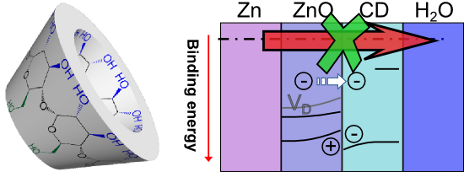
- because of β-CD adsorption is too high to enable easy electron transfer at active corrosion conditions. This work shows that the energy level alignment across the interface can be significantly affected by the presence of simple organic molecules. The defect chemistry of the oxide plays also an important


Perfusion double-channel micropipette probes for oxygen flux mapping with single-cell resolution
Beilstein J. Nanotechnol. 2018, 9, 850–860, doi:10.3762/bjnano.9.79
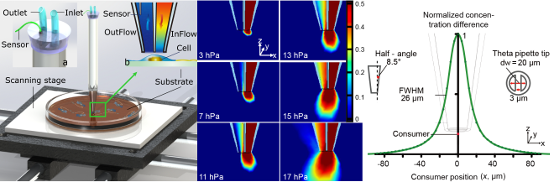
- as individual cells at subcellular resolution. Keywords: double-barrel pipette; hydrodynamic confinement; perfusion; oxygen flux; single-cell metabolic analysis; Introduction Transport, production and consumption of gasses, ions, and organic molecules are fluxes that sustain life. Relatively few


Tuning adhesion forces between functionalized gold colloidal nanoparticles and silicon AFM tips: role of ligands and capillary forces
Beilstein J. Nanotechnol. 2018, 9, 660–670, doi:10.3762/bjnano.9.61
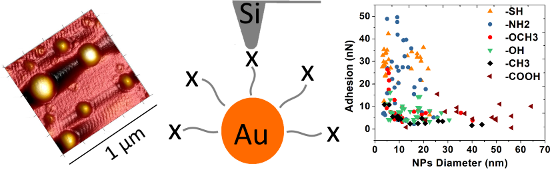
- , varying from 20 up to 70 nm diameter. The carboxylic acid terminated Au NPs are surrounded by short chains organic molecules that confer a disordered SAMs coating with low surface density, compared to –OH tail group. For these raw NPs bearing residual stabilizing carboxy group, one can reasonably suppose


Mechanistic insights into plasmonic photocatalysts in utilizing visible light
Beilstein J. Nanotechnol. 2018, 9, 628–648, doi:10.3762/bjnano.9.59
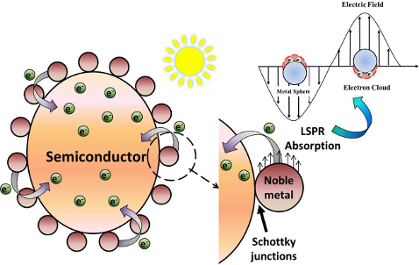
- in this system (as do organic molecules in the solution) and thus lack the potential for redox reactions to occur. The generated charge carriers are trapped by the presence of noble metal. This leads to saturation when accumulating charge carrier reaches it limits. Thus, the gathered charges are
- also reported the use of Ag NPs to remove phenol and drive oxidation of benzyl alcohol to benzaldehyde under UV light. This verifies the role of the LSPR effect and interband transition of Ag NPs in activating organic molecules for oxidation under UV–vis irradiation [169]. Au NPs are more suitable for





Green synthesis of fluorescent carbon dots from spices for in vitro imaging and tumour cell growth inhibition
Beilstein J. Nanotechnol. 2018, 9, 530–544, doi:10.3762/bjnano.9.51
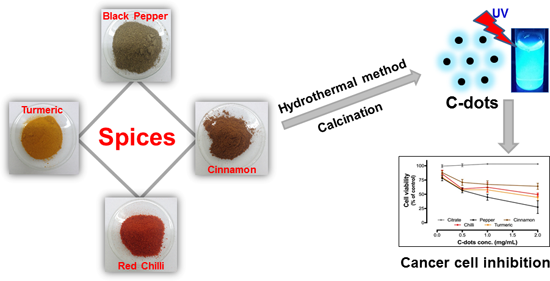
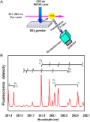
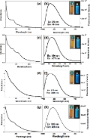
- attributed to surface state emission, intrinsic band emission, triple ground state emission, dipole emission involving electron–phonon coupling, transition from surface electrons to valence holes, self-trapped excitons and to the presence of small organic molecules. Moreover, the characteristic excitation


Kinetics of solvent supported tubule formation of Lotus (Nelumbo nucifera) wax on highly oriented pyrolytic graphite (HOPG) investigated by atomic force microscopy
Beilstein J. Nanotechnol. 2018, 9, 468–481, doi:10.3762/bjnano.9.45
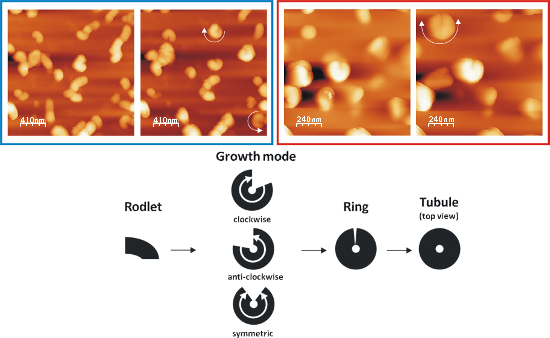
- studying the epitaxial growth of organic molecules with aliphatic chains on HOPG which occurs due to the perfectly-matched interatomic distances in the molecules and the HOPG substrate. Watel and coworkers have demonstrated for long chain alkanes a parallel orientation of the carbon skeleton with respect


Anchoring of a dye precursor on NiO(001) studied by non-contact atomic force microscopy
Beilstein J. Nanotechnol. 2018, 9, 242–249, doi:10.3762/bjnano.9.26
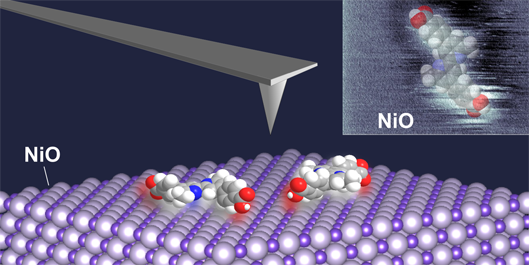
- , Switzerland 10.3762/bjnano.9.26 Abstract The properties of metal oxides, such as charge-transport mechanisms or optoelectronic characteristics, can be modified by functionalization with organic molecules. This kind of organic/inorganic surface is nowadays highly regarded, in particular, for the design of
- (II) oxide (NiO); non-contact atomic force microscopy; p-type semiconductor; sub-molecular resolution; Introduction Inorganic substrates functionalized with organic molecules are nowadays highly regarded materials for emerging hybrid technologies including molecular electronics, photocatalysts or


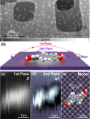


The rational design of a Au(I) precursor for focused electron beam induced deposition
Beilstein J. Nanotechnol. 2017, 8, 2753–2765, doi:10.3762/bjnano.8.274
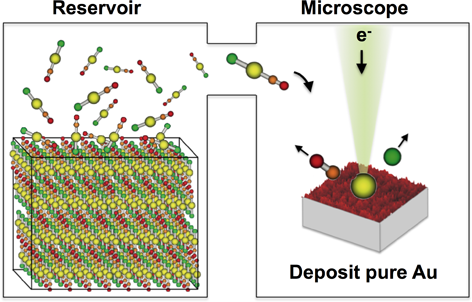
- . High-purity Au deposits are of interest for many applications, such as the directed self-assembly of functional organic molecules [45], seeds for the growth of nanorods or nanotubes [46] and for plasmonics [47]. Two Au(I) compounds have been used for the deposition of pure gold. Utke et al


L-Lysine-grafted graphene oxide as an effective adsorbent for the removal of methylene blue and metal ions
Beilstein J. Nanotechnol. 2017, 8, 2680–2688, doi:10.3762/bjnano.8.268
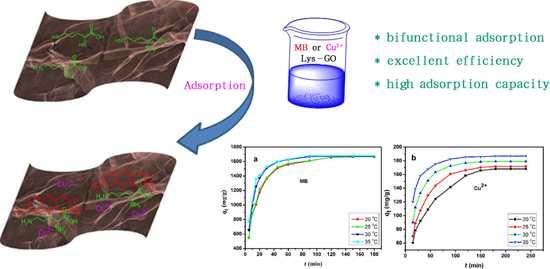
- organic molecules and metal nanoparticles via covalent or non-covalent binding [13][14][15][16]. Recently, functionalized graphene materials have shown great potential as highly efficient absorbers for the treatment of environmental pollutants and wastewater purification [17][18][19]. However, most of the
- defects and π–π interactions on the graphene basal planes and edges can enhance the adsorption capacities for pollutants [3][20]. We inferred that organic molecules modifying graphene might improve their adsorption capabilities. For instance, Swager et al. reported the surface functionalization of


The role of ligands in coinage-metal nanoparticles for electronics
Beilstein J. Nanotechnol. 2017, 8, 2625–2639, doi:10.3762/bjnano.8.263
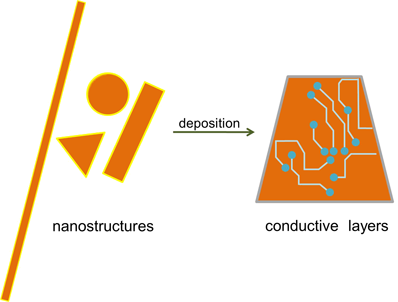
- particles with organic molecules, one may sinter them to create metallic, conductive connections [32]. The conditions required for successful sintering depend on the tendency of the surface ligands to desorb, which lets particles fuse without melting [122]. Metal nanoparticle films with low insulator–metal


Adsorption of iron tetraphenylporphyrin on (111) surfaces of coinage metals: a density functional theory study
Beilstein J. Nanotechnol. 2017, 8, 2484–2491, doi:10.3762/bjnano.8.248
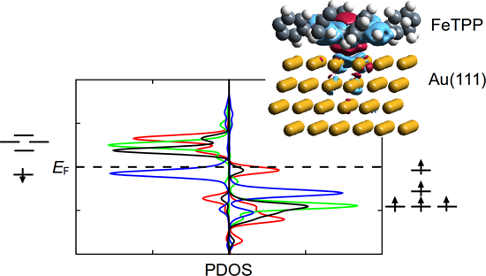
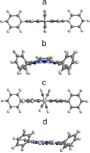
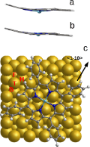
- agreement with the experimental one (5.35 eV) [23]. After the adsorption, the work function was reduced to 4.19 eV. This value is consistent with that measured on copper phthalocyanine (CuPc) adsorbed on Au(111) [24]. Adsorption on Ag(111) and Cu(111) surfaces It is well known for large organic molecules