Search results
Search for "phenomenon" in Full Text gives 615 result(s) in Beilstein Journal of Nanotechnology. Showing first 200.
Interaction of graphene oxide with tannic acid: computational modeling and toxicity mitigation in C. elegans
Beilstein J. Nanotechnol. 2024, 15, 1297–1311, doi:10.3762/bjnano.15.105
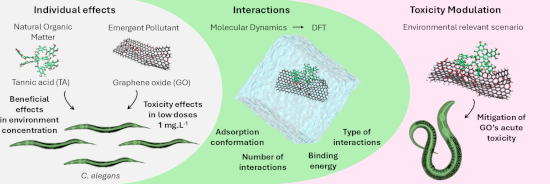
- directly affects delivered dose, internalization, and biodistribution in organisms. In the EPA medium, GO exhibited aggregation and precipitation at concentrations of 5.0 and 10 mg·L−1, respectively, a phenomenon attributable to the screening effect of salt ions diminishing the repulsive forces between GO


New design of operational MEMS bridges for measurements of properties of FEBID-based nanostructures
Beilstein J. Nanotechnol. 2024, 15, 1273–1282, doi:10.3762/bjnano.15.103
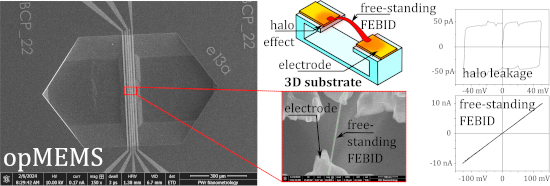
- /nm2 (Figure 6). These two steps were repeated alternately until the spacing in the RoI was reduced to less than 100 nm, as confirmed by SEM imaging (Figure 6). Understanding FIB-induced strain as a physical phenomenon would require a repeatable experimental setup to collect data on the influence of


Realizing active targeting in cancer nanomedicine with ultrasmall nanoparticles
Beilstein J. Nanotechnol. 2024, 15, 1208–1226, doi:10.3762/bjnano.15.98
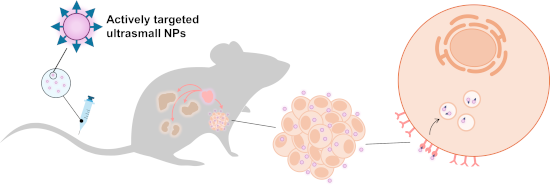
- were 8–10 nm in size and exhibited efficient renal clearance, with over 90% ID found in the urine at 72 h p.i. Such a high clearance rate was unexpected considering the larger size of the construct compared to the kidney filtration barrier, and the underlying mechanism for this phenomenon requires


Synthesis, characterization and anticancer effect of doxorubicin-loaded dual stimuli-responsive smart nanopolymers
Beilstein J. Nanotechnol. 2024, 15, 1189–1196, doi:10.3762/bjnano.15.96
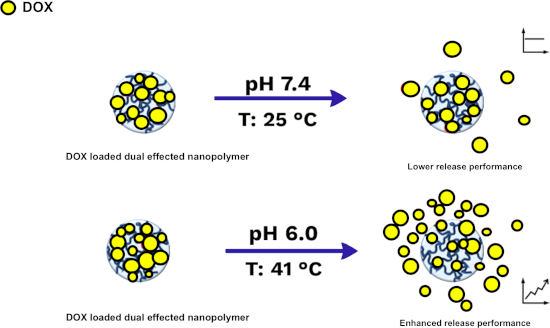
- tumors [35][36] and retained longer than negatively charged and/or neutral structures [36]. This phenomenon demonstrates the potential of utilizing these SNPs in biomedicine. DOX loading to SNPs One of the most important points when designing a DD material is its drug-carrying capacity because a


Effect of wavelength and liquid on formation of Ag, Au, Ag/Au nanoparticles via picosecond laser ablation and SERS-based detection of DMMP
Beilstein J. Nanotechnol. 2024, 15, 1054–1069, doi:10.3762/bjnano.15.86

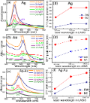
- ablation. This phenomenon led to lower NP production at 355 nm compared to that at 532 and 1064 nm laser wavelengths, this was also reflected in the absorption spectra. Consequently, there is a tendency for NP agglomeration and chain formation, which is evident from the TEM pictures depicted in Figure 3


Interface properties of nanostructured carbon-coated biological implants: an overview
Beilstein J. Nanotechnol. 2024, 15, 1041–1053, doi:10.3762/bjnano.15.85
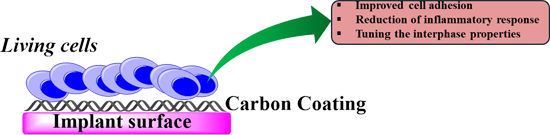
- rings, which prevents planar deformations [33]. The same phenomenon explains the high thermal conductivity of up to 3000 W·m−1·K−1 [34][35] and the outstanding electrical properties [36][37][38]. Compared to conventional 3D materials, the understanding of electronic transport and carrier dynamics in
- accumulation of collagen leading to the foreign-body reaction. This phenomenon involves the formation of a fibrous capsule around the implant, which compromises its functionality (such as the flexibility of cardiovascular stents) and, thus, limits the integration of soft tissue implants. The effect of



Entry of nanoparticles into cells and tissues: status and challenges
Beilstein J. Nanotechnol. 2024, 15, 1017–1029, doi:10.3762/bjnano.15.83
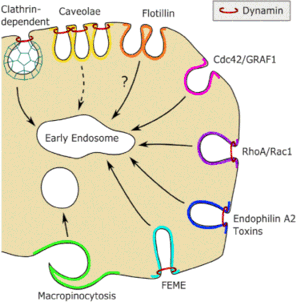
- may respond by increasing others [13]. Importantly, knockdown of caveolin may lead to increased uptake via the CLIC/GEEC pathway [14], and a similar phenomenon is seen after knockdown of cavin [15]. To which extent the CLIC/GEEC pathway is important for endocytosis of NPs has not been explored in
- stimulation of protein kinase A [7]. To which extent this is a general phenomenon is still unknown. In contrast, in endothelial cells caveolae can be seen on both sides of the endothelial cell layer, and caveolae have been reported to be involved in transcytosis across the cell layer [23]. It should, however


Investigation on drag reduction on rotating blade surfaces with microtextures
Beilstein J. Nanotechnol. 2024, 15, 833–853, doi:10.3762/bjnano.15.70
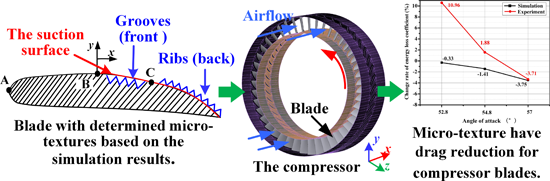
- moving animals, such as the “denticles” found on the surface of shark skin, which enable high-speed swimming [2], as well as the texture of bird feathers [3]. The phenomenon of drag reduction can also be observed on the surface of plants. For example, there is a superhydrophobic structure on the surface
- reasons: (1) There is a lack of analysis on the flow field over smooth blades. The phenomenon of flow separation on blades occurs because of the complex curved surface in the air flow. The placement position of microstructures needs to be determined based on the locations of flow separation on blade
- Table 12. The results in Table 11 indicate that ξ0 rises with increasing angle of attack. The simulation reveals distinct phenomena occurring at three angles of attack; the separation phenomenon and vortex at the back section of the blade become more apparent and intense with the increase of the angle


Electrospun polysuccinimide scaffolds containing different salts as potential wound dressing material
Beilstein J. Nanotechnol. 2024, 15, 781–796, doi:10.3762/bjnano.15.65
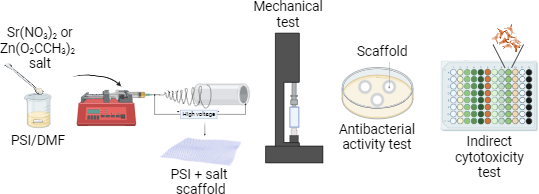
- et al. investigated the effects of PSI scaffold against bacterial strains, and they noticed that narrow, clear zones were formed after 24 h of incubation. This phenomenon was explained by the change in pH during the hydrolyzation of the PSI. By adding silver nanoparticles to the PSI scaffold, the



Exploring surface charge dynamics: implications for AFM height measurements in 2D materials
Beilstein J. Nanotechnol. 2024, 15, 767–780, doi:10.3762/bjnano.15.64
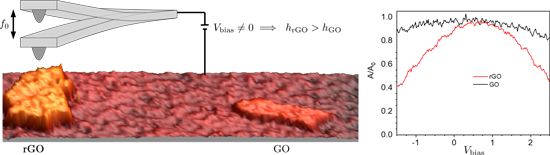
- , consequently, affect the measured height. To investigate this phenomenon, we conduct measurements on monolayer flakes of co-deposited graphene oxide and reduced graphene oxide. Subsequently, we introduce a general model that elucidates our observations. This approach offers valuable insights into the dynamics
- to the free oscillation amplitude for low to moderate amplitudes. Additionally, we observed a parabolic dependence on the tip–sample bias voltage, with the dissipation effect being more pronounced as the in-plane conductivity of the material increases. We have linked this phenomenon to an in-plane


Green synthesis of biomass-derived carbon quantum dots for photocatalytic degradation of methylene blue
Beilstein J. Nanotechnol. 2024, 15, 755–766, doi:10.3762/bjnano.15.63
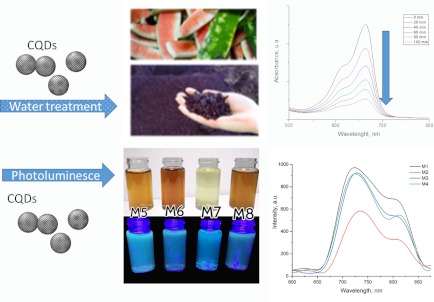
- fluorescence is intriguing and often associated with the presence of surface defects. Various researchers have highlighted the role of radiative recombination of electron–hole pairs and the influence of functional groups within the carbon network in driving the fluorescence phenomenon [24][30][31]. Furthermore
- in Figure 7 shows a phenomenon where the emitted fluorescence has a shorter wavelength than the excitation wavelength. This is different from the down-conversion luminescence, where the excitation occurs in the UV region and the emission takes place in the visible spectrum. Unlike down-conversion


Effect of repeating hydrothermal growth processes and rapid thermal annealing on CuO thin film properties
Beilstein J. Nanotechnol. 2024, 15, 743–754, doi:10.3762/bjnano.15.62
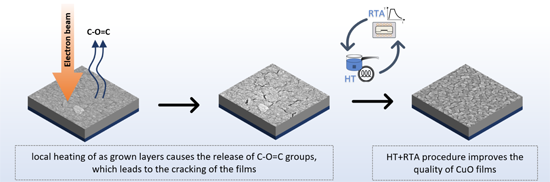
- cracking. This phenomenon was manifested, for example, during SEM measurements, when the sample was locally heated by an electron beam, as shown in Figure 1. Simultaneously, exposing the samples to thermal processing results in a reduction of the content of carbon atoms. On this basis, it is postulated
- phenomenon likely accounts for their subsequent release from the layers at relatively moderate temperatures, resulting in the formation of discontinuities along the grain boundaries. Furthermore, an interesting observation pertains to alterations in the surface potential of the films, directly impacting




Simultaneous electrochemical determination of uric acid and hypoxanthine at a TiO2/graphene quantum dot-modified electrode
Beilstein J. Nanotechnol. 2024, 15, 719–732, doi:10.3762/bjnano.15.60
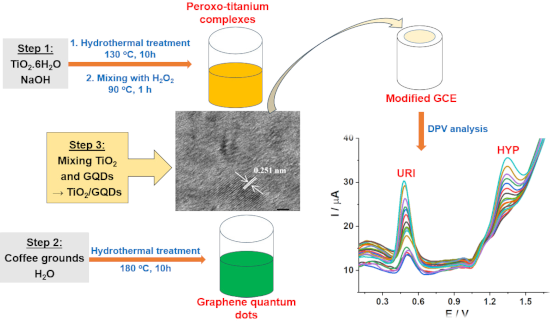
- , the IP values for URI and HYP are 3.787 ± 0.535 μA (n = 3) and 4.193 ± 0.318 μA (n = 3), respectively (Supporting Information File 1, Figure S1c,d). This phenomenon shows that URI and HYP quickly adsorb on the surface of the modified electrode at the beginning of the measurement. Therefore, when the


Enhancing higher-order modal response in multifrequency atomic force microscopy with a coupled cantilever system
Beilstein J. Nanotechnol. 2024, 15, 694–703, doi:10.3762/bjnano.15.57

- from the graph that the first-mode response of the coupled system is reduced, indicating a certain limitation on the first-mode response in the coupled system. This phenomenon may be related to the excitation position. However, it does not have a large impact on imaging in practical applications


Functional fibrillar interfaces: Biological hair as inspiration across scales
Beilstein J. Nanotechnol. 2024, 15, 664–677, doi:10.3762/bjnano.15.55
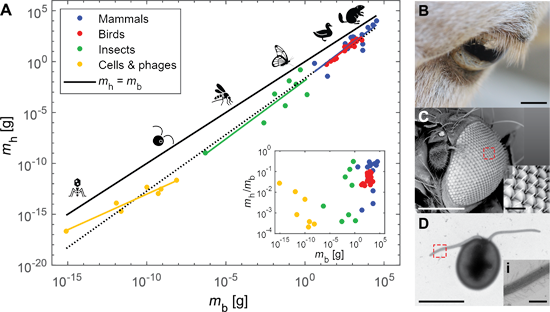
- microscopic pillars. The superhydrophobic surface is self-cleaning since water droplets bead up on the surface, and, when they roll off, they pick up any dirt or other particles and remove them from the leaf’s surface. This phenomenon was termed the “Lotus effect” and has been translated to the development of


Directed growth of quinacridone chains on the vicinal Ag(35 1 1) surface
Beilstein J. Nanotechnol. 2024, 15, 556–568, doi:10.3762/bjnano.15.48
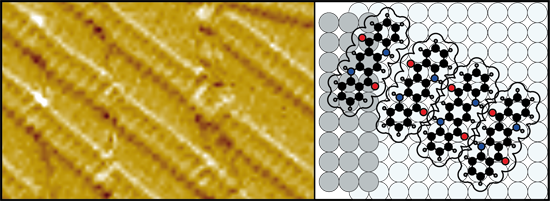
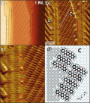
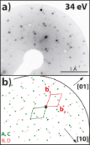
- . For a coverage of 0.8 ML, this occurs in about 90% of all cases when a QA chain reaches a Ag step edge. At lower coverages, this phenomenon is less likely (at 0.45 ML only about 70%). When QA chains continue across the step, in about 50% of all cases a visible gap or break in the chain (discontinuity
- described in the above publications is that, here, the Ag step edges also cause the preferential growth of QA chains or commensurate domains with distinct step-selected orientations at elevated temperatures. A similar phenomenon has, to the best of our knowledge, not been reported, so far. Another
- phenomenon that was reported by Schmitt et al. [47] for PTCDA on vicinal Ag(100) surfaces is the faceting of the Ag substrate surface that is induced by the adsorption of the molecules. They found that the adsorption of PTCDA leads to the formation of Ag facets, which are usually not stable on the bare


Sidewall angle tuning in focused electron beam-induced processing
Beilstein J. Nanotechnol. 2024, 15, 447–456, doi:10.3762/bjnano.15.40
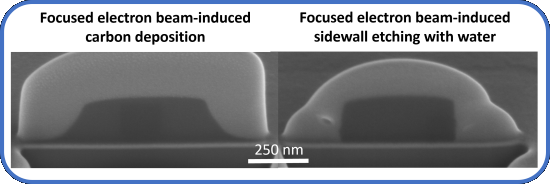
- an outward slope. Further, the extent of under-etch depends on the ratio between the SE distribution widths of the deposit and the substrate, which has been chosen arbitrarily here to simply demonstrate the phenomenon. As in Figure 4c, there is a small amount of material remaining to the right of the
- also been carried out in situ in an SEM. Making use of the phenomenon of enhanced SE emission from an edge, the evolution of the sidewall angle during etching was continuously monitored using the SE signal. It has been demonstrated that this technique is sufficiently sensitive to determine the dose at




Heat-induced morphological changes in silver nanowires deposited on a patterned silicon substrate
Beilstein J. Nanotechnol. 2024, 15, 435–446, doi:10.3762/bjnano.15.39
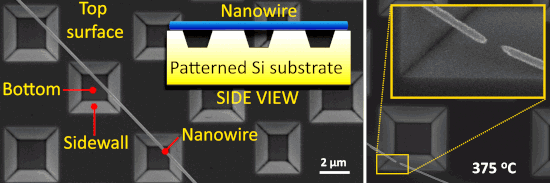
- ][23]. This phenomenon is closely related to the variation of surface energy with size [24]. For instance, the melting temperature can decrease by several hundred degrees for structures smaller than 10 nm [25]. In practical applications, the diameters of Ag NWs are typically significantly larger
- shorter fragments in a similar way as it generally happens with heated Ag and Au NWs on a flat Si substrate [27]. This process is commonly explained by the phenomenon known as Rayleigh instability [48][49][50]. According to our understanding, stresses that arise at the interface between the NW and the
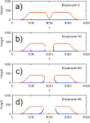
- significant bending in the suspended part in the heating scheme 2. The onset temperature of this phenomenon is difficult to determine as the deformation can be below the detection limits of SEM. Moreover, in SEM we only see the 2D projection normal to the electron beam. If NWs are bent out of the substrate


Potential of a deep eutectic solvent in silver nanoparticle fabrication for antibiotic residue detection
Beilstein J. Nanotechnol. 2024, 15, 426–434, doi:10.3762/bjnano.15.38
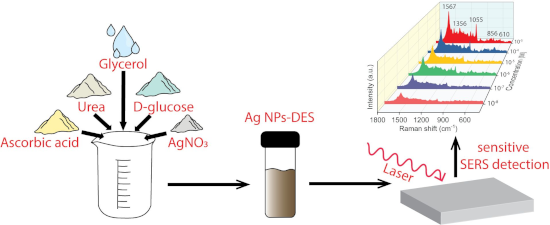
- to form hydrogen bonds. The DES acts as a surfactant helping to stabilize Ag NPs. The rod-like appearance with 122.6 nm average length and small crystals on the surface of Ag NPs crucially contribute to strengthening the LSPR phenomenon thanks to the lightning rod effect [42]. As reported by other


On the mechanism of piezoresistance in nanocrystalline graphite
Beilstein J. Nanotechnol. 2024, 15, 376–384, doi:10.3762/bjnano.15.34
- phenomenon occurs up to 0.7% strain and then stops. The reason could be that the remaining GBs are stronger than the ones that fractured between 0.3% and 0.7% strain. The plateau after 0.7% strain indicates that although the strain is increased, no crack formation occurs. In addition, the slopes of the


Exploring the relationships between physiochemical properties of nanoparticles and cell damage to combat cancer growth using simple periodic table-based descriptors
Beilstein J. Nanotechnol. 2024, 15, 297–309, doi:10.3762/bjnano.15.27
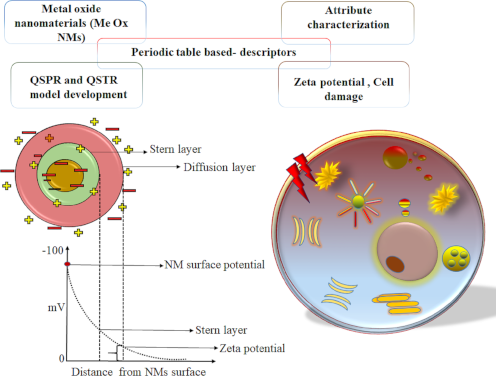
- stability based on the aggregation phenomenon. This is well observed in MeOx NPs, where an increase in the oxidation number (χox) decreases the zeta potential. In WO3 NPs, the χox value is 6 and the zeta potential value is −23 mV; for NiO NPs, the χox value is 2, and the zeta potential value is 34.4 mV. The
- determining the surface charge and stability of the NPs in the solution. The positive regression coefficient suggests that an increase in the surface charge of the metal helps the NPs to remain dispersed in the media and thus avoids flocculation. This phenomenon is observable in Yb2O3 NPs with a high
- plot for cell damage endpoint (model 2). Zeta potential formation and influence phenomenon in respect to the modeled descriptors. Interpretation of descriptors with respect to cell damage (endpoint) in cancer cells. Results for read across prediction using different similarity-based approaches


Ultrasensitive and ultrastretchable metal crack strain sensor based on helical polydimethylsiloxane
Beilstein J. Nanotechnol. 2024, 15, 270–278, doi:10.3762/bjnano.15.25
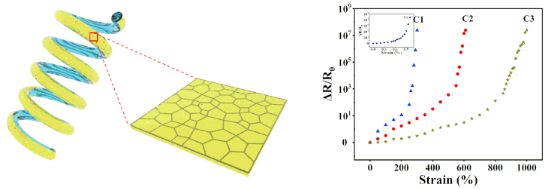
- . The samples were subjected to 1000 cycles of stretching and releasing with a strain of 150%, and the resulting changes in relative resistance were recorded, as depicted in Figure 2g. There is a decrease of approximately 5% in the output signal; this gradual attenuation phenomenon has been previously


Vinorelbine-loaded multifunctional magnetic nanoparticles as anticancer drug delivery systems: synthesis, characterization, and in vitro release study
Beilstein J. Nanotechnol. 2024, 15, 256–269, doi:10.3762/bjnano.15.24
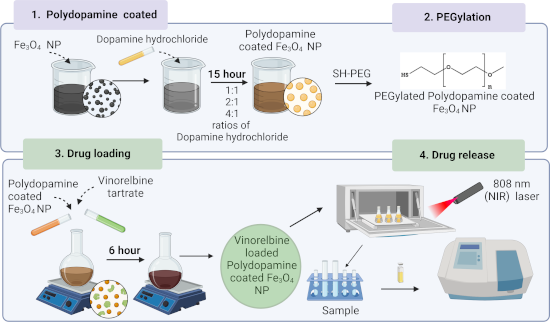
- phenomenon lies in the thickness of the PDA coating. It is plausible to consider that as the PDA layer becomes thicker, it may pose a barrier to efficient heating of the Fe3O4 core. This could result in a delayed release compared to formulations with a thinner PDA layer. Moreover, it’s worth noting that a


Design, fabrication, and characterization of kinetic-inductive force sensors for scanning probe applications
Beilstein J. Nanotechnol. 2024, 15, 242–255, doi:10.3762/bjnano.15.23
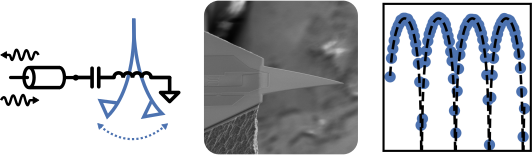
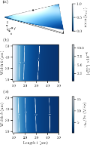
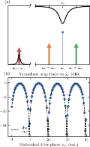
- microwave resonators are coupled to mechanical motion through a change in capacitance. Here, we detect motion through a change in kinetic inductance. Kinetic inductance is an electromechanical phenomenon resulting from Cooper pair mass and the kinetic energy of a supercurrent. It can be orders of magnitude



Quantitative wear evaluation of tips based on sharp structures
Beilstein J. Nanotechnol. 2024, 15, 230–241, doi:10.3762/bjnano.15.22
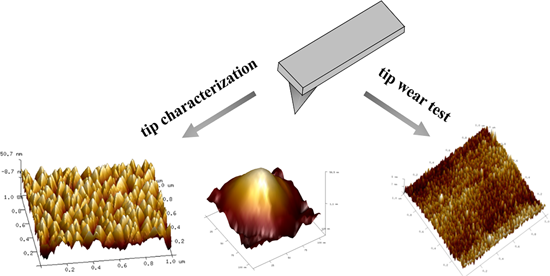
- finest details of the tip, researchers can glean insights into the tip’s topography and assess its wear. The image obtained from AFM is influenced by the morphology of the tip, leading to a deviation from the actual sample topography and an “expansion” effect in the scanned image. This phenomenon is