


Search results
Search for "phonon" in Full Text gives 201 result(s) in Beilstein Journal of Nanotechnology. Showing first 200.
Self-assembly of a terbium(III) 1D coordination polymer on mica
Beilstein J. Nanotechnol. 2019, 10, 2440–2448, doi:10.3762/bjnano.10.234
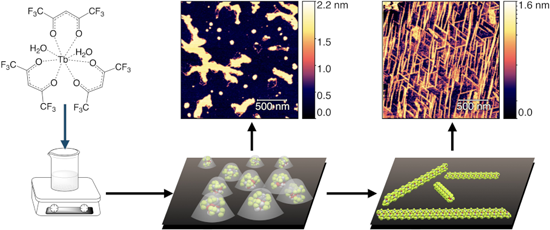
- layering on the mica substrate. This may be a result of i) the geometric distribution of the Tb coordination environment in the deposits similar to what has been observed when SMMs are dissolved in liquid matrixes [27] or ii) a modification of the spin–phonon coupling, as the phonon bath of such deposits




Deterministic placement of ultra-bright near-infrared color centers in arrays of silicon carbide micropillars
Beilstein J. Nanotechnol. 2019, 10, 2383–2395, doi:10.3762/bjnano.10.229
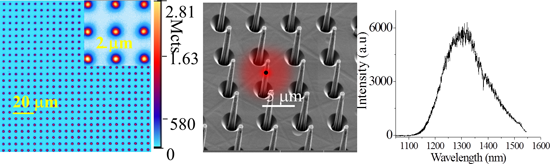
- . Current studies aim to determine more accurately the quantum properties of these defects by using more recent methods of single-photon detection and single-color center isolation, and quantum coherent spin control. The parameters used to describe the quantum properties of color centers include zero-phonon
- line (ZPL) [22], Debye–Waller factor (DWF) [23][24], zero-field-splitting (ZFS) [25] and optically detected magnetic resonance (ODMR) [26]. The ZPL and the phonon sideband together determine the line shape of individual light-absorbing and emitting molecules [22]. The DWF describes the thermal motion
- attenuation of X-ray or coherent neutron scattering [23][24]. The DWF can be estimated as the ratio of the ZPL PL emission, compared to the total PL emission, which is the combination of the ZPL PL emission and the phonon-broadened PL. The ZFS refers to the lifting of degeneracy in the absence of a magnetic


Ion mobility and material transport on KBr in air as a function of the relative humidity
Beilstein J. Nanotechnol. 2019, 10, 2084–2093, doi:10.3762/bjnano.10.203
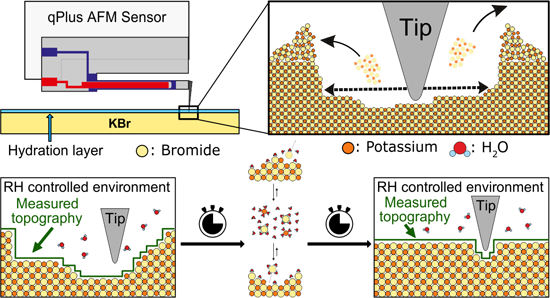
- overcome the energy barrier, kB the Boltzmann constant and T the temperature. We assume an attempt rate of ν = 1013 s−1, which is in the order of magnitude of a KBr phonon [31], equal for both transitions. This differential equation can be solved by an exponential decaying function of the form N(t) = N0


Improvement of the thermoelectric properties of a MoO3 monolayer through oxygen vacancies
Beilstein J. Nanotechnol. 2019, 10, 2031–2038, doi:10.3762/bjnano.10.199
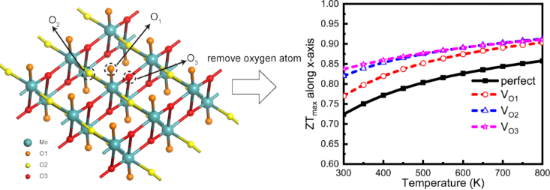
- (harmonic) interatomic force constants (IFCs), and third-order (anharmonic) IFCs are obtained from the ShengBTE code [28] with the maximum atomic interaction distance of the sixth neighbor in the 4 × 4 × 1 supercell. Here, a dense phonon q-grid of 52 × 52 × 1 is used to compute the thermal conductivity of
- the HSE06 hybrid functional potential, we use the PBE potential to get the electrical transport properties of the MoO3 monolayer in the following work. The phonon dispersion in the high-symmetry directions of the first Brillouin zone of the MoO3 monolayer is plotted in Figure 1c. There is no imaginary
- frequency, ensuring the stability of the MoO3 monolayer. It is well known that the acoustical phonon branches possess large group velocities and mainly determine the thermal conductivity of the lattice [32]. As the dashed lines emphasize in Figure 1c, the acoustic phonon group velocity along the Γ–Y


Remarkable electronic and optical anisotropy of layered 1T’-WTe2 2D materials
Beilstein J. Nanotechnol. 2019, 10, 1745–1753, doi:10.3762/bjnano.10.170
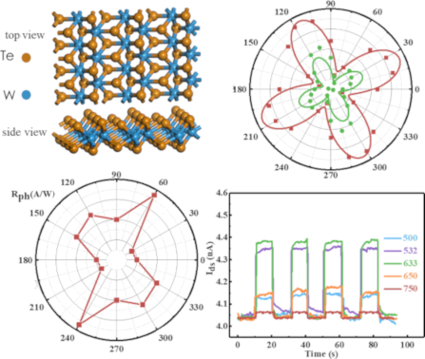
- anisotropic acoustic phonon scatter and elliptic elastic constants (both are relevant to the anisotropic crystalline structure) [31]. One of the consequences of an anisotropic carrier mobility is the anisotropic resistance. Therefore, we also performed angle-resolved DC conductance measurements on the 1T


High-temperature resistive gas sensors based on ZnO/SiC nanocomposites
Beilstein J. Nanotechnol. 2019, 10, 1537–1547, doi:10.3762/bjnano.10.151
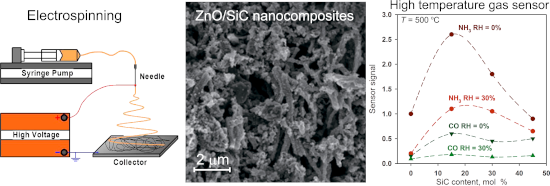
- of zinc oxide contains an intense broad signal, corresponding to the stretching vibrations of Zn–O bonds (635–400 cm−1). The above spectrum also shows the signals from the multi-phonon vibrational modes of the ZnO lattice (990 and 870 cm−1). In accordance with the literature data, such oscillations


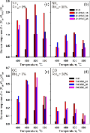

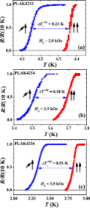
Superconducting switching due to a triplet component in the Pb/Cu/Ni/Cu/Co2Cr1−xFexAly spin-valve structure
Beilstein J. Nanotechnol. 2019, 10, 1458–1463, doi:10.3762/bjnano.10.144
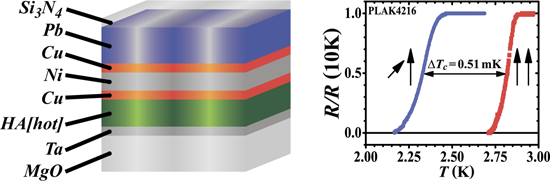
- mechanically removed from the areas where the golden wires should be attached using a silver paste. The quality of the Pb layer can be judged from the residual resistivity ratio (RRR): Here, R(T) is the measured resistance at a given temperature T, ρph(300 K) is the phonon contribution to the specific



Kelvin probe force microscopy of the nanoscale electrical surface potential barrier of metal/semiconductor interfaces in ambient atmosphere
Beilstein J. Nanotechnol. 2019, 10, 1401–1411, doi:10.3762/bjnano.10.138
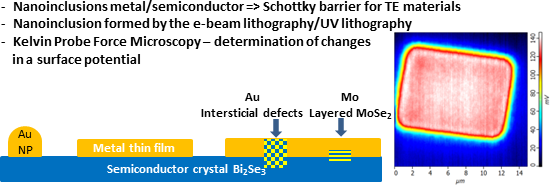
- (NIs/NPs) into the bulk semiconducting matrices has been proposed [4][5][6] and supported in theoretical works [7][8][9]. Such NIs or NPs are able to enhance ZT via a reduction of the thermal conductivity by phonon scattering [10][11][12][13][14], by modulated carrier doping or by the carrier energy


Construction of a 0D/1D composite based on Au nanoparticles/CuBi2O4 microrods for efficient visible-light-driven photocatalytic activity
Beilstein J. Nanotechnol. 2019, 10, 1360–1367, doi:10.3762/bjnano.10.134
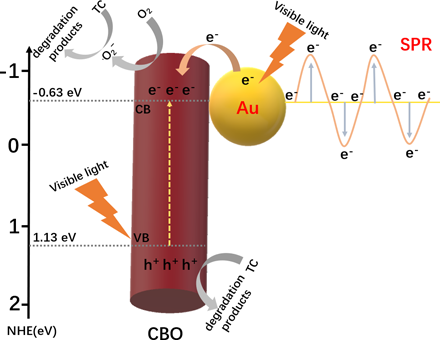
- light. Among these compounds, the spinel-type compound CuBi2O4 has attracted much attention because of its low phonon energy, strong visible-light response and adequate thermal stability [11][12]. Because of these attractive features, CuBi2O4 has been widely studied as a photocatalytic material in the


Synthesis and characterization of quaternary La(Sr)S–TaS2 misfit-layered nanotubes
Beilstein J. Nanotechnol. 2019, 10, 1112–1124, doi:10.3762/bjnano.10.111
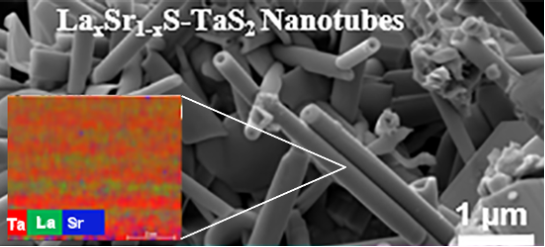
- cm−1 was assigned to the two-phonon bands of the TaS2 slab. The 125 cm−1 peak was assigned to the out-of-phase vibration of the LaS lattice. On the other hand, the 150 cm−1 peak was assigned to the in-phase phonon of LaS. The E2g mode of the TaS2 in the MLC lattice is found in the energy range of
- about 321–325 cm−1. This peak is blue-shifted compared to the pure TaS2 (279 cm−1), which is attributed to the characteristic charge transfer from the LaS slab to that of TaS2. The broad band between ≈240 and 304 cm−1 is attributed to the two-phonon band [52], whereas the 400 cm−1 transition was


CuInSe2 quantum dots grown by molecular beam epitaxy on amorphous SiO2 surfaces
Beilstein J. Nanotechnol. 2019, 10, 1103–1111, doi:10.3762/bjnano.10.110
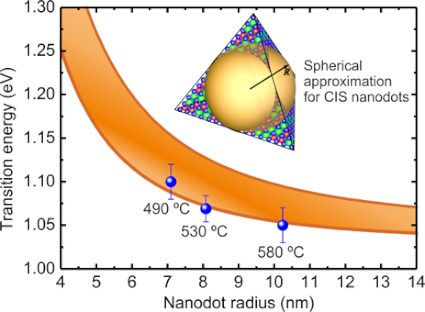
- substrates, bare (as-grown) nanodot samples and CdS-covered nanodot samples, as shown in Figure 4. The PL spectra of the bare Si and CIS samples, Figure 4a, show only the common sharp lines related with the Si substrate [41][42]. The observed lines correspond to the phonon replicas (TA, TO and TO+OΓ) of the
- radiative recombination of free excitons (FE) and of bound excitons (B), as well as the no-phonon line of the bound exciton (BNP) as confirmed from PL measurements performed under the same experimental conditions of a Si substrate. After the deposition of a CdS layer on top of the three as-grown nanodot


Electronic properties of several two dimensional halides from ab initio calculations
Beilstein J. Nanotechnol. 2019, 10, 823–832, doi:10.3762/bjnano.10.82
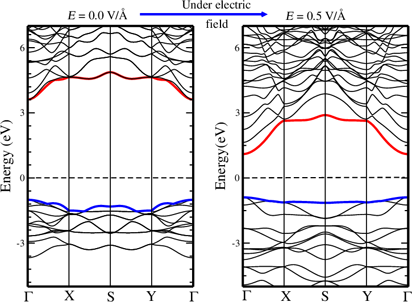
- electronic bandgaps, as obtained with the HSE hybrid functional, range between 3.0 and 7.5 eV and that their phonon spectra are dynamically stable. Additionally, we show that under an external electric field some of these systems exhibit a semiconductor-to-metal transition. Keywords: density functional
- performing phonon calculations. These studies were conducted on bulk materials but little is known on the structural and electronic properties of the corresponding isolated layers. By using a datamining procedure some halides were identified as possible 2D materials [14] but their dynamical stability and
- images. Geometries (cell and atom positions) were relaxed with a threshold on forces of 10−6 eV/Å. The phonon dispersion curves of the single layers, as presented in Supporting Information File 1, were determined with the PHONOPY code [39] with a 5 × 5 × 1 supercell using density functional perturbation


Ultrasonication-assisted synthesis of CsPbBr3 and Cs4PbBr6 perovskite nanocrystals and their reversible transformation
Beilstein J. Nanotechnol. 2019, 10, 666–676, doi:10.3762/bjnano.10.66
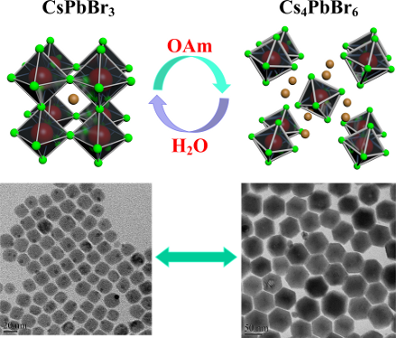
- ) structures of Cs4PbX6 NCs can be achieved, demonstrating a crystalline structure with well-separated octahedra [PbBr6]4− isolated by Cs+ ions [12][13]. This specific structure is expected to result in strong quantum confinement and electron–phonon interactions. This inspires researchers to further explore



Enhancement in thermoelectric properties due to Ag nanoparticles incorporated in Bi2Te3 matrix
Beilstein J. Nanotechnol. 2019, 10, 634–643, doi:10.3762/bjnano.10.63
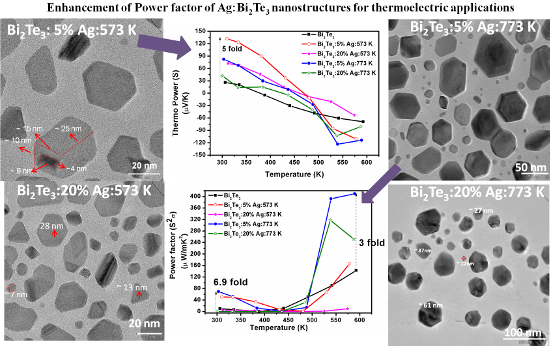
- to unity, it can be improved further with the introduction of nanostructures. The electron and phonon energy spectra can be controlled by tuning the size of nanostructures, which opens up new ways for ZT enhancement [1][2]. Since the introduction of nanotechnology in TE in 1993, various methods have
- applications but these materials are not very efficient because of their low ZT [8][9]. To increase ZT, nanostructures play an important role in the simultaneous increase in power factor and reduction in phonon thermal conductivity (kph) [10]. Recently, Faleev et al. [11] and Zebardaji et al. [12] performed
- is ca. 6.3-times for 10% Ag at 300 K and 1.3-times for 2% Ag at 600 K. The nanoparticles in the semiconductor matrix also lead to a reduction of thermal conductivity through phonon scattering at the interfaces, which in turn increases the figure of merit. The present work shows that during the



Quantification and coupling of the electromagnetic and chemical contributions in surface-enhanced Raman scattering
Beilstein J. Nanotechnol. 2019, 10, 549–556, doi:10.3762/bjnano.10.56
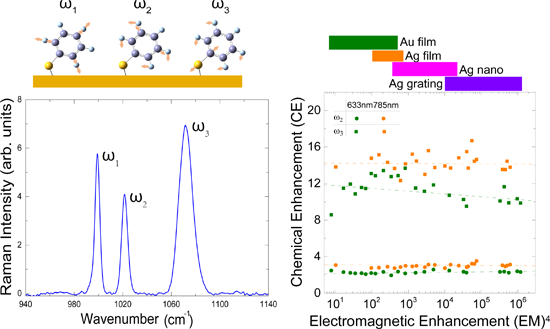
- reference to estimate the SERS enhancement factor. All spectra were recorded with 5 s acquisition time. The silicon phonon Raman response at 520.7 cm−1 was used to calibrate the spectrometer. Results SERS spectra The spectral range of 900–1200 cm−1 was selected for the study of three characteristic Raman


Temperature-dependent Raman spectroscopy and sensor applications of PtSe2 nanosheets synthesized by wet chemistry
Beilstein J. Nanotechnol. 2019, 10, 467–474, doi:10.3762/bjnano.10.46
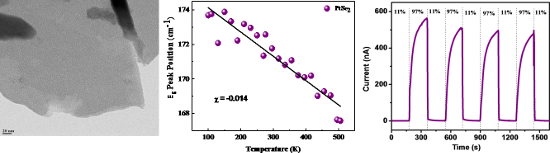
- fitting the Lorentzian function to the A1g and Eg modes. The temperature coefficient can be calculated by Equation 1 [29]: where ω0 is the peak position of the A1g and Eg mode at zero Kelvin, χ is the temperature coefficient of the A1g and Eg modes, and ω is a Raman phonon frequency. The slope of the
- anharmonicity. The Raman phonon frequency as a function of volume and temperature is given by Equation 2 [30]: where γ is the volume thermal coefficient and K represents the isothermal volume compressibility. The first term on the right hand side, −γ/K (∂lnω/∂P)T, represents the volume contribution at a
- resonance phenomenon can be attributed to several process including absorption of an incident photon, creation of a hole pair, double scattering of a created hole pair by phonon, and recombination of an electron–hole pair with emission of phonon. The temperature coefficient for the Eg and A1g modes was



Raman study of flash-lamp annealed aqueous Cu2ZnSnS4 nanocrystals
Beilstein J. Nanotechnol. 2019, 10, 222–227, doi:10.3762/bjnano.10.20
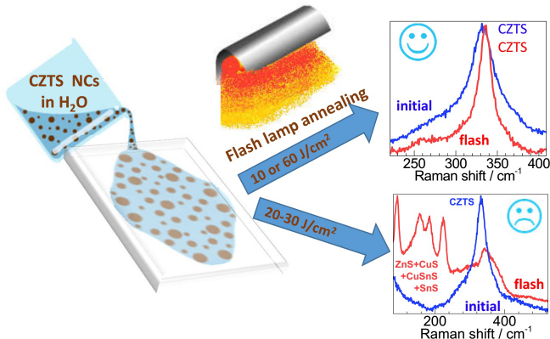
- sulfide Cu2ZnSnS4 (CZTS); CuS; Cu-Sn-S; kesterite; phonon; pulsed light crystallization; Raman spectroscopy; secondary phase; SnS; Introduction Affordable and non-toxic solar energy materials having a high absorption coefficient and a bandgap in the solar illumination range are an ever-growing research
- that the laser power does not affect the samples are our recently reported low-temperature measurements (77 K) [34], which revealed no qualitative changes in the spectra except for an expected temperature-induced shift and narrowing of the phonon peaks. The Raman spectra of the ink1-derived films
- appeared to be spectrally homogeneous and revealed a strong phonon peak at 333 cm−1 when measured in different spots of the films (Figure 1). In contrast, despite the optically homogeneous surface, the spectra of ink0-derived films showed a variation of the peak position between 328 and 331 cm−1 over the


Graphene–graphite hybrid epoxy composites with controllable workability for thermal management
Beilstein J. Nanotechnol. 2019, 10, 95–104, doi:10.3762/bjnano.10.9
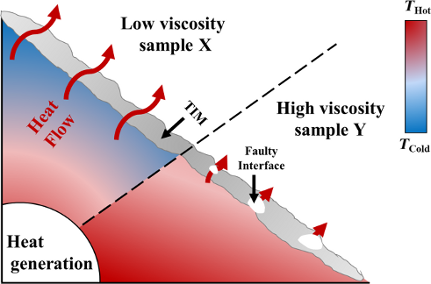
- materials by virtue of their high TC (>3500 W/(m∙K) for individual tubes) [18][19], but their performance has proved to be disappointing [20][21][22][23] as a result of phonon scattering at the tube–tube interface. Another graphitic candidate that appears to have good potential as a filler material is



Oriented zinc oxide nanorods: A novel saturable absorber for lasers in the near-infrared
Beilstein J. Nanotechnol. 2018, 9, 2730–2740, doi:10.3762/bjnano.9.255
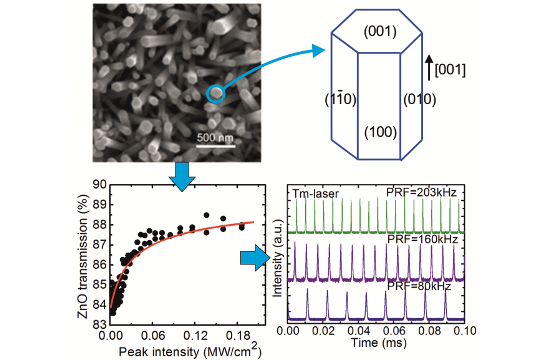
- orientation of the nanorods along the [001] crystallographic axis. No notable variation in the XRD patterns of the NRs was observed with respect to growth time. The Raman spectra of the ZnO NRs are shown in Figure 2b, where a strong Raman scattering at 435 cm−1 representing the E2high phonon mode of ZnO is



Disorder in H+-irradiated HOPG: effect of impinging energy and dose on Raman D-band splitting and surface topography
Beilstein J. Nanotechnol. 2018, 9, 2708–2717, doi:10.3762/bjnano.9.253
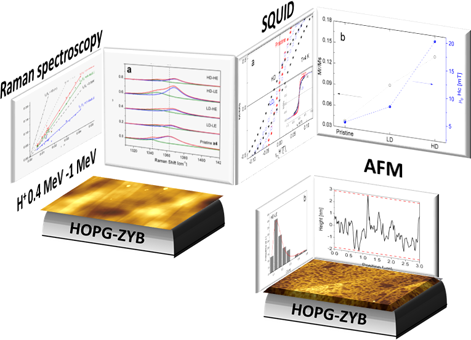
- activates a TO phonon (“inter-valley” defect-induced electron–hole). On the other hand, the D′ band is activated by a similar double-resonance process that activates an LO phonon (“intra-valley”). Despite the fact that the D band and the D′ band have been widely reported [5][8][9][30][31][32][33] there is


Nanoantenna structures for the detection of phonons in nanocrystals
Beilstein J. Nanotechnol. 2018, 9, 2646–2656, doi:10.3762/bjnano.9.246
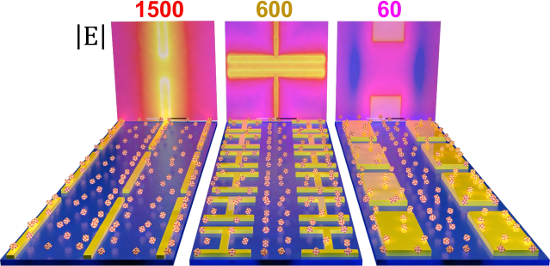
- -wave electromagnetic simulations of the electromagnetic field distribution around the micro- and nanoantennas were employed to realize the maximal SEIRA enhancement for structural parameters of the arrays whereby the LSPR and the NC optical phonon energies coincide. The SEIRA experiments quantitatively
- been extensively examined to date. Recently, A. Toma et al. [21] published the first report on SEIRA for detection of an optical phonon mode (so-called Froehlich mode) from a monolayer of CdSe NCs deposited on Au nanoantenna arrays. The SEIRA enhancement induced by the nanoantennas was estimated to be
- ], nanorings [28], and nanoslits [29]. A detailed description of various nanoantenna geometries can be found in the comprehensive review [30]. In this paper, we report on a systematic study of the effect of SEIRA by the phonon response from monolayers of CdSe, CdS, and PbS NCs deposited on periodic arrays of


Metal-free catalysis based on nitrogen-doped carbon nanomaterials: a photoelectron spectroscopy point of view
Beilstein J. Nanotechnol. 2018, 9, 2015–2031, doi:10.3762/bjnano.9.191
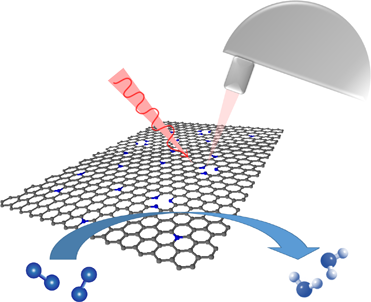
- structure of bulk and nanoscale objects, illustrating the so-called “phonon bottleneck” phenomenon. The excitation relaxation time is enhanced when the spacing between the size-quantized energy levels ΔE is larger than the vibrational energy ħω. This mechanism is discussed for illustration purposes only




Defect formation in multiwalled carbon nanotubes under low-energy He and Ne ion irradiation
Beilstein J. Nanotechnol. 2018, 9, 1951–1963, doi:10.3762/bjnano.9.186
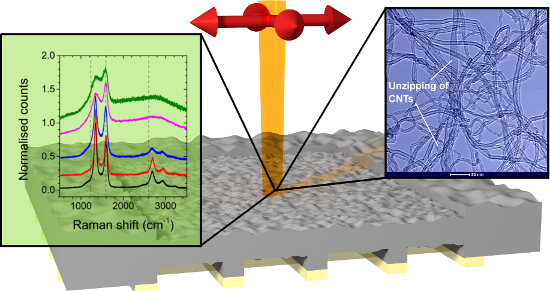
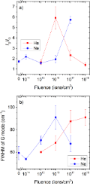
- have a D band peak around 1350 cm−1, a G band peak around 1590 cm−1 and G’ band peak in the region of 2700 cm−1. The first is related to the presence of disordered carbon, the second to the tangential vibrations of graphitic carbon and the third one to two-phonon scattering related to long-range order
- higher sample temperature pushing the maximum to a higher fluence [54]. Hence, their data at room temperature agrees well with ours. The peak at 2700 cm−1 in the pristine sample, called G’, is an overtone of the D band and is an additional indicator for damage formation. It is caused by two-phonon



SO2 gas adsorption on carbon nanomaterials: a comparative study
Beilstein J. Nanotechnol. 2018, 9, 1782–1792, doi:10.3762/bjnano.9.169

- proportional to the presence of defects or disorder in the material and is strongly dependent on the laser excitation energy [32]. The 2D band for sp2-hybridized carbon materials is found between 2500 and 2800 cm−1 and is a double-resonance two-phonon process [33]. The 2D band intensity is found to be


Increasing the performance of a superconducting spin valve using a Heusler alloy
Beilstein J. Nanotechnol. 2018, 9, 1764–1769, doi:10.3762/bjnano.9.167
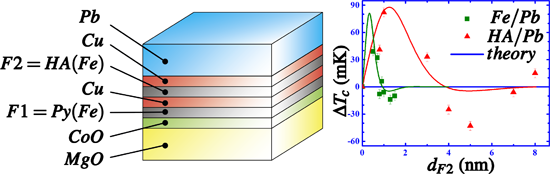
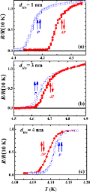
- the residual resistivity ratio RRR = R(T = 300 K)/R(Tc= [ρ(300 K) + ρ(Tc)]/ρ(Tc). Since the room-temperature resistivity of the Pb layer is dominated by the phonon contribution ρph(300 K) = 21 μΩ·cm [27] we obtain the ρS values presented below in Table 1. Then with the aid of the Pippard relations [28

![[Graphic 4]](/bjnano/content/inline/2190-4286-9-167-i9.svg?max-width=637&scale=1.18182) on the thickness of layer F2, dF2 in the SSV heterostructures AFM/F1/N1/F2/N2/S. Tri...
on the thickness of layer F2, dF2 in the SSV heterostructures AFM/F1/N1/F2/N2/S. Tri...



