Search results
Search for "photoelectron spectroscopy" in Full Text gives 353 result(s) in Beilstein Journal of Nanotechnology. Showing first 200.
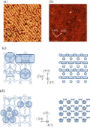
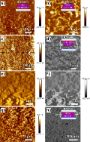
Investigation of electron-induced cross-linking of self-assembled monolayers by scanning tunneling microscopy
Beilstein J. Nanotechnol. 2022, 13, 462–471, doi:10.3762/bjnano.13.39
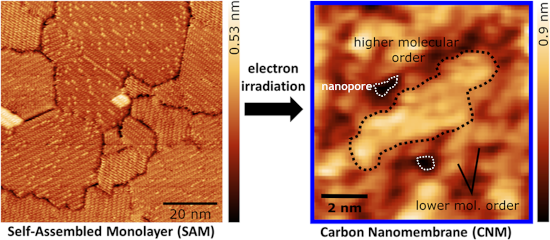
- separation [36][37][38][39][40][41][42]. The interactions between aromatic SAMs and electrons have been studied by X-ray photoelectron spectroscopy (XPS), near-edge X-ray-absorption fine-structure (NEXAFS) technique [43][44][45][46][47][48][49], infrared spectroscopy [43][50][51][52], high-resolution
- K and the substrate was held at room temperature. The chamber pressure during the evaporation process was ≈10−8 mbar and the evaporation time was ≈30 min. X-ray photoelectron spectroscopy was employed to monitor the existence of thiolates as well as physisorbed thiols. To remove physisorbed


Investigation of a memory effect in a Au/(Ti–Cu)Ox-gradient thin film/TiAlV structure
Beilstein J. Nanotechnol. 2022, 13, 265–273, doi:10.3762/bjnano.13.21
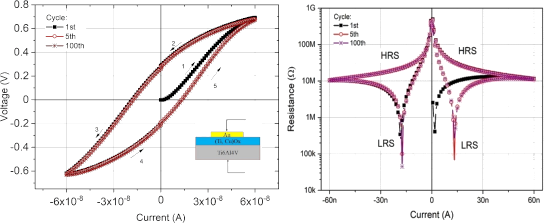
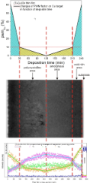
- resistive switching behavior. Results of optical, X-ray, and ultraviolet photoelectron spectroscopy measurements allowed us to elaborate the scheme of the bandgap alignment of the prepared thin films with respect to the Au and TiAlV electrical contacts. Detailed structure and elemental profile
- of the current-to-voltage measurements. On the basis of the performed investigations, we suggest that the conducting filament switching is the most probable mechanism. This is supported by investigations of structure and surface properties using X-ray methods, UV photoelectron spectroscopy, and cross
- also investigated to show the gradient distribution of Ti and Cu as a function of the thin film depth. X-ray photoelectron spectroscopy (XPS) studies were performed to determine the chemical state of titanium and copper on the surface of the mixed oxide thin films. A Specs XR-50 X-ray non-monochromatic



Impact of device design on the electronic and optoelectronic properties of integrated Ru-terpyridine complexes
Beilstein J. Nanotechnol. 2022, 13, 219–229, doi:10.3762/bjnano.13.16
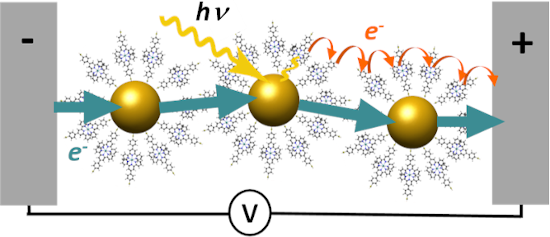
- . Instrumentation X-ray photoelectron spectroscopy (XPS) measurements were conducted with a PHI5000 VersaProbe II using monochromatic Al Kα radiation (1.486 keV). Survey scans (187.5 eV pass energy, 0.8 eV/step) and core level spectra (23.5 eV pass energy, 0.1 eV/step) of the elements C 1s, N 1s, O 1s, S 1s, Ru 3d


Thermal oxidation process on Si(113)-(3 × 2) investigated using high-temperature scanning tunneling microscopy
Beilstein J. Nanotechnol. 2022, 13, 172–181, doi:10.3762/bjnano.13.12
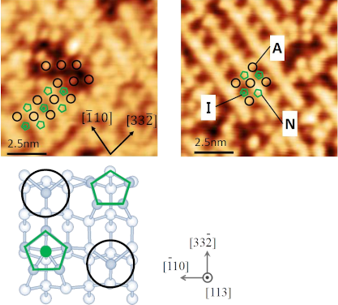
- the Si 2p and O 1s core levels in detail during thermal oxidation using high-resolution X-ray photoelectron spectroscopy with synchrotron radiation [7][8][9]. Using a state-of-the-art wet oxidation procedure, we also reduced the interface trap density (Dit) at the SiO2/Si interface on the Si(113




Tin dioxide nanomaterial-based photocatalysts for nitrogen oxide oxidation: a review
Beilstein J. Nanotechnol. 2022, 13, 96–113, doi:10.3762/bjnano.13.7
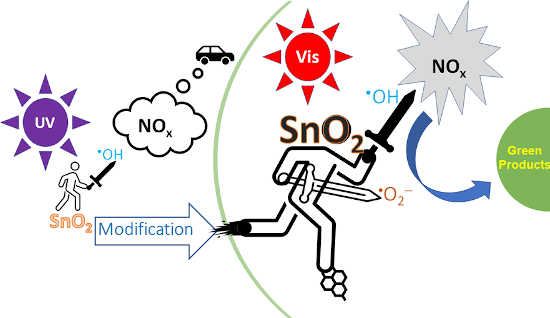
- reports still proposed its photocatalytic behaviors partly based on •O2− species via the combination of experimental physicochemical analyses, such as electron spin resonance (ESR) spectroscopy, active species trapping experiments, valence band X-ray photoelectron spectroscopy (XPS), and diffuse


Sputtering onto liquids: a critical review
Beilstein J. Nanotechnol. 2022, 13, 10–53, doi:10.3762/bjnano.13.2







Chemical vapor deposition of germanium-rich CrGex nanowires
Beilstein J. Nanotechnol. 2021, 12, 1365–1371, doi:10.3762/bjnano.12.100
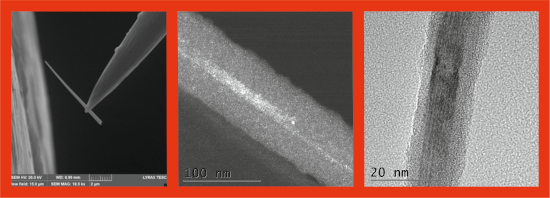
- -resolution transmission electron microscopy, scanning electron microscopy, electron dispersive X-ray analysis, selected area electron diffraction, and X-ray photoelectron spectroscopy, showed that unlike nanoballs and particles composed of crystalline germanium, the layer was made of chromium germanide CrGex



Plasmon-enhanced photoluminescence from TiO2 and TeO2 thin films doped by Eu3+ for optoelectronic applications
Beilstein J. Nanotechnol. 2021, 12, 1271–1278, doi:10.3762/bjnano.12.94
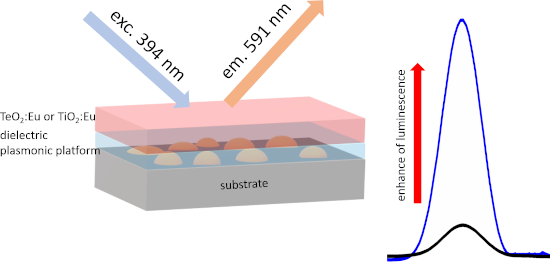
- CrossBeam 540 scanning electron microscope (SEM) operated at 2 kV was used. For microstructure analysis of the plasmonic structures, a TALOS F200X high-resolution transmission electron microscope (HRTEM) was used. The chemical composition of the luminescent layers was investigated by X-ray photoelectron
- spectroscopy (XPS). Measurement was performed using Omicron Nanotechnology equipment at room temperature and under ultrahigh vacuum conditions, at a pressure below 1.1 × 10⁻⁶ Pa. A Mg Kα X-ray source was operated at 15 kV and 300 W. XPS analysis were performed using CASA XPS software package with Shirley


The effect of cobalt on morphology, structure, and ORR activity of electrospun carbon fibre mats in aqueous alkaline environments
Beilstein J. Nanotechnol. 2021, 12, 1173–1186, doi:10.3762/bjnano.12.87
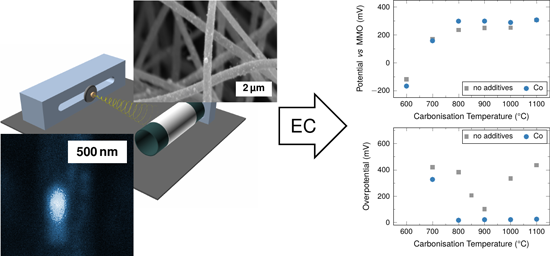
- electron microscopy (SEM), energy-dispersive X-ray spectroscopy (EDX), X-ray diffraction (XRD), X-ray photoelectron spectroscopy (XPS), Raman spectroscopy, elemental analysis, and inductively coupled plasma optical emission spectrometry (ICP-OES). In addition, the fibres were analysed in terms of their
- , samples of 1 cm2 were cut from the fibre mats and fixed on a silicon crystal in a rotating sample holder. The scan range was limited to 10° to 80°, scanned with a step width of 0.01°. X-ray photoelectron spectroscopy (XPS) was performed with a Phi5000 VersaProbe II (ULVAC-Phi Inc., USA). Spectra were
- , Electronics and Analytics (ZEA-3) of Forschungszentrum Jülich for performing the elemental analysis as well as X-ray photoelectron spectroscopy measurements and data analysis. Funding Funding by the German Federal Ministry of Education and Research (BMBF) project LuZi “Air–zinc batteries with innovative


Irradiation-driven molecular dynamics simulation of the FEBID process for Pt(PF3)4
Beilstein J. Nanotechnol. 2021, 12, 1151–1172, doi:10.3762/bjnano.12.86
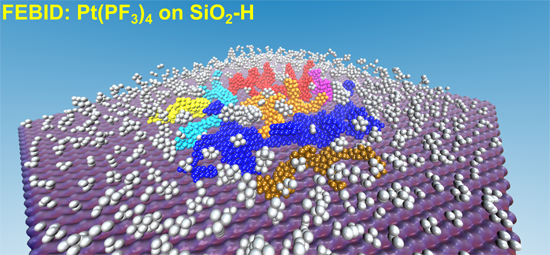
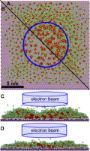
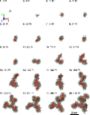
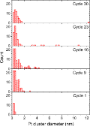
- influence the rate of precursor molecule fragmentation. The chosen value of the deposited energy can be verified by comparing the dependence of surface coverage of precursor elements on the electron dose with the experimental data measured by means of X-ray photoelectron spectroscopy (XPS). Electron energy








Impact of GaAs(100) surface preparation on EQE of AZO/Al2O3/p-GaAs photovoltaic structures
Beilstein J. Nanotechnol. 2021, 12, 578–592, doi:10.3762/bjnano.12.48
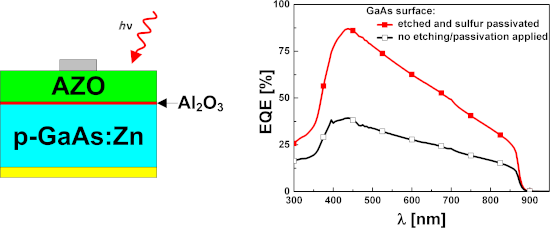
- ) and scanning electron microscopy (SEM) examinations were conducted to obtain structural details of the devices. X-ray photoelectron spectroscopy (XPS) with depth profiling was used to examine interface structure and changes in the elemental content and chemical bonds. The photoluminescence (PL




Interface interaction of transition metal phthalocyanines with strontium titanate (100)
Beilstein J. Nanotechnol. 2021, 12, 485–496, doi:10.3762/bjnano.12.39
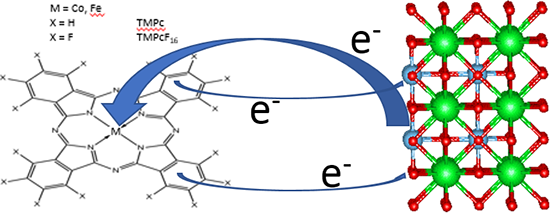
- Tübingen, Germany 10.3762/bjnano.12.39 Abstract We study interface properties of CoPcFx and FePcFx (x = 0 or 16) on niobium-doped SrTiO3(100) surfaces using mainly X-ray photoelectron spectroscopy and ultraviolet photoelectron spectroscopy. For all studied molecules, a rather complex, bidirectional charge
- a thickness of 0.34 nm estimated from the structure of an α-polymorph of TMPcs [42][43][44]. Photoelectron spectroscopy (PES) measurements were performed using an ultrahigh-vacuum setup equipped with a monochromatized standard source (Al Kα), a twin-anode standard source (Al Kα and Mg Kα), PHOIBOS
- 100 (X-ray photoelectron diffraction) or 150 (monochromatized X-ray photoelectron spectroscopy) hemispherical analyzers (SPECS), and a four-grid LEED optics (SpectaLEED, Omicron, Germany). The PES binding energy scale is calibrated to reproduce the binding energies of Cu 2p3/2 (932.6 eV), Ag 3d5/2


Boosting of photocatalytic hydrogen evolution via chlorine doping of polymeric carbon nitride
Beilstein J. Nanotechnol. 2021, 12, 473–484, doi:10.3762/bjnano.12.38
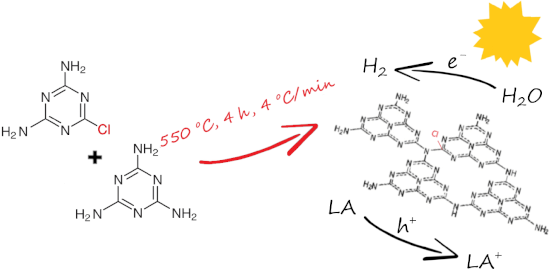
- Cl modification resulted in the maintenance of the chemical skeleton [43][44][45][46][47]. The chemical composition and relative atomic percentages of the obtained materials were analyzed by X-ray photoelectron spectroscopy (XPS). The XPS spectra revealed that the samples are composed of carbon


Structural and optical characteristics determined by the sputtering deposition conditions of oxide thin films
Beilstein J. Nanotechnol. 2021, 12, 354–365, doi:10.3762/bjnano.12.29
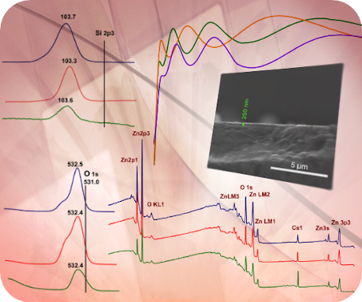
- diffraction (XRD) and X-ray photoelectron spectroscopy (XPS), while the surface topography of the samples was analyzed using scanning electron microscopy (SEM). The optical characteristics were measured for samples with the same composition but obtained with different deposition parameters, such as increasing


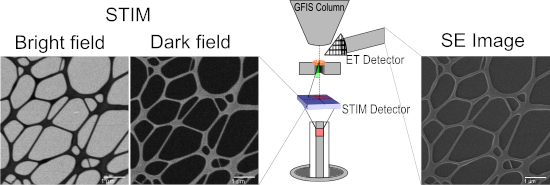
Scanning transmission helium ion microscopy on carbon nanomembranes
Beilstein J. Nanotechnol. 2021, 12, 222–231, doi:10.3762/bjnano.12.18
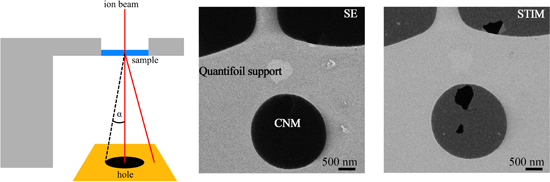
- detector is able to determine the thickness of membranes with sub-nanometer precision by quantitatively evaluating the image signal and comparing the results with Monte Carlo simulations. The thickness determined by the dark-field transmission detector is compared to X-ray photoelectron spectroscopy and
- between the two cases, and the error of this particular measurement is 9%. To test the validity of the determined thickness and the approach described above, the results from the STIM dark-field imaging are compared to X-ray photoelectron spectroscopy (XPS) and energy-filtered transmission electron
- steps of 1 mrad. X-ray photoelectron spectroscopy was conducted on an Omicron Multiprobe instrument using a monochromatized Al Kα X-ray source (1486.7 eV, 225 W) and an Omicron Sphera hemispherical electron energy analyzer at a constant analyzer energy of 12.5 eV. The data was acquired under a


Fusion of purple membranes triggered by immobilization on carbon nanomembranes
Beilstein J. Nanotechnol. 2021, 12, 93–101, doi:10.3762/bjnano.12.8
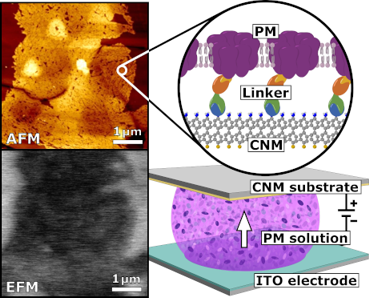
- histidine-tag at the extracellular side of a PM mutant (c-His PM). The functionalization and the resulting hybrid membrane were examined by atomic force microscopy (AFM), scanning electron microscopy (SEM), X-ray photoelectron spectroscopy (XPS), confocal laser scanning microscopy (CLSM), and infrared
- . Afterwards the sample was rinsed with ethanol, dried in a stream of nitrogen, and stored under argon gas. Sample characterization X-ray photoelectron spectroscopy (XPS) has been conducted in an Omicron Multiprobe UHV system (Scienta Omicron GmbH, Taunusstein, Germany) using monochromatic Al Kα irradiation, a


Free and partially encapsulated manganese ferrite nanoparticles in multiwall carbon nanotubes
Beilstein J. Nanotechnol. 2020, 11, 1891–1904, doi:10.3762/bjnano.11.170
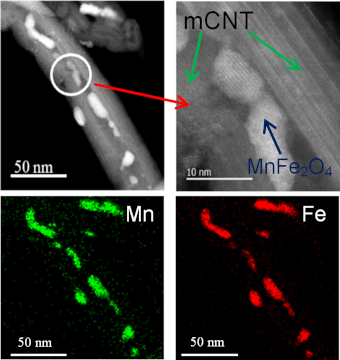
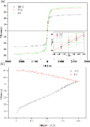
- ) overnight. X-ray photoelectron spectroscopy (XPS, Omicron Nanotechnology) was employed with a monochromatic Al Kα radiation (hν = 1486.6 eV), with a source voltage of 15 kV and an emission current of 20 mA. Scans were carried out at a base pressure of 2 × 10⁻⁸ Pa. A wide scan was recorded at a constant
- nanoparticles [15], as confirmed by the line profile shown in Figure 1d. In order to investigate the electronic properties of free MnFe2O4 nanoparticles, ultraviolet photoelectron spectroscopy was employed. Even though theoretical studies have been reported for MnFe2O4 [16], to the best of our knowledge, these




Scanning transmission imaging in the helium ion microscope using a microchannel plate with a delay line detector
Beilstein J. Nanotechnol. 2020, 11, 1854–1864, doi:10.3762/bjnano.11.167
- combination of MCPs with a delay line readout structure as a position-sensitive detector was first implemented for the detection of 1–15 keV electrons [33]. Since then, it has been used in many other applications such as in astrophysics [34], transmission electron microscopy [35], and hard X-ray photoelectron
- spectroscopy [36]. The working principle of the detector can be summarized as follows: At the front side of the MCP, SEs are produced by the impact of the impinging energetic particles (He ions and atoms). These SEs are drawn into the microchannels due to the applied bias. The number of SEs is multiplied by


Unravelling the interfacial interaction in mesoporous SiO2@nickel phyllosilicate/TiO2 core–shell nanostructures for photocatalytic activity
Beilstein J. Nanotechnol. 2020, 11, 1834–1846, doi:10.3762/bjnano.11.165
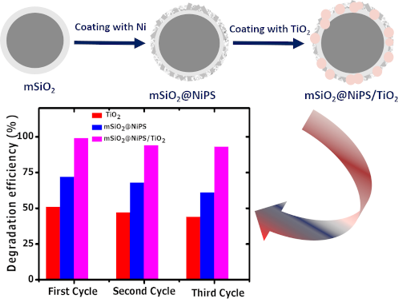
- , and X-ray photoelectron spectroscopy (XPS) were used to elucidate the morphological and textural features, optoelectronic properties, and elemental composition of the core–shell nanomaterials. These core–shell nanostructures were also employed as catalysts in a model reaction, that is, the
- hydroxy groups bonded to nickel atoms (δ(NiO–H) band) in NiPS as multiple peaks were recorded between 630 and 710 cm−1 [57]. XPS analysis of mSiO2@NiPS and mSiO2@NiPS/TiO2 X-ray photoelectron spectroscopy (XPS) was used to study the surface composition of mSiO2@NiPS and mSiO2@NiPS/TiO2. The complete scans


Self-standing heterostructured NiCx-NiFe-NC/biochar as a highly efficient cathode for lithium–oxygen batteries
Beilstein J. Nanotechnol. 2020, 11, 1809–1821, doi:10.3762/bjnano.11.163
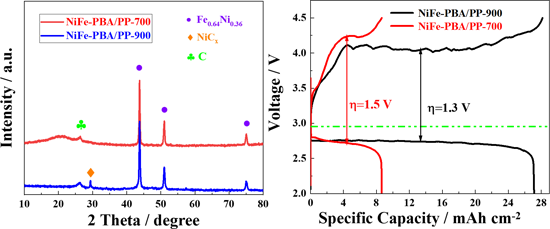
- energy-dispersive X-ray spectroscopy (EDX) were carried out on a FEI Tecnia G2 F20 high-resolution transmission electron microscope operating at 200 kV. The surface composition of the samples was analyzed by X-ray photoelectron spectroscopy (XPS) on a ESCALAB 250Xi electron energy spectrometer using Al


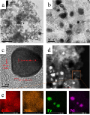


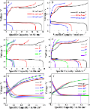


Electron beam-induced deposition of platinum from Pt(CO)2Cl2 and Pt(CO)2Br2
Beilstein J. Nanotechnol. 2020, 11, 1789–1800, doi:10.3762/bjnano.11.161
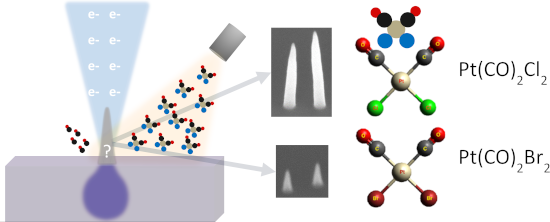
- for complete precursor decomposition [14]. Electron-induced decomposition of adsorbed Pt(CO)2Cl2 has been previously studied using X-ray photoelectron spectroscopy (XPS) and mass spectrometry, and some deposits were produced in the ultrahigh vacuum (UHV) environment of an Auger electron spectroscopy


Absorption and photoconductivity spectra of amorphous multilayer structures
Beilstein J. Nanotechnol. 2020, 11, 1757–1763, doi:10.3762/bjnano.11.158
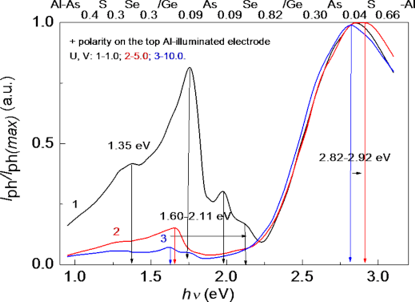
- As2Se3:Snx glassy system [6] and X-ray photoelectron spectroscopy studies of AsxGexSe1−2x glasses [4], the introduction of elements such as Sn or Ge in glasses based on arsenic selenides, leads to the formation of new tetrahedral Sn(Se1/2)4 and quasi-octahedral SnSe structural units or of GeSe4


Direct observation of the Si(110)-(16×2) surface reconstruction by atomic force microscopy
Beilstein J. Nanotechnol. 2020, 11, 1750–1756, doi:10.3762/bjnano.11.157
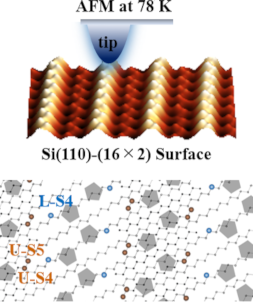
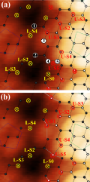
- ], scanning tunneling microscopy (STM) [15][16][17][18][19][20][21][22][23][24], scanning transmission electron microscopy (STEM) [25], and photoelectron spectroscopy (PES) [22][26][27]. The 16×2 reconstruction has a striped structure with upper and lower terraces and with boundaries of monatomic steps. In



PEG/PEI-functionalized single-walled carbon nanotubes as delivery carriers for doxorubicin: synthesis, characterization, and in vitro evaluation
Beilstein J. Nanotechnol. 2020, 11, 1728–1741, doi:10.3762/bjnano.11.155
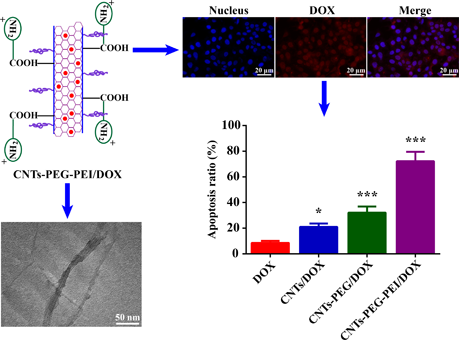
- 3000HS). A volume-weighted Gaussian size distribution was fit to the autocorrelation functions to obtain the particle size and zeta potential values. The atomic fractions of C, O, and N in the different SWCNTs samples were determined by X-ray photoelectron spectroscopy (XPS, Thermo Fisher Scientific




The influence of an interfacial hBN layer on the fluorescence of an organic molecule
Beilstein J. Nanotechnol. 2020, 11, 1663–1684, doi:10.3762/bjnano.11.149
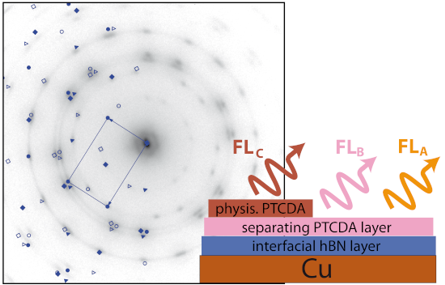
- PTCDA and hBN/Cu(111) is weak and physisorptive [32] as opposed to the chemisorptive bond between PTCDA and Cu(111) [33]. Ultraviolet photoelectron spectroscopy (UPS) experiments showed that on the Cu(111) surface the chemical bonding leads to a filling of the LUMO [33]. In contrast, on hBN/Cu(111), the