


Search results
Search for "platinum" in Full Text gives 342 result(s) in Beilstein Journal of Nanotechnology. Showing first 200.
Sputtering onto liquids: a critical review
Beilstein J. Nanotechnol. 2022, 13, 10–53, doi:10.3762/bjnano.13.2
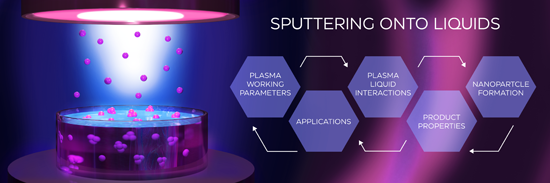
- where platinum/copper (Pt/Cu) NPs were obtained by using an alloy target for the sputtering onto polyethylene glycol (PEG), it was reported that increasing the current from 10 to 50 mA leads to the formation of bigger NPs, from 1.3 to 4.5 nm, respectively [127






Chemical vapor deposition of germanium-rich CrGex nanowires
Beilstein J. Nanotechnol. 2021, 12, 1365–1371, doi:10.3762/bjnano.12.100
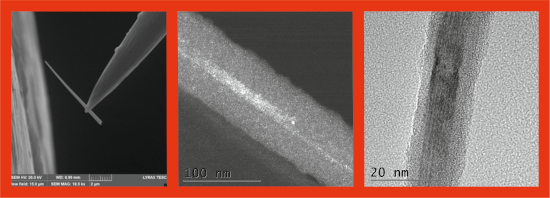
- carbon–platinum composite using focused electron beam-induced deposition (FEBID) (Supporting Information File 1, Figure S10). The resistivity of the nanowire–deposit system was estimated to be 2.7 kΩ·cm (Figure 5). This value is significantly higher than the previously reported resistivity for nominally



Morphology-driven gas sensing by fabricated fractals: A review
Beilstein J. Nanotechnol. 2021, 12, 1187–1208, doi:10.3762/bjnano.12.88
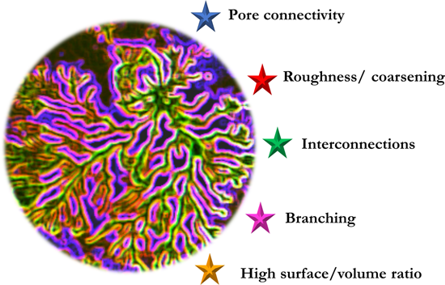
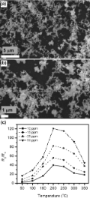
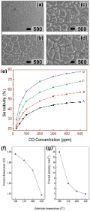
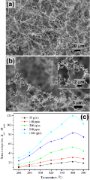
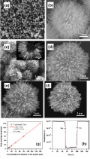
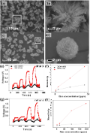
- to some excellent articles on hierarchical gas sensors that address such geometries [8][30][33][37]. Tin oxide-based fractals Yin et al. reported SnO2 nanoparticles with and without platinum (Pt) decoration synthesized using a sol–gel hydrothermal technique for gas sensing applications [63]. Figure








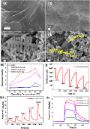

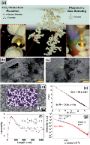
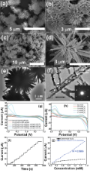

The effect of cobalt on morphology, structure, and ORR activity of electrospun carbon fibre mats in aqueous alkaline environments
Beilstein J. Nanotechnol. 2021, 12, 1173–1186, doi:10.3762/bjnano.12.87
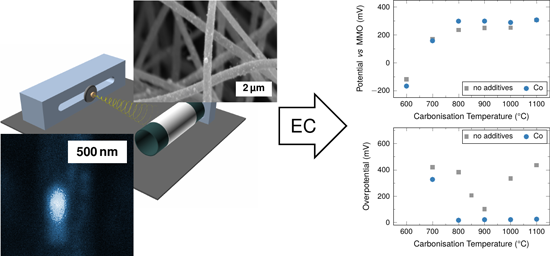
- the electrode of 3 cm2 using 6 M KOH electrolyte (KOH: 85%, VWR, France; deionised water: 0.055 μS·cm−1, Purelab flex, Elga Veolia, United Kingdom). The reference electrode was a mercury/mercury oxide electrode (MMO; ALS, Japan) and the counter electrode was a platinum wire. Cells were assembled and


Irradiation-driven molecular dynamics simulation of the FEBID process for Pt(PF3)4
Beilstein J. Nanotechnol. 2021, 12, 1151–1172, doi:10.3762/bjnano.12.86
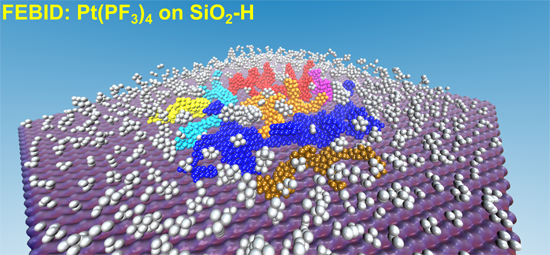
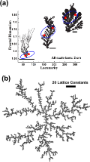
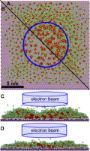
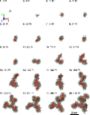
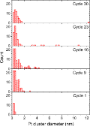
- molecule, on a SiO2 surface. The simulations reveal the processes driving the initial phase of nanostructure formation during FEBID, including the nucleation of Pt atoms and the formation of small metal clusters on the surface, followed by their aggregation and the formation of dendritic platinum
- deposition; irradiation-driven molecular dynamics; irradiation-induced chemistry; platinum nanostructures; reactive force fields; Introduction The controllable fabrication of nanostructures with nanoscale resolution remains a considerable scientific and technological challenge [1]. To address this challenge
- Pt(PF3)4, a widely studied precursor molecule [21][22][23][24][25][26], on a fully hydroxylated SiO2 surface. As such, this work extends the earlier IDMD-based studies [13][15] of the FEBID of W(CO)6 towards another precursor molecule that has been commonly used to fabricate platinum-containing








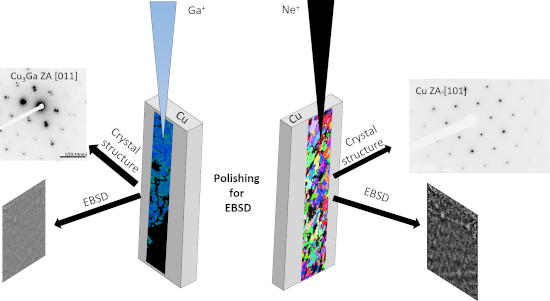
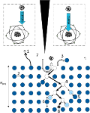
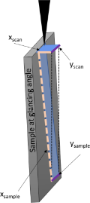
Is the Ne operation of the helium ion microscope suitable for electron backscatter diffraction sample preparation?
Beilstein J. Nanotechnol. 2021, 12, 965–983, doi:10.3762/bjnano.12.73




Uniform arrays of gold nanoelectrodes with tuneable recess depth
Beilstein J. Nanotechnol. 2021, 12, 957–964, doi:10.3762/bjnano.12.72
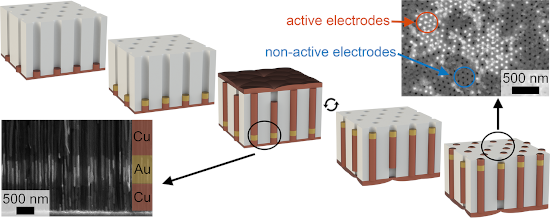
- deposited by magnetron sputtering onto the bottom side of the AAO template. Electrodeposition of metals into channels of the AAO template was performed in a three-electrode cell with an electrodeposition area of 0.2 cm2 and a volume of 50 mL at room temperature in a potentiostatic mode. A platinum ring


The role of deep eutectic solvents and carrageenan in synthesizing biocompatible anisotropic metal nanoparticles
Beilstein J. Nanotechnol. 2021, 12, 924–938, doi:10.3762/bjnano.12.69
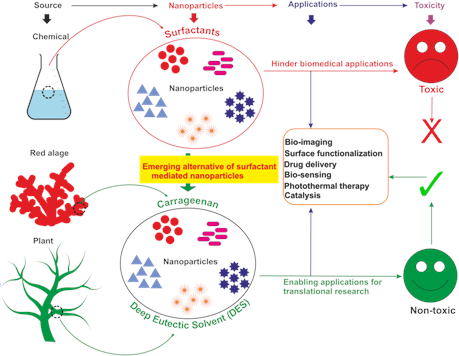
- platinum, are showing excellent potential owing to their unique physicochemical properties. DESs were first used for synthesizing anisotropic gold nanoparticles with high monodispersity in a mixture of choline chloride and urea in 2008 by Sun and co-workers [27]. The anisotropy was driven using the mild
- reducing agent ascorbic acid and the DES. The result was remarkable as the synthesis involved no surfactant or seeds. The Sun group also synthesized platinum nanoflowers of ca. 200 nm size with high monodispersity using DESs [93]. The group also successfully synthesized triambic icosahedral (TIH) Pt


Comprehensive review on ultrasound-responsive theranostic nanomaterials: mechanisms, structures and medical applications
Beilstein J. Nanotechnol. 2021, 12, 808–862, doi:10.3762/bjnano.12.64
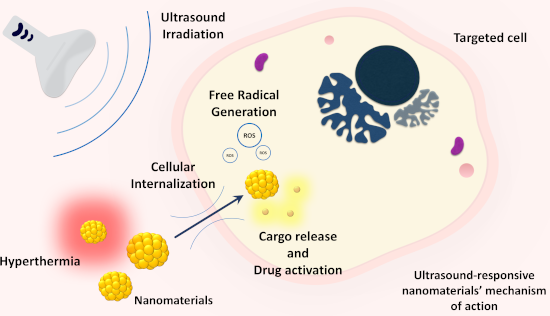
- compared to non-treated samples [154]. Other researchers have developed platinum-based NPs for sonodynamic therapy and ROS generation in both extra- and intracellular environments [155]. The schematic illustration of this mechanism is presented in Figure 2. Ultrasound-responsive nanomaterials Various


Recent progress in actuation technologies of micro/nanorobots
Beilstein J. Nanotechnol. 2021, 12, 756–765, doi:10.3762/bjnano.12.59
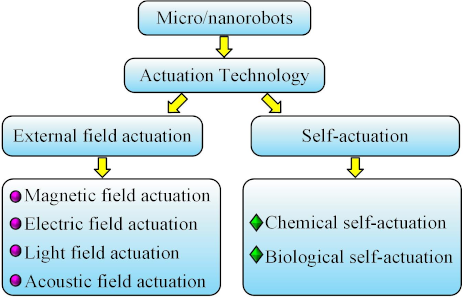
- micro/nanorobots. Traditional piezoelectric actuators are suitable for millimeter-sized robots, but not for the micro/nanoscale. Therefore, the innovation was to design a new type of electrochemical actuator and to use it as legs of the robot. It was made of nanoscale platinum and manufactured by a
- robot in 2002. The terminal of this micro/nanorobot was equipped with a platinum-plated porous glass filter, which can generate a large amount of oxygen through decomposition of H2O2 on the platinum surface and generate an actuation force at the interface between H2O2 solution and air to push the robot
- previous research, Bao et al. [38] innovatively designed a V-shaped micro/nanorobot made of platinum only. The nanorobot is propelled by oxygen molecules generated by the decomposition of H2O2 and can maintain a rotating motion and navigate in a stable trajectory. Compared with previous studies, the


Physical constraints lead to parallel evolution of micro- and nanostructures of animal adhesive pads: a review
Beilstein J. Nanotechnol. 2021, 12, 725–743, doi:10.3762/bjnano.12.57
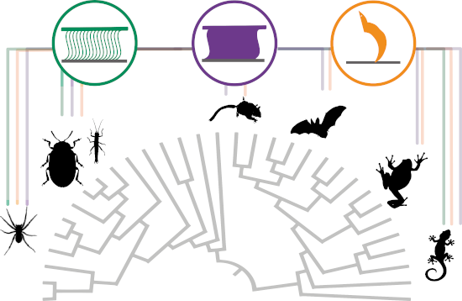
- coverage. Similar data have been obtained for the chrysomelid beetle Hemisphaerota cyanea (Chrysomelidae, Cassidinae) [261]. In smooth insect pads, the pad secretion consists of a water-soluble and a lipid-soluble part [254]. Data obtained from shock-freezing, carbon–platinum coating, and replica
- Clearance Center, Inc.. This content is not subject to CC BY 4.0. Fluid micro- and nanodrops in animal attachment pads. (A) Carbon–platinum replica of frozen and coated droplets of the fly Calliphora vicina in SEM (black arrow indicates the direction of coating). Please note the pattern of nanodrops on the


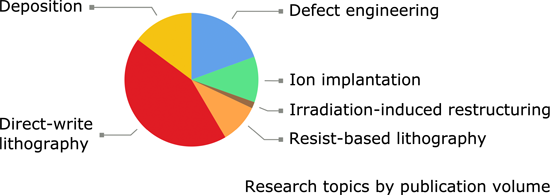
A review of defect engineering, ion implantation, and nanofabrication using the helium ion microscope
Beilstein J. Nanotechnol. 2021, 12, 633–664, doi:10.3762/bjnano.12.52


Stability and activity of platinum nanoparticles in the oxygen electroreduction reaction: is size or uniformity of primary importance?
Beilstein J. Nanotechnol. 2021, 12, 593–606, doi:10.3762/bjnano.12.49
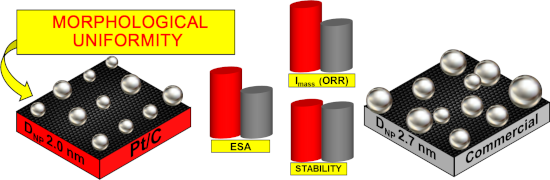
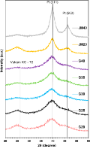
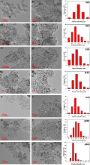
- University, "High-Resolution Transmission Electron Microscopy” Shared Use Center, 344090, 194/2 Stachki st., Rostov-on-Don, Russia 10.3762/bjnano.12.49 Abstract Platinum–carbon catalysts are widely used in the manufacturing of proton-exchange membrane fuel cells. Increasing Pt/C activity and stability is an
- . Keywords: durability; electrocatalysts; morphology control; oxygen reduction reaction; platinum nanoparticles; size distribution; spatial distribution; Introduction Nowadays, low-temperature proton-exchange membrane fuel cells (PEMFC) are gaining a wider application. This is due to their environmental
- hydrogen oxidation or an organic reducing agent oxidation (e.g. methanol) occur [4][5]. The need to carry out high-rate electrode reactions requires electrocatalysts (i.e., platinum nanoparticles – NPs – or its alloys), deposited mainly onto nano/microparticles of carbon supports, which are currently the


On the stability of microwave-fabricated SERS substrates – chemical and morphological considerations
Beilstein J. Nanotechnol. 2021, 12, 541–551, doi:10.3762/bjnano.12.44
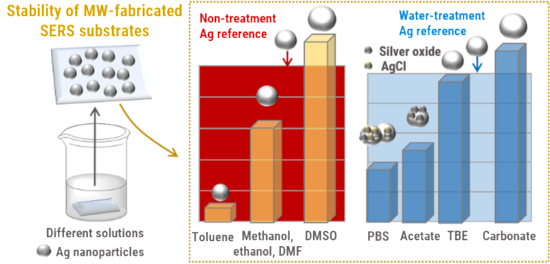
- carbon tape. To improve the contrast and to reduce the potential charging effect, the samples were sputter-coated with platinum (Pt) with a coating thickness of 4 nm. The SEM imaging was performed with a field-emission scanning electron microscope (Sigma VP, Carl Zeiss AG, Jena, Germany) at an


Boosting of photocatalytic hydrogen evolution via chlorine doping of polymeric carbon nitride
Beilstein J. Nanotechnol. 2021, 12, 473–484, doi:10.3762/bjnano.12.38
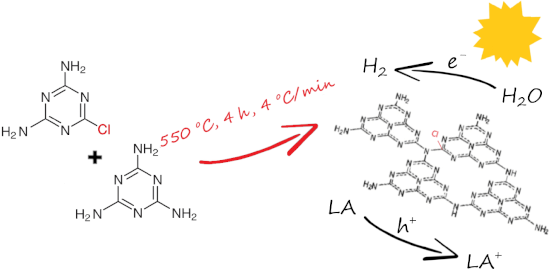
- potentiostat in a three-electrode test cell with a platinum wire as the counter electrode and the saturated calomel electrode (SCE) as the reference. The working electrode was a fluorine-doped tin oxide (FTO) glass with the analyzed material drop-casted from a 0.2% ethanol/Nafion solution. A 0.5 M sodium


Rapid controlled synthesis of gold–platinum nanorods with excellent photothermal properties under 808 nm excitation
Beilstein J. Nanotechnol. 2021, 12, 462–472, doi:10.3762/bjnano.12.37
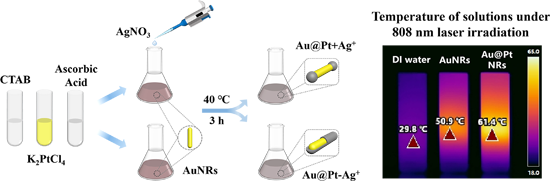
- conversion efficiency (PCE) due to local surface plasmon resonance (LSPR). Studies on different gold–platinum (Au–Pt) bimetal nanoparticles exhibiting the LSPR effect have provided a new idea for the synthesis of excellent PTAs. But there is no simple and scalable method for the controllable synthesis of Au
- . Keywords: AuNRs; local surface plasmon resonance (LSPR); photothermal conversion efficiency; photothermal transduction agents; platinum; Introduction On the surface of noble metal nanoparticles, when the wavelength of incident light resonates with the light absorption wavelength of the nanoparticles, a
- there was no excess CTAB and Ag+ in the AuNRs solution. AuNRs with uniform particle size and good dispersion were obtained. Platinum coating of AuNRs Using a slightly modified experimental method of Grzelczak et al. [27], Pt was deposited on the tips of the AuNRs in the presence of Ag+. The cleaned


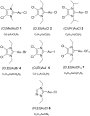
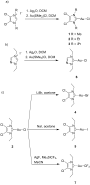
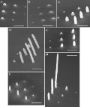
Gold(I) N-heterocyclic carbene precursors for focused electron beam-induced deposition
Beilstein J. Nanotechnol. 2021, 12, 257–269, doi:10.3762/bjnano.12.21
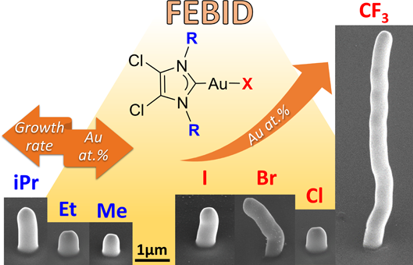
- for gold compounds. The difference between the bromide and chloride ligands has been investigated [47] for platinum precursors. It was shown that under the tested conditions, the chloro compound performed better than the bromo compound in terms of composition and growth rate [47]. Compound 6 is a





Mapping the local dielectric constant of a biological nanostructured system
Beilstein J. Nanotechnol. 2021, 12, 139–150, doi:10.3762/bjnano.12.11
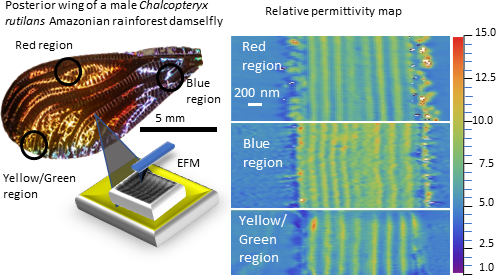
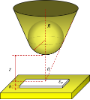
- , different probes, with slightly different K values, were used for each region of the wing, in order to always have a new, clean probe in each measurement. We used the platinum-coated AC240TM-R3 probe model by Oxford Instruments Asylum Research in all measurements. The EFM mode used in this work is the




A review on the green and sustainable synthesis of silver nanoparticles and one-dimensional silver nanostructures
Beilstein J. Nanotechnol. 2021, 12, 102–136, doi:10.3762/bjnano.12.9
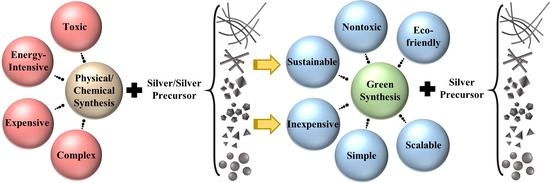
- ] synthesized AgNPs in cylindrical matrices using TMV as the biotemplate. In this work, AgNPs were 2–4 nm in size and it was shown that AgNPs, unlike platinum and gold nanoparticles, were coated on the inner surface of the TMV channel. The synthesis process is known to be mediated by the amino acid functional


Atomic layer deposited films of Al2O3 on fluorine-doped tin oxide electrodes: stability and barrier properties
Beilstein J. Nanotechnol. 2021, 12, 24–34, doi:10.3762/bjnano.12.2
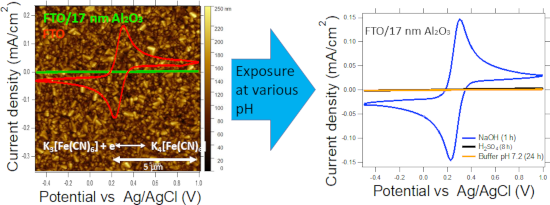
- M KCl) and a platinum rod was used as the counter electrode. The blocking properties of the deposited layers were evaluated by cyclic voltammetry (CV) in an aqueous electrolyte composed of 0.5 mM K3[Fe(CN)6] and 0.5 mM K4[Fe(CN)6] in 0.5 M KCl (pH 2.5, adjusted with HCl) or in phosphate buffer (pH


Bio-imaging with the helium-ion microscope: A review
Beilstein J. Nanotechnol. 2021, 12, 1–23, doi:10.3762/bjnano.12.1
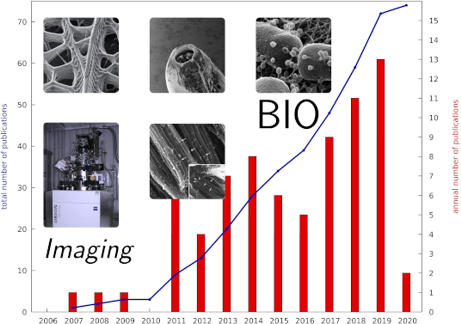
- materials, such as carbon, platinum, or gold. Coating the samples can, however, result in minute changes to surface features which are only visible at very high resolution. One of the main advantages of HIM is the ability to neutralise charge by implementation of an electron flood gun. This flood gun


Self-standing heterostructured NiCx-NiFe-NC/biochar as a highly efficient cathode for lithium–oxygen batteries
Beilstein J. Nanotechnol. 2020, 11, 1809–1821, doi:10.3762/bjnano.11.163
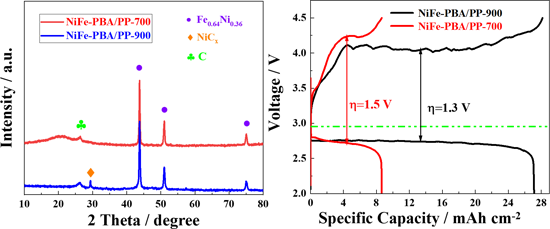
- batteries [7][8][9][10]). In order to meet the requirements for efficient catalysts in practical applications, platinum group metal (PGM)-based catalysts are currently used as principal catalysts to reduce the overpotential of ORR and OER due to their slow kinetics [11][12][13]. The high cost, poor






Electron beam-induced deposition of platinum from Pt(CO)2Cl2 and Pt(CO)2Br2
Beilstein J. Nanotechnol. 2020, 11, 1789–1800, doi:10.3762/bjnano.11.161
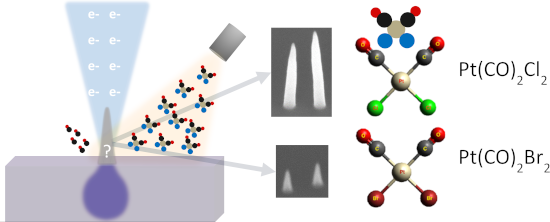
- platinum precursors, Pt(CO)2Cl2 and Pt(CO)2Br2, were designed for focused electron beam-induced deposition (FEBID) with the aim of producing platinum deposits of higher purity than those deposited from commercially available precursors. In this work, we present the first deposition experiments in a
- -dispersive X-ray spectroscopy (EDX); focused electron beam-induced deposition (FEBID); nanofabrication; platinum precursors; scanning electron microscopy (SEM); thermogravimetric analysis (TGA); Introduction Focused electron beam-induced deposition (FEBID) is a direct-write nanopatterning technique. FEBID
- respect but are thermally unstable, for instance, ClAuCO and ClAuPF3 [11][12][13]. Therefore, it is desirable to design new stable precursors that enable the deposition of pure metals. In this work, two novel platinum precursors (Pt(CO)2Cl2 and Pt(CO)2Br2) were synthesized and tested. Both Pt(CO)2X2


Helium ion microscope – secondary ion mass spectrometry for geological materials
Beilstein J. Nanotechnol. 2020, 11, 1504–1515, doi:10.3762/bjnano.11.133
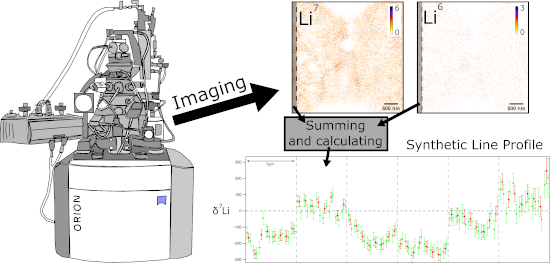
- , typically gold, using a sputter coater. Here we employ a similar technique, coating samples with either gold or platinum, or, in the case of analysis of platinum-group elements [15], carbon. This coating is removed by the action of the primary beam in the region of interest prior to analysis, allowing for
- , this same standard is required to maintain this homogeneity at a nanometre length scale in order to be used accurately with the HIM–SIMS instrument. It is extremely difficult to manufacture a standard material for all elements that is homogeneous at the nanometre scale. Platinum group elements, for



Wafer-level integration of self-aligned high aspect ratio silicon 3D structures using the MACE method with Au, Pd, Pt, Cu, and Ir
Beilstein J. Nanotechnol. 2020, 11, 1439–1449, doi:10.3762/bjnano.11.128
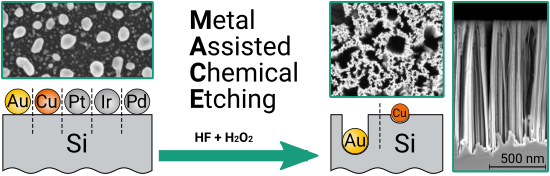
- also investigated palladium (Pd), platinum (Pt), and to a lesser extent even copper (Cu) [20][21][22]. However, there is no study analysing iridium (Ir) as catalytic metal. According to its standard reduction potential of 1.16 V, it is comparable to Pt (1.18 V) and Pd (0.95 V) and should work
- structures, while etching with platinum-group metals (Pt, Pd, or Ir) yields predominantly nanoporous sponge-like structures. We demonstrated the MACE process with the noble metals Au, Pt, Pd, Cu, and, as a novelty, with Ir. Depending on the contamination budget of the integrated system one can select an
- PVD methods. The deposition of gold and palladium was done by magnetron sputtering. The film thickness has been adjusted by the use of a calibrated deposition rate. Ion beam sputter deposition (IBSD) has been used to deposit platinum and copper. For copper deposition, the thickness has been controlled





