Search results
Search for "polystyrene" in Full Text gives 234 result(s) in Beilstein Journal of Nanotechnology. Showing first 200.
Outstanding chain-extension effect and high UV resistance of polybutylene succinate containing amino-acid-modified layered double hydroxides
Beilstein J. Nanotechnol. 2019, 10, 684–695, doi:10.3762/bjnano.10.68
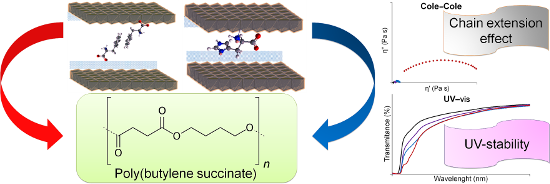
- rather than a gel-like transition, this may indicate the presence of a jamming structure due to mobility hindrance of PBS chains as observed for other LDH composites with polystyrene [27] rather that a possible covalent or hydrogen-type bonding between tethered PHE and PBS. The worst behaviour in terms


Ceria/polymer nanocontainers for high-performance encapsulation of fluorophores
Beilstein J. Nanotechnol. 2019, 10, 522–530, doi:10.3762/bjnano.10.53
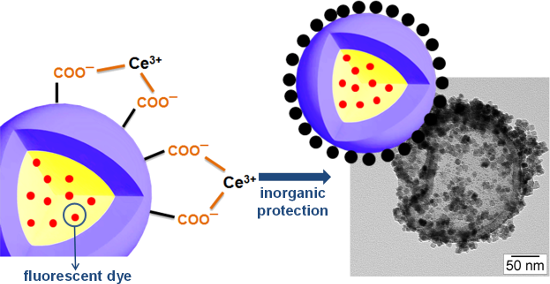
- strategy to reduce the impact of reactive oxygen by applying an additional synthetic step, while keeping unchanged all parameters involved in the synthesis of the initial nanoconfined materials. Exemplarily, polystyrene nanocontainers with a liquid hydrophobic core of hexadecane synthesized by using
- transferred in hexadecane (4 g) to obtain a final concentration of 1 × 10⁻⁴ M. Afterwards, THF was completely removed by rotary evaporation (1 h at 70 mbar and 50 °C). Synthesis of carboxyl-functionalized nanocapsules Polystyrene nanocapsules were synthesized either under ambient conditions (sample NC) or
- analogous one in argon atmosphere. Results and Discussion The objective of this work was to design colloidally stable polystyrene-based hybrid nanocapsules containing the fluorescent dye terrylene diimide (TDI) and being armored with metal-oxide nanoparticles on the polymer shell surface. Polymeric


Pull-off and friction forces of micropatterned elastomers on soft substrates: the effects of pattern length scale and stiffness
Beilstein J. Nanotechnol. 2019, 10, 79–94, doi:10.3762/bjnano.10.8
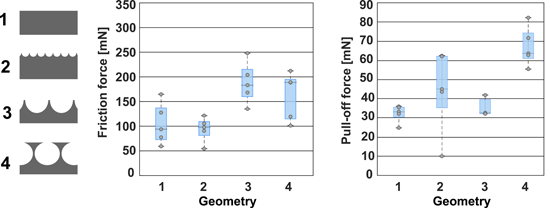
- and polystyrene. Much less is known about the performance of micropatterned adhesives when the substrate is deformable. Secure grip on soft, deformable substrates can be useful in a range of applications, including soft-tissue manipulation during surgical procedures and pick-and-place of soft
- particles: Carboxylated polystyrene (PS) particles with a sub-microscale diameter were synthesized in a single-step surfactant-free emulsion polymerization, according to Appel et al. [42]. The particles were washed by centrifugation three times in ethanol and three times in water. The particles were





Electrostatic force microscopy for the accurate characterization of interphases in nanocomposites
Beilstein J. Nanotechnol. 2018, 9, 2999–3012, doi:10.3762/bjnano.9.279
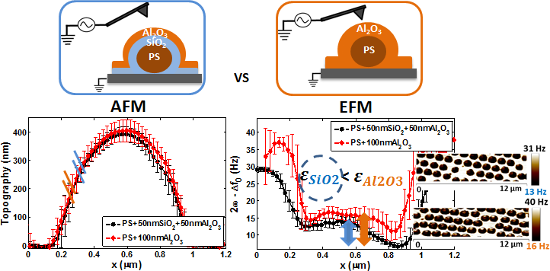
- “calibrating” the EFM technique for future interphase studies. EFM was demonstrated to be able to discriminate between alumina and silicon dioxide interphase layers of 50 and 100 nm thickness deposited over polystyrene spheres and different types of matrix materials. Consistent permittivity values were also
- dielectric constituents that represent a simplified configuration of the particle–interphase–matrix assembly found in nanodielectrics. Specifically, polystyrene (PS) nanoparticles of 380 nm diameter were prepared by self-assembly on metallized substrates. Then, two shells of variable thicknesses (50 and 100
- best fitted the experimental results, as indicated by the 4.6% total error compared with the simulations (Figure 6). Errors were measured as follows: Reference polystyrene sample The EFM and AFM images of the reference PS sample (Figure 7a,c) were used to extract the average topography and EFM cross




Colloidal chemistry with patchy silica nanoparticles
Beilstein J. Nanotechnol. 2018, 9, 2989–2998, doi:10.3762/bjnano.9.278
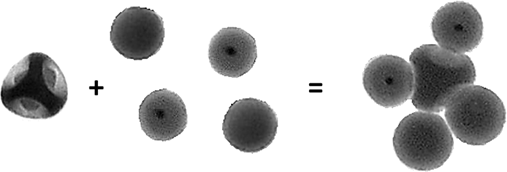
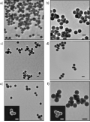
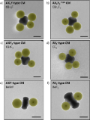
- Ravensteijn has also reported asymmetric dumbbell-like particles, i.e., with two nodules of different chemical compositions, obtained through a phase separation process during the styrene emulsion polymerization seeded with cross-linked polystyrene (PS) particles coated with a thin layer of poly(vinylbenzyl


Charged particle single nanometre manufacturing
Beilstein J. Nanotechnol. 2018, 9, 2855–2882, doi:10.3762/bjnano.9.266


Block copolymers for designing nanostructured porous coatings
Beilstein J. Nanotechnol. 2018, 9, 2332–2344, doi:10.3762/bjnano.9.218
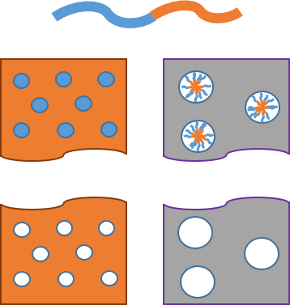
- ). Therefore, an extended discussion around the exploitation of block copolymers is proposed here in this review, using polystyrene-block-polyethylene oxide (PS-b-PEO) as the model substrate, and critical points are highlighted. Keywords: block copolymers; coatings; materials science; porous materials; self
- functionalities, reactivity). Since the scientific literature describing the properties of BCs is extremely vast, this review will only consider (and analyze in detail) the works and the technical discussion relevant for this review. Moreover, for simplicity, only the scientific literature describing polystyrene


Electrospun one-dimensional nanostructures: a new horizon for gas sensing materials
Beilstein J. Nanotechnol. 2018, 9, 2128–2170, doi:10.3762/bjnano.9.202
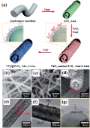
- inside a stainless steel needle. The electrospinning setup and resulting hollow fibers are shown in Figure 5. Choi et al. [75] synthesized macroporous WO3 NTs using coaxial electrospinning combined with sacrificial templating. A porous structure using colloidal polystyrene (PS) particles in a solution






Nanoconjugates of a calixresorcinarene derivative with methoxy poly(ethylene glycol) fragments for drug encapsulation
Beilstein J. Nanotechnol. 2018, 9, 2057–2070, doi:10.3762/bjnano.9.195
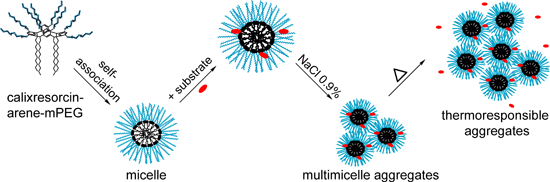
- ] software packages. DLS, SLS, and zeta-potential measurements were carried out by employing a Zetasizer nano ZS with Dispersion Technology Software 5.00. The measurements were carried out at 25 °C in polystyrene cells, for temperature-dependent DLS measurements (25–65 °C) and SLS measurement, a glass


Recent highlights in nanoscale and mesoscale friction
Beilstein J. Nanotechnol. 2018, 9, 1995–2014, doi:10.3762/bjnano.9.190
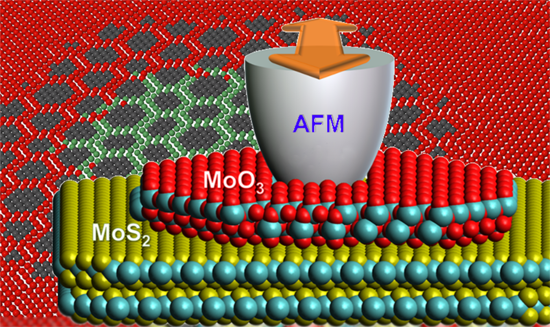
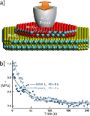
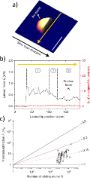
- probing what each mobile particle in the sliding layer is doing instant after instant at the interface. In short, charged polystyrene spheres in aqueous solution repel each other, forming, under confinement, a 2D hexagonal crystal [158][159][160][161][162][163]. This crystal is driven across an either


Self-assembled quasi-hexagonal arrays of gold nanoparticles with small gaps for surface-enhanced Raman spectroscopy
Beilstein J. Nanotechnol. 2018, 9, 1977–1985, doi:10.3762/bjnano.9.188
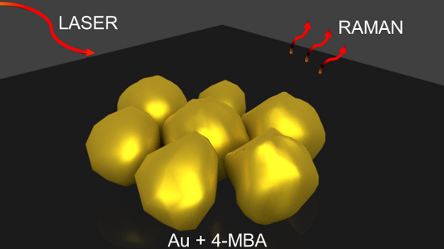
- cleaned with acetone in an ultrasonic bath for two minutes. Then they were rinsed with isopropanol, and finally dried with nitrogen gas. A symmetric diblock copolymer (polystyrene-block-poly-2-vinylpyridine, PS(133000)-block-P2VP(132000), polymer source) was dissolved in toluene at a concentration of 1 mg



Preparation of micro/nanopatterned gelatins crosslinked with genipin for biocompatible dental implants
Beilstein J. Nanotechnol. 2018, 9, 1735–1754, doi:10.3762/bjnano.9.165
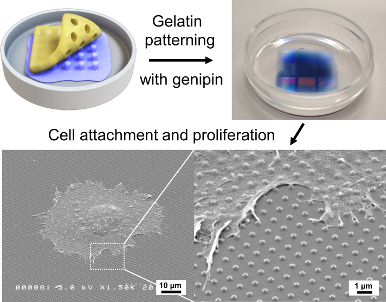
- , which indicated the presence of live cells on the crosslinked gelatin, was similar to the high ratio of green-stained cells on a tissue cultured polystyrene (TCPS), which was used as a control for a high-viability surface after 1 day or 7 days of culturing. The number of red-stained cells was few








Closed polymer containers based on phenylboronic esters of resorcinarenes
Beilstein J. Nanotechnol. 2018, 9, 1594–1601, doi:10.3762/bjnano.9.151
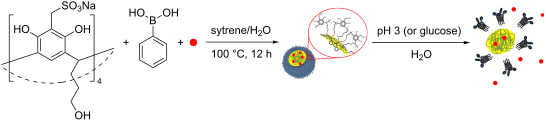
- C–C and C–H bonds at 1191, 1048 and 533 cm−1 are present in the IR spectrum of p(SRA-B) (see Supporting Information File 1, Figure S3). In the 13C and 1H NMR spectra of p(SRA-B), the signals of SRA, BA ester and polystyrene are present (see Supporting Information File 1, Figure S4 and Figure S5
- ). The integrals of proton signals in the 1H NMR spectrum at 1.0–4.5 ppm indicate that p(SRA-B) contains one polystyrene unit per one SRA fragment, i.e., the polystyrene fraction is about 11 wt % of p(SRA-B). According to differential scanning calorimetry (DSC) data, p(SRA-B) is thermally more stable


Interaction-tailored organization of large-area colloidal assemblies
Beilstein J. Nanotechnol. 2018, 9, 1582–1593, doi:10.3762/bjnano.9.150
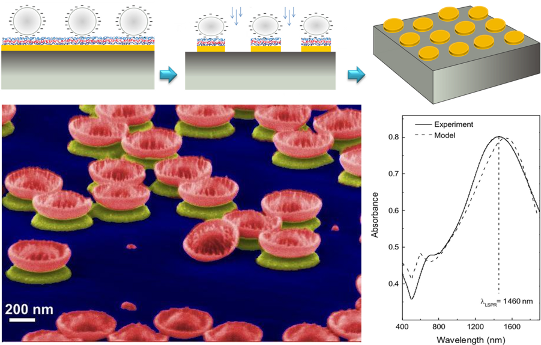
- absorption of polystyrene spheres onto a substrate and discuss the effect of particle–substrate and particle–particle interactions on their organization. Depending on the nature and the strength of the interactions acting in the colloidal film formation, two different strategies were developed in order to
- polystyrene nanoparticles) are self-assembled onto a substrate to form a 2D crystal used as a lithographic (positive or negative) mask. The size, shape and interspacing can be controlled on the nanoscale by changing the particle diameter as well as the conditions of film deposition. Indeed, the colloidal
- obtain good surface coverage, we exploited electrostatic interactions between negatively charged, polystyrene, spherical, nanoscale materials and a functionalized, positively charged surface. In the case of small spheres (diameter of 80 nm), the interparticle distance and the number of randomly adsorbed


Optical near-field mapping of plasmonic nanostructures prepared by nanosphere lithography
Beilstein J. Nanotechnol. 2018, 9, 1536–1543, doi:10.3762/bjnano.9.144
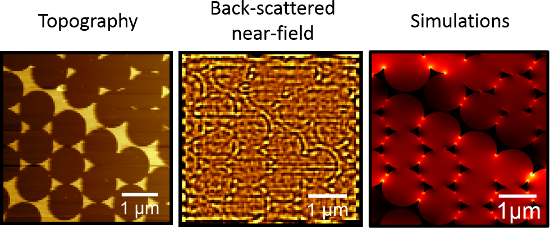
- measurements can be easily performed without heavy experimental devices or complicated posttreatment analysis. Methods Sample preparation The samples were fabricated by nanosphere lithography. A solution of 1 µm diameter polystyrene microsphere mixed with ethanol was deposited on a dry, clean microscope glass
- coverslip and distributed homogeneously. After the sample dried, 3 nm of Ti followed by 30 nm of Au were deposited using electron beam evaporation. The sample was then sonicated in ethanol for 1 min to remove the polystyrene particles. A pattern of gold plasmonic nanotriangles (side length ≈350 nm




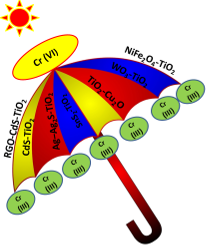
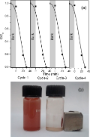
Cr(VI) remediation from aqueous environment through modified-TiO2-mediated photocatalytic reduction
Beilstein J. Nanotechnol. 2018, 9, 1448–1470, doi:10.3762/bjnano.9.137


Imaging of viscoelastic soft matter with small indentation using higher eigenmodes in single-eigenmode amplitude-modulation atomic force microscopy
Beilstein J. Nanotechnol. 2018, 9, 1116–1122, doi:10.3762/bjnano.9.103
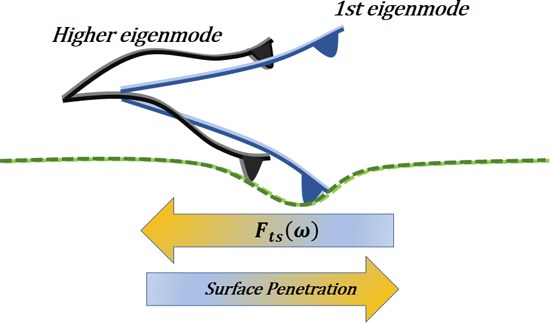
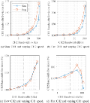
- described in previous studies [29] and details can be found in the computational code provided in [26]. Experimental results Polystyrene thin film height measurements were performed using the same imaging modes as in the numerical simulations. All three measurements were performed with a single cantilever
- having f1 ≈ 45 kHz and k1 ≈ 5.80 N/m. Polystyrene with 33 kDa molecular weight diluted to 2.5 wt % in THF was used, which was spin-coated onto a silicon wafer at 1400 rpm for 60 s. We have selected a polystyrene of low molecular weight to prepare a sample that displays time-dependent behavior within the
- deformational timescale in our studies (previous studies have quantified the dependence of characteristic times on the molecular weight for polystyrene [30]). In order to ensure a homogenous surface, the relative humidity was controlled to be approximately 30% during the spin-coating process. A portion of the


P3HT:PCBM blend films phase diagram on the base of variable-temperature spectroscopic ellipsometry
Beilstein J. Nanotechnol. 2018, 9, 1108–1115, doi:10.3762/bjnano.9.102
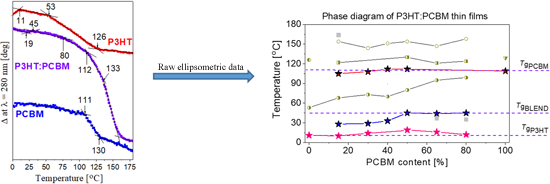
- coefficient, which can be detected as change in the slope of d(T) plots [26]. Variable-temperature spectroscopic ellipsometry has been applied to study thin films of polymers such as polystyrene (PS) [27][28][29][30][31], poly(α-methylstyrene) [32], poly(methyl methacrylate) (PMMA) [33][34] and polyester [35


Review on nanoparticles and nanostructured materials: history, sources, toxicity and regulations
Beilstein J. Nanotechnol. 2018, 9, 1050–1074, doi:10.3762/bjnano.9.98



Automated image segmentation-assisted flattening of atomic force microscopy images
Beilstein J. Nanotechnol. 2018, 9, 975–985, doi:10.3762/bjnano.9.91
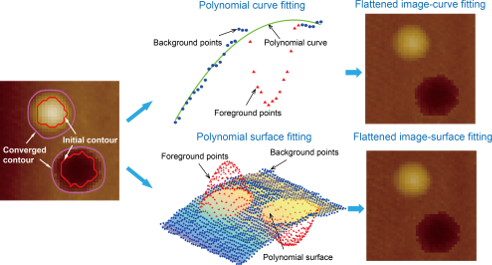
- spin coating a thin film of polystyrene (PS) on a silicon (100) substrate at a speed of 500 rpm. Prior to spin coating, the silicon substrate was sequentially cleaned in a sonic bath of piranha solution, acetone and water for 30 minutes. The PS solution was obtained by dissolving PS particles


Comparative study of antibacterial properties of polystyrene films with TiOx and Cu nanoparticles fabricated using cluster beam technique
Beilstein J. Nanotechnol. 2018, 9, 861–869, doi:10.3762/bjnano.9.80
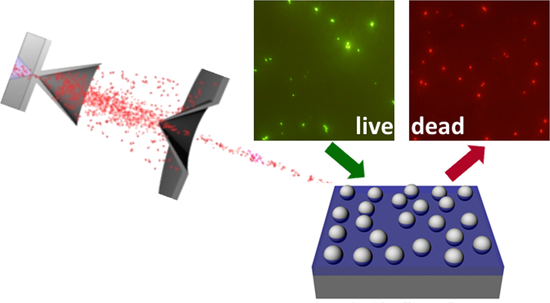
- describes a novel approach for the formation of bactericidal polymer thin films (polystyrene in this case), produced by spin-coating, with Ti and Cu NPs deposited from cluster beams. Ti NPs are treated in three different ways in order to study different approaches for oxidation and, thus, efficiency in
- formation of the particles with semiconducting properties required for the catalytic formation of reactive oxygen species. Cu NPs are used as deposited. Partial NP embedding into polystyrene is realised in a controllable manner using thermal annealing in order to improve surface adhesion and make the
- [9][10][11][12][13][14][15]. In the current work, both Ti and Cu clusters are produced using magnetron sputtering in special cluster sources and deposited on substrates coated by a thin layer of polystyrene (PS). The focus is on the optimization of the nanocomposite formation using the cluster beam




Facile phase transfer of gold nanorods and nanospheres stabilized with block copolymers
Beilstein J. Nanotechnol. 2018, 9, 616–627, doi:10.3762/bjnano.9.58
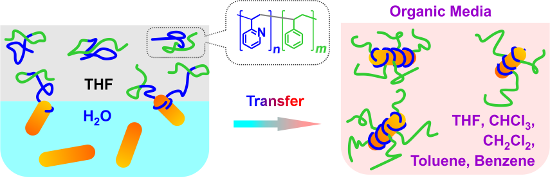
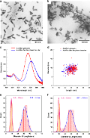
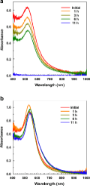
- presented in Figure 3. For the sodium D-line, the refractive index of CTAB equals 1.4350 [48], which is close to 1.4440 for chloroform [49], but markedly different from 1.3333 for water [43], 1.4956 for benzene [44], 1.4920 for toluene [44], 1.5915 for polystyrene [50] and 1.622 for poly(2-vinylpyridine) at
- the PS-b-P2VP block copolymer, the presence of polystyrene blocks in the surface layer of nanorods can effectively increase the refractive index of that layer and bring it close to the refractive index of the dispersion medium, benzene. If so, the modeled extinction cross section for a bare nanorod


Single-step process to improve the mechanical properties of carbon nanotube yarn
Beilstein J. Nanotechnol. 2018, 9, 545–554, doi:10.3762/bjnano.9.52
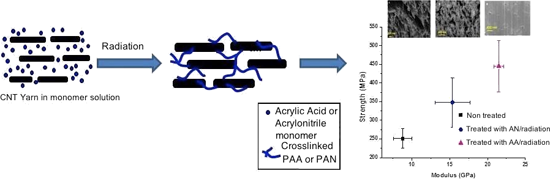
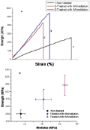
- 100 °C for more than 6 h. They found some improvement in mechanical properties of CNT yarn infiltrated with polymers [43]. Hiremath et al. also concluded the same when they investigated the effect of toluene and polystyrene infiltrated in the microstructure of carbon nanotube yarns [44]. The results




Lyapunov estimation for high-speed demodulation in multifrequency atomic force microscopy
Beilstein J. Nanotechnol. 2018, 9, 490–498, doi:10.3762/bjnano.9.47
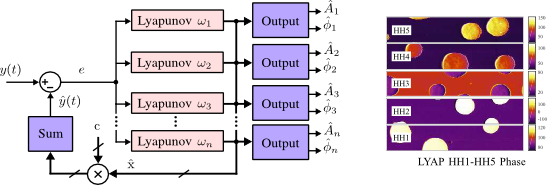
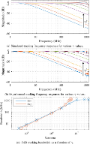
- have fundamental resonance frequencies of 168.8 kHz and 46.1 kHz, respectively. The samples used are a z-calibration grating (NT-MDT TGZ3) with periodic height features of approx. 500 nm and a blend of polystyrene (PS) and polyolefin elastomer (LDPE) available from Bruker (PS-LDPE-12M). Due to the





Engineering of oriented carbon nanotubes in composite materials
Beilstein J. Nanotechnol. 2018, 9, 415–435, doi:10.3762/bjnano.9.41
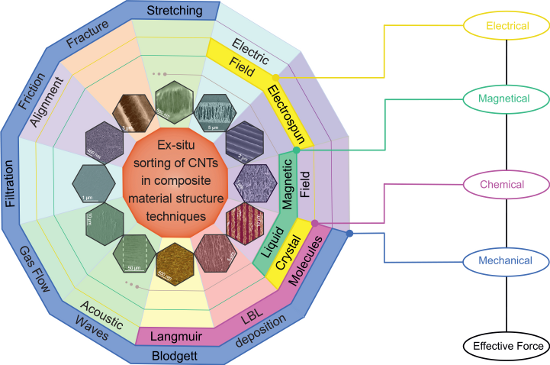
- (PU) or polystyrene (PS), is stretched too far. Fracture occurs and the oriented CNTs are formed in the fracture gap as shown in Figure 4. Since CNTs have the desired electronic properties and the method is easy to perform, this technique might be suitable for making CNT electronic devices such as
- the fractured part of the composite. Reproduced with permission from [33], copyright 2009 Versita Warsaw. SEM images of a polystyrene (PS) composite film containing 25 wt % CNTs. (a) Random networked CNTs on the film surface and (b) oriented CNTs by fracturing, reproduced with permission from [37