Search results
Search for "porosity" in Full Text gives 261 result(s) in Beilstein Journal of Nanotechnology. Showing first 200.
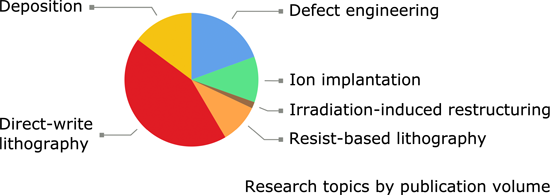
A review of defect engineering, ion implantation, and nanofabrication using the helium ion microscope
Beilstein J. Nanotechnol. 2021, 12, 633–664, doi:10.3762/bjnano.12.52


Boosting of photocatalytic hydrogen evolution via chlorine doping of polymeric carbon nitride
Beilstein J. Nanotechnol. 2021, 12, 473–484, doi:10.3762/bjnano.12.38
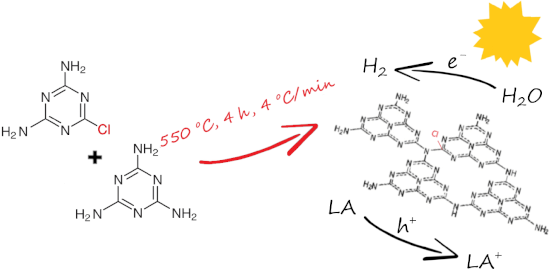
- 84.77% to 87.23%. The schematic representation of the as-synthesized material structure is shown in Figure 5. The porosity of polymeric carbon nitride and PCN doped with chlorine was tested by the N2 adsorption–desorption experiment. The typical IV isotherms with H3 hysteresis loops are observed in the


Structural and optical characteristics determined by the sputtering deposition conditions of oxide thin films
Beilstein J. Nanotechnol. 2021, 12, 354–365, doi:10.3762/bjnano.12.29
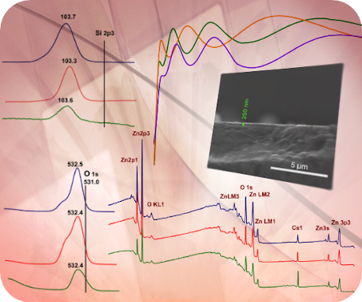
- transmission in the visible range decreases and the porosity at the film surface increases, which is justified by the lack of applied heat treatment. The dispersion of the refractive index for the investigated samples shows a normal dispersion in the considered spectral range (Figure 11). The plots indicate


Exploring the fabrication and transfer mechanism of metallic nanostructures on carbon nanomembranes via focused electron beam induced processing
Beilstein J. Nanotechnol. 2021, 12, 319–329, doi:10.3762/bjnano.12.26
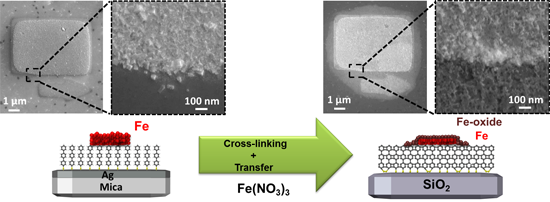
- arbitrary substrates or grids to obtain free-standing 2D membranes [25]. The specific choice of the self-assembling molecules determines the thickness, porosity, stiffness, and the mechanical/electrical properties of the resulting CNM [26][27]. The SAMs that are used for the fabrication of CNMs consist of


Effect of different silica coatings on the toxicity of upconversion nanoparticles on RAW 264.7 macrophage cells
Beilstein J. Nanotechnol. 2021, 12, 35–48, doi:10.3762/bjnano.12.3
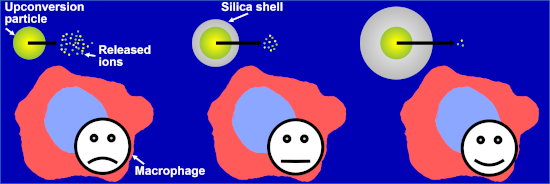
- -shelled samples (sample UC@thick_RBITC_NH2). The silica shells of the dye-doped samples were slightly thicker than those of the samples without the dye, as APS and RBITC-APS slightly increase the porosity of the silica shell. Consequently, identical amounts of silica per particle result in slightly


Bio-imaging with the helium-ion microscope: A review
Beilstein J. Nanotechnol. 2021, 12, 1–23, doi:10.3762/bjnano.12.1


Oxidation of Au/Ag films by oxygen plasma: phase separation and generation of nanoporosity
Beilstein J. Nanotechnol. 2020, 11, 1608–1614, doi:10.3762/bjnano.11.143
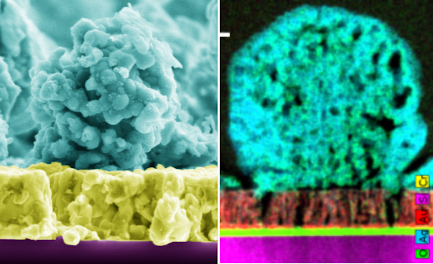
- originates from their special architecture and porosity, resulting in an extremely high specific surface area, at the nanometer scale, which can be suitable for many applications [10]. Details related to the silver oxidation process using either oxygen plasma or ozone have been previously reported [6][7][8
- . Interestingly, these microspheres do not cover the entire film surface but are rather randomly distributed over the surface. Moreover, when examining the surface an increase in porosity is noticed, probably as a consequence of the decrease in film density due to the migration of the oxidized silver toward the
- , resulting in a mobility decrease at the surface; and (2) the high porosity of the film which serves as a support for the surface diffusion of silver. The clusters formed during the early stages of the process serve as nucleation sites which grow into larger spheres as the oxidation process evolves. The


Fabrication of nano/microstructures for SERS substrates using an electrochemical method
Beilstein J. Nanotechnol. 2020, 11, 1568–1576, doi:10.3762/bjnano.11.139
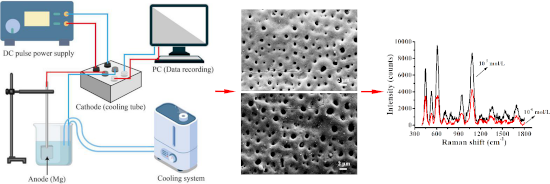
- mechanical stirring cooling system. To study the influence of surface conditions (e.g., porosity and roughness) on the SERS intensity, the duration of the PEO treatment was set as the single variable (1, 2, and 5 min), as shown in Table 1. The structured Mg surfaces were coated with Au of varying thickness


One-step synthesis of carbon-supported electrocatalysts
Beilstein J. Nanotechnol. 2020, 11, 1419–1431, doi:10.3762/bjnano.11.126

- ) micrograph in Figure 2a. Pt-NPs (black dots) are homogeneously distributed across the entire porous carbon sheet (grey areas). The porosity of the support can be observed in the dark-field TEM micrograph (Figure 2b) and has been reported to be beneficial in electrocatalysis, as it reduces mass transport




Structure and electrochemical performance of electrospun-ordered porous carbon/graphene composite nanofibers
Beilstein J. Nanotechnol. 2020, 11, 1280–1290, doi:10.3762/bjnano.11.112
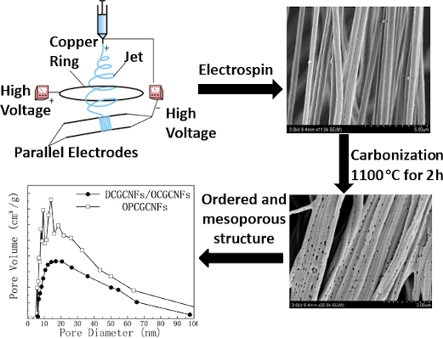
- were submitted to carbonization under a N2 atmosphere at 1100 °C. The influence of the ordering and porosity of CGCNFs on their electrochemical performance was studied. The results showed that by adding deionized water to the spinning solution one could increase the number of mesopores and the specific
- specific surface area. The increase in the specific surface area of the electrode due to increased porosity facilitates ion transportation, which increases the conductivity of monolithic electrodes [24][25][26]. Although the porous carbon nanofibers have a high specific surface area, their low electrical
- mesopores to be used as a material to synthesize supercapacitor electrodes. The method used in our previous work to induce porosity was the carbonization of the OPPGCNFs, obtained by MPEM, at 1100 °C under a N2 atmosphere [33]. The results showed that the number of mesopores and the specific surface area of


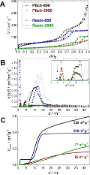
Gas sorption porosimetry for the evaluation of hard carbons as anodes for Li- and Na-ion batteries
Beilstein J. Nanotechnol. 2020, 11, 1217–1229, doi:10.3762/bjnano.11.106
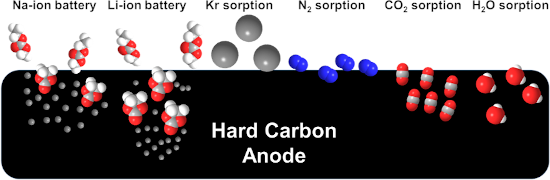
- importantly CO2, sorption porosimetry turned out to be the preferred methods to evaluate the likelihood for excessive irreversible capacities. The methods are also useful to select the relatively most promising active materials within chemically similar materials. A quantitative relation of porosity
- size assignments [27]. Considering the expected complex interdependencies of the porosity/pore size distribution of HCs with their electrochemical properties, a combination of these sorption techniques seems reasonable. To minimize capacity losses due to SEI formation in graphite-based LIBs, the
- appears to be more reasonable. Pore size distributions of the HT carbons derived from CO2 sorption data using the Monte Carlo method were centered around 0.5 nm with less abundant larger pores between 0.7 and 1.5 nm (Figure 2b). RF-1600 does not have pores smaller than 0.5 nm with main porosity


Plant growth regulation by seed coating with films of alginate and auxin-intercalated layered double hydroxides
Beilstein J. Nanotechnol. 2020, 11, 1082–1091, doi:10.3762/bjnano.11.93
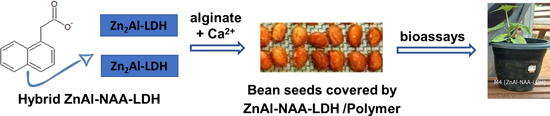
- in the UV–vis region (37.1%) and the Zn/Al molar ratio of 2, the following formula is proposed for the hybrid material: Zn2Al(OH)6](NAA)·3H2O (calculated: 37.1% of NAA; 10.8% of H2O). The morphology and porosity of LDHs can change depending on the synthesis method and also on the chemical



Highly sensitive detection of estradiol by a SERS sensor based on TiO2 covered with gold nanoparticles
Beilstein J. Nanotechnol. 2020, 11, 1026–1035, doi:10.3762/bjnano.11.87
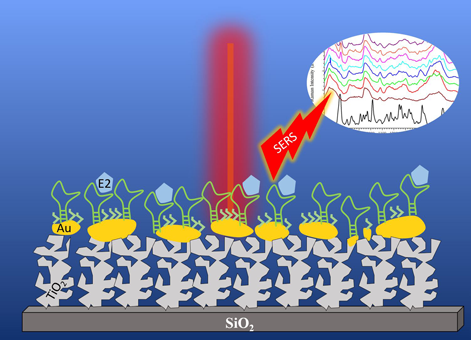
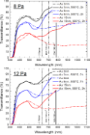
- Si(100) and soda-lime glass substrates, which were mounted on a sample holder at a fixed target-to-substrate distance of 5 cm. Changing the background pressure within the deposition chamber allowed for a tuning of the film morphology (i.e., a higher pressure resulted in a higher film porosity) [28
- porosity were deposited by pulsed laser deposition (PLD) as already reported in [28]. By increasing the background O2 pressure during deposition it is possible to deposit films that are more porous. Samples were therefore synthetized at background pressures of 8 or 12 Pa. Au layers were then evaporated on
- phase (as demonstrated by Raman spectra, not shown) and caused dewetting in the Au layer with the subsequent formation of NPs [32]. Evaporation and dewetting of Au on TiO2 layers with different porosity was carried out to exploit the effect of the surface morphology on the formation of Au NPs, yielding


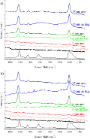

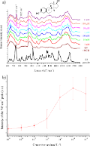
Gas-sensing features of nanostructured tellurium thin films
Beilstein J. Nanotechnol. 2020, 11, 1010–1018, doi:10.3762/bjnano.11.85
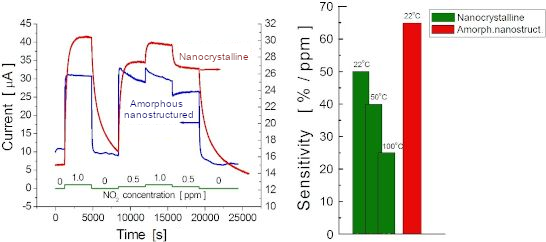
- were interpreted in terms of an increase in disorder (amorphization), leading to an increase in the surface chemical activity of chalcogenides, as well as an increase in the active surface area due to substrate porosity. Keywords: gas-sensing properties; NO2; tellurium thin films; nanocrystalline
- increase in the chemical activity of chalcogenides at the surface when disorder (amorphization) increases [32][33] and to the increase in the active area caused by substrate porosity. Another interesting feature observed in the experiments was the spontaneous reduction (or sometimes increase) in the gas
- surface area due to increased substrate porosity. SEM of Te films grown: a) on Pyrex glass at a rate of 10 nm/s and b) on nanostructured Al2O3 substrates at a rate of 30 nm/s. Scale bar is 5 µm. XRD diffraction patterns of Te films grown on Pyrex glass (A) or nanostructured Al2O3 (B) substrates


Electrochemical nanostructuring of (111) oriented GaAs crystals: from porous structures to nanowires
Beilstein J. Nanotechnol. 2020, 11, 966–975, doi:10.3762/bjnano.11.81
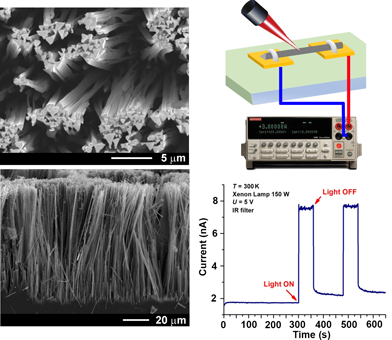
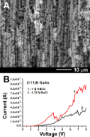
- electrolytes is performed in galvanostatic and potentiostatic anodization modes. Anodization in NaCl electrolytes was found to result in the formation of porous structures with porosity controlled either by current under the galvanostatic anodization, or by the potential under the potentiostatic anodization
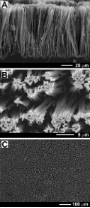
- intersect each other without changing their direction of propagation during growth. As one can see from Figure 1A, the degree of porosity decreases with decreasing the anodization current density. The situation is different when the GaAs crystals are anodized on the (111)B surface. During anodization in the
- galvanostatic mode at current densities similar to those applied during anodizing the (111)A surface (15, 10, and 5 mA), three porous layers are formed with different degrees of porosity, but the pores are parallel to each other and they grow perpendicularly to the crystal surface (Figure 1B). The same





Atomic layer deposition for efficient oxygen evolution reaction at Pt/Ir catalyst layers
Beilstein J. Nanotechnol. 2020, 11, 952–959, doi:10.3762/bjnano.11.79
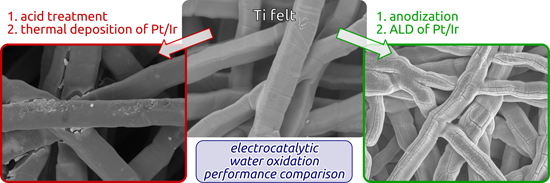
- prominent presence of catalytically more active Ir at the surface. The geometric effect of felt porosity is also prevalent on the graphs. The best sample achieves 26.8 μA·cm−2 at η = 0.4 V, which corresponds to a mass activity of 557 A·g−1. This catalyst coating yields (as compared to the thermal


A 3D-polyphenylalanine network inside porous alumina: Synthesis and characterization of an inorganic–organic composite membrane
Beilstein J. Nanotechnol. 2020, 11, 938–951, doi:10.3762/bjnano.11.78
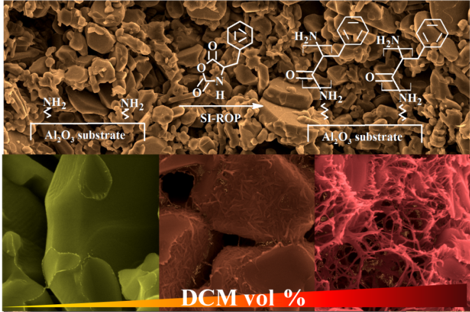
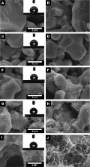
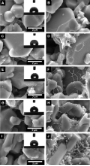
- -dimensional fibrillar network with intrinsic porosity was formed in DCM, whereas in THF, a dense and smooth polypeptide film was observed. A post-treatment with a mixture of chloroform and dichloroacetic acid leads to rearrangement of the morphology of the grafted polymer films. The analysis by scanning
- functionalization [33][34]. The surface of ALOX-membranes contains hydroxyl groups, which can be used for chemical modification [35]. Their porosity predetermines different conditions in wet chemical surface functionalization due to a restricted and diffusion limited transport of reactants to the inner surface of




Band tail state related photoluminescence and photoresponse of ZnMgO solid solution nanostructured films
Beilstein J. Nanotechnol. 2020, 11, 899–910, doi:10.3762/bjnano.11.75
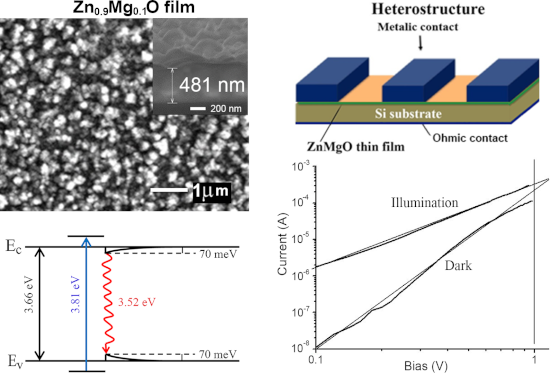
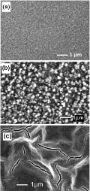
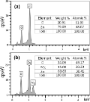
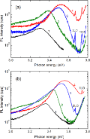
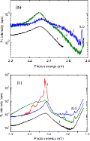
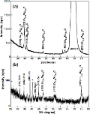
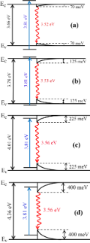
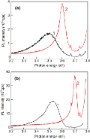
- amplitude of potential fluctuations is determined by the degree of doping and conductivity compensation. In porous semiconductors the amplitude is determined by the degree of porosity, while it is a function of local fluctuations of the composition in solid solutions, including ZnMgO. The observation of the

A set of empirical equations describing the observed colours of metal–anodic aluminium oxide–Al nanostructures
Beilstein J. Nanotechnol. 2020, 11, 798–806, doi:10.3762/bjnano.11.64
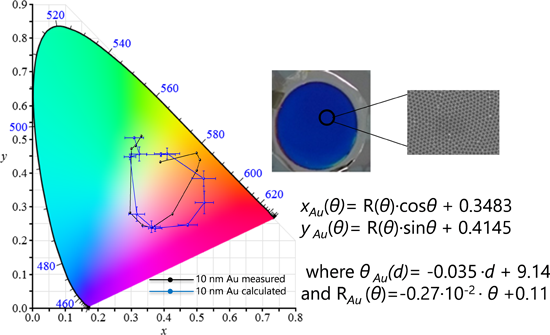
- thickness and porosity of the nanostructures was determined, which describes a gamut of colours. The proposed mathematical model can be applied in different fields, such as wavelength absorbers, RGB (red, green, blue) display devices, as well as chemical or optical sensors. Keywords: anodic aluminium oxide
- . In a previous study by our group, the effects of morphological parameters (pore diameters, interpore distance, porosity, and nanostructure order) on the colours and the effective refractive index of AAO films were studied on metal–AAO–Al nanostructures [4]. Thickness and porosity are the two main
- design of colours by choosing a specific thickness [14]. Also, there is a model based on optical measurements (ellipsometry integrating indirectly thickness, porosity) in combination with total reflectance measurements to access the colours, in terms of L*a*b* values, of AAO–Al nanostructures filled with


Nickel nanoparticles supported on a covalent triazine framework as electrocatalyst for oxygen evolution reaction and oxygen reduction reactions
Beilstein J. Nanotechnol. 2020, 11, 770–781, doi:10.3762/bjnano.11.62
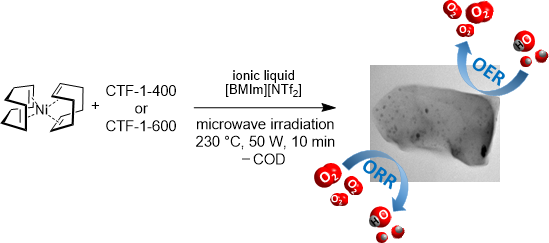
- nitrogen-containing aromatic polymer frameworks with triazine rings, which exhibit high surface area, porosity, and thermal and chemical stability [21][22]. CTFs are promising materials for applications such as catalysts or catalyst support [23][24][25] and for energy storage and conversion [26][27][28
- ]. CTFs can be synthesized through different methods and under different reaction conditions, which enables the control over porosity and surface area [29][30][31][32]. The nitrogen moieties within the CTFs can provide coordination anchors or support for metal species [33][34]. They allow for the
- according to the literature by the ionothermal method [32][42]. Since the synthesis parameters, such as reaction temperature, affect texture, porosity and nitrogen content of the framework, two different reaction temperatures (400 and 600 °C) have been used for the synthesis (Scheme S1, Supporting


Adsorptive removal of bulky dye molecules from water with mesoporous polyaniline-derived carbon
Beilstein J. Nanotechnol. 2020, 11, 597–605, doi:10.3762/bjnano.11.47
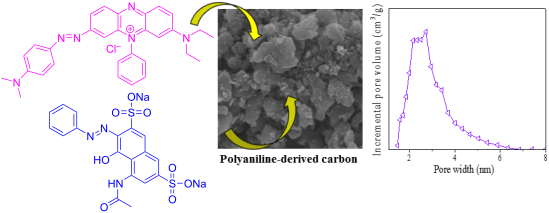
- synthesis, high conductivity and nitrogen content. Porous carbon materials, with high porosity and nitrogen content, have also been obtained from PANI. In other words, functional carbon, for catalysts and supercapacitors can be derived from high temperature carbonization of PANI, especially in the co
- JGB under a wide range of pH values (from 2 to 12). Results and Discussion Characterization of polyaniline-derived carbon (PDC) The porosity and pore size distribution of the adsorbents were characterized with nitrogen adsorption at 77 K. As shown in Figure 1a, the porosity of the PDC materials was
- considerable when the pyrolysis temperature was equal to or higher than 700 °C. The detailed porosity data are summarized in Supporting Information File 1, Table S1. With increasing pyrolysis temperature up to 800 °C, the BET surface area, total pore volume and mesopore volume increased. However, all of the


Comparison of fresh and aged lithium iron phosphate cathodes using a tailored electrochemical strain microscopy technique
Beilstein J. Nanotechnol. 2020, 11, 583–596, doi:10.3762/bjnano.11.46
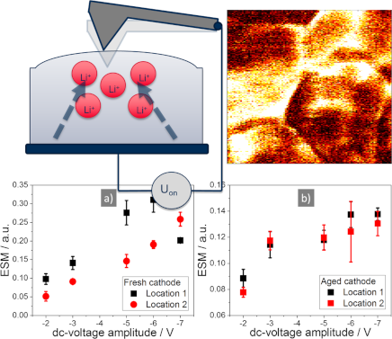
- the coexistence of a lithiated and delithiated phase for LFP [78]. Additionally, other mechanisms and factors, e.g., the generation of surface layers, porosity and tortuosity of electrodes, electrolyte salts and concentration gradients in the electrodes are affecting the ion transport and therefore



Multilayer capsules made of weak polyelectrolytes: a review on the preparation, functionalization and applications in drug delivery
Beilstein J. Nanotechnol. 2020, 11, 508–532, doi:10.3762/bjnano.11.41
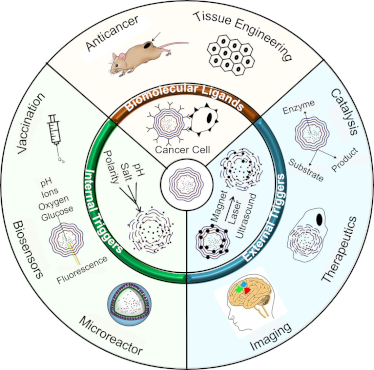
- LbL multistep technique and can be easily controlled by varying the polymerization time. This single-step technique resulted in a wall thickness similar to the LbL multistep technique and was applicable to other particles of different size and porosity. Because of the broad absorption and interesting



Evolution of Ag nanostructures created from thin films: UV–vis absorption and its theoretical predictions
Beilstein J. Nanotechnol. 2020, 11, 494–507, doi:10.3762/bjnano.11.40
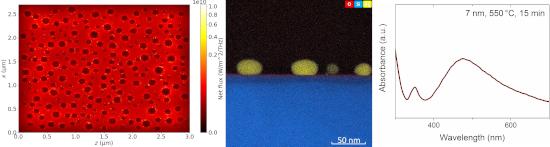
- , and thus the amplification of the electromagnetic field, was observed in several directions, depending on the direction of illumination. The plasmon resonance also has an effect on the porosity of the metallic nanostructures [26][27], which is why determining the shape and surface quality is extremely




An advanced structural characterization of templated meso-macroporous carbon monoliths by small- and wide-angle scattering techniques
Beilstein J. Nanotechnol. 2020, 11, 310–322, doi:10.3762/bjnano.11.23
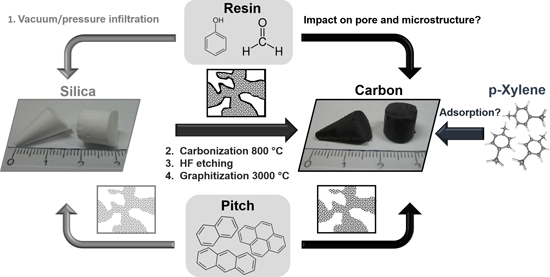
- ][7][8]. The turbostratic microstructure of these “non-graphitic” carbon materials combined with variable conductivity and a significant nanoscale disordered porosity are typical features of this kind of carbon materials. Templating strategies are meanwhile well established to endow carbon materials
- with defined porosity on the nanometer scale, in particular to enhance the surface area and to control the pore size [9][10][11][12]. This study is dedicated to a quantitative determination of the porosity, e.g., pore size, pore volume and pore shape of carbon materials prepared by hard-templating of
- can markedly affect the nanoscale porosity [13][14][15][16][17][18][19][20][21]. Hence, a combined in-depth elucidation of meso/microporosity and the graphene-based structure upon heat treatment is pursued in this study to obtain a profound understanding of the relationship between the changes in the