


Search results
Search for "shear" in Full Text gives 188 result(s) in Beilstein Journal of Nanotechnology.
Mechanical and thermodynamic properties of Aβ42, Aβ40, and α-synuclein fibrils: a coarse-grained method to complement experimental studies
Beilstein J. Nanotechnol. 2019, 10, 500–513, doi:10.3762/bjnano.10.51
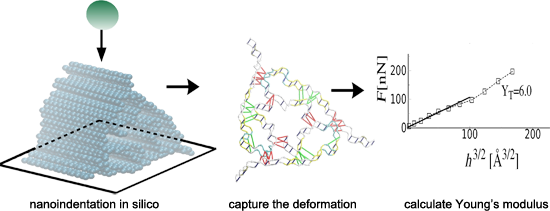
- molecular understanding. Our approach allows a comparison of diverse elastic properties based on different deformations , i.e., tensile (YL), shear (S), and indentation (YT) deformation. From our analysis, we find a significant elastic anisotropy between axial and transverse directions (i.e., YT > YL) for
- the requirement of a different experimental setup, namely, the more involved sonification method [34]. Moreover, the experimental calculation of the shear modulus (S) can be realised by suspending the fibril between two beams and pressing the free part against the indenter, which gives rise to the
- , shear, and indentation processes. Mechanical and thermodynamics characterization through a CG model In our previous work [36], we have constructed a computational protocol for performing several types of mechanical deformation in silico (Figure 3). Such processes can be carried out at constant speed or


Graphene–graphite hybrid epoxy composites with controllable workability for thermal management
Beilstein J. Nanotechnol. 2019, 10, 95–104, doi:10.3762/bjnano.10.9
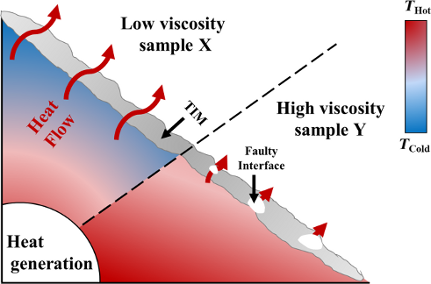
- ) operated in cone and plate arrangements (stainless steel cone, with a 40 mm diameter and a 4° cone angle) at 25 °C. The shear rate was swept between 0.01–100 1/s, and each measurement was performed at steady-state flow at a shear rate of 0.01 1/s to extract the viscosity [51][68]. Functional thermal
- ). Single-filler composites: (a) TC and (b) viscosity and relative viscosity as functions of filler type and volume fraction at constant shear rate (0.1 1/s) and temperature of 25 °C. Each graph displays the fitting parameters. The solid lines in (a) are fits to the ROM model (Equation 1), and those in (b
- (at constant shear rate 0.1 [1/s], T = 25 °C) as a function of the graphite volume fraction. Each color represents a different constant GNP volume percent. The lines in (a) are fits to the ROM model (Equation 1), and those in (b), to the modified K–D model (Equation 2). The fitting parameters are



Pull-off and friction forces of micropatterned elastomers on soft substrates: the effects of pattern length scale and stiffness
Beilstein J. Nanotechnol. 2019, 10, 79–94, doi:10.3762/bjnano.10.8
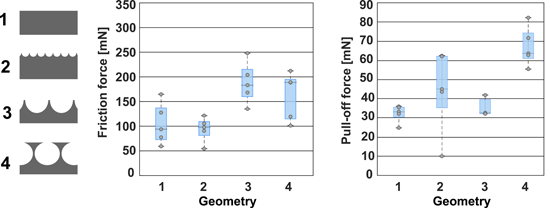
- are present is referred to as the elastocapillary length l, which is defined as l = γ/μ, where γ is the surface tension of the substrate and μ is the elastic shear modulus of the substrate [26]. If the length scale of the microscale features is in the order of the elastocapillary length, indentation
- PVA-18, respectively. The elastocapillary length of PVA (defined as l = γPVA/μPVA [26], with surface tension γPVA ≈ 50 kPa [32] and elastic shear modulus μPVA ≈ 12 kPa for PVA-12) is in the order of 400 nm. Similarly, the elastocapillary length of PVA-18 is in the order of 300 nm. Pull-off forces of





A comparison of tarsal morphology and traction force in the two burying beetles Nicrophorus nepalensis and Nicrophorus vespilloides (Coleoptera, Silphidae)
Beilstein J. Nanotechnol. 2019, 10, 47–61, doi:10.3762/bjnano.10.5
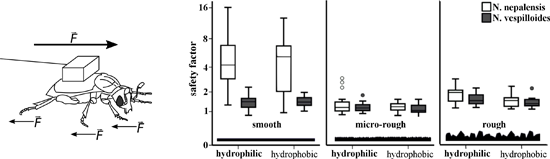
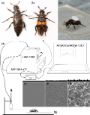
- of pulling is well known in the attachment systems of insects, spiders and geckos [41]. Whereas in smooth systems, directionality results from a drop in contact area attributable to the flexibility of the pad, in hairy systems, both the contact area of each single hair and the higher shear stress
- local release might support shear-induced adhesion [46] and help to dose the secretion economically. In terms of the biological role, the higher attachment force in the pull direction might help the animals to climb effectively on a variety of structures such as plants and fur and might enable the males
- secretion in N. nepalensis compared with that of N. vespilloides [3]. Since under the dynamics of friction regimes, the generated shear stress is largely determined by the viscosity of the fluid [46], such higher viscosities might be responsible for the observed higher friction forces of N. nepalensis on



Contact splitting in dry adhesion and friction: reducing the influence of roughness
Beilstein J. Nanotechnol. 2019, 10, 1–8, doi:10.3762/bjnano.10.1
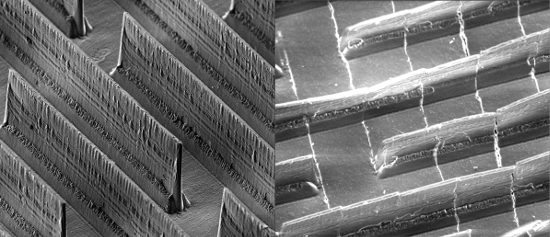
- more easily to the surface waviness and by reducing the effective average peeling angle. These findings can be used to guide the development of biomimetic shear-actuated adhesives suitable for operation not only on smooth but also on rough surfaces. Keywords: biomimetics; contact splitting; gecko
- , regardless of the surface waviness, when the surface roughness increases. Second, splitting the wall-shaped microstructure in parallel to the shear direction helps to mitigate the negative effect of the increasing surface unevenness by allowing the split microstructure to adapt more easily to the surface
- waviness as well as by allowing it to reduce the effective average peeling angle. These findings can guide the development of biomimetic shear-actuated adhesives that are suitable for operation not only on smooth but also on rough surfaces. Experimental Microstructured surfaces with 140 µm high flaps


Ternary nanocomposites of reduced graphene oxide, polyaniline and hexaniobate: hierarchical architecture and high polaron formation
Beilstein J. Nanotechnol. 2018, 9, 2936–2946, doi:10.3762/bjnano.9.272
- -shear mixed at 7000 rpm for four times (15 min each). This procedure was used to avoid thermal degradation of the sample. The GO particles prepared by this method present flake sizes ranging from 5 to 30 μm [14][17], which are remarkably larger in comparison to GO reported in literature obtained by


Layered calcium phenylphosphonate: a hybrid material for a new generation of nanofillers
Beilstein J. Nanotechnol. 2018, 9, 2906–2915, doi:10.3762/bjnano.9.269
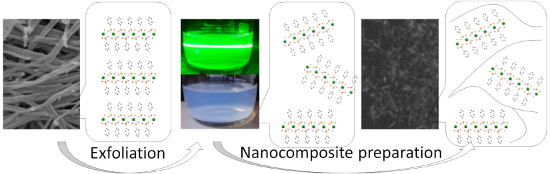
- the exfoliation of CaPhP in an amount sufficient for incorporation into polymers involved using propan-2-ol with a strong shear force generated in a high-shear disperser. The filler was tested both in its unexfoliated and exfoliated forms for the preparation of polymer composites, for which a low
- more appropriate for treatment with hydrophobic compounds and, in comparison to pure ethanol, less expensive. The exfoliation of CaPhP in propan-2-ol was studied using various force actions starting with sonication, in addition to the combination with mild shear force, which is produced by pushing the
- particle dispersion through an injection needle by a peristaltic pump. Additionally, a strong shear force created by a high-shear disperser, where the velocity of dispersion was 5 m/s, was also applied. It was found out that the most suitable method for the exfoliation of calcium phenylphosphonate was the


The effect of flexible joint-like elements on the adhesive performance of nature-inspired bent mushroom-like fibers
Beilstein J. Nanotechnol. 2018, 9, 2893–2905, doi:10.3762/bjnano.9.268
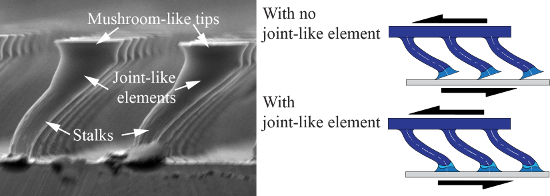
- kPa in shear and 110 kPa in pull-off stress in the gripping direction, which are twice and ten times higher than that in the releasing direction, respectively. A model to optimize the elastic modulus of the joint-like elements to enable sliding without peeling of the tips has been proposed. Keywords
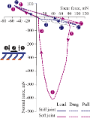
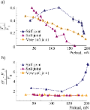
- than vertically aligned [10]. This tilt, in addition to enhanced performance [11], equips the gecko with directional adhesion properties as shown by Autumn et al. [12]. When they tested setae using a load–drag–pull (LDP) experiment, they found that setae exhibit very high interfacial shear and tension
- when dragged along the direction of the tilt. Opposite to the tilt direction, low shear and compression was measured. They called this phenomenon frictional adhesion suggesting that the adhesive engagement between the gecko’s foot and the surface is enabled only when it pulls the foot in the direction






Low cost tips for tip-enhanced Raman spectroscopy fabricated by two-step electrochemical etching of 125 µm diameter gold wires
Beilstein J. Nanotechnol. 2018, 9, 2718–2729, doi:10.3762/bjnano.9.254
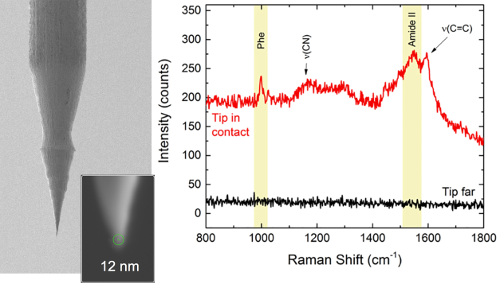
- ] and shear-force microscopy (ShFM) [15] allow for chemical imaging of nanostructured materials, surfaces and (bio)molecular layers with a spatial resolution of 4–10 nm in ambient conditions [15][16], and can even reach atomic-level sensitivity in ultrahigh vacuum (UHV) [17][18][19]. Excellent reviews


Friction reduction through biologically inspired scale-like laser surface textures
Beilstein J. Nanotechnol. 2018, 9, 2561–2572, doi:10.3762/bjnano.9.238
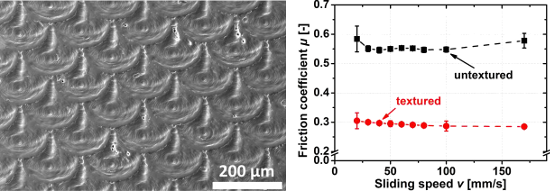
- ratio of the shear strength to the yield pressure of the softer metal [51]. Consequently, the tribological properties of the surface are strongly influenced by the subsurface material and the subsurface microstructure is strongly influenced by the plasticity and the nature of the corresponding


Evidence of friction reduction in laterally graded materials
Beilstein J. Nanotechnol. 2018, 9, 2443–2456, doi:10.3762/bjnano.9.229
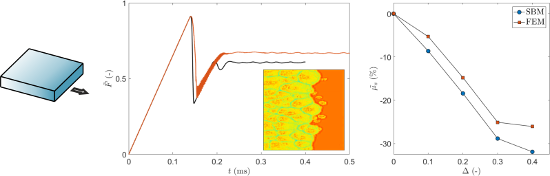
- time evolution obtained with FEM is also shown. In this case, the behaviour is strongly dependent on the thickness of the block. The time interval Δts needed to reach the static friction peak can be estimated starting from the shear stress τ = Gγ, where G is the shear modulus. If the shear deformation
- shear stress is reached (i.e., the static friction threshold). The first detachment of the sliding surface produces a detachment avalanche propagating towards the region with higher static friction threshold, as shown in Figure 5 (see also Supporting Information File 1). Analogous effects on the


![[Graphic 5]](/bjnano/content/inline/2190-4286-9-229-i10.svg?max-width=637&scale=1.18182) as function of time for the non-graded material: SBM solution for dif...
as function of time for the non-graded material: SBM solution for dif...


Electrospun one-dimensional nanostructures: a new horizon for gas sensing materials
Beilstein J. Nanotechnol. 2018, 9, 2128–2170, doi:10.3762/bjnano.9.202






Recent highlights in nanoscale and mesoscale friction
Beilstein J. Nanotechnol. 2018, 9, 1995–2014, doi:10.3762/bjnano.9.190
- friction was recently observed for micro- and macroscale systems based on incommensurate sliding between graphene-covered spheres or “nanoscrolls” and substrates [76][77]. Also a decrease of friction shear stress with increasing number of layers has been observed for graphene over Si/SiO2 in vacuum
- , nitrogen, and air [78]. In addition, the shear strength and the interface adhesion energy for graphene on Si/SiO2 was proven to always exceed those of the graphene/Ni(111) interface [78]. The weakly lattice-mismatched graphite/hBN interface is also predicted to be promising for ultra-low-friction
- , only small particles adhere to the sublinear superlubric scaling law, while larger particles show a linear scaling between friction and area, equivalent to a constant shear stress [100]. This can be explained by an enhanced interaction between the Sb atoms and the substrate, as was found by ab initio


Defect formation in multiwalled carbon nanotubes under low-energy He and Ne ion irradiation
Beilstein J. Nanotechnol. 2018, 9, 1951–1963, doi:10.3762/bjnano.9.186
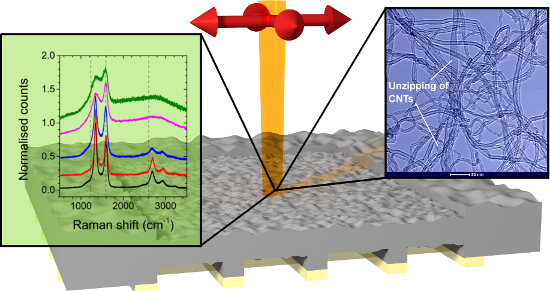
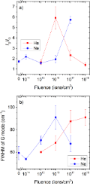
- irradiation is part of these studies [2]. Irradiation-induced defects affect the elastic modulus and the tensile strength of CNTs [3]. For example, for multiwalled carbon nanotubes (MWCNTs), the presence of a small number of defects can increase the interlayer shear strength by several orders of magnitude [4



Nonlinear effect of carrier drift on the performance of an n-type ZnO nanowire nanogenerator by coupling piezoelectric effect and semiconduction
Beilstein J. Nanotechnol. 2018, 9, 1917–1925, doi:10.3762/bjnano.9.183
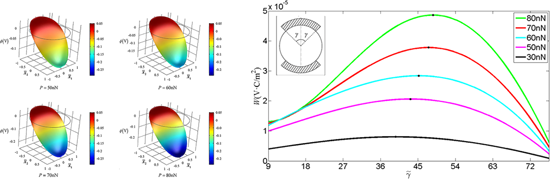
- the neutral axis [31]. There are two factors to affect : mechanical shear deformations and accumulation of electric carriers. In general, shear deformations result in in-plane electric fields, which lead to carrier drift, while carrier accumulation results in diffusion. Because Δn/n0 is very small in
- the whole ZNW cross section in the linear regime, the largest variance rate of carrier concentration appears along the neutral axis because of the strongest shear deformation there. With increasing end force, the carrier accumulation increases such that there is a stronger nonlinear drift effect on
- difference is between the two endpoints of the x2-axis. Furthermore, the maximal positive potential amplitude is much lower than the maximal negative potential amplitude. In a bent piezoelectric semiconducting beam, two shear deformations produce two in-plane electric field components, E1 and E2. E1 is


![[Graphic 46]](/bjnano/content/inline/2190-4286-9-183-i59.svg?max-width=637&scale=1.18182) and (b) boundary electric displacement Dr at Ω for different end f...
and (b) boundary electric displacement Dr at Ω for different end f...


Friction force microscopy of tribochemistry and interfacial ageing for the SiOx/Si/Au system
Beilstein J. Nanotechnol. 2018, 9, 1647–1658, doi:10.3762/bjnano.9.157
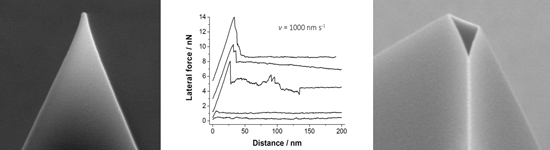
- at the sliding interface is expected only at higher temperature [26][27] but may be facilitated by frictional energy and by shear mixing. Eutectic AuSi will segregate at room temperature and can thus not be detected after the experiments. We rather suggest that for re-passivation Si reacts with




Optical near-field mapping of plasmonic nanostructures prepared by nanosphere lithography
Beilstein J. Nanotechnol. 2018, 9, 1536–1543, doi:10.3762/bjnano.9.144
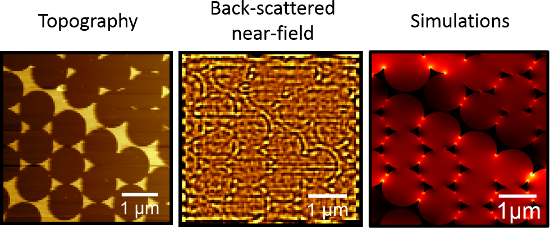
- then glued onto an Abracon Corporation, AB38T-32.768 kHz tuning fork operated in shear force configuration. Image treatment To perform the FFT analysis of the optical images we used the open source software Gwyddion [38]. Any AFM software offering these processing options could be used to achieve the




Atomistic modeling of tribological properties of Pd and Al nanoparticles on a graphene surface
Beilstein J. Nanotechnol. 2018, 9, 1239–1246, doi:10.3762/bjnano.9.115
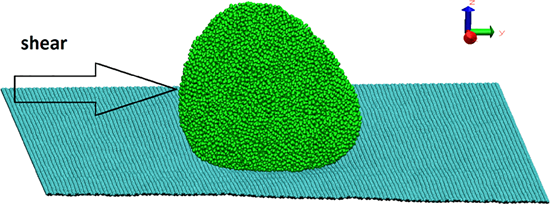
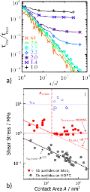
- . Figure 5 depicts the frictional shear stress τ as a function of the contact area. The average shear stress is τ ≈ 9.9 MPa for the Al particles and 12.2 MPa for Pd particles. The values of shear stress in experiments (Figure 2 in [7]) for Sb particles on MoS2 substrate varies from 1 MPa to 3 MPa with
- contact area changes from 1000 nm2 to 100000 nm2. Also, for Sb particles on highly oriented pyrolytic graphite τ is in the range from 0.1 MPa to 1 MPa with the same changes of contact area. In [7] the shear stress decreases linearly with contact area while we find that τ is nearly independent of it. This
- area of Ni nanoparticles changes from 0.2 nN to 0.45 nN and from 0.1 nN to 0.2 nN for Ag, with contact area A from 20 nm2 to 60 nm2 for Ni and from 30 nm2 to 80 nm2 for Ag. The shear stress depending on the contact area of Ag nanoparticles varies from 40 MPa to 90 MPa and from 50 MPa to 140 MPa for Ni


Imaging of viscoelastic soft matter with small indentation using higher eigenmodes in single-eigenmode amplitude-modulation atomic force microscopy
Beilstein J. Nanotechnol. 2018, 9, 1116–1122, doi:10.3762/bjnano.9.103
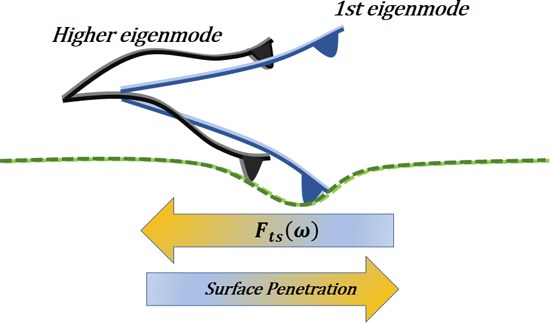
- apex, δ is the tip indentation and G(t) is the shear relaxation modulus, which in our case is described by the Generalized Maxwell (also called Wiechert) model (see Figure 1): where τn = ηn/Gn is the ratio between viscosity (ηn) and modulus (Gn) in the n-th arm in the model in Figure 1. The values for


Fatigue crack growth characteristics of Fe and Ni under cyclic loading using a quasi-continuum method
Beilstein J. Nanotechnol. 2018, 9, 1000–1014, doi:10.3762/bjnano.9.93
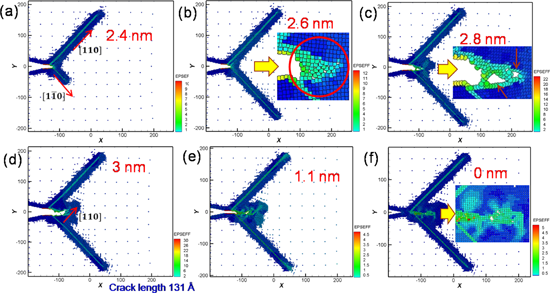
- that under cyclic loading, the initially damaged area of the crack will coalesce again after compression or shear to the initial geometry leading to a strengthening of the material. If no coalescence appears, the crack spreads rapidly and the material breaks. Moreover, under the cyclic loading of shear
- at any orientation, the slip dislocation observed in the materials considerably affects the release of stress. Keywords: dislocations; fatigue crack growth; materials treatment effects; mechanics; shear stress; Introduction When materials undergo cyclic loading, the growth of cracks in the material
- cyclic loading of tension or shear. To completely analyze the crack growth and expansion characteristics of single-crystal Fe and Ni, the quasi-continuum (QC) method as proposed by Miller and Tadmor [15], instead of the traditional MD method, was employed as its computational efficiency is considerably









Engineering of oriented carbon nanotubes in composite materials
Beilstein J. Nanotechnol. 2018, 9, 415–435, doi:10.3762/bjnano.9.41
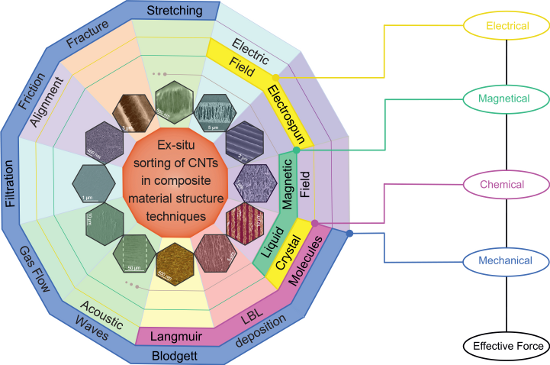
- of the gap between the two layers and the simultaneous effects of the shear force and mechanical tensile stretch, a slight drag force pulls the CNT in the vertical direction. However, the obtained free CNTs are certainly not vertical relative to the surface of layers. Although the small length of the
- tubes limits the angle of the gap, it also leads to a very small angle deviation in the direction of the shear force. In principle the tubes were not constrained to be quite vertically oriented, but a microscopic view showed satisfactory alignment. To keep the CNTs aligned, the top layer of the CNT/PSF








Liquid-crystalline nanoarchitectures for tissue engineering
Beilstein J. Nanotechnol. 2018, 9, 205–215, doi:10.3762/bjnano.9.22
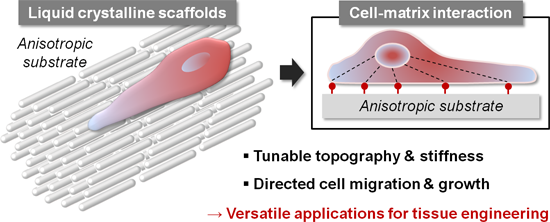
- hydrophobic molecular interactions [25][26][27]. Even simple solutions of purified biopolymers and biocolloids, considered as rod-like particles, may exhibit multiple phases of self-organization depending on the rod concentration, ionic conditions, confinements, and shear forces [28][29]. Figure 1 shows an
- . Structurally ordered films have been fabricated by applying unidirectional shear force on a drop of concentrated M13 virus suspension, which resulted in a nematic-like organization of the viruses. The long-range order 2D nematic topography can guide the directional growth of hippocampal neural progenitor cells
- potential along the bundle gel. Collagen-based helical nanofibrillar scaffolds have shown the ability to support the growth of human endothelial cells [104]. The nanofibrils were generated by applying shear stress on a collagen solution in a (chiral) nematic phase. When the cells were seeded in a 3D


Hyperthermic intracavitary nanoaerosol therapy (HINAT) as an improved approach for pressurised intraperitoneal aerosol chemotherapy (PIPAC): Technical description, experimental validation and first proof of concept
Beilstein J. Nanotechnol. 2017, 8, 2729–2740, doi:10.3762/bjnano.8.272
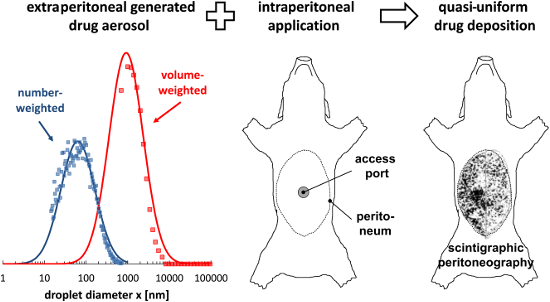
- head, where the carbon dioxide flow leads to shear-stress-induced droplet formation as well as droplet acceleration. The generated polydisperse aerosol leaves the nozzle head within a jet stream, which is directed perpendicular to the enclosure surface. The enclosure surface serves thus as an impaction




Exploring wear at the nanoscale with circular mode atomic force microscopy
Beilstein J. Nanotechnol. 2017, 8, 2662–2668, doi:10.3762/bjnano.8.266
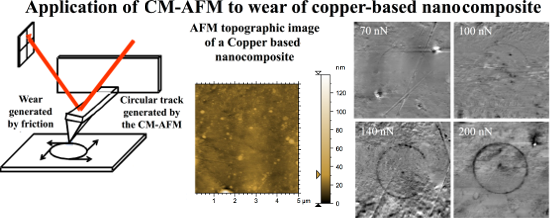
- . Consequently, the shear stress applied to the contact appears to be not high enough to wear the material. The wear depths determined from the wear profiles (Figure 3D for example) are in the nanometer range. One can calculate from Figure 5 in the steady-state regime for an applied load of 3 µN that about 100


Ferrocholesteric–ferronematic transitions induced by shear flow and magnetic field
Beilstein J. Nanotechnol. 2017, 8, 2552–2561, doi:10.3762/bjnano.8.255
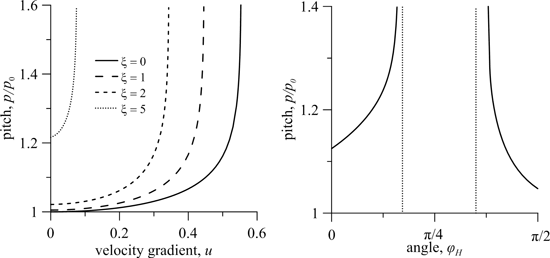
- magnetic field and a shear flow. Both influences are able to induce the ferrocholesteric–ferronematic transition independently; however, the differences between the magnetic field orientation and the flow alignment direction lead to a competition between magnetic and hydrodynamic mechanisms of influence on
- the ferrocholesteric structure. We analyze various orientations of a magnetic field relative to the direction of a shear flow. The pitch of the ferrocholesteric helix is obtained as function of the strength and the orientation angle of the magnetic field, the shear velocity gradient and a reactive
- parameter. Phase diagrams of ferrocholesteric–ferronematic transition and the pitch of the ferrocholesteric helix as functions of the material and the governing parameters are calculated. We find out that imposing a shear flow leads to a shift of the magnetic field threshold. The value of the critical





