Search results
Search for "silicon" in Full Text gives 913 result(s) in Beilstein Journal of Nanotechnology. Showing first 200.
Green synthesis of carbon dot structures from Rheum Ribes and Schottky diode fabrication
Beilstein J. Nanotechnol. 2024, 15, 1369–1375, doi:10.3762/bjnano.15.110
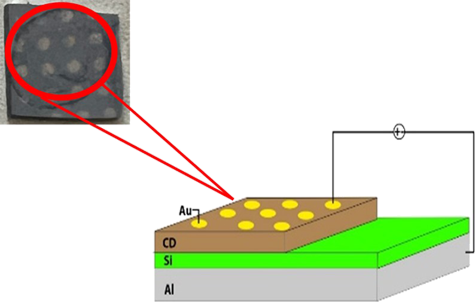
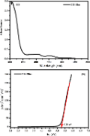
- steady-state fluorescence measurements. In the second part of the study, CDs were dripped onto silicon substrates, and a CDs thin film was formed by evaporation. A diode structure was obtained by evaporating gold with the shadow mask technique on the CDs film, and the current–voltage characteristics of
- dried to synthesize CDs. Acetone, methanol, silicon, gold powder, and aluminum were purchased from Sigma-Aldrich, Merck, and Alfa Aesar. All studies were carried out at room temperature. Instruments Various devices were used for the structural, morphological, and optical characterization of the CDs. FEI
- supernatant was removed by decantation and a stock solution was prepared to be used in the studies. The prepared stock solution was stored at 4 °C to prevent contamination [15]. Schottky diode fabrication An n-type silicon substrate was used for Schottky diode fabrication. In the first step, the silicon




Interaction of graphene oxide with tannic acid: computational modeling and toxicity mitigation in C. elegans
Beilstein J. Nanotechnol. 2024, 15, 1297–1311, doi:10.3762/bjnano.15.105

- temperature; for XPS, the suspensions were dripped on a silicon substrate. Computational methods MD simulations of interactions between TA and the GO surface were performed in LAMMPS, applying ReaxFF reactive force field [72]. MD simulations were conducted under constant pressure (P) and temperature (T), the


New design of operational MEMS bridges for measurements of properties of FEBID-based nanostructures
Beilstein J. Nanotechnol. 2024, 15, 1273–1282, doi:10.3762/bjnano.15.103
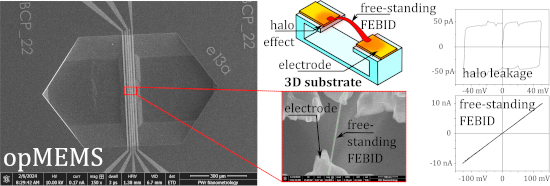
- of the nanostructures into larger devices remains one of the major challenges, especially when non-silicon materials (such as carbon nanotubes or multimaterial nanowires) are used [8][9][10]. Among the fabrication methods, particle beam-based methods offer the greatest versatility for rapid
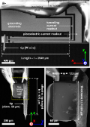
- nanomodification. Finally, we show results of resistance measurements of a free-standing FEBID nanostructure deposited across the RoI of a LiS-embedded opMEMS bridge. Materials and Methods Design of opMEMS bridges The opMEMS were fabricated on an undoped ⟨110⟩ silicon substrate on which a 40 nm silicon nitride
- (Si3N4) layer was deposited via CVD. The 40 nm thick platinum paths were then patterned by lift-off photolithography. The opMEMS bridge body was defined photolithographically with a feature size of 2 µm, etched by dry oxygen plasma etching (DRIE) and then released by KOH anisotropic wet silicon etching


Photocatalytic methane oxidation over a TiO2/SiNWs p–n junction catalyst at room temperature
Beilstein J. Nanotechnol. 2024, 15, 1132–1141, doi:10.3762/bjnano.15.92
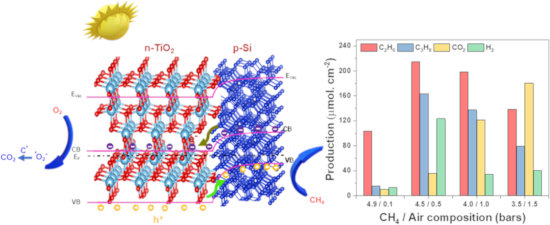
- recombination of charge carriers in semiconductors is a main drawback for photocatalytic oxidative coupling of methane (OCM) reactions. Herein, we propose a novel catalyst by developing a p–n junction titania–silicon nanowires (TiO2/SiNWs) heterostructure. The structure is fabricated by atomic layer deposition
- . Experimental Chemicals and materials Commercial p-type Si 3-inch wafers (⟨100⟩ orientation, boron-doped, resistivity = 0.01–1 Ω·cm) were purchased from Silicon Mitus Corporation, South Korea. Silver nitrate (AgNO3, 0.1 M), hydrofluoric acid HF (50 wt %), nitric acid (HNO3, 63%), acetone, and ethanol were
- over the TiO2/SiNWs sample. Proposed mechanism of photocatalytic CH4 oxidation reaction over p–n junction TiO2/SiNWs sample. Schematic illustration of TiO2/SiNWs chip fabrication starting from a p-type silicon wafer. A thin layer of TiO2 was deposited on the Si NWs via ALD. Comparison of the OCM


Direct electron beam writing of silver using a β-diketonate precursor: first insights
Beilstein J. Nanotechnol. 2024, 15, 1117–1124, doi:10.3762/bjnano.15.90

- precursors were cleaned after each use. The cleaning involved mechanical wiping using acetone-wetted tissues, followed by a sequence of sonification in acetone and ethanol, and dry-blowing with nitrogen. Depositions were carried out on silicon with native oxide. The silicon substrates were cleaned using a
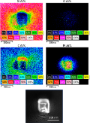
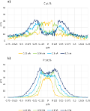
- a flat silicon substrate matching our deposition conditions. The density of SE and BSE decreases exponentially with increasing distance to the central beam and extends to roughly 2 µm, which corresponds to the halo region 1 (H1 and H1’) observed in Figure 1a. The fact that halo region 2 extends
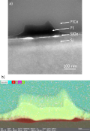
- magnification were adapted to match the high-resolution SEM (HRSEM) image above. The deposit structure turned out to be extremely non-uniform with a continuous layer of elemental silver at the interface between deposit and silicon substrate (cf. Supporting Information File 1, Figure S4, for more details on the


Signal generation in dynamic interferometric displacement detection
Beilstein J. Nanotechnol. 2024, 15, 1070–1076, doi:10.3762/bjnano.15.87
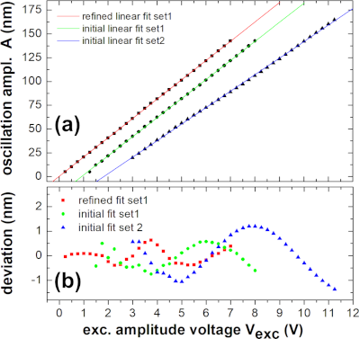
- a Michelson interferometer. Experiments reported here are performed with the dielectric/vacuum interface of the bare fiber end acting as the first mirror and a metal-coated silicon cantilever as the second mirror. We keep the fiber–cantilever distance d always large enough to work in the Michelson
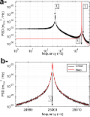
- = 0.81) aluminum-coated silicon microcantilever (type PPP-NCLR, NanoWorld AG, Neuchâtel, Switzerland) having dimensions of (225 ± 10) μm × (38 ± 8) μm × (7 ± 1) μm according to the specification of the manufacture. Using our standard procedure [15], we determined the eigenfrequency as f0 = 169.67622 kHz


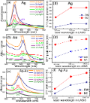
Effect of wavelength and liquid on formation of Ag, Au, Ag/Au nanoparticles via picosecond laser ablation and SERS-based detection of DMMP
Beilstein J. Nanotechnol. 2024, 15, 1054–1069, doi:10.3762/bjnano.15.86

- , and biomaterials for constructing flexible SERS substrates, owing to their numerous advantages over traditional options such as glass and silicon [31][32][33][34][35][36][37][38][39]. Detecting hazardous molecules, such as pesticides, explosives, and chemical threats (nerve agents) using flexible SERS
- detection of DMMP (1.2 ppm V) in the vapor phase using Glass_Ag_Au NPs, 3D fractal microstructure substrates developed by corner lithography and anisotropic wet etching of silicon using the 785 nm as the Raman excitation. When UV excitation was utilized during the measurements, the Raman peak intensities


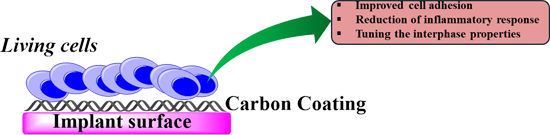
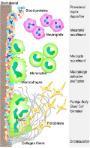
Interface properties of nanostructured carbon-coated biological implants: an overview
Beilstein J. Nanotechnol. 2024, 15, 1041–1053, doi:10.3762/bjnano.15.85
- ., camphor and cyclohexanol) on various substrates, ranging from uncoated silicon to simple glass, to yield carpets of vertically aligned CNTs. Nevertheless, a purification stage for removing the catalyst is mandatory for avoiding side effects in biological environments [82][83]. The choice of the catalyst



Bolometric IR photoresponse based on a 3D micro-nano integrated CNT architecture
Beilstein J. Nanotechnol. 2024, 15, 1030–1040, doi:10.3762/bjnano.15.84
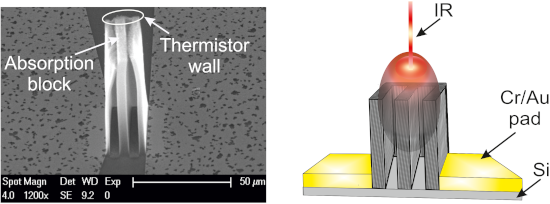
- . Simultaneously, emphasis will be placed on the effective conversion of heat into electrical signal, which is the most critical effect contributing to the overall success of non-cryogenic IR microbolometer and thermal detector design [11]. Experimental The process started with cleaning a silicon substrate with a
- 600 nm thick thermally oxidized SiO2 layer. The wafer was p-type and lightly boron-doped (Si-Mat, Silicon Materials). The substrate was thoroughly cleaned to remove impurities and contaminants to provide an ideal condition for CNT growth. Subsequently, an essential 30 nm aluminum oxide (AlOx) layer
- VACNTs (water-assisted CVD on silicon substrates with ethylene as the carbon source) has been investigated by [3]. They showed that vertically aligned SWCNTs can absorb light almost perfectly with a reflectance of 0.01–0.02 over a very wide spectral range (0.2–200 μm). The UV-to-mid-IR absorption


Recent progress on field-effect transistor-based biosensors: device perspective
Beilstein J. Nanotechnol. 2024, 15, 977–994, doi:10.3762/bjnano.15.80
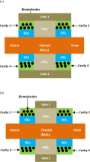
- ]. Figure 5 shows the 2D representation of the structure of a silicon HG NT JL FET-based biosensor. In this case, the full architecture of a nanotube FET has been used to design high performance biosensors. There are two types of gate cavity: the inner gate cavity and the outer gate cavity, as shown in
- FET)-based biosensor. Figure 6 shows the 2D representation of silicon VS NS FET-based biosensor designed on a buried oxide (BOX). In this structure, three similar nanocavity regions were created between the three channels and the metal gate to immobilize targeted biomolecules, as shown in Figure 6
- . Figure 7 shows the 3D representation of an SRG JL FET-based biosensor. One type of doping concentration was added to the silicon channel, source, and drain region. A surrounding cavity was created between the oxide and the gate metal. This structure utilizes a silicon-based substrate with SiO2 as an




Electrospun nanofibers: building blocks for the repair of bone tissue
Beilstein J. Nanotechnol. 2024, 15, 941–953, doi:10.3762/bjnano.15.77
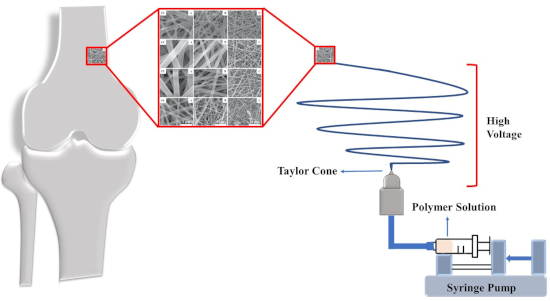
- -based nanofiber scaffolds for tissue regeneration (Stellenbosch Nanofiber Company, South Africa) [45]. ReBOSSIS consists of β-tricalcium phosphate, PLGA, and silicon-doped calcium carbonate to support bone formation. ReBOSSIS electrospun fibers are distinguished from other market products by a cotton


Water-assisted purification during electron beam-induced deposition of platinum and gold
Beilstein J. Nanotechnol. 2024, 15, 884–896, doi:10.3762/bjnano.15.73
- after loading the sample, the chamber was plasma-cleaned with an XEI Scientific Evactron decontaminator for 30 min, at 0.4 Torr (air leak) and a forward radio frequency power of 12 W. Silicon substrates were obtained from a 525 ± 25 µm p-type silicon wafer (resistivity of 1–5 Ω·cm, (100) crystal
- orientation) with a native silicon oxide layer. Samples of 1 × 1 cm2 were used, on to which an array of annular patterns was lithographically defined, by laser lithography and etching using an SF6–O2 dry-etch, to facilitate location of the deposition areas. The substrates were roughly cleaned in acetone and
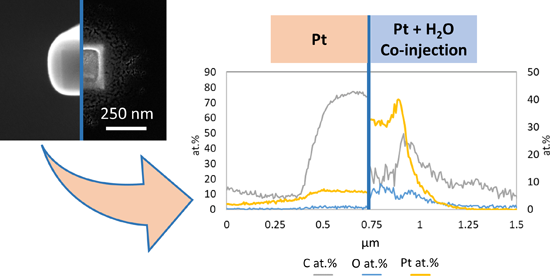
- both deposition and etching, resulting in partially purified material within the BSE range. In this case, with the injection of the water precursor only, cleaning of the silicon substrate is the only process observed. At a larger number of passes (5000–10000), a change in the morphology of the





Intermixing of MoS2 and WS2 photocatalysts toward methylene blue photodegradation
Beilstein J. Nanotechnol. 2024, 15, 817–829, doi:10.3762/bjnano.15.68
- additional peaks observed in all XRD diagrams at ≈37° and ≈69° positions are due to the silicon substrate. The X-ray photoelectron spectroscopy (XPS) survey scans and high-resolution scans for all samples are presented in Figure 3a–j. All XPS analyses were first calibrated using the C 1s peak of carbon at


Exploring surface charge dynamics: implications for AFM height measurements in 2D materials
Beilstein J. Nanotechnol. 2024, 15, 767–780, doi:10.3762/bjnano.15.64
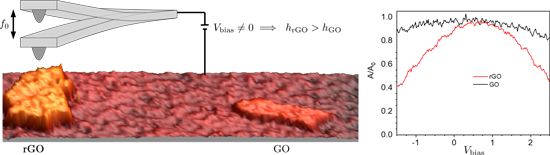
- and/or rGO in Milli-Q type-I water (MQ water) were utilized. A drop of these dispersions was cast onto highly doped p-type silicon (1–10 Ω·cm, Siltronix) with a 300 nm SiO2 layer thermally grown on top. Before deposition, the substrate underwent a thorough cleaning process, which involved rinsing with
- modulation mode (FM-KPFM) with an AC voltage of 700 mV at 7 kHz using platinum-coated silicon tips (Olympus AC240TM-R3, k = 2 N/m and f0 = 70 kHz). Using a dual lock-in amplifier (Zurich instruments, HF2LI), in addition to the KPFM channel, which provides information on the sample's SP, the 2ωelec


Effect of repeating hydrothermal growth processes and rapid thermal annealing on CuO thin film properties
Beilstein J. Nanotechnol. 2024, 15, 743–754, doi:10.3762/bjnano.15.62
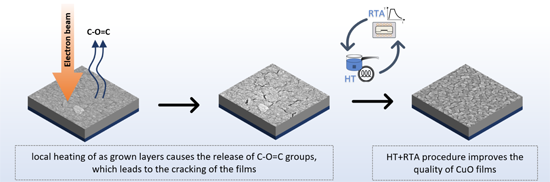
- silicon (100) substrates (Siegert Wafer). These substrates were covered with a nucleation layer in the form of gold nanoislands sputtered using a turbomolecular-pumped coater Quorum Q150T ES. CuO films were obtained according to the following procedure. First, an aqueous solution of copper(II) acetate
- characterized using an analytical scanning electron microscope (SEM) Hitachi SU-70 with the X-ray microanalysis system (EDX) enabling composition analysis (Thermo Fisher Pathfinder system with a silicon drift detector). Additionally, in the study, a scanning probe microscope (Dimension Icon, Bruker) was used
- silicon nitride probe, ScanAsyst-AIR (Bruker). Scanning capacitance microscopy (SCM) measurements were conducted in contact mode using a silicon probe coated with a PtIr layer, SCM-PIT-V2 (Bruker). Capacitance measurements were taken with VAC = 2 V and VDC = 1 V applied. The carrier distribution maps at a




Level set simulation of focused ion beam sputtering of a multilayer substrate
Beilstein J. Nanotechnol. 2024, 15, 733–742, doi:10.3762/bjnano.15.61
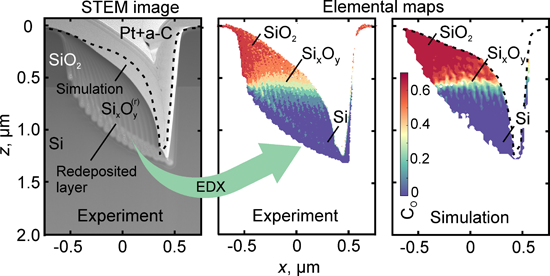
- processing was simulated using the level set method and experimentally studied by milling a silicon dioxide layer covering a crystalline silicon substrate. The simulation took into account the redeposition of atoms simultaneously sputtered from both layers of the sample as well as the influence of
- ; multilayer substrate; silicon; silicon dioxide; sputtering; Introduction The focused ion beam (FIB) technique is an effective method for surface nanostructuring. It is based on the local removal of material by sputtering with a narrow beam of, typically, gallium ions. This feature of the FIB method makes it
- -based [21], level set [22][23][24], and Monte Carlo [25] methods. The most commonly studied materials are monocrystalline silicon [21][22][23] and amorphous silicon dioxide [24][25] because of their technological importance in microelectronics. More complex simulations of multilayer milling, which need
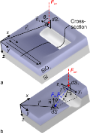

![[Graphic 55]](/bjnano/content/inline/2190-4286-15-61-i68.svg?max-width=637&scale=1.18182)


Reduced subthreshold swing in a vertical tunnel FET using a low-work-function live metal strip and a low-k material at the drain
Beilstein J. Nanotechnol. 2024, 15, 713–718, doi:10.3762/bjnano.15.59
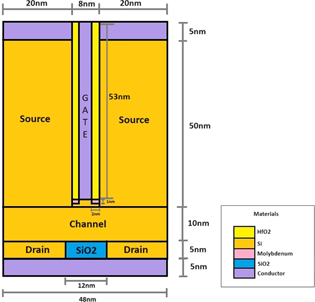
- to reduce gate oxide leakage are high-k materials. The device’s ability to keep a charge is increased by using high-k materials, which also aids in downsizing. HfO2 is compatible with a silicon substrate and possesses a high dielectric constant (ε ≈ 25), a large bandgap (5.68 eV), band offsets with
- silicon, a low leakage current, and a lattice parameter that is close to that of silicon with a modest lattice misfit (ca. 5%) [11]. In this paper, a published VTFET structure is taken for comparison [12]. A large tunnel area and a thin channel enhance the device metrics [13]. In contrast to the


Elastic modulus of β-Ga2O3 nanowires measured by resonance and three-point bending techniques
Beilstein J. Nanotechnol. 2024, 15, 704–712, doi:10.3762/bjnano.15.58
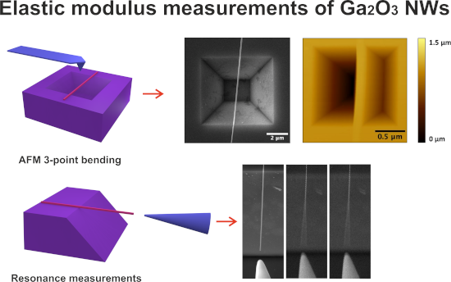
- pressure chemical vapour transport in a horizontal quartz tube reactor (18 mm inner diameter) according to the method reported in [2]. The process involved loading a ceramic boat with 0.15 g of Ga2O3 powder (99.99%, Alfa Aesar) at the centre of the quartz tube. Oxidised silicon wafers SiO2/Si (100) coated
- geometry, utilising a 600 W Cu anode (Cu Kα radiation, λ = 1.5406 Å) X-ray tube. In four steps, (100)Si wafers (Semiconductor wafer, Inc.) with 50 nm thermal oxide, were processed to create the patterned silicon substrates with grooves and inverted pyramids. First, the patterns were created in a
- photoresist on the wafer using conventional optical lithography. Next, the SiO2 was selectively removed using a buffered HF solution to replicate the resist pattern in the oxide layer. Then, the silicon was etched at 90 °C in a tetramethylammonium hydroxide (TMAH) solution to create etch pits. Finally, the


Enhancing higher-order modal response in multifrequency atomic force microscopy with a coupled cantilever system
Beilstein J. Nanotechnol. 2024, 15, 694–703, doi:10.3762/bjnano.15.57

- parameters Several commercial rectangular multifrequency AFM cantilevers of different sizes from different manufacturers are summarized in [24]. In the ANSYS Workbench finite element simulation, the material used in the simulation is silicon, with a Young's modulus of 166 GPa and a density of 2330 kg/m3. We
- cantilever experimental platform setup used to measure the modal response is shown in Figure 7. The experimental setup consists of a macroscale cantilever (6 × 1 × 0.18 cm, silicon content up to 99.9999%) with left-side clamping and a simple bottom support. A photo is shown in Figure 8. In the experiments


Laser synthesis of nanoparticles in organic solvents – products, reactions, and perspectives
Beilstein J. Nanotechnol. 2024, 15, 638–663, doi:10.3762/bjnano.15.54
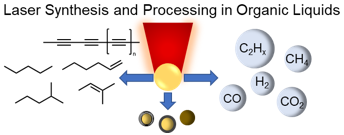
- femtosecond and picosecond irradiation of solvents including toluene, hexane, acetone, and acetonitrile [117][162][163]. Nanodiamonds have been obtained through femtosecond irradiation of ethanol [164][165]. Fluorescent carbon dots were also observed as a by-product when synthesizing 1-octene-capped silicon





AFM-IR investigation of thin PECVD SiOx films on a polypropylene substrate in the surface-sensitive mode
Beilstein J. Nanotechnol. 2024, 15, 603–611, doi:10.3762/bjnano.15.51
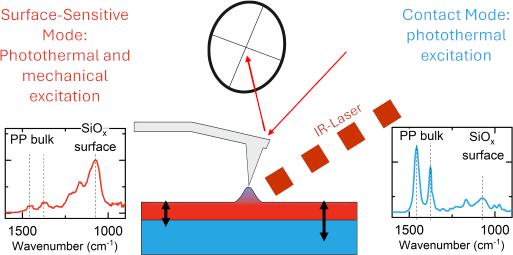
- /bjnano.15.51 Abstract Thin silicon oxide films deposited on a polypropylene substrate by plasma-enhanced chemical vapor deposition were investigated using atomic force microscopy-based infrared (AFM-IR) nanospectroscopy in contact and surface-sensitive mode. The focus of this work is the comparison of
- signal of the substrate material could be significantly reduced. Even layers that are so thin that they could hardly be measured in the contact mode can be analyzed with the surface-sensitive mode. Keywords: AFM-IR; polypropylene; surface-sensitive mode; silicon oxide; thin films; XPS; Introduction
- sample excitation). However, it is much more flexible in the choice of the drive and detection frequencies, as only the mixing frequency needs to match a system resonance and not the individual frequencies themselves. Here, we use AFM-IR in the surface-sensitive mode to investigate thin silicon oxide


Stiffness calibration of qPlus sensors at low temperature through thermal noise measurements
Beilstein J. Nanotechnol. 2024, 15, 580–602, doi:10.3762/bjnano.15.50
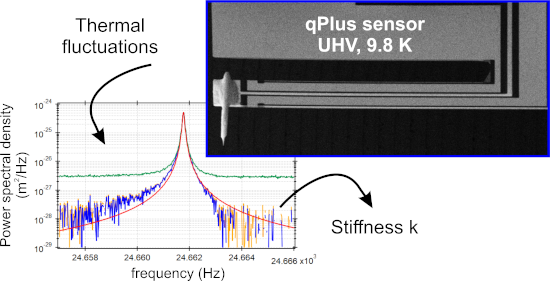
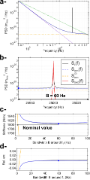
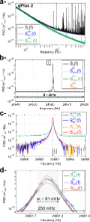
- little precision. An accurate stiffness calibration is therefore mandatory if accurate force measurements are targeted. In nc-AFM, the probe may either be a silicon cantilever, a quartz tuning fork (QTF), or a length extensional resonator (LER). When used in ultrahigh vacuum (UHV) and at low temperature
- the framework focuses on a particular kind of sensor, it may be adapted to any high-k, high-Q nc-AFM probe used under similar conditions, such as silicon cantilevers and LERs. Keywords: low temperature; non-contact atomic force microscopy; qPlus sensors; quartz tuning fork; stiffness calibration
- and at room temperature, nc-AFM experiments are mostly carried out with silicon cantilevers, similar to those used during AFM experiments in air or in liquid. Their stiffness rarely exceeds 100 N/m. In UHV and at low temperature, the use of cantilevers is more tedious because of the required in situ

Fabrication of nanocrystal forms of ᴅ-cycloserine and their application for transdermal and enteric drug delivery systems
Beilstein J. Nanotechnol. 2024, 15, 465–474, doi:10.3762/bjnano.15.42
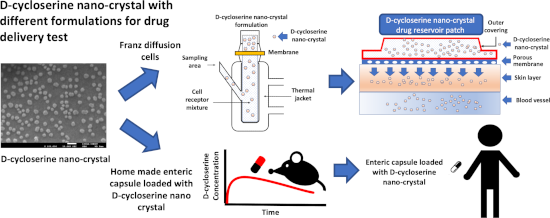
- other hand, only a few research articles reported DCS formulations for parenteral administration [18][19]. Nanocarriers offer great advantages to many technological fields. For example, polytetrafluoroethylene (PTFE) with silicon carbide nanocrystals can be applied as a photostabilizer or as a UV light


Sidewall angle tuning in focused electron beam-induced processing
Beilstein J. Nanotechnol. 2024, 15, 447–456, doi:10.3762/bjnano.15.40
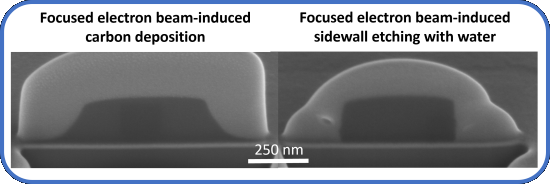
- ) and from the BSE (SE2) [6][7][8]. An example of a line deposited from a carbon precursor on a silicon substrate, coated with a 20 nm Au–Pd layer and a 5 nm Ti adhesion layer, is shown in Figure 1a, clearly showing the broad (black) tails on both sides of the line. The cross section of the line, made
- , section S1 for more details on the simulation). Sidewall slope evolution under FEBIE To experimentally study the modification of the sidewalls of a FEBID structure, carbon structures were first deposited on a silicon substrate with a 20 nm gold–palladium layer and a 5 nm titanium adhesion layer. The
- MeCpPtMe3. Then the sample was tilted by 52° and milled with a gallium FIB. The cross-sectional profile was imaged at low energy (2 keV) with the SE detector. SE image of a deposited FEBID carbon line, top view (a) and FIB cross section (b). The line was deposited from a dodecane precursor on a silicon




Heat-induced morphological changes in silver nanowires deposited on a patterned silicon substrate
Beilstein J. Nanotechnol. 2024, 15, 435–446, doi:10.3762/bjnano.15.39
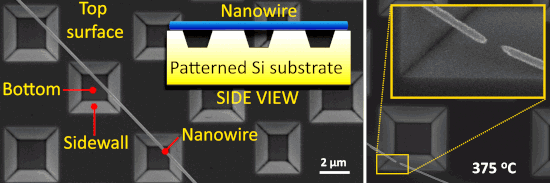
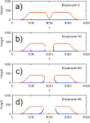
- specially patterned silicon wafers so that some NWs were partially suspended over the holes in the substrate. Then, we performed a series of heat-treatment experiments and found that adhered and suspended parts of NWs behave differently under the heat treatment. Moreover, depending on the heat-treatment
- for various novel applications where arrays of metal nanostructures are used, such as surface-enhanced Raman spectroscopy substrates [36][37][38]. In this work, we deposited Ag NWs on specially patterned silicon (Si) substrates, so large fractions of NWs are partially suspended over the holes. Samples
- silicon substrates with square holes were prepared from (100) silicon wafers (Semiconductor Wafer, Inc.) with 50 nm thermal oxide in four steps as follows: 1) conventional optical lithography process to produce the desired pattern in a photoresist on the wafer; 2) selective removal of SiO2 using buffered