Search results
Search for "sulfur" in Full Text gives 208 result(s) in Beilstein Journal of Nanotechnology. Showing first 200.
Improved adsorption and degradation performance by S-doping of (001)-TiO2
Beilstein J. Nanotechnol. 2019, 10, 2116–2127, doi:10.3762/bjnano.10.206
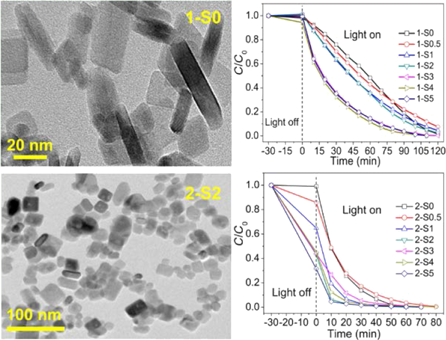
- of Physical Science and Information Technology, Anhui University, Hefei 230039, China 10.3762/bjnano.10.206 Abstract In this work, sulfur-doped (S-doped) TiO2 with the (001) face exposed was synthesized by thermal chemical vapor deposition at 180 or 250 °C using S/Ti molar ratios RS/Ti of 0, 0.5, 1





Gold-coated plant virus as computed tomography imaging contrast agent
Beilstein J. Nanotechnol. 2019, 10, 1983–1993, doi:10.3762/bjnano.10.195
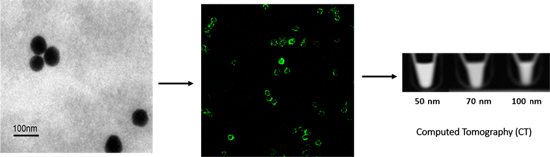
- signal from sulfur (red arrow in Figure 3B) from the linker on the surface of the Au-CPMV particles. To confirm successful modification of the Au-CPMV with antibodies zeta potential measurements were carried out [39]. The zeta potential of the 50 nm Au-CPMV particles decreased from −45.9 ± 3.1 mV to
- and size, indicating that they are resistant to solubilization or oxidation. The dual STEM and EDX spectra from the Antibody-PEG5000Au-CPMV gave useful information about the spatial distribution of gold and sulfur across the cellular surface. The simultaneously acquired EDX spectrum images confirmed
- that gold and sulfur are at the surface as a consequence of the modification of Au-CPMV with the antibody linker. Furthermore, STEM-EDX analysis provided compositional and topographical 3-D elemental distributions (Figure 5). CT Imaging Iodine-containing compounds are routinely used as CT imaging





Long-term entrapment and temperature-controlled-release of SF6 gas in metal–organic frameworks (MOFs)
Beilstein J. Nanotechnol. 2019, 10, 1851–1859, doi:10.3762/bjnano.10.180
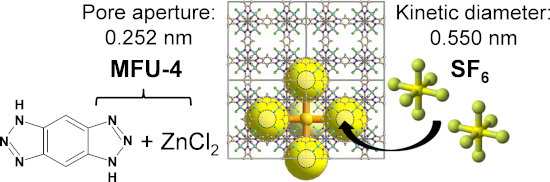
- frameworks (MOFs); sulfur hexafluoride; Introduction Metal–organic frameworks (MOFs) are coordination polymers with organic ligands containing (potential) voids [1]. Their porosity and high surface area make them attractive materials for adsorption-based applications [2][3][4][5]. MOFs have been suggested
- this work we selected sulfur hexafluoride (kinetic diameter: 5.50 Å) [14] as a guest, which has a much larger kinetic diameter than the previously reported entrapment of xenon gas (kinetic diameter: 3.96 Å) [14]. Additionally, its presence inside the pores can be easily followed by Fourier-transform
- extracted from the previous force field scan trajectory and all atomic positions were allowed to relax during subsequent optimization steps, except for the position of the sulfur atom of SF6, which was fixed at the corresponding c/N coordinate of the transition path. The PW-DFT+D calculations were performed


Toxicity and safety study of silver and gold nanoparticles functionalized with cysteine and glutathione
Beilstein J. Nanotechnol. 2019, 10, 1802–1817, doi:10.3762/bjnano.10.175
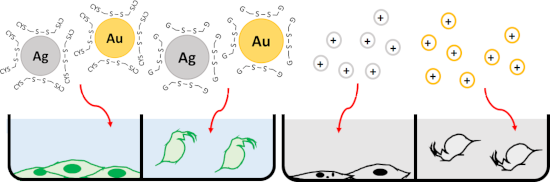
- circulation via different routes [40][41][42][43]. Absorbed or intravenously applied NPs will accumulate in different body compartments [44][45][46]. AgNPs are prone to oxidative dissolution in biological media and the released Ag+ reacts with thiolate groups of sulfur-containing biomolecules [47], which may


TiO2/GO-coated functional separator to suppress polysulfide migration in lithium–sulfur batteries
Beilstein J. Nanotechnol. 2019, 10, 1726–1736, doi:10.3762/bjnano.10.168
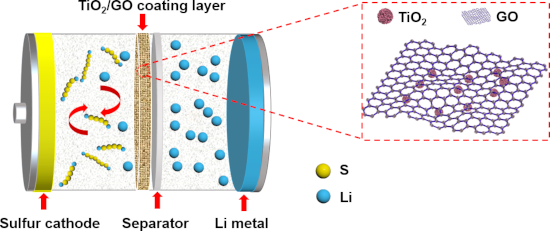
- Ning Liu Lu Wang Taizhe Tan Yan Zhao Yongguang Zhang School of Materials Science and Engineering, Hebei University of Technology, Tianjin 300130, China Synergy Innovation Institute of GDUT, Heyuan 517000, China 10.3762/bjnano.10.168 Abstract Lithium–sulfur batteries render a high energy density
- but suffer from poor cyclic performance due to the dissolution of intermediate polysulfides. Herein, a lightweight nanoporous TiO2 and graphene oxide (GO) composite is prepared and utilized as an interlayer between a Li anode and a sulfur cathode to suppress the polysulfide migration and improve the
- batteries. Keywords: dealloying; functional separator; lithium–sulfur batteries; TiO2/GO composite; Introduction The portability of handheld electronic products and successful realization of next-generation electric vehicles urgently require advanced energy storage devices with higher storage capacity and


Upcycling of polyurethane waste by mechanochemistry: synthesis of N-doped porous carbon materials for supercapacitor applications
Beilstein J. Nanotechnol. 2019, 10, 1618–1627, doi:10.3762/bjnano.10.157
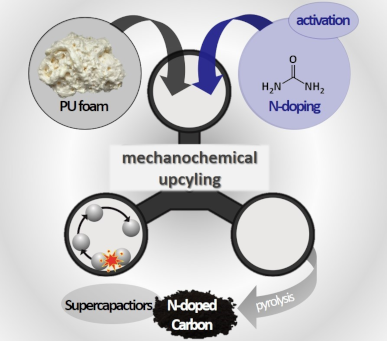
- Quantachrome Instruments after vacuum activation at 150 °C for at least 24 h. The total pore volume was calculated at relative pressure of p/p0 = 0.96 for each material. Elemental analysis was carried out with a vario Micro cube from Elementar. The elemental composition of carbon, hydrogen, nitrogen and sulfur


Flexible freestanding MoS2-based composite paper for energy conversion and storage
Beilstein J. Nanotechnol. 2019, 10, 1488–1496, doi:10.3762/bjnano.10.147
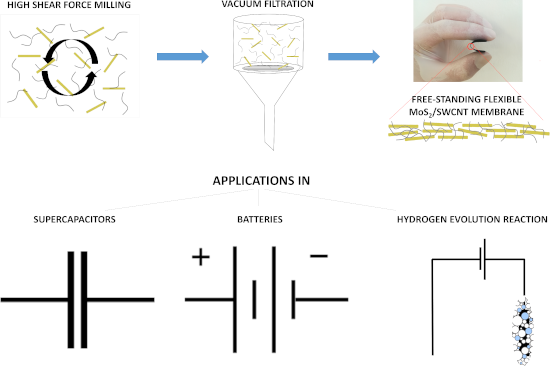
- demonstrated that nanoscale MoS2 is more appropriate than the bulk phase equivalent. The surface of the bulk phase mainly consists of thermodynamically more stable basal sites, which are catalytically less active. In contrast, the sulfur edge sites of MoS2 are highly catalytically active towards HER [32][33
- %. This degree of oxidation is lower than in the case of chemically exfoliated MoS2, which is possibly due to a slightly lower degree of exfoliation [39]. Additionally, no oxidation was observed for sulfur as only states originating from sulfides were identified in the S 2p spectrum (Figure 3b) [40]. The
- the following Equation 3) and the decomposition of the electrolyte followed by the formation of a solid electrolyte interphase (SEI) layer [18][20]. The prominent anodic peak at ≈2.5 V results from the conversion of Li2S to sulfur and lithium ions (see the following Equation 4) [20]. During the


Warped graphitic layers generated by oxidation of fullerene extraction residue and its oxygen reduction catalytic activity
Beilstein J. Nanotechnol. 2019, 10, 1391–1400, doi:10.3762/bjnano.10.137
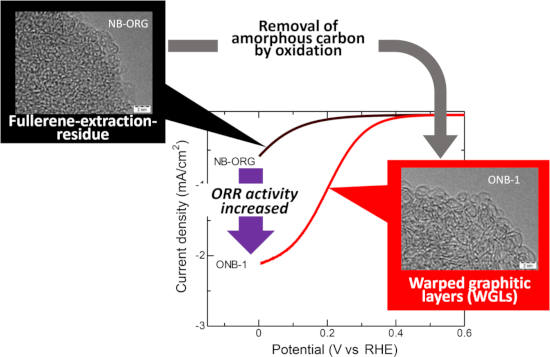
- diamond phase, nitrogen, boron, phosphorus, sulfur, and transition metals like iron and cobalt. Such WGLs can be obtained from fullerene-related materials. We selected a commercial carbon, Nanom Black, which is a fullerene extraction residue from a fullerene soot prepared by a combustion method [40]. The




A biomimetic nanofluidic diode based on surface-modified polymeric carbon nitride nanotubes
Beilstein J. Nanotechnol. 2019, 10, 1316–1323, doi:10.3762/bjnano.10.130
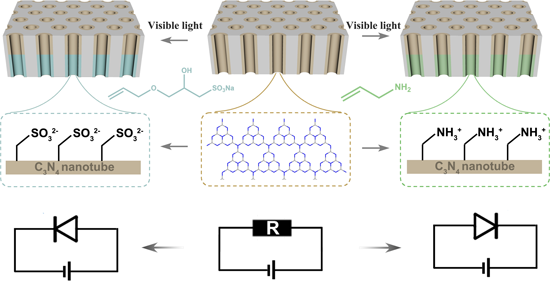
- shows the existence of sulfur atoms on the surface while unmodified side only contains carbon and nitrogen (Figure S6, Supporting Information File 1). The AHPA modification was also confirmed by FTIR spectra recorded before and after modification (Figure 4c). After modification, there is an obvious peak


Alloyed Pt3M (M = Co, Ni) nanoparticles supported on S- and N-doped carbon nanotubes for the oxygen reduction reaction
Beilstein J. Nanotechnol. 2019, 10, 1251–1269, doi:10.3762/bjnano.10.125
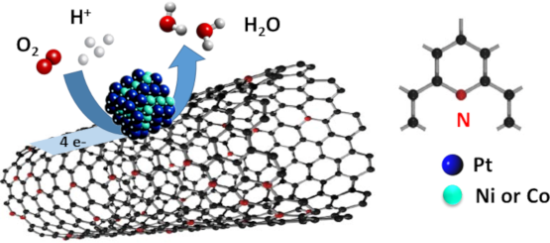
- , 31055 Toulouse Cedex 4, France 10.3762/bjnano.10.125 Abstract Sulfur- (S-CNT) and nitrogen-doped (N-CNT) carbon nanotubes have been produced by catalytic chemical vapor deposition (c-CVD) and were subject to an annealing treatment. These CNTs were used as supports for small (≈2 nm) Pt3M (M = Co or Ni
- of the deposited particles, which is close to 25 nm [31]. Previous works have shown the possibility to dope CNTs with nitrogen (N-CNT) or sulfur (S-CNT) in order to modify properties such as electronic conduction and surface chemistry [32][33][34]. This strategy contributes to improve the metal
- -CNTs) and S-doped CNT (S-CNTs). To further increase the corrosion resistance and the electrical conductivity of the N-CNTs, they were annealed at 1000 °C to produce N-CNTHT. The introduction of nitrogen or sulfur into the CNT structure has an effect on the structural properties of the prepared









Pure and mixed ordered monolayers of tetracyano-2,6-naphthoquinodimethane and hexathiapentacene on the Ag(100) surface
Beilstein J. Nanotechnol. 2019, 10, 1188–1199, doi:10.3762/bjnano.10.118
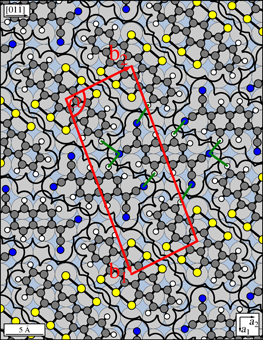
- for 60 min prior to the deposition of the molecules. HTPEN was synthesized as green microcrystalline substance by reacting pentacene with an excess of elemental sulfur in 1,2,4-trichlorobenzene solution at 210 °C, according to the published procedure [31]. The analytical data was identical to that
- on the basis of the space requirement of the molecules is very similar to that in the relaxed structure. In both structures, the molecules are arranged in a brickwall-like structure, where the sulfur atoms along the sides of the molecules face hydrogen atoms of the terminal benzene rings of the
- neighboring molecules are as far apart from each other as possible. This arrangement suggests the presence of strong hydrogen bonds between nitrogen atoms of the TNAP and hydrogen atoms of both TNAP and HTPEN molecules. In this mixed structure, the smallest distance between sulfur atoms of neighboring HTPEN


Porous N- and S-doped carbon–carbon composite electrodes by soft-templating for redox flow batteries
Beilstein J. Nanotechnol. 2019, 10, 1131–1139, doi:10.3762/bjnano.10.113
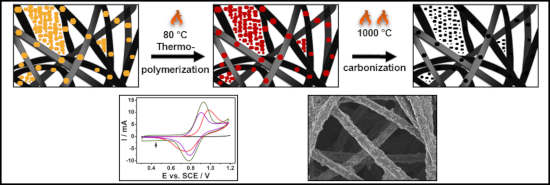
- solution containing a phenolic resin, a nitrogen source (pyrrole-2-carboxaldehyde) and a sulfur source (2-thiophenecarboxaldehyde), as well as a triblock copolymer (Pluronic® F-127) acting as the structure-directing agent. By this strategy, highly porous carbon phase co-doped with nitrogen and sulfur was
- additional 2-thiophenecarboxaldehyde was employed as a sulfur source. The carbon–carbon composite materials were synthesized by soaking the felts in a solution containing the aforementioned precursors. After thermopolymerization under air a subsequent carbonization step under protective atmosphere, in which
- the porogen is removed, was performed to obtain highly porous carbon electrodes co-doped with nitrogen and sulfur. But not all of the formed carbon coating sticks to the surface of the felt fibers, some excess co-doped carbon material exists besides. This additional material is referred to as “bulk



Synthesis and characterization of quaternary La(Sr)S–TaS2 misfit-layered nanotubes
Beilstein J. Nanotechnol. 2019, 10, 1112–1124, doi:10.3762/bjnano.10.111
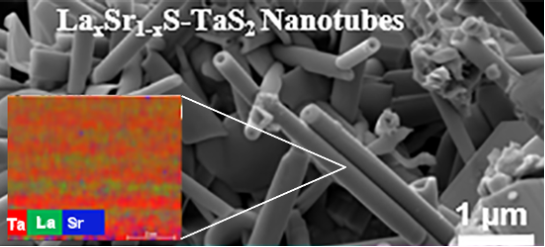
- ) are characterized by the presence of a superstructure in which the Se atoms preferentially occupied the hexagonal crystal positions around the Ta atoms, while the sulfur atoms showed a preference for the rock-salt sites in the LnS lattice [36]. More recently, the inclusion of Nb atoms in LaS–TaS2


Glucose-derived carbon materials with tailored properties as electrocatalysts for the oxygen reduction reaction
Beilstein J. Nanotechnol. 2019, 10, 1089–1102, doi:10.3762/bjnano.10.109
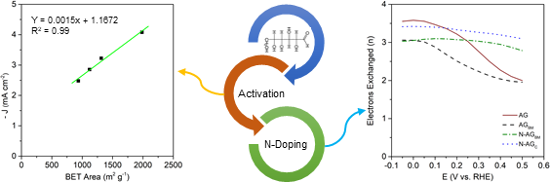
- ]. The main advantage of carbon materials is the possibility of modifying their physical and chemical properties resulting in a more electroactive material [2][3][10], which is an especially important feature for the ORR. The incorporation of heteroatoms like nitrogen [11][12], oxygen [13], sulfur [14


Structural and optical properties of penicillamine-protected gold nanocluster fractions separated by sequential size-selective fractionation
Beilstein J. Nanotechnol. 2019, 10, 955–966, doi:10.3762/bjnano.10.96
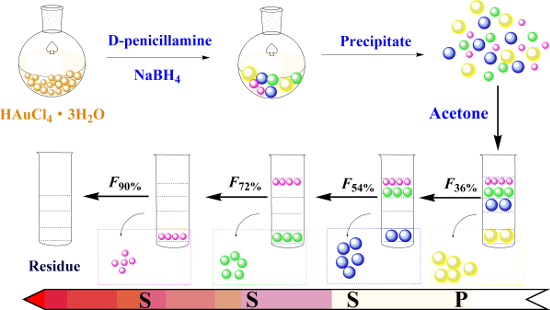
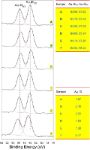
- size and the ratio of Au atoms to ligands of AuNCs. X-ray photoelectron spectroscopy (XPS) has also been applied to observe the molecular dependence on the gold and sulfur chemical state of organosulfur monolayers of the fractions. The photoluminescence spectra of these AuNCs in the range of 900–790 nm
- shifted by 0.76 eV with respect to the largest clusters (F36%). The trend of this shift is closely related to the oxidation state of Au, and its magnitude is similar to that of other Au(I) complexes [31]. The analysis of the S 2p peak is a reliable method for assessing the chemical bonds of sulfur atoms
- (2p1/2). Each doublet has a peak area ratio of 2:1 and a splitting of ≈1.2 eV that is consistent with the results determined theoretically by the spin–orbit splitting effect. The sulfur binding energy for S 2p3/2 at 162 eV suggests that all the sulfur atoms are bound to gold as a thiolate species [34





In situ AFM visualization of Li–O2 battery discharge products during redox cycling in an atmospherically controlled sample cell
Beilstein J. Nanotechnol. 2019, 10, 930–940, doi:10.3762/bjnano.10.94
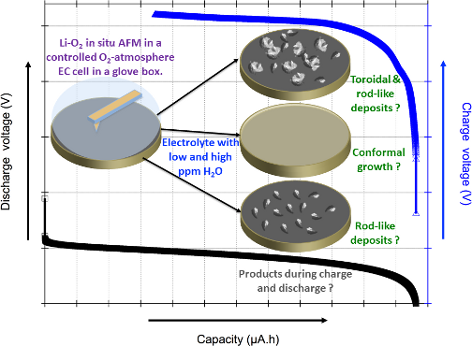
- of water in the electrolyte. In our previous attempt [25] a closed AFM cell was exposed to atmosphere during imaging and discharge with oxygen saturated solvent precluding any impedance spectroscopy and cell recharge studies. Lang et al. discussed in situ AFM studies of lithium/sulfur [26] batteries


Tungsten disulfide-based nanocomposites for photothermal therapy
Beilstein J. Nanotechnol. 2019, 10, 811–822, doi:10.3762/bjnano.10.81
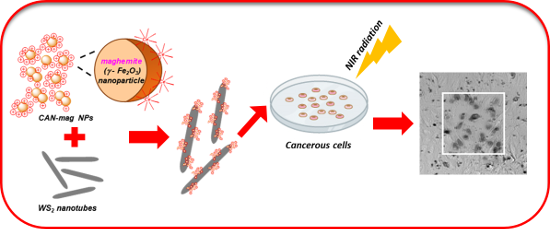
- two hexagonal sulfur layers. WS2 belongs to a family of compounds called transition-metal dichalcogenides (TMDCs), with a general formula of MX2 (M = W, Mo and X = S, Se, Te) and a similar structure based on triple-layers. Good mechanical properties of WS2 inorganic nanotubes (INTs; up to 15 µm length
- [45], nanodots [40] and hollow spheres [46]. Recently, WS2 nanotubes functionalized with C-dots showed promising results for PTT and cell imaging [47]. We selected nanotubes for their mechanical properties and the possibility of coordinate bonds with sulfur atoms, which enables bonding with CAN-mag







Trapping polysulfide on two-dimensional molybdenum disulfide for Li–S batteries through phase selection with optimized binding
Beilstein J. Nanotechnol. 2019, 10, 774–780, doi:10.3762/bjnano.10.77
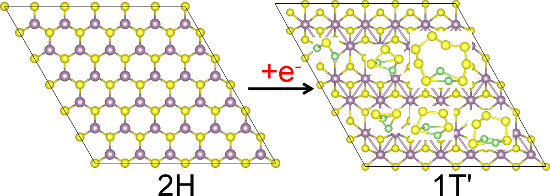
- batteries. Keywords: Li–S batteries; molybdenum disulfide; phase transformation; Introduction To satisfy the increasing demand for high-capacity energy storage systems, rechargeable lithium–sulfur (Li–S) batteries have attracted much attention in recent years due to a high theoretical specific energy
- density of 2567 Wh/kg, a high theoretical capacity of 1672 mAh/g, low cost, non-toxicity, and the abundance of sulfur [1]. The energy density of a Li–S battery is six times higher than that of current commercially used lithium-ion batteries (387 Wh/kg) [2][3][4][5]. Typically, a rechargeable Li–S battery
- is composed of a sulfur cathode and a metallic Li anode, with an organic liquid electrolyte as the ionic conductor, and a porous separator. The Li–S batteries undergo the reaction of 16Li + S8 → 8Li2S, with a simplified reaction sequence of S8 → Li2S8 → Li2S6/Li2S4 → Li2S2/Li2S. Low coulombic


Hydrophilicity and carbon chain length effects on the gas sensing properties of chemoresistive, self-assembled monolayer carbon nanotube sensors
Beilstein J. Nanotechnol. 2019, 10, 565–577, doi:10.3762/bjnano.10.58
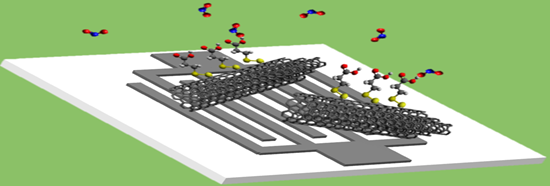
- environment of these molecules was absolutely different. In other words, despite the fact that what is detected in both cases is the C–S elongation, the sulfur in free C3H6O2S was bonded in addition to a hydrogen atom, while in thiol attached to Au-MWCNT samples, the sulfur was bonded to a gold atom. Moreover
- ). In the reference sample, the presence of only gold and carbon related peaks is clear; after the reaction with thiols, we can observe the presence of peaks generated by photoelectrons emitted from sulfur atoms for both samples and oxygen atoms for the short-chain thiol. In order to investigate the
- a short-chain thiol sample in Figure 4b. The S 2p3/2 peak centered at 161.9 eV is reported to be generated by photoelectrons emitted from sulfur atoms bound to gold atoms at the gold nanoparticle surface as thiolate species [38]. The nonexistence of peaks in the binding energy region above 164 eV


Direct observation of the CVD growth of monolayer MoS2 using in situ optical spectroscopy
Beilstein J. Nanotechnol. 2019, 10, 557–564, doi:10.3762/bjnano.10.57
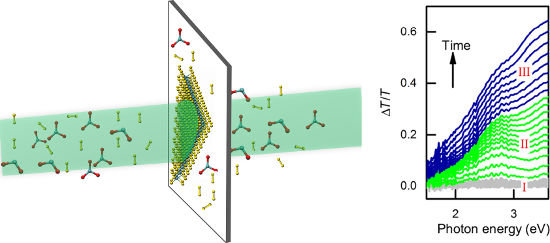
- properties during growth can be recognized by a close look at Figure 2a, which shows the DT spectra recorded during the CVD process. Based on the evolution of the DTS, we divide our CVD process into three sections. For the first section (section I) starting from the preheating of the sulfur source and the
- furnace, it can be seen that the DT spectrum remains unchanged during the first 33 min, although the temperature measured at the position related of sulfur, MoO3, and the substrate increased. This observation shows that no thin film was deposited during this period. The second section (section II
- spectroscopy, its correlation with the temperature at the positions related to the sulfur source, MoO3 source, and the substrate are plotted in Figure 2e and Figure 2f. In Figure 2f, the DT signal at 2.7 eV is selected to represent the growth of the MoS2. By looking at Figure 2e and Figure 2f, it becomes clear


Quantification and coupling of the electromagnetic and chemical contributions in surface-enhanced Raman scattering
Beilstein J. Nanotechnol. 2019, 10, 549–556, doi:10.3762/bjnano.10.56
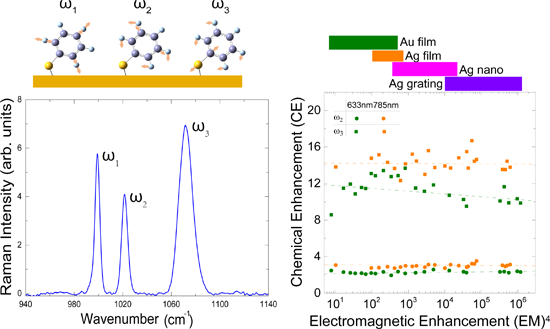
- be the strong sulfur–metal bond itself with its effect on the electronic structure of the phenyl group that leads to the modification and CE of the Raman polarizability of the associated modes. Similarly, a direct modification of the magnitude of CE through a vibrational Stark effect is not expected



A porous 3D-RGO@MWCNT hybrid material as Li–S battery cathode
Beilstein J. Nanotechnol. 2019, 10, 514–521, doi:10.3762/bjnano.10.52
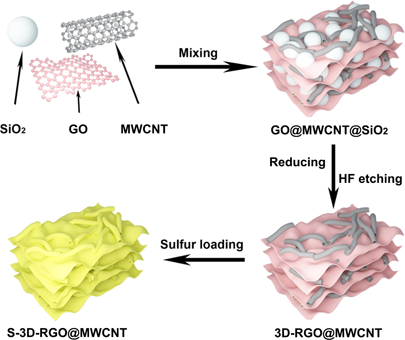
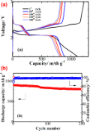
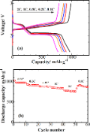
- structure. When used in Li–S batteries, the 3D porous lattice matrix not only accommodates a high content of sulfur, but also induces a confinement effect towards polysulfide, and thereby reduces the “shuttle effect”. The as-prepared S-3D-RGO@MWCNT composite delivers an initial specific capacity of 1102
- nanotubes; energy storage and conversion; Li–S batteries; nanocomposites; Introduction Li–S batteries are notable for their high theoretical specific capacity (1675 mAh·g−1) and energy density (2600 Wh·kg−1). Sulfur is an abundant element, enabling Li–S batteries to be highly competitive among the various
- battery technologies. The actual application of Li–S batteries, however, is hindered by several challenges, i.e., i) the poor conductivity of sulfur and ii) the “shuttle effect” of polysulfides (Li2Sx, 4 < x ≤ 8) [1][2][3][4]. To achieve a high specific capacity, a sulfur cathode with high electrical



Uniform Sb2S3 optical coatings by chemical spray method
Beilstein J. Nanotechnol. 2019, 10, 198–210, doi:10.3762/bjnano.10.18
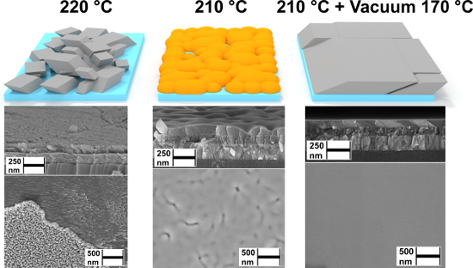
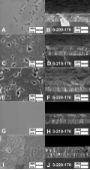
- sideways on the substrate (3-220-As-dep., Figure 3I,J, Figure S3C,D). Rod-shaped Sb2S3 grains were able to grow due to the nature of the material as well as due to complex interactions between the substrate and the turbulence of the spray during deposition [29]. Increasing the sulfur precursor
- , Figure 4C,D). The decreasing layer thickness indicates that approximately a quarter of Sb2S3 by volume has either evaporated or sublimated, i.e., volatilized. Incongruent evaporation, i.e., depletion of sulfur in Sb2S3 during evaporation, may cause the change in Sb2S3 layer morphology, as volatilization
- TD ≥ 210 °C on glass/ITO/TiO2 substrates in air. Increasing the concentration of the sulfur precursor in spray solution from Sb/S 1:3 to 1:6 reduced the crystallization temperature of Sb2S3 layers by ≈10 °C. Uniform layers of amorphous Sb2S3 (Eg ≈ 2.7 eV, S/Sb 1:3) were deposited on glass/ITO/TiO2




Zn/F-doped tin oxide nanoparticles synthesized by laser pyrolysis: structural and optical properties
Beilstein J. Nanotechnol. 2019, 10, 9–21, doi:10.3762/bjnano.10.2
- of the simultaneous doping with both cations and anions. In the case of a high aluminum and lower sulfur co-doped film made by spray pyrolysis at 480 °C, the transparency increased and the grain size was significantly reduced for the optimal composition [22]. This approach benefits from the reduction
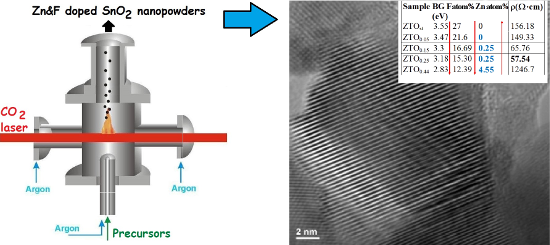
- decomposition of SF6. The elemental analysis reveals that the laser pyrolysis method can be used to synthesize nanoparticles with a large variation of Zn doping (from 4 to 0.1 atom %), by controlling only the SnMe4 to ZnEt2 ratio in the reagent mixture. Also, there is no clear evidence of sulfur in any of the
- , 95% purity) liquids from Sigma and sulfur hexafluoride (SF6), oxygen (O2), argon (Ar) (99.99999 vol %) and ethylene (C2H4) (99.999 vol %) bottled gases from Linde. The reactive precursors used to obtain zinc-doped tin nanopowders, SnMe4 and ZnEt2, have no infrared absorption bands around the CO2




Electrospun one-dimensional nanostructures: a new horizon for gas sensing materials
Beilstein J. Nanotechnol. 2018, 9, 2128–2170, doi:10.3762/bjnano.9.202