


Search results
Search for "surface chemistry" in Full Text gives 221 result(s) in Beilstein Journal of Nanotechnology. Showing first 200.
Analysis of catalyst surface wetting: the early stage of epitaxial germanium nanowire growth
Beilstein J. Nanotechnol. 2020, 11, 1371–1380, doi:10.3762/bjnano.11.121
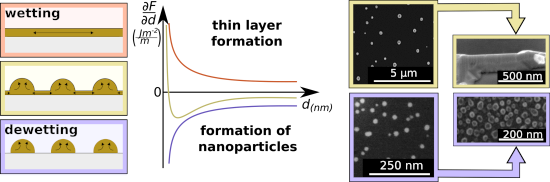
- and no defined surface chemistry, since different oxide types can occur. The vW model fails to provide a complete theoretical description of gold deposition onto silicon oxide. This happens since there is not enough information about the morphology and chemical heterogeneity of silicon oxide surfaces
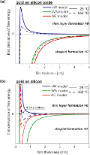
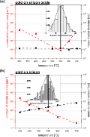


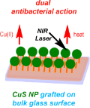
Photothermally active nanoparticles as a promising tool for eliminating bacteria and biofilms
Beilstein J. Nanotechnol. 2020, 11, 1134–1146, doi:10.3762/bjnano.11.98
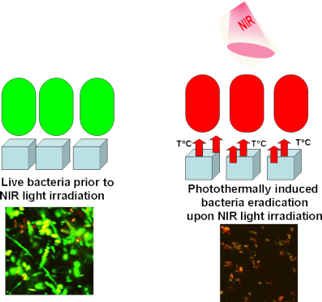
- nanoparticles are synthesized, resulting in nanoparticles with different dimensions and shape. On the other hand, the nanoparticle surface chemistry as well as the surrounding environment exert a weaker influence on the plasmonic properties. For the non-plasmonic nanoparticles, the photothermal properties are


Gram-scale synthesis of splat-shaped Ag–TiO2 nanocomposites for enhanced antimicrobial properties
Beilstein J. Nanotechnol. 2020, 11, 1119–1125, doi:10.3762/bjnano.11.96
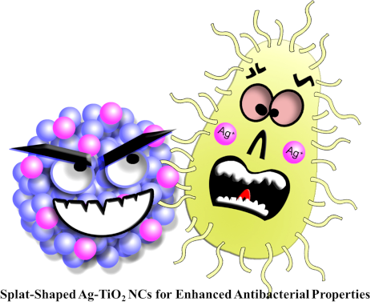
- incubated with NPs was higher than 80% even at high NP concentrations. The cytotoxicity results demonstrate that the NCs have a good biocompatibility which is needed for biomedical applications. A number of intrinsic factors such as shape, size and surface chemistry of the nanostructures strongly influence


Applications of superparamagnetic iron oxide nanoparticles in drug and therapeutic delivery, and biotechnological advancements
Beilstein J. Nanotechnol. 2020, 11, 1092–1109, doi:10.3762/bjnano.11.94
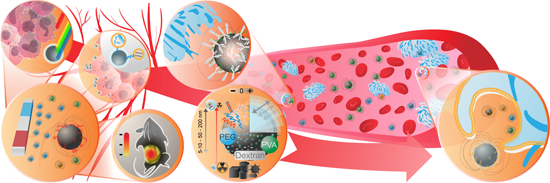
- SPIONs for medical applications it is necessary to cover the SPIONs with a biocompatible material that prevents the aggregation of the nanoparticles. Nanoparticle coating or conjugation has the advantage of creating a designed surface chemistry for specific applications. This coating has a downside as


Identification of physicochemical properties that modulate nanoparticle aggregation in blood
Beilstein J. Nanotechnol. 2020, 11, 550–567, doi:10.3762/bjnano.11.44
- ; size; surface chemistry; Introduction Nanomedicine is one of the most exciting fields of research in the branch of nanotechnology as it has the potential to generate practical and effective solutions to tackle chronic diseases and to solve unmet clinical challenges. However, a tremendous gap exists
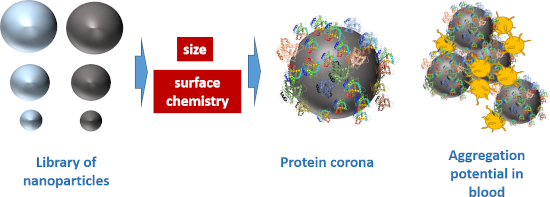
- necessary. This is not always straightforward due to the interdependence between the various chemical and physical properties. In the present study, two sets of nanoparticles were prepared with the aim to specifically investigate the effect of the surface curvature and surface chemistry on platelet
- comparison, therefore, excludes surface charge and hydrophilicity as variables to be investigated. In Figure 12 we summarise the strategy used to unravel possible SARs. This strategy allowed us to identify the surface chemistry as the key factor in the protein corona composition while both surface chemistry




Understanding nanoparticle flow with a new in vitro experimental and computational approach using hydrogel channels
Beilstein J. Nanotechnol. 2020, 11, 296–309, doi:10.3762/bjnano.11.22
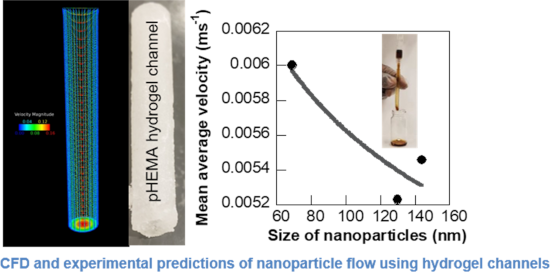
- vivo methods for a more efficient and reliable evaluation of NP drugs [12]. However, many variables such as the size, surface chemistry, and interaction of the NPs with different biological compounds within the body influence the trajectory of NPs in vivo [13][14][15]. This makes it challenging to


Synthesis of amorphous and graphitized porous nitrogen-doped carbon spheres as oxygen reduction reaction catalysts
Beilstein J. Nanotechnol. 2020, 11, 1–15, doi:10.3762/bjnano.11.1
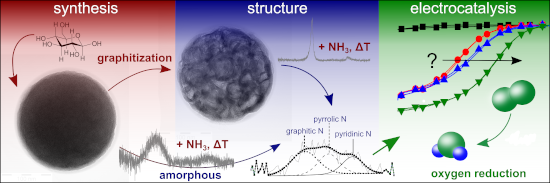
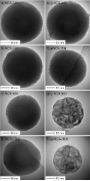
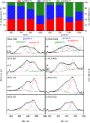
- Maximilian Wassner Markus Eckardt Andreas Reyer Thomas Diemant Michael S. Elsaesser R. Jurgen Behm Nicola Husing Chemistry and Physics of Materials, Salzburg University, A-5020 Salzburg, Austria Institute of Surface Chemistry and Catalysis, Ulm University, D-89069 Ulm, Germany 10.3762/bjnano.11.1




Microfluidics as tool to prepare size-tunable PLGA nanoparticles with high curcumin encapsulation for efficient mucus penetration
Beilstein J. Nanotechnol. 2019, 10, 2280–2293, doi:10.3762/bjnano.10.220
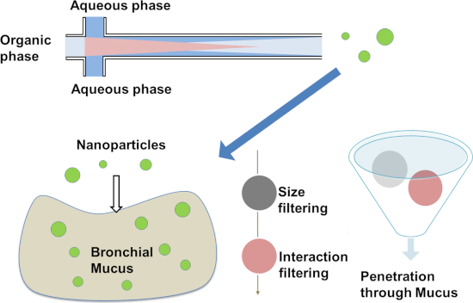
- mucus. Drug carrier systems such as nanoparticles (NPs) require proper surface chemistry and small size to ensure their permeability through the hydrogel-like systems. We have employed a microfluidic system to fabricate poly(lactic-co-glycolic acid) (PLGA) nanoparticles coated with a muco-penetrating
- ][16]. Notably, only NPs with size less than 200 nm have the ability to permeate easily through mucus without being immobilized by the natural size-filtering mechanism [10][17][18][19]. Furthermore, modifying the surface chemistry of NPs is beneficial for avoiding the interaction/filtering mechanisms
- Discussion Influence of different parameters on the NP size Smaller nanoparticles (NPs) are known to have a better diffusion through mucus, whereby they can evade the natural size-filtration mechanism [10][14][39]. Furthermore, the surface chemistry of NPs plays a crucial role in facilitating their


Synthesis of highly active ETS-10-based titanosilicate for heterogeneously catalyzed transesterification of triglycerides
Beilstein J. Nanotechnol. 2019, 10, 2039–2061, doi:10.3762/bjnano.10.200
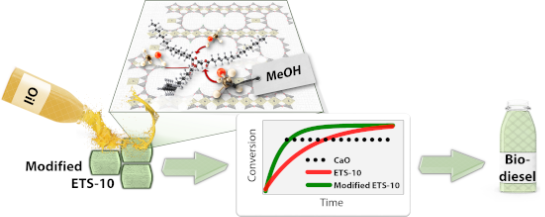
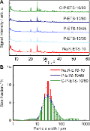
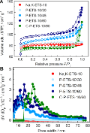
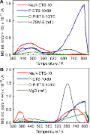
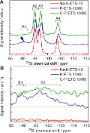
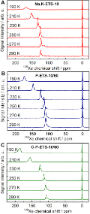
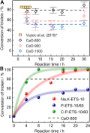
- literature data of 1.36 nm [38]. Impact of H2O2 treatment on crystallinity, textural characteristics, surface chemistry and pore interconnectivity of ETS-10 titanosilicates The XRD data of treated samples in Figure 7A demonstrate that the treatment of titanosilicates with H2O2 and subsequent calcination does








Pulsed laser synthesis of highly active Ag–Rh and Ag–Pt antenna–reactor-type plasmonic catalysts
Beilstein J. Nanotechnol. 2019, 10, 1958–1963, doi:10.3762/bjnano.10.192
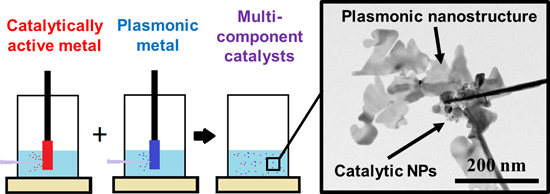
- dissipation, the experiments concluded that charge carriers produced in the Pt shell via LSPR excitation from the Ag nanocube core could be utilized for surface chemistry. Similarly, Zhang et al. coined the term “antenna–reactor” photocatalysis by fabricating Al, surrounded by a thin layer of Al2O3, as a


Fabrication and characterization of Si1−xGex nanocrystals in as-grown and annealed structures: a comparative study
Beilstein J. Nanotechnol. 2019, 10, 1873–1882, doi:10.3762/bjnano.10.182
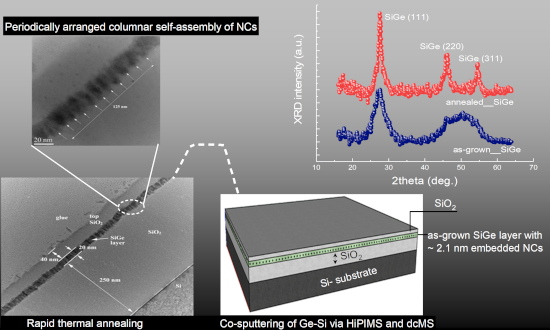
- above which the interface effect prevails and below which the photoresponse is associated with quantum confinement. That is, size and surface chemistry of the NCs and oxygen-related bonds are the factors determining the photocurrent spectra. It is well understood that annealing results in the formation


Nanoarchitectonics meets cell surface engineering: shape recognition of human cells by halloysite-doped silica cell imprints
Beilstein J. Nanotechnol. 2019, 10, 1818–1825, doi:10.3762/bjnano.10.176
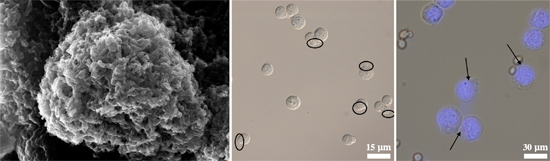
- of various functional composite materials [26]. The anisotropic shape (hollow tubules having lengths from 300 nm to 1–2 µm, 50–70 nm diameter, and 20 nm lumen) and surface chemistry (outer surface of SiO2, inner surface of Al2O3) make these nanotubes ideal carriers for novel catalysts, polymer


Growth of lithium hydride thin films from solutions: Towards solution atomic layer deposition of lithiated films
Beilstein J. Nanotechnol. 2019, 10, 1443–1451, doi:10.3762/bjnano.10.142
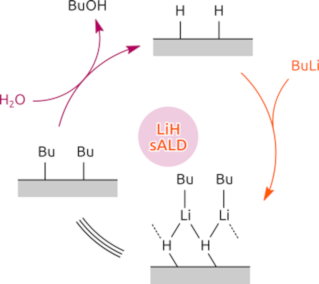
- sodium and molecular sieves. n-Butyllithium (2.5 M in hexanes, Sigma) was diluted to 10 mM with diethyl ether. Deionized water was used as the complementary precursor, dissolved in diethyl ether (20 mM). The purging was carried out with nitrogen from the Schlenk line. In order to monitor the surface
- chemistry, a quartz crystal microbalance (QCM) system was installed behind the exit of the deposition setup with tubing of minimal length (2 cm), effectively allowing the deposition to occur on the QCM crystal as well. The waste pumped out of the QCM chamber was immediately neutralized with ethanol


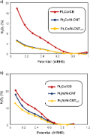
Alloyed Pt3M (M = Co, Ni) nanoparticles supported on S- and N-doped carbon nanotubes for the oxygen reduction reaction
Beilstein J. Nanotechnol. 2019, 10, 1251–1269, doi:10.3762/bjnano.10.125
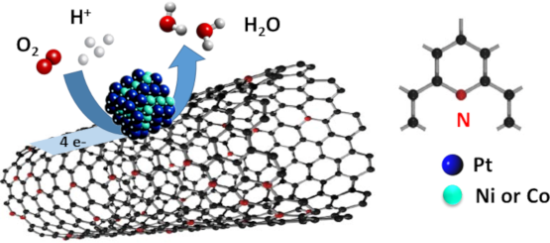
- of the deposited particles, which is close to 25 nm [31]. Previous works have shown the possibility to dope CNTs with nitrogen (N-CNT) or sulfur (S-CNT) in order to modify properties such as electronic conduction and surface chemistry [32][33][34]. This strategy contributes to improve the metal
- obtained with XRD are presented in Table 1. All the values are larger than that of graphite (3.334 Å), and the smallest value is obtained for N-CNTHT, indicating a higher level of graphitization for this sample. The elemental composition as well as the surface chemistry is also affected by heteroatom
- performance and durability of PEM fuel cells [44][45]. These materials should combine some key characteristics such as: i) an adapted surface chemistry to allow high dispersion of the metallic phase at very high metal loading, ii) a good balance between hydrophobicity and hydrophilicity to allow water







Glucose-derived carbon materials with tailored properties as electrocatalysts for the oxygen reduction reaction
Beilstein J. Nanotechnol. 2019, 10, 1089–1102, doi:10.3762/bjnano.10.109
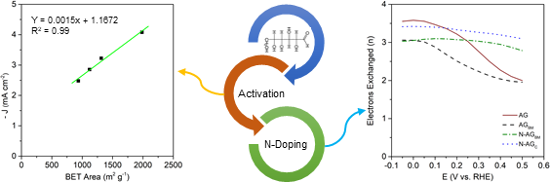
- of the nitrogen functionalities. Keywords: electrocatalysts; microporosity; nitrogen-doped carbon materials; oxygen reduction reaction; surface chemistry; Introduction Due to the recent increase in interest for more sustainable, renewable and cheaper energy, multiple conversion devices are being
- heteroatoms to modify the surface chemistry, specifically by adding nitrogen functionalities. Biomass-derived carbons have been functionalized by applying thermal treatments in the presence of a gaseous or solid nitrogen precursor [35][36] or without any precursor in the case where the biomass already
- incorporate nitrogen atoms and to modify the surface chemistry of carbon materials [39][40]. Some of these doping techniques have shown to provide materials with similar ORR performance as commercially available Pt/C electrocatalysts [39]. However, most of these studies have been focused only on the effect of


Tailoring the stability/aggregation of one-dimensional TiO2(B)/titanate nanowires using surfactants
Beilstein J. Nanotechnol. 2019, 10, 1024–1037, doi:10.3762/bjnano.10.103
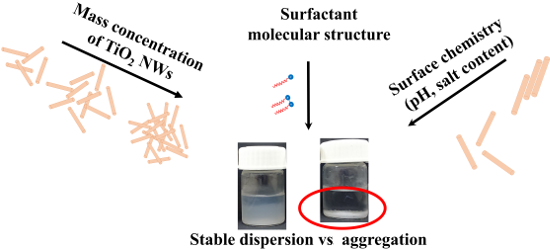
- Atida Selmani Johannes Lutzenkirchen Kristina Kucanda Dario Dabic Engelbert Redel Ida Delac Marion Damir Kralj Darija Domazet Jurasin Maja Dutour Sikiric Laboratory for Biocolloids and Surface Chemistry, Division of Physical Chemistry, Ruđer Bošković Institute, Bijenička Cesta 54, 10000 Zagreb


Rapid, ultraviolet-induced, reversibly switchable wettability of superhydrophobic/superhydrophilic surfaces
Beilstein J. Nanotechnol. 2019, 10, 866–873, doi:10.3762/bjnano.10.87
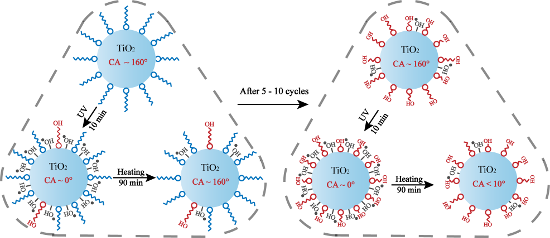
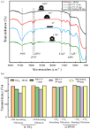
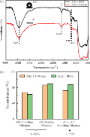
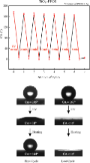
- solid surfaces governed by surface chemistry and surface topography [1][2] and has found significant applications in various fields [3][4][5][6][7][8]. Controllable wettability that can be enabled through external stimuli, such as illumination, electric fields or heating, can be applied in chemical



Sub-wavelength waveguide properties of 1D and surface-functionalized SnO2 nanostructures of various morphologies
Beilstein J. Nanotechnol. 2019, 10, 379–388, doi:10.3762/bjnano.10.37
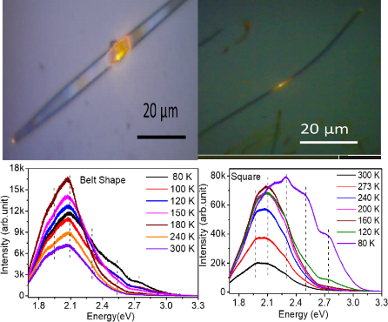
- behavior was also demonstrated in tapered and surface-functionalized SnO2 NWs. While the tapered waveguide can allow for easy focusing of light, the simple surface chemistry offers selective light propagation by tuning the luminescence. Defect-related PL in NWs is studied using temperature-dependent


Pull-off and friction forces of micropatterned elastomers on soft substrates: the effects of pattern length scale and stiffness
Beilstein J. Nanotechnol. 2019, 10, 79–94, doi:10.3762/bjnano.10.8
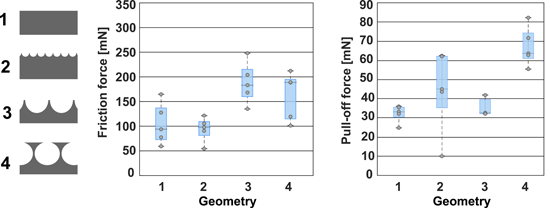
- fully penetrate the monolayer. The latter problem could be solved by creating colloidal monolayers with a larger spacing, for example by optimizing the surface chemistry of particles. The mechanism of generating grip on the tested substrates is likely indentation-based, creating mechanical interlocking





Surface plasmon resonance enhancement of photoluminescence intensity and bioimaging application of gold nanorod@CdSe/ZnS quantum dots
Beilstein J. Nanotechnol. 2019, 10, 22–31, doi:10.3762/bjnano.10.3
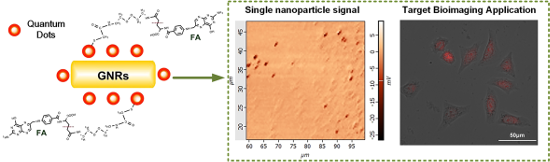
- . PL lifetime is also an important parameter in studying the photoelectric properties and surface chemistry of nanoparticles. A multiexponential decay curve provides evidence of the presence of nonradioactive or radiative recombination. The lifetime of GNR@CdSe/ZnS and CdSe/ZnS was obtained by using a


In situ characterization of nanoscale contaminations adsorbed in air using atomic force microscopy
Beilstein J. Nanotechnol. 2018, 9, 2925–2935, doi:10.3762/bjnano.9.271
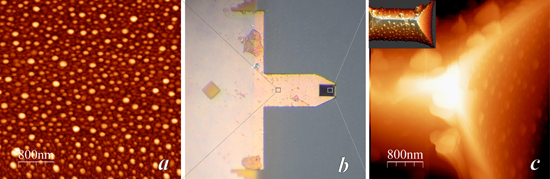
- surfaces allow for a detailed comparison between theory and experiments triggering an immense advance of surface chemistry. While UHV conditions are experimentally and theoretically appealing, most processes occur under ambient conditions, where it is much more difficult to prepare well-defined surfaces


Impact of the anodization time on the photocatalytic activity of TiO2 nanotubes
Beilstein J. Nanotechnol. 2018, 9, 2628–2643, doi:10.3762/bjnano.9.244
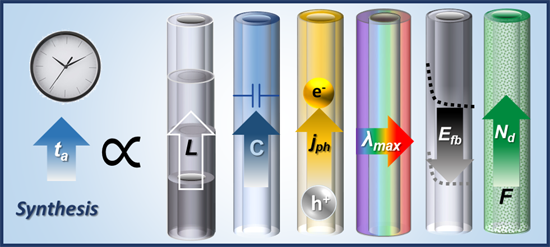
- is supported by the fact that atomic radii for O (48 pm) and F (42 pm) are similar enough to allow for the replacement of the former, effectively doping the material by creating oxygen vacancies and different energy states [29]. XPS To characterize the surface chemistry, high-resolution XPS
- were obtained for longer ta. A linear trend for the growth rate was observed for samples with ta ≥ 1.0 h. Changes in the surface chemistry were confirmed by XPS measurements, indicating F and N doping. This was explained in terms of the exposition time during the anodization process since higher F
- measured at a laser power of 2.5 mW/cm2 and a slit width of 25 μm. X-ray photoelectron spectroscopy (XPS) was used to complement the information of the surface chemistry with a Thermo Scientific instrument (model K-Alpha + surface analysis). Electrochemical and photo-electrochemical characterization The


Characterization of the microscopic tribological properties of sandfish (Scincus scincus) scales by atomic force microscopy
Beilstein J. Nanotechnol. 2018, 9, 2618–2627, doi:10.3762/bjnano.9.243

- including adhesion, friction and resistance to abrasion of sandfish scales in detail utilizing various AFM techniques and probes with different size and surface chemistry. The experimental results do not indicate superior tribological properties of sandfish scales if compared to scales of other reptiles or


Friction reduction through biologically inspired scale-like laser surface textures
Beilstein J. Nanotechnol. 2018, 9, 2561–2572, doi:10.3762/bjnano.9.238
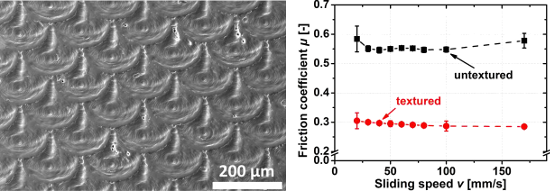
- experiments [16][23]. All tests were conducted at room temperature (25 °C) and at a relative humidity of approximately 45%. All tested pellets and discs were sonicated in isopropanol for 15 minutes before each tribological experiment in order to ensure a reproducible surface chemistry and clean samples


Nanocellulose: Recent advances and its prospects in environmental remediation
Beilstein J. Nanotechnol. 2018, 9, 2479–2498, doi:10.3762/bjnano.9.232
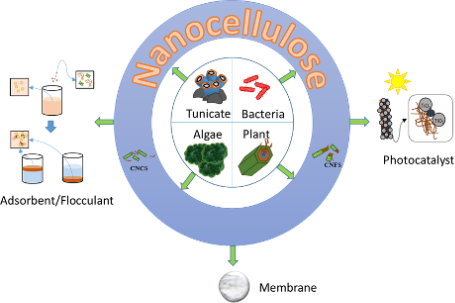
- process), respectively [62]. Typically, the production techniques employ several processes in sequence to produce various types of CNF/CNC which differ in terms of morphology, crystallinity, and surface chemistry [32]. These processes involve mechanical disintegration as well as biological and chemical





