


Search results
Search for "temperature dependent" in Full Text gives 133 result(s) in Beilstein Journal of Nanotechnology.
Process-specific mechanisms of vertically oriented graphene growth in plasmas
Beilstein J. Nanotechnol. 2017, 8, 1658–1670, doi:10.3762/bjnano.8.166
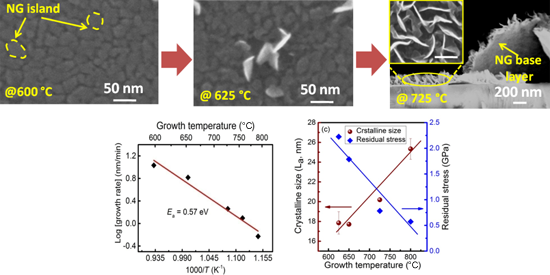
- the temperature-dependent growth rates where the activation energy is found to be as low as 0.57 eV. It is shown that the growth rate and the structural quality of the films could be enhanced by (a) increasing the substrate temperature, (b) decreasing the distance between the microwave plasma source


Formation of ferromagnetic molecular thin films from blends by annealing
Beilstein J. Nanotechnol. 2017, 8, 1469–1475, doi:10.3762/bjnano.8.146
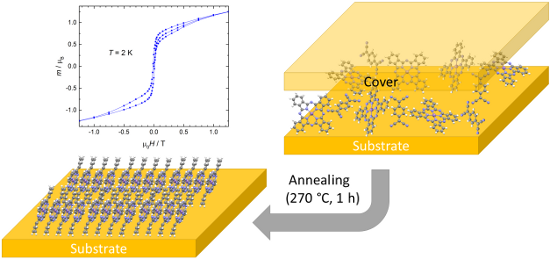
- this case (|D|/J > 1) long-range ordering is not possible [33], which leads to the assumption that β-MnPc can be treated as a single-chain magnet. From the temperature-dependent magnetisation values collected at two different fields the inverse differential susceptibility was determined and is shown in



Low uptake of silica nanoparticles in Caco-2 intestinal epithelial barriers
Beilstein J. Nanotechnol. 2017, 8, 1396–1406, doi:10.3762/bjnano.8.141
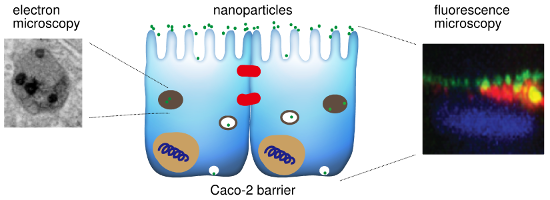
- ][33] and poly(lactic-co-glycolic acid) and poly(lactic acid) with attached poly(ethylene glycol) [31][32] nanoparticles and to be temperature-dependent [29][30][31][32][33]. Despite uptake, transport across differentiated Caco-2 barriers (grown for 21 days) has been shown to be very limited for



Deposition of exchange-coupled dinickel complexes on gold substrates utilizing ambidentate mercapto-carboxylato ligands
Beilstein J. Nanotechnol. 2017, 8, 1375–1387, doi:10.3762/bjnano.8.139
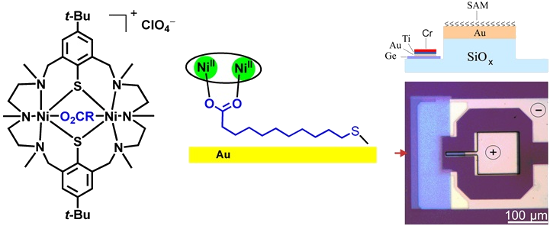
- HS(C6H4)2CO2− (8)), and their ability to adsorb on gold surfaces is reported. Besides elemental analysis, IR spectroscopy, electrospray ionization mass spectrometry (ESIMS), UV–vis spectroscopy, and X-ray crystallography (for 6 and 7), the compounds were also studied by temperature-dependent magnetic
- susceptibility measurements (for 7 and 8) and (broken symmetry) density functional theory (DFT) calculations. An S = 2 ground state is demonstrated by temperature-dependent susceptibility and magnetization measurements, achieved by ferromagnetic coupling between the spins of the Ni(II) ions in 7 (J = +22.3 cm−1
- parameters and g-values (isotropic average) [53]. It is well-known that temperature-dependent magnetic susceptibility measurements do not allow a concise determination of the magnitude and sign of D [54]. As a consequence, the data for 7 and 8 were analyzed with the approximation in Equation 2 [55]. The D


Comprehensive Raman study of epitaxial silicene-related phases on Ag(111)
Beilstein J. Nanotechnol. 2017, 8, 1357–1365, doi:10.3762/bjnano.8.137
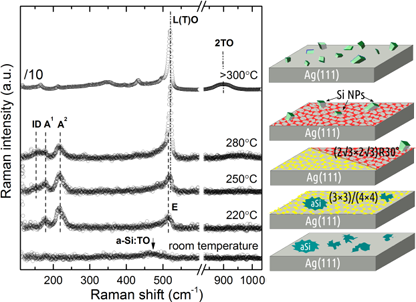
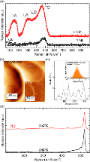
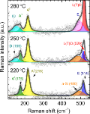
- -energy shoulder. The formation of such crystallites is clearly temperature-dependent. Solely 3D growth is observed when the temperature reaches 300 °C, i.e., the limit of the 2D Si-layer growth mode on Ag(111). The Raman and AFM results confirm the co-existence of Si crystallites and of the “” structure



Charge transport in organic nanocrystal diodes based on rolled-up robust nanomembrane contacts
Beilstein J. Nanotechnol. 2017, 8, 1277–1282, doi:10.3762/bjnano.8.129
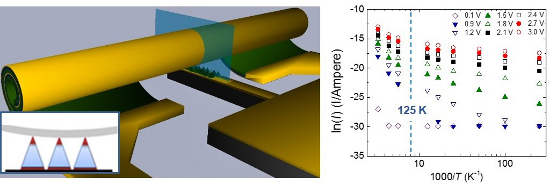
- diodes contacted by rolled-up robust nanomembranes. The organic nanocrystals consist of vanadyl phthalocyanine and copper hexadecafluorophthalocyanine heterojunctions. The temperature dependent charge transport through organic nanocrystals was investigated to reveal the transport properties of ohmic and
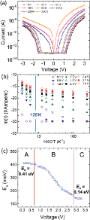
- contacts. The nanocrystals consist of vanadyl phthalocyanine (VOPc) and copper hexadecafluorophthalocyanine (F16CuPc) heterojunctions. The temperature dependent current–voltage behaviors were investigated to unveil the charge transport properties of the nanocrystals. As most of the well-studied charge
- shown in Figure 3a. Similar to the current–voltage characteristics at room temperature, the current under forward bias remains dominant also at lower temperatures. By plotting the temperature dependent current behavior (ln(I)–1000/T) under different bias we obtain two distinct regions with different


Fully scalable one-pot method for the production of phosphonic graphene derivatives
Beilstein J. Nanotechnol. 2017, 8, 1094–1103, doi:10.3762/bjnano.8.111
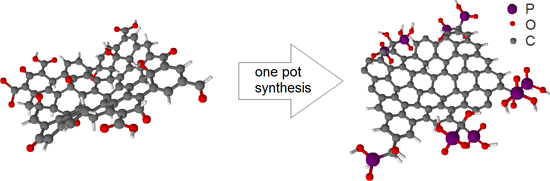
- the usage of GO-P as flame retardant, similarly as was reported by Kim et al. [4]. Finally, a measurement of the electrical properties of GO-P materials was carried out. Before reduction, the GO layers exhibited insulating behavior, with a resistivity higher than 106 Ω·cm. The temperature-dependent


Tuning the spin coherence time of Cu(II)−(bis)oxamato and Cu(II)−(bis)oxamidato complexes by advanced ESR pulse protocols
Beilstein J. Nanotechnol. 2017, 8, 943–955, doi:10.3762/bjnano.8.96
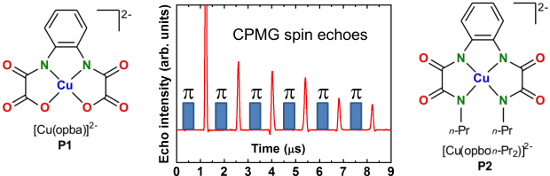
- (ER4118MD5-W1 for X-band and EN5107D2 for Q-band measurements). For the temperature dependent measurements the cavities are inserted into the CF935 cryostat. The temperature is controlled with the ITC503 temperature controller from Oxford Ins. Echo-detected ESR spectra were recorded by using the standard
- ). This suggests additional temperature dependent contributions to the stochastic modulation of the HF interaction in the studied complexes. Such contributions, which could explain the observed temperature dependence of Tm, may arise due to a random modulation of the HF interaction by a temperature
- dependent nuclear spin-lattice relaxation and/or by molecular mobility, e.g., by rotation of the CH3, CH2CH3 or other groups. Arguably, at low temperatures the local HF magnetic field acting on the electron spin is most effectively modulated by the nuclear spin diffusion. With increasing temperature a


Vapor-phase-synthesized fluoroacrylate polymer thin films: thermal stability and structural properties
Beilstein J. Nanotechnol. 2017, 8, 933–942, doi:10.3762/bjnano.8.95
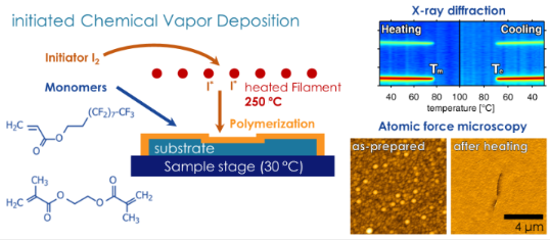
- . Keywords: EGDMA; iCVD; in situ; PFDA; spectroscopic ellipsometry; temperature dependent; X-ray diffraction; Introduction Fluoropolymers, such as polytetrafluoroethylene, are interesting for a variety of different applications due to their low surface energy. The resultant hydrophobic and oleophobic
- , whereby qz = 4π·sin(θ)/λ. The index z indicates that only net planes parallel to the substrate surface were probed in the experiment (specular scan). In situ, temperature-dependent XRD studies were performed with a DHS900 heating stage attachment (Anton-Paar, Austria), using a heating rate of 2 °C/min
- situ temperature-dependent spectroscopic ellipsometry measurements were performed on a Woollam M-2000 ellipsometer (J.A. Woollam Co., USA), equipped with a THMS600 temperature stage (Linkam, UK) under nitrogen atmosphere. The samples were investigated in the temperature range between 10 and 150 °C at a


Investigation of growth dynamics of carbon nanotubes
Beilstein J. Nanotechnol. 2017, 8, 826–856, doi:10.3762/bjnano.8.85


3D Nanoprinting via laser-assisted electron beam induced deposition: growth kinetics, enhanced purity, and electrical resistivity
Beilstein J. Nanotechnol. 2017, 8, 801–812, doi:10.3762/bjnano.8.83
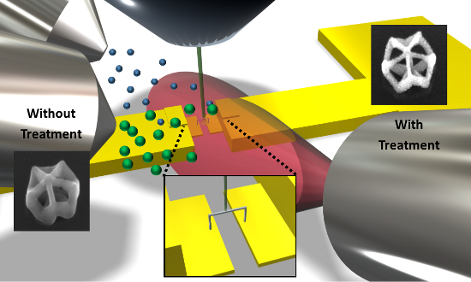
- larger vertical growth and constant lateral growth. In addition to the change in length, both the EBID and LAEBID segment widths increase as a function of increasing dwell time, which is consistent with standard EBID and IBID growth models [65]. Temperature-dependent diffusion drives grain growth


Recombinant DNA technology and click chemistry: a powerful combination for generating a hybrid elastin-like-statherin hydrogel to control calcium phosphate mineralization
Beilstein J. Nanotechnol. 2017, 8, 772–783, doi:10.3762/bjnano.8.80
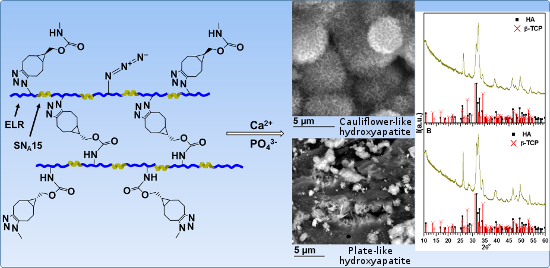
- biology experiments for gene construction were performed using standard methods. ELR production was carried out using cellular systems for genetically engineered protein biosynthesis in E. coli and purification was performed with several cycles of temperature-dependent reversible precipitation. After



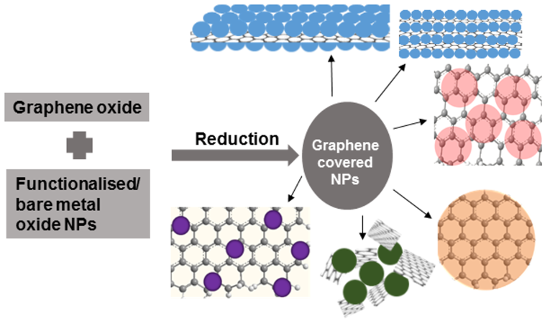
Synthesis of graphene–transition metal oxide hybrid nanoparticles and their application in various fields
Beilstein J. Nanotechnol. 2017, 8, 688–714, doi:10.3762/bjnano.8.74






Thin SnOx films for surface plasmon resonance enhanced ellipsometric gas sensing (SPREE)
Beilstein J. Nanotechnol. 2017, 8, 522–529, doi:10.3762/bjnano.8.56
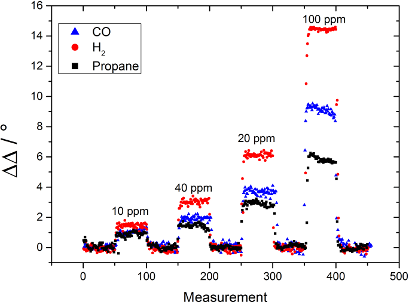
- could not be determined due to the lack of temperature dependent measurements. An additional linear dependence to the gas pressure was observed which needs to be controlled during the gas measurement to obtain reliable data on the dependence of the measurement signal on the additional layer. The new


The longstanding challenge of the nanocrystallization of 1,3,5-trinitroperhydro-1,3,5-triazine (RDX)
Beilstein J. Nanotechnol. 2017, 8, 452–466, doi:10.3762/bjnano.8.49
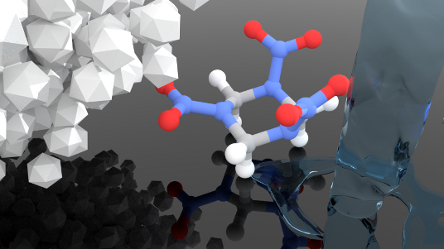
- be used. For instance, if the solubility is not very temperature dependent, evaporation will be more effective than cooling. To our knowledge, no consistent study of the behavior of the solubility of RDX has been made. Fedoroff and Sheffield [11] indicate that the RDX solubility in acetone is reduced


Impact of contact resistance on the electrical properties of MoS2 transistors at practical operating temperatures
Beilstein J. Nanotechnol. 2017, 8, 254–263, doi:10.3762/bjnano.8.28
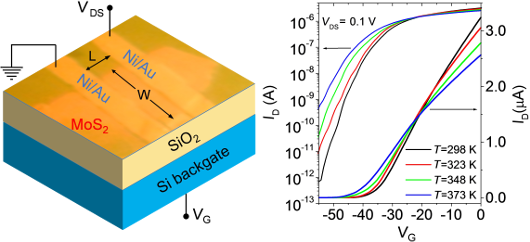
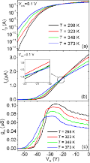
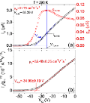
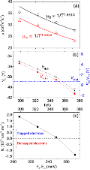
- electrical characteristics at a fixed measurement condition. Hence, to gain a deeper understanding of the behavior of MoS2 transistors for real applications, a temperature-dependent characterization of the main electrical parameters under practical operating conditions is mandatory. A temperature range from
- ]. In this paper, we report a detailed temperature dependent investigation of multilayer MoS2 transistors with Ni source/drain contacts, focusing on the role played by the contact both in the subthreshold regime and above the threshold voltage. In contrast to other literature works, mainly focused on
- , the reported temperature-dependent analysis has been carried out on one of the transistors from this set of devices. Figure 1a shows a schematic representation including an optical image of a MoS2 transistor with the SiO2/Si backgate and Ni/Au source and drain contacts. An atomic force microscopy




Sub-nanosecond light-pulse generation with waveguide-coupled carbon nanotube transducers
Beilstein J. Nanotechnol. 2017, 8, 38–44, doi:10.3762/bjnano.8.5
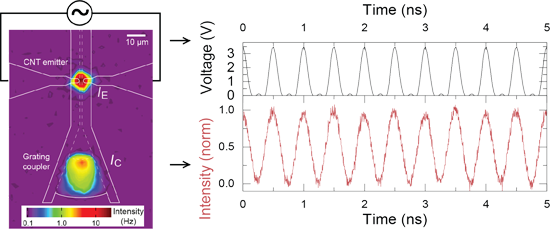
- into , similar to previous measurements with metallic CNTs [17]. To rationalize this dependence we have modeled the temperature-dependent spectral distribution Ispectral,mod(λ,T) as the product of the Planck spectrum Itherm(λ,T) and the spectral sensitivity of the detector S(λ) and plotted the result
- in the inset of Figure 2b. For simplicity, we have approximated the sensitivity of our detector by a Gaussian spectral profile centered at 830 nm and a FWHM of about 250 nm. From these spectra we calculated the wavelength-integrated, temperature-dependent intensity of the collected light Iintegrated
- along the surface normal collected with the free-space setup. (b) Simulation of the temperature-dependent total intensity of the incandescent light collected with a CCD camera Iintegrated,mod(T) (red symbols), compared with exponential (red line) and power law (blue line) fits. Inset: Simulated spectra


Obtaining and doping of InAs-QD/GaAs(001) nanostructures by ion beam sputtering
Beilstein J. Nanotechnol. 2017, 8, 12–20, doi:10.3762/bjnano.8.2
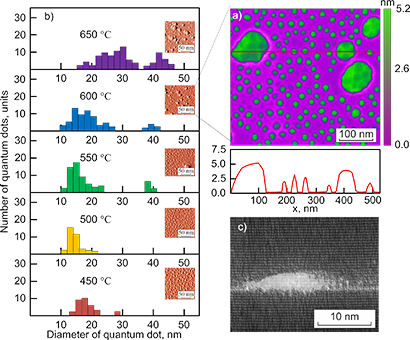
- distribution is observed at 500 °C. The dimension dispersion decreases and the linear dimensions are about 15 nm. Separately, we denote the fact of increase in the dimensions of dome structures at the substrate temperatures higher than 550 °С. The surface density of the nanoislands is also a temperature
- -dependent parameter (Table 1). Increasing the temperature from 450 to 500 °C practically does not affect the surface density. At temperatures higher than 500 °C, the surface density essentially decreases from 1.1·1011 cm−2 to 0.4·1011 cm−2. The existence of the stability regions for indium arsenide (T = 450


Cubic chemically ordered FeRh and FeCo nanomagnets prepared by mass-selected low-energy cluster-beam deposition: a comparative study
Beilstein J. Nanotechnol. 2016, 7, 1850–1860, doi:10.3762/bjnano.7.177
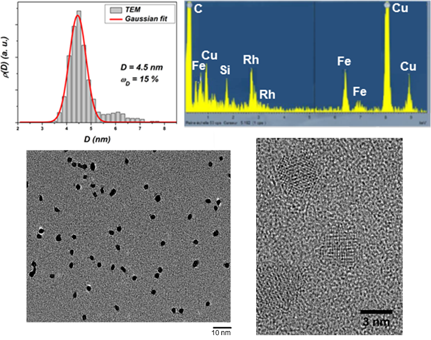
- nanoalloy, incompatible with AFM order at finite size. We are now preparing by the same MS LECBD technique, CsCl-type (B2) chemically ordered FeRh nanoparticles larger than 5 nm in diameter embedded in such inert carbon matrix, in order to determine the transition size for the temperature-dependent


Analysis of self-heating of thermally assisted spin-transfer torque magnetic random access memory
Beilstein J. Nanotechnol. 2016, 7, 1676–1683, doi:10.3762/bjnano.7.160
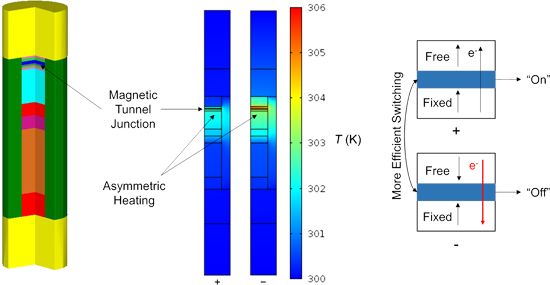
- T is the local temperature. Temperature-dependent materials properties [7][10][11][12][13][14] (Figure 3) are used for CoFeB, MgO, and Fe. The temperature-dependent thermal conductivity of CoFeB is calculated using the Wiedemann–Franz law: where L is the Lorenz number. It is assumed the annealing
- temperature was sufficiently low so as to not cause crystallization [7] on the MgO–CoFeB interface, leaving the CoFeB completely amorphous. The Pd–Co layers are treated as an alloy due to the large number of sub-nanometer thick layers. The temperature-dependent materials properties of the PdCo alloy were
- ) and reduced distance to the thermal boundary for heat generated on the bottom of the MTJ. Assuming constant resistances for the two states – which is equivalent to assuming switching occurs only at the end of the pulses – together with temperature-dependent changes of electrical and thermal





Microwave synthesis of high-quality and uniform 4 nm ZnFe2O4 nanocrystals for application in energy storage and nanomagnetics
Beilstein J. Nanotechnol. 2016, 7, 1350–1360, doi:10.3762/bjnano.7.126
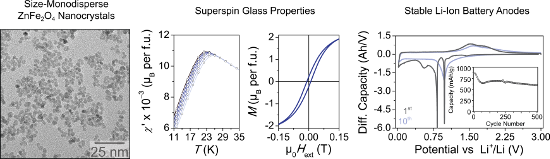
- in Figure 4. It reveals a sextet pattern because of the presence of magnetic ordering. This is in accordance with both the magnetometry data below and temperature-dependent Mössbauer spectra shown in Supporting Information File 1, Figure S6. The low-temperature data can be fitted reasonably well with


Thermo-voltage measurements of atomic contacts at low temperature
Beilstein J. Nanotechnol. 2016, 7, 767–775, doi:10.3762/bjnano.7.68
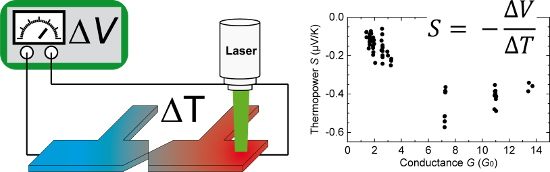
- from reduced lifetime, is largely facilitated. Furthermore, temperature-dependent effects of the transmission function that are expected in resonant tunneling situations can be revealed. Thus the ability to measure at variable temperature represents a considerable improvement compared to fixed


Magnetic switching of nanoscale antidot lattices
Beilstein J. Nanotechnol. 2016, 7, 733–750, doi:10.3762/bjnano.7.65
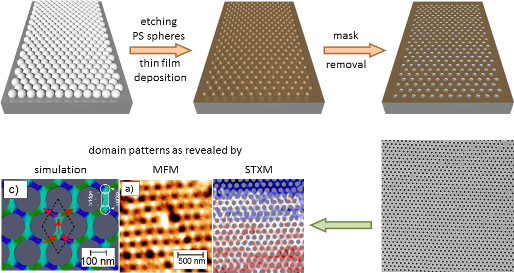
- material parameters and temperature dependent input functions. The latter are the exchange stiffness, the equilibrium magnetisation, and the parallel and perpendicular susceptibilities. The parallel susceptibility can be related to the uniaxial anisotropy [34][35]. In the past, these input functions were



Comparative kinematical analyses of Venus flytrap (Dionaea muscipula) snap traps
Beilstein J. Nanotechnol. 2016, 7, 664–674, doi:10.3762/bjnano.7.59

- motion is ultimately dictated by the flow of interstitial water through the lobes, future comparative snapping experiments should be performed in temperature-constant chambers to exclude even small temperature-dependent physiological differences. As a conclusion it can be said that the Venus flytrap has


Plasticity-mediated collapse and recrystallization in hollow copper nanowires: a molecular dynamics simulation
Beilstein J. Nanotechnol. 2016, 7, 228–235, doi:10.3762/bjnano.7.21
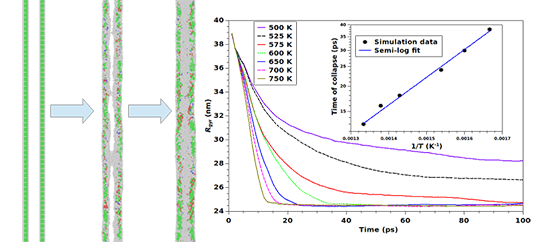
- ), 700 K (red) and 750 K (blue) in the high temperature regime. The temperature-dependent trend is found to be generally different in the two regimes. The insets offer a closer look during the first few picoseconds of the simulations. Interestingly, in this short timescale, the trends are found to be





