


Search results
Search for "ultrasonication" in Full Text gives 108 result(s) in Beilstein Journal of Nanotechnology.
Graphene-enhanced plasmonic nanohole arrays for environmental sensing in aqueous samples
Beilstein J. Nanotechnol. 2016, 7, 1564–1573, doi:10.3762/bjnano.7.150
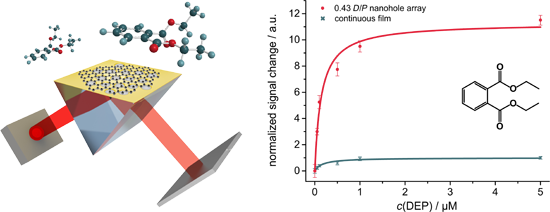
- ) ratio for 60 min in an ultrasonication bath. Between treatments the glass slides were rinsed with water and sonicated three times in water for 15 min. Each time the water was exchanged. The fabrication of nanohole arrays consists of several steps [39][40]. First a sphere mask of a hexagonal, closed




Ammonia gas sensors based on In2O3/PANI hetero-nanofibers operating at room temperature
Beilstein J. Nanotechnol. 2016, 7, 1312–1321, doi:10.3762/bjnano.7.122
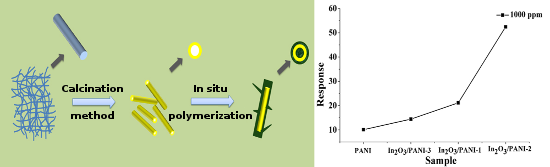
- been ground in an agate mortar, were added into 200 mL 1.2 mol/L HCl solution with ultrasonication treatment. Then a certain amount of aniline in HCl solution was added to the above suspension. After that, 30 mL 1.2 mol/L HCl solution containing APS was slowly dripped into the suspension to initiate


Multiwalled carbon nanotube hybrids as MRI contrast agents
Beilstein J. Nanotechnol. 2016, 7, 1086–1103, doi:10.3762/bjnano.7.102
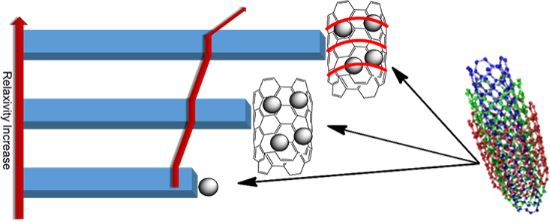
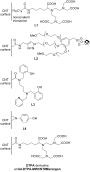
- sequence: sonication of oMWCNT with Fe(acac)3 in ethanol, solvent evaporation, partial reduction of Fe(acac)3 to Fe3O4 with hydrazine by ultrasonication for 10 min and irradiation by microwave at 100 °C for 20 min. PM-b-PEG/SPIO@oMWCNT#Liu hybrids were obtained by non-covalent decoration with the



Photocurrent generation in carbon nanotube/cubic-phase HfO2 nanoparticle hybrid nanocomposites
Beilstein J. Nanotechnol. 2016, 7, 1075–1085, doi:10.3762/bjnano.7.101
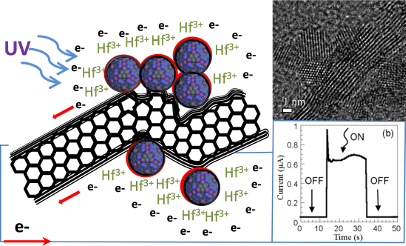
- these regions [28]. In another approach, chemical functionalization is usually combined with ultrasonication. In fact, the latter tends to create defects on the walls of the CNT along with C dangling bonds along with a change in the carbon hybridization from sp2 to sp3 [29]. Nevertheless, studies have
- been conducted where ultrasonication without functionalizing agents has been used for successfully debundling CNTs with minimal damage to the tube walls [23]. CNTs produced via CVD methods typically contain various imperfections, such as residual impurities of metal catalysts, graphene sheets


Assembling semiconducting molecules by covalent attachment to a lamellar crystalline polymer substrate
Beilstein J. Nanotechnol. 2016, 7, 784–798, doi:10.3762/bjnano.7.70
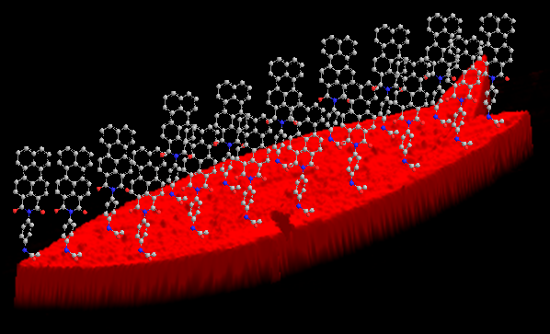
- semiconducting molecules. Results Nanocrystal analysis by AFM The model of an ideal CPE45 nanocrystal Nanocrystal dispersions were prepared via nanoprecipitation with the impact of shear forces generated by ultrasonication. By cryo-transmission electron microscopy (TEM) studies on the dispersions, a thickness of
- heating and ultrasonication was required. Upon cooling, the solution became turbid, indicating the onset of crystallization. To re-dissolve the polymer, heating without ultrasonication was sufficient. In order to grow crystals from the homogeneous CPE45 solution, we applied a method based on local


Impact of ultrasonic dispersion on the photocatalytic activity of titania aggregates
Beilstein J. Nanotechnol. 2015, 6, 2423–2430, doi:10.3762/bjnano.6.250
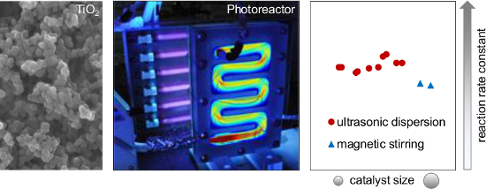
- required for significant changes in the size distribution). Equation 5 implies that to halve the TiO2 P25 size requires an energy density change by a factor of 170 (corresponding to a time modification of a factor of 30 when generating a 100 W ultrasonication in a 1000 mL suspension). Consequently, this
- reaction rate constant when the material balance between the storage tank and the reactor is established. The proposed calculation scheme was experimentally verified. In addition, the study took a closer look at the dispersion procedures for the TiO2 suspensions. Focus was placed on ultrasonication, which
- absorbance increases with further dispersion. Obviously, the maximum reaction rate is already achieved after short ultrasonication time, which disperses the large micrometer-sized agglomerates into submicron aggregates. This outcome is explained by the limited UV penetration depth into the concentrated


Green and energy-efficient methods for the production of metallic nanoparticles
Beilstein J. Nanotechnol. 2015, 6, 2354–2376, doi:10.3762/bjnano.6.243


Self-assembly mechanism of Ni nanowires prepared with an external magnetic field
Beilstein J. Nanotechnol. 2015, 6, 2123–2128, doi:10.3762/bjnano.6.217
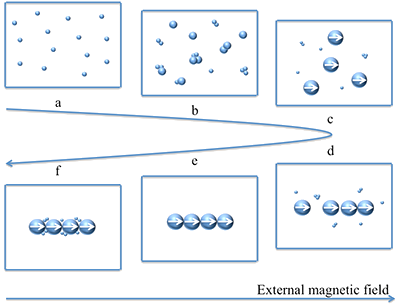
- diameter of about 95 nm and a length of about 26 μm are composed of spherical-like particles that are connected with each other and form straight chains. Notably, the Ni samples remain chain-like after ultrasonication for 30 min, which implies that the Ni particles grow together and do not simply aggregate




Temperature-dependent breakdown of hydrogen peroxide-treated ZnO and TiO2 nanoparticle agglomerates
Beilstein J. Nanotechnol. 2015, 6, 1897–1903, doi:10.3762/bjnano.6.193
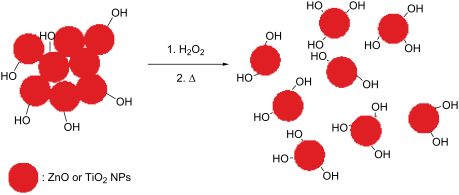
- contaminate the NP suspension, which may limit the applications of the NPs. Their dispersion in aqueous media can also be physically achieved after long ultrasonication processes (up to 60 h [10]). However, the long sonication time may also cause erosion or dissolution and the formation of cavities on the




Preparation of Ni/Cu composite nanowires
Beilstein J. Nanotechnol. 2015, 6, 1268–1271, doi:10.3762/bjnano.6.130
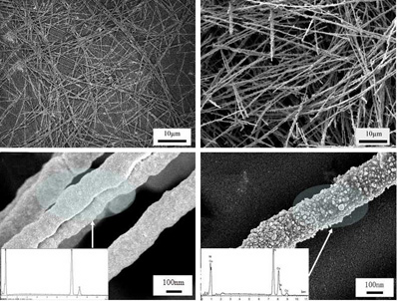
- particles deposited on the surface of the Ni nanowires. Copper particles were nucleating and growing fast, while nickel decreased on the surface. Intensive ultrasonication for 30 min did not disintegrate the Ni/Cu composite nanowires and no dispersive particles could be observed, which implies the


Synthesis, characterization and in vitro effects of 7 nm alloyed silver–gold nanoparticles
Beilstein J. Nanotechnol. 2015, 6, 1212–1220, doi:10.3762/bjnano.6.124
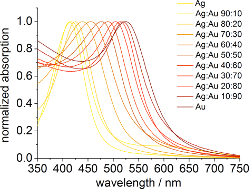
- ablation was reported [25][26][27]. Alloying of presynthesized silver core/gold shell nanoparticles by refluxing with oleylamine [28] or ultrasonication of separate gold and silver nanoparticles [29] was also described. Here, an aqueous co-reduction of silver nitrate and tetrachloroauric acid with a


Patterning technique for gold nanoparticles on substrates using a focused electron beam
Beilstein J. Nanotechnol. 2015, 6, 1010–1015, doi:10.3762/bjnano.6.104
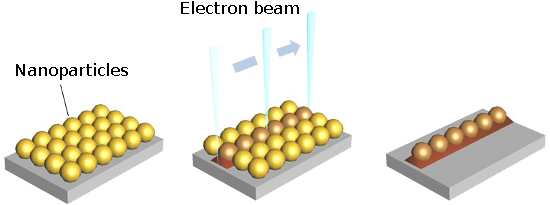
- particles Finally, the irradiated substrate was rinsed in water during ultrasonication with a commercially available surface-active agent for the amine-epoxy method. For the amino-undecanethiol method, an amino-1-undecanethiol in an ethanolic solution was used instead of water. This step removed the unfixed




Electrical properties of single CdTe nanowires
Beilstein J. Nanotechnol. 2015, 6, 444–450, doi:10.3762/bjnano.6.45
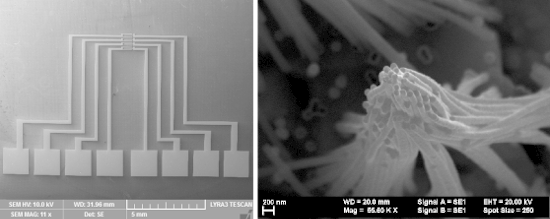
- is in accordance with literature data at approximately 1.45–1.5 eV [18]. The nanowires were further harvested in chloroform by ultrasonication. Taking into account the brittleness of the semiconducting nanostructure, the ultrasonication step was performed for only a few seconds. Further, a droplet of
- wires were harvested by ultrasonication into a suspension in chloroform. A droplet of nanowire suspension in semiconductor-grade chloroform was placed on a n++ Si/SiO2 substrate with patterned, interdigitated contracts. These were obtained by photolithography and sequential deposition of 20 nm of Ti and


Liquid-phase exfoliated graphene: functionalization, characterization, and applications
Beilstein J. Nanotechnol. 2014, 5, 2328–2338, doi:10.3762/bjnano.5.242
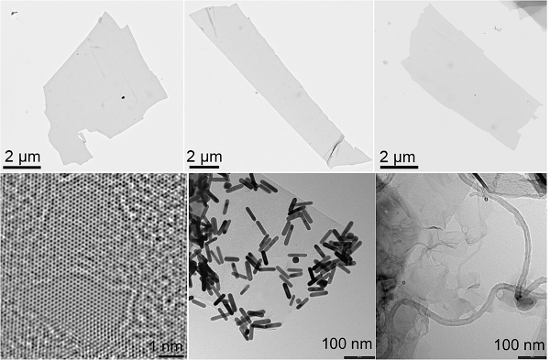
- of graphene into advanced functional materials forward. Keywords: applications; dispersions; graphene; organic functionalization; ultrasonication; Review Introduction Various methodologies for the production of graphene and chemically modified graphene have been described during the last years [1
- techniques, since this is a straightforward process for the production of clean graphene layers ready for organic functionalization. Importantly, the exfoliation of graphite by ultrasonication is a very versatile technique that has already demonstrated its effectiveness in dispersing graphene in solvents
- with different physical and chemical properties. This flexibility allows the incorporation of additives such as surfactants [8], antioxidants [9], and polymers [10] during the ultrasonication process, while increasing the affinity for the solvent, the quality of the resulting graphene layers, or their




Carbon nano-onions (multi-layer fullerenes): chemistry and applications
Beilstein J. Nanotechnol. 2014, 5, 1980–1998, doi:10.3762/bjnano.5.207
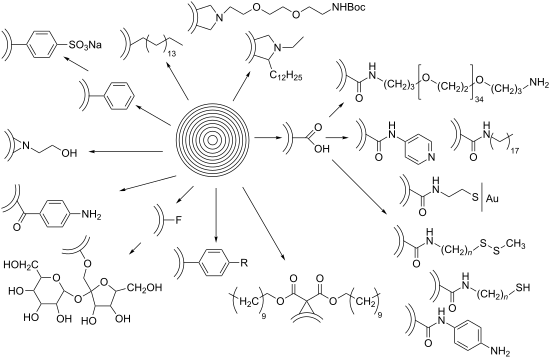
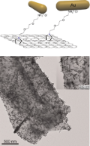
- form reactive bis-radicals [31]. After ultrasonication and heating of the CNOs and BODA in N-methyl-2-pyrrolidone (NMP) in a pressure vessel, a CNO–BODA copolymer was obtained. NMP suspensions of the CNO–BODA copolymer were found to be very stable, even at high concentrations of up to 0.67 mg·mL−1
- functional groups, such as bromides, benzoic acids, tert-butyl groups, nitro groups, methyl esters, and trimethylsilyl (TMS) acetylenes. For all reactions, the CNO starting material was suspended in DMF by ultrasonication and then the aniline derivative and isoamyl nitrite were subsequently added. After


PVP-coated, negatively charged silver nanoparticles: A multi-center study of their physicochemical characteristics, cell culture and in vivo experiments
Beilstein J. Nanotechnol. 2014, 5, 1944–1965, doi:10.3762/bjnano.5.205



Non-covalent and reversible functionalization of carbon nanotubes
Beilstein J. Nanotechnol. 2014, 5, 1675–1690, doi:10.3762/bjnano.5.178
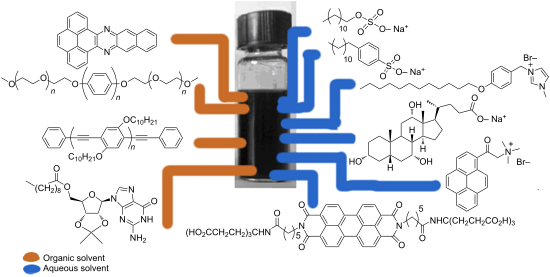
- provided by magnetic stirring, reflux, shear mixing, or, most commonly, ultrasonication either mild sonication in a bath or high-power sonication using a tip [16]. Once exfoliated, the simplest stable CNTs dispersions have been achieved by using solvent molecules able to efficiently interact with CNTs such



Trade-offs in sensitivity and sampling depth in bimodal atomic force microscopy and comparison to the trimodal case
Beilstein J. Nanotechnol. 2014, 5, 1144–1151, doi:10.3762/bjnano.5.125
- ). The product was received in H+ form and no further treatment was performed, except for a routine cleaning procedure. Sections of the membrane of the size of 1 × 1 cm2 were rinsed with DI-water followed by 5 min of ultrasonication in DI-water and a second rinse step prior to equilibration in a closed


A visible-light-driven composite photocatalyst of TiO2 nanotube arrays and graphene quantum dots
Beilstein J. Nanotechnol. 2014, 5, 689–695, doi:10.3762/bjnano.5.81
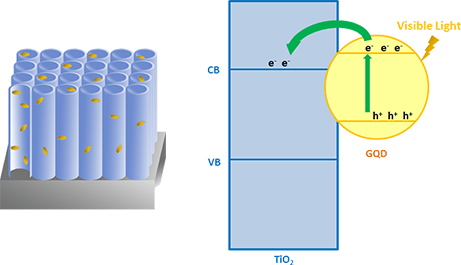
- % deionized (DI) water was used as electrolyte. Ti foil (2 cm × 3 cm) was used as a working electrode, and a Pt foil (1 cm × 1 cm) served as a counter electrode. Prior to anodization, Ti foils were washed with ethanol, acetone by ultrasonication to remove contaminants, subsequently rinsed with DI water and


Morphological characterization of fullerene–androsterone conjugates
Beilstein J. Nanotechnol. 2014, 5, 374–379, doi:10.3762/bjnano.5.43
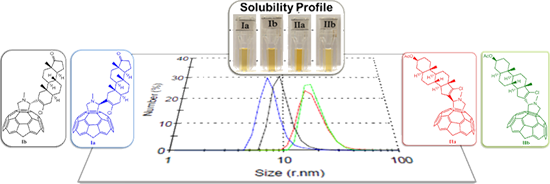
- by dissolving the corresponding sample (10 mg) in H2O (10 mL) with ultrasonication for 2 h, followed by centrifugation (10 min, 3000 rpm) and the transparent brown suspension was transferred to a clean vessel. The resulting suspension was analysed by TEM and DLS. Transmission electron microscopy The


A catechol biosensor based on electrospun carbon nanofibers
Beilstein J. Nanotechnol. 2014, 5, 346–354, doi:10.3762/bjnano.5.39
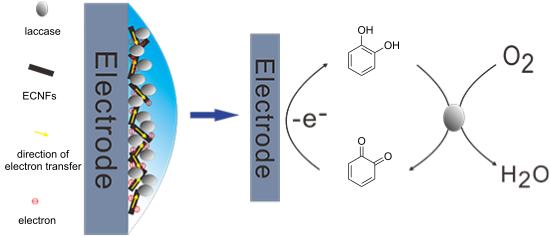
- were optimized. Ultimately, the biosensor was fabricated by using a mixture containing 1.5 wt % Nafion, 0.4 mg·mL−1 ECNFs and 3 mg·mL−1 laccase. A typical procedure for the preparation of the laccase–Nafion–ECNFs/GCE is as follows: First, with the help of ultrasonication and stirring, 4 mg ECNFs is


En route to controlled catalytic CVD synthesis of densely packed and vertically aligned nitrogen-doped carbon nanotube arrays
Beilstein J. Nanotechnol. 2014, 5, 219–233, doi:10.3762/bjnano.5.24
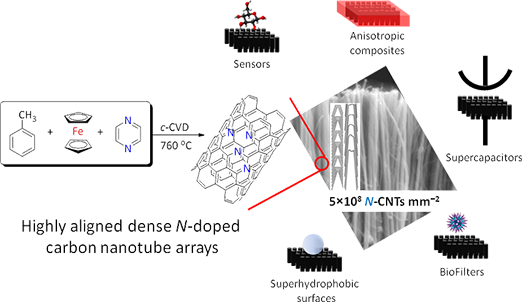
- , SWCNT arrays as less geometrically restricted ‘forests’ can be grown up to 1.64 × 10¹¹ nanotubes per mm2 [59]. Moreover, for the N-CNTs grown in Synthesis V the highest Fe content was found, and in the SEM imaging (in which pre-ultrasonication was not required) the catalyst nanoparticles can be still
- catalyst nanoparticle residues (dark spots) can be visible at the nanotube ends. It must be emphasized that Fe3C is a brittle material, which can be easily withdrawn from the nanotube tips during ultrasonication, and also possibly in other mechanical operations. Moreover, there are a few smaller particles
- ultrasonication bath and dropped onto 400 mesh copper grids covered with a holey carbon film. The nanotube samples were investigated by using a RM1000 (Ramascope-1000 system) Raman microscope with a spectral resolution of 0.1 cm−1 and a spatial resolution of the X/Y/Z stage of 1 µm. An argon ion laser (green, λ


Study of mesoporous CdS-quantum-dot-sensitized TiO2 films by using X-ray photoelectron spectroscopy and AFM
Beilstein J. Nanotechnol. 2014, 5, 68–76, doi:10.3762/bjnano.5.6
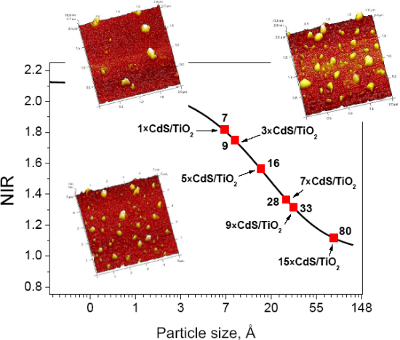
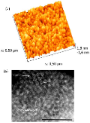
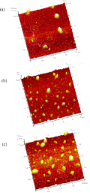
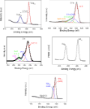
- under magnetic stirring at room temperature for 3 h before the films were spin-coated onto soda lime glass (SLG). Prior to use, the substrates were cleaned by ultrasonication (detergent, distilled water, acetone, ethanol, for 15 min in each medium) to remove hydrophobic contaminants at the surface and


Cytotoxic and proinflammatory effects of PVP-coated silver nanoparticles after intratracheal instillation in rats
Beilstein J. Nanotechnol. 2013, 4, 933–940, doi:10.3762/bjnano.4.105
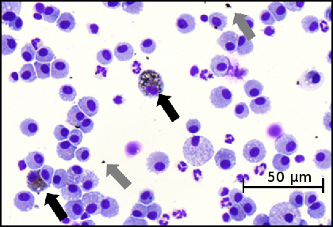
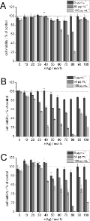
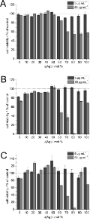
- dispersed in ultrapure, degassed water. The final silver concentration was determined by atomic absorption spectroscopy (AAS). The typical yield of Ag was about 5%. Unreacted silver and synthesis byproducts were removed by multiple ultracentrifugation, followed by redispersion under ultrasonication




Template based precursor route for the synthesis of CuInSe2 nanorod arrays for potential solar cell applications
Beilstein J. Nanotechnol. 2013, 4, 868–874, doi:10.3762/bjnano.4.98
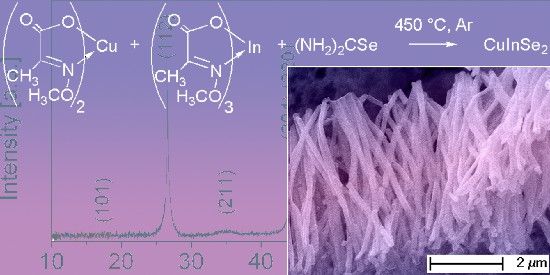
- F20 microscope operated at 200 kV, the samples were dispersed in ethanol by ultrasonication and then deposited on copper TEM grids. X-ray analysis (XRD) of the species was carried out on a Stoe&Cie StadiP diffractometer in Debye–Scherrer geometry while using Cu Kα1 radiation (λ = 1.541 Å) with a Ge
- individual size cannot be determined. Possibly, smaller crystallites are distributed at the surface, and a crystal size enlargement takes place near the rod core, so that the average size equals to 30 nm. It has to be mentioned that the samples for TEM/SAED were dispersed in ethanol by ultrasonication before





