


Search results
Search for "1H NMR" in Full Text gives 105 result(s) in Beilstein Journal of Nanotechnology.
Magnetic-Fe/Fe3O4-nanoparticle-bound SN38 as carboxylesterase-cleavable prodrug for the delivery to tumors within monocytes/macrophages
Beilstein J. Nanotechnol. 2012, 3, 444–455, doi:10.3762/bjnano.3.51
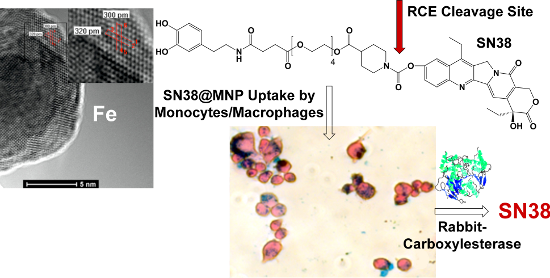
- of the hydroxyl groups by Pd/C-catalyzed hydrogenation, and was used as ligand II to incorporate SN38 to the MNPs. Compound 13 was fully characterized with 1H NMR, 13C NMR, and mass spectrometry. Loading SN38 to Fe/Fe3O4 magnetic nanoparticles (MNPs) Loading of SN38 to core/shell Fe/Fe3O4 magnetic
- hydrodynamic light scattering and laser Doppler electrophoresis. The 1H NMR and 13C NMR were obtained on a Varian Unity Plus (400 MHz) NMR spectrometer with deuterated chloroform or DMSO as solvents and TMS as the internal standard. ESI–MS spectra were acquired on an API4000 (Applied Biosystems, Foster City
- -binding SN38 prodrug was achieved in a 10-stage synthesis with overall 32% yield. The final product was fully characterized by 1H NMR, 13C NMR, and mass spectrometry. Characterization of the nanoparticles Figure 1a shows a low-resolution transmission electron microscope (TEM) image of the nanoparticles


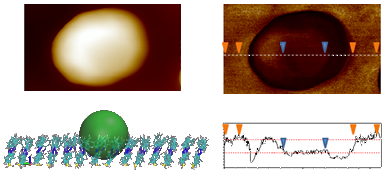
An NC-AFM and KPFM study of the adsorption of a triphenylene derivative on KBr(001)
Beilstein J. Nanotechnol. 2012, 3, 221–229, doi:10.3762/bjnano.3.25
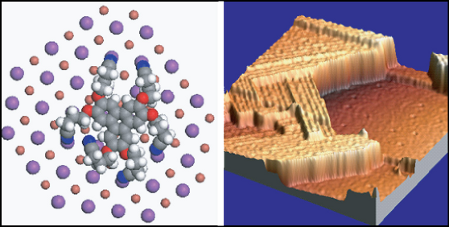
- by column chromatography (SiO2, DCM–AcOEt, 8:2) and drying under vacuum at 40 °C for 7h gave HCPTP (319 mg, yield: 71%). Rf = 0.5 (TLC, DCM–AcOEt, 7:3); 1H NMR (CD2Cl2, 300 MHz) δ 7.90 (s, 6H, arom), 4.36 (t, J = 5.7 Hz, 12H, CH2O), 2.71 (t, J = 7 Hz, 12H, CH2CN), 2.27 (m, 12H, NCCH2CH2) ppm; 13C NMR


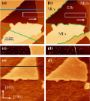


Variations in the structure and reactivity of thioester functionalized self-assembled monolayers and their use for controlled surface modification
Beilstein J. Nanotechnol. 2012, 3, 213–220, doi:10.3762/bjnano.3.24
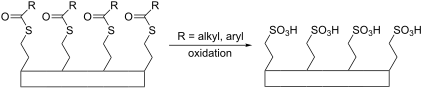
- obtained from Virginia Semiconductor (n-type; undoped, <100>, >1000 Ω·cm). Quartz substrates were obtained from Quarzschmelze Ilmenau. Analytical Methods Unless otherwise indicated, NMR spectra were obtained on a Bruker DPX 300 spectrometer (1H NMR at 300 MHz; 13C NMR at 75 MHz). Some were performed on a
- Bruker DPX 200 spectrometer (1H NMR at 200 MHz; 13C NMR at 50 MHz). The spectra are reported in ppm units (δ) and are referenced to TMS at 0 ppm for 1H NMR and to CDCl3 at 77.160 ppm for 13C NMR. UV spectra (200–800 nm) were measured on a Cary Model 100 spectrometer (in double-beam transmission mode
- (50 mL) and brine (50 mL). The hexane was dried over MgSO4 and filtered, and the solvent was removed on a rotovap. The crude ω-undecenyl thiol was purified by flash chromatography (hexane): Yield 6.02 g (82%); 1H NMR δ 1.20–1.47 (m, 13H), 1.61 (m, 2H), 2.04 (m, 2H), 2.52 (q, J = 7.5 Hz, 2H), 4.93 (m


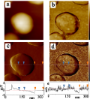
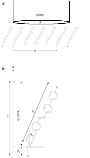
Direct monitoring of opto-mechanical switching of self-assembled monolayer films containing the azobenzene group
Beilstein J. Nanotechnol. 2011, 2, 834–844, doi:10.3762/bjnano.2.93
- and the mixture was sealed and stirred at room temperature for 4 h. The solvents were then evaporated under reduced pressure affording the thiol 2, thio-2-DA, which was used without further purification; 1H NMR (CDCl3) δ 3.5 (s, –SH), 7.4 (d, 3H), 7.5 (t, 2H), 7.6 (d, 2H), 7.7–7.8 (m, 6H), 8.0 (m, 4H



Novel acridone-modified MCM-41 type silica: Synthesis, characterization and fluorescence tuning
Beilstein J. Nanotechnol. 2011, 2, 284–292, doi:10.3762/bjnano.2.33
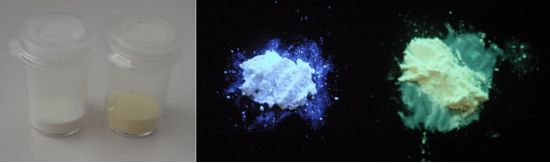
- orange oil (16.9 mmol, 6.77 g, 56%) showing a strong blue–green fluorescence under UV light. 1H NMR (400 MHz, CDCl3) δ 8.61 (d, 3JHH = 7.9 Hz, 2H), 7.76 (t, 3JHH = 7.8 Hz, 2H), 7.59 (d, 3JHH = 8.7 Hz, 2H), 7.32 (t, 3JHH = 7.5 Hz, 2H), 4.51–4.34 (m, 2H), 3.67 (s, 9H), 2.22–2.01 (m, 2H), 0.89 (t, 3JHH


Other Beilstein-Institut Open Science Activities



