


Search results
Search for "LED" in Full Text gives 775 result(s) in Beilstein Journal of Nanotechnology. Showing first 200.
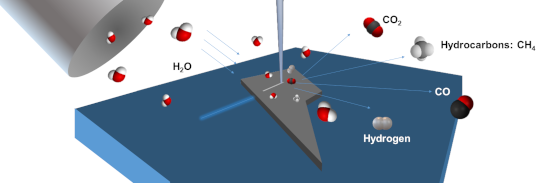
Photocatalytic methane oxidation over a TiO2/SiNWs p–n junction catalyst at room temperature
Beilstein J. Nanotechnol. 2024, 15, 1132–1141, doi:10.3762/bjnano.15.92
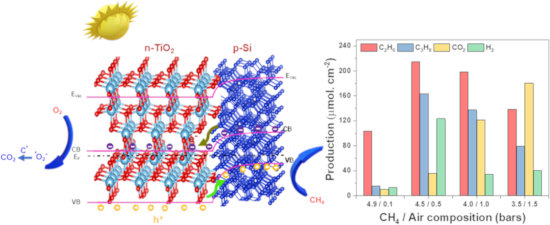
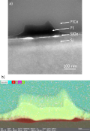
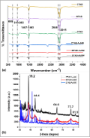
- ) [43][44]. As expected, the crystal orientation of the TiO2/SiNWs catalyst obviously led to the creation of a robust p–n junction photocatalyst. The SEM analysis further confirms the morphological evolution during etching and TiO2 ALD. As revealed in Supporting Information File 1, Figure S1, the


Direct electron beam writing of silver using a β-diketonate precursor: first insights
Beilstein J. Nanotechnol. 2024, 15, 1117–1124, doi:10.3762/bjnano.15.90

- compounds exist that feature sufficient vapor pressure and stability to be delivered into and used in a vacuum chamber. To date, only the class of carboxylates led to successful implementation, including both fluorinated and non-flourinated ligands [27]. The surprisingly high content of elemental silver


Effect of wavelength and liquid on formation of Ag, Au, Ag/Au nanoparticles via picosecond laser ablation and SERS-based detection of DMMP
Beilstein J. Nanotechnol. 2024, 15, 1054–1069, doi:10.3762/bjnano.15.86

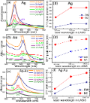
- ablation. This phenomenon led to lower NP production at 355 nm compared to that at 532 and 1064 nm laser wavelengths, this was also reflected in the absorption spectra. Consequently, there is a tendency for NP agglomeration and chain formation, which is evident from the TEM pictures depicted in Figure 3
- days, the presence of NaCl led to an increase in the SERS signal; however, over a longer duration, the NPs in DW showed better SERS intensity than those in aqueous NaCl solution. Jiang et al. [62] investigated the SERS performance of Ag NPs in detecting CV molecules. They found that bare Ag NPs


Recent progress on field-effect transistor-based biosensors: device perspective
Beilstein J. Nanotechnol. 2024, 15, 977–994, doi:10.3762/bjnano.15.80
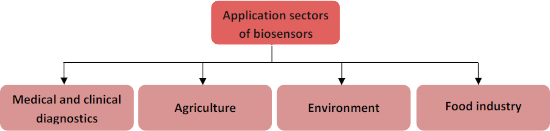
- biosensors for accurate detection of viruses [25], cancer [15], proteins [36], DNA, glucose [17], and nucleic acids has been strongly developed [37]. On the other hand, specific biomolecule classifications by microbiologists has led to the realization and development of different biosensors, significantly




Identification of structural features of surface modifiers in engineered nanostructured metal oxides regarding cell uptake through ML-based classification
Beilstein J. Nanotechnol. 2024, 15, 909–924, doi:10.3762/bjnano.15.75
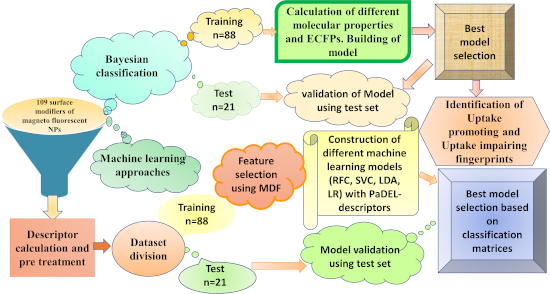
- advancement of nanotechnology has led to the widespread utilization of engineered nanostructured metal oxides (ENMOs) in various industrial and biomedical applications [1]. Nanoparticles (NPs) are described by the International Organization for Standardization as structures characterized by one, two, or three
- nanoparticles consist of metal elements bonded with oxygen in intricate structures [3][4]. They exhibit exceptional physicochemical properties, which have led to their widespread utilization across various industries [5][6]. These nanomaterials are employed in, for example, electronics, cosmetics, and medicine


Water-assisted purification during electron beam-induced deposition of platinum and gold
Beilstein J. Nanotechnol. 2024, 15, 884–896, doi:10.3762/bjnano.15.73
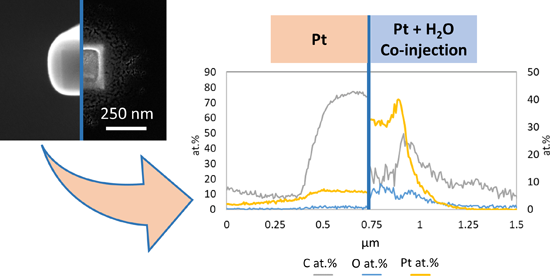
- precursor MeCpPtMe3. As a water precursor MgSO4·7H2O was used. The purification during deposition led to a decrease of the carbon-to-gold ratio (in atom %) from 2.8 to 0.5 and a decrease of the carbon-to-platinum ratio (in atom %) from 6–7 to 0.2. The purification was done in a regular scanning electron
- carbon matrix [15][17][18]. Variation of deposition conditions [15] and post-deposition purifications [18][19][20][21] have all led to an increased Pt content in the deposits, but a straightforward method of obtaining pure material is still a challenge. However, Shawrav et al. [22] managed to deposit
- exposure) led to the purification of a 40 nm thick bottom layer of the deposit [37][38]. Fully post-deposition-purified FEBID structures were reported by Seewald et al. [4], who deposited three-dimensional hollow cones of moderate thickness, which were purified using an e-beam-assisted post-deposition





The effect of age on the attachment ability of stick insects (Phasmatodea)
Beilstein J. Nanotechnol. 2024, 15, 867–883, doi:10.3762/bjnano.15.72

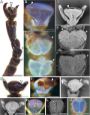
- , and reduced inflation led to larger contact area and increased adhesive performance [43]. As the inflation is achieved by an increased hemolymph pressure in the pads of S. aeta, a decline in hemolymph supply to the pads would reduce inflation. The strong extent of deflation visible in these pads might


Green synthesis of biomass-derived carbon quantum dots for photocatalytic degradation of methylene blue
Beilstein J. Nanotechnol. 2024, 15, 755–766, doi:10.3762/bjnano.15.63
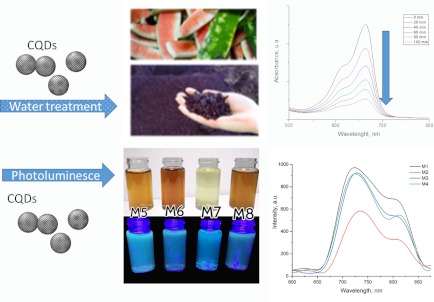
- absence of any hydrolyzing agent (urea) or acidic compound (nitric acid). This led to poor degradation of organic matter, resulting in relatively large carbon structures (over 100 nm) as it was shown in Figure 4, which does not correspond to the size range of a CQD. Nevertheless, when these samples were
- achieved. We found that optimized synthesis parameters led to CQDs with diverse chemical characteristics. Notably, samples derived from grape pomace and watermelon peels synthesized with nitric acid, exhibited superior catalytic activity in methylene blue degradation, along with enhanced luminescence and


Reduced subthreshold swing in a vertical tunnel FET using a low-work-function live metal strip and a low-k material at the drain
Beilstein J. Nanotechnol. 2024, 15, 713–718, doi:10.3762/bjnano.15.59
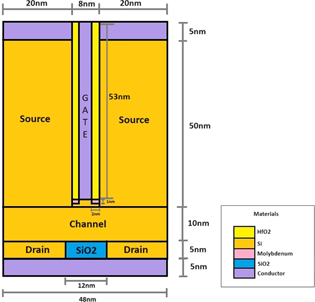
- ); tunnel field-effect transistor (TFET); Introduction Rapid miniaturization of electronic devices has led to an increase in leakage current. Leakage current is a big challenge in miniaturized circuits. Miniaturization, at the same time, increased the device performance and reduced the area occupied by the


Gold nanomakura: nanoarchitectonics and their photothermal response in association with carrageenan hydrogels
Beilstein J. Nanotechnol. 2024, 15, 678–693, doi:10.3762/bjnano.15.56

- can be seen differential UPD of AgNO3 along with the micellar structure arrangement of the surfactant which led to the generation of nanomakura-shaped nanoparticles. Seed-mediated and seedless synthesis of gold nanorods (AuNRs) In this experiment, two different approaches were adopted for synthesizing






Laser synthesis of nanoparticles in organic solvents – products, reactions, and perspectives
Beilstein J. Nanotechnol. 2024, 15, 638–663, doi:10.3762/bjnano.15.54
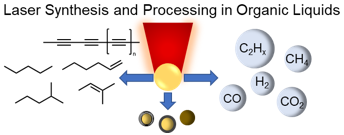
- physical synthesis method. Moreover, the irradiation of pure organic solvents with femtosecond or picosecond radiation led to the formation of numerous products induced by the intense conditions, which can be attributed to laser-induced optical breakdown and/or shockwaves. The optical breakdown of the
- without an oxide shell. A moderate oxidation was found for the ethanol–water mixture, leading to oxide crescents on the nanoparticle surface; nitrogen-saturated ethanol led to scarcely oxidized AuFe nanoparticles. However, it has to be noted that the addition of such agents influences the ablation
- propionitrile or butyronitrile, however, led to the formation of regular (heteroatom-free) graphitic carbon shells. Begildayeva et al. attributed this behavior to the high availability of the CN− moiety in acetonitrile after decomposition, while the decomposition of nitriles with longer chains leads to the





Radiofrequency enhances drug release from responsive nanoflowers for hepatocellular carcinoma therapy
Beilstein J. Nanotechnol. 2024, 15, 569–579, doi:10.3762/bjnano.15.49
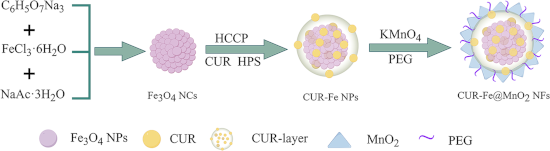
- above suspension for 3 min. The resulting mixture was subsequently sonicated for 4 h. Under the effect of TEA, the hydroxy groups on CUR and HPS became activated and replaced the chlorine atoms on HCCP, which led to the coassembly of the coating structure on the surface of Fe3O4 NCs. The generated CUR


Directed growth of quinacridone chains on the vicinal Ag(35 1 1) surface
Beilstein J. Nanotechnol. 2024, 15, 556–568, doi:10.3762/bjnano.15.48
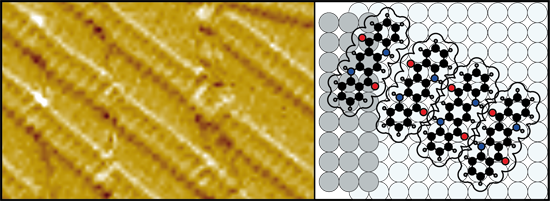
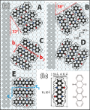
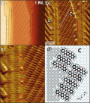
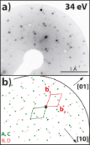
- the higher temperature of 400 K has led to the preferred formation of the three chain orientations A, C, and E, which are thermodynamically more stable than the orientations B and D. Deposition at 500 K Last, we discuss the structure of QA after deposition at 500 K. From our previous work regarding QA


Electron-induced deposition using Fe(CO)4MA and Fe(CO)5 – effect of MA ligand and process conditions
Beilstein J. Nanotechnol. 2024, 15, 500–516, doi:10.3762/bjnano.15.45
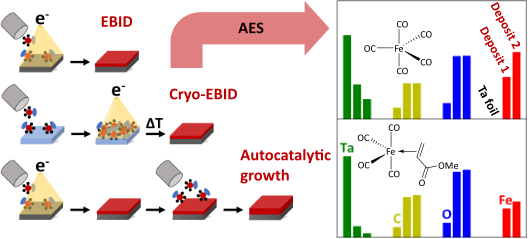
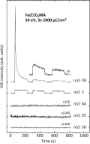
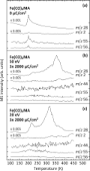
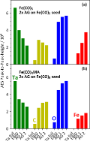
- with more than 90 atom % Fe were obtained [19], presumably related to electron beam heating effects. However, attempts to purify deposits with initial Fe contents of only 40 atom % by annealing up to 700 °C led to phase segregation into a highly pure and crystalline Fe phase and a carbonaceous material
- when further Fe(CO)5 was dosed without electron irradiation onto a seed deposit produced by EBID and held at room temperature [27]. A control experiment in which the same amount of Fe(CO)5 was dosed directly onto the Ta substrate without EBID seed layer, however, led to much smaller FeLMM signals [27



Sidewall angle tuning in focused electron beam-induced processing
Beilstein J. Nanotechnol. 2024, 15, 447–456, doi:10.3762/bjnano.15.40
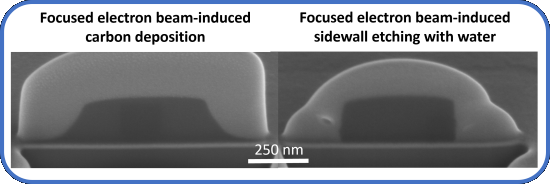
- the etching takes place is unknown. It was noticed that a small change in the pressure of water vapour led to a significant change in the etching rate, suggesting that the process is gas-limited (see Supporting Information File 1, section S3). The role of diffusion could therefore be significant. The




Potential of a deep eutectic solvent in silver nanoparticle fabrication for antibiotic residue detection
Beilstein J. Nanotechnol. 2024, 15, 426–434, doi:10.3762/bjnano.15.38
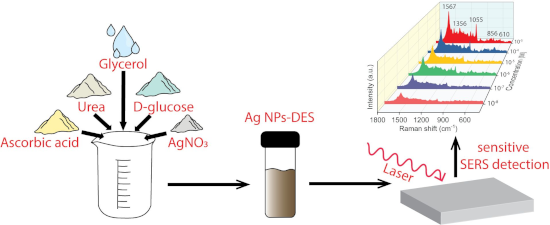
- . The similarities between Ag NPs and Au NPs, with the higher LSPR and SERS performance of Ag NPs [18][31], led to the innovative idea of Ag NPs synthesis in DESs. In this work, we present a novel strategy to fabricate Ag NPs and demonstrate our hypothesis about the application of DESs in stabilizing Ag


Investigating ripple pattern formation and damage profiles in Si and Ge induced by 100 keV Ar+ ion beam: a comparative study
Beilstein J. Nanotechnol. 2024, 15, 367–375, doi:10.3762/bjnano.15.33
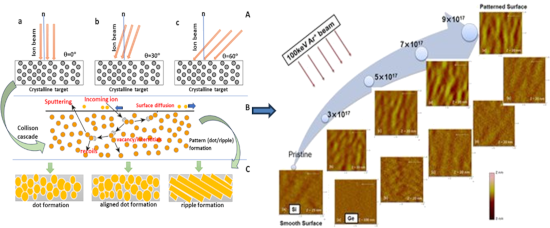
- observed for Si. This further confirms that the near surface region of Si, amorphized to form better ripple patterns in Si as compared to Ge, may be due to the overlap of the collision cascade which led to more defect formation [41]. Rutherford backscattering results The RBS technique was used to determine


Nanomedicines against Chagas disease: a critical review
Beilstein J. Nanotechnol. 2024, 15, 333–349, doi:10.3762/bjnano.15.30
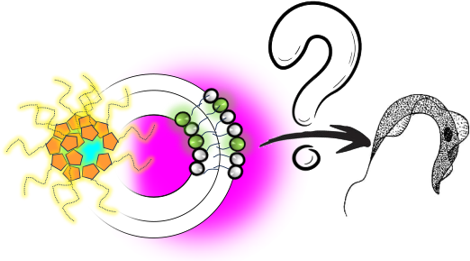
- therapeutic response, were detected [22]. This finding led to the assumption that in adults the BNZ treatment could be overdosed. Unlike adults, children show few ADRs; therefore, the existence of a potential direct correlation between drug concentration and the incidence of ADRs was suggested. Data from
- successfully develop nanomedicines, disease-led rather than formulation-led design is essential [141]. In treatments performed with intravenous nanomedicines, hydrodynamic diameter (much larger than that of a low-molecular-weight drug) and surface nature, are critical to maximize the access to target sites

Ultrasensitive and ultrastretchable metal crack strain sensor based on helical polydimethylsiloxane
Beilstein J. Nanotechnol. 2024, 15, 270–278, doi:10.3762/bjnano.15.25
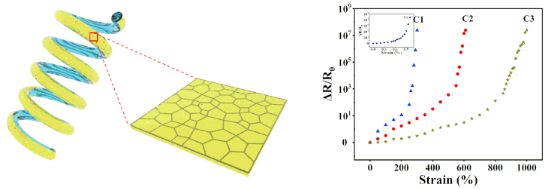
- and a light-emitting diode (LED). When a tensile strain is applied, the light emitted by the LED is modulated by the strain sensor. The LED rapidly switched off when the sensor surpassed the critical strain threshold of the target. The switch-off of the LED could serve as an alarm signal, and the
- of the temperature. (b) The relative resistance change varies with the external temperature. (c) The different brightness of an LED as alarm signal. Inset: the LED in series with the strain sensor. Schematic illustration of the fabrication process of the metal crack strain sensor based on helical


Quantitative wear evaluation of tips based on sharp structures
Beilstein J. Nanotechnol. 2024, 15, 230–241, doi:10.3762/bjnano.15.22
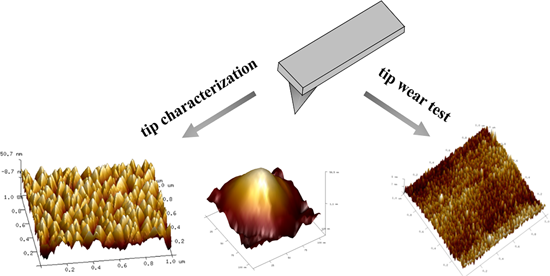
- scanning, the tip diameter at a set point of 0.2 approached the initial diameter of the probe at the set point of 0.6. This led to the conclusion that the wear of the tip at a higher set point was less, which might be due to the larger initial diameter of the tip. Table 1 summarizes the effects of the


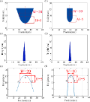


Graphene removal by water-assisted focused electron-beam-induced etching – unveiling the dose and dwell time impact on the etch profile and topographical changes in SiO2 substrates
Beilstein J. Nanotechnol. 2024, 15, 190–198, doi:10.3762/bjnano.15.18
- unconventional strong electron–electron interactions, present in superlattices formed in twisted bilayered and trilayered graphene, led to the emergence of a new field called “twistronics” – just to highlight recent remarkable discoveries such as superconductivity [2][3], topological phases [4][5], and the


Enhanced feedback performance in off-resonance AFM modes through pulse train sampling
Beilstein J. Nanotechnol. 2024, 15, 134–143, doi:10.3762/bjnano.15.13
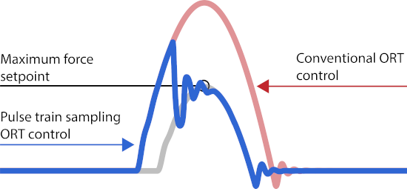
- led to a significant increase in the achievable ORT frequency [24]. The other speed-limiting factor is the snap-off ringing of the cantilever, especially for applications in air and vacuum [27]. Although this physical phenomenon can be used to extract material properties [28], it slows down the


Assessing phytotoxicity and tolerance levels of ZnO nanoparticles on Raphanus sativus: implications for widespread adoptions
Beilstein J. Nanotechnol. 2024, 15, 115–125, doi:10.3762/bjnano.15.11
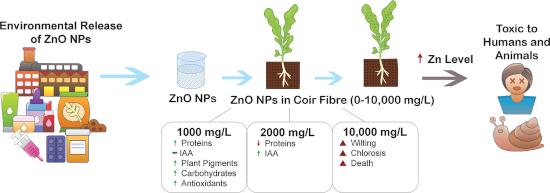
- (Chl-b), total chlorophylls, carotenoids, and antioxidants by 24.7%, 58.5%, 38.0%, 42.2%, 39.9%, 11.2%, and 7.7%, respectively. Interestingly, this dose had no impact on the indole acetic acid (IAA) content. Conversely, the use of 2,000 mg/L of ZnO NPs in the same medium led to a significant reduction
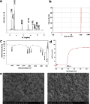


Development and characterization of potential larvicidal nanoemulsions against Aedes aegypti
Beilstein J. Nanotechnol. 2024, 15, 104–114, doi:10.3762/bjnano.15.10
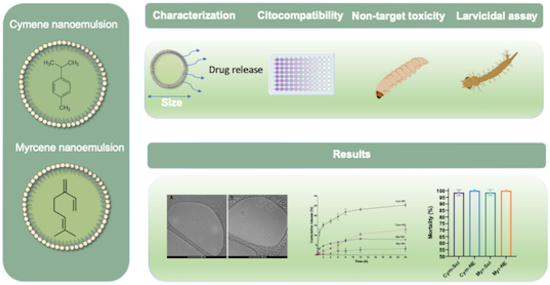
- myrcene or cymene in nanoemulsions led to a sustained release of the compounds, suggesting that they could potentially provide a more efficient method for delivering these compounds compared to free solutions. Furthermore, the study showed that the nanoemulsification process reduced the cytotoxicity of


Berberine-loaded polylactic acid nanofiber scaffold as a drug delivery system: The relationship between chemical characteristics, drug-release behavior, and antibacterial efficiency
Beilstein J. Nanotechnol. 2024, 15, 71–82, doi:10.3762/bjnano.15.7
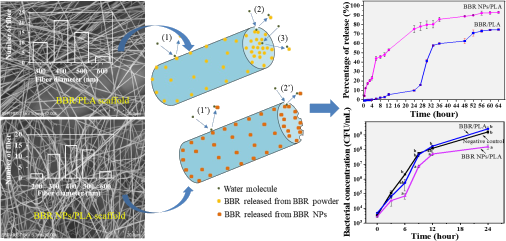
- , the BBR NPs/PLA nanofiber scaffold had more wettability and higher concentration of BBR NPs dispersed on the surface of PLA nanofibers. This led to a sustained release of 75 wt % of the loaded BBR during the first 24 h, and consequently boosted the antibacterial effectiveness. Moreover, the





