Search results
Search for "STEM" in Full Text gives 301 result(s) in Beilstein Journal of Nanotechnology. Showing first 200.
Effect of different silica coatings on the toxicity of upconversion nanoparticles on RAW 264.7 macrophage cells
Beilstein J. Nanotechnol. 2021, 12, 35–48, doi:10.3762/bjnano.12.3
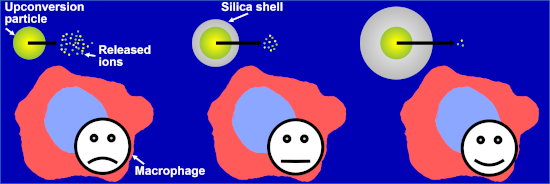
- -aminopropyltrimethoxysilane (AHAPS), which provides the nanoparticle surface with a positive charge, increasing their interaction with the cell membrane. The particles were characterized by scanning transmission electron microscopy (STEM), dynamic light scattering (DLS), electrophoretic light scattering (ELS), and
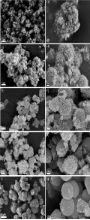
- thermal decomposition method [47], yielding spherical particles with a low polydispersity (Figure 1A, STEM diameter (dSTEM) = 33 ± 2 nm). The hydrodynamic diameter (Z-average) was 47 ± 1 nm (polydispersity index, PDI = 0.38 ± 0.05). ICP-OES measurements yielded a percentual molar ratio of Y/Yb/Er = [74
- thicker shells. As a reference system, pure silica nanoparticles with a size of 50 nm were also coupled with RBITC and functionalized with AHAPS (sample SiO2 @RBITC_NH2). STEM images of each sample are shown in Supporting Information File 1, Figure S3. The STEM data of all the particles is summarized in


Free and partially encapsulated manganese ferrite nanoparticles in multiwall carbon nanotubes
Beilstein J. Nanotechnol. 2020, 11, 1891–1904, doi:10.3762/bjnano.11.170
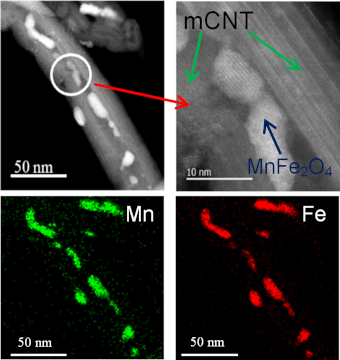
- microscopy (HRTEM) on a JEOL JEM-2100F microscope working at 200 kV. Partially encapsulated manganese ferrite nanoparticles were characterized using HRTEM and energy-dispersive X-ray spectroscopy (EDS); the elemental mapping was performed on a JEOL JEM-ARM200F. Scanning transmission electron microscopy (STEM
- nanoparticles are characterized by the superparamagnetic behavior. Partially encapsulated manganese ferrite nanoparticles inside multiwall carbon nanotubes The formation of MnFe2O4 nanoparticles inside the inner cavity of MWCNTs and outside of MWCNTs is confirmed by chemical mapping using EDS–STEM (Figure 4
- MWCNTs is similar to that of pristine MWCNTs. This explanation is consistent with STEM images and EDS mappings presented in Figure 4, which show MnFe2O4 particles inside the tubes and attached to the external surfaces of the MWCNTs. The first and the second peak in the UPS spectrum of MnFe2O4/MWCNTs




Piezotronic effect in AlGaN/AlN/GaN heterojunction nanowires used as a flexible strain sensor
Beilstein J. Nanotechnol. 2020, 11, 1847–1853, doi:10.3762/bjnano.11.166
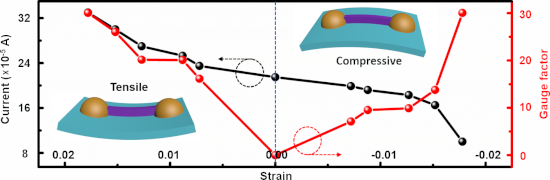
- contrast. Detailed structural parameters are shown in the Experimental section. Figure 1b shows a scanning transmission electron microscopy (STEM) image taken of the AlGaN/AlN/GaN heterojunction (left panel) and a corresponding high-resolution transmission electron microscopy (HRTEM) image of the GaN layer
- (ZEISS Ultra 55), and a TEM (JEM-2100HR, JEM-1400 PLUS). The I–V characteristic curves were measured using a source table including a SR570 low-noise current preamplifier and a DS345 function generator. (a) Schematic diagram of the epitaxial structure. (b) STEM image taken of the AlGaN/AlN/GaN


Direct observation of the Si(110)-(16×2) surface reconstruction by atomic force microscopy
Beilstein J. Nanotechnol. 2020, 11, 1750–1756, doi:10.3762/bjnano.11.157
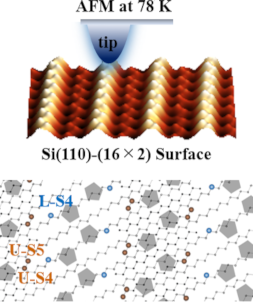
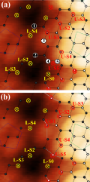
- ], scanning tunneling microscopy (STM) [15][16][17][18][19][20][21][22][23][24], scanning transmission electron microscopy (STEM) [25], and photoelectron spectroscopy (PES) [22][26][27]. The 16×2 reconstruction has a striped structure with upper and lower terraces and with boundaries of monatomic steps. In



The influence of an interfacial hBN layer on the fluorescence of an organic molecule
Beilstein J. Nanotechnol. 2020, 11, 1663–1684, doi:10.3762/bjnano.11.149
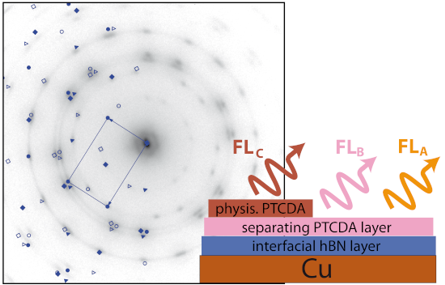
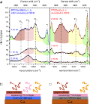
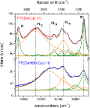
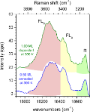
- . Thus, it does not stem from PTCDA directly adsorbed on hBN, but from ordered PTCDA domains in a second layer. However, this is different from the FL emission (Y), which is present in bulk-like PTCDA layers and was reported, for example, in [67]. Indeed, we observed the broad Y line and its vibronic





Oxidation of Au/Ag films by oxygen plasma: phase separation and generation of nanoporosity
Beilstein J. Nanotechnol. 2020, 11, 1608–1614, doi:10.3762/bjnano.11.143
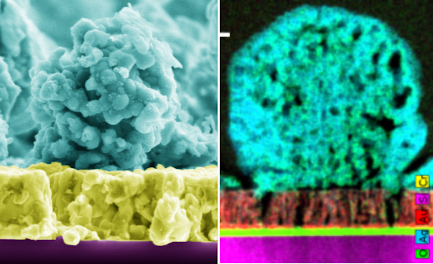
- presented previously. The nanoporosity in the microspheres was further confirmed by cross-sectional scanning transmission electron microscopy (STEM) imaging performed on a sample oxidized for 30 min (Figure 5). STEM-EDS analysis showed that the microspheres were comprised of silver and oxygen, and it
- confirmed that no gold migrated toward the film surface. According to the HAADF image in Figure 6, while the film maintained its columnar morphology, its nanocolumns became nanoporous, which is consistent with the cross-sectional SEM images of the same sample presented previously. The STEM-EDS elemental
- process and also due to the restructuring of gold at the nanometer scale via a surface diffusion mechanism. Based on the STEM data (Figure 6) it is possible to conclude that silver underwent a solid-state diffusion mechanism to reach the upper surface of the film. In principle, this was an intriguing


One-step synthesis of carbon-supported electrocatalysts
Beilstein J. Nanotechnol. 2020, 11, 1419–1431, doi:10.3762/bjnano.11.126

- [22][23]. Figure 2d shows a dark-field scanning transmission electron micrograph (STEM) of several Pt-NPs on a CNW sheet and corresponding energy dispersive spectroscopy (EDS) measurements of the platinum and carbon content. No significant amounts of other elements were detected. These measurements
- of 1.8 nm. d) Dark-field STEM micrograph and respective EDS measurements of the Pt and C distribution of a small area of a Pt/CNW sheet. The black dots in a) are identified as Pt-NPs. No other elements than Pt, C, and O were detected, which was later confirmed by XPS measurements (see Figure 5 a




Magnetic-field-assisted synthesis of anisotropic iron oxide particles: Effect of pH
Beilstein J. Nanotechnol. 2020, 11, 1230–1241, doi:10.3762/bjnano.11.107
- scanning TEM (STEM). The specimens were examined under a TITAN 80-300 microscope (FEI, USA) equipped with a Schottky field emission gun, a spherical aberration corrector (Cs probe corrector), a direct detection camera (Falcon II, FEI, USA), and an EDX spectroscopy system (EDAX, USA). The TEM was operated
- at 300 kV in the STEM bright-field mode. The details regarding the HRTEM equipment and the experimental techniques used were described elsewhere [58][59]. Image processing was performed using the Digital Micrograph (Gatan, USA) and TIA (FEI, USA) software. Image processing The electron micrographs





3D superconducting hollow nanowires with tailored diameters grown by focused He+ beam direct writing
Beilstein J. Nanotechnol. 2020, 11, 1198–1206, doi:10.3762/bjnano.11.104
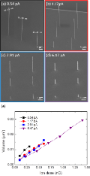
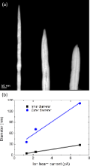
- To investigate the dependence of the NW inner diameter on the ion beam current, scanning transmission electron microscopy (STEM) experiments were performed. We found that inner diameter of the hollow NWs changes from 5 to 28 nm, whereas the outer diameter changes from 36 to 143 nm upon increasing the
- ion beam current from 1.3 to 7 pA. STEM images of these hollow NWs are shown in Figure 3a. The observed non-uniform shape of the cavity in the central nanowire could be explained by several reasons, such as He+ FIB instability or irregular substrate surface. We find a linear dependence of the inner
- are present up to the tip of the NW. On the left panel of Figure 4a, a STEM image of the NW with outer and inner diameter of 142 and 28 nm, respectively, is shown. On the right panel, a snapshot of the colored 3D tomographic reconstruction is depicted. Figure 4b shows a STEM image of the NW with outer



Hybridization vs decoupling: influence of an h-BN interlayer on the physical properties of a lander-type molecule on Ni(111)
Beilstein J. Nanotechnol. 2020, 11, 1168–1177, doi:10.3762/bjnano.11.101
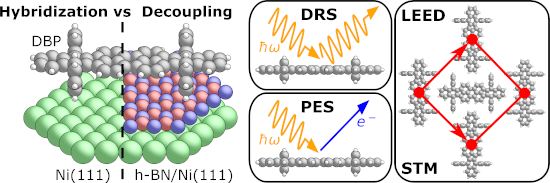
- is consistent with vacuum level alignment (see section “Valence band structure and work function change” above). The origin of the more pronounced broadening as well as the asymmetric line shape [45] of the C 1s level in the case of DBP on bare Ni(111) may stem from a variety of different adsorption


Applications of superparamagnetic iron oxide nanoparticles in drug and therapeutic delivery, and biotechnological advancements
Beilstein J. Nanotechnol. 2020, 11, 1092–1109, doi:10.3762/bjnano.11.94
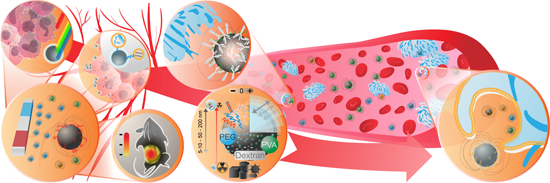
- that starch-coated SPIONs (BNF-starch) were taken up by human adipose tissue-derived stem cells in a dose-dependent manner. After 24 h these SPIONs ended up in lysosomes where they were degraded to Fe ions. Arbab and collaborators [129] attempted to find out the necessary lysosomal pH value for the
- iron metabolism to complete. They found that mesenchymal stem cells needed a sodium acetate buffer with pH 4.5 to completely reduce the iron, which took them less than seven days. At pH 5.5, they obtained a measurable iron release after 48 h. To prevent the lysosomal degradation of SPIONs, Wu et al
- resistance to chemotherapy. When studying stem cells or progenitor cells labeled with SPIONs, some authors state that the labeling has no effect on the ability of the cells to differentiate, but other authors claim that this ability is impaired by the iron oxide nanoparticles labeling [44][47][132][156


Key for crossing the BBB with nanoparticles: the rational design
Beilstein J. Nanotechnol. 2020, 11, 866–883, doi:10.3762/bjnano.11.72
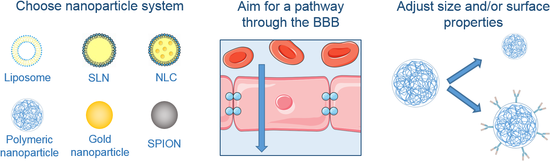
- in non-neurogenic regions. Disruption of the BBB by NIR light irradiation of AuNRs increased the AuNRs ability to accumulate in the SVZ, making this formulation interesting for targeting neural stem cells. Superparamagnetic iron oxide nanoparticles: Superparamagnetic iron oxide nanoparticles (SPIONs


Nickel nanoparticles supported on a covalent triazine framework as electrocatalyst for oxygen evolution reaction and oxygen reduction reactions
Beilstein J. Nanotechnol. 2020, 11, 770–781, doi:10.3762/bjnano.11.62
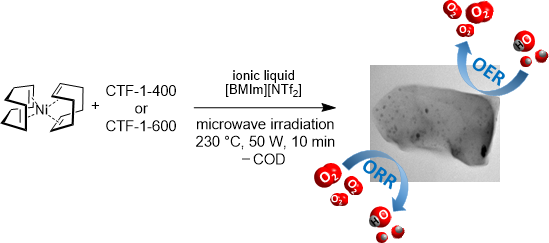
- microscopy (STEM)-EDX elemental mapping. The element compositions of defined areas (orange square) showing both a single Ni particle and its CTF support in the background are displayed in Figure S11, Supporting Information File 1. A possible reason why Ni NPs outside the NP agglomerates are not visible in
- was washed off three times with acetonitrile and left to dry. Images were recorded on a FEI Tecnai G2 F20 electron microscope operated at 200 kV accelerating voltage equipped with a Gatan UltraScan 1000P detector [68]. Scanning transmission electron microscopy (STEM) images and EDX elemental mapping


Hexagonal boron nitride: a review of the emerging material platform for single-photon sources and the spin–photon interface
Beilstein J. Nanotechnol. 2020, 11, 740–769, doi:10.3762/bjnano.11.61
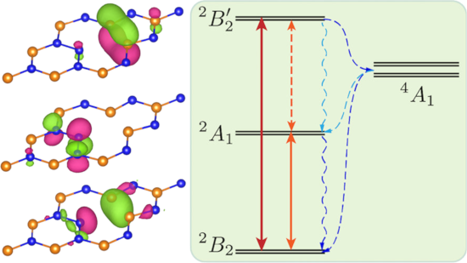
- atom probe tomography, providing sub-nanometer spatial information of the chemical composition, scanning tunneling electron microscope (STEM) imaging and spectroscopy at low beam energy [65], enabling the characterization of individual defects in h-BN, and atomic electron tomography. However, all these
- transmission electron microscopy (STEM) and CL. ZPLs in PL and CL were observed ranging from 540–720 nm. Four distinct defect classes were attributed to the observed emission range. One defect class with ZPL emission centered at 580 nm had PL and CL matching with spectral variability due to strain. This is




Electromigration-induced directional steps towards the formation of single atomic Ag contacts
Beilstein J. Nanotechnol. 2020, 11, 680–687, doi:10.3762/bjnano.11.55
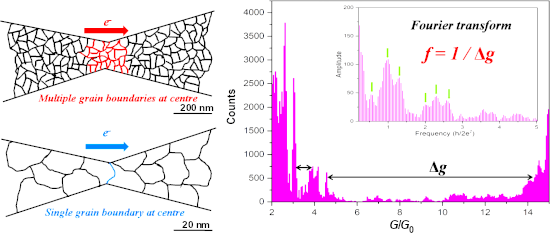
- and 15G0 is depicted in Figure 2. Peaks at 2.1G0, 2.6G0, 3.0G0, 3.8G0, 4.2G0, 4.6G0, 14.5G0 and 15G0 are observed. At this point it is not clear whether these values are the result of several contacts in parallel or stem from a single contact, since non-integer values of conductance are commonly


Observation of unexpected uniaxial magnetic anisotropy in La2/3Sr1/3MnO3 films by a BaTiO3 overlayer in an artificial multiferroic bilayer
Beilstein J. Nanotechnol. 2020, 11, 651–661, doi:10.3762/bjnano.11.51
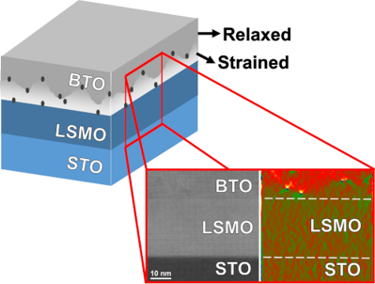
- varied the layer thicknesses. We structurally analyzed samples by reciprocal space maps (RSMs) around the pseudocubic (103) reflection in an X-ray diffractometer and high-angle annular dark field in scanning transmission electron microscopy (HAADF-STEM). Local strain maps were reconstructed by the
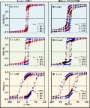
- geometric phase analysis (GPA) method on HAADF-STEM images. We magnetically analyzed samples by performing room-temperature polar plots of the remnant field, where we applied magnetic field on the plane of the sample along different directions. Results and Discussion Figure 1 displays RSMs taken around the
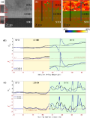
- HAADF-STEM image for a BTO/LSMO bilayer grown on STO substrate, where we can identify both BTO/LSMO and LSMO/STO interfaces. The insets correspond to high-magnification HAADF-STEM images to highlight the flat atomic sharp interfaces. By means of GPA method on the HAADF images, it is possible to display



Multilayer capsules made of weak polyelectrolytes: a review on the preparation, functionalization and applications in drug delivery
Beilstein J. Nanotechnol. 2020, 11, 508–532, doi:10.3762/bjnano.11.41




Current measurements in the intermittent-contact mode of atomic force microscopy using the Fourier method: a feasibility analysis
Beilstein J. Nanotechnol. 2020, 11, 453–465, doi:10.3762/bjnano.11.37
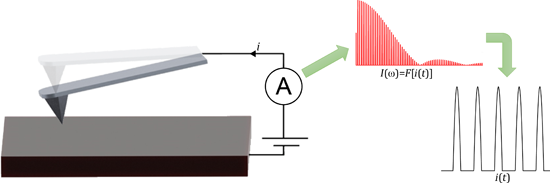
- stem from the dynamics and mechanics of an intermittent-contact operation. Besides the fact that electrical contacts would be intermittent, the nature of the contact would also be time-dependent within the contact time. This is because the indentation is constantly varying. Furthermore, the




Formation of nanoripples on ZnO flat substrates and nanorods by gas cluster ion bombardment
Beilstein J. Nanotechnol. 2020, 11, 383–390, doi:10.3762/bjnano.11.29
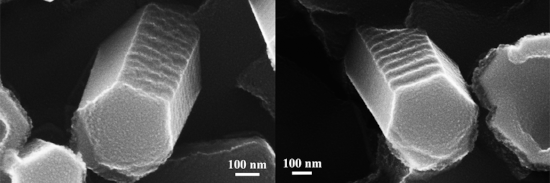
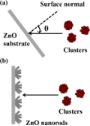
- and ion fluence are qualitatively the same as those of the flat targets. The obtained result can be compared with a study by Ghoniem et al. on the sputtering of Re and W nanorods with low-energy argon ions in which the authors have found the formation of rather weak ripple structures on the stem side



Using gold nanoparticles to detect single-nucleotide polymorphisms: toward liquid biopsy
Beilstein J. Nanotechnol. 2020, 11, 263–284, doi:10.3762/bjnano.11.20
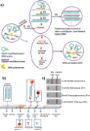
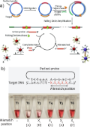
- to a conformational change, and stem separation (step 1), followed by polymerization reaction by the polymerase (step 2), forming biotin- and digoxin-attached duplex DNA (step 3). The process was further amplified through the next cycle (step 4). Overall, by the cyclic process, a large number of




Molecular architectonics of DNA for functional nanoarchitectures
Beilstein J. Nanotechnol. 2020, 11, 124–140, doi:10.3762/bjnano.11.11

- complementary base pairs. Cy3 and Cy5 dyes acted as donor–acceptor FRET pair systems that were ligated at the 5' and 3' end of the duplex stem structure, respectively. Under normal physiological conditions, the closed hairpin structure of the LMB probe facilitated juxtaposition of the two dyes, followed by


Fully amino acid-based hydrogel as potential scaffold for cell culturing and drug delivery
Beilstein J. Nanotechnol. 2019, 10, 2579–2593, doi:10.3762/bjnano.10.249
- out using primary cultures of human periodontal ligament-derived cells (PDLCs) instead of the previously used tumor cell line. Periodontal ligament as a source of stem-like cells is easily accessible during surgical removal of wisdom teeth [48]. PDLCs hold great promise for application in the field of
- viability results. According to the literature, various forms of lysine-containing scaffolds are able to enhance both the adhesion and the proliferation of stem cells. The most commonly used scaffolds are based on poly-ʟ-lysine [30][59][60] and poly-ᴅ-lysine [61]. However, LYS was applied as a cross-linker


Synthesis and acetone sensing properties of ZnFe2O4/rGO gas sensors
Beilstein J. Nanotechnol. 2019, 10, 2516–2526, doi:10.3762/bjnano.10.242
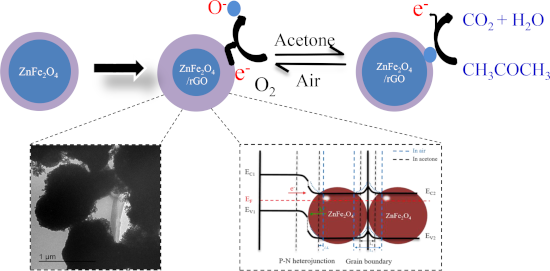
- the 0.5 wt % ZnFe2O4/rGO composite. Furthermore, the composition of the sample was analyzed by high-angle annular dark-field imaging scanning transmission electron microscopy (HAADF-STEM) and EDS. The element mappings in Figure 6e reveal the existence of C, Zn, Fe and O in the 0.5 wt % ZnFe2O4/rGO
- wt % of rGO. TEM images of (a) the 0.5 wt % ZnFe2O4/rGO spheres and (b) the 1 wt % ZnFe2O4/rGO spheres. (c) HRTEM image of the 0.5 wt % ZnFe2O4/rGO sample, the corresponding FFT image is shown in the inset. (d) SAED pattern of the 0.5 wt % ZnFe2O4/rGO sample and (e) HAADF-STEM image of the 0.5 wt




Coating of upconversion nanoparticles with silica nanoshells of 5–250 nm thickness
Beilstein J. Nanotechnol. 2019, 10, 2410–2421, doi:10.3762/bjnano.10.231
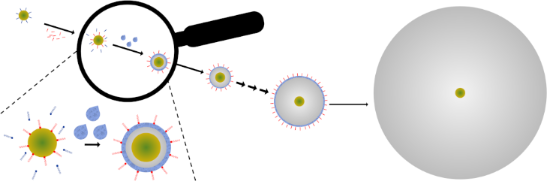
- study, i.e., oleate-capped UCNPs with a NaYF4 host structure and doped with 18% Yb and 2% Er, were synthesized by a thermal decomposition method [16] yielding spherical particles of low polydispersity. A typical scanning transmission electron microscopy (STEM) image is shown in Figure 1A. The diameter
- of the UCNP@SiO2 core–shell particles was obtained from these STEM images, and the corresponding hydrodynamic diameters were measured by dynamic light scattering (DLS, see below in Table 1). Although large, core-free silica particles can easily be obtained by Stöber-like growth processes [28], and
- −20 mV, which explains the low colloidal stability of these particles. The latter was also confirmed by the rather high hydrodynamic diameter of the particles derived from DLS compared to the diameter obtained by STEM (see below in Table 1). A similarly low colloidal stability of the NPs coated with


Semitransparent Sb2S3 thin film solar cells by ultrasonic spray pyrolysis for use in solar windows
Beilstein J. Nanotechnol. 2019, 10, 2396–2409, doi:10.3762/bjnano.10.230
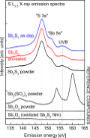
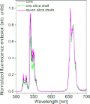
- Sb2S3 layers, the XES spectra (Figure 2) probe the chemical states in the entire Sb2S3 film. The S L2,3 XES data in Figure 2 allows three transitions for the Sb2S3 films and the reference (denoted as “S 3s”, “Sb 5s”, and UVB – upper valence band) to be clearly distinguished. These transitions stem from