


Search results
Search for "alcohol" in Full Text gives 276 result(s) in Beilstein Journal of Nanotechnology. Showing first 200.
Nanocasting synthesis of BiFeO3 nanoparticles with enhanced visible-light photocatalytic activity
Beilstein J. Nanotechnol. 2020, 11, 1822–1833, doi:10.3762/bjnano.11.164
- nitrates with equimolar amounts of tartaric acid in the presence of an alcohol can lead to an Fe3+-catalyzed autocombustion reaction. The rapid release of heat upon combustion can then lead to the formation of unwanted by-products [29][31]. Thus, the samples of BiFeO3-0, BiFeO3-0, 2%, BiFeO3-0, 3% and
- experiments with different scavengers, such as AgNO3, ethylenediaminetetraacetic acid (EDTA), tert-butyl alcohol (TBA), and benzoquinone (BQ), was performed. It is generally well-accepted that in semiconductor photocatalysis the reaction of promoted electrons with molecular oxygen leads to superoxide anion
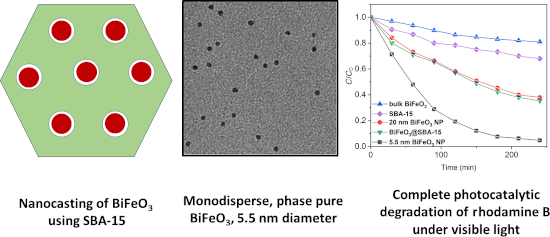
- efficiency of the catalyst, leading to an overall degradation of approx. 21%. In order to evaluate the role of hydroxyl radicals, the radical scavenger tert-butyl alcohol (TBA, 2 mM) was added. The degradation percentage of RhB was reduced from 95% to 38% indicating that hydroxyl radicals play a major role




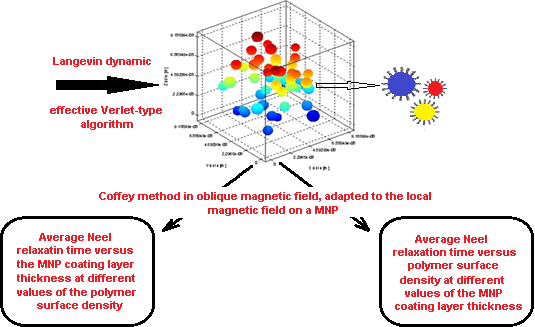
Influence of the magnetic nanoparticle coating on the magnetic relaxation time
Beilstein J. Nanotechnol. 2020, 11, 1207–1216, doi:10.3762/bjnano.11.105
- sol–gel process, yielding metal-oxide nanoparticles dispersed in a mesoporous matrix. [5]. Other methods used for synthesising these nanoparticles include modifications of the sol–gel method. These methods involve supercritical conditions, such as ethyl alcohol and alkaline co-precipitation, and an


Photothermally active nanoparticles as a promising tool for eliminating bacteria and biofilms
Beilstein J. Nanotechnol. 2020, 11, 1134–1146, doi:10.3762/bjnano.11.98
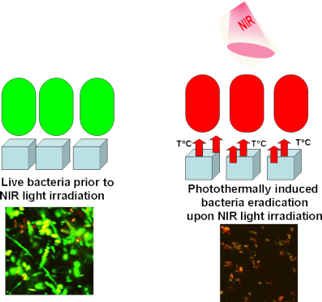
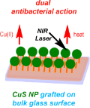
- after one round of laser exposure. Poly(vinyl alcohol) (PVA) films cross-linked with citric acid loaded with highly efficient photothermal gold nanostars were also fabricated [66]. The resulting films demonstrated a pronounced photothermal effect under NIR irradiation in the 730–1064 nm wavelength range
- nanostructures provided rapid and efficient eradication of up to 99% of both Gram-positive and Gram-negative bacteria within 10 min of NIR laser irradiation. In a very recent publication, poly(vinyl alcohol) hydrogel incorporating reduced graphene oxide composites (MoS2/Ag3PO4) was fabricated to yield a highly


Applications of superparamagnetic iron oxide nanoparticles in drug and therapeutic delivery, and biotechnological advancements
Beilstein J. Nanotechnol. 2020, 11, 1092–1109, doi:10.3762/bjnano.11.94
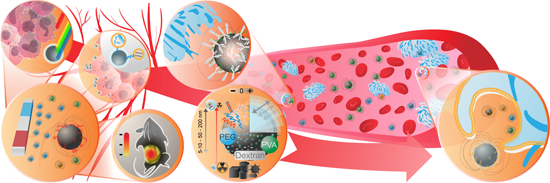
- with polyethyleneimine and conjugated with CD44 siRNA can be used as non-viral gene therapy vectors. Polyethylene imine is the material of choice for nucleic acid intracellular delivery, as it gives a positive charge to the nanoparticle surface [41]. Polyvinyl alcohol (PVA)-coated SPIONs were tested as


Extracting viscoelastic material parameters using an atomic force microscope and static force spectroscopy
Beilstein J. Nanotechnol. 2020, 11, 922–937, doi:10.3762/bjnano.11.77
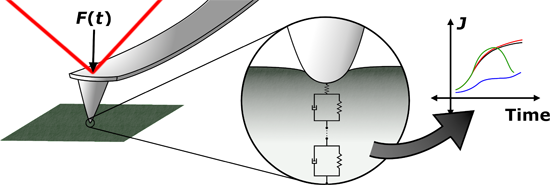
- experimental data for nylon A hollow nylon tube (source: McMaster-Carr, P/N 8628K48, Grade 6/6) was cut, ground smooth with a hand-held rotary tool, and cleaned in isopropyl alcohol (IPA) followed by a bath in deionized (DI) water. The sample was then allowed to dry sufficiently and mounted on an AFM metal


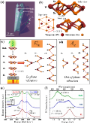
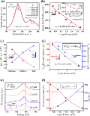
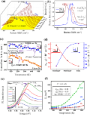
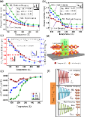
Light–matter interactions in two-dimensional layered WSe2 for gauging evolution of phonon dynamics
Beilstein J. Nanotechnol. 2020, 11, 782–797, doi:10.3762/bjnano.11.63
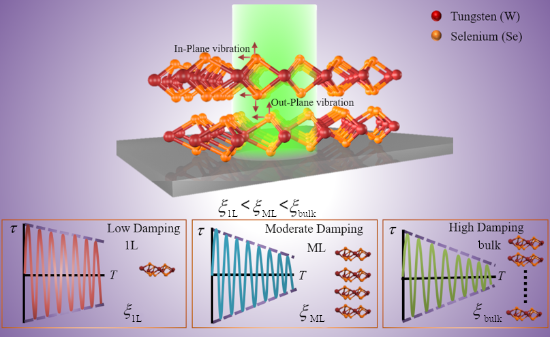
- substrates were cleaned using acetone, isopropyl alcohol and methanol solution in an ultrasonicator, and rinsed with DI water. Nitrogen blow drying and substrate heating on a hotplate at T = 110 °C for 5 min allowed any residual moisture from the substrate surface to be removed. The micro-Raman and PL
Effect of Ag loading position on the photocatalytic performance of TiO2 nanocolumn arrays
Beilstein J. Nanotechnol. 2020, 11, 717–728, doi:10.3762/bjnano.11.59
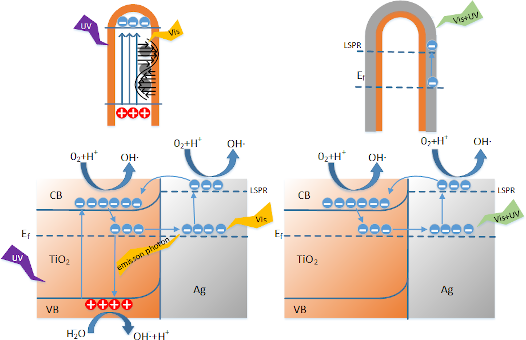
- , chromic acid (H2CrO4), and methylene blue (MB) were purchased from Alfa Aesar. Alcohol, perchloric acid (HClO4), and sulfuric acid (H2SO4) were purchased from Beijing Chemical Works. All the chemicals used in the experiments were of analytical grade and used without further purification. Method Anodized
- alcohol. The anodized electrolyte solution was 0.2 M H2SO4, the oxidation voltage was 20 V, the ambient temperature was maintained at 0 °C, and the oxidation time was 6 h. After the oxidation was completed, the aluminum sheet was immersed in 1.8 wt % H2CrO4 to remove the first oxide layer. The sample was


Exfoliation in a low boiling point solvent and electrochemical applications of MoO3
Beilstein J. Nanotechnol. 2020, 11, 662–670, doi:10.3762/bjnano.11.52
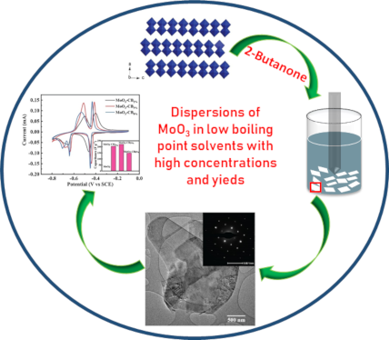
- boiling point, such as isopropyl alcohol (IPA) [5]. Alternative approaches for obtaining MoO3 dispersions in low boiling point solvents have also been reported. For instance, Alsaif et al. have exfoliated MoO3 in mixtures of water and alcohols (methanol, ethanol, IPA) [12]. In these dispersions molybdenum

Electrochemically derived functionalized graphene for bulk production of hydrogen peroxide
Beilstein J. Nanotechnol. 2020, 11, 432–442, doi:10.3762/bjnano.11.34
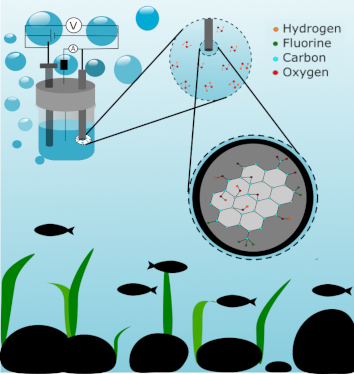
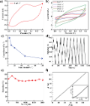
- dispersing 10 mg of functionalized graphene in 375 µL of the solvent mixture consisting of isopropyl alcohol (IPA, 275 µL), water (50 µL), and N,N-dimethyl formamide (DMF, 50 µL). 3 µL and 5 µL of the above-prepared ink was drop cast over the well-polished GCE and RRDE (GCE disk having 4 mm diameter


Synthesis and enhanced photocatalytic performance of 0D/2D CuO/tourmaline composite photocatalysts
Beilstein J. Nanotechnol. 2020, 11, 407–416, doi:10.3762/bjnano.11.31
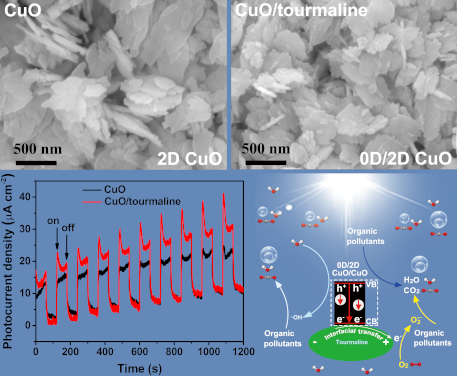
- , AR), sodium hydroxide (NaOH, AR), sodium sulfite (Na2SO3, AR), sodium sulfide (Na2S, AR), 5,5-dimethyl-1-pyrroline N-oxide (DMPO, AR), disodium ethylenediaminetetraacetate (EDTA, AR), tert-butyl alcohol (TBA, AR), 1,4-benzoquinone (BQ, AR), and Nafion were purchased from Aladdin Chemistry Co., Ltd


Gold and silver dichroic nanocomposite in the quest for 3D printing the Lycurgus cup
Beilstein J. Nanotechnol. 2020, 11, 16–23, doi:10.3762/bjnano.11.2
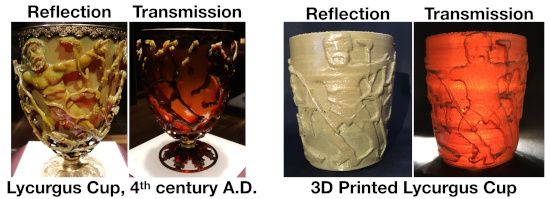
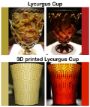
- hoped dichroic effect, and the nanoparticles precipitated out of solution as a black solid. A low amount of reducing agent in the presence of polyvinyl alcohol (PVA) as stabiliser agent, which would be the 3D printable material, also did not suffice to keep the nanoparticles in solution. After multiple


Advanced hybrid nanomaterials
Beilstein J. Nanotechnol. 2019, 10, 2563–2567, doi:10.3762/bjnano.10.247

- is the focus of an article reporting the performance of functionalized gold clusters deposited on ZrO2 nanoparticles for benzyl alcohol oxidation in [39]. Interestingly, the defunctionalized gold nanoclusters exhibit full catalytic conversion. Overall, this thematic issue clearly highlights not only
Evaluation of click chemistry microarrays for immunosensing of alpha-fetoprotein (AFP)
Beilstein J. Nanotechnol. 2019, 10, 2505–2515, doi:10.3762/bjnano.10.241
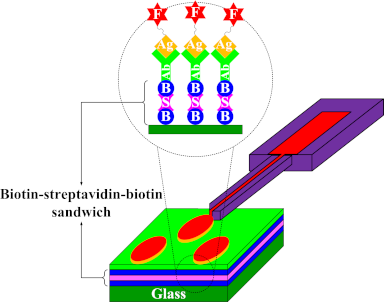
- September 2018 estimated about 840,000 new cases and 780,000 deaths of liver cancer in 2018 for both sexes and all ages [1]. Cirrhosis of the liver, hepatitis B virus (HBV) and hepatitis C virus (HCV) infections, heavy alcohol consumption, ingestion of aflatoxin and certain diseases like hemochromatosis


Label-free highly sensitive probe detection with novel hierarchical SERS substrates fabricated by nanoindentation and chemical reaction methods
Beilstein J. Nanotechnol. 2019, 10, 2483–2496, doi:10.3762/bjnano.10.239
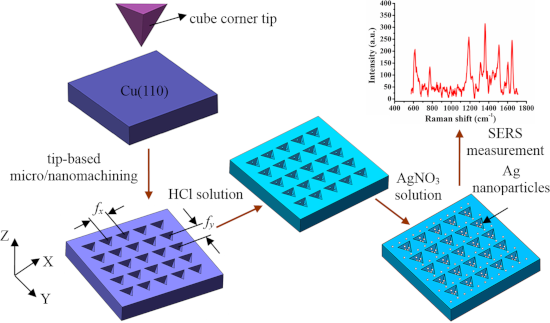
- ° and a radius of 200 nm. The normal force for the fabrication of the micro/nanostructures is 10 mN, the feed in the x-direction ranges from 2 to 10 μm, and the feed in the y- direction ranges from 1 to 10 μm. The structured copper surface was cleaned with an excess of alcohol followed by acetone. A 10


Mobility of charge carriers in self-assembled monolayers
Beilstein J. Nanotechnol. 2019, 10, 2449–2458, doi:10.3762/bjnano.10.235
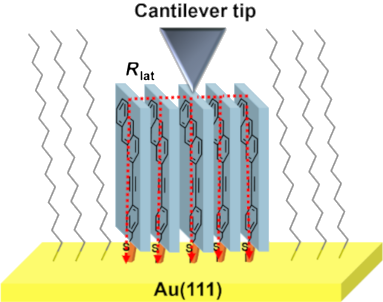
- (CDCl3, 400 MHz) δ 8.23 (s, 2H, H-10, H-9), 8.05 (s, 1H, H-1), 7.87–7.81 (m, 2H, H-5, H-8), 7.79 (d, 1H, H-4), 7.35–7.28 (m, 3H, H-3, H-6, H-7), 3.04 (s, 1H, CH) ppm. 4-(Anthracen-2-ylethynyl)benzyl alcohol A mixture of 1.7 g of 4-iodobenzyl alcohol (7.3 mmol), 1.5 g 2-ethynylanthracene (7.4 mmol), 0.282
- added maintaining a temperature of 0 °C. This mixture was added dropwise to a solution of 0.15 g of 4-(anthracen-2-ylethynyl)benzyl alcohol (0.49 mmol) and 0.3 mL of thioacetic acid (4.2 mmol) in 10 mL of THF. The reaction was allowed to proceed for 3 h, before the volatiles were removed in vacuo. The


pH-Controlled fluorescence switching in water-dispersed polymer brushes grafted to modified boron nitride nanotubes for cellular imaging
Beilstein J. Nanotechnol. 2019, 10, 2428–2439, doi:10.3762/bjnano.10.233
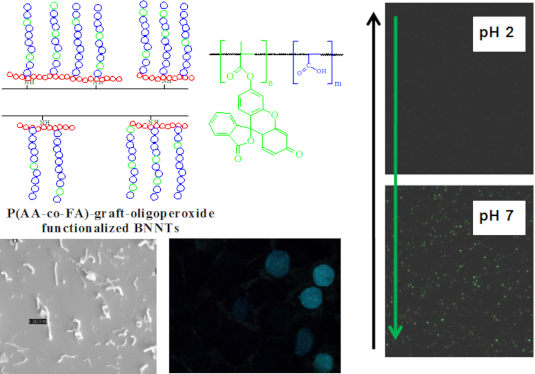
- -dependent fluorescence properties. Third, acrylic groups in P(AA-co-FA) can be easy modified for drugs and/or targeting agents similar to that reported in [61]. It is well known that the carboxyl group of acrylic acid can react with ammonia to form acrylamide, or with an alcohol to form an acrylate ester
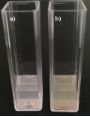


Coating of upconversion nanoparticles with silica nanoshells of 5–250 nm thickness
Beilstein J. Nanotechnol. 2019, 10, 2410–2421, doi:10.3762/bjnano.10.231
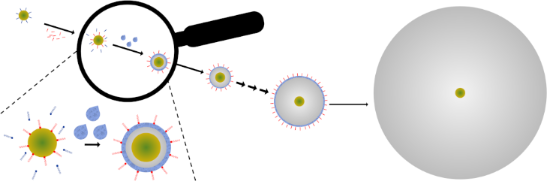
- microemulsion method. The Stöber method refers to the process of preparing silica via the hydrolysis and condensation of tetraethyl orthosilicate (TEOS) within an alcohol–ammonia–water system [25]. Related methods are widely used for coating NPs that are dispersible in polar media [26][27]. Modified Stöber


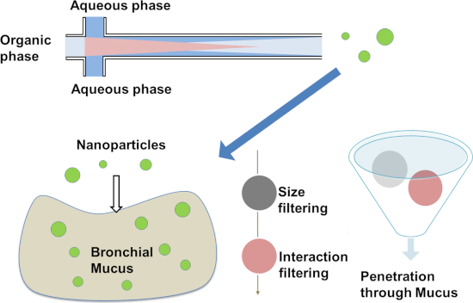
Microfluidics as tool to prepare size-tunable PLGA nanoparticles with high curcumin encapsulation for efficient mucus penetration
Beilstein J. Nanotechnol. 2019, 10, 2280–2293, doi:10.3762/bjnano.10.220
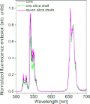
- fluorescence dye (2) is activated with DCC in water-free DCM and reacts with the terminal alcohol group of PLGA (1) under DMAP catalysis to the functionalized polymer (3). Properties and miscibility of organic solvents with water according to the Hildebrand solubility parameter. Overview of the concentration


Mannosylated brush copolymers based on poly(ethylene glycol) and poly(ε-caprolactone) as multivalent lectin-binding nanomaterials
Beilstein J. Nanotechnol. 2019, 10, 2192–2206, doi:10.3762/bjnano.10.212
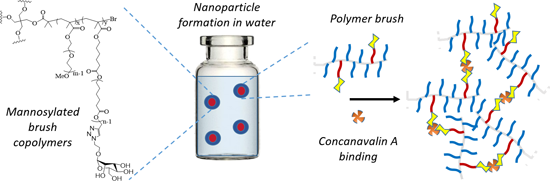
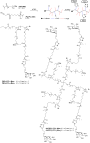
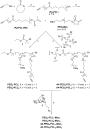
- examined. Results and Discussion Synthesis of the PCL-based macromonomer Propargyl-poly(ε-caprolactone)-methacrylate (Pg-PCL-MA) was prepared in two steps starting from ε-caprolactone, through a bulk ROP initiated by propargyl alcohol and catalyzed by tin(II) 2-ethylhexanoate [25] (Scheme 1, step a
- -poly(ε-caprolactone) (Pg-PCL). Pg-PCL was synthesized as reported in a previous work [25]. Briefly, ε-caprolactone (20 g, 0.175 mol, 5 equiv) was added in a round flask and heated up to 130 °C. A second yellowish solution containing propargyl alcohol (2.04 mL, 0.035 mol, 1 equiv) and tin(II) 2
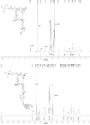
- , obtaining 20 g of final product Pg-PCL as a colorless viscous oil. Conversionε-CL = 99%; conversionpropargyl alcohol = 96%; yield = 92%; Mn,NMR = 716 g·mol−1; Mn,GPC = 1345 g·mol−1; PDI = 1.19 (relative to linear polystyrene). 1H NMR (400 MHz, CDCl3) δ 4.65 (d, J = 2.4 Hz, 2H, -CH2-CCH), 4.03 (t, J = 6.6 Hz



BergaCare SmartLipids: commercial lipophilic active concentrates for improved performance of dermal products
Beilstein J. Nanotechnol. 2019, 10, 2152–2162, doi:10.3762/bjnano.10.208
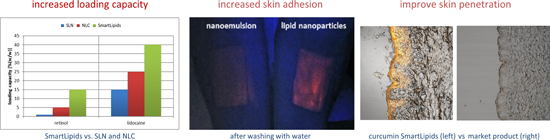
- pure lipids and three natural lipid mixtures (cetearyl alcohol, cetearyl glucoside, octyldodecanol, carnauba wax, candelilla wax, and beeswax). Different from the SmartLipids principle are, e.g., NLCs made from a relatively uniform solid lipid, e.g., tristearin (mainly C18 triglyceride) blended with


Improved adsorption and degradation performance by S-doping of (001)-TiO2
Beilstein J. Nanotechnol. 2019, 10, 2116–2127, doi:10.3762/bjnano.10.206
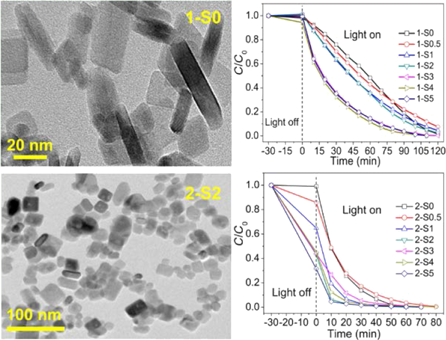
- -pyrroline-N-oxide (DMPO) were determined on a Bruker EMX plus 10/12 (equipped with Oxford ESR910 Liquid Helium cryostat). For detection of the superoxide radicals (•O2−) and hydroxyl radicals (•OH), 2.5 mg of the photocatalyst was dispersed in 1 mL DMPO/methyl alcohol solution or DMPO/H2O solution. The




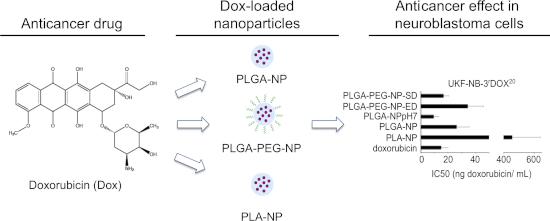
Incorporation of doxorubicin in different polymer nanoparticles and their anticancer activity
Beilstein J. Nanotechnol. 2019, 10, 2062–2072, doi:10.3762/bjnano.10.201
- (vinyl alcohol) (PVA, 30,000–70,000 Da), bovine serum albumin (BSA), HSA, and glutaraldehyde were obtained from Sigma-Aldrich Chemie GmbH (Karlsruhe, Germany). Dulbecco's Phosphate buffered saline (PBS) was purchased from Biochrom GmbH (Berlin, Germany). Doxorubicin was obtained from LGC Standards GmbH





Porous silver-coated pNIPAM-co-AAc hydrogel nanocapsules
Beilstein J. Nanotechnol. 2019, 10, 1973–1982, doi:10.3762/bjnano.10.194
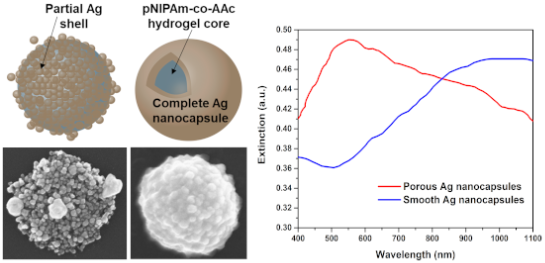
- glassware and equipment used were first cleaned using aqua regia (3:1, HCl/HNO3), then cleaned in a base bath (saturated KOH in isopropyl alcohol) and lastly, rinsed with Milli-Q water prior to use. Preparation of pNIPAM-co-AAc hydrogel particles. Colloidal pNIPAM-co-AAc hydrogel particles were prepared


Magnetic properties of biofunctionalized iron oxide nanoparticles as magnetic resonance imaging contrast agents
Beilstein J. Nanotechnol. 2019, 10, 1964–1972, doi:10.3762/bjnano.10.193
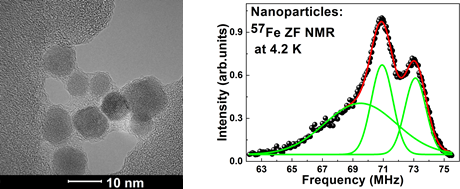
- (III) acetylacetonate. Briefly, the solution of iron(III) acetylacetonate (2 g) in anhydrous benzyl alcohol (40 mL) was heated to 110 °С for 1 h. Afterwards, the solution was heated to reflux under nitrogen atmosphere and kept for 30 min under reflux. Subsequently, the solution was cooled down, and the
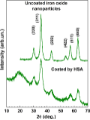


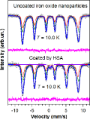

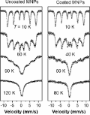

Facile synthesis of carbon nanotube-supported NiO//Fe2O3 for all-solid-state supercapacitors
Beilstein J. Nanotechnol. 2019, 10, 1923–1932, doi:10.3762/bjnano.10.188
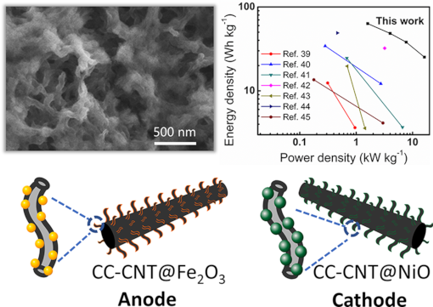
- . All-solid-state asymmetric supercapacitor An all-solid-state asymmetric supercapacitor (ASC) was constructed with CC-CNT@Fe2O3 as the negative electrode, CC-CNT@NiO as the positive electrode, potassium hydroxide/polyvinyl alcohol gel (KOH/PVA, 1:1 mass ratio) as the electrolyte, and a cellulose





