Search results
Search for "aqueous solution" in Full Text gives 455 result(s) in Beilstein Journal of Nanotechnology. Showing first 200.
PEG/PEI-functionalized single-walled carbon nanotubes as delivery carriers for doxorubicin: synthesis, characterization, and in vitro evaluation
Beilstein J. Nanotechnol. 2020, 11, 1728–1741, doi:10.3762/bjnano.11.155
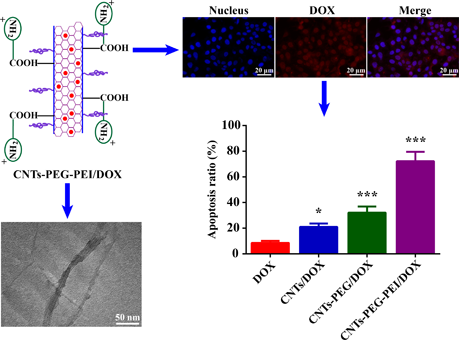
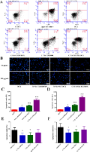
- from PEI make the CNTs much more soluble in aqueous solution and thus improve their biocompatibility [37]. Furthermore, surface modification with PEGylated agents or positively charged groups can protect the nanocarriers by providing a steric barrier from being recognized and captured by the
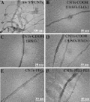
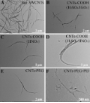
- be obtained by acidification and functionalization. All the above results demonstrate that the raw SWCNTs are shortened and functionalized while retaining their spectroscopical properties. The carboxylated and the functionalized CNTs are individually dispersed in aqueous solution, suitable for




Piezoelectric sensor based on graphene-doped PVDF nanofibers for sign language translation
Beilstein J. Nanotechnol. 2020, 11, 1655–1662, doi:10.3762/bjnano.11.148
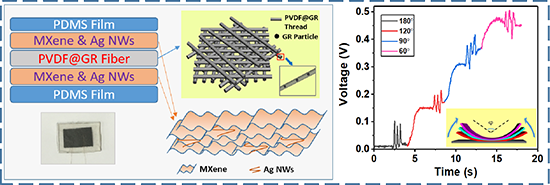
- is added under stirring to yield the spinning solution for electrospinning. After preparation of the fibers, an aqueous solution of Ti3C2 MXene and Ag NWs is sprayed on both sides of the material and then dried. Finally, the nanowire membrane is covered on both sides with PDMS to obtain the


High-responsivity hybrid α-Ag2S/Si photodetector prepared by pulsed laser ablation in liquid
Beilstein J. Nanotechnol. 2020, 11, 1596–1607, doi:10.3762/bjnano.11.142
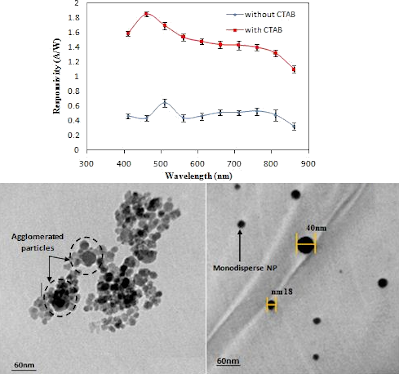
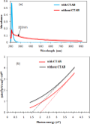
- Raid A. Ismail Hanan A. Rawdhan Duha S. Ahmed Department of Applied Science, University of Technology, Baghdad, Iraq 10.3762/bjnano.11.142 Abstract We report the synthesis of α-Ag2S nanoparticles (NPs) by one-step laser ablation of a silver target in aqueous solution of thiourea (Tu, CH4N2S
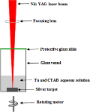
- Ag2S NPs were prepared by laser ablation of a high-purity silver target in an aqueous solution of thiourea (Tu, CH4N2S) mixed with an aqueous solution of the surfactant cetyltrimethylammonium bromide (CTAB, C19H42BrN). To prepare the ablation liquid, 0.39 g of Tu was dissolved in 10 mL of double




Fabrication of nano/microstructures for SERS substrates using an electrochemical method
Beilstein J. Nanotechnol. 2020, 11, 1568–1576, doi:10.3762/bjnano.11.139
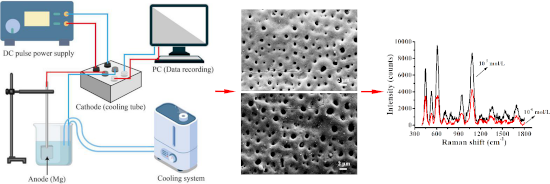
- and dipped into an aqueous solution of R6G (10−7 mol·L−1) for 20 min. The excess R6G molecules were removed by rinsing with ethanol and a gentle nitrogen flow was used to dry the samples. A micro-Raman inVia spectroscopic system (Renishaw, UK) with 532 and 785 nm lasers was used. The incident optical


Cu2O nanoparticles for the degradation of methyl parathion
Beilstein J. Nanotechnol. 2020, 11, 1546–1555, doi:10.3762/bjnano.11.137
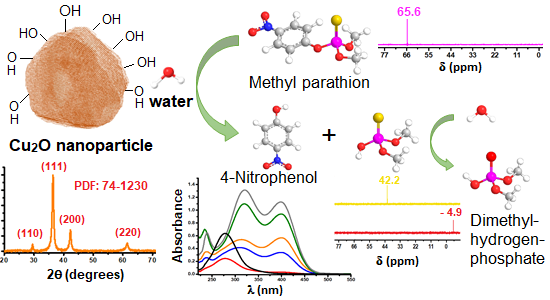
- used for the synthesis of Cu2O NPs with different sizes, it is not used in the degradation of MP. Methyl parathion degradation The degradation of MP was achieved in deionized water by reacting MP with Cu2O NPs in a 1:5 molar ratio. This was carried out using 250 mL of a 1.5 × 10⁻⁴ M aqueous solution of
- . Observed degradation pathway of MP with Cu2O NPs in aqueous solution to form 4-nitrophenol and dimethyl phosphate. Numbers in blue indicate the observed 1H NMR chemical shifts (δ) in parts per million (ppm) while the numbers in red correspond to 31P. 4-Nitrophenol can further be reduced to 4-aminophenol as


Antimicrobial metal-based nanoparticles: a review on their synthesis, types and antimicrobial action
Beilstein J. Nanotechnol. 2020, 11, 1450–1469, doi:10.3762/bjnano.11.129
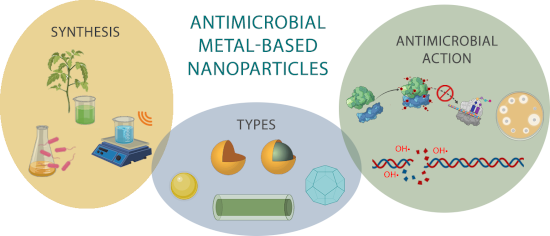
- bacteria and fungi, has increased. The antimicrobial activity of CuO NPs obtained from an Actinomycete bacteria in a copper sulfate aqueous solution was tested against a few pathogenic bacteria, such as Staphylococcus aureus, Bacillus cereus, Proteus mirabilis, Edwardsiella tard, Aeromonas caviae


Transient coating of γ-Fe2O3 nanoparticles with glutamate for its delivery to and removal from brain nerve terminals
Beilstein J. Nanotechnol. 2020, 11, 1381–1393, doi:10.3762/bjnano.11.122
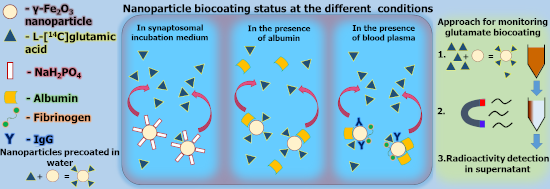
- Synthesis of superparamagnetic maghemite (γ-Fe2O3) nanoparticles γ-Fe2O3 nanoparticles were synthesized and characterized according to [21]. A 0.5 M solution of NH4OH (subaliquot amount needed for quantitative formation of Fe(OH)3) was added dropwise to a 0.5 M aqueous solution of FeCl3 under sonication
- biocoating at the nanoparticle surface. As shown in Figure 5, 10 mM KCl had no effect on the ability of γ-Fe2O3 nanoparticles, at concentrations of 0.75, 1.5, and 3 mg/mL, to adsorb 1.86 µM glutamate/ʟ-[14C]glutamate compared to an aqueous solution. Also, an almost complete inhibition of glutamate/ʟ-[14C


Structure and electrochemical performance of electrospun-ordered porous carbon/graphene composite nanofibers
Beilstein J. Nanotechnol. 2020, 11, 1280–1290, doi:10.3762/bjnano.11.112
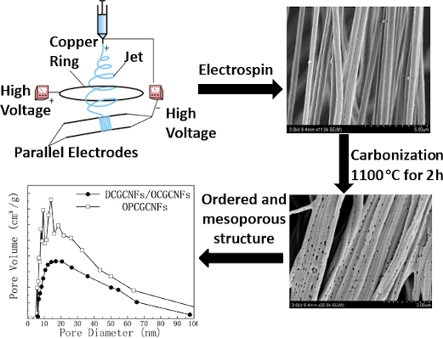
- standard three-electrode cell at room temperature. A graphite rod was used as the counter electrode, Hg/HgO was used as the reference electrode, and a 6.0 M KOH aqueous solution was used as the electrolyte solution. The electrochemical performance of the CCGNFs was investigated using an electrochemical


Magnetic-field-assisted synthesis of anisotropic iron oxide particles: Effect of pH
Beilstein J. Nanotechnol. 2020, 11, 1230–1241, doi:10.3762/bjnano.11.107
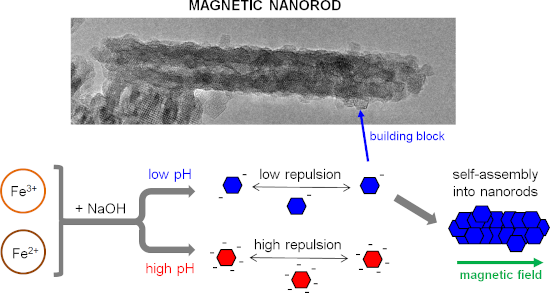
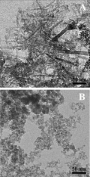
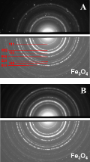
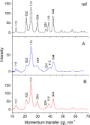
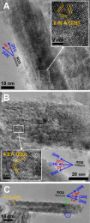
- (TEM) To prepare the TEM specimens, a drop (10 μL) of a freshly sonicated nanoparticle aqueous solution was deposited onto a 140 mesh Formvar-coated copper grid and and air-dried under ambient conditions. TEM micrographs and electron diffraction patterns were obtained on a LEO 912 AB OMEGA microscope





Photothermally active nanoparticles as a promising tool for eliminating bacteria and biofilms
Beilstein J. Nanotechnol. 2020, 11, 1134–1146, doi:10.3762/bjnano.11.98
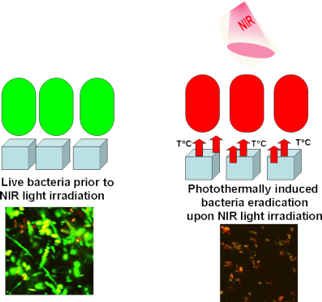
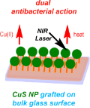
- of successful studies, the direct application of colloidal solutions containing photothermally active gold nanoparticles may be limited particularly due to the risk of accumulation in the body. Moreover, due to the heat dissipation in aqueous solution, high laser intensities are usually required to


Thermophoretic tweezers for single nanoparticle manipulation
Beilstein J. Nanotechnol. 2020, 11, 1126–1133, doi:10.3762/bjnano.11.97
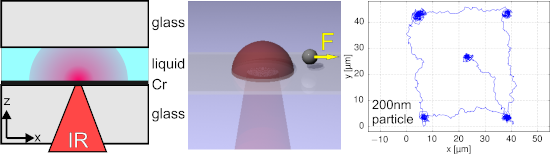
- with an aqueous solution of bovine serum albumin (Sigma-Aldrich) and washed to prevent nanoparticle adhesion to the glass. A collimated IR laser beam (Compass 1064-2500MN, Coherent, λ = 1064 nm) is deflected with a pair of acousto-optic deflectors (AODs). AODs enable the simultaneous generation of


Plant growth regulation by seed coating with films of alginate and auxin-intercalated layered double hydroxides
Beilstein J. Nanotechnol. 2020, 11, 1082–1091, doi:10.3762/bjnano.11.93
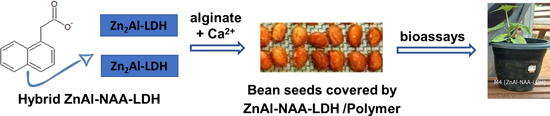
- , indicating that the release process was endothermic. The total released amounts of NAA and IBA at pH 4 and pH 12 were higher than the quantities released at pH 7. The study of electrolytes evidenced that the released quantities of NAA and IBA depend on the interfering anion present in the aqueous solution



Gas-sensing features of nanostructured tellurium thin films
Beilstein J. Nanotechnol. 2020, 11, 1010–1018, doi:10.3762/bjnano.11.85
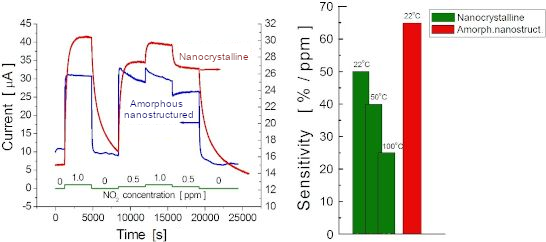
- grow Te nanoflakes. In order to synthesize Te nanowires, Liang and collaborators [13] performed chemical reactions of Na2TeO3, in aqueous solution, via hydrothermal treatment, whereas Ma and colleagues [14] used a solvothermal approach on glass substrates. To synthesize Te nanotubes, techniques such as


A 3D-polyphenylalanine network inside porous alumina: Synthesis and characterization of an inorganic–organic composite membrane
Beilstein J. Nanotechnol. 2020, 11, 938–951, doi:10.3762/bjnano.11.78
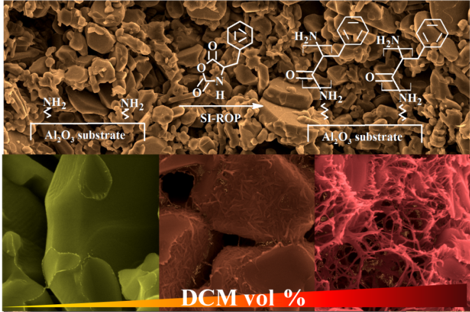
- , 1454 m, 1441 w, 1259 m, 743 m, 695 m, 483 m cm−1. Adsorption analysis. 2 mL of an aqueous solution of chloroanilic acid (48 µM) was pumped through the porous ALOX-membranes with a syringe pump at a flow rate of 1 mL/min. Prior conditioning of the ALOX-membrane was done by activation with 2 mL of




Key for crossing the BBB with nanoparticles: the rational design
Beilstein J. Nanotechnol. 2020, 11, 866–883, doi:10.3762/bjnano.11.72
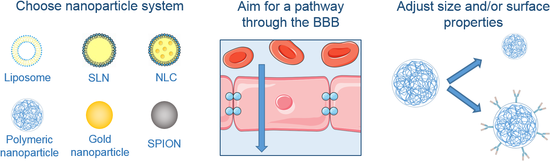
- than that of the drug alone [170]. Moreover, in a study by Tsai et al., baicalein was loaded inside NLCs prepared with poloxamer 188. The NLCs revealed 7.5- and 4.7-fold higher baicalein accumulations in the cerebral cortex and brainstem, respectively, compared to the aqueous solution [171]. It is also


Effect of Ag loading position on the photocatalytic performance of TiO2 nanocolumn arrays
Beilstein J. Nanotechnol. 2020, 11, 717–728, doi:10.3762/bjnano.11.59
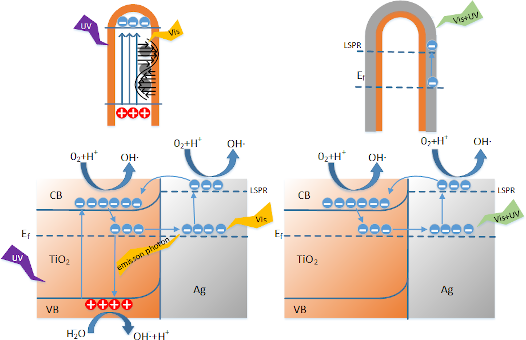
- photocatalysis was performed under 300 W Xe light using 15 mL of a 5 ppm MB aqueous solution. Before starting the photocatalysis, the sample was immersed in the MB solution and allowed to remain in the dark for 30 min to reach the adsorption–desorption balance. Then, the solution was placed under a light source


Preparation, characterization and photocatalytic performance of heterostructured CuO–ZnO-loaded composite nanofiber membranes
Beilstein J. Nanotechnol. 2020, 11, 631–650, doi:10.3762/bjnano.11.50
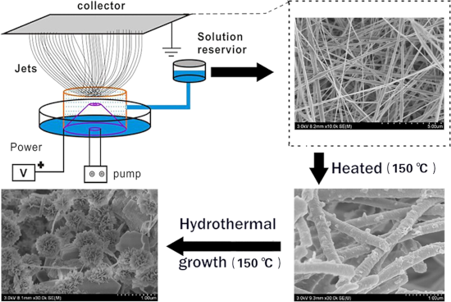
- Hydrothermal process Preparation of growth solution: The growth solutions used in the hydrothermal process were obtained by preparing mixtures of C6H12N4, NH3·H2O, and a saturated aqueous solution of CuSO4 and ZnCl2. The saturated solution of CuSO4 and ZnCl2 was prepared by dissolving an excess of CuSO4 and









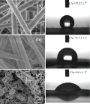


Silver-decorated gel-shell nanobeads: physicochemical characterization and evaluation of antibacterial properties
Beilstein J. Nanotechnol. 2020, 11, 620–630, doi:10.3762/bjnano.11.49
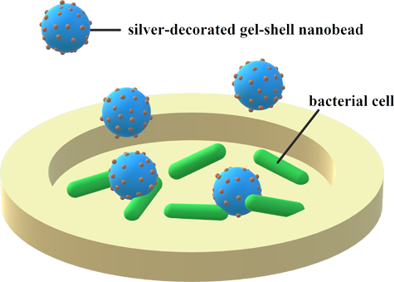
- structures are stable in aqueous solution, this may not be the case after addition of surfactants or the exchange of the solvent for a more hydrophobic one. Zhao et al. [23] proposed to incorporate silver nanoparticles into polystyrene/polystyrene sulfonate particles through accumulation of a silver complex
- sulfonated nanobeads. The beads were mixed with 150 µL aqueous AgNO3 solution (0.0125 M) for ca. 30 min followed by the addition of 150 µL of a freshly prepared aqueous solution of NaBH4 (0.075 M) and PVP (40 mg/mL). Subsequently, this mixture was kept at 55 °C and stirred using ultrasound for 30 min. The
- final product was collected by centrifugation (13400 rpm, 12100g, 5 min), and washed several times with deionized water. Preparation of silver nanoparticles (non-incorporated in polymer beads): 150 µL of a freshly prepared solution of NaBH4 (0.075 M) in an aqueous solution of PVP (40 mg/mL) was added to


Soybean-derived blue photoluminescent carbon dots
Beilstein J. Nanotechnol. 2020, 11, 606–619, doi:10.3762/bjnano.11.48
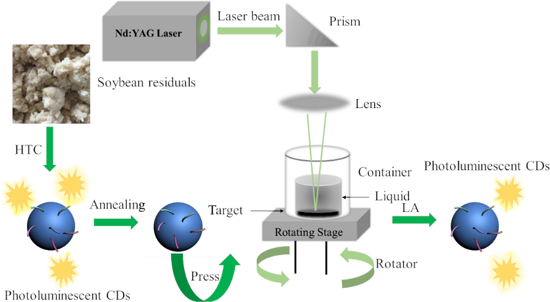
- hydrothermally carbonized soybean residual. Briefly, a suspension consisting of ≈40 g of ground soybean residual and ≈5 mL of 1 wt % H2SO4 aqueous solution was prepared and stirred ultrasonically. The suspension was transferred into a Teflon-lined autoclave, which was then placed in an oven for the HTC
- obtained after filtration were named as annealed-CDs. Laser ablation in NH4OH solution Figure 1 illustrates the process for the synthesis of CDs from ground soybean residual and the setup for the laser ablation of the annealed-HTC carbon particles in NH4OH aqueous solution. Using a prism and an optical
- h. A mechanical press of the heated mixture at 6000 psi for 5 min led to the formation of a circular pellet of ≈1.27 cm in diameter and ≈1 mm in thickness. The circular pellet was transferred to a self-made vial with a quartz window for laser ablation, and ≈3 mL NH4OH aqueous solution was added to


Adsorptive removal of bulky dye molecules from water with mesoporous polyaniline-derived carbon
Beilstein J. Nanotechnol. 2020, 11, 597–605, doi:10.3762/bjnano.11.47
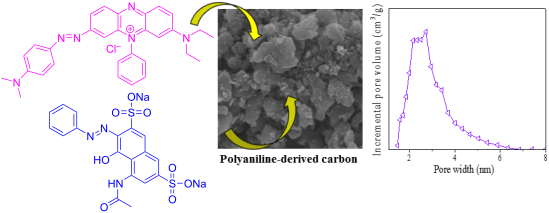
- Information File 1. In order to understand the adsorption mechanism, the solution pH for AR1 and JGB was controlled (up to 2–12) with aqueous solution of NaOH or HCl (0.1 M each). (a) N2 adsorption isotherms and (b) pore size distribution of PDC materials and activated carbon (AC) . Amount of adsorbed (a) H2O


Preparation and in vivo evaluation of glyco-gold nanoparticles carrying synthetic mycobacterial hexaarabinofuranoside
Beilstein J. Nanotechnol. 2020, 11, 480–493, doi:10.3762/bjnano.11.39
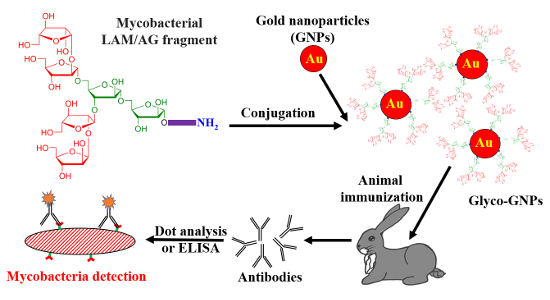
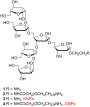
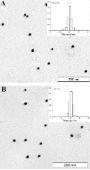
- [108][109][110] supramers in aqueous solution [104][111][112], which eventually would form more clustered Ara6-glycan domains on the surface of Ara6-GNPs. The results obtained clearly suggest that the choice of the spacer aglycon may be critical for the specificity of antibodies against the
- was determined as described below. The pH value of the GNP solutions was adjusted to 6.2, 7.0, 8.9, 9.7, 10.0, and 10.2 by addition of 0.2 М K2CO3 aqueous solution. After that, 100 μL of an aqueous solution of Ara6 glycoside 1 or 2 (concentration 200 μg·mL−1) was added to 100 μL of the obtained GNP
- solutions. The mixtures were incubated at room temperature for 10 min. Then 10% aqueous solution of NaCl was added to an end concentration of 0.9% (m/v) in each solution. The spectra of the obtained solutions were registered with a Tecan Spark 10M microplate reader (Tecan, Austria) at 400–800 nm (Figure 3


Nanoparticles based on the zwitterionic pillar[5]arene and Ag+: synthesis, self-assembly and cytotoxicity in the human lung cancer cell line A549
Beilstein J. Nanotechnol. 2020, 11, 421–431, doi:10.3762/bjnano.11.33
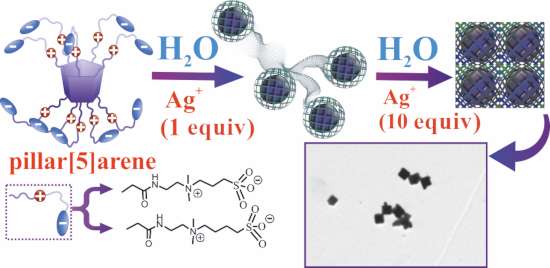
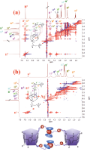
- pillar[5]arenes, containing γ- and δ-sulfobetaine fragments were synthesized. It was shown by the DLS method that the obtained pillar[5]arenes 3 and 4 did not form stable self-associates in aqueous solution. The association of macrocycle 3 with AgNO3 was confirmed by DLS, UV–vis and 2D NMR spectroscopy




Synthesis and enhanced photocatalytic performance of 0D/2D CuO/tourmaline composite photocatalysts
Beilstein J. Nanotechnol. 2020, 11, 407–416, doi:10.3762/bjnano.11.31
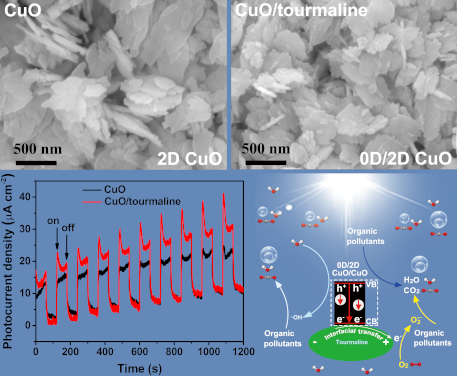
- 0.01 g L−1 MB aqueous solution, followed by 1 h of magnetic stirring in the dark to make sure the adsorption saturation of MB onto the photocatalysts was achieved. Then, the photocatalyst–dye aqueous suspension system was exposed to light. 4 mL of the aqueous suspension was extracted every 20 min and


Understanding nanoparticle flow with a new in vitro experimental and computational approach using hydrogel channels
Beilstein J. Nanotechnol. 2020, 11, 296–309, doi:10.3762/bjnano.11.22
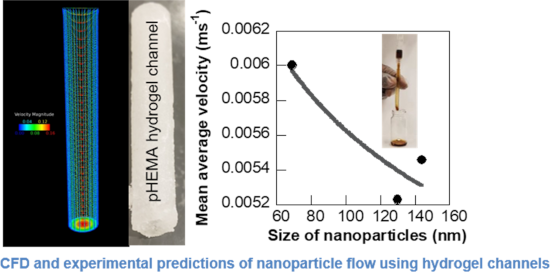
- , 98%), sodium metabisulfite (Na2S2O5, NaMBS, Fisher, 99.4%), inhibitor remover (Sigma-Aldrich), iron(III)-2,4-pentanedionate (Fe(acac)3, Alfa Aesar), polyethyleneimine (PEI, Alfa Aesar, 60 kDa – 50 wt % aqueous solution), polyvinylpyrrolidone (PVP, TCI, 10 kDa, 99%), triethylene glycol (TREG, ACROS


High-performance asymmetric supercapacitor made of NiMoO4 nanorods@Co3O4 on a cellulose-based carbon aerogel
Beilstein J. Nanotechnol. 2020, 11, 240–251, doi:10.3762/bjnano.11.18
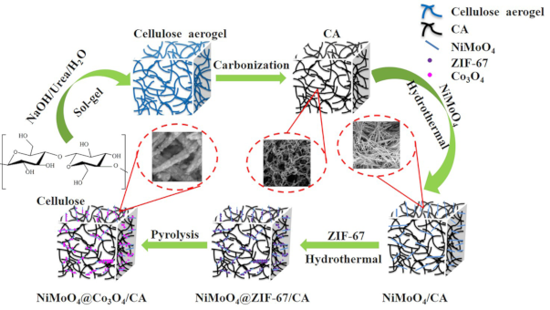
- KOH aqueous solution. The working electrode materials were prepared by mixing the obtained sample, carbon black, acetylene black and polytetrafluoroethylene (PTEF) emulsions at a mass ratio of 80:7.5:7.5:5.0. The homogeneous slurry was coated on Ni foam substrates (1 cm × 1 cm) and dried at 80 °C for