Search results
Search for "catalysts" in Full Text gives 315 result(s) in Beilstein Journal of Nanotechnology. Showing first 200.
Air oxidation of sulfur mustard gas simulants using a pyrene-based metal–organic framework photocatalyst
Beilstein J. Nanotechnol. 2019, 10, 2422–2427, doi:10.3762/bjnano.10.232
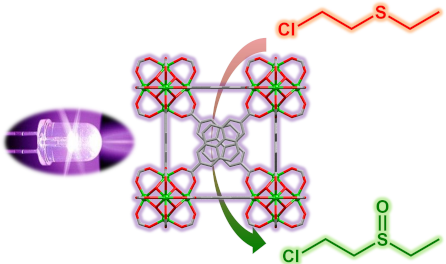
- quantum yields and whose absorption wavelengths span the ultraviolet–visible spectrum. Moreover, singlet oxygen could be generated from homogenous [23] or heterogeneous catalysts, the latter of which will allow for the ease of separation at the end of the reaction, recyclability of the catalyst, wide
- oxygen saturation. The photocatalytic activity of NU-400 enabled singlet oxygen-induced conversion of CEES to CEESO with a half-life of 13.5 minutes under air, a milestone in the development of MOFs as new, highly efficient catalysts for mustard gas degradation. NU-400 constituents: a) the pyrene-based




Synthesis of highly active ETS-10-based titanosilicate for heterogeneously catalyzed transesterification of triglycerides
Beilstein J. Nanotechnol. 2019, 10, 2039–2061, doi:10.3762/bjnano.10.200
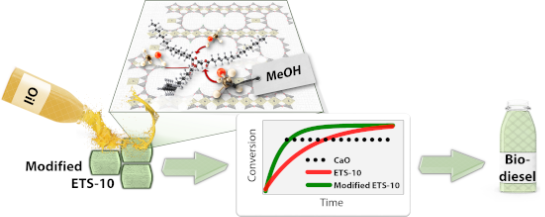
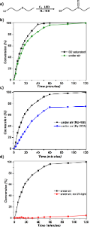
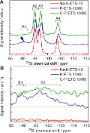
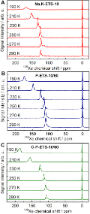
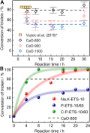
- , Linnéstraße 5, 04103 Leipzig, Germany 10.3762/bjnano.10.200 Abstract In this contribution, the preparation of hierarchically structured ETS-10-based catalysts exhibiting notably higher activity in the conversion of triolein with methanol compared to microporous titanosilicate is presented. Triolein, together
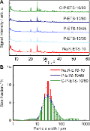
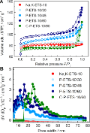
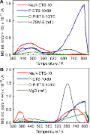
- maximum conversion of 83% after 24 h, the ETS-10-based catalyst reached 100% after 8 h, revealing its higher stability compared to CaO. The following characteristics of the catalysts were experimentally addressed – crystal structure (X-ray diffraction, transmission electron microscopy), crystal shape and
- implementation on the industrial scale [5]. The preparation and application of different types of catalysts for homogeneous, heterogeneous, and even enzymatic transesterification processes have been extensively investigated [6]. However, the most commonly used commercial process for biodiesel production is the








Pulsed laser synthesis of highly active Ag–Rh and Ag–Pt antenna–reactor-type plasmonic catalysts
Beilstein J. Nanotechnol. 2019, 10, 1958–1963, doi:10.3762/bjnano.10.192
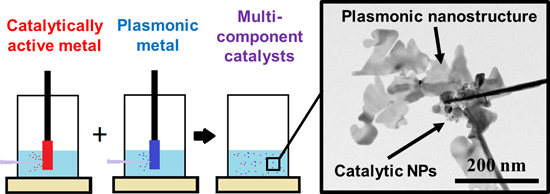
- for Ag–Pt and Ag–Rh compared to the monometallic constituents, and persisted at lower loading ratios and consecutive reduction cycles. The enhancement is attributed to the Rh and Pt nanoparticles forming antenna–reactor-type plasmonic catalysts with the Ag nanostructures. Keywords: Ag; antenna
- of the reduction can be directly observed via UV–vis absorption spectroscopy. Ag–Rh/Pt heterostructures exhibited a significantly increased catalytic activity compared to the constituents. The observed increase is attributed to the heterostructures forming antenna–reactor-type plasmonic catalysts
- . [18] and Zhang and co-workers [19]. The aim of the present study is to lay the foundation for future work and illuminate the potential efficacy of pulsed laser ablation as an effective method for the production of multicomponent plasmonic catalysts. The reported method possesses several inherent


The influence of porosity on nanoparticle formation in hierarchical aluminophosphates
Beilstein J. Nanotechnol. 2019, 10, 1952–1957, doi:10.3762/bjnano.10.191
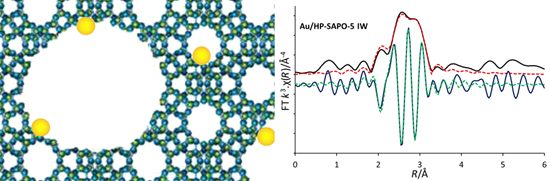
- : aluminophosphate; catalysis; hierarchical catalysts; nanoparticles; porosity; Findings The controlled synthetic design of metallic nanoparticles has generated significant interest in recent decades due to their implementation in a range of fields, including medicine [1], optics [2] and catalysis [3]. Given the
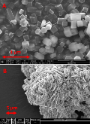
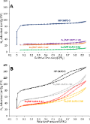
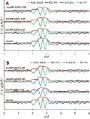
- ) helps the systems maintain higher pore volumes and surface areas after nanoparticle inclusion. In principle this should translate into the hierarchical systems being improved catalysts with better diffusion. To probe the influence of the support on the deposited metal, a range of characterisation
- complete reduction of the Au species, during the activation (calcination/reduction) process. We have thus shown that pore blockage can be minimised by immobilising metal nanoparticles onto hierarchical systems, allowing tailored zeotype catalysts to act as hosts through the inclusion of mesopores, with
Nanoarchitectonics meets cell surface engineering: shape recognition of human cells by halloysite-doped silica cell imprints
Beilstein J. Nanotechnol. 2019, 10, 1818–1825, doi:10.3762/bjnano.10.176
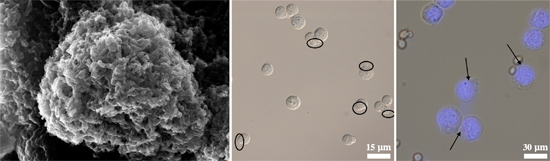
- of various functional composite materials [26]. The anisotropic shape (hollow tubules having lengths from 300 nm to 1–2 µm, 50–70 nm diameter, and 20 nm lumen) and surface chemistry (outer surface of SiO2, inner surface of Al2O3) make these nanotubes ideal carriers for novel catalysts, polymer


Synthesis of nickel/gallium nanoalloys using a dual-source approach in 1-alkyl-3-methylimidazole ionic liquids
Beilstein J. Nanotechnol. 2019, 10, 1754–1767, doi:10.3762/bjnano.10.171
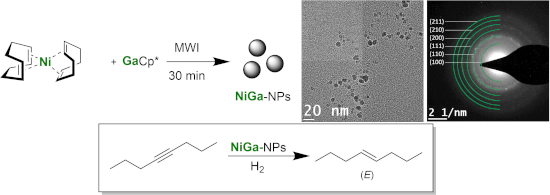
- presence of small quantities of alkynes significantly reduces the efficiency of catalysts in the subsequent polymerization reactions. Semihydrogenation reactions are an interesting way not only to remove but also to convert the alkynes to the respective polymerizable alkenes [25]. The addition of main
- -group metals such as gallium to transition metals can significantly improve the catalytic selectivity towards semihydrogenation reactions, e.g., PdGa [26][27][28] and RhGa [29]. Intermetallic nanoparticles of nickel and gallium have been proven as efficient catalysts in semihydrogenation reactions
- catalysts indicated that using Ni3Ga (α) yielded the highest activity with a turnover frequency (TOF) of 5.16 × 10⁻³ h−1 with the highest selectivities [10][30][32][42]. Bimetallic nanoparticles containing Ga are difficult to synthesize from Ga3+ precursors, because of the high negative redox potential of




Layered double hydroxide/sepiolite hybrid nanoarchitectures for the controlled release of herbicides
Beilstein J. Nanotechnol. 2019, 10, 1679–1690, doi:10.3762/bjnano.10.163
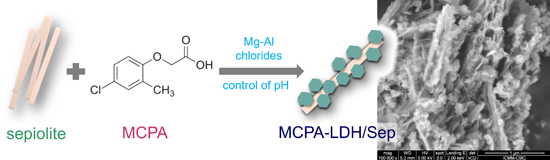
- value. This procedure and other protocols of synthesis together with the possibility to stabilize solids involving a large variety of metal ions have provided a large variety of LDH compounds of interest in numerous applications as adsorbents of anionic pollutants, catalysts, additive of polymers, as


Chiral nanostructures self-assembled from nitrocinnamic amide amphiphiles: substituent and solvent effects
Beilstein J. Nanotechnol. 2019, 10, 1608–1617, doi:10.3762/bjnano.10.156
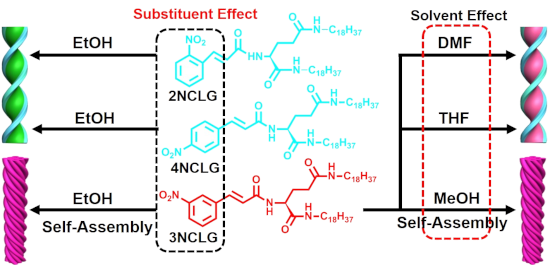
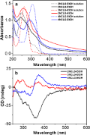
- value [29][30], solvents [31][32], temperature [33][34], and photo-irradiation [35][36]. Inverse chiral nanostructures have exhibited their tunable functions in the field of asymmetric catalysts [37][38][39], chiral separation [40][41], and circular polarized luminescence [42][43]. In this case, tunable




Materials nanoarchitectonics at two-dimensional liquid interfaces
Beilstein J. Nanotechnol. 2019, 10, 1559–1587, doi:10.3762/bjnano.10.153
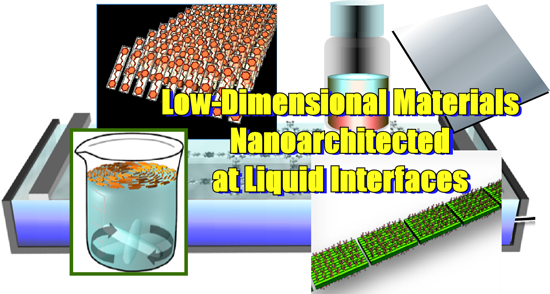
- perturbations such as microwave and plasma irradiation [45][46][47][48][49][50][51]. Carbon nanotubes, representative one-dimensional objects, were produced using catalysts as well [52][53][54][55]. Recently, two-dimensional materials such as graphene and MoS2 nanosheets attracted the interests of researchers
- systems fabricated with low-dimensional materials are actively investigated. For example, Lvov and co-workers reported the immobilization of small functional materials such as metal clusters and metal catalysts within one-dimensional halloysite clay nanotubes to make them work under appropriate protection
- from external disturbances [82][83][84]. Zhong and Xu summarized, in their recent review, the preparation of metal nanoparticles for hydrogen generation from liquid chemical hydrides [85]. In their review, the usage of effective catalysts within low-dimensional cages of metal-organic frameworks was













Synthesis of P- and N-doped carbon catalysts for the oxygen reduction reaction via controlled phosphoric acid treatment of folic acid
Beilstein J. Nanotechnol. 2019, 10, 1497–1510, doi:10.3762/bjnano.10.148
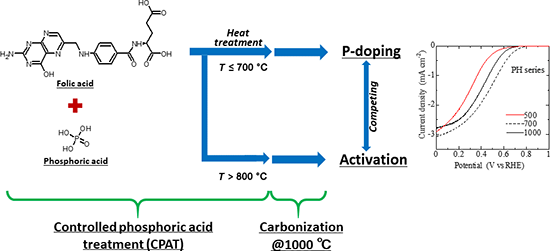
- acid; oxygen reduction reaction; phosphoric acid treatment; PN-doped carbon catalysts; polymer electrolyte fuel cells; Introduction The widespread application of fuel cells as clean energy sources is the most desirable way of realizing a low-CO2-emission society. In conventional polymer electrolyte
- application as domestic, back-up, and vehicle power sources. The cost of cathode catalysts can be reduced in a number of ways, e.g., by alloying Pt with base metals [2], forming core–shell particles with base-metal cores covered by thin Pt layers [3], and developing non-Pt catalysts. In particular, the
- implementation of non-Pt or non-precious-metal cathode catalysts is the ultimate goal of PEFC development. Since the discovery of the ORR activity of cobalt phthalocyanine in 1964 [4], numerous studies have focused on the synthesis of non-precious metal ORR catalysts such as those based on carbon [5]. The





Flexible freestanding MoS2-based composite paper for energy conversion and storage
Beilstein J. Nanotechnol. 2019, 10, 1488–1496, doi:10.3762/bjnano.10.147
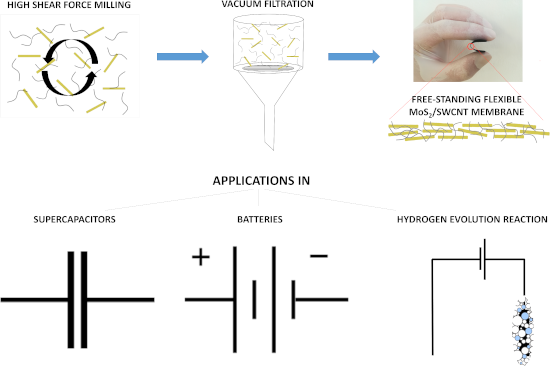
- materials [26]. Another popular related field in the context of energy storage and sustainable energy production is water splitting to produce hydrogen. The best catalysts for the hydrogen evolution reaction (HER) are unequivocally based on platinum and iridium, however the scarcity and the high cost of
- these materials are tremendous disadvantages for the production of hydrogen on an industrial scale [16]. Hence, it is necessary to develop new catalysts which are abundant, inexpensive and chemically robust [16]. MoS2 is again a promising candidate. Theoretical and experimental studies have successfully


Hierarchically structured 3D carbon nanotube electrodes for electrocatalytic applications
Beilstein J. Nanotechnol. 2019, 10, 1475–1487, doi:10.3762/bjnano.10.146
- ][5][6][7][8]. Besides the above-mentioned applications, CNTs have also been investigated as catalysts or catalyst supports for various electrocatalytic reactions [8][9][10][11][12][13], including methanol oxidation in direct methanol fuel cells (DMFCs). DMFCs are promising power sources for future
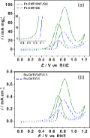
- typical appearance of the CVs for methanol oxidation over Pt-based catalysts. Methanol is oxidized to CO2 in the forward CV scan until Pt is oxidized, leading to a surface passivation and a sudden decrease in the oxidation current. During the backward CV scan, MeOH oxidation starts as soon as the
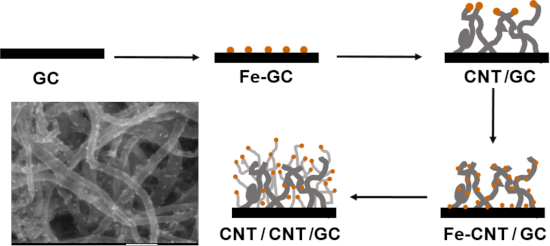
- CNT growth was investigated, where gas flow rates were adjusted by mass flow controllers (Bronkhorst High-Tech, Germany). Prior to CVD, the Fe catalysts were conditioned at 750 °C for 30 min in a H2/Ar gas mixture. After the CNT growth, the surface of CNT/GC is highly hydrophobic. To remove remaining





Direct observation of oxygen-vacancy formation and structural changes in Bi2WO6 nanoflakes induced by electron irradiation
Beilstein J. Nanotechnol. 2019, 10, 1434–1442, doi:10.3762/bjnano.10.141
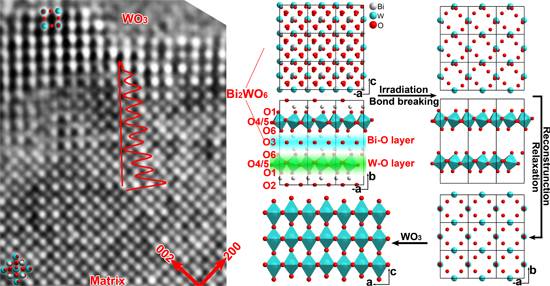
- of the Aurivillius phases, perovskites with the general formula of (Bi2O2)(Am−1BmO3m+1) and a crystal structure of tilted WO6 octahedra layers sandwiched between Bi–O layers. The W–O layers in the Bi2WO6 crystal transfer electrons to the surface of catalysts, and Bi–O layers act as insulating layers


Warped graphitic layers generated by oxidation of fullerene extraction residue and its oxygen reduction catalytic activity
Beilstein J. Nanotechnol. 2019, 10, 1391–1400, doi:10.3762/bjnano.10.137
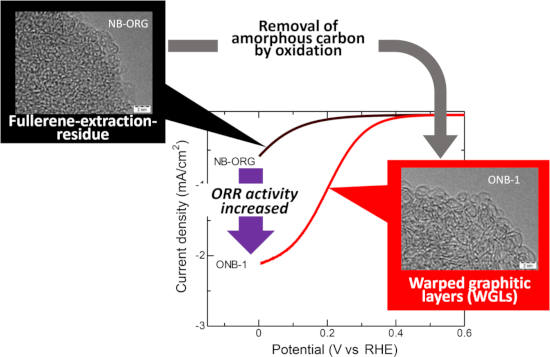
- Abstract Carbon-based oxygen reduction reaction (ORR) catalysts are regarded as a promising candidate to replace the currently used Pt catalyst in polymer electrolyte fuel cells (PEFCs); however, the active sites remain under discussion. We predicted that warped graphitic layers (WGLs) are responsible for
- the ORR catalytic activity in some carbon catalysts (i.e., carbon alloy catalysts (CACs)). To prove our assumption, we needed to use WGLs consisting of carbon materials, but without any extrinsic catalytic elements, such as nitrogen, iron, or cobalt, which effectively enhance ORR activity. The present
- maximum specific ORR activity after 1 h of oxidation time. WGLs were found to lower the heat of adsorption for O2 and to increase the occurrence of heterogeneous electron transfer. Keywords: carbon alloy catalysts; fullerene extraction residue; oxygen reduction reaction (ORR); polymer electrolyte fuel



Highly ordered mesoporous silica film nanocomposites containing gold nanoparticles for the catalytic reduction of 4-nitrophenol
Beilstein J. Nanotechnol. 2019, 10, 1368–1379, doi:10.3762/bjnano.10.135
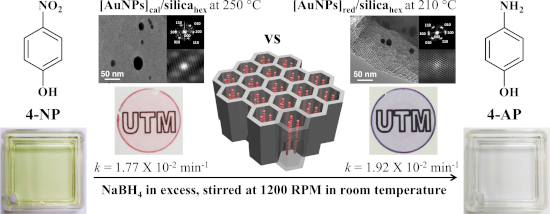
- ; Introduction Mesoporous silica nanomaterials with pore size between 2 to 50 nm [1] have been recently applied to the development of biomedical adsorbents [2][3][4], drug delivery systems [5][6][7], catalysts [8][9][10], as well as supports for metal nanoparticles [11][12][13] due to their large surface area
- wastewaters due to its high solubility properties [33], it is very crucial to find an effective method for the degradation and transformation of 4-NP. Generally, the reduction of 4-NP by heterogeneous catalysts in powdered form usually involves a tedious and time-consuming recovery process such as filtration
- and centrifugation in order to retrieve the catalysts. Hence, we highlight the utilization of thin film nanocomposites [AuNPs]red/silicahex as a heterogeneous catalyst for the reduction of 4-NP to 4-aminophenol (4-AP), where a thin film was simply dipped into the reaction system containing an excess


Construction of a 0D/1D composite based on Au nanoparticles/CuBi2O4 microrods for efficient visible-light-driven photocatalytic activity
Beilstein J. Nanotechnol. 2019, 10, 1360–1367, doi:10.3762/bjnano.10.134
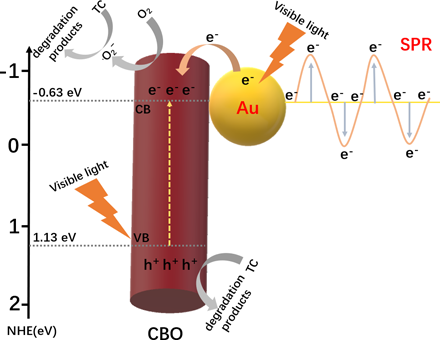
- photocatalytic activity after three cycles. This decrease of photocatalytic performance is mainly due to the mass of catalysts being inevitably lost in the recycling process [39]. Photocurrent response and electrochemical impedance spectroscopy (EIS) measurements were carried out to obtain some insights into the


A silver-nanoparticle/cellulose-nanofiber composite as a highly effective substrate for surface-enhanced Raman spectroscopy
Beilstein J. Nanotechnol. 2019, 10, 1270–1279, doi:10.3762/bjnano.10.126
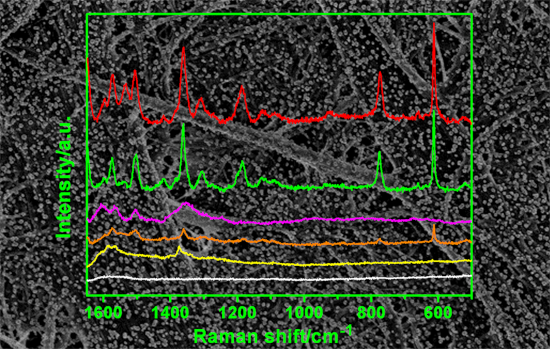
- nanoarchitectures developed so far have prominent application potentials in the areas of sensors and devices [26][27][28][29][30], catalysts [17][31][32], energy materials [16][32][33], as well as bio-oriented applications [34][35][36][37][38][39][40][41][42]. In the current work, a functional nanoarchitecture


Alloyed Pt3M (M = Co, Ni) nanoparticles supported on S- and N-doped carbon nanotubes for the oxygen reduction reaction
Beilstein J. Nanotechnol. 2019, 10, 1251–1269, doi:10.3762/bjnano.10.125
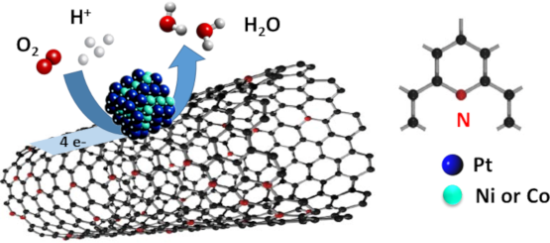
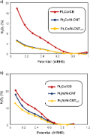
- reaction (ORR) have been evaluated in a rotating ring disk electrode experiment. The Pt3M/N-CNT catalysts revealed excellent electrochemical properties compared to a commercial Pt3Co/Vulcan XC-72 catalyst. The nature of the carbon support plays a key role in determining the properties of the metal
- -based alloys can also been used [24][25]. Therefore, it seems important to develop nanostructured catalysts supported on a material with electronic conductivity and surface area close to the common CB but with more resistance towards corrosion. Interestingly, it has recently been shown that the
- introduction of small amounts of ionic liquids (ILs), which are known as NP stabilizers, including on carbon supports [26], into Pt-based catalysts can further improve the ORR performance. This is likely due to the high O2 solubility in the IL phase [27]. It was also demonstrated that the choice of the carbon








Playing with covalent triazine framework tiles for improved CO2 adsorption properties and catalytic performance
Beilstein J. Nanotechnol. 2019, 10, 1217–1227, doi:10.3762/bjnano.10.121
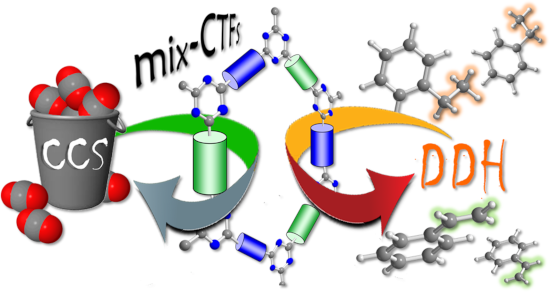
- ). Moreover, following our recent achievements in the field of steam- and oxygen-free dehydrogenation catalysis using CTFs as metal-free catalysts, the new samples with highest N contents have been scrutinized in the process to provide additional insights to their complex structure–activity relationship
- stability) as metal-free catalysts in gas-phase processes. Our recent achievements in the use of highly porous and N-rich carbon nanomaterials as metal-free catalysts for the steam- and oxygen-free dehydrogenation catalysis (DDH) of ethylbenzene (EB) to styrene (ST) have shown unique outcomes in terms of
- -dicyanoimidazole (DCI) or its equimolar mixtures with the aforementioned dicyanoaryl units (see Scheme 1 below) [45]. The as-prepared samples have been investigated as CO2 storage materials as well as metal-free catalysts for the gas-phase DDH of EB to ST. Notably, mixed CTF samples from this series have shown CO2


A highly efficient porous rod-like Ce-doped ZnO photocatalyst for the degradation of dye contaminants in water
Beilstein J. Nanotechnol. 2019, 10, 1157–1165, doi:10.3762/bjnano.10.115
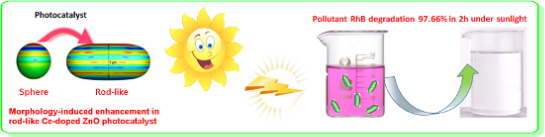
- most suitable catalysts in many industries given its inexpensive, non-toxic, efficient and anti-corrosion properties [7]. Nevertheless, it still has some disadvantages with respect to photocatalysis. For example, it has a narrow response range, low quantum efficiency, and its photogenerated electron
- morphology and better photocatalytic activity. Surface field The unique shape and porous microstructure are believed to have a great impact on the photocatalytic activity of catalysts by concentrating the reactant and scattering the light (high-performance rods). As an initial attempt to verify this
- , XPS, SEM and ICP, respectively. Furthermore, to supply a helpful reference for large-scale dye degradation, the optimum photocatalytic conditions of undoped and doped catalysts were also screened. Sample preparation Materials and instruments In this study, zinc acetate dihydrate was purchased from


Photoactive nanoarchitectures based on clays incorporating TiO2 and ZnO nanoparticles
Beilstein J. Nanotechnol. 2019, 10, 1140–1156, doi:10.3762/bjnano.10.114
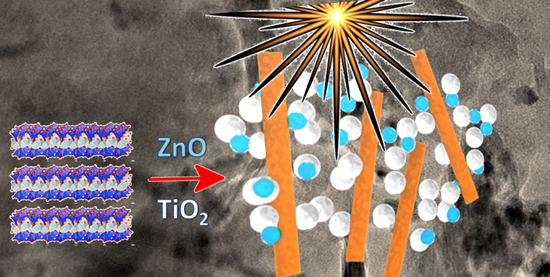
- alkoxides, salts or coordination complexes, remain associated with the delaminated clay sheets, resulting in stable and efficient photoactive catalysts of particular interest for the removal of organic pollutants from wastewater [84][87][89][106][107][118][128]. Akkari and co-workers [118] have recently



Direct growth of few-layer graphene on AlN-based resonators for high-sensitivity gravimetric biosensors
Beilstein J. Nanotechnol. 2019, 10, 975–984, doi:10.3762/bjnano.10.98
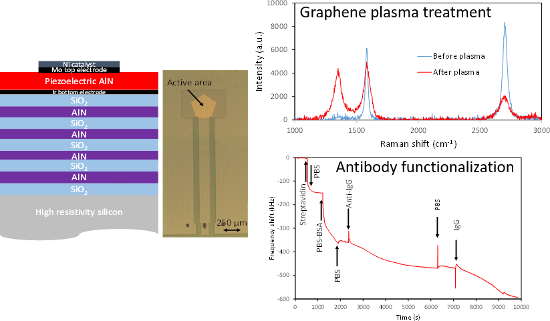
- -based solidly mounted resonators (SMR) using a low-temperature chemical vapour deposition (CVD) process assisted by Ni catalysts, and its effective bio-functionalization with antibodies. The SMRs are manufactured on top of fully insulating AlN/SiO2 acoustic mirrors able to withstand the temperatures
- typically transferred to the active area of the devices after being grown at high temperatures on copper catalysts [14], or from liquid suspensions [15], but never directly grown on top of the resonators. However, not all the applications require high-quality single-layer graphene; in fact, few-layer
- of their characteristics and then functionalized to manufacture gravimetric biosensors, which eliminates the need to use complex transfer methods. Defect-free few-layer graphene was selectively grown through a low-temperature (650 °C) CVD process on Ni [16] thin-film catalysts previously evaporated



Synthesis of novel C-doped g-C3N4 nanosheets coupled with CdIn2S4 for enhanced photocatalytic hydrogen evolution
Beilstein J. Nanotechnol. 2019, 10, 912–921, doi:10.3762/bjnano.10.92
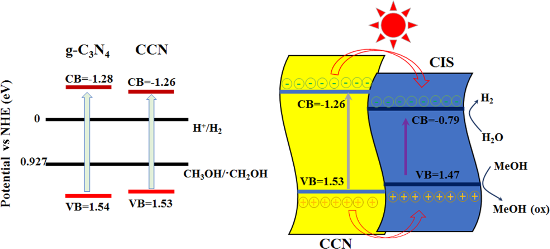
- metal-free organic catalysts with visible-light response, has been extensively used in pollutant elimination, hydrogen production and photoreduction of CO2 because of its facile fabrication, superior physicochemical stability, appropriate energy band structure, and low cost [7][8][9]. Nevertheless, the


Synthesis of MnO2–CuO–Fe2O3/CNTs catalysts: low-temperature SCR activity and formation mechanism
Beilstein J. Nanotechnol. 2019, 10, 848–855, doi:10.3762/bjnano.10.85
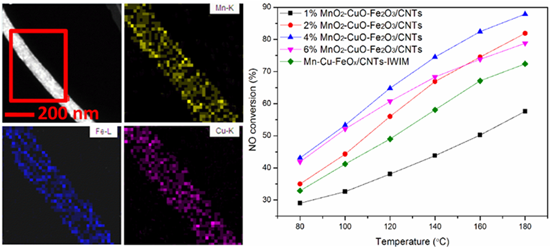
- Coal Salt Resources, Pingdingshan 467000, People′s Republic of China 10.3762/bjnano.10.85 Abstract MnO2–CuO–Fe2O3/CNTs catalysts, as a low-dimensional material, were fabricated by a mild redox strategy and used in denitration reactions. A formation mechanism of the catalysts was proposed. NO
- structure and outstanding chemical and physical properties. Hence, they are extensively studied for the application in SCR, e.g., in MnOx/CNTs [10], Mn–CeOx/CNTs [11] and CuOx/carbonaceous-materials catalysts [12]. However, the working temperature window of these SCR catalysts is still between 200 and 300
- °C. A series of Cu-based [12][13] and (Mn + Fe)-based [14][15] catalysts have been applied in the SCR reaction and presented good catalytic activity. Nevertheless, the preparation procedures of the catalysts always need high-temperature calcination or high-pressure hydrothermal reactions, which are




Electronic properties of several two dimensional halides from ab initio calculations
Beilstein J. Nanotechnol. 2019, 10, 823–832, doi:10.3762/bjnano.10.82
- synthesis and the photocatalytic properties of BiOX compounds under three different exposure conditions. Also, transition-metal oxychlorides MOCl (M = Sc, Ti, V, Cr, Fe) systems possess interesting electronic and magnetic properties [21][22][23][24]. Bismuth oxyhalides have been investigated as catalysts