Search results
Search for "charge transfer" in Full Text gives 375 result(s) in Beilstein Journal of Nanotechnology. Showing first 200.
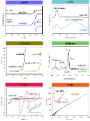
ZnO and MXenes as electrode materials for supercapacitor devices
Beilstein J. Nanotechnol. 2021, 12, 49–57, doi:10.3762/bjnano.12.4
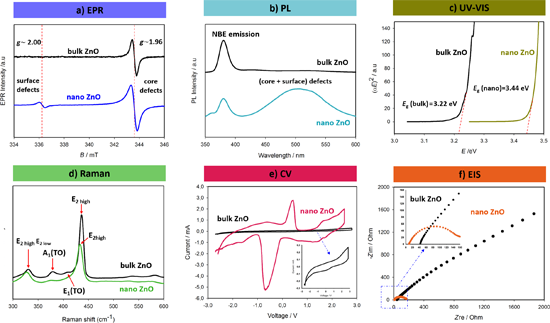
- . Therefore, different electrical components contribute to the equivalent circuit of the EIS results. Warburg element, charge transfer resistance (Rct), and equivalent series resistance (ESR) are some of the elements that contribute to the resistive behavior [11]. At this point, we highly suggest to the
Atomic layer deposited films of Al2O3 on fluorine-doped tin oxide electrodes: stability and barrier properties
Beilstein J. Nanotechnol. 2021, 12, 24–34, doi:10.3762/bjnano.12.2
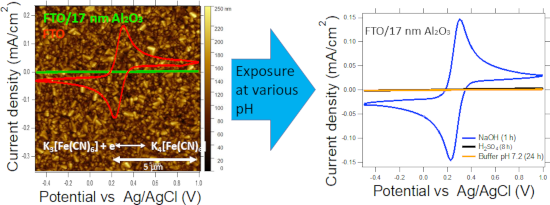
- that of pure FTO is higher than three. This means that there are B-type defects in the barrier film. These defects cause not only the delamination of the Al2O3 film from the FTO substrate, but also a slowdown of the charge-transfer kinetics (accompanied by a strong increase in ΔEpp). The Table 1 shows
- voltammogram of the sample resembled that of pure FTO, indicating that a significant charge transfer occurred at the electrolyte solution/FTO interface. The blocking properties of a 17 nm thick Al2O3 film after a 5 min exposure to 1 M NaOH were evaluated via EPA calculation and shown in Table 1. A 5 min


Free and partially encapsulated manganese ferrite nanoparticles in multiwall carbon nanotubes
Beilstein J. Nanotechnol. 2020, 11, 1891–1904, doi:10.3762/bjnano.11.170
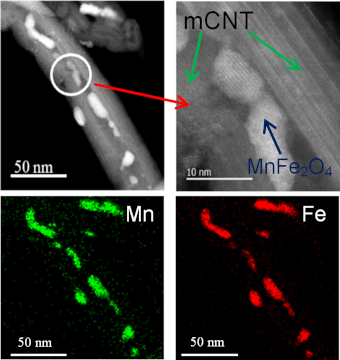
- manganese ferrite nanoparticles inside the tubes is observed as a shift in the X-ray diffraction peaks and as an increase in stress, hyperfine field, and coercivity when compared to free manganese ferrite nanoparticles. On the other hand, a strong charge transfer from the multiwall carbon nanotubes is
- ferrite nanoparticles in comparison to free manganese ferrite nanoparticles, which leads to an enhancement of the metallic properties. Keywords: carbon nanotubes; charge transfer; manganese ferrite; metallic nanoparticles; partial encapsulation; stress; surface; Introduction Since the discovery of
- the change in intensity of the emitted electrons from the π band to a strong charge transfer between MWCNTs and the functionalized materials [37]. In our case, the π band signal in MnFe2O4/MWCNTs is obscured by the presence of the Mn 3d signal, which makes it difficult to draw any conclusion related


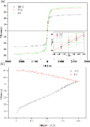


Unravelling the interfacial interaction in mesoporous SiO2@nickel phyllosilicate/TiO2 core–shell nanostructures for photocatalytic activity
Beilstein J. Nanotechnol. 2020, 11, 1834–1846, doi:10.3762/bjnano.11.165
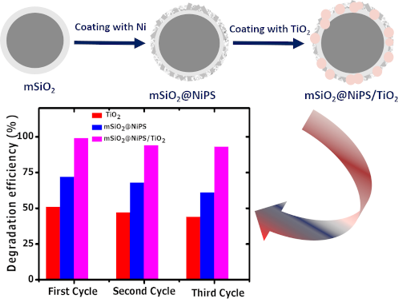
- metal oxides, such as ZrO2 [16] and SiO2 [17], influence the morphology and surface features of the resulting binary metal oxide semiconductors. Moreover, these binary metal oxide semiconductors act as charge-transfer catalysts and significantly reduce the electron–hole recombination [18][19]. Another
- that facilitates easy adsorption of organic molecules and their transfer onto the active sites of TiO2 [22][23]. Additionally, the interaction between SiO2 and TiO2 could result in the creation of oxygen vacancies that promote charge-transfer processes and, hence, enhance the photocatalytic activity
- the bandgap energy value of TiO2 (3.2 eV) to approx. 2.7 eV for Ni2+-doped TiO2 was reported by Devi and co-workers [51]. They associated the shift in light absorption to the charge transfer between the interacting ions. Although there are only a few studies on nickel phyllosilicates, a prior


Self-standing heterostructured NiCx-NiFe-NC/biochar as a highly efficient cathode for lithium–oxygen batteries
Beilstein J. Nanotechnol. 2020, 11, 1809–1821, doi:10.3762/bjnano.11.163
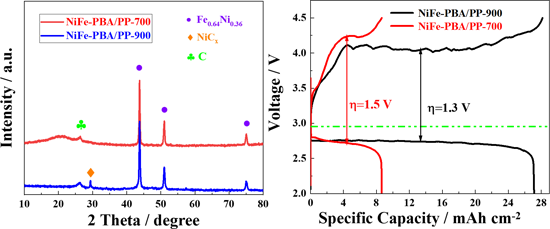
- seems to facilitate the process of adsorption/desorption of intermediate species and the charge transfer ability during hydrogen evolution reaction (HER)/OER. In addition, the interfaces between Ni3C and N-doped C probably strongly reshuffle the electronic density, resulting in enhanced catalytic
- . The ohmic resistance (RΩ) and charge-transfer resistance (Rct) values of the fresh sample and of the sample after the first charge and first discharge were obtained by analyzing the EIS curves (Table 2). The value of RΩ of NiFe-PBA/PP-T after the first discharge was higher than that of the fresh






Molecular dynamics modeling of the influence forming process parameters on the structure and morphology of a superconducting spin valve
Beilstein J. Nanotechnol. 2020, 11, 1776–1788, doi:10.3762/bjnano.11.160
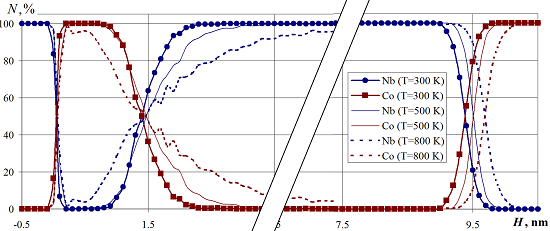
- nanostructures are a new type of quantum electronics elements based on electron spin transport. Unlike conventional electronics, spintronics uses not only charge transfer, but also the electron spin in solids, solving the problem of transport and recording of information [1][2][3][4][5][6][7]. Based on the basic


The influence of an interfacial hBN layer on the fluorescence of an organic molecule
Beilstein J. Nanotechnol. 2020, 11, 1663–1684, doi:10.3762/bjnano.11.149
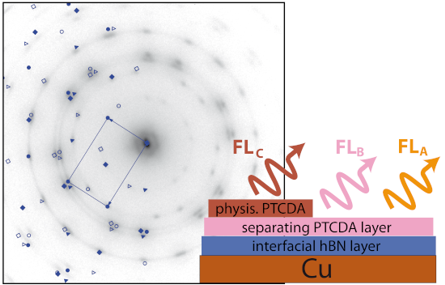
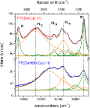
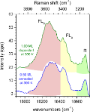
- a 2DM layer grown on a metal characterizes the degree of electronic coupling of the molecular and metallic states. For completeness, we note that quenching of an electronic excitation of a molecule in the first layers on a metal surface can be the result of interfacial charge transfer (CT) [5] or of
- LUMO of PTCDA was found on Ag(111), but not on Au(111) [33]. Thus, the quenching on Ag(111) is directly understood by the static charge transfer seen in UPS. The quenching on Au(111), not as evident from UPS, demonstrates the sensitivity of FL spectroscopy to an overlap of wave functions of excited





PTCDA adsorption on CaF2 thin films
Beilstein J. Nanotechnol. 2020, 11, 1615–1622, doi:10.3762/bjnano.11.144
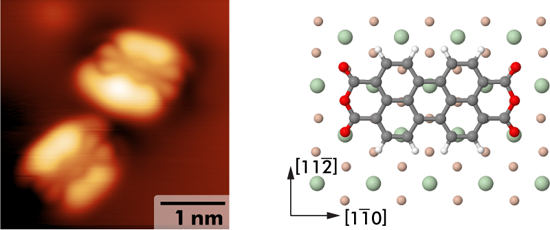
- , coupling to defects within the CaF1 layer, or charge transfer into the LUMO. Imaging at a positive sample bias of +1.5 V was performed in constant-height mode as the reduced sample conductivity at positive bias impeded operation in constant-current mode. Still, conductivity through PTCDA molecules is also


Detecting stable adsorbates of (1S)-camphor on Cu(111) with Bayesian optimization
Beilstein J. Nanotechnol. 2020, 11, 1577–1589, doi:10.3762/bjnano.11.140
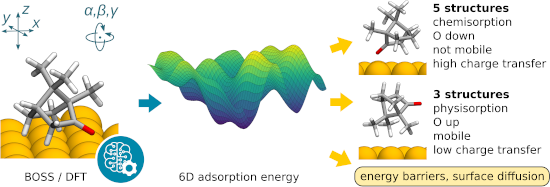
- fast to compute, but they cannot accurately model hybrid materials, in which atomic interactions often feature a mixture of covalent and dispersive bonding, with charge transfer and polarization effects. Instead, we must employ quantum mechanical methods, such as density-functional theory (DFT) [12][13


Fabrication of nano/microstructures for SERS substrates using an electrochemical method
Beilstein J. Nanotechnol. 2020, 11, 1568–1576, doi:10.3762/bjnano.11.139
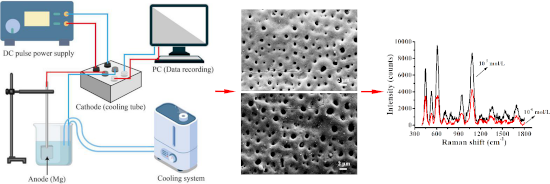
- Raman signal by several orders of magnitude. The functionality of SERS is due to a combination of surface electron movement in the substrate and charge transfer between substrate and the analyte molecules, in contrast to the typical signal intensity elicited during spontaneous Raman spectroscopy, which


Adsorption and self-assembly of porphyrins on ultrathin CoO films on Ir(100)
Beilstein J. Nanotechnol. 2020, 11, 1516–1524, doi:10.3762/bjnano.11.134
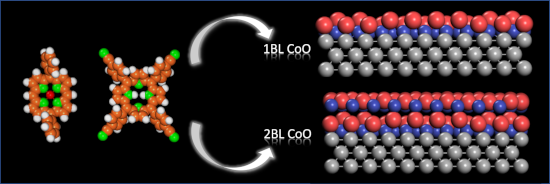
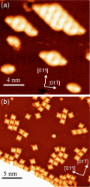
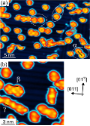
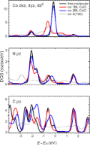
- in the calculations, the true PDOS will deviate and conclusions have to be drawn with care. However, the work function of CoO is, with 5.85 eV (1BL) and 6.01 eV (2BL) [47], significantly higher than that of most metals. Following the arguments of Yang et al. [48], a charge transfer into unoccupied




Controlling the electronic and physical coupling on dielectric thin films
Beilstein J. Nanotechnol. 2020, 11, 1492–1503, doi:10.3762/bjnano.11.132
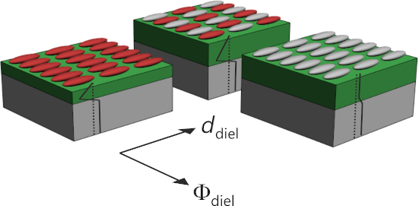
- (6P) on ultrathin MgO(100) films supported on Ag(100) is reported. By deliberately changing the work function of the MgO(100)/Ag(100) system, it is shown that the charge transfer (electronic coupling) into the 6P molecules can be controlled, and 6P monolayers with uncharged molecules (Schottky–Mott
- regime) and charged and uncharged molecules (Fermi level pinning regime) can be obtained. Furthermore, it was found that charge transfer and temperature strongly influence the orientation, conformation, and wetting behavior (physical coupling) of the 6P layers on the MgO(100) thin films. Keywords
- : decoupling; integer charge transfer; organic films; para-sexiphenyl; thin dielectric film; Introduction Since the first scanning tunneling microscope (STM) imaging of the highest occupied molecular orbital (HOMO) and the lowest unoccupied molecular orbital (LUMO) of pentacene (5A) on NaCl/Cu(111) was




Self-assembly and spectroscopic fingerprints of photoactive pyrenyl tectons on hBN/Cu(111)
Beilstein J. Nanotechnol. 2020, 11, 1470–1483, doi:10.3762/bjnano.11.130
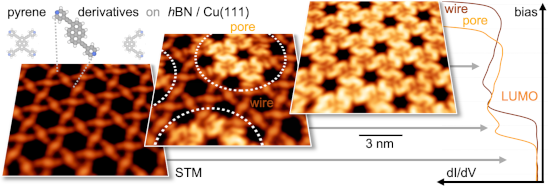
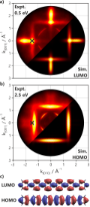
- ][33], decouple perylenetetracarboxylic dianhydride (PTCDA) aggregates [34], study interfacial charge transfer in binary phthalocyanine arrays [35], probe vibronic conductance in oligophenylenes [36], and control the charge state of F16CoPc [37]. Studies focusing on the preparation of coordination
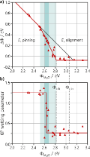
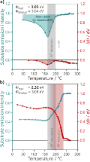
- molecular adsorption (Figure S11, Supporting Information File 1), open-porous structures would feature a smaller work function shift compared to densely packed molecular films. In the absence of charge transfer, the work function was assumed to decrease upon the adsorption of pyrenes on hBN/Cu(111) [84




Triboelectric nanogenerator based on Teflon/vitamin B1 powder for self-powered humidity sensing
Beilstein J. Nanotechnol. 2020, 11, 1394–1401, doi:10.3762/bjnano.11.123
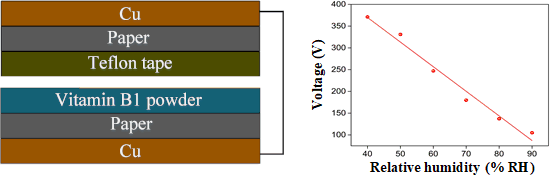
- the Teflon membrane is separated in the absence of an external force. There is a positive charge transfer from the conductive copper foil tape at the bottom of the TVB-TENG, to the conductive copper foil tape at the top, leading to an electric field equilibrium due to electrostatic induction. As a
- result, a potential difference between the electrodes is generated. Subsequently, when the TVB-TENG is pressed again, an opposite potential difference is produced due to the triboelectrification principle. As such, there is a positive charge transfer from the top of the conductive copper foil tape of the




Impact of fluorination on interface energetics and growth of pentacene on Ag(111)
Beilstein J. Nanotechnol. 2020, 11, 1361–1370, doi:10.3762/bjnano.11.120
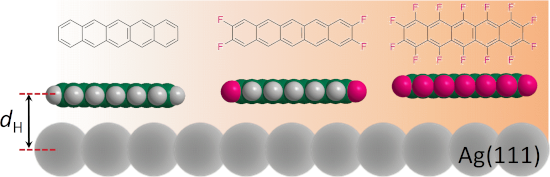
- charge transfer from the substrate [9][28]. This can be explained by the repulsive interaction of the fluorine atoms with the substrate, which leads to much larger vertical adsorption heights of PFP compared to PEN in monolayers on Cu(111) [9]. Ag(111) represents an intermediate case [55] with weak
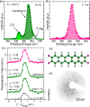
- fluorinated PEN, namely 2,3,9,10-tetrafluoropentacene (F4PEN) [46][60][61]. F4PEN physisorbs on Au(111) [62] and chemisorbs on Cu(111), involving interfacial charge transfer and strong molecular distortions [63]. Here, we investigated the coupling with Ag(111) as we expected this to be an interesting
- contrast to the monolayers of PEN and PFP on graphite, with a likewise lying-down orientation and large differences in the HOMO positions [11][25][26]. In general, for a strong interfacial coupling and charge transfer, the resonance structure of the adsorbate in the monolayer can be notably different from


Effect of localized helium ion irradiation on the performance of synthetic monolayer MoS2 field-effect transistors
Beilstein J. Nanotechnol. 2020, 11, 1329–1335, doi:10.3762/bjnano.11.117
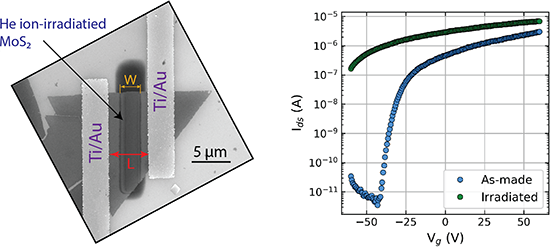
- in MoS2 [11], as well as enhanced out-of-plane charge transfer in 2D graphene/WSe2 heterostructures [12]. Energetic light ions are known to preferentially sputter chalcogen atoms from TMDs while retaining an adequate micrometer-scale structural integrity for irradiation doses up to approx. 1016 ions


Structural and electronic properties of SnO2 doped with non-metal elements
Beilstein J. Nanotechnol. 2020, 11, 1321–1328, doi:10.3762/bjnano.11.116
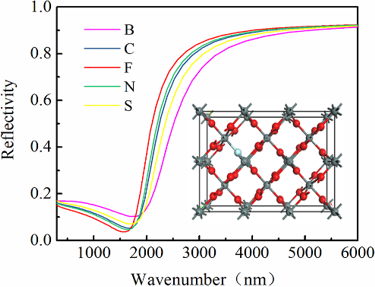
- crystals effectively. In order to obtain information about charge transfer after doping, the secondary differential charge distribution of the elements was calculated and the results are shown in Figure 3. Compared with O, the ability of the doping atoms to accumulate charge is reduced. This provides more



Structure and electrochemical performance of electrospun-ordered porous carbon/graphene composite nanofibers
Beilstein J. Nanotechnol. 2020, 11, 1280–1290, doi:10.3762/bjnano.11.112
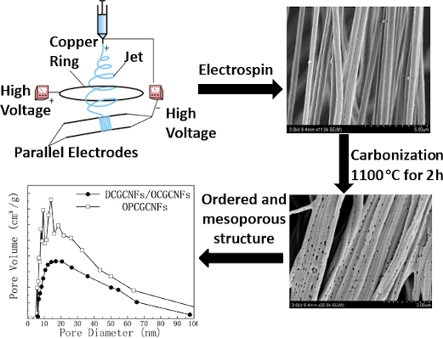
- resistances of DCGCNF, OCGCNF and OPCGCNF electrodes were 3.2, 0.8 and 0.7 ohm, respectively, as shown in Figure 7. The diameter of the semicircle in the high-frequency region is a direct representation of the charge transfer resistance (Rct). Therefore, the smaller the semicircle diameter, the smaller the
- charge transfer resistance. The charge transfer resistance is related to both the conductivity of the electrode and the morphology of the active material (i.e., surface area and pore size, respectively) [50][51]. The Rct values for DCGCNF, OCGCNF and OPCGCNF electrodes were 1.6, 1.2, and 1.0 ohm
- , respectively. The charge transfer resistance of the OPCGCNF electrode was significantly smaller than of the other CGCNF electrodes, as illustrated in Figure 7. The low-frequency curve is related to the diffusion resistance of the electrolyte and ions into the electrode [52][53]. The almost vertical shape


Hybridization vs decoupling: influence of an h-BN interlayer on the physical properties of a lander-type molecule on Ni(111)
Beilstein J. Nanotechnol. 2020, 11, 1168–1177, doi:10.3762/bjnano.11.101
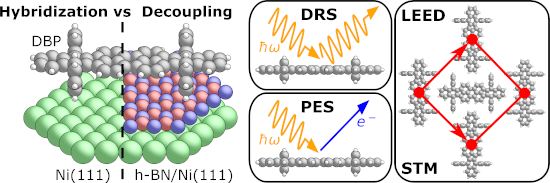
- charge transfer [1][2]. Some applications, however, require to preserve the intrinsic properties of the molecules such as the typically rather narrow optical absorption and/or emission bands. To achieve this, one needs to electronically decouple the molecules from the substrate, which can be achieved


Photothermally active nanoparticles as a promising tool for eliminating bacteria and biofilms
Beilstein J. Nanotechnol. 2020, 11, 1134–1146, doi:10.3762/bjnano.11.98
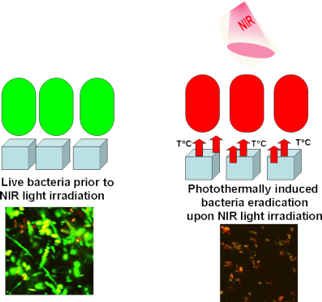
- blue nanoparticles for bacteria and biofilm photothermal ablation has recently become a new research topic. Those nanoparticles strongly absorb in the range of 700–750 nm due to the metal-to-metal charge transfer between FeII and FeIII through the cyanide bridge [37]. The photothermally induced death
- NIR-photothermal ablation (>99.99%) of S. aureus both in biofilms and in infected tissues [98]. Molybdenum oxide nanoparticles display a strong absorption in the NIR region, originating from the intervalence charge-transfer transition between the Mo5+ and Mo6+ states [99]. Ag nanocubes supported on


Monolayers of MoS2 on Ag(111) as decoupling layers for organic molecules: resolution of electronic and vibronic states of TCNQ
Beilstein J. Nanotechnol. 2020, 11, 1062–1071, doi:10.3762/bjnano.11.91
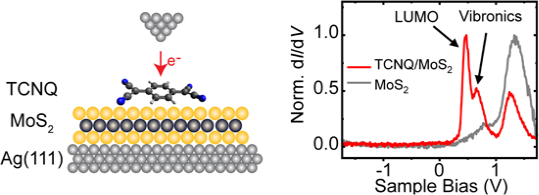
- hybridization, charge transfer and screening [1][2][3][4]. These effects lead to a broadening and shift of the molecular resonances [5]. Often the molecular functionality is also lost due to these interactions [6]. However, addressing individual molecules in devices or by single-molecule spectroscopy as offered
- -derived resonance lies close to, but above, the Fermi level of the substrate, whereas the HOMO is far below. This leaves the molecule in a neutral state with a negligible amount of charge transfer, despite the electron accepting character of TCNQ. Nonetheless, its electron affinity of approx. 3.4 eV [53


Adsorption behavior of tin phthalocyanine onto the (110) face of rutile TiO2
Beilstein J. Nanotechnol. 2020, 11, 821–828, doi:10.3762/bjnano.11.67
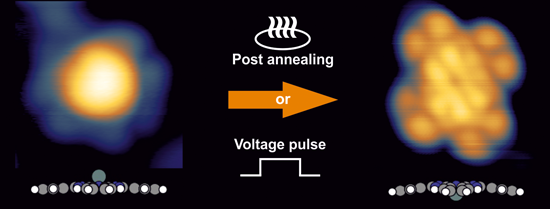
- show tremendous potential for a multitude of applications [1][2][3][4][5]. In many applications, the interface between a Pc molecule and the surface onto which it is adsorbed is of paramount importance. It is the adsorption configuration that affects phenomena such as charge transfer and layer
- the molecules. The change of the molecular positions is not accompanied by the creation of new chemical bonds, as XPS spectra reveal. This suggests that positioning the Sn atom in close proximity to the surface does not induce a significant charge transfer between the substrate and the molecule. Due


Templating effect of single-layer graphene supported by an insulating substrate on the molecular orientation of lead phthalocyanine
Beilstein J. Nanotechnol. 2020, 11, 814–820, doi:10.3762/bjnano.11.66
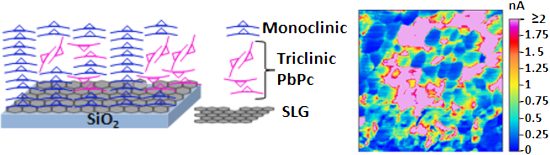
- microscopy shows enhanced vertical conductance with interconnected conducting domains consisting of ordered monoclinic crystallites through which the charge transfer occurs via tunneling. These results show the importance of a templating layer to induce the formation of a required phase of PbPc suitable for


Nickel nanoparticles supported on a covalent triazine framework as electrocatalyst for oxygen evolution reaction and oxygen reduction reactions
Beilstein J. Nanotechnol. 2020, 11, 770–781, doi:10.3762/bjnano.11.62
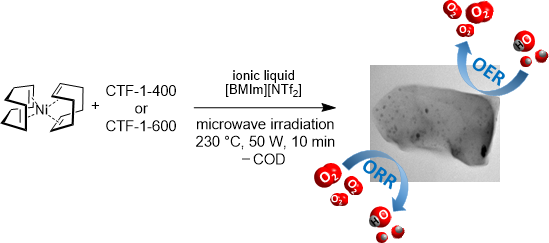
- exposure of active sites and to improve the ion and charge transfer through nanochannels together with the electron-conductive medium [46]. Here, the increase of conductivity and surface area from CTF-1-400 to CTF-1-600 go in the same direction and cannot be differentiated regarding their role in improving
- admixture of Ni species with low activity in the composite materials. The better OER performance of CTF-1-600 over the CTF-1-400 materials is attributed to the better conductivity of the former (as given by the Nyquist plot in Figure 7) and its faster ion and charge transfer together with its higher


Exfoliation in a low boiling point solvent and electrochemical applications of MoO3
Beilstein J. Nanotechnol. 2020, 11, 662–670, doi:10.3762/bjnano.11.52
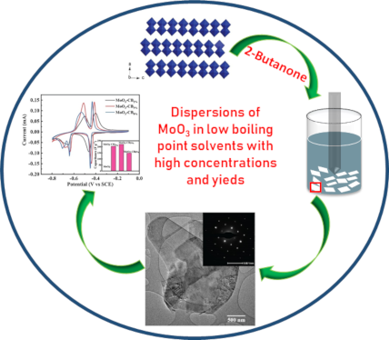
- effect of CB (Figure 3f). The addition of carbon black leads to a reduction of charge transfer resistance in the composites with 5 and 8 wt % CB (6 Ω) compared to the composite with 2 wt % CB (19 Ω). The charge–transfer curve is similar for 5 and 8 wt % CB, which implies that the effect of the additive