Search results
Search for "contacts" in Full Text gives 357 result(s) in Beilstein Journal of Nanotechnology. Showing first 200.
Internalization mechanisms of cell-penetrating peptides
Beilstein J. Nanotechnol. 2020, 11, 101–123, doi:10.3762/bjnano.11.10
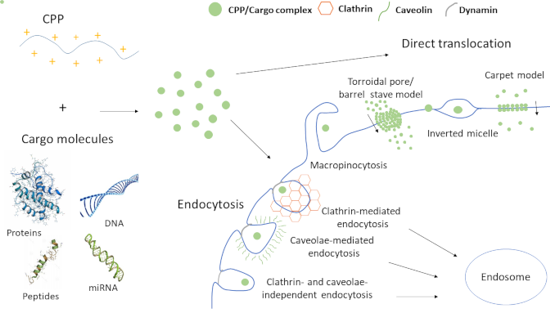
- lead to the internalization of peptides. The role of glycosaminoglycans in the initial contacts of CPPs and cells and in the initiation of internalization has been a part of several reviews so far [3][27][28][68][69]. The extensive research done on arginine-rich peptides, especially octa-arginine (R8


Mobility of charge carriers in self-assembled monolayers
Beilstein J. Nanotechnol. 2019, 10, 2449–2458, doi:10.3762/bjnano.10.235
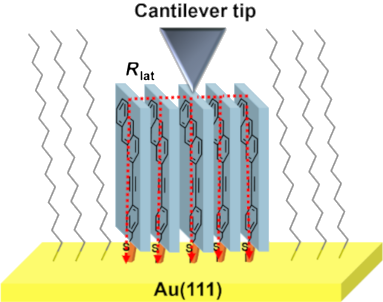
- by tip size effects. The schematics presented in Figure 3 rationalize the observation that the conductivity increases with island size. In the hypothetical case that the AFM tip contacts only a single PAT molecule, i.e., an island consisting of a single molecule only, we would obtain the resistance


Semitransparent Sb2S3 thin film solar cells by ultrasonic spray pyrolysis for use in solar windows
Beilstein J. Nanotechnol. 2019, 10, 2396–2409, doi:10.3762/bjnano.10.230
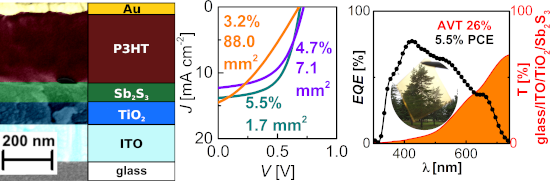
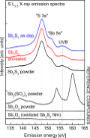
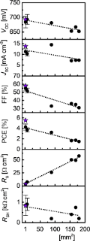
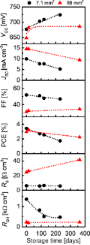
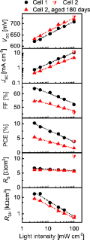
- perforated metal masks. The area of cells larger than 7.1 mm2 was defined by mechanically scribing contacts after Au deposition. Thin film characterization The characterization methods employed in this study, except for XRD and XES, have already been described in detail elsewhere [28]. The structure and



Polyvinylpyrrolidone as additive for perovskite solar cells with water and isopropanol as solvents
Beilstein J. Nanotechnol. 2019, 10, 2374–2382, doi:10.3762/bjnano.10.228
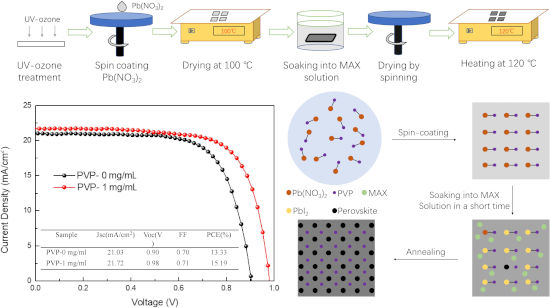
- MHz to 100 Hz. The fit results are presented in Table 2. In the circuit model, the resistors derived from metal contacts, compound resistors, and chemical capacitors are denoted by the symbols RS, Rrec, and C1, respectively. As the cell structure is uniform, the difference of the RS values between the




Review of advanced sensor devices employing nanoarchitectonics concepts
Beilstein J. Nanotechnol. 2019, 10, 2014–2030, doi:10.3762/bjnano.10.198
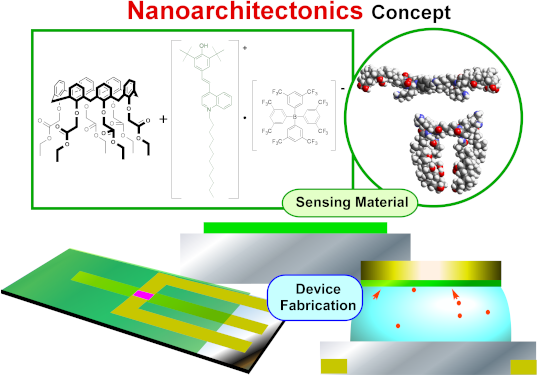
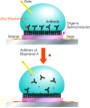
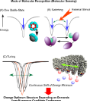
- environments is briefly described and hints for future sensor designs are discussed. Interfacial environments provide two distinct features, (i) contacts of phases with different dielectric natures and (ii) connection of extremely different size events (both along the lateral direction and thickness direction
- semiconductive layer provides better sensor performance with long-term stability and high sensitivity. Features of molecular recognition at interfacial media: (i) contacts of phases with different dielectric natures to result in huge enhancement of molecular recognition; (ii) connection of extremely different





Charge-transfer interactions between fullerenes and a mesoporous tetrathiafulvalene-based metal–organic framework
Beilstein J. Nanotechnol. 2019, 10, 1883–1893, doi:10.3762/bjnano.10.183
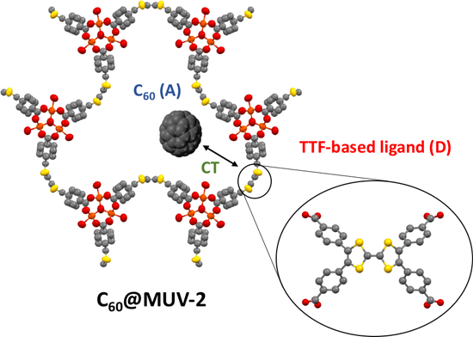
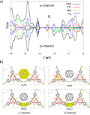
- system (A and B; Figure 5a, Supporting Information File 2). In conformer A, the fullerene ball remains in the void between two TTFTB ligands, approaching one of them with short C(C60)…S(TTFTB) and C(C60)…benzene(TTFTB) contacts calculated at 3.4 and 3.5 Å, respectively (Figure 5b). In conformer B
- , fullerene remains over the TTFTB ligand, promoting an efficient concave–convex complementarity with a large amount of noncovalent interactions between the C60 ball and the TTF core (C(C60)…S(TTFTB) distances of 3.6–3.8 Å), and stabilizing CH…π contacts between the benzene rings of TTFTB and the fullerene
- boundary conditions (PBC). b) Supramolecular assemblies of C60@TTFTB extracted from the PBC-optimized C60@MUV-2 system in arrangements A and B. Intermolecular short contacts (in Å) and NCI surfaces (reduced density gradient isovalue = 0.3 a. u. (atomic units)) are displayed. Interaction energies (Eint) of




Fabrication and characterization of Si1−xGex nanocrystals in as-grown and annealed structures: a comparative study
Beilstein J. Nanotechnol. 2019, 10, 1873–1882, doi:10.3762/bjnano.10.182
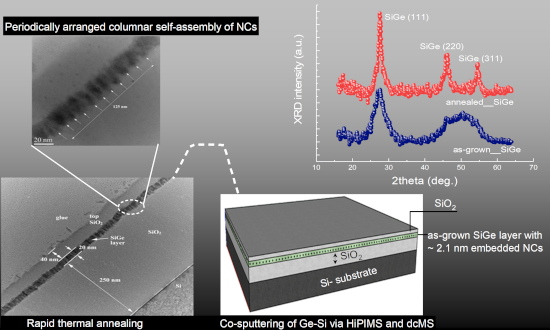
- ° divergence slit and a 0.27° parallel plate collimator was used. The measurement run was made over 0.005 °/s scan speed. For photoconductive measurement, Al contacts (1 × 4 mm2) in co-planar geometry with a gap of 4 mm between them were deposited by evaporation. A schematic of the photocurrent setup and the


Materials nanoarchitectonics at two-dimensional liquid interfaces
Beilstein J. Nanotechnol. 2019, 10, 1559–1587, doi:10.3762/bjnano.10.153
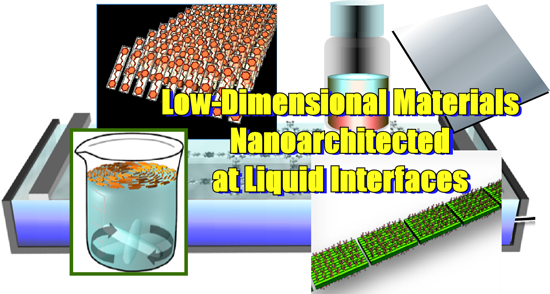
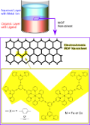
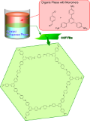
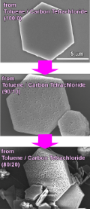
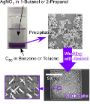
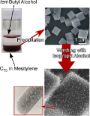
- 15) [237][238][239]. Fullerene molecules, such as C60 and C70, are dissolved in a liquid phase (good solvent) that contacts an immiscible liquid phase in which the molecules are poorly soluble (poor solvent). The formation of crystalline assemblies of fullerene molecules is induced by supersaturation
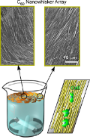
- -dimensional C60 crystals prepared through liquid–liquid interfacial precipitation between m-xylene and isopropyl alcohol for visible-spectrum photodetectors [248]. Additional materials or two metal contacts are not necessary in the fabricated photodetectors. These devices made solely from carbon can be used













High-temperature resistive gas sensors based on ZnO/SiC nanocomposites
Beilstein J. Nanotechnol. 2019, 10, 1537–1547, doi:10.3762/bjnano.10.151
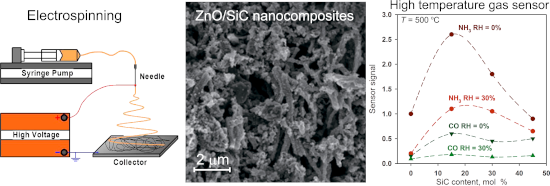
- alumina micro-hotplates provided with vapor-deposited Pt contacts (0.3 × 0.2 mm2) separated by a 0.2 mm gap and with embedded Pt-meanders. The paste was dried at room temperature in ambient air and then calcined at 250 °C in purified air for 20 h to remove the binder. The thick sensing layer was about 1



Kelvin probe force microscopy of the nanoscale electrical surface potential barrier of metal/semiconductor interfaces in ambient atmosphere
Beilstein J. Nanotechnol. 2019, 10, 1401–1411, doi:10.3762/bjnano.10.138
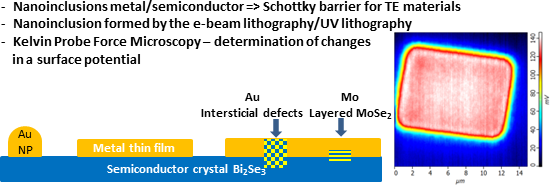
- Au layer (both contacts on the same layer); c) 53 nm Au layer; d) and e) 19 nm Au layer before and after e-beam diffusion; f) cleaved Bi2Se3. Curves c–f) were measured with the ohmic contact on the 107 nm Au layer (see Figure S1, Supporting Information File 1). (A) Change of the I–V characteristics


Gas sensing properties of individual SnO2 nanowires and SnO2 sol–gel nanocomposites
Beilstein J. Nanotechnol. 2019, 10, 1380–1390, doi:10.3762/bjnano.10.136
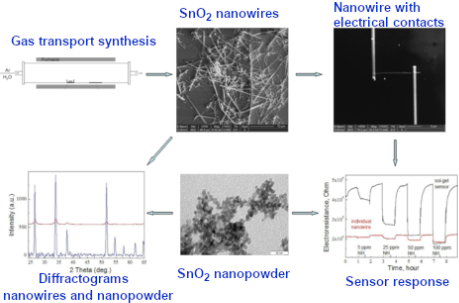
- , wherein random electrical contact between wires located on different electrodes are formed. The contact between each pair of nanowires is not stable, but due to the large number of contacts, completely stable electrical contact behavior is observed (on a statistical average). Sensors based on such systems
- show high sensitivity [10][11][12][13][14][15][16][17][18][19][20]. Hierarchical structures with SnO2 nanowires covered with additional nanoscale objects can be used for the improvement of electrical contacts [11][16][17]. A second direction in nanowire sensor development is the manufacturing of
- electrical contacts with individual nanowires [21][22][23][24][25][26][27][28][29][30][31][32][33]. These contacts can be made by means of photolithography, but more often, focused ion beam (FIB) technology is used for this purpose. This approach has several advantages: first, a reliable electrical contact




Molecular attachment to a microscope tip: inelastic tunneling, Kondo screening, and thermopower
Beilstein J. Nanotechnol. 2019, 10, 1243–1250, doi:10.3762/bjnano.10.124
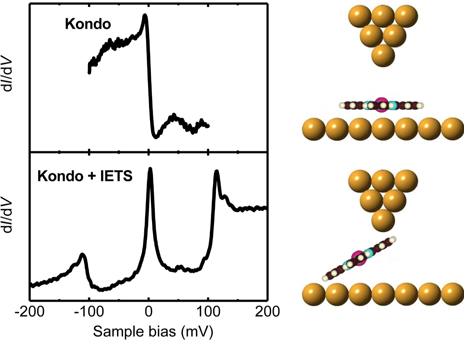
- matter of fact, in our configuration, the tip–molecule and the molecule–sample contacts are not equivalent for small gaps, leading to strong effects for partially lifted molecules, as described in Figure 2f. A molecular rearrangement due to new geometrical boundary conditions is thus expected for larger


Electroluminescence and current–voltage measurements of single-(In,Ga)N/GaN-nanowire light-emitting diodes in a nanowire ensemble
Beilstein J. Nanotechnol. 2019, 10, 1177–1187, doi:10.3762/bjnano.10.117
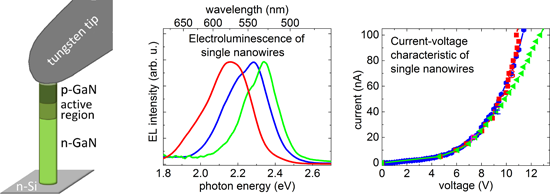
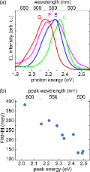
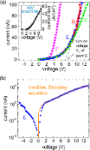
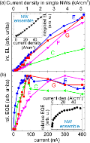
- top contacts and on the back side of the Si substrate, respectively. A more detailed description of the growth and processing procedure as well as the EL and I–V characteristics of the NW-ensemble LED can be found in [12]. The EL and I–V measurements on single-NW LEDs were carried out in a Zeiss
- current density for the maximum relative EQE and vice versa. It should be noted that this relation is only true if the NWs have similar contact resistances, resulting in a homogeneous current spreading in the ensemble device. The side-by-side comparison of ITO and Ni/Au top contacts in [12] showed that


Direct growth of few-layer graphene on AlN-based resonators for high-sensitivity gravimetric biosensors
Beilstein J. Nanotechnol. 2019, 10, 975–984, doi:10.3762/bjnano.10.98
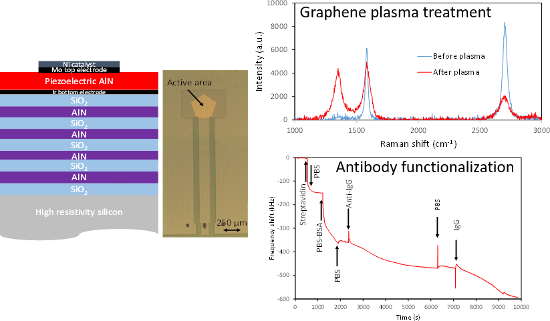
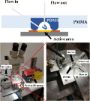
- SMRs in terms of quality and electromechanical coupling factors. To fit the fluidic system, the electrical contacts to the resonators were set apart from the active area of the devices, which entailed extending the electrical pads (see Figure 8b where the O-ring sealing footprint is sketched) [26]. All


In situ AFM visualization of Li–O2 battery discharge products during redox cycling in an atmospherically controlled sample cell
Beilstein J. Nanotechnol. 2019, 10, 930–940, doi:10.3762/bjnano.10.94
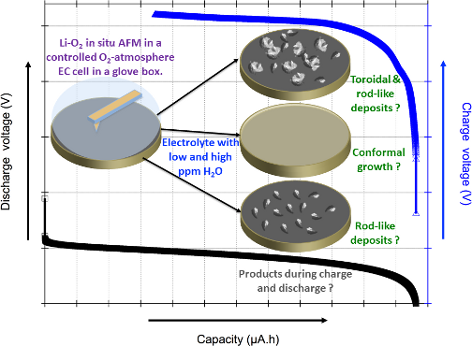
- ] using this in situ AFM set-up we monitored surface changes on the products of a Na–oxygen discharge reaction. The terms electrochemical cell and battery are used interchangeably in this study. Upon cell assembly, electrical connections were made between the lithium and carbon stainless steel contacts


Renewable energy conversion using nano- and microstructured materials
Beilstein J. Nanotechnol. 2019, 10, 771–773, doi:10.3762/bjnano.10.76

- benefits arising from core–shell nanowire arrays for Si heterojunction solar cells. Contacts with a high surface-to-volume ratio can clearly be seen. Particularly in photovoltaics, they may be prone to increased recombination losses. For other applications, such as water splitting, porous materials may
Hydrophilicity and carbon chain length effects on the gas sensing properties of chemoresistive, self-assembled monolayer carbon nanotube sensors
Beilstein J. Nanotechnol. 2019, 10, 565–577, doi:10.3762/bjnano.10.58
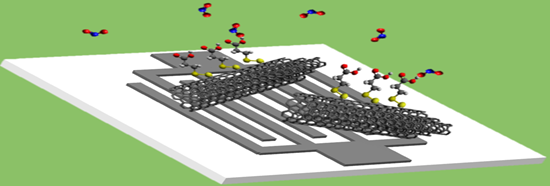
- coated with a mat of CNTs via airbrushing through a shadow mask. Once the sensors were sputtered with gold and functionalized with thiols, two-wire contacts were made on the samples using a conductive epoxy (Ag component metallization, Heraeus) and platinum wires. The samples were bonded to a 20 × 30 mm2


Mechanical and thermodynamic properties of Aβ42, Aβ40, and α-synuclein fibrils: a coarse-grained method to complement experimental studies
Beilstein J. Nanotechnol. 2019, 10, 500–513, doi:10.3762/bjnano.10.51
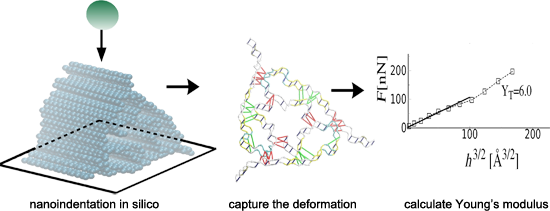
- achieve this by applying different types of deformation (e.g., tension, shearing and indentation) and analysing the intermolecular contacts between amino acids. Our simulations reveal significant differences in the mechanical behaviour between Aβ40 and Aβ42 and α-syn fibrils. Moreover, we find that the α
- capsids [35] and β-amyloids [36]. The strength of the repulsive non-native term, ε’, is set equal to ε. Our CG model takes into account native distances as in the case of a Gō-like model [37]. Hence, the native contacts are determined by the overlap criterion [48]. In practice, each heavy atom is assigned
- representation for some biological fibrils as well as their native interactions. These native contacts represent hydrogen bonds (HB), and hydrophobic and ionic bridges. Moreover, we consider contacts between amino acids in individual chains with sequential distance |i − j| > 4. The parameters σij are given by


Nanocomposite–parylene C thin films with high dielectric constant and low losses for future organic electronic devices
Beilstein J. Nanotechnol. 2019, 10, 428–441, doi:10.3762/bjnano.10.42
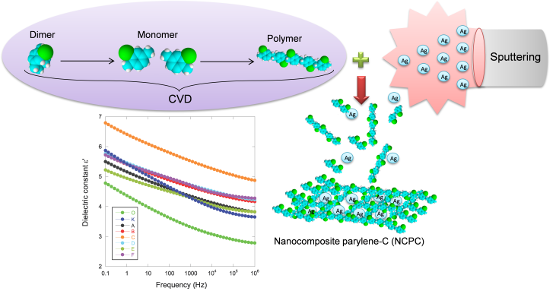
- to probe deeper the film structure. The surface morphology was analyzed using a non-contact mode AFM model C-21 (Danish Micro Engineering), mounting a DualScope Probe Scanner 95-50. Capacitance areas were defined in the top NCPC resulting in square 2 × 2 mm2 contacts. In order to assure a homogeneous




Relation between thickness, crystallite size and magnetoresistance of nanostructured La1−xSrxMnyO3±δ films for magnetic field sensors
Beilstein J. Nanotechnol. 2019, 10, 256–261, doi:10.3762/bjnano.10.24
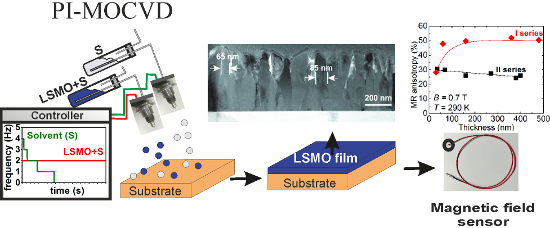
- % nitric acid. For the electric transport and magnetoresistance measurements, the Ag contacts with a Cr sublayer were thermally deposited and postannealed at 450 °C for 1 h in Ar atmosphere. The magnetoresistance (MR) measurements were performed under a permanent magnetic field up to 0.7 T using an


Sputtering of silicon nanopowders by an argon cluster ion beam
Beilstein J. Nanotechnol. 2019, 10, 135–143, doi:10.3762/bjnano.10.13
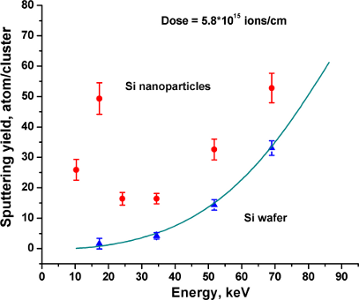
- the nanoparticles are filled by debris, which due to the limited lateral resolution cannot be observed. Such filling of the voids results in densification of the top surface layer. Therefore, as the number of contacts between neighbor nanoparticles increases, consequently, we can expect the weakening





Pull-off and friction forces of micropatterned elastomers on soft substrates: the effects of pattern length scale and stiffness
Beilstein J. Nanotechnol. 2019, 10, 79–94, doi:10.3762/bjnano.10.8
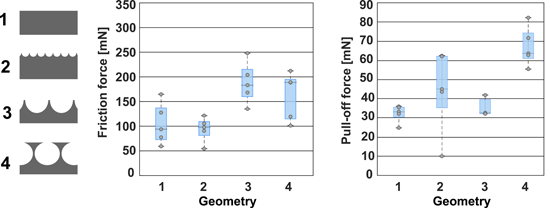
- material is used for the micropattern, the Eeff is low, leading to better defect control, stress distribution, and contact stiffness compared to micropatterns made of stiffer materials [22]. Also, the strength of the contacts formed between the adhesive and the substrate is affected by the material
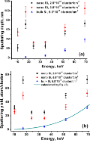
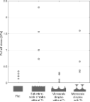
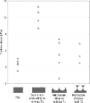
- -microscale and microscale dimples without a terminal layer do not generate significantly higher pull-off forces than flat samples. We assume that, for both dimple sizes, the soft substrate fully conforms to the dimples, and the formation of independent contacts does not happen. Sub-microscale dimples have a





Contact splitting in dry adhesion and friction: reducing the influence of roughness
Beilstein J. Nanotechnol. 2019, 10, 1–8, doi:10.3762/bjnano.10.1
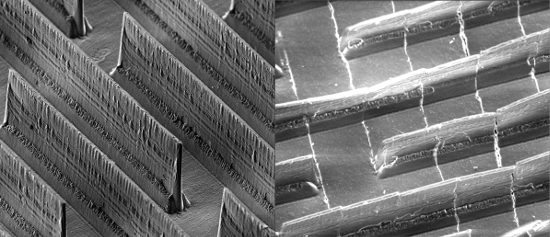
- different boundary conditions. However, it provides a useful example that qualitatively illustrates the effect we may expect to see. Shearing an original and a split flap against an uneven substrate, we may expect that they will form contacts similar to those shown in Figure 4a, with the original flap being


Apparent tunneling barrier height and local work function of atomic arrays
Beilstein J. Nanotechnol. 2018, 9, 3048–3052, doi:10.3762/bjnano.9.283
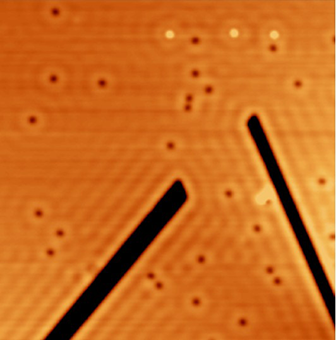
- transport through nanoscale constrictions [32] and was suggested to affect the apparent barrier height in single-atom contacts [33]. Atomistic transport calculations have been performed for Au contacts in [34]. Symmetric junctions comprised of two (001) surfaces, either planar or with an adatom or with a


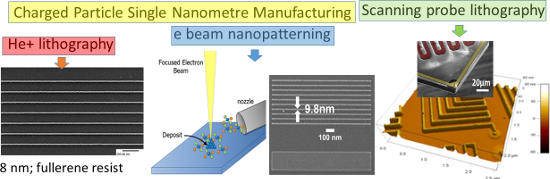
Charged particle single nanometre manufacturing
Beilstein J. Nanotechnol. 2018, 9, 2855–2882, doi:10.3762/bjnano.9.266