


Search results
Search for "cross section" in Full Text gives 525 result(s) in Beilstein Journal of Nanotechnology. Showing first 200.
Design aspects of Bi2Sr2CaCu2O8+δ THz sources: optimization of thermal and radiative properties
Beilstein J. Nanotechnol. 2021, 12, 1392–1403, doi:10.3762/bjnano.12.103
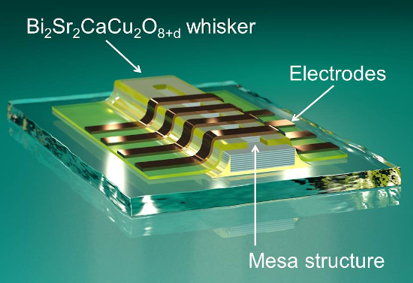
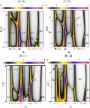
- the mesa volume with a total power of 1 mW and uniform density. Figure 3 represents heat transfer simulations for a whisker without an electrode. Figure 3a,b shows sketches of the device and the x–z cross-section through the mesa (not to scale), respectively. Figure 3c–e shows the temperature
- distribution for the case when the sample is placed in vacuum. Figure 3c shows the top view, Figure 3d the x–z cross section through the mesa (stretched by a factor of three in the vertical direction), and Figure 3e shows the temperature distribution in the mesa (stretched by a factor of 50 in the vertical
- -based device without electrodes. (a) A sketch of the device and (b) a cross section through the mesa (not to scale). (c–e) Calculated temperature distribution for the device in vacuum. (f–h) The same for the device in exchange He gas. Heat transport in a whisker-based device with an electrode. (a) A


Plasmon-enhanced photoluminescence from TiO2 and TeO2 thin films doped by Eu3+ for optoelectronic applications
Beilstein J. Nanotechnol. 2021, 12, 1271–1278, doi:10.3762/bjnano.12.94
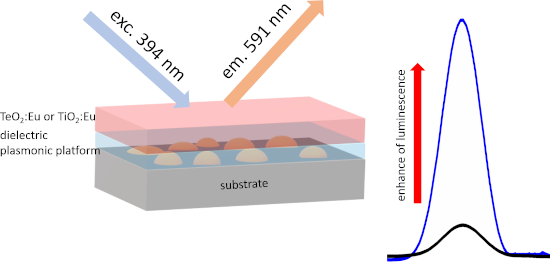
- examined by SEM and TEM. The SEM image presented in Figure 2a shows a good uniformity of the prepared Au nanostructures. Nanoislands cover the whole substrate surface. Additionally, the HRTEM image of a cross section of a single nanoisland is shown in Figure 2b [25][26]. It can be seen, that the
- prepared structures. (a) SEM image of gold plasmonic platform, (b) HRTEM image of the cross section of a single gold nanoisland [25]. Figure 2a,b was reproduced from [25] (© 2019 M. Łapiński et al., published by Springer Nature, distributed under the terms of the Creative Commons Attribution 4.0


Irradiation-driven molecular dynamics simulation of the FEBID process for Pt(PF3)4
Beilstein J. Nanotechnol. 2021, 12, 1151–1172, doi:10.3762/bjnano.12.86
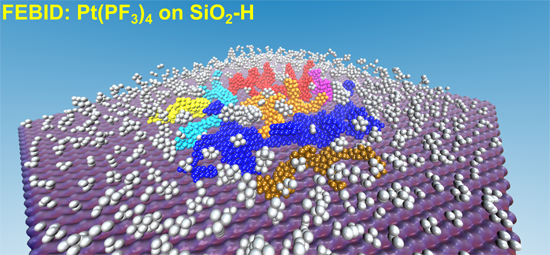
- electron irradiation field, the fragmentation cross section, as well as the energy deposited into the system during the fragmentation process are specified. The initial state of the adsorbed molecules to be exposed to electron-beam irradiation is created in step 3. This follows by the multiple cycling of
- distribution of secondary (SE) and backscattered (BSE) electrons produced due to the collision of the PE beam with the substrate. The convolution of the SE and BSE flux density with the fragmentation cross section of the precursor molecule determines the fragmentation probability of precursors at any space
- consider a cylindrical PE beam with a radius of 5 nm and energy of 10 keV. The number of generated electrons (that is the sum of SE and BSE contributions) of specific energy per primary electron [15] is shown in Figure 3A by the solid red line. The dashed line shows the Pt(PF3)4 fragmentation cross section








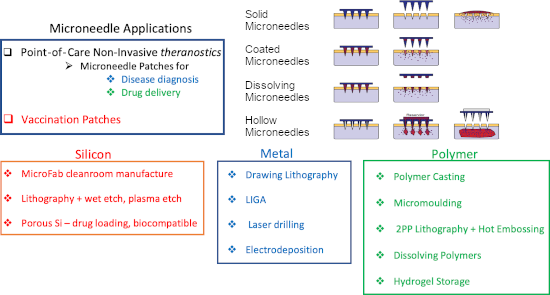
An overview of microneedle applications, materials, and fabrication methods
Beilstein J. Nanotechnol. 2021, 12, 1034–1046, doi:10.3762/bjnano.12.77
- by GCoS. (a) Overview, (b) microneedle outlet and shank, (c) inlet with microchannels, (d) outlet with microchannels, (e,f) cross-section of microchannels with two and five cavities. (g) A coronal brain cross-section micrograph with the infusion of a dye at the posterior nucleus, (h) a horizontal
- cross-section of brain displaying cells (Hoechst staining), astrocytes (GFAP staining), and neurons (cresyl violet staining) at the insertion location of the microneedle [66]. Figure 3a–h were reprinted from [66], Sensors and Actuators B, Chemical, vol. 209, by Lee, H. J.; Son, Y.; Kim, D.; Kim, Y. K


Is the Ne operation of the helium ion microscope suitable for electron backscatter diffraction sample preparation?
Beilstein J. Nanotechnol. 2021, 12, 965–983, doi:10.3762/bjnano.12.73



Self-assembly of Eucalyptus gunnii wax tubules and pure ß-diketone on HOPG and glass
Beilstein J. Nanotechnol. 2021, 12, 939–949, doi:10.3762/bjnano.12.70
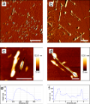
- amplitude data of AFM measurements were processed and analyzed with JPK data processing software (version 4.2.62). The height of the tubules and the thickness of the layers were investigated using the cross section function of the processing software. The tubule height was calculated by averaging the height
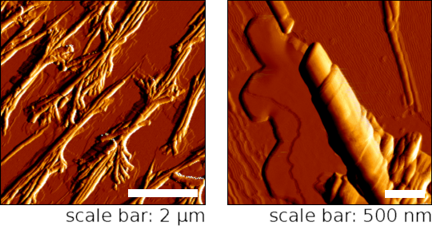
- substrate. AFM image of recrystallized wax tubules from a wax solution on glass. (a) Top view of vertically growing tubules 22 h and 39 min after application. (b) Cross section of tubule 1 and 2 and (c) cross sections of tubule 3 and 4 seen in (a). Scale bar: 500 nm. Diagram of height increase of vertically




Modification of a SERS-active Ag surface to promote adsorption of charged analytes: effect of Cu2+ ions
Beilstein J. Nanotechnol. 2021, 12, 902–912, doi:10.3762/bjnano.12.67
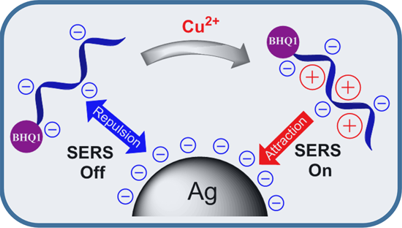
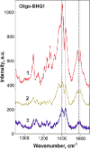
- introduces new states in the electronic structure of the metal–adsorbate complex leading to an increase in the Raman scattering cross section of the analyte [17]. Consequently, the CE mechanism should be accompanied by a change of spectral properties of the analyte, which was not observed in this study. Thus


9.1% efficient zinc oxide/silicon solar cells on a 50 μm thick Si absorber
Beilstein J. Nanotechnol. 2021, 12, 766–774, doi:10.3762/bjnano.12.60
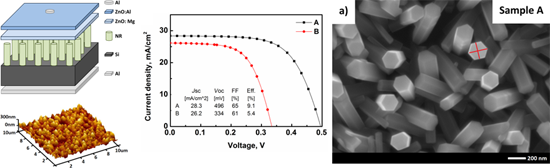
- . Schematic images of final PV structures studied in this work: (a) SC with ZnONR, (b) planar SC. Scanning electron microscopy images of zinc oxide nanorods on the silicon surface: (a) top view, (b) cross section. SEM images of ZnO/Si solar cells: (a) modified with nanorods, (b) planar. Surface morphology of


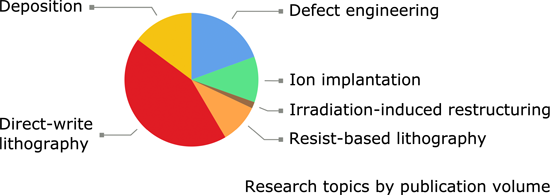
A review of defect engineering, ion implantation, and nanofabrication using the helium ion microscope
Beilstein J. Nanotechnol. 2021, 12, 633–664, doi:10.3762/bjnano.12.52


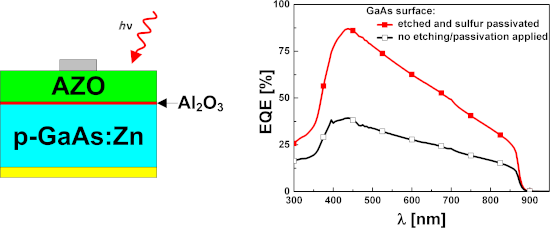
Impact of GaAs(100) surface preparation on EQE of AZO/Al2O3/p-GaAs photovoltaic structures
Beilstein J. Nanotechnol. 2021, 12, 578–592, doi:10.3762/bjnano.12.48
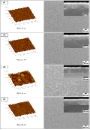
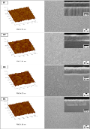
- performed with 2 kV Ar+ ions. Results and Discussion Examination of the devices by SEM and AFM Figure 3 and Figure 4 present AFM images of the surface of the devices (left side), top-view SEM images (right side), and SEM cross-section images (inset on the right) of the analyzed samples from the A series and
- exhibited even interfaces as shown in the cross-section images. In contrast, the highest RMS values were found in the samples etched with HCl-based solution. Additionally, the interfaces in these samples were very uneven. There is no explicit correlation between the use of sulfur passivation and the




Properties of graphene deposited on GaN nanowires: influence of nanowire roughness, self-induced nanogating and defects
Beilstein J. Nanotechnol. 2021, 12, 566–577, doi:10.3762/bjnano.12.47
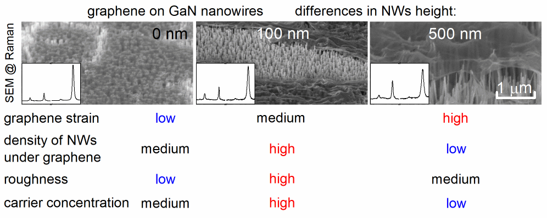
- containing graphene on nanowires have been used in solar cells to increase their efficiency. In particular, it has been shown that the application of nanowires in solar cells decreases light reflection by scattering of light in between nanowires [7][8]. Nanowires have also a high cross-section of light




Simulation of gas sensing with a triboelectric nanogenerator
Beilstein J. Nanotechnol. 2021, 12, 507–516, doi:10.3762/bjnano.12.41
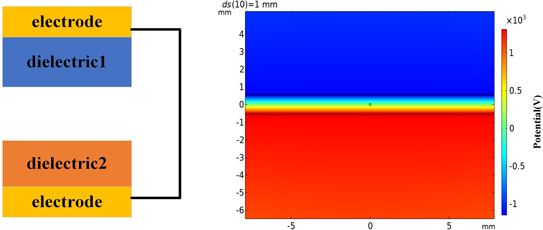
- applied for gas sensing without external power supply. In this paper, a two-dimensional model of a TENG was established, and a gas jet a rectangular cross section was added between two triboelectric materials. The TENG could generate distinguishable electrical signals according to the different types of
- self-powered gas sensors. In this paper, in order to explore the sensing of different gases by TENGs, a gas jet of rectangular cross section was added to the two-dimensional model of a TENG. The TENG generates electrical signals depending on the type of gas and the cross section of the gas injection
- TENGs were carried out in this paper. In order to investigate the sensing of different gases with sensors based on these TENGs, an injected gas jet with rectangular cross section was added to the two-dimensional model of the TENG. The size of the gas jet influences the potential of the TENG. However



Spontaneous shape transition of MnxGe1−x islands to long nanowires
Beilstein J. Nanotechnol. 2021, 12, 366–374, doi:10.3762/bjnano.12.30
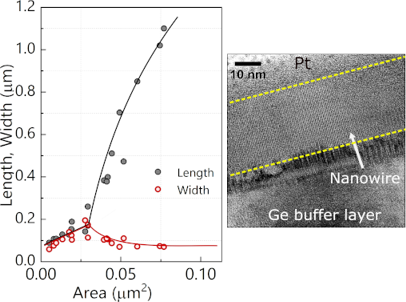
- increases proportionally). We conclude that the NW composition is homogeneous throughout the total volume of the NW from the elemental map recorded on a cross-section of a NW of the same sample showing uniform distribution of Ge and Mn in the whole NW volume (Figure 5). Here, the Mn signal appears stronger
- seeds would have induced a Mn gradient with a higher concentration close to the Mn droplet, which in our case was not detected [7][30][31]. Second, the width of the NWs is remarkably constant with a very narrow size distribution. In addition, a cross-section HRTEM image along the [110] zone axis (Figure
- , obtained by deposition of a 4.5 ML thick Mn film followed by annealing at 650 °C for 15 min. (b) Mn and Ge EDX line profiles along the yellow line drawn in (a). EDX elemental map (Kα line), carried out on a cross-section of a NW on the surface of the 4.5 ML thick Mn film showing the distribution of Mn, Ge


Structural and optical characteristics determined by the sputtering deposition conditions of oxide thin films
Beilstein J. Nanotechnol. 2021, 12, 354–365, doi:10.3762/bjnano.12.29
- ). The system is equipped with an X-ray source and an EDX unit with elementary energy dispersion spectroscopy (EDS). These analyses employ different magnifications depending on the quality of the thin films and the structure of their surface. Using cross-section imaging and a magnification of 20000×, it
- was possible to gain information related to the thickness of our samples. The high-resolution elementary microanalysis of the cross section perpendicular to the surface of the thin films was performed in manual mode, where the adjustment device allowed the manual setting of the tilt angle from −90° to
- +90°. Therefore, the dynamic focusing with tilt angle was successfully used. The thickness was measured by the cross-section technique of the SEM analysis, with a margin of error of ±5% (2–5 nm) compared to a standard 100 nm thick sample. Optical transmission spectra were acquired using a UV–vis–NIR


Mapping the local dielectric constant of a biological nanostructured system
Beilstein J. Nanotechnol. 2021, 12, 139–150, doi:10.3762/bjnano.12.11
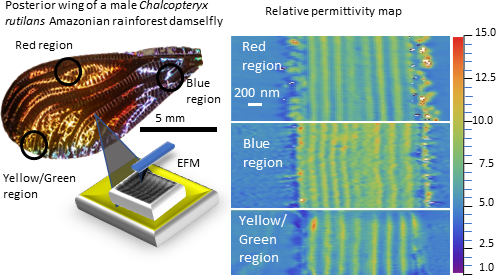
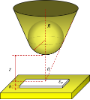
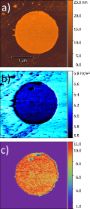
- work is to determine the varying dielectric constant of a biological nanostructured system via electrostatic force microscopy (EFM) and to show how this method is useful to study natural photonic crystals. We mapped the dielectric constant of the cross section of the posterior wing of the damselfly
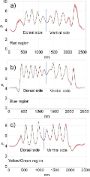
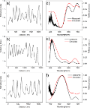
- wings appear as the external discontinuous regions of the multilayered structure. The number of nanolayers and their thickness values change from one color region to another. The ventral and dorsal sides shown in Figure 1 can be seen in cross section in the images of Figure 6, where the ventral side is
- about (210 ± 10) nm wide, matching the reddish color of the whole ventral side of the wing, as seen in Figure 1b. Figure 7 shows the average value of the relativity permittivity, for each region, along the cross section of the wing (the area between the vertical white dashed lines in the figure). The




A review on the green and sustainable synthesis of silver nanoparticles and one-dimensional silver nanostructures
Beilstein J. Nanotechnol. 2021, 12, 102–136, doi:10.3762/bjnano.12.9
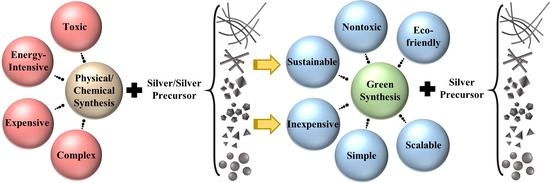
- –gel technique at 100 °C and produced particles with an average diameter of 25 nm with hexagonal cross section. In the sol–gel process, besides temperature and gel composition, the solvent plays an important role in determining the size, morphology, and surface characteristics of the synthesized AgNPs


Bulk chemical composition contrast from attractive forces in AFM force spectroscopy
Beilstein J. Nanotechnol. 2021, 12, 58–71, doi:10.3762/bjnano.12.5
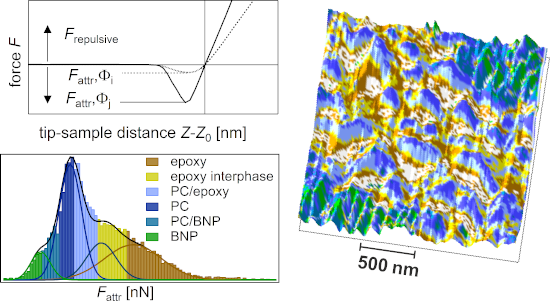
- analysis (mPCA) from a kr/Fattr diagram. A third sample comprised of (3) epoxy/polycarbonate/boehmite is measured by ImAFM. The measurement of a 2 × 2 µm cross section yields 128 × 128 force curves which are successfully evaluated by a kr/Fattr diagram and the nanoscopic heterogeneity of the sample is
- , therefore, a mixed behavior. This is supported by the corresponding mixed mechanical behavior, as seen in the kr/Fattr diagram (Figure 4d, top right). It has to be taken into account that the topography only shows a cross section of a three-dimensional structured composite and PC spherulites might extend
- and an inorganic phase and is described in detail by Khorasani and coworkers [16]. A layer of boehmite is sandwiched between epoxy layers, as seen in Figure 5a–c which shows the cross section of the three layers. The layers were built from left to right, which means that the left-side epoxy was cured


Bio-imaging with the helium-ion microscope: A review
Beilstein J. Nanotechnol. 2021, 12, 1–23, doi:10.3762/bjnano.12.1


Kondo effects in small-bandgap carbon nanotube quantum dots
Beilstein J. Nanotechnol. 2020, 11, 1873–1890, doi:10.3762/bjnano.11.169
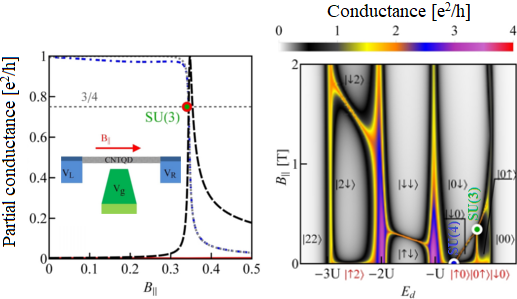
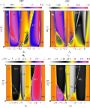
- presents the field dependence of the partial conductance along the cross section through the SU(3) Kondo state (SU1(3)) with fluctuating states |h−1+⟩, |e1−⟩, and |e−1−⟩. Figure 11b shows the field dependencies of the conductance through the SU(3) Kondo state (SU2(3)) involving the states |h1+⟩, |h−1
- vertical lines. (c) Partial-conductance values of the dot CNTQD(24,21) strongly coupled to the leads for B|| = 0. (d) Conductance values for fixed values of the gate voltage (cross section through the SU(3) point specified by the dotted black line, Γ = 0.03 meV). Maps of the total conductance values with



![[Graphic 37]](/bjnano/content/inline/2190-4286-11-169-i52.svg?max-width=637&scale=1.18182) as a functio...
as a functio...


Towards 3D self-assembled rolled multiwall carbon nanotube structures by spontaneous peel off
Beilstein J. Nanotechnol. 2020, 11, 1865–1872, doi:10.3762/bjnano.11.168
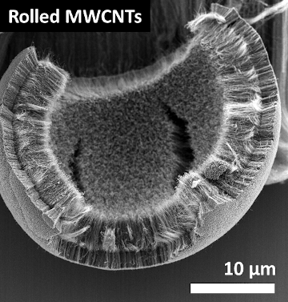
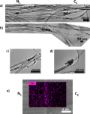
- same cross section, unambiguously assign a given morphology to a given structure in a confirmed root-growth mechanism, since the sample can be kept on a substrate [16]. TEM characterization is more challenging since the information regarding the relative position of the different sections is lost
- clarity, cross section images of MWCNT forests were obtained by simply cleaving the silicon wafer after MWCNT growth, in order to expose the inside of the MWCNT forests for both Raman and SEM. This was simply achieved by applying mechanical pressure on the edge of the silicon wafer. EDS mapping and



Nanomechanics of few-layer materials: do individual layers slide upon folding?
Beilstein J. Nanotechnol. 2020, 11, 1801–1808, doi:10.3762/bjnano.11.162
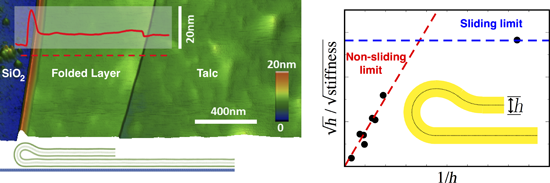
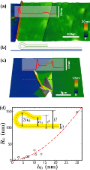
- deposited on a substrate exhibits a cross-section geometry similar to that indicated in Figure 1 (see, for instance, Wang et al. [12] for electron microscopy images). Figure 1a shows an AFM image of a talc flake (green shades) with a thickness of approximately 2.4 nm (corresponding to two layers), which was
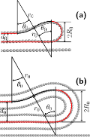
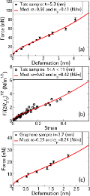
- curve R0 = ahb, where b = 1.75 and a = 0.38 (m−3/4). To obtain κ and α from the AFM data, we propose a variational continuum model (see Supporting Information File 1, section “Deposited folded edges”) for the folded edges with the geometry depicted in Figure 2. This figure shows both cross-section

![[Graphic 5]](/bjnano/content/inline/2190-4286-11-162-i8.svg?max-width=637&scale=1.18182) =
= ![[Graphic 6]](/bjnano/content/inline/2190-4286-11-162-i9.svg?max-width=637&scale=1.18182) as a function of 1/h for the nine measured talc samples. h is a directly measured ...
as a function of 1/h for the nine measured talc samples. h is a directly measured ...
Electron beam-induced deposition of platinum from Pt(CO)2Cl2 and Pt(CO)2Br2
Beilstein J. Nanotechnol. 2020, 11, 1789–1800, doi:10.3762/bjnano.11.161
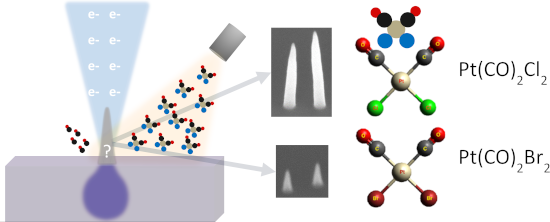
- ][29]. The larger height of the MeCpPtMe3 pillars compared to the Pt(CO)2Cl2 pillars is presumably caused by the higher partial pressure of MeCpPtMe3, but may also be caused by many other factors governing FEBID such as the surface residence time, the dissociation cross section, and surface diffusion


Mapping of integrated PIN diodes with a 3D architecture by scanning microwave impedance microscopy and dynamic spectroscopy
Beilstein J. Nanotechnol. 2020, 11, 1764–1775, doi:10.3762/bjnano.11.159
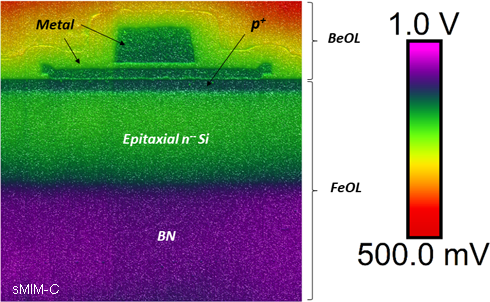
- BEOL steps were accomplished. The SPM electrical measurements were performed in the cross section of the chip at the wafer level. In order to enable a stable and constant nanoscale contact between the sensor tip and the sample, a surface with a low roughness is required. For this purpose, the sample
- was hand-polished down to a roughness of a few nanometres with diamond-based lapping films with decreasing granularity. In the following section, the local electrical properties of all layers in the cross section of the PIN diode are analysed. In order to evaluate the impact of the applied VDC bias
- , an electrical back contact is created between the microscope chuck and the sample. Results and Discussion The vertical PIN structure Figure 2 shows the surface topography of the cross section of the PIN diode. The different materials used (silicon substrate, epitaxial layers, oxides, and alloy metals


Application of contact-resonance AFM methods to polymer samples
Beilstein J. Nanotechnol. 2020, 11, 1714–1727, doi:10.3762/bjnano.11.154
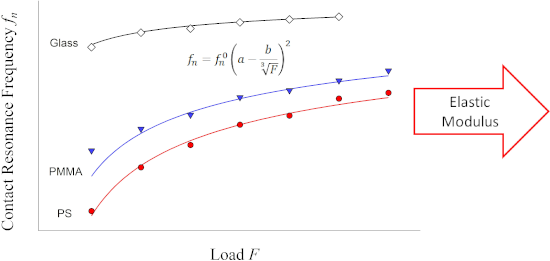
- (CR-AFM) is to get information on the stiffness of a sample via its vibrations and, in particular, through its contact-resonance frequency (CR frequency). In the following, the cantilever is modeled as a rectangular, elastically isotropic beam of uniform cross section with length L, width w, thickness
- measurements and calculated through mode crossing are not the same [10][26]. Differences are ascribed to deviations of the cantilever shape from the idealized model shape (uniform rectangular cross section). The measurements analyzed in the present work show varying γ values for the same cantilever. For
- determined on compliant polymer samples are often very different from those on stiff samples, such as glass or silicon. This is probably due to the use of very simple models: (1) The cantilever is modelled as an elastically isotropic beam of uniform cross section and the tip mass is neglected [8][26]. (2


Seebeck coefficient of silicon nanowire forests doped by thermal diffusion
Beilstein J. Nanotechnol. 2020, 11, 1707–1713, doi:10.3762/bjnano.11.153
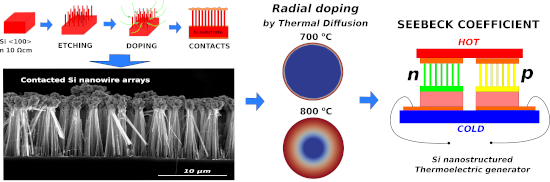
- ) ν, where ν is the ratio between the total cross-section surface of the nanowires and the surface of the sample. From the plot, a value of kt = 4.2 ± 0.4 results for the samples doped at 800 °C. For the estimation of the filling factor, several SEM images have been taken of different locations of
- diffusion in nanowires with a diameter of 80 nm and length of several micrometers. The simulations were carried out solving the 2D diffusion equation = −DP∇ND(x,y,t) in the circular cross section of a typical nanowire, where ND(x,y,t) is the doping concentration as a function of the position and of the
- the result of the simulation of the doping process. Hence, the Seebeck coefficient depends on the position in the nanowire. That is, S = S(n(x,y)), where (x,y) is a generic point in the cross section. Also the electrical conductivity depends on doping, that is, σ(x,y) = σ(n(x,y)) It has been estimated





