


Search results
Search for "dynamic light scattering" in Full Text gives 231 result(s) in Beilstein Journal of Nanotechnology. Showing first 200.
Synthesis and potent cytotoxic activity of a novel diosgenin derivative and its phytosomes against lung cancer cells
Beilstein J. Nanotechnol. 2019, 10, 1933–1942, doi:10.3762/bjnano.10.189
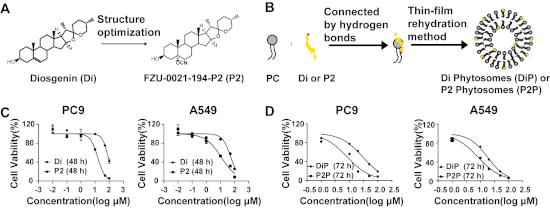
- , Di phytosomes (DiP) and P2 phytosomes (P2P) were prepared by a thin-film rehydration method (Figure 3A). Blank lipid nanoparticles without drugs (P) were also prepared with the same process. Particle size and zeta potential of the phytosomes were measured by dynamic light scattering (DLS). The



Preservation of rutin nanosuspensions without the use of preservatives
Beilstein J. Nanotechnol. 2019, 10, 1902–1913, doi:10.3762/bjnano.10.185
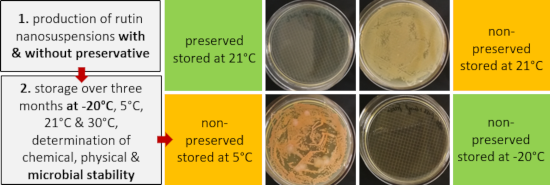
- over a period of three months of samples under all storage conditions. Increases in d(v) values, z-average, and polydispersity index (PdI) over time indicated instability. The laser diffractometry (LD) data and the dynamic light scattering (DLS) data obtained from this part of the study are shown in
- regarding size by three different and independent methods. The hydrodynamic diameter and the polydispersity (z-average (z-ave) and PdI) were analysed by dynamic light scattering (DLS) with a Zetasizer Nano ZS (Malvern Panalytical GmbH, Germany). As DLS measurements, when used as stand-alone method for the


Engineered superparamagnetic iron oxide nanoparticles (SPIONs) for dual-modality imaging of intracranial glioblastoma via EGFRvIII targeting
Beilstein J. Nanotechnol. 2019, 10, 1860–1872, doi:10.3762/bjnano.10.181
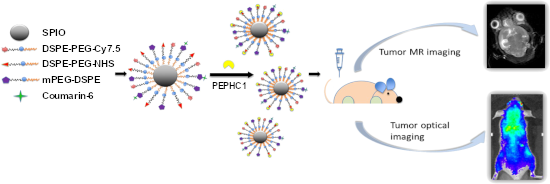
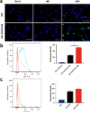
- -SPIONs. (a) TEM images of SPIONs (left) and PEPHC1-conjugated NPs (right). (b) Dynamic light scattering (DLS) profile of NPs (before PEPHC1 conjugation) and PNPs (after PEPHC1 conjugation). (c) Hydrodynamic diameter of NPs and PNPs measured by DLS in water. (d) Zeta potential of NPs and PNPs. T2-weighted




Microfluidic manufacturing of different niosomes nanoparticles for curcumin encapsulation: Physical characteristics, encapsulation efficacy, and drug release
Beilstein J. Nanotechnol. 2019, 10, 1826–1832, doi:10.3762/bjnano.10.177
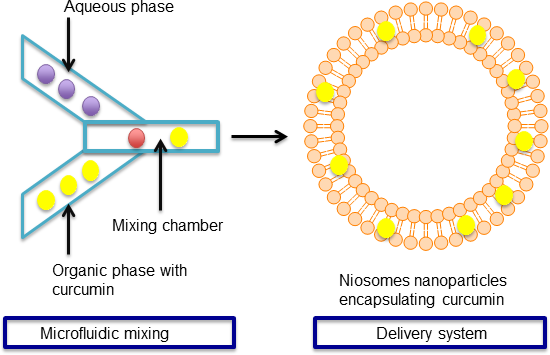
- average particle size (ZAverage) and the PDI of the niosomes with and without the curcumin was measured by dynamic light scattering (DLS) using a Zetasizer Nano-ZS (Malvern Instruments Ltd., UK). All the samples were diluted at 1/20 using deionised water and the measurements in triplicate were taken at 25


Toxicity and safety study of silver and gold nanoparticles functionalized with cysteine and glutathione
Beilstein J. Nanotechnol. 2019, 10, 1802–1817, doi:10.3762/bjnano.10.175
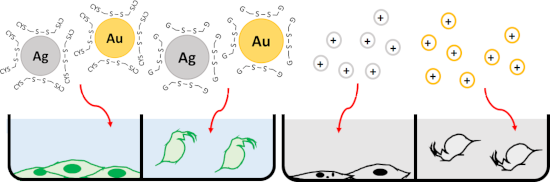
- Supporting Information File 1. The particles were deemed unstable if they fully precipitated after synthesis and could not be redispersed, otherwise they were noted as stable. After each synthesis, the careful characterization of stable NPs was performed by dynamic light scattering (DLS), electrophoretic
- . The obtained NPs were carefully characterized by means of size distribution and surface charge employing dynamic light scattering (DLS) and electrophoretic light scattering (ELS) methods. The visualization of the NPs was performed using TEM. The most stable AuNPs and AgNPs with similar physico


Development of a new hybrid approach combining AFM and SEM for the nanoparticle dimensional metrology
Beilstein J. Nanotechnol. 2019, 10, 1523–1536, doi:10.3762/bjnano.10.150
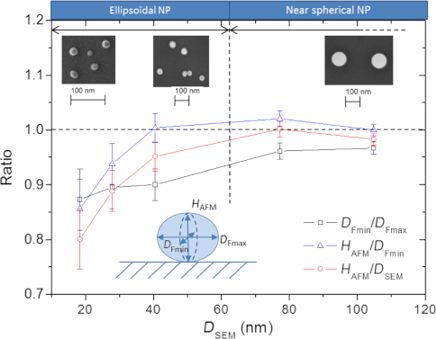
- NP dimensional measurement and the meter definition in the international system (SI) of units [1]. The involved measurand is then a geometrical size. Unlike microscopy-based techniques, all other NP sizing techniques, for instance, dynamic light scattering, centrifugal liquid sedimentation, and
- ) and 84 nm with a 2.1 nm uncertainty (k = 2) for a second size class (called size class B) [15]. Concerning ERM-FD304, the certification only covers dynamic light scattering and centrifugal liquid sedimentation as measuring methods. It also gives an indicative value for microscopy-based techniques (SEM


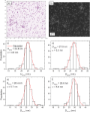
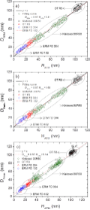

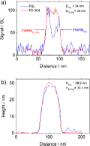

Scavenging of reactive oxygen species by phenolic compound-modified maghemite nanoparticles
Beilstein J. Nanotechnol. 2019, 10, 1073–1088, doi:10.3762/bjnano.10.108
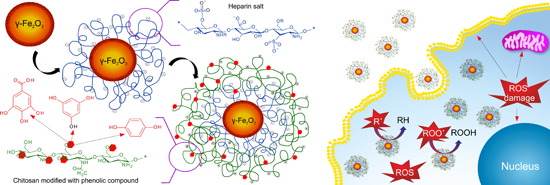
- ), to yield γ-Fe2O3@Hep-CS-G, γ-Fe2O3@Hep-CS-H, and γ-Fe2O3@Hep-CS-P particles, respectively. Surface modification of the particles was analyzed by transmission electron microscopy, dynamic light scattering, attenuated total reflection Fourier transform infrared spectroscopy, and thermogravimetric
- ) was used to analyze the morphology of the particles. Number-average (Dn) and weight-average diameter (Dw) and dispersity (Ð = Dw/Dn) were calculated from at least 500 particles using Atlas software (Tescan; Brno, Czech Republic), as described previously [40]. Dynamic light scattering (DLS





Tailoring the stability/aggregation of one-dimensional TiO2(B)/titanate nanowires using surfactants
Beilstein J. Nanotechnol. 2019, 10, 1024–1037, doi:10.3762/bjnano.10.103
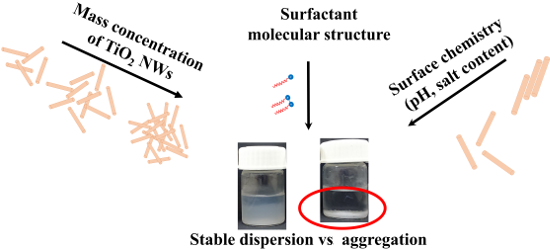
- affected neither the dh nor the zeta potential. Effect of 12-2-12 concentration: The results obtained by dynamic light scattering (DLS) and electrophoretic light scattering (ELS) after 24 h are represented in Figure 4a,b. In Supporting Information File 1, the visual inspection results (Figure S7) as well


The systemic effect of PEG-nGO-induced oxidative stress in vivo in a rodent model
Beilstein J. Nanotechnol. 2019, 10, 901–911, doi:10.3762/bjnano.10.91
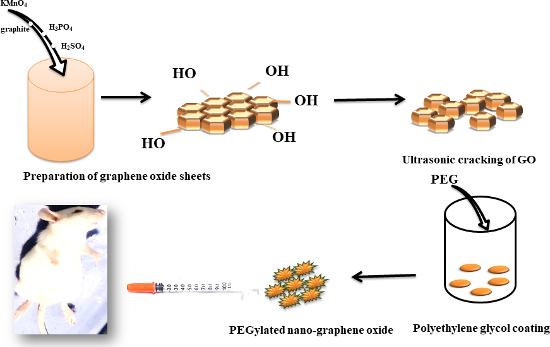
- polyethylene glycol (PEG). PEGylation of nGO was confirmed by Fourier-transform infrared spectroscopy (FTIR), UV spectroscopy and TEM. The average size distribution of nGO and PEG-nGO was determined by using dynamic light scattering (DLS). Subsequently, an in vivo study measuring a marker for oxidative stress
- covering of PEG is clearly seen around nGO (Figure 4). Dynamic light scattering The average particle size distributions of nGO and PEG-nGO were determined by dynamic light scattering (Malvern Panalytical ZS90, Figure 5). The intensive peaks were recorded at 178.5 ± 73.01 nm and 204 ± 82.74 nm, indicating
- (JEOL JEM-1400 Plus) was used to examine the morphology of GO, nGO, and PEG-nGO. The average particle size distribution of nGO and PEG-nGO were analyzed by dynamic light scattering (Malvern Panalytical ZS90). In vivo treatment Female albino mice were kept at the facility of King Saud University Research


Polydopamine-coated Au nanorods for targeted fluorescent cell imaging and photothermal therapy
Beilstein J. Nanotechnol. 2019, 10, 794–803, doi:10.3762/bjnano.10.79
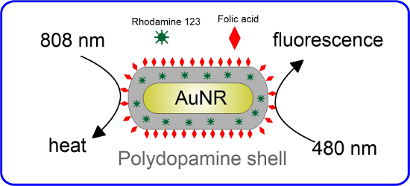
- -folate nanocomposites. Supporting Information S1. Calculation of the AuNR concentration; S2. Calibration curve for determination of rhodamine 123 concentration; S3. Dynamic light scattering study of nanocomposites at different pH values. Supporting Information File 168: Additional experimental data


Ceria/polymer nanocontainers for high-performance encapsulation of fluorophores
Beilstein J. Nanotechnol. 2019, 10, 522–530, doi:10.3762/bjnano.10.53
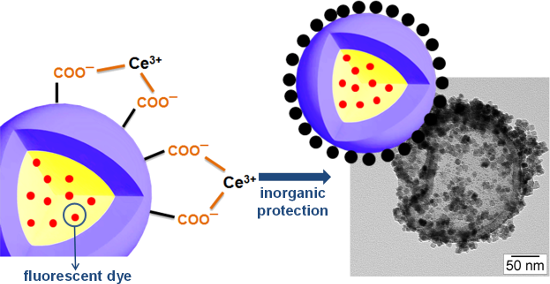
- oxide formation. The loaded samples were freeze-dried for subsequent characterizations. Characterization of the materials Particle sizes of the prepared nanocapsules were determined by dynamic light scattering (DLS) using a Nicomp 380 PSS particle sizer (Santa Barbara, CA) at a fixed angle of 90°. Table


pH-mediated control over the mesostructure of ordered mesoporous materials templated by polyion complex micelles
Beilstein J. Nanotechnol. 2019, 10, 144–156, doi:10.3762/bjnano.10.14
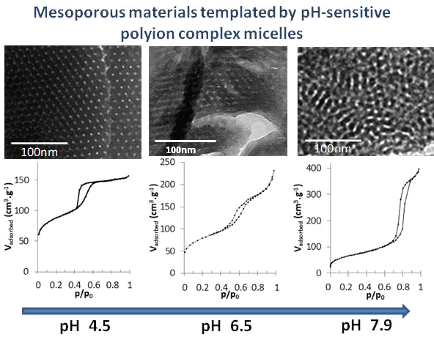
- for 8 hours. Characterization techniques The formation of polyion complex (PIC) micelles as a function of pH (3 < pH < 10) was studied by dynamic light scattering (DLS) experiments at 25 ± 1°C using a Malvern 4800 spectrogoniometer (Malvern Instruments, UK) equipped with a 50 mW laser operating at 532


Surface plasmon resonance enhancement of photoluminescence intensity and bioimaging application of gold nanorod@CdSe/ZnS quantum dots
Beilstein J. Nanotechnol. 2019, 10, 22–31, doi:10.3762/bjnano.10.3
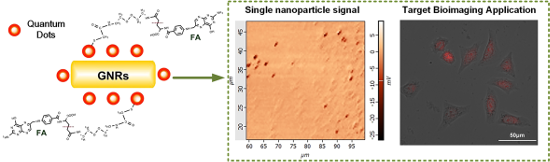
- contributed to an enhanced lifetime. To make this multifunctional nanomaterial more biocompatible and specific to the cancer cell, we conjugated the FA with GNR@CdSe/ZnS nanoparticles. Firstly, we performed a colloidal stability study in which their hydrodynamic sizes were monitored using the dynamic light
- scattering technique at room temperature. The results shown in Figure 7 indicated relatively stable conditions of GNR@CdSe/ZnS@FA formulations when the pH values were 4, 7, and 9, and that the samples were relatively stable in the alkaline environment. The size of GNR@CdSe/ZnS@FA did not show significant


Characterization and influence of hydroxyapatite nanopowders on living cells
Beilstein J. Nanotechnol. 2018, 9, 3079–3094, doi:10.3762/bjnano.9.286
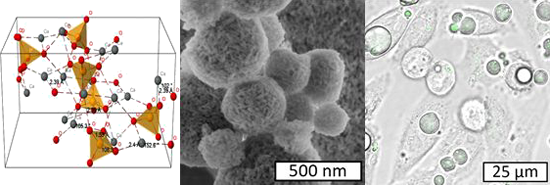
- and co-workers [38]. Based on the obtained dimensions, the aspect ratio in three dimensions (3D AR, see Figure 1) was calculated and used for particle-shape evaluation. For a spherical shape, the value of 3D AR approaches 1. A higher value represents a more elongated shape. Dynamic light scattering
- The average size of HAp nanoobjects in water (L), pH value and zeta potential (ζ) of particles were determined by using dynamic light scattering (DLS, Malvern Instruments Zetasizer Ltd, Spectris). Samples were prepared in 0.02% water solutions with addition of 0.1% Pluronic (used in cell assays, Sigma

![[Graphic 1]](/bjnano/content/inline/2190-4286-9-286-i2.svg?max-width=637&scale=1.18182) .
.



The nanoscaled metal-organic framework ICR-2 as a carrier of porphyrins for photodynamic therapy
Beilstein J. Nanotechnol. 2018, 9, 2960–2967, doi:10.3762/bjnano.9.275
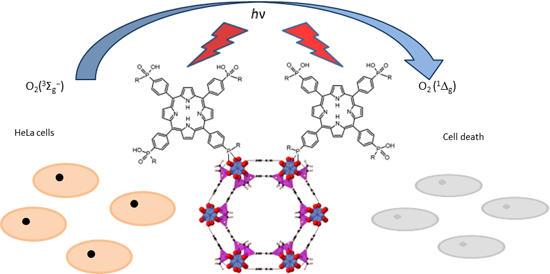
- diffraction measurements (XRD), transmission electron microscopy (TEM), and dynamic light scattering (DLS). The powder XRD pattern depicted in Figure 4 clearly corresponds to the ICR-2 phase [25]. The size of the coherent diffraction domains of 29 nm was calculated from the broadening of the 110 and 020
- dynamic light scattering (DLS, Figure S3A, Supporting Information File 1). In water, nanoICR-2 forms aggregates with a mean value of the size distribution of 87 ± 31 nm (by number, Z-average = 136 nm, PDI = 0.12). The zeta potential of nanoICR-2 in water is slightly positive with an average of 5 ± 5 mV
- Dispersive X-ray (EDX) detector. The particle size distributions and zeta potentials in water were determined by dynamic light scattering (DLS) using a particle size analyser Zetasizer Nano ZS (Malvern, UK). Fluorescence spectra and absolute fluorescence quantum yields, ΦL, were measured using a Quantaurus


Hybrid Au@alendronate nanoparticles as dual chemo-photothermal agent for combined cancer treatment
Beilstein J. Nanotechnol. 2018, 9, 2947–2952, doi:10.3762/bjnano.9.273
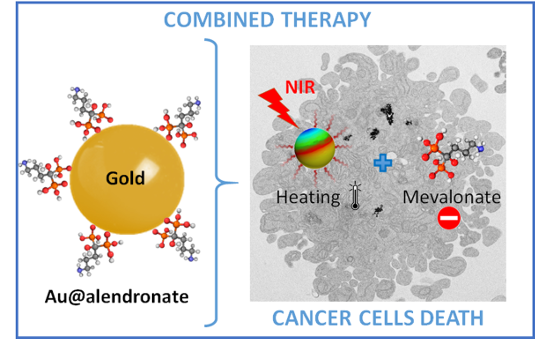
- suggest that alendronate was grafted onto the nanocrystal surface through the phosphonate groups and could be activated for further biocoupling [10]. The excellent coating density led to a good colloidal stability, as confirmed by dynamic light scattering (DLS) measurements at physiological pH values. A


Comparative biological effects of spherical noble metal nanoparticles (Rh, Pd, Ag, Pt, Au) with 4–8 nm diameter
Beilstein J. Nanotechnol. 2018, 9, 2763–2774, doi:10.3762/bjnano.9.258
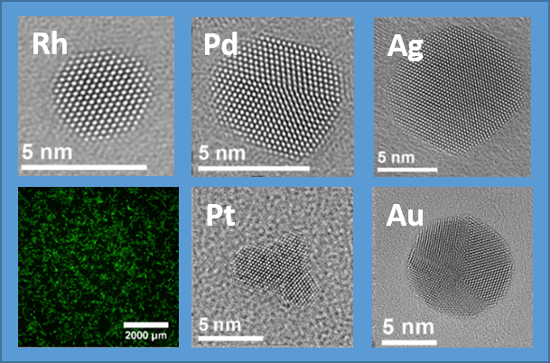
- functionalization were all the same. Size and morphology of the nanoparticles were determined by dynamic light scattering (DLS), analytical disc centrifugation (differential centrifugal sedimentation, DCS), and high-resolution transmission electron microscopy (HRTEM). Cell-biological experiments were performed to
- to each run. A sample volume of 100 μL was used. Dynamic light scattering (DLS) for particle size analysis and zeta potential determination was carried out on a Malvern Zetasizer Nano ZS ZEN 3600 instrument (25 °C, laser wavelength 633 nm). The scattering was monitored at a fixed angle of 173° in
- diameter between 4 and 8 nm by different syntheses that are colloidally stabilized by PVP. Rhodium, palladium, and platinum were reduced with glucose, silver was reduced with NaBH4, and gold was reduced with a mixture of citrate and tannine. The particles were characterized by dynamic light scattering (DLS


Size-selected Fe3O4–Au hybrid nanoparticles for improved magnetism-based theranostics
Beilstein J. Nanotechnol. 2018, 9, 2684–2699, doi:10.3762/bjnano.9.251
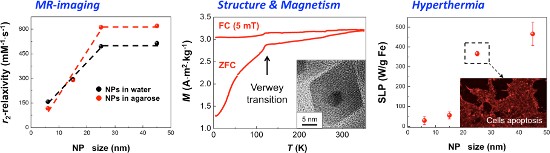
- light scattering data (Table S1, Supporting Information File 1). The ability of magnetite NPs to increase the T2-contrast in MRI arises from the creation of huge magnetic field gradients, accelerating the relaxation rate of water protons in the vicinity of the NPs [56]. The correlation of r2-relaxivity
- crystallite diameter are optimized. Standard magnetometry at various temperatures and fields was measured in a Quantum Design PPMS DynaCool system. For this, about 10 mg of dried powder Fe3O4–Au NPs was put into synthetic capsules. The hydrodynamic size of the NPs in water was measured by dynamic light
- impact on the NP performance in MRI. For this purpose, the NPs were stabilized in water by modification with a biocompatible derivative of polyethylene glycol and phospholipid (DSPE-PEG-COOH). The NPs with a polymer shell have a hydrodynamic diameter ranging from 95 to 160 nm, according to the dynamic


Cytotoxicity of doxorubicin-conjugated poly[N-(2-hydroxypropyl)methacrylamide]-modified γ-Fe2O3 nanoparticles towards human tumor cells
Beilstein J. Nanotechnol. 2018, 9, 2533–2545, doi:10.3762/bjnano.9.236
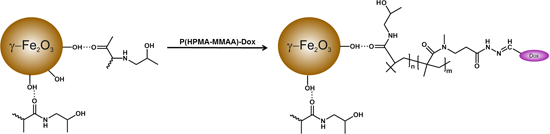
- Republic). Dynamic light scattering (DLS) was measured on a Zetasizer Nano-ZS Model ZEN3600 (Malvern Instruments; Malvern, UK) providing hydrodynamic diameter Dh and polydispersity PI. UV–vis spectra were recorded on a Specord 250 Plus spectrophotometer (Analytic Jena; Jena, Germany). Cytotoxicity studies


Non-agglomerated silicon–organic nanoparticles and their nanocomplexes with oligonucleotides: synthesis and properties
Beilstein J. Nanotechnol. 2018, 9, 2516–2525, doi:10.3762/bjnano.9.234
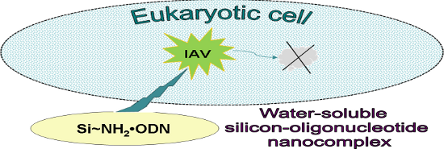
- particle size detected by AFM. Reasonable results on the diameter of the studied particles were obtained by dynamic light scattering (Table 1 and Table 2), which allows measurement of the particle size in solution (without effects of the drying process, which most likely leads to polymerization and


Enhanced antineoplastic/therapeutic efficacy using 5-fluorouracil-loaded calcium phosphate nanoparticles
Beilstein J. Nanotechnol. 2018, 9, 2499–2515, doi:10.3762/bjnano.9.233
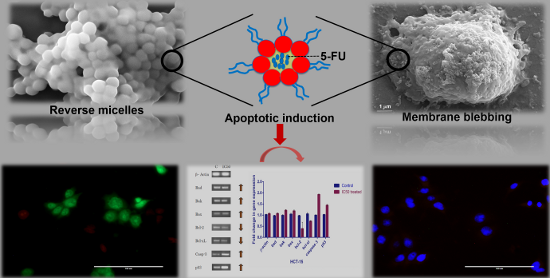
- with an approximate diameter of 160–180 nm was confirmed by different methods. The physicochemical characterization of the synthesized CaP@5-FU NPs was done with transmission electron microscopy (TEM), dynamic light scattering (DLS), field emission scanning electron microscopy (FE-SEM), Fourier
- improves the efficacy of the treatment in real time and reduces the nonspecific toxicity. Particle size determination by dynamic light scattering The diameter of the synthesized CaP@5-FU NPs was analysed with dynamic light scattering and a mean hydrodynamic diameter of 198 ± 33.67 nm was determined (Figure


Nanoconjugates of a calixresorcinarene derivative with methoxy poly(ethylene glycol) fragments for drug encapsulation
Beilstein J. Nanotechnol. 2018, 9, 2057–2070, doi:10.3762/bjnano.9.195
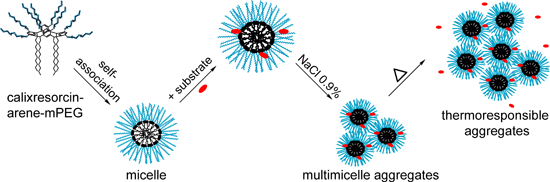
- using dynamic light scattering (DLS) and a the bimodal particle size distribution of 3 was observed in aqueous solution. The detailed DLS data are presented in Table S1, Supporting Information File 1. In Figure 3a the intensity-averaged size distribution is presented. It shows that in the solution are


Controllable one-pot synthesis of uniform colloidal TiO2 particles in a mixed solvent solution for photocatalysis
Beilstein J. Nanotechnol. 2018, 9, 1715–1727, doi:10.3762/bjnano.9.163
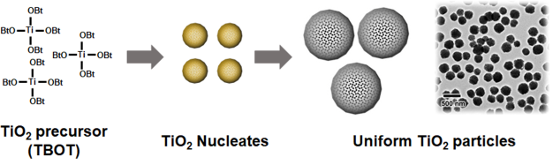
- TiO2, we conducted SEM under low magnification and dynamic light scattering (DLS) analysis. Supporting Information File 1, Figure S2 shows low magnification SEM images and the DLS results of as-synthesized amorphous TiO2 particles which were prepared by using a volume ratio of EtOH/ACN of 3:1, and




Nanocomposites comprised of homogeneously dispersed magnetic iron-oxide nanoparticles and poly(methyl methacrylate)
Beilstein J. Nanotechnol. 2018, 9, 1613–1622, doi:10.3762/bjnano.9.153
- equipped with STARe 9.3 software (Mettler Toledo, OH, USA). The glass-transition temperature of the nanocomposites was determined on a Mettler Toledo DSC1 instrument. Dynamic light scattering (DLS) was used to measure the distribution of the hydrodynamic diameter of the nanoparticle. The room temperature
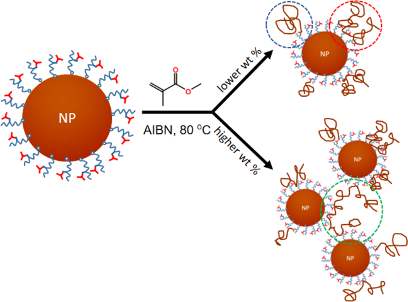
- of the NP-PMMA-3, where the concentration of the NP-MMA was the highest, indicate the relatively high content of the PMMA chains connecting several neighboring nanoparticles. The size of the NP-PMMA-3 nanoparticles and the free PMMA chains were probed using dynamic light scattering (DLS). Two


Closed polymer containers based on phenylboronic esters of resorcinarenes
Beilstein J. Nanotechnol. 2018, 9, 1594–1601, doi:10.3762/bjnano.9.151
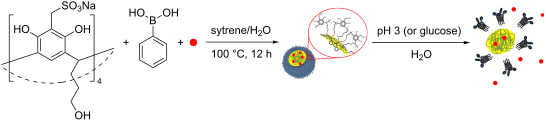
- index (PDI) of 0.23 according to dynamic light scattering (DLS) data (see Supporting Information File 1, Figure S1, Table S1). Hereafter, we studied only the particles formed using this ratio. The nanoparticles were purified by dialysis, washed with acetone and dried to give p(SRA-B) with 66% yield. The





