Search results
Search for "electron beam" in Full Text gives 387 result(s) in Beilstein Journal of Nanotechnology. Showing first 200.
Formation of metal/semiconductor Cu–Si composite nanostructures
Beilstein J. Nanotechnol. 2019, 10, 2497–2504, doi:10.3762/bjnano.10.240
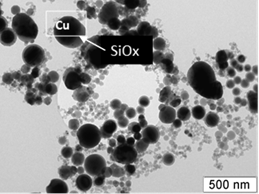
- nanoclusters of various morphologies. Experimental Technique We used an installation based on a relativistic electron accelerator with an energy of 1.4 MeV and a current in the range of 5–25 mA as the heating source (Figure 1) to obtain composite nanoparticles. At the first step, the electron beam from the
- cohesive energy (4.63 eV) than copper (3.54 eV). Experimental results Experimentally obtained Cu–SiOx Janus-like and the Cu@SiOx core–shell composite nanoparticles from evaporating the raw materials with a relativistic electron beam are shown in Figure 6 and Figure 7. The average size was obtained from the
- temperature of the sample in the evaporation chamber under irradiation by a relativistic electron beam. A rough estimate of the cooling rate based on the experimental parameters is 105 K/s, which is significantly less than the modelled value of 1012 K/s. This is most likely due to the strong nonequilibrium of


Label-free highly sensitive probe detection with novel hierarchical SERS substrates fabricated by nanoindentation and chemical reaction methods
Beilstein J. Nanotechnol. 2019, 10, 2483–2496, doi:10.3762/bjnano.10.239
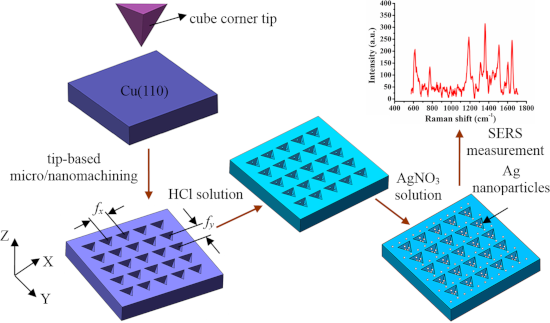
- beam lithography and self-assembly methods to fabricate gold clusters of micrometer size and regular spacing. Subsequently, the detection resolution of 4-acetamidothiophenol was 0.05 g/L using the substrate. Nanoparticle cluster array structures with a size of 40 nm were fabricated by electron beam
- the template-assisted assembly of gold nanospheres with patterned PDMS molds featuring square array geometries with lattice parameters of 400 to 1600 nm and hole diameters of 230 to 960 nm. Then 4-acetamidothiophenol at 10−4 mol/L was detected using this substrate. Domenici et al. [22] used electron


Integration of sharp silicon nitride tips into high-speed SU8 cantilevers in a batch fabrication process
Beilstein J. Nanotechnol. 2019, 10, 2357–2363, doi:10.3762/bjnano.10.226
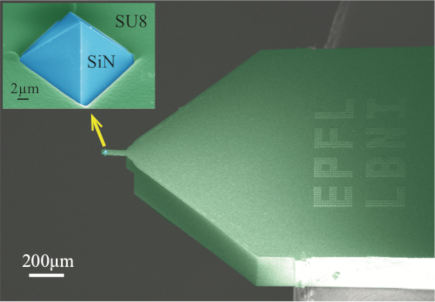
- by low-pressure chemical vapor deposition. Circular openings (20 µm diameter) are then cut into the layer by electron-beam lithography. The LSNT mask is dry-etched before the moulds are structured by anisotropic KOH (40% at 60 °C) etching. The formation of {111} facets results in four-sided pyramidal


Atomic force acoustic microscopy reveals the influence of substrate stiffness and topography on cell behavior
Beilstein J. Nanotechnol. 2019, 10, 2329–2337, doi:10.3762/bjnano.10.223
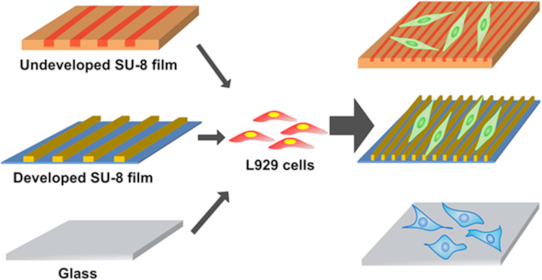
- able to characterize materials at high lateral resolution. To produce substrates of tunable stiffness and topography, we imprint nanostripe patterns on undeveloped and developed SU-8 photoresist films using electron-beam lithography (EBL). Elastic deformations of the substrate surfaces and the cells
- mechanical strength [25][26]. The patterned stiffness of the SU-8 films was induced by electron beam lithography (EBL). The approach to control the stiffness and the topography of the substrate is shown in Figure 1. The rigidity of the film was tuned by varying the electron beam dosage, while the surface
- (Supporting Information File 1, Figure S1), as measured by SEM (FEI Quanta 250 FEG, USA). The SU-8 films were then patterned by EBL using a nanopattern generation system (NPGS, V9.1, from JC Nabity Lithography Systems). The SU-8 films were exposed to the 30 kV electron beam at a beam current of 63 pA and a


The importance of design in nanoarchitectonics: multifractality in MACE silicon nanowires
Beilstein J. Nanotechnol. 2019, 10, 2094–2102, doi:10.3762/bjnano.10.204
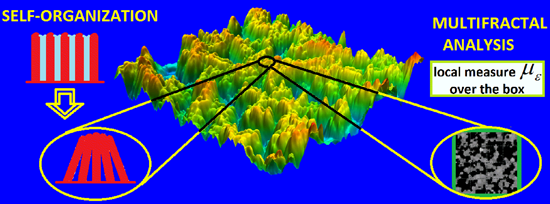
- the cleaned surfaces by electron beam evaporation. These gold films do not coat the substrates uniformly. The uncovered parts of the Si surfaces become the seeds of the NWs in the subsequent etching step. For the etching step, the substrates are immersed in an aqueous solution of HF (5 M) and H2O2
- Si substrate by electron beam evaporation. The conditions during the growth of the gold thin film were similar to the ones during the growth of the samples SiNW1 and SiNW2. The black regions correspond to the uncovered silicon areas, while the white region represents the deposited Au. It is evident




Oblique angle deposition of nickel thin films by high-power impulse magnetron sputtering
Beilstein J. Nanotechnol. 2019, 10, 1914–1921, doi:10.3762/bjnano.10.186
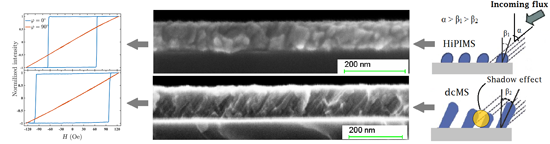
- microscope. The acceleration voltage of the electron beam was set to 20 kV and the working distance was kept at 3.5 mm for all images presented here. Magnetic hysteresis was characterized using a custom-made high-sensitivity magneto-optical Kerr effect (MOKE) looper using a laser source with 632.8 nm
- ) conditions analogous with electron beam and thermal evaporation methods. However, at our working gas pressure the mean free path is around 11 mm which is remarkably shorter than target to substrate distance (250 mm). Besides, Elofsson et al. [55] show that the melting point of the deposited materials impacts


Synthesis of nickel/gallium nanoalloys using a dual-source approach in 1-alkyl-3-methylimidazole ionic liquids
Beilstein J. Nanotechnol. 2019, 10, 1754–1767, doi:10.3762/bjnano.10.171
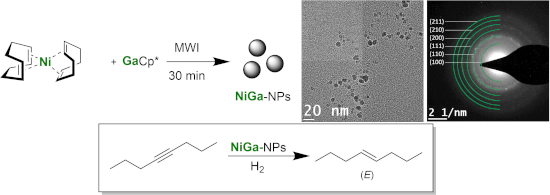
- metal under the energy of the electron beam in the TEM. Thus, the orthorhombic Ga phase probably contains a few percent of metallic nickel. Similarly, Ni(COD)2 and GaCp* were dispersed in equimolar ratio in [BMIm][NTf2] for 12 h prior to the thermal decomposition. Through microwave irradiation at 230 °C




The impact of crystal size and temperature on the adsorption-induced flexibility of the Zr-based metal–organic framework DUT-98
Beilstein J. Nanotechnol. 2019, 10, 1737–1744, doi:10.3762/bjnano.10.169
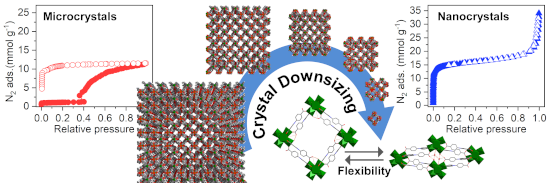
- (Supporting Information File 1, Figure S9). Interestingly, DUT-98(Hf) showed enhanced stability towards the electron beam allowing for detailed microscopic analysis of the nanocrystals and their structure. HRTEM analysis shows uniform pore channels along the rod-shaped nanocrystals with a spacing of the Hf



Stationary beam full-field transmission helium ion microscopy using sub-50 keV He+: Projected images and intensity patterns
Beilstein J. Nanotechnol. 2019, 10, 1648–1657, doi:10.3762/bjnano.10.160
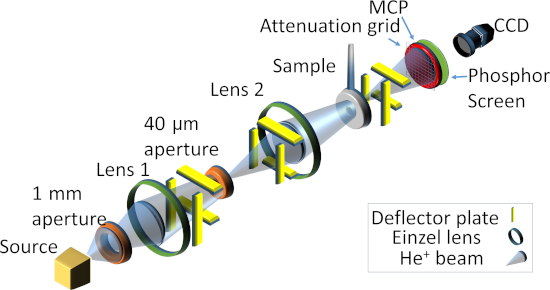
- (MEM), where dark “bubbles” are formed in the image where the sample becomes negatively charged [31]. In MEM, when the electron beam goes through the focus, the contrast in the image can invert and dark bubbles become bright stars. The variation of the deflection pattern to a spot pattern in this


Materials nanoarchitectonics at two-dimensional liquid interfaces
Beilstein J. Nanotechnol. 2019, 10, 1559–1587, doi:10.3762/bjnano.10.153



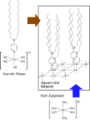

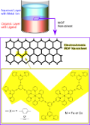

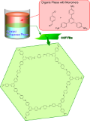


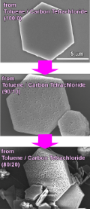






Development of a new hybrid approach combining AFM and SEM for the nanoparticle dimensional metrology
Beilstein J. Nanotechnol. 2019, 10, 1523–1536, doi:10.3762/bjnano.10.150
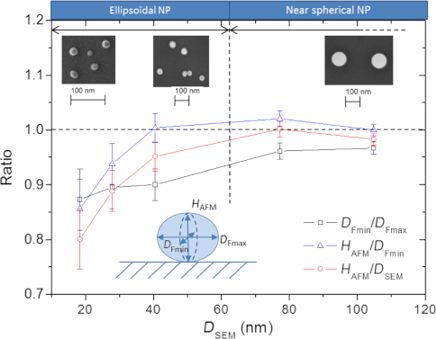
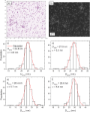
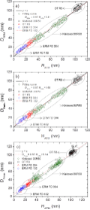
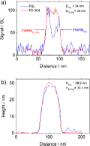
- can be used for an accurate determination of the NP diameter by just measuring their heights because the convolution has no effect on the measurement of the highest point of the NP [1]. In SEM, an electron beam scans the sample and several interactions can occur between the incident electrons and the
- silicon wafers. The technique is based on using a direct-writing system (Raith-Vistec EBPG 5000+ electron-beam lithography system) and PMMA resist. After developing, the mask is transferred using RIE (reactive-ion etching). The P900H60 grating is used as a transfer standard and was calibrated by means of
- both kinds of NP. Moreover, these measurements have been carried out by maintaining the adjustment parameters constant, that is, with the same dimensional properties of the electron beam. Consequently, the difference in behavior observed between AFM and SEM measurements performed on PSL and silica NPs




Rapid thermal annealing for high-quality ITO thin films deposited by radio-frequency magnetron sputtering
Beilstein J. Nanotechnol. 2019, 10, 1511–1522, doi:10.3762/bjnano.10.149
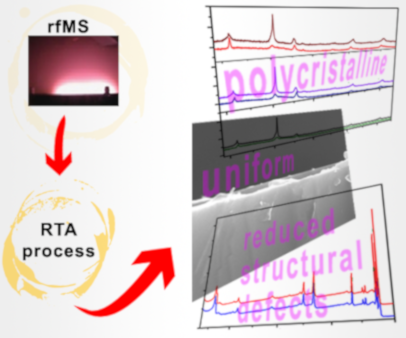
- deposited by rfMS, the thermal treatments show superior performance in terms of the optical properties, such as an increase of the bandgap by 0.41 eV. On the other hand, ITO films deposited by electron beam evaporation do not exhibit an improvement of their optical properties even after thermal treatment


Direct observation of oxygen-vacancy formation and structural changes in Bi2WO6 nanoflakes induced by electron irradiation
Beilstein J. Nanotechnol. 2019, 10, 1434–1442, doi:10.3762/bjnano.10.141
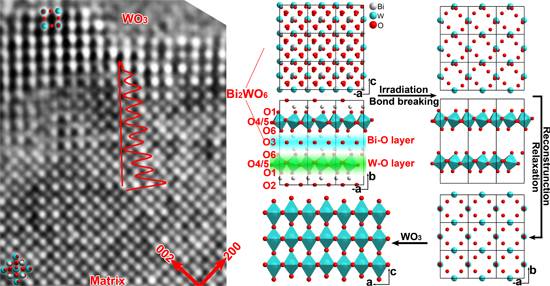
- be a fundamental step for controllable engineering of defects. Electron-beam irradiation is a powerful technique to fabricate or modify materials at the nanoscale [21][22]. For example, electron irradiation can induce a phase transformation from crystalline to amorphous or vice versa [23][24]; the
- knock-on effect of electron-beam irradiation will break chemical bonds and or knock off atoms directly from the surface of the irradiated material. Generally, it is thought that electron irradiation of materials containing heavy atoms by using a traditional transmission electron microscope (TEM) is not
- effective. Considering that the atomic escape energies are relatively small [25][26], Bi2WO6 nanoflakes with a thickness below 10 nm will be favorable when defects are to be induced through electron irradiation. When subjected to intense electron-beam irradiation, various types of crystal defects, including


Kelvin probe force microscopy of the nanoscale electrical surface potential barrier of metal/semiconductor interfaces in ambient atmosphere
Beilstein J. Nanotechnol. 2019, 10, 1401–1411, doi:10.3762/bjnano.10.138
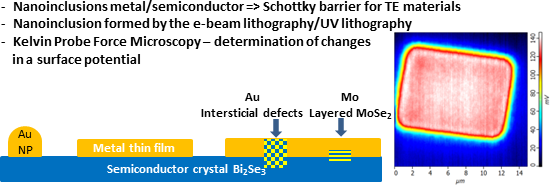
- diffusion or the reaction of the Mo layer with the Bi2Se3 substrate. To enhance the diffusion/reaction rate, we used e-beam irradiation. An area of the 8 × 10 µm2 was locally irradiated by an electron beam for different periods of time (75 s; 180 s and 360 s). This resulted in a nanocomposite material
- for ten repetitions of a single-point and (B) induced changes in the topography and (C) height profiles across a perturbation and a non-affected area (horizontal lines in (B)). (A) SEM image of the Au layer (33 nm in thickness) on Bi2Se3 irradiated by the electron beam for different periods of time


Fabrication of phase masks from amorphous carbon thin films for electron-beam shaping
Beilstein J. Nanotechnol. 2019, 10, 1290–1302, doi:10.3762/bjnano.10.128
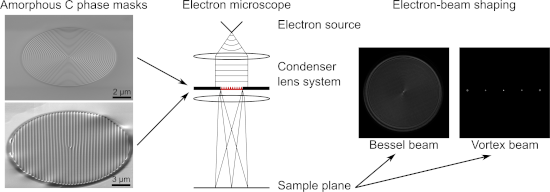
- Lukas Grunewald Dagmar Gerthsen Simon Hettler Laboratory for Electron Microscopy, Karlsruhe Institute of Technology (KIT), Engesserstrasse 7, 76131 Karlsruhe, Germany 10.3762/bjnano.10.128 Abstract Background: Electron-beam shaping opens up the possibility for novel imaging techniques in scanning
- (transmission) electron microscopy (S(T)EM). Phase-modulating thin-film devices (phase masks) made of amorphous silicon nitride are commonly used to generate a wide range of different beam shapes. An additional conductive layer on such a device is required to avoid charging under electron-beam irradiation
- ; Bessel beam; electron-beam shaping; nanofabrication; vortex beam; Introduction The possibility to shape electron beams has gained much interest since the first observation of electron vortex beams, i.e., beams that carry a defined orbital angular momentum [1][2][3]. Various other beam shapes, e.g., non



Revisiting semicontinuous silver films as surface-enhanced Raman spectroscopy substrates
Beilstein J. Nanotechnol. 2019, 10, 1048–1055, doi:10.3762/bjnano.10.105
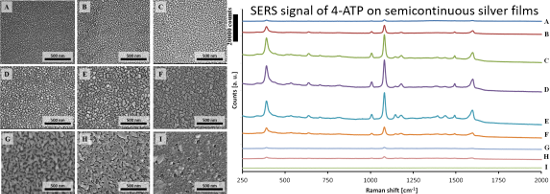
- nanostructures fabricated using physical methods, such as semicontinuous metal films obtained via electron beam physical vapor deposition. In these studies, we investigate the influence of morphology of semicontinuous silver films on their SERS properties. The morphologies studied ranged from isolated particles
- via various structuring methods. Electron beam lithography allows fabrication of planar [21] and 3D metallic structures [22]. Nanosphere lithography can be used to obtain nanotriangles [23] and nanocones [24]. Much attention has been also given to the deposition of metal onto nano- and micro
- . SSFs can be fabricated on large area planar substrates using electron beam (or thermal) PVD techniques, and thus are simple to prepare and rather inexpensive. Island type structures can be also fabricated using pulsed laser deposition [42]. The SSFs form when 5–10 nm (mass thickness corresponding to




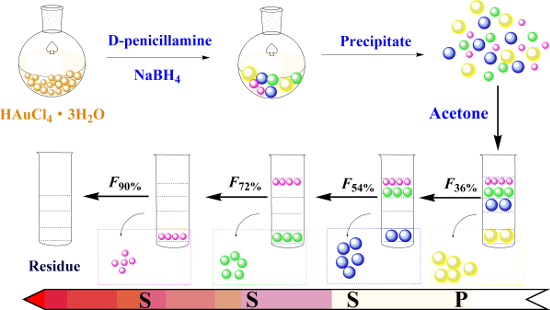
Structural and optical properties of penicillamine-protected gold nanocluster fractions separated by sequential size-selective fractionation
Beilstein J. Nanotechnol. 2019, 10, 955–966, doi:10.3762/bjnano.10.96
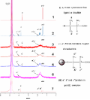
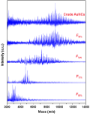
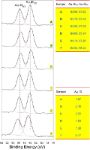
- SAED pattern of each AuNC fraction was obtained by focusing the electron beam perpendicular to the TEM sample lying flat on the support carbon film. The blurry characteristic rings from inner to outer in the polycrystalline diffraction pattern can be indexed as {111}, {200}, {220}, {311}, and {331



In situ AFM visualization of Li–O2 battery discharge products during redox cycling in an atmospherically controlled sample cell
Beilstein J. Nanotechnol. 2019, 10, 930–940, doi:10.3762/bjnano.10.94
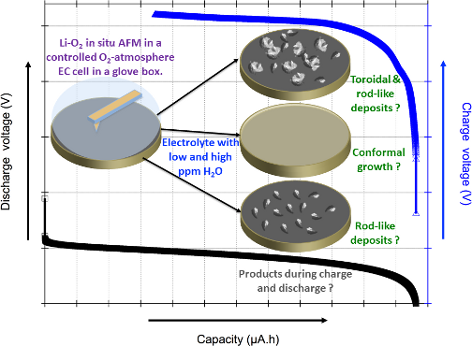
- al. [18] used transmission electron microscopy to investigate electrochemical processes of Li/O2 cells. In situ observations using electron beams tend to have limited time for observation as the electron beam reacts with the Li and the Li/O2 discharge products. Lu et al. [19] used ambient pressure X


Fabrication of silver nanoisland films by pulsed laser deposition for surface-enhanced Raman spectroscopy
Beilstein J. Nanotechnol. 2019, 10, 882–893, doi:10.3762/bjnano.10.89
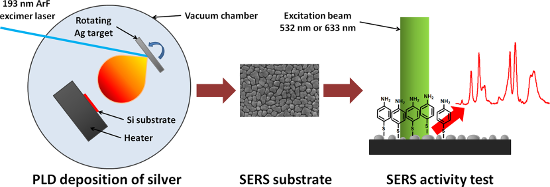
- physical methods include fabrication of nanostructured silver films by electron-beam evaporation [16], gas aggregation [17] and radio-frequency sputtering [18]. The advantages of certain physical methods over chemical methods include that there is no reagent contamination and that the monodispersity of




Trapping polysulfide on two-dimensional molybdenum disulfide for Li–S batteries through phase selection with optimized binding
Beilstein J. Nanotechnol. 2019, 10, 774–780, doi:10.3762/bjnano.10.77
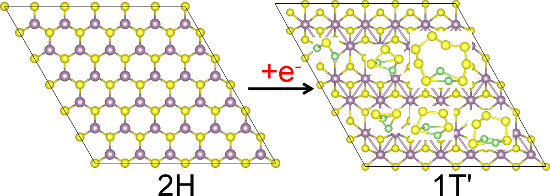
- Mo by Re atoms [28], electron-beam irradiation [31] and hot-electron injection [32]. Recently, it was reported that MoS2/reduced graphene oxide (rGO)/S cathodes for Li–S batteries exhibit outstanding performance. X-ray photoelectron spectroscopy and Raman spectroscopy showed that few-layered MoS2 is


Biomimetic synthesis of Ag-coated glasswing butterfly arrays as ultra-sensitive SERS substrates for efficient trace detection of pesticides
Beilstein J. Nanotechnol. 2019, 10, 578–588, doi:10.3762/bjnano.10.59
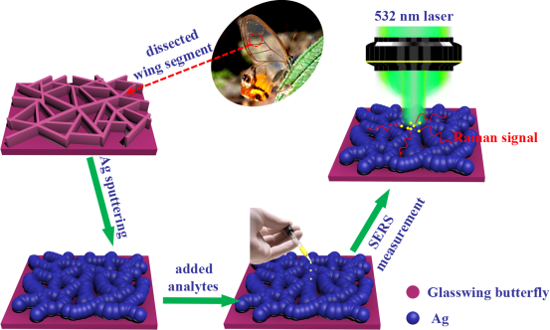
- invaluable in research and industrial application. Researchers have paid attention to physical methods (“top-down” techniques) such as focused ion beam lithography (FIB) [14][15], electron beam lithography (EBL) [16][17] or soft nanoimprint nanolithography (NIL) [18], which can produce controllable shapes


Direct observation of the CVD growth of monolayer MoS2 using in situ optical spectroscopy
Beilstein J. Nanotechnol. 2019, 10, 557–564, doi:10.3762/bjnano.10.57
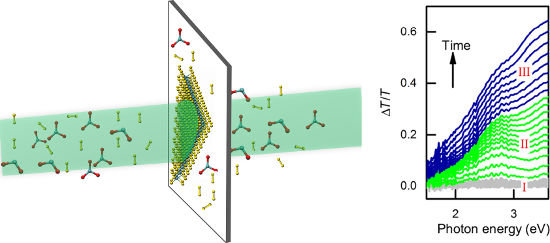
- processes used for the synthesis of 2D TMDCs are very complicated, involving gases with pressure in the range between atmosphere and several mbar, the characterization methods based on electron beam techniques are not applicable and the in situ real time study becomes very challenging. On the other hand


Mo-doped boron nitride monolayer as a promising single-atom electrocatalyst for CO2 conversion
Beilstein J. Nanotechnol. 2019, 10, 540–548, doi:10.3762/bjnano.10.55
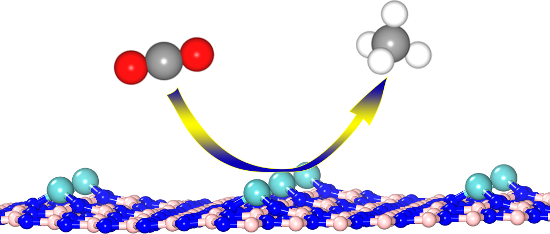
- refractory nature [11][35][36][37][38][39][40][41]. Moreover, BN nanomaterials have been used as superior substrates for doping various transition metals by electron beam irradiation [42] or solvent exfoliation [43] to form selected point defects, which are preferred to growing specific boron vacancies [42


Advanced scanning probe lithography using anatase-to-rutile transition to create localized TiO2 nanorods
Beilstein J. Nanotechnol. 2019, 10, 412–418, doi:10.3762/bjnano.10.40
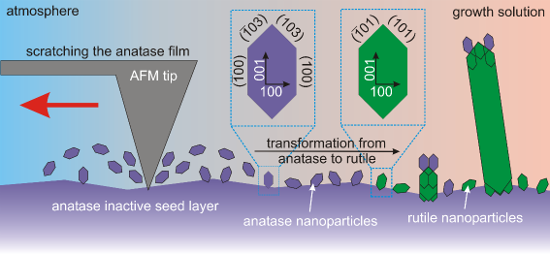
- nanocrystals and provide the growth of rutile TiO2 nanorods in well-defined areas. Due to the small tip radius, the resolution of this method is excellent and the method is quite inexpensive compared to electron-beam lithography and similar methods providing a position-controlled growth of semiconducting TiO2
- hydrothermally grown rutile TiO2 nanorods [36]. Beside the homogeneous growth on macroscopic areas, we indicated how to trigger the growth via conventional electron-beam lithography locally. In this report, we apply an advanced but inexpensive scanning probe lithography technique to draw thin lines of nanorods
- directly on polycrystalline anatase TiO2 films. The resulting nanorod arrangements are compared with similar structures obtained with conventional electron-beam lithography, which is a more expensive and laborious procedure. The method is drafted in Figure 1. A silicon tip, as it is used in a conventional


Uniform Sb2S3 optical coatings by chemical spray method
Beilstein J. Nanotechnol. 2019, 10, 198–210, doi:10.3762/bjnano.10.18
- spectrometer with ESPRIT 1.8 system at the Zeiss HR FESEM Ultra 55 scanning electron microscope (SEM) operating at an accelerating voltage of 7 kV. The surface and cross-sectional morphologies of the layers were recorded by the same SEM system at an electron beam accelerating voltage of 4 kV. Unpolarized micro