


Search results
Search for "fluorescence" in Full Text gives 457 result(s) in Beilstein Journal of Nanotechnology. Showing first 200.
Antibacterial activity of a berberine nanoformulation
Beilstein J. Nanotechnol. 2022, 13, 641–652, doi:10.3762/bjnano.13.56
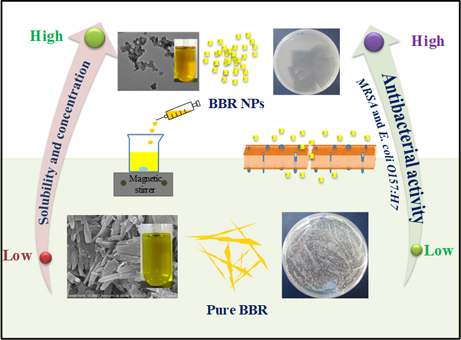
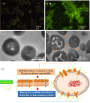
- . MRSA is a Gram-positive bacterium that has a thick and smooth peptidoglycan layer in the cell wall. Furthermore, the above results also revealed that the antibacterial activity of BBR NPs against MRSA is higher than that against E. coli O157:H7. Figure 7a shows an unclear fluorescence stereomicroscopy
- image of MRSA. The image is unclear because the bacterial cells are not self-fluorescent under excitation. In contrast, after incubation with BBR NPs, the BBR molecules adhered to the bacterial cell walls exhibited fluorescence (Figure 7b) upon UV excitation [44]. In our experiment, the samples used for
- observation under the fluorescence microscope were all centrifuged and washed three times in bi-distilled water. However, due to the limited resolution of the stereomicroscope, the interaction of BBR NPs and bacterial cell walls could not be clearly observed. Therefore, the samples were processed by ultrathin



Effects of substrate stiffness on the viscoelasticity and migration of prostate cancer cells examined by atomic force microscopy
Beilstein J. Nanotechnol. 2022, 13, 560–569, doi:10.3762/bjnano.13.47
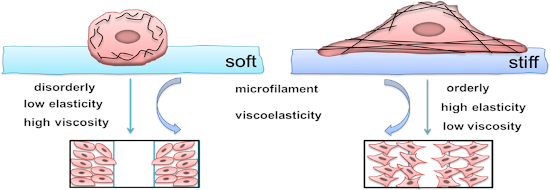
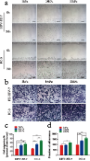
- treatment with 20 µM of blebbistatin for 30 min revealed disorganised microfilament bundles on stiff substrates and weaker fluorescence intensity in PC-3 cells rather than in non-blebbistatin-treated cells (Supporting Information File 1, Figure S4b–d). The Young's modulus of HPV-PZ-7 and PC-3 cells on stiff
- washed with PBS and fluorescence images were obtained using an inverted optical microscope (Leica, Germany) with 488 laser lines. The obtained images were linearly analysed and pseudo-coloured using the ImageJ analysis software. Blebbistatin treatment assay To inhibit myosin II, cells were incubated with
- imaging and cell contour maps. (d) Quantitative statistics of the average surface roughness (Ra). (e) Quantification plot of cell height; “ns” means no difference, ** P < 0.01, *** P < 0.001. Cytoskeletal microfilaments respond to changes in substrate stiffness on prostate cancer cells. (a) Fluorescence



Detection and imaging of Hg(II) in vivo using glutathione-functionalized gold nanoparticles
Beilstein J. Nanotechnol. 2022, 13, 549–559, doi:10.3762/bjnano.13.46
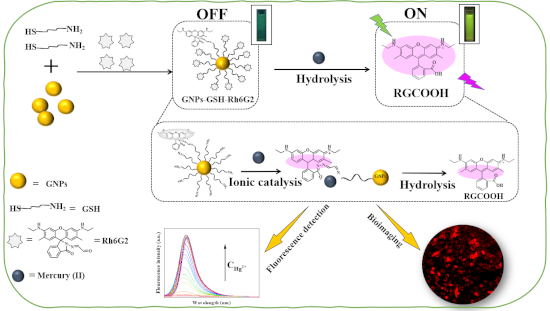
- hydrolysis of the spirolactam ring of Rh6G2, leading to a significant change in the fluorescence of GNPs-GSH-Rh6G2 from an “OFF” to an “ON” state. This strategy is an effective tool to detect Hg2+ ions. In cytotoxicity experiments, GNPs-GSH-Rh6G2 could penetrate living cells and detect mercury ions through
- the fluorescent “ON” form. Keywords: cell imaging; fluorescence probes; glutathione; gold nanoparticles; mercury ions; rhodamine 6G derivatives; Introduction Metal nanoparticles have been widely used in the development and construction of sensor systems and drug carriers due to their excellent
- molecular release system. After adding Cu(II), we observed a switching of the GNP–ʟ-Cys–Rh6G2 fluorescence from “OFF” to “ON” with high stability. Furthermore, it is worth noting that glutathione (GSH) contains a thiol and an amino group. It can not only conjugate to the nanoparticle surfaces through the


Zinc oxide nanostructures for fluorescence and Raman signal enhancement: a review
Beilstein J. Nanotechnol. 2022, 13, 472–490, doi:10.3762/bjnano.13.40
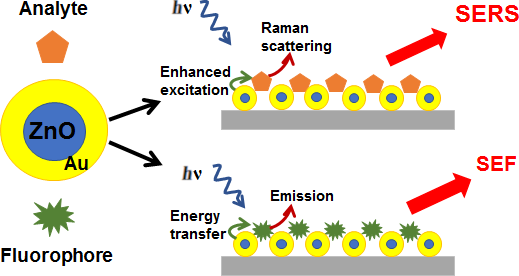
- fluorescence (SEF), these techniques have shown huge potential for applications in biomedicine, biotechnology, and optical sensors. Both methods rely on the high electromagnetic fields created at locations on the surface of plasmonic metal nanoparticles, depending on the geometry of the nanoparticles, their
- surface features, and the specific location of analyte molecules. Lately, ZnO-based nanostructures have been exploited especially as SERS substrates showing high enhancement factors and increased charge transfer effect. Additionally, applications focused on enhancing the fluorescence of analyte molecules
- as well as on tuning the photoluminescence properties of ZnO nanostructures through combination with metal nanoparticles. This review covers the major recent results of ZnO-based nanostructures used for fluorescence and Raman signal enhancement. The broad range of ZnO and ZnO–metal nanostructures




A non-enzymatic electrochemical hydrogen peroxide sensor based on copper oxide nanostructures
Beilstein J. Nanotechnol. 2022, 13, 424–436, doi:10.3762/bjnano.13.35
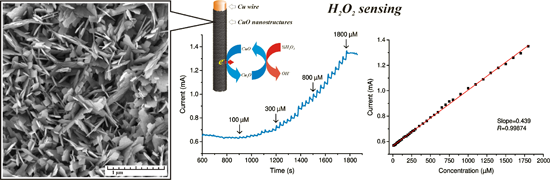
- pharmaceuticals [16][17][18], environmental protection [19], and industrial areas (especially food production) [20][21][22][23][24][25]. Measurement techniques including fluorescence [26][27], luminescence [28], spectrometry [29][30], and electrochemistry [31][32][33] are widely used for H2O2 determination




Micro- and nanotechnology in biomedical engineering for cartilage tissue regeneration in osteoarthritis
Beilstein J. Nanotechnol. 2022, 13, 363–389, doi:10.3762/bjnano.13.31
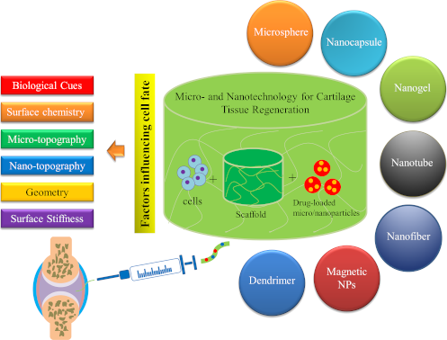
- , osteogenic, and chondrogenic potentials of the hMSCs [124]. However, the migration of SWCNTs through the cell wall to the nucleus was detected using fluorescence-labeled CNTs. In line with these results, the long term exposure of chondrocytes to COOH- and PEG-functionalized SWCNTs in 2D cultures, 3D pellet


Coordination-assembled myricetin nanoarchitectonics for sustainably scavenging free radicals
Beilstein J. Nanotechnol. 2022, 13, 284–291, doi:10.3762/bjnano.13.23
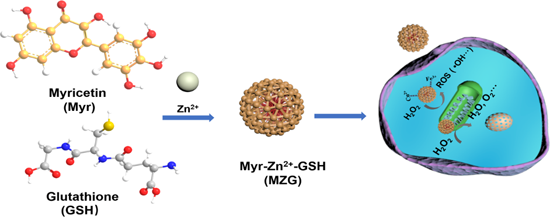
- was used to incubate these cells for 5 min and the fluorescence intensity of the cells was recorded via confocal laser scanning microscopy. Results and Discussion Synthesis and characterization of MZG We chose Zn2+, a typical essential metal, to effectively bond Myr and GSH via coordination
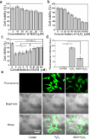
- to effectively protect cells from damage. DCFH-DA was used to probe ROS in cells, which showed no fluorescence signal without ROS, while it turned to highly fluorescent 2′7′-dichlorofluorescein after interacting with ROS in cells. As shown in the confocal laser scanning microscopy (CLSM) images, the
- fluorescence intensity of cells treated with H2O2 and MZG nanoparticles was weaker than that of cells only treated with H2O2 (Figure 4e). The fluorescence intensity of cells was further measured, indicating that the fluorescence intensity of cells treated with a combination of MZG nanoparticles and H2O2 was


A comprehensive review on electrospun nanohybrid membranes for wastewater treatment
Beilstein J. Nanotechnol. 2022, 13, 137–159, doi:10.3762/bjnano.13.10
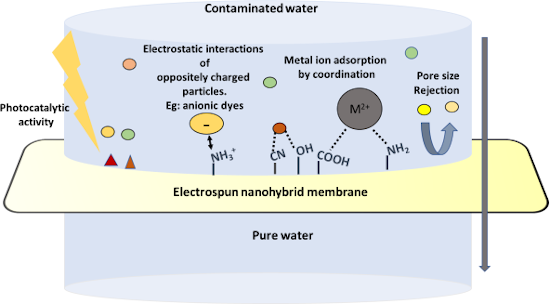
- acid (DTPA)-modified CS membranes electrospun in combination with PEO [60]. The maximum adsorption capacities according to the Langmuir model were found to be 177, 142, and 56 mg/g for Cu2+, Pb2+, and Ni2+, respectively. Li and co-workers reported on an electrospun magnetic fluorescence nanofiber
- reached equilibrium within 100 min. Moreover, the authors developed a simplistic method for real-time and non-invasive tracking of adsorption, based on the linear relationship between adsorption and fluorescence intensity of the membranes. Yari et al. fabricated a novel mesoporous nanohybrid sorbent




Tin dioxide nanomaterial-based photocatalysts for nitrogen oxide oxidation: a review
Beilstein J. Nanotechnol. 2022, 13, 96–113, doi:10.3762/bjnano.13.7
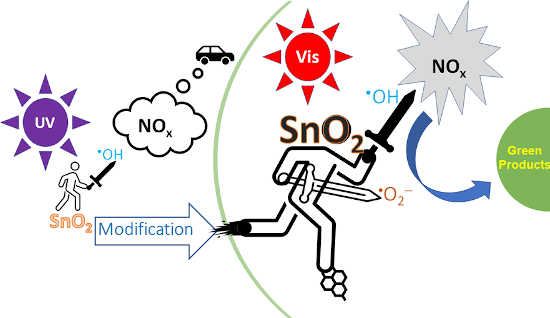
- spectroscopy (EIS) data, and the nanosecond-level time-resolved fluorescence decay spectra (Figure 11) demonstrated that the SnO2/NCDs/ZHS nanohybrid achieved low charge carrier recombination, high photoactivity, and excellent photoinduced charge transfer to the surface of the semiconductor. This study enables
- of ZHS, SnO2/ZHS, NCDs/ZHS and SnO2/NCDs/ZHS samples, and (d) PL spectra (inset: transient fluorescence decay spectra). Figure 11 was republished with permission of The Royal Society of Chemistry from [76] (“Constructing Z-scheme SnO2/N-doped carbon quantum dots/ZnSn(OH)6 nanohybrids with high redox


Theranostic potential of self-luminescent branched polyethyleneimine-coated superparamagnetic iron oxide nanoparticles
Beilstein J. Nanotechnol. 2022, 13, 82–95, doi:10.3762/bjnano.13.6
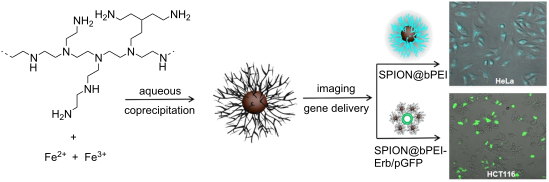
- exact reason behind this luminescence is not known, but it seems like there is not a single mechanism that explains the intrinsic fluorescence of these “periodically amine” containing species. Different factors including delocalization of nonbonding electrons in highly repeating systems, the rigidity of
- in many in vitro studies including, for example, flow cytometry or fluorescence imaging, since the luminescence of the polymer was not detected [18][33][34]. Unfortunately, the luminescence of the fluorophores (dye or quantum dots) that are active in the visible range is usually significantly reduced
- as well as its targeted delivery to epidermal growth factor receptor (EGFR)-positive cancer cell lines, in vitro. Initially, the dose dependent cytotoxicity of the nanoparticles was determined. Then, using a fluorescence microscope, the ability of these nanoparticles to generate intracellular optical




Sputtering onto liquids: a critical review
Beilstein J. Nanotechnol. 2022, 13, 10–53, doi:10.3762/bjnano.13.2






Alteration of nanomechanical properties of pancreatic cancer cells through anticancer drug treatment revealed by atomic force microscopy
Beilstein J. Nanotechnol. 2021, 12, 1372–1379, doi:10.3762/bjnano.12.101
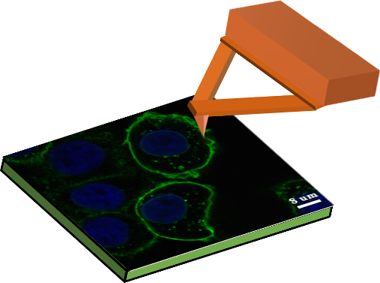
- development of anticancer drugs. The laser confocal fluorescence images of MIA PaCa-2 before and after treating with DOX in different concentrations are shown in Figure 5. The results show that the cell morphologies are not affected significantly by DOX. The quantitative analysis of the average fluorescence
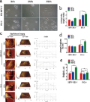
- pancreatic cell characterized by AFM. Laser confocal fluorescence images (a–d) and deflection maps (e–h) of (a, e) HDPE6-C7; (b, f) AsPC-1; (c, g) MIA-PaCa-2, and (d, h) BxPC-3. Nanomechanical mapping, FDCs, and corresponding Young's modulus distribution of (a) HDPE6-C7, (b) AsPC-1, (c) BxPC-3, and (d) MIA
- -PaCa-2. Statistics of (a) Young's modulus and (b) energy dissipation for AsPC-1, MIA-PaCa-2, BxPC-3, and HDPE6-C7. Laser confocal fluorescence images of MIA PaCa-2 before and after DOX treatment. (a–c) Without DOX treatment; (d–f) treated with 10 µg/mL DOX; (g–i) treated with 30 µg/mL DOX; (j–l


Biocompatibility and cytotoxicity in vitro of surface-functionalized drug-loaded spinel ferrite nanoparticles
Beilstein J. Nanotechnol. 2021, 12, 1339–1364, doi:10.3762/bjnano.12.99
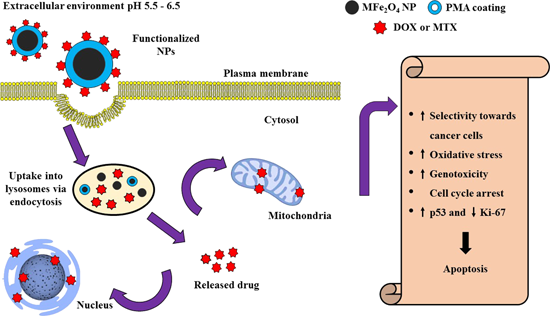
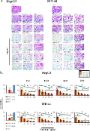
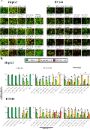
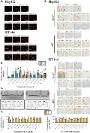
- HT144) were quantitatively determined by fluorescence microscopy using acridine orange and propidium iodide (AOPI) staining. Cells were treated with drug-loaded NPs for 3 h at concentration values of 5 and 10 μg/mL. NTC, NPs-PMA (10 μg/mL) and free drugs (DOX and MTX, 5 μM each) were included as
- controls. After treatment and staining with AOPI, cells were observed under a fluorescence microscope where viable cells appeared green, apoptotic cells appeared orange/yellow, and necrotic cells appeared red in color (Figure 5a). Percentage fractions of live, necrotic, and apoptotic cells were calculated
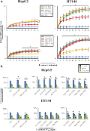
- was used to determine cellular ROS production in HepG2 and HT144 cells upon treatment with NPs over a period of time. Cells were exposed to NPs+DOX and NPs+MTX at IC50 concentrations and the increase in fluorescence was determined relative to untreated control cells over a time interval (0–45 min





Plasmon-enhanced photoluminescence from TiO2 and TeO2 thin films doped by Eu3+ for optoelectronic applications
Beilstein J. Nanotechnol. 2021, 12, 1271–1278, doi:10.3762/bjnano.12.94
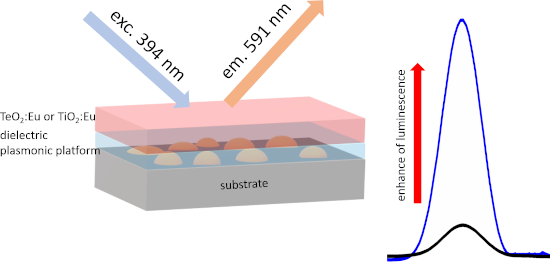
- composition, layers were etched for 2, 6, and 8 min. Optical transmittance spectra of all prepared structures were measured using an Evolution 220 UV–visible spectrophotometer in the range of 200–1000 nm. Luminescence excitation and emission spectra were recorded using a Scinco FluoroMate FS-2 fluorescence


Self-assembly of amino acids toward functional biomaterials
Beilstein J. Nanotechnol. 2021, 12, 1140–1150, doi:10.3762/bjnano.12.85
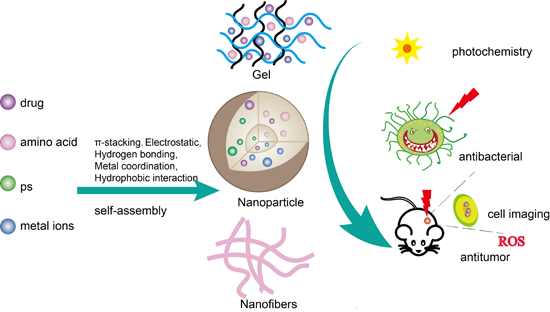
- crystalline sheet-like assembly. Interestingly, their group also identified the optical properties of single amino acids during assembly, demonstrating the intrinsic fluorescence of amyloid structures of metabolites such as adenine, tryptophan, tyrosine, and phenylalanine which can be used to detect living
- pharmacokinetic model. To investigate the in vivo distribution of metal nanoparticles in tumor-bearing mice, mice injected with metal nanoparticles or unencapsulated Ce6 had strong fluorescence signals throughout the body 2 h after injection. Fmoc-H/Zn2+/Ce6 or Z-HF/Zn2+/Ce6 showed strong fluorescence at the
- tumor site 24 h after injection. In contrast, no significant fluorescence was observed in mice injected with unencapsulated Ce6 12 h after injection. In addition, metal nanoparticles induce an effective tumor ablation, while unencapsulated Ce6 only partially inhibits tumor growth. Curcumin is a

pH-driven enhancement of anti-tubercular drug loading on iron oxide nanoparticles for drug delivery in macrophages
Beilstein J. Nanotechnol. 2021, 12, 1127–1139, doi:10.3762/bjnano.12.84
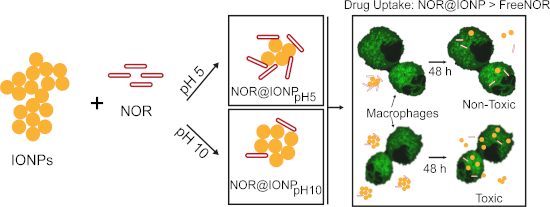
- correcting the volume reduction due to sampling loss. The concentration of NOR released was estimated fluorometrically (Ex/Em: 280/420 nm) (SpectraMax M5, Molecular Devices) using a known NOR concentration versus fluorescence standard, prepared with dilution in phosphate buffer saline (PBS) (same as the



Molecular assemblies on surfaces: towards physical and electronic decoupling of organic molecules
Beilstein J. Nanotechnol. 2021, 12, 950–956, doi:10.3762/bjnano.12.71

- significant enhancement of the excited-state spin lifetimes [62]. Concerning optical properties, successful decoupling made the examination of fluorescence from both single molecules and molecular assemblies feasible by tunneling electron excitation [19][63][64][65][66]. Also, sub-molecularly resolved Raman
- otherwise only achieved for multilayers on the bare Ni. On hBN/Cu(111), Zimmermann et al. [87] could visualize the molecular orbitals of pyrene derivatives by STM at the submolecular level, while Brülke et al. [88] measured the fluorescence of monolayer perylenetetracarboxylic dianhydride (PTCDA), which is
Modification of a SERS-active Ag surface to promote adsorption of charged analytes: effect of Cu2+ ions
Beilstein J. Nanotechnol. 2021, 12, 902–912, doi:10.3762/bjnano.12.67
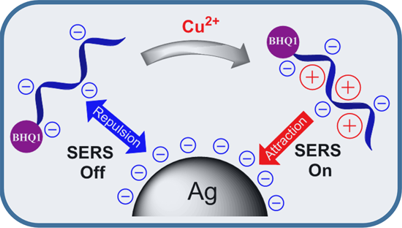
- for bioconjugation [34]. Thus, oligonucleotide SERS spectra can indicate a positive charge of the SERS substrate surface. An oligonucleotide was labeled with a Black Hole Quencher dye (BHQ1) for better spectrum recognition due to exclusion of characteristic peaks with background fluorescence, which is


The role of convolutional neural networks in scanning probe microscopy: a review
Beilstein J. Nanotechnol. 2021, 12, 878–901, doi:10.3762/bjnano.12.66
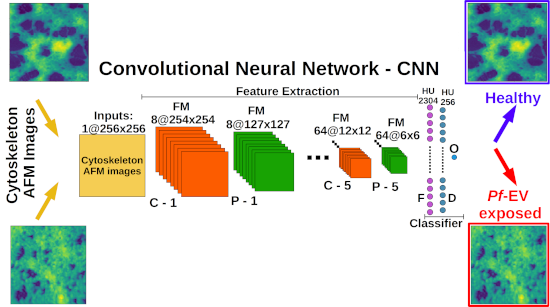
- image types was achieved, such as in images of cells and worms, enabling efficient cell-counting and viability prediction, as well as of silver nanowires. Image classification and segmentation CNNs are popular for cell classification. A CNN model based on actin-labeled fluorescence microscopy images
- continuous high-speed and blur-free bright-field and two-color fluorescence image acquisition of cells flowing at a rate of 1 m/s [106]. An outstanding CNN for image segmentation is U-Net, developed mainly for biomedical image segmentation [107]. It leads to precise and fast segmentation of images and
- , fluorescence microscopy, and serial block-face scanning electron microscopy (SBEM) micrographs [108]. Deep learning techniques have been developed for segmentation and tracing of neurons in volume electron microscopy for synaptic connectivity reconstruction. Mitochondria, synapses, axons, dendrites, spines







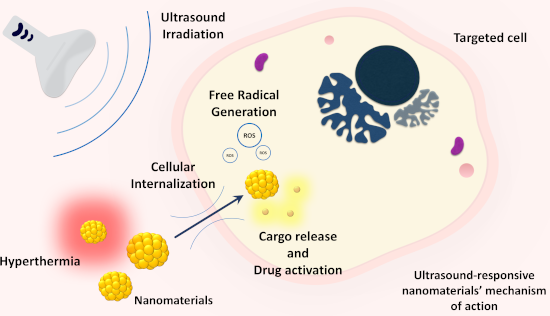
Comprehensive review on ultrasound-responsive theranostic nanomaterials: mechanisms, structures and medical applications
Beilstein J. Nanotechnol. 2021, 12, 808–862, doi:10.3762/bjnano.12.64


Silver nanoparticles induce the cardiomyogenic differentiation of bone marrow derived mesenchymal stem cells via telomere length extension
Beilstein J. Nanotechnol. 2021, 12, 786–797, doi:10.3762/bjnano.12.62
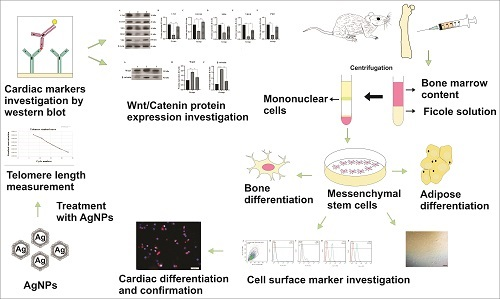
- and the fluorescent cells were visualized under a fluorescence microscope. Cell proliferation assay by MTT The 3-(4,5-dimethylthiazol-2-yl)-2,5-diphenyltetrazolium bromide (MTT) assay measures the mitochondrial activity of the cells [45]. After the BM-MSCs grew to 70–80% confluence, they were washed
- (Corbett Research, Australia). Fluorescence data was calculated in relation to β-actin CT values by the 2−ΔΔCT method. Primers (Table 3) were designed using Oligo 7 v.7.52 software [44][48][49]. Protein expression assessment The proteins were extracted from cardiomyogenically differentiated BM-MSCs and


Recent progress in actuation technologies of micro/nanorobots
Beilstein J. Nanotechnol. 2021, 12, 756–765, doi:10.3762/bjnano.12.59
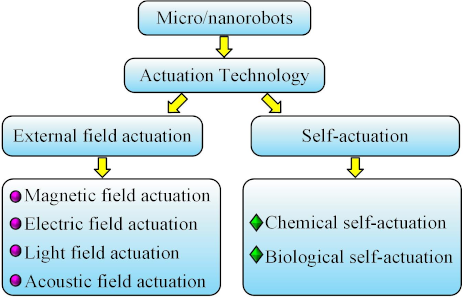
- dual-mode fluorescence and magnetic resonance imaging. Using magnetic targeting, the micro/nanorobot broke through complex physiological barriers and entered tumors while carrying a photosensitizer. After that, local high temperature was generated by a near-infrared laser, and observable and accurate


Recent progress in magnetic applications for micro- and nanorobots
Beilstein J. Nanotechnol. 2021, 12, 744–755, doi:10.3762/bjnano.12.58
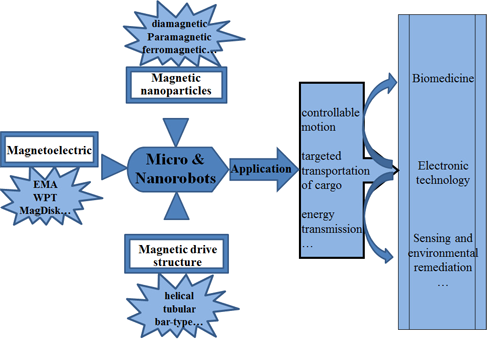
- sensor can approach F-sub, and then F-sub cutting and fluorescence signal amplification are carried out in the presence of analytes. Bakshi et al. proposed a cellular nanoreactor. It had two kinds of magnetic particles, each of which is functionalized by two components of the binary deoxyribozyme system
- developed an electromagnetic coil system (MagDisk) integrated into a fluorescence microscope and a fluorescent magnetic spore-based microrobot (FMSM). The MagDisk was low-cost and plug-and-play, and consisted of five independent coils. The maximum magnetic field strength of the MagDisk was around 20 mT. The


A review of defect engineering, ion implantation, and nanofabrication using the helium ion microscope
Beilstein J. Nanotechnol. 2021, 12, 633–664, doi:10.3762/bjnano.12.52

- . Conversely, helium ion irradiation of another material, silicon nitride, in the HIM was found to reduce its fluorescence [60]. This was attributed to ion beam-induced disruption of the optically active defects present in the material. In the cited work, the effect was used to locally reduce the fluorescence
- of patches of a silicon nitride membrane that were subsequently perforated by helium ion beam milling to create solid-state nanopores for biomolecule detection. Following this approach, a low fluorescence background was achieved, facilitating the translocation detection of fluorescently labeled


Boosting of photocatalytic hydrogen evolution via chlorine doping of polymeric carbon nitride
Beilstein J. Nanotechnol. 2021, 12, 473–484, doi:10.3762/bjnano.12.38
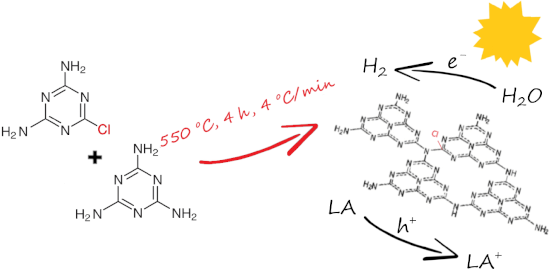
- ) radiation in a Prevac (Poland) system equipped with a Scienta SES 2002 (Sweden) electron energy analyzer operating with a constant transmission energy (Ep = 50 eV). The analysis chamber was evacuated to a pressure below 5 × 10⁻⁹ mbar. The PL spectra were measured using a fluorescence spectrophotometer





