


Search results
Search for "interactions" in Full Text gives 1250 result(s) in Beilstein Journal of Nanotechnology. Showing first 200.
Hydrogels and nanogels: effectiveness in dermal applications
Beilstein J. Nanotechnol. 2025, 16, 1216–1233, doi:10.3762/bjnano.16.90
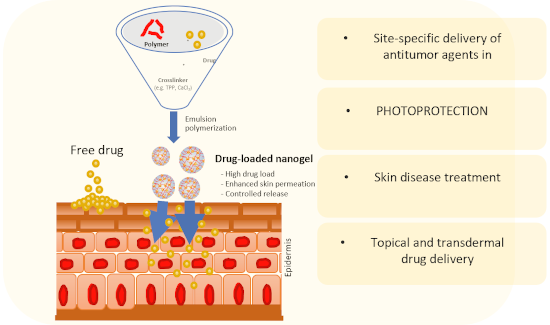
- - or intermolecularly cross-linked by chemical bonding or physical interaction (Figure 1). Physical cross-linking is performed using interactions other than the covalent bond, such as hydrogen bonding or ionic interaction. Physical cross-links can be reversibly dissociated and recombined under specific
- (intramolecular) [44][57][148]. The process of nanogel particle formation may involve physical methods [164] or chemical reactions [165]. For example, nanogels can be obtained through electrostatic interactions generated by the ionization technique with electrospray [166]. Ionizing radiation can also be used for
- thermodynamic activity of the system). Thus, the physicochemical properties related to the first approach involve only the interactions between drugs and vehicles. On the other hand, changing the drug solubility and/or its diffusion through SC is much more complex and comprises multiple interactions among drug


Chitosan nanocomposite containing rotenoids: an alternative bioinsecticidal approach for the management of Aedes aegypti
Beilstein J. Nanotechnol. 2025, 16, 1197–1208, doi:10.3762/bjnano.16.88
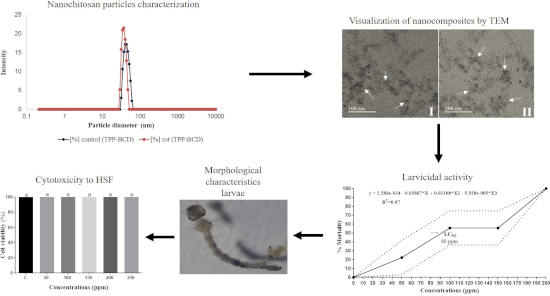
- potential values > ±30 mV are indicative of nanoparticle stability, as strong electrostatic repulsion prevents aggregation and ensures colloidal stability [20][21]. While these measurements provide important physicochemical insights, further evidence of the chemical incorporation and potential interactions
- nanocomposite. Additionally, a noticeable reduction in the intensity of the amide-related bands in CS/TPP-β-CD-rot suggests possible interactions – such as hydrogen bonding or covalent bonding – between rotenoids and the chitosan matrix. These spectral features confirm the successful incorporation of rotenoids
- into the chitosan-based nanocomposite and suggest molecular interactions that may contribute to the enhanced stability and bioactivity of the formulation. To complement the physicochemical characterization and confirm the efficiency of rotenoid encapsulation within the nanoparticles, a calibration



Electronic and optical properties of chloropicrin adsorbed ZnS nanotubes: first principle analysis
Beilstein J. Nanotechnol. 2025, 16, 1184–1196, doi:10.3762/bjnano.16.87
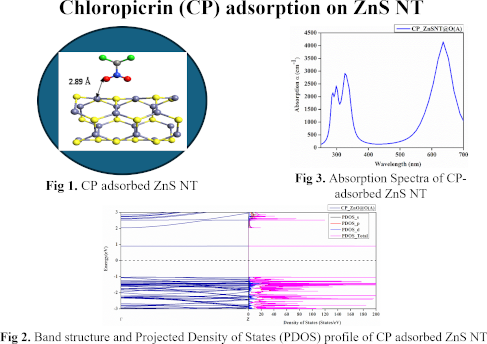
- slight strain in the lattice. A vacuum slab of 20 Å thickness was introduced along the radial direction to minimize spurious interactions between adjacent NT images in the simulation. This ensures that the periodic boundary conditions do not artificially influence the electronic and structural properties
- could form a surface dipole, enhancing the interaction of the NT with external molecules. Such structural features are particularly relevant for potential applications in gas sensing, where surface interactions play a critical role in sensitivity and selectivity. The adsorption energy Eads for CP with
- comparison to the oxygen atoms of CP, which may be attributed to the availability of three lone pairs with each chlorine atom in comparison to the two lone pairs with each oxygen atoms. To gain deeper insight into these interactions, a Mulliken population analysis was performed, revealing the extent of


Mechanical stability of individual bacterial cells under different osmotic pressure conditions: a nanoindentation study of Pseudomonas aeruginosa
Beilstein J. Nanotechnol. 2025, 16, 1171–1183, doi:10.3762/bjnano.16.86
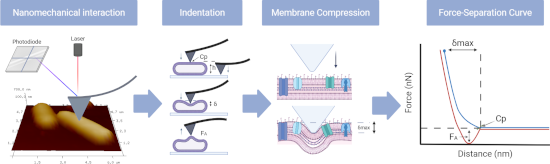
- bacterial adhesion through short-range electrostatic and hydrophobic interactions. Before deposition on the PLL-coated substrate, the bacterial suspension was centrifuged at 2500 rpm for 3 min, and the resulting supernatant was removed. The bacteria were then resuspended in 150 μL of PBS to increase their
- loading force of 500 pN for each nanoindentation applied in a pre-programmed grid of 48 points per line to quantify surface interactions and the mechanical response of bacteria. This allowed us to simultaneously acquire maps with enough resolution on the sample surface to identify individual bacteria and
- obtain the mechanical response from the membrane rigidity within a reversible regime. The advantage of mapping bacteria at low loading forces is that surface interactions between the tip and cell membrane can be analyzed, and information related to its adhesion or surface charge could be revealed with


Crystalline and amorphous structure selectivity of ignoble high-entropy alloy nanoparticles during laser ablation in organic liquids is set by pulse duration
Beilstein J. Nanotechnol. 2025, 16, 1141–1159, doi:10.3762/bjnano.16.84
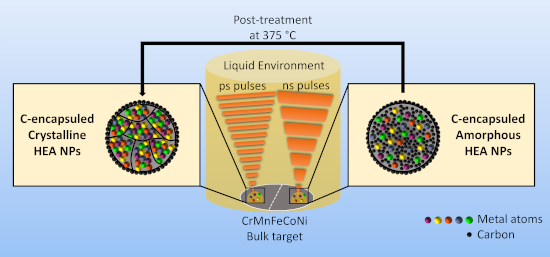
- ), while the carbon species inside the particle core also resemble metal-carbon species [103][104], although a clear classification and quantification is difficult due to the presence of multiple elements. Thus, multiple interactions may lead to signal shifts that can easily be misinterpreted. Still, the




Deep learning for enhancement of low-resolution and noisy scanning probe microscopy images
Beilstein J. Nanotechnol. 2025, 16, 1129–1140, doi:10.3762/bjnano.16.83
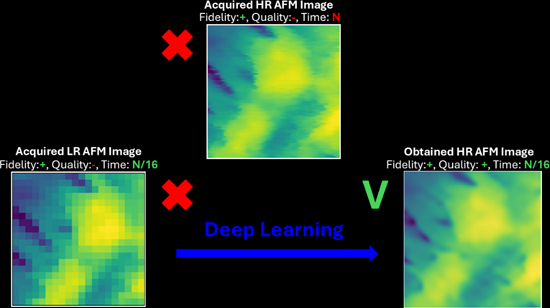
- interactions. Scanning distortions due to non-linearities in the scan are also trickier to correct and harder to avoid in fast scanning. Some of these artifacts can be eliminated or attenuated by image processing techniques [4][5][6][7][8][9][10][11][12]. Another resolution-limiting factor in AFM is the tip


Fabrication of metal complex phthalocyanine and porphyrin nanoparticle aqueous colloids by pulsed laser fragmentation in liquid and their potential application to a photosensitizer for photodynamic therapy
Beilstein J. Nanotechnol. 2025, 16, 1088–1096, doi:10.3762/bjnano.16.80
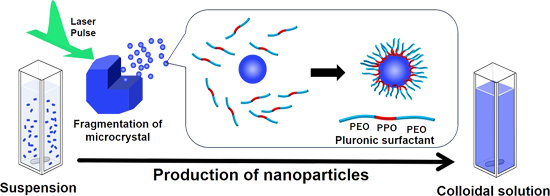
- solution remained stably dispersed in PBS, as was the case for AlClPc (Figure S4, Supporting Information File 1). The results indicate that the nanoparticles generated by pulsed laser irradiation will be coated tightly with F-127 molecules through hydrophobic interactions between the extremely hydrophobic
- hydrophobic interactions between the hydrophobic nanoparticles’ surface and the hydrophobic PPO block of F-127. A nanoemulsion having a core (MPcs or PtOEP nanoparticle)–shell (F-127) structure formed immediately after laser fragmentation of microcrystals, leading to the generation of highly dispersive


Piezoelectricity of hexagonal boron nitrides improves bone tissue generation as tested on osteoblasts
Beilstein J. Nanotechnol. 2025, 16, 1068–1081, doi:10.3762/bjnano.16.78
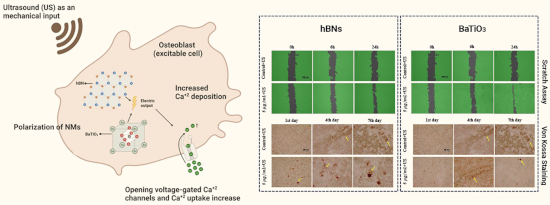
- [30][31]. The piezoelectric property of 2D hBN arises from its noncentrosymmetric structure, supported by these van der Waals interactions [32]. The excellent biocompatibility of hBN makes it attractive for diverse applications, including cosmetics, drug delivery, cancer treatment, orthopedic implants
- performed to investigate the main interactions between HOb cells and NMs with US stimulation. HOb cells were cultured in a High-Glucose Dulbecco’s Modified Eagle Medium/Nutrient Mixture F-12 (DMEM/F-12) (Pan Biotech) medium containing 10% fetal bovine serum (FBS) (Pan Biotech), 1% penicillin streptomycin


Soft materials nanoarchitectonics: liquid crystals, polymers, gels, biomaterials, and others
Beilstein J. Nanotechnol. 2025, 16, 1025–1067, doi:10.3762/bjnano.16.77
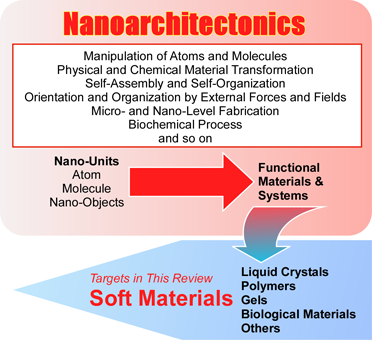
- heterocoronene discotic liquid phase molecules can also serve as an excellent case study for intermolecular interactions in bulky molecular systems. Based on molecular nanoarchitectonics, this will facilitate the establishment of design rules for optimal performance in device applications. Extended π-conjugated
- polyelectrolyte–surfactant complexes (Figure 10) [260]. The complex structures consist of polyaniline appended with amino groups and monododecyl phosphate. The intricate films were produced using a spin coating method. The films displayed distinct lamellar structures, resulting from the strong interactions






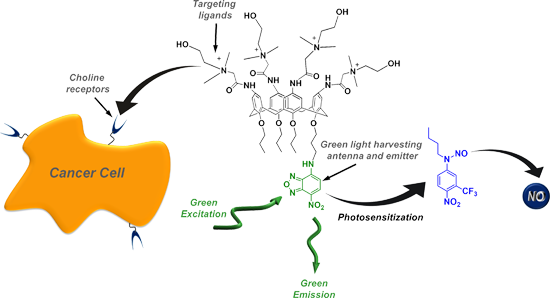
A calix[4]arene-based supramolecular nanoassembly targeting cancer cells and triggering the release of nitric oxide with green light
Beilstein J. Nanotechnol. 2025, 16, 1003–1013, doi:10.3762/bjnano.16.75
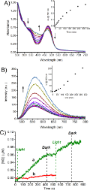
- with a PI of ca. 0.3 (inset Figure 4A). The supramolecular construct 1·2 was stable for days, and its formation and stability can be reasonably attributed to both hydrophobic and stacking interactions between the aliphatic chains and the aromatic regions of the host and guest components. Encapsulation


Time-resolved probing of laser-induced nanostructuring processes in liquids
Beilstein J. Nanotechnol. 2025, 16, 968–1002, doi:10.3762/bjnano.16.74
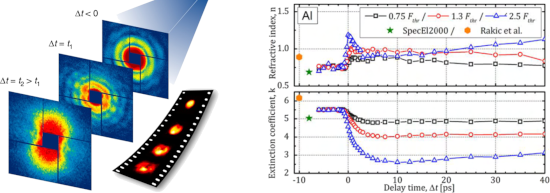
- ultrafast phenomena, enabling precise control of material properties [55][56][57][58]. This advancement has catalyzed new directions in nanomaterial processing and synthesis, such as producing controlled NPs through ultrafast laser–matter interactions. A notable example is the production of monodisperse NPs
- in aqueous solutions via laser pulse exposures [1][59], demonstrating practical applications and underscoring the need for deeper insights into non-equilibrium light–matter interactions. Experimental approaches to uncover the underlying reaction kinetics of such complex interactions have been diverse
- single-pulse, single-particle imaging using XFELs has enabled nanoscale-resolution observations of ultrafast irreversible processes. XFELs’ unique combination of spatial coherence, ultrahigh brightness, and femtosecond pulse durations provides a powerful probe for studying interactions between strong


Shape, membrane morphology, and morphodynamic response of metabolically active human mitochondria revealed by scanning ion conductance microscopy
Beilstein J. Nanotechnol. 2025, 16, 951–967, doi:10.3762/bjnano.16.73
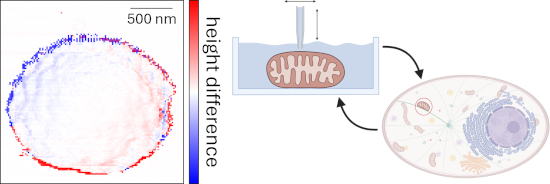
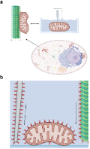
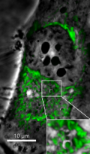
- the mitochondria actively react morphodynamically to the nanopipette’s surface potential properties. In living cells, mitochondrial interactions with the cytoskeleton play a critical role in shaping and regulating mitochondrial function (Figure 8a and Figure 9). Among cytoskeletal components
- ) Collaborative Research Centre (CRC) 1477 “Light-Matter Interactions at Interfaces”, project number 441234705 and the CRC 1270/2 “Electrically Active Implants”, project number 299150580.



Tendency in tip polarity changes in non-contact atomic force microscopy imaging on a fluorite surface
Beilstein J. Nanotechnol. 2025, 16, 944–950, doi:10.3762/bjnano.16.72
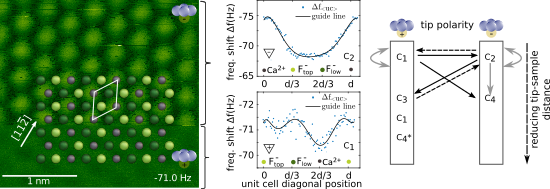
- over many years based on theoretical simulations of NC-AFM data for a variety of plausible tip models [9][19][20][21][22]. Through further endeavors, a qualitative distance-dependent approach involving electrostatic interactions and Pauli repulsion has recently been exemplified on CaF2(111) [10]. As a


Structural and magnetic properties of microwave-synthesized reduced graphene oxide/VO2/Fe2O3 nanocomposite
Beilstein J. Nanotechnol. 2025, 16, 921–932, doi:10.3762/bjnano.16.70
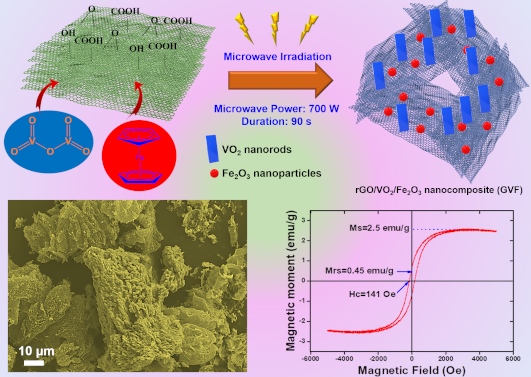
- surfaces through substantial interactions. To confirm the formation of the ternary NC, the XRD analysis of the GVF was performed. As shown in Figure 3a, the characteristic peaks of GVF corresponding to the α phase of Fe2O3 and VO2, along with the signature peak of rGO were observed. To be specific, the



Insights into the electronic and atomic structures of cerium oxide-based ultrathin films and nanostructures using high-brilliance light sources
Beilstein J. Nanotechnol. 2025, 16, 860–871, doi:10.3762/bjnano.16.65

- was possible to identify different types of interactions between Pt NPs and cerium oxide surfaces including electron transfer from Pt NPs to CeO2 and transport of oxygen atoms from ceria to Pt NPs, the latter occurring only when the ceria support surface is nanostructured [26]. In addition, thanks to
- rationalized the observed high activity of the material in direct methanol fuel cells [37]. Regarding the Ni-CeO2−x(111) system, a study of the methanol reaction revealed that the strong metal–support interactions between Ni and CeO2 determines the high selectivity for CO2 production, instead of the formation


Synchrotron X-ray photoelectron spectroscopy study of sodium adsorption on vertically arranged MoS2 layers coated with pyrolytic carbon
Beilstein J. Nanotechnol. 2025, 16, 847–859, doi:10.3762/bjnano.16.64
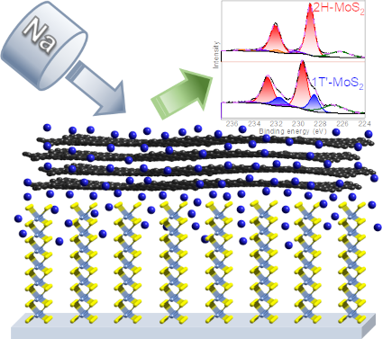
- spacing of 0.62 nm and weak van der Waals interactions between them. At a sodium ion intercalation potential of about 1.4 V vs Na/Na+, the thermodynamically preferred 2H-MoS2 phase transforms into the metastable 1T-MoS2 phase [3][4]. With further increase in the intercalated sodium concentration


Synthesis and magnetic transitions of rare-earth-free Fe–Mn–Ni–Si-based compositionally complex alloys at bulk and nanoscale
Beilstein J. Nanotechnol. 2025, 16, 823–836, doi:10.3762/bjnano.16.62
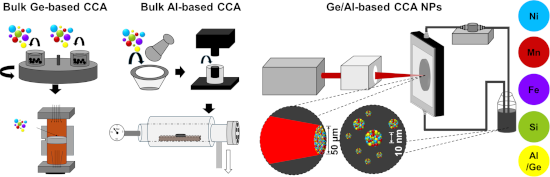
- combinations that control the configurational entropy of mixing, phase, and free energy of the material. Consequently, the magnetic phase transition of CCAs can be tuned by altering their chemical composition because of the different elemental interactions [17]. A significant advantage of using CCAs is their
- higher transition temperature compared to the Ge-based CCA implies stronger magnetic interactions in the Al-based CCA, which are able to persist even at higher temperatures. The broader dip in the dM/dT–T curve, compared to the sharper drop seen in the Ge-based CCA, suggests that the magnetic ordering in


Supramolecular hydration structure of graphene-based hydrogels: density functional theory, green chemistry and interface application
Beilstein J. Nanotechnol. 2025, 16, 806–822, doi:10.3762/bjnano.16.61
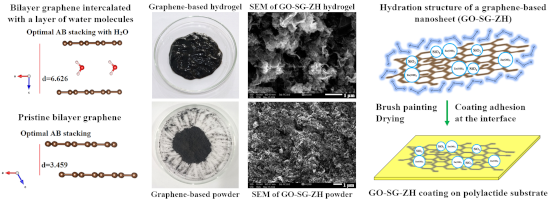
- plays an important role in the stability and functionality of nanoscale structures. Van der Waals forces are supramolecular intermolecular interactions that govern the agglomeration of nanomaterials. Carbon nanostructures with π-conjugated systems (fullerene, carbon nanotube, and graphene) have π–π
- interactions, a type of van der Waals force, for supramolecular attraction [9]. Particularly, graphene sheets with a large surface area and π-conjugated network are likely to stack together through hydrophobic agglomeration and π–π interaction. Although π–π interactions are generally weaker than hydrogen
- , leading to facile brush coating on plastic films of polylactide (PLA). Dehydrated GO-SG-ZH coating is adhered to the PLA substrate through interfacial interactions. Furthermore, antibacterial activities, coating stability, and mechanical properties of the nanocomposite materials were investigated and


Morphology and properties of pyrite nanoparticles obtained by pulsed laser ablation in liquid and thin films for photodetection
Beilstein J. Nanotechnol. 2025, 16, 785–805, doi:10.3762/bjnano.16.60
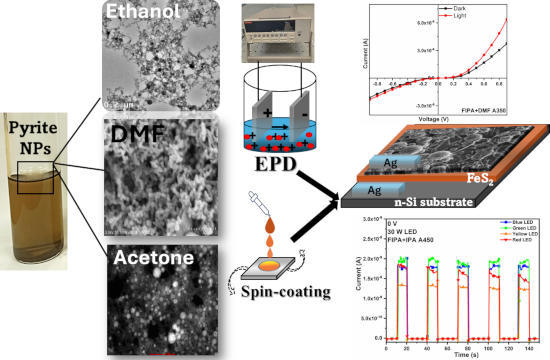
- the as-prepared films is given in Supporting Information File 1, Figure S4. These differences are likely attributed to variations in solvent properties and particle interactions during deposition. The morphologies of the FeS2 thin films vary depending on the different synthesis and fabrication
- interactions with the material (FeS2 in this case) play a significant role in morphology. From the results obtained, it can be concluded that high-polarity solvents (e.g., methanol, ethanol) tend to promote faster nucleation and growth, leading to larger NPs (≈26 nm), whereas low-viscosity and highly volatile




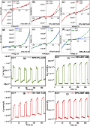


Changes of structural, magnetic and spectroscopic properties of microencapsulated iron sucrose nanoparticles in saline
Beilstein J. Nanotechnol. 2025, 16, 762–784, doi:10.3762/bjnano.16.59
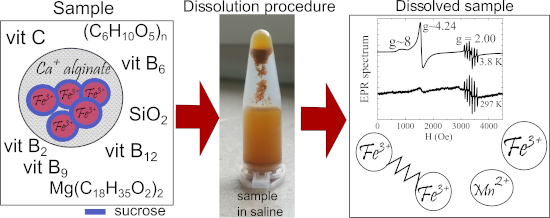
- coupling between Fe ions, (iii) the analysis of interactions between the magnetic core and the sucrose shell and their impact on core surface magnetic moments, (iv) the impact of the core surface and nonmagnetic additives on the saturation magnetization of the investigated compound [19], and (v) the
- consequences of the dissolution process in terms of microstructural changes and interactions between iron ions. The paper is organized as follows: the “Result and Discussion” section is divided into subsections relating to the individual measurement technique used, presenting measurement results and their
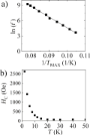
- the microcapsule as a magnetic system, it is expected that the sucrose shell will prevent or significantly diminish interactions between nanoparticles, also probably modifies the surface state of the core. To understand the low-temperature magnetic state of the FS0 sample, the zero field cooled





Serum heat inactivation diminishes ApoE-mediated uptake of D-Lin-MC3-DMA lipid nanoparticles
Beilstein J. Nanotechnol. 2025, 16, 740–748, doi:10.3762/bjnano.16.57
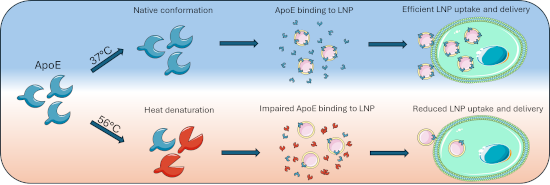
- surface of nanoparticles after administration has garnered substantial attention due to the significant effects it has on their performance. Lipid nanoparticles (LNPs) depend on protein corona formation to mediate their targeting. Such protein–nanoparticle interactions are often initially studied using in
- subsequent cell-nanoparticle interactions remains unclear. Here, the effect of FCS heat inactivation on the in vitro behavior of the clinically applied and most studied D-Lin-MC3-DMA (MC3) LNPs was investigated and compared to LNPs containing a different ionizable lipid, C12-200 (C12). Moreover, mechanisms
- by which FCS heat inactivation could affect cellular interactions with LNPs were studied in detail. Materials and Methods Buffers, reagents, materials Phosphate buffered saline (PBS), bovine serum albumin (BSA), thioflavin T (ThT), cholesterol and distearoylphosphatidylcholine (DSPC) were purchased


Synthesis of a multicomponent cellulose-based adsorbent for tetracycline removal from aquaculture water
Beilstein J. Nanotechnol. 2025, 16, 728–739, doi:10.3762/bjnano.16.56
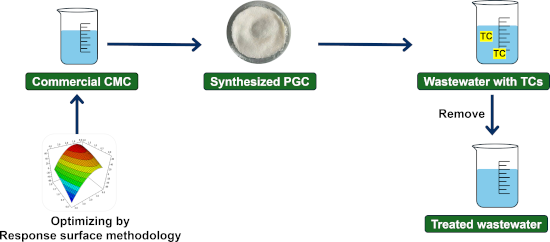
- were characterized, and the TC adsorption efficiency of PGC was assessed using high-performance liquid chromatography–mass spectroscopy (HPLC-MS). Elemental analysis of PGC identified four key mechanisms governing its endothermic TC adsorption mechanism: surface complexation, electrostatic interactions
- , hydrogen bonding, and CH–π interactions, with surface complexation between Ca2+ and TCs being dominant. Batch adsorption experiments conducted to examine the factors influencing adsorption capacity revealed that PGC achieved up to 70% TC removal efficiency at an adsorbent dosage of 40 mg and an initial TC
- spectrum, the sample matrix, and the radiation intensity. Activated carbon is a conventional approach [10][11], however, a major drawback of activated carbon is its incomplete recovery after adsorption. Because adsorption primarily relies on physical interactions such as hydrogen bonding interactions


Nanostructured materials characterized by scanning photoelectron spectromicroscopy
Beilstein J. Nanotechnol. 2025, 16, 700–710, doi:10.3762/bjnano.16.54
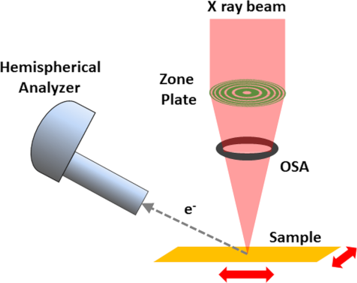
- surfaces. The characterization of the building blocks is of paramount importance to deeply understand their functionalities and mutual interactions when they are part of a nanostructured body. The building blocks may differ in their atomic structure, crystallographic orientation, chemical composition, and


High-temperature epitaxial growth of tantalum nitride thin films on MgO: structural evolution and potential for SQUID applications
Beilstein J. Nanotechnol. 2025, 16, 690–699, doi:10.3762/bjnano.16.53
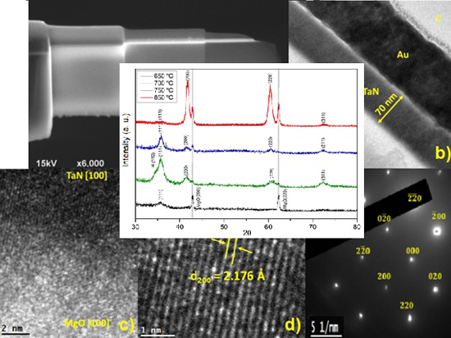
- the displacement of O2, effectively reducing the incorporation of O₂ within the thin films. The interaction between a laser-generated plume and the surrounding background gas is a dynamic and complex process significantly influenced by the background gas pressure. Understanding these interactions is
- interactions and a relatively unperturbed plume expansion. As the background pressure increases, the collision frequency between plume particles and background gas molecules rises. This leads to more pronounced interactions, including increased scattering, energy transfer, and chemical reactions. In the


The impact of tris(pentafluorophenyl)borane hole transport layer doping on interfacial charge extraction and recombination
Beilstein J. Nanotechnol. 2025, 16, 678–689, doi:10.3762/bjnano.16.52
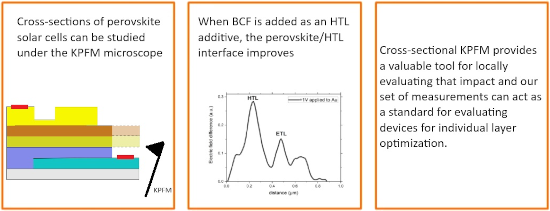
- charge extraction takes place might be affected by factors such as ion accumulation. In a previous study, we demonstrated that the position of the potential drop can be significantly shifted into the transport layers, due to ionic interactions [15]. In the case of the cells incorporating spiro-OMeTAD





