Search results
Search for "metal oxides" in Full Text gives 228 result(s) in Beilstein Journal of Nanotechnology. Showing first 200.
Thermal control of the defunctionalization of supported Au25(glutathione)18 catalysts for benzyl alcohol oxidation
Beilstein J. Nanotechnol. 2019, 10, 228–237, doi:10.3762/bjnano.10.21
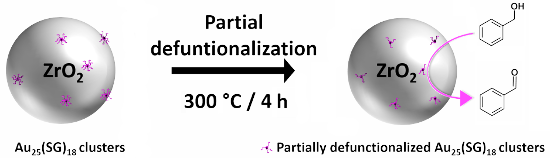
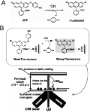
- nanoparticles (GNPs), GNPs have been of great interest in chemistry, dispersed on metal oxides and in CO oxidation reaction [1]. Today, GNPs of diameter less than 10 nm are known to be a remarkable, heterogeneous catalyst, capable of catalyzing a wide range of reactions including hydrocarbon combustion [2


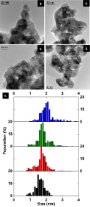


Wet chemistry route for the decoration of carbon nanotubes with iron oxide nanoparticles for gas sensing
Beilstein J. Nanotechnol. 2019, 10, 105–118, doi:10.3762/bjnano.10.10
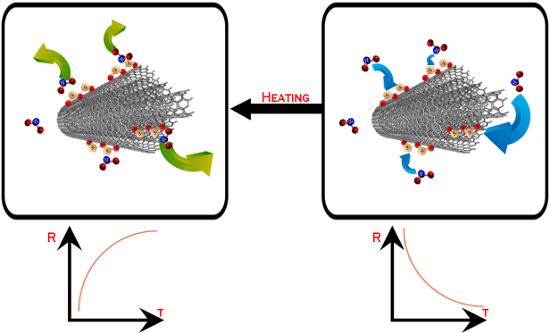
- into more reactive species that, in turn, interact with CNTs. In addition, such nanoparticles shift the Fermi level of CNTs, adsorb target molecules, and help in mediating the charge transfer between adsorbates and CNTs [6][10]. Several metal oxides have been reported as useful for decorating CNTs and
- improving their interaction with gas molecules. Sensitivity and selectivity can be tailored by selecting the type of metal oxide employed, the size of nanoparticles and the decoration density or loading [6][10][11]. Metal oxides have been extensively investigated for sensing a wide range of gases [12][13




Zn/F-doped tin oxide nanoparticles synthesized by laser pyrolysis: structural and optical properties
Beilstein J. Nanotechnol. 2019, 10, 9–21, doi:10.3762/bjnano.10.2
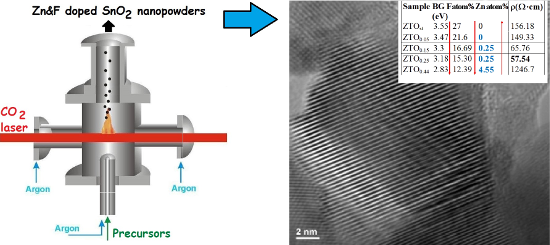
- precursors to oxides (SnO2 and ZnO, in fact Zn-doped SnO2), CO2 and H2O in the laser pyrolysis reaction zone. Due to the much higher reactivity of metals, the metal oxides are formed with priority, and the unoxidized alkyl radicals from the precursors will undergo a complex process involving reactions such




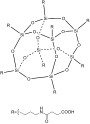
A novel polyhedral oligomeric silsesquioxane-modified layered double hydroxide: preparation, characterization and properties
Beilstein J. Nanotechnol. 2018, 9, 3053–3068, doi:10.3762/bjnano.9.284
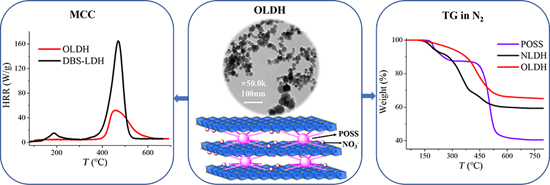
- reacts with the metal oxides to form a continuous and compact condensed phase. This mixed carbonized protecting layer provides a good barrier to the transfer of heat and mass, preventing the inner layer against further decomposition and accelerating the formation of char. Evidence in favor of this








Ternary nanocomposites of reduced graphene oxide, polyaniline and hexaniobate: hierarchical architecture and high polaron formation
Beilstein J. Nanotechnol. 2018, 9, 2936–2946, doi:10.3762/bjnano.9.272
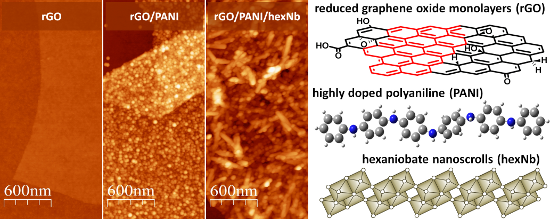
- properties when compared to individual phases or enable new technological applications [1][2][3]. For instance, ternary nanocomposites (conducting polymers, metal oxides and carbon-based materials) exhibit improved energy and power densities, improved stabilities upon charge/discharge cycles [4], and higher


Nanostructure-induced performance degradation of WO3·nH2O for energy conversion and storage devices
Beilstein J. Nanotechnol. 2018, 9, 2845–2854, doi:10.3762/bjnano.9.265
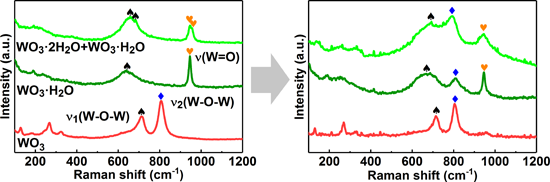
- layered transition metal oxides. Keywords: 2D layered oxides; interlayer water; van der Waals interaction; WO3·nH2O; Introduction Within the less than 20 years since the successful exfoliation of atomically thin graphene, 2D layered nanomaterials have been contributing greatly to the advances of
- nanoscience and nanotechnology with their exotic properties and versatility of applications [1][2][3][4][5][6][7][8][9][10]. Among all 2D nanomaterials, 2D transition metal oxides (TMOs) are the group with the highest electrochemical activities for energy conversion and storage [11][12][13][14][15]. As the


Graphene-enhanced metal oxide gas sensors at room temperature: a review
Beilstein J. Nanotechnol. 2018, 9, 2832–2844, doi:10.3762/bjnano.9.264
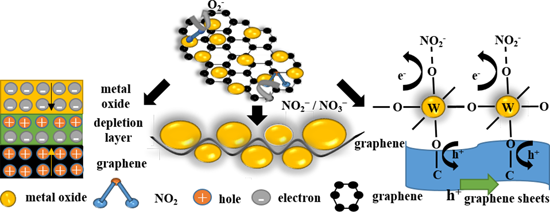
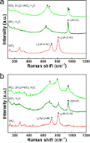
- sensors based on rGO/metal oxides, which exhibit enhanced sensing performance mainly due to the formation of heterojunctions. Tai et al. [46] deposited ZnO nanoparticles and GO thin films on gold interdigital electrodes (IDEs) through a simple spray process and thermally reduced the deposits to ZnO–rGO
- during the carbothermal reduction (1150 °C). Another was the formation of Schottky barriers between ZnO and the metal electrodes, which caused ZnO to exhibit p-type semiconductor properties. The gas-sensing performance parameters of the abovementioned sensors for reducing gases based on metal oxides and
- performance of the ternary composite sensor was still the p–n heterojunctions. The gas-sensing performance parameters of the abovementioned NO2 sensors based on metal oxides and rGO enhanced by the formation of semiconductor interfaces are listed in Table 2. Enhancement by improved morphology and structure By



Improved catalytic combustion of methane using CuO nanobelts with predominantly (001) surfaces
Beilstein J. Nanotechnol. 2018, 9, 2526–2532, doi:10.3762/bjnano.9.235
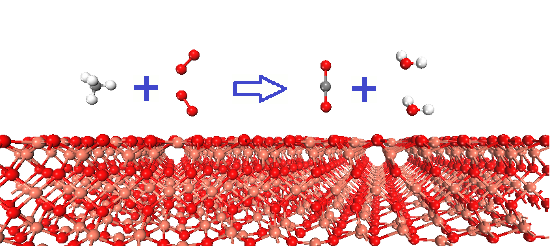
- most metal oxides. To improve the reactivity of metal oxides, surfaces with high energy (and thus low surface area), namely minority surfaces, may offer new opportunities. Although minority surfaces often diminish quickly during crystal growth due to their low stability, they can be stabilized by


Thickness-dependent photoelectrochemical properties of a semitransparent Co3O4 photocathode
Beilstein J. Nanotechnol. 2018, 9, 2432–2442, doi:10.3762/bjnano.9.228
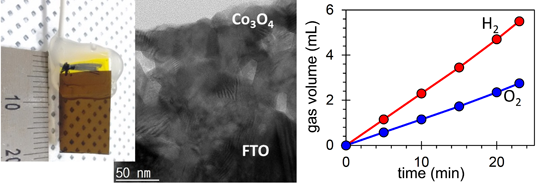
- -dependent properties; Introduction Hydrogen production using water splitting in photoelectrochemical (PEC) cells may help to overcome challenges in the conversion and storage of solar energy. Most of the metal oxides are earth-abundant, non-toxic, stable and easy to synthesise, and hence attractive
- -absorber materials such as metal sulfides and metal oxides via heterojunction. The photocurrent can be further improved by three approaches: The first one is to improve the optoelectronic processes in the Co3O4 film [39], the second is to improve the composition of the heterojunction, i.e. Co3O4/Ga2O3 [42



ZnO-nanostructure-based electrochemical sensor: Effect of nanostructure morphology on the sensing of heavy metal ions
Beilstein J. Nanotechnol. 2018, 9, 2421–2431, doi:10.3762/bjnano.9.227
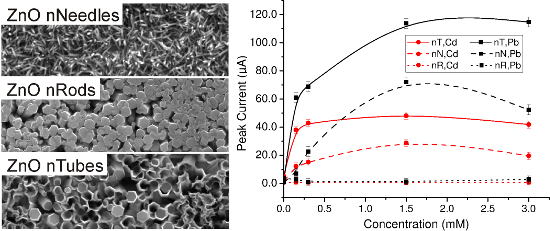
- molecular recognition device based on the nanostructures of metal oxides for biomolecules detection”.


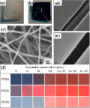
Electrospun one-dimensional nanostructures: a new horizon for gas sensing materials
Beilstein J. Nanotechnol. 2018, 9, 2128–2170, doi:10.3762/bjnano.9.202

- ][22][23][24][25][26][27][28][29][30][31][32][33]. Different types of nanostructures, including those based on metal oxides (MOx), organic and inorganic materials and carbon nanostructures, have shown promising sensing performance due to their unique characteristics, such as high surface-to-volume
- shown in Figure 1. A nanofiber film has a surface area approximately twice that of a continuous thin film. This property means that nanofibers are excellent candidates for gas sensing applications. Moreover, nanofibers derived from a variety of materials, such as polymers, metals, metal-oxides and
- the development of the gas sensors employing electrospun nanofibers have been published. Recently, Choi et al. [43] reported a review on chemiresistive and optical sensors employing only semiconducting metal oxides and their functionalization by catalytic nanoparticles. Herein, we will comprehensively







Metal-free catalysis based on nitrogen-doped carbon nanomaterials: a photoelectron spectroscopy point of view
Beilstein J. Nanotechnol. 2018, 9, 2015–2031, doi:10.3762/bjnano.9.191
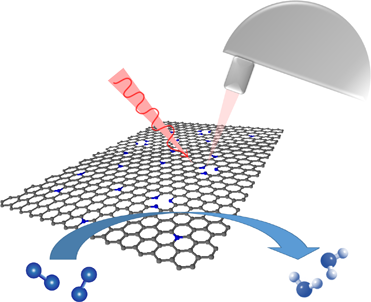
- as platinum or its alloys, or metal oxides, which affect the engineering cost of fuel cells being also energy consuming and not highly selective [3]. Therefore, research efforts have been devoted towards alternative highly active catalysts from non-precious metals [4]. Repeatedly reported potential





Synthesis of rare-earth metal and rare-earth metal-fluoride nanoparticles in ionic liquids and propylene carbonate
Beilstein J. Nanotechnol. 2018, 9, 1881–1894, doi:10.3762/bjnano.9.180
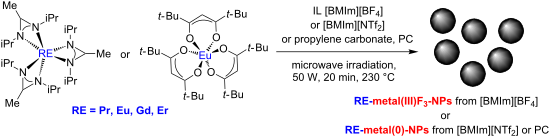
- are given in literature and thereby exclude the formation of metal(0) and the presence of organic fluoride (from residual IL). In addition, the formation of metal oxides can be excluded, since the measured binding energies of oxygen match very well with the literature values of organic oxygen [48][49
- fluorides. We note that the amount of metal oxides is below the detection limit and that small amounts of water in the ILs of up to 30 ± 18 ppm for [BMIm][BF4] does not lead to a detectable formation of metal oxides. The water amount in the less hydrophilic IL [BMIm][NTf2] was even lower (10 ppm). RE-NPs


Quantitative comparison of wideband low-latency phase-locked loop circuit designs for high-speed frequency modulation atomic force microscopy
Beilstein J. Nanotechnol. 2018, 9, 1844–1855, doi:10.3762/bjnano.9.176
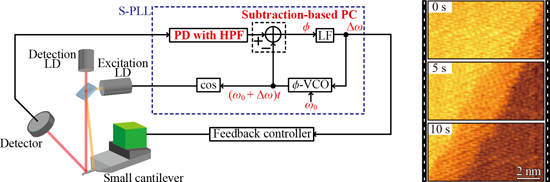
- [1]. It has been used under ultrahigh vacuum conditions for high-resolution imaging of various materials, including metals, semiconductors, metal oxides, and organic molecules [2][3][4][5]. Furthermore, recent advances in FM-AFM have enabled atom manipulation and identification at room temperature [6



Cryochemical synthesis of ultrasmall, highly crystalline, nanostructured metal oxides and salts
Beilstein J. Nanotechnol. 2018, 9, 1755–1763, doi:10.3762/bjnano.9.166
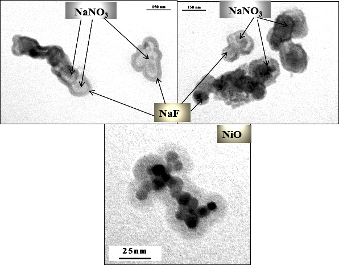
- /bjnano.9.166 Abstract In the present investigation, the cryochemical approach was used for the improved synthesis of nanocrystalline metal oxides (e.g., NiO, Fe2O3, CeO2) and NaNO3 salt. It was shown that the solutions and sols can be treated with a liquid nitrogen stream (−196 °C) to increase the powder
- characteristics without significant increase in technical development costs. Keywords: cryochemical synthesis; cryosols; nanocrystalline metal oxides; nanostructured powders; Introduction In recent decades, nanostructured raw products have become particularly in demand for obtaining many of the new functional
- that of the same composition prepared directly from an as-prepared microemulsion. In [14] we reported on a method for producing metal oxides (CeO2, Fe2O3 and NiO) with a crystallite size less than ≤10 nm by a combination of the sol–gel method and cryotechnology. The essence of the method is to create


Nitrogen-doped carbon nanotubes coated with zinc oxide nanoparticles as sulfur encapsulator for high-performance lithium/sulfur batteries
Beilstein J. Nanotechnol. 2018, 9, 1677–1685, doi:10.3762/bjnano.9.159
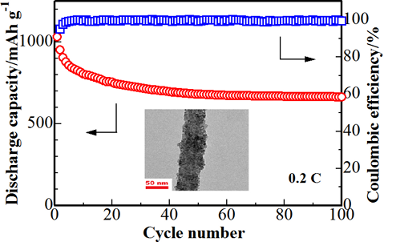
- Li/S batteries [5]. Another popular strategy to reduce polysulfides from dissolution is using metal oxides, such as TiO2 [6], ZnO [7], MnO2 [8], and SiO2 [9], as the additives or coating layer in the S-cathode. This is because metal oxides can provide strong binding sites with S and reduce the
- shuttling effect [10]. In addition, metal oxides can be easily synthesized in various morphologies, e.g., hollow structures, to “hold” S [11]. Similar to S, metal oxides are, however, not conductive [12]. Therefore, an efficient approach is to use hybrids/composites of carbon materials and metal oxides, as


Cr(VI) remediation from aqueous environment through modified-TiO2-mediated photocatalytic reduction
Beilstein J. Nanotechnol. 2018, 9, 1448–1470, doi:10.3762/bjnano.9.137
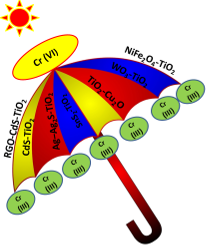
- TiO2 as a photocatalyst and the importance of its modification for photocatalytic reduction of Cr(VI) has also been addressed. In this review, the photocatalytic activity of TiO2 after modification with carbon-based advanced materials, metal oxides, metal sulfides and noble metals towards reduction of
- photocatalytic activity and light absorption range of TiO2 towards reduction of Cr(VI). The importance of the combination of metal oxides with TiO2 for photocatalytic reduction of Cr(VI) was discussed in section three. Section four highlights the enhancement of photocatalytic activity and the light absorption
- . This also enhances the light absorption range towards longer wavelengths. The band edge potentials and band gaps of different semiconductor oxides and sulfides are given in Figure 2. Photocatalytic reduction of Cr(VI) over TiO2 modified with simple transition metal oxides under UV irradiation


Understanding the performance and mechanism of Mg-containing oxides as support catalysts in the thermal dry reforming of methane
Beilstein J. Nanotechnol. 2018, 9, 1162–1183, doi:10.3762/bjnano.9.108
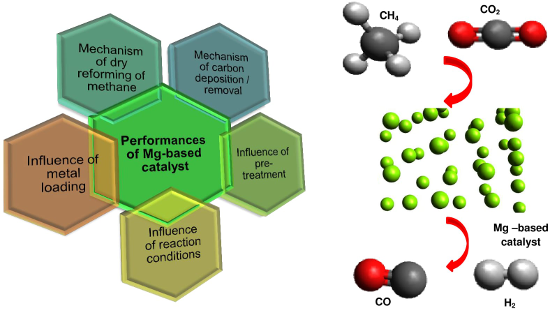
- alkaline earth metal oxides, to the DRM catalyst to alter the catalyst acidity [39][45][46][47][48]. Numerous publications have reported on the ability of Mg-containing oxide catalysts to decrease the rate of carbon formation in a DRM reaction [18][19][49][50][51][52][53][54]. MgO exhibits superior surface







Review on nanoparticles and nanostructured materials: history, sources, toxicity and regulations
Beilstein J. Nanotechnol. 2018, 9, 1050–1074, doi:10.3762/bjnano.9.98

- production methods for these carbon-based materials fabrication (except carbon black) [8]. (ii) Inorganic-based nanomaterials: These NMs include metal and metal oxide NPs and NSMs. These NMs can be synthesized into metals such as Au or Ag NPs, metal oxides such as TiO2 and ZnO NPs, and semiconductors such as


Comparative study of antibacterial properties of polystyrene films with TiOx and Cu nanoparticles fabricated using cluster beam technique
Beilstein J. Nanotechnol. 2018, 9, 861–869, doi:10.3762/bjnano.9.80
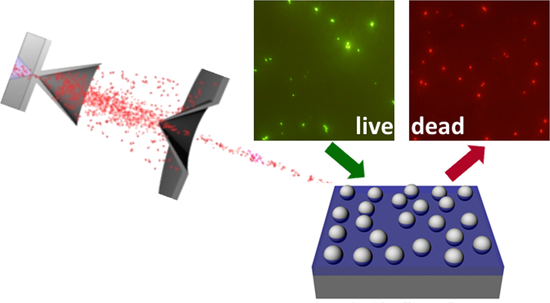
- ], and they are also cheaper compared to silver. These particles mainly show bactericidal effects through mechanisms (i) and (iii). Among the metal oxides, TiO2 is the best-known and most widely used semiconductor material with a wide band gap that under UV illumination generates electron–hole pairs




Facile synthesis of a ZnO–BiOI p–n nano-heterojunction with excellent visible-light photocatalytic activity
Beilstein J. Nanotechnol. 2018, 9, 789–800, doi:10.3762/bjnano.9.72
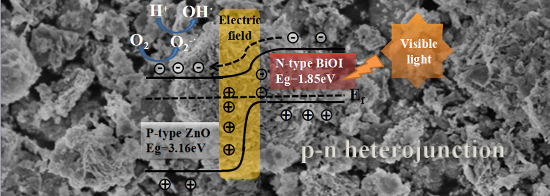
- degradation [3][4][5][6], nitrogen fixation [7][8], to solar fuel production [9]. The metal oxides, such as CdO [10], Al2O3 [11], and CuO [12][13], has attracted a lot of interest in photocatalytic applications. And among all of these metal oxides, it is titanium dioxide and zinc oxide (TiO2 and ZnO) that are
- the most widely exploited by taking advantage of their long-term stability and environmental non-toxicity, in addition to providing a low-cost alternative to the n-type semiconductor photocatalysts [14][15][16]. However, further application of these metal oxides is usually significantly limited by the


Surface-plasmon-enhanced ultraviolet emission of Au-decorated ZnO structures for gas sensing and photocatalytic devices
Beilstein J. Nanotechnol. 2018, 9, 771–779, doi:10.3762/bjnano.9.70
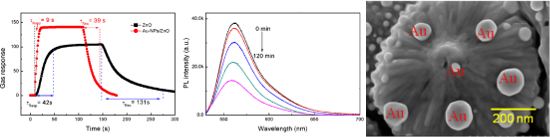
- precursors is higher, resulting in the core-spike architecture by minimizing the surface energy. It was found that the plasmonic metal nanomaterial/metal-oxide semiconductor structures were preferred as the nanometer-sized metal oxides for high photocatalytic activity and wide dispersion. However, in this





A review of carbon-based and non-carbon-based catalyst supports for the selective catalytic reduction of nitric oxide
Beilstein J. Nanotechnol. 2018, 9, 740–761, doi:10.3762/bjnano.9.68
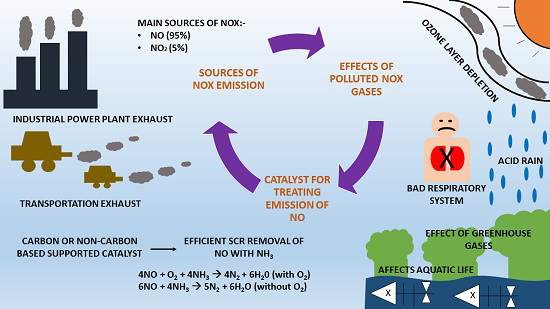
- catalysts have been widely studied due to their high surface area, porosity, ability to regenerate and be reused, and good support properties [17]. Several metal oxides were impregnated with carbon-based materials such as carbon nanotubes (CNTs), activated carbon (AC), activated carbon nanofibres (ACNFs
- that the active component was highly dispersed onto the TiO2 and CNT surface because the copper oxide was not detectable by XRD measurements. CNTs play a significant role in the catalyst structure, as they promote the distribution of metal oxides. The XPS analysis shows that the intensity peak of Cu
- impregnated with several metal oxides (Ce, Ni, Fe, and V). The palm shell support was found to be capable of removing NO gas and further loading with metal oxides increased the conversion reaction due to the increased micropore volume of the palm shell AC. Yoon et al. [98] studied the effect of propellant
Combined pulsed laser deposition and non-contact atomic force microscopy system for studies of insulator metal oxide thin films
Beilstein J. Nanotechnol. 2018, 9, 686–692, doi:10.3762/bjnano.9.63
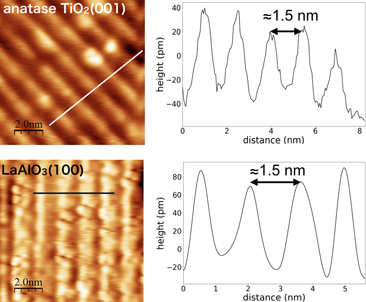
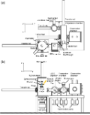
- deposition; Introduction The surfaces of metal oxides have attractive and useful properties, such as superconductivity, ferroelectricity and catalytic activity [1]. These properties are derived from the unique structure, the electron and spin interactions, the degree of freedom of the electron orbit and the
- lattice constant of the metal oxides. To understand and apply these characteristics, various studies have been conducted thus far, including investigations of physical properties by growth of ultra-high-quality metal oxide thin films [2][3], discovery of novel physical properties by fabricating
- heterointerfaces using different metal oxides [4][5], and expression of conductivity and magnetism by doping metal oxides with specific elements [6][7]. In studies of metal oxide surfaces at the atomic scale, developments of observation techniques have been advancing rapidly, especially in the field of



Mechanistic insights into plasmonic photocatalysts in utilizing visible light
Beilstein J. Nanotechnol. 2018, 9, 628–648, doi:10.3762/bjnano.9.59
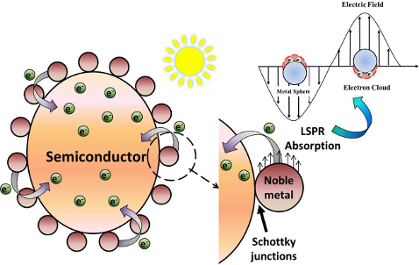
- form, etc. Although many semiconductor metal oxides such as N-doped TiO2 [88], Fe2O3 [89], CdS [90] and Bi2O3 [91][92] have been reported, this section will mainly focus on TiO2, which is the most widely studied. Au or Ag nanoparticles can be employed to produce an outstanding plasmonic effect in the