Search results
Search for "micelles" in Full Text gives 117 result(s) in Beilstein Journal of Nanotechnology.
Optimizing the synthesis of CdS/ZnS core/shell semiconductor nanocrystals for bioimaging applications
Beilstein J. Nanotechnol. 2014, 5, 919–926, doi:10.3762/bjnano.5.105
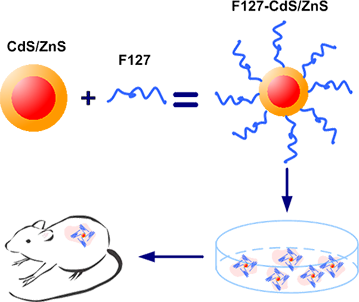
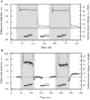
- intensity, stronger stability and exhibited a longer lifetime compared to uncapped CdS. The CdS/ZnS nanocrystals were stabilized in Pluronic F127 block copolymer micelles, offering an optically and colloidally stable contrast agents for in vitro and in vivo imaging. Photostability test exhibited that the
- ZnS protective shell not only enhances the brightness of the QDs but also improves their stability in a biological environment. An in-vivo imaging study showed that F127-CdS/ZnS micelles had strong luminescence. These results suggest that these nanoparticles have significant advantages for bioimaging
- novel integrative strategy that produces bioconjugated CdS/ZnS QDs for the use in bioimaging. In this study, we report a rapid and straightforward method for formulating CdS/ZnS QDs, encapsulated CdS/ZnS QDs in a hydrophobic core provided by block copolymer (Pluronic F127) micelles for bioimaging. The


Cyclic photochemical re-growth of gold nanoparticles: Overcoming the mask-erosion limit during reactive ion etching on the nanoscale
Beilstein J. Nanotechnol. 2013, 4, 886–894, doi:10.3762/bjnano.4.100
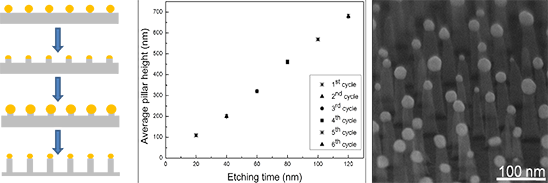
- distance within a given periodic arrangement. 5) The maximizing of defect-free domain sizes of such NP lattices. A relative simple and affordable approach that nevertheless addresses all the above requirements is based on the self-organization of organic carrier systems such as colloids or reverse micelles
- ] carriers. In the following we focus exclusively on Au-precursor (HAuCl4) loaded diblock-copolymers [poly(styrene)(PS)-block-poly(2-vinylpyridine)(P2VP)], which is commercially available from Polymer Source Inc. Canada] that form reverse micelles in toluene. Details on preparing the solution, the dip
- given in parentheses are a measure of each block length) the size (diameter) of the finally obtained Au NP are completely determined by the amount of precursor salt added to the solution. By prolonged stirring, the micelles will be homogeneously loaded with precursor to deliver Gaussian size


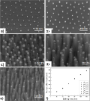
Photocatalytic antibacterial performance of TiO2 and Ag-doped TiO2 against S. aureus. P. aeruginosa and E. coli
Beilstein J. Nanotechnol. 2013, 4, 345–351, doi:10.3762/bjnano.4.40
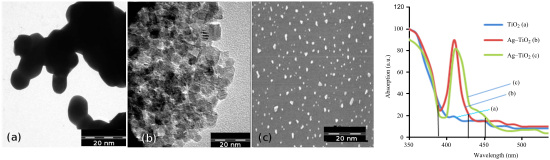
- -catalyzed sol–gel process [23] starting from titanium(IV) tetrabutoxide (2.94 mM) and using 5 mL of water (pH 2) in the presence of toluene as solvent containing 1% aerosol-OT (reverse micelles) under stirring for 1 h: After gelation, the gel was dried at 100 °C in an oven for 24 h; white TiO2 nanosized
- mM) using 5 mL of water (pH 2) in presence of toluene as solvent containing 1% aerosol-OT (reverse micelles). The appropriate concentration of silver salt (3% or 7%) in 0.5 mL deionized water was dropwise added to the reaction mixture under stirring. After gelation, the nanoparticles were allowed to


Guided immobilisation of single gold nanoparticles by chemical electron beam lithography
Beilstein J. Nanotechnol. 2013, 4, 336–344, doi:10.3762/bjnano.4.39
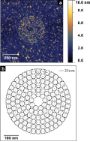
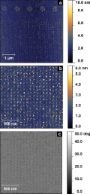
- -assembly of micelles loaded with HAuCl4 and subsequent reduction by hydrogen plasma [8]. Such assembly protocols are more facile, but are limited to the formation of self-forming periodic patterns, which are typically of hexagonal symmetry [8][9][10]. In order to increase the structural variability, guided


Nanoscopic surfactant behavior of the porin MspA in aqueous media
Beilstein J. Nanotechnol. 2013, 4, 278–284, doi:10.3762/bjnano.4.30
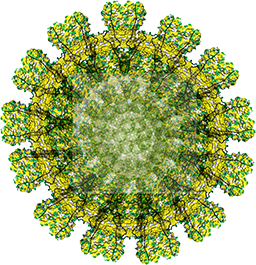
- in aqueous phase. Engelhardt et al. have established by using high-resolution TEM that MspA forms micelles and linear aggregates on surfaces showing a zipper-like pattern in the absence of surfactants, and that MspA is able to reconstitute in dimyristoyl phosphatidylcholine (DMPC) vesicles in the
- of surfactants forming spherical or ellipsoidal micelles. To our surprise, TEM characterization of MspA aggregates clearly indicated the formation of vesicles (Figure 4). However, vesicles are typically formed by surfactant bilayers featuring a packing parameter in the range of 0.5 to 1.0 [25]. This
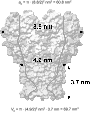
- and positive charges at the outer surface of MspA is shown in Figure 1B and Figure 1C. The experimental finding that MspA forms vesicles and not micelles under the described conditions clearly indicates that there exist additional forces in supramolecular MspA aggregates, which are hydrogen bonding




Controlled positioning of nanoparticles on a micrometer scale
Beilstein J. Nanotechnol. 2012, 3, 773–777, doi:10.3762/bjnano.3.86
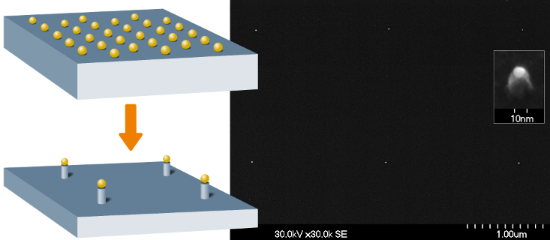
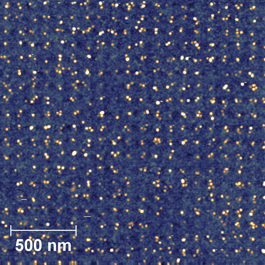
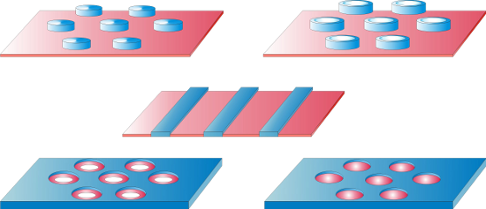
- arranged in arrays of a certain geometry. For this purpose, a method is introduced combining the bottom-up self-organization of precursor-loaded micelles providing Au nanoparticles (NPs), with top-down electron-beam lithography. As an example, 13 nm Au NPs are arranged in a square array with interparticle
- them as masks for subsequent etching procedures to transfer the NP pattern into their supporting substrate. In this respect, the notion of a nanoparticle should include as well colloids and micelles since their use for patterning is more widely spread [7][8][9][10][11][12]. Of course, in addition to
- distances well above 1 µm. It is exactly this problem of combining the nano- with the micro-scale that is the focus of the present contribution. In the following approach, NPs prepared by exploiting the self-organization of precursor loaded micelles formed from diblock-copolymers play a major role as a


Magnetic-Fe/Fe3O4-nanoparticle-bound SN38 as carboxylesterase-cleavable prodrug for the delivery to tumors within monocytes/macrophages
Beilstein J. Nanotechnol. 2012, 3, 444–455, doi:10.3762/bjnano.3.51
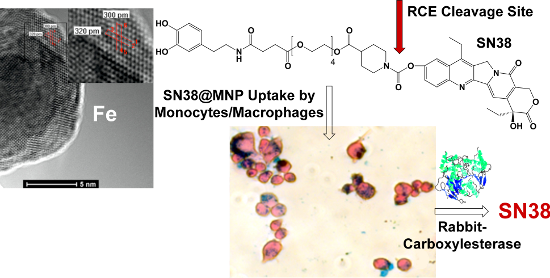
- vehicles that can incorporate SN38 by chemical conjugation or physical entrapment. Polymeric micelles, liposomes and thermally sensitive polymer-based nanoparticles, as well as multi-armed-PEG-functionalized nanographene oxide, have been used as carriers for the delivery of SN38 into biological systems [21
- ][22][23][24][25][26]. SN38-loaded polymeric micelles (NK012) have been used in preclinical and clinical studies against various types of cancer. Specific accumulation of this formulation to the tumor site by the EPR effect (enhanced permeation and retention), and sustained release of SN38 in tumor


Mesoporous MgTa2O6 thin films with enhanced photocatalytic activity: On the interplay between crystallinity and mesostructure
Beilstein J. Nanotechnol. 2012, 3, 123–133, doi:10.3762/bjnano.3.13
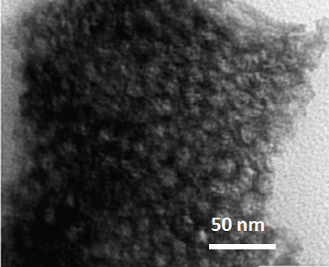
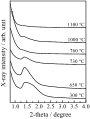
- , the SAXS scattering maxima can still be discerned after calcination up to 1000 °C. Therefore, the present ordered mesoporous MgTa2O6 film possessed a relatively high thermal stability. This property was attributed to the special templating properties of KLE, which forms relatively large micelles






Template-assisted formation of microsized nanocrystalline CeO2 tubes and their catalytic performance in the carboxylation of methanol
Beilstein J. Nanotechnol. 2011, 2, 776–784, doi:10.3762/bjnano.2.86
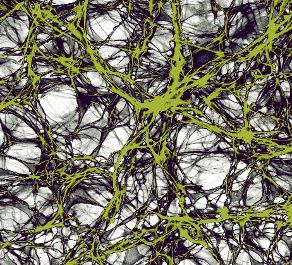
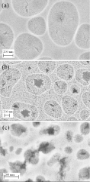
- , which form spherical and cylindrical micelles, and which could thus allow for a better contact of the inorganic ceria sol with the electrospun polymer fibres during impregnation. After spray-coating followed by sol–gel transformation to the ceramic green body at 80 °C overnight, the green body was


Surface induced self-organization of comb-like macromolecules
Beilstein J. Nanotechnol. 2011, 2, 569–584, doi:10.3762/bjnano.2.61
- unusual viscoelastic properties (super-soft elastomers) [5][14], may form micelles as big as 300 nm [15] and have extremely interesting 2D conformational behavior in the adsorbed state [4]. Brush copolymers with diblock and triblock copolymers as side chains can be used for the creation of well defined
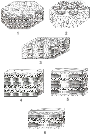
- behavior [46][47][48]. Both scaling theory [46][47] and simulations [47][48] predicted that collapse of the main chain with increase of hydrophobicity in densely grafted combs would lead to formation of a necklace of intramolecular starlike micelles, with hydrophobic corelike domains connected by extended
- bridges and hydrophilic corona formed by the grafts (Figure 1). Scaling analysis reveals that the formation of finite-size intramolecular micelles happens only in a narrow range of interaction parameters near the transition point. A similar pearl-necklace structure was detected experimentally for core




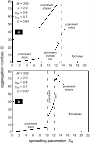
Nanoscaled alloy formation from self-assembled elemental Co nanoparticles on top of Pt films
Beilstein J. Nanotechnol. 2011, 2, 473–485, doi:10.3762/bjnano.2.51
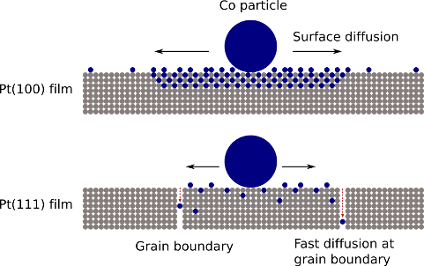
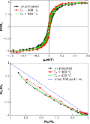
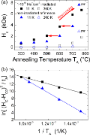
- ) substrates, respectively. For this purpose, metallic Co nanoparticles (diameter 7 nm) were prepared with a spacing of 100 nm by deposition of precursor-loaded reverse micelles, subsequent plasma etching and reduction on flat Pt surfaces. The samples were then annealed at successively higher temperatures
- probe microscopy techniques [5], one is left with processes relying on the self-assembly of colloids or micelles [6][7][8]. In the context of magnetic NPs, two prominent examples, both dealing with the preparation of magnetically attractive FePt NPs, which successfully demonstrated fulfillment of the
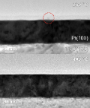
- orientation of the STO substrates we find a cube-on-cube growth of the Pt film on the STO(100) with orientations Pt(100)||STO(100) and Pt[010]||STO[010]. Co nanoparticles on Pt films The preparation of metal NPs is based on spherical reverse micelles formed by the diblock copolymer poly(styrene)[m]-block-poly


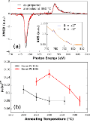
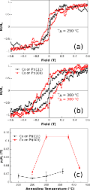


Platinum nanoparticles from size adjusted functional colloidal particles generated by a seeded emulsion polymerization process
Beilstein J. Nanotechnol. 2011, 2, 459–472, doi:10.3762/bjnano.2.50
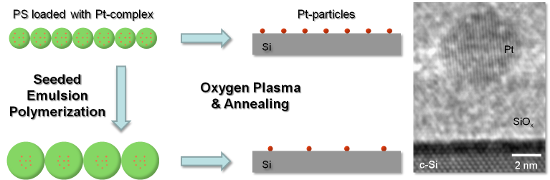
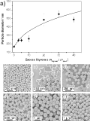
- concentrations were below the critical value for micelle formation (cmc). Such concentrations are used in conventional emulsion polymerization and lead to particles nucleated in monomer swollen micelles [13]. Figure 3b and c show representative SEM micrographs of the resulting dispersions. For both cases

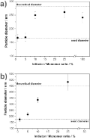


Organic–inorganic nanosystems
Beilstein J. Nanotechnol. 2011, 2, 363–364, doi:10.3762/bjnano.2.41

- the application to pre-patterned substrates acting as templates. In the above example, diblock-copolymers will form spherical micelles within a certain window of block lengths in a properly chosen solvent, and such micelles can be used as carriers for a metal precursor during their self-organization
- loaded micelles or, more generally, colloids, the organic carriers are completely removed after their self-organization by various plasma treatments while the precursor compounds are transformed into metal oxides or, finally, into metals. In this way, hexagonal ordered arrays of metal nanoparticles can
Novel acridone-modified MCM-41 type silica: Synthesis, characterization and fluorescence tuning
Beilstein J. Nanotechnol. 2011, 2, 284–292, doi:10.3762/bjnano.2.33
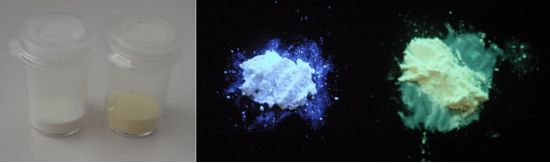
- decrease of ordering with increasing bulk of the organic groups, although all exhibited very high specific surface areas. As the formation of micelles will strongly depend on the nature of the organic molecule and its concentration, it was decided to keep the amount of precursor 1 at 10 mol % with respect


Review and outlook: from single nanoparticles to self-assembled monolayers and granular GMR sensors
Beilstein J. Nanotechnol. 2010, 1, 75–93, doi:10.3762/bjnano.1.10
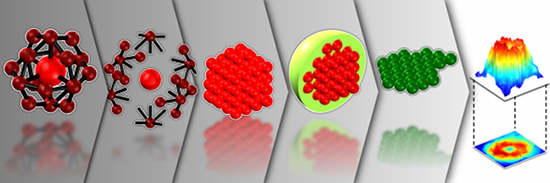
- technique which is based on a thermally stabile, isotropic dispersion of two immiscible solvents, in which the micro domains of one or both solvents are stabilized by tensides on the boundary layer. Such behavior is well known from tensides in water which form micelles due to hydrophilic head groups and
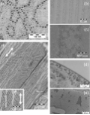
- hydrophobic tails. Such micelles have a size of 1 to 50 nm depending on the tenside concentration [18]. The precursor is confined within these defined droplets which may, thus, act as nanoreactors in which particle growth is initiated. A typical result obtained by the use of an isopropanol/water emulsion and




Preparation and characterization of supported magnetic nanoparticles prepared by reverse micelles
Beilstein J. Nanotechnol. 2010, 1, 24–47, doi:10.3762/bjnano.1.5
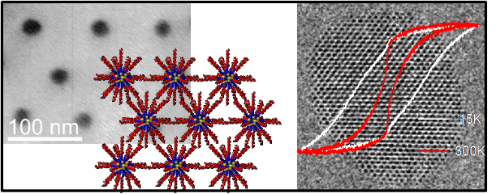
- ) nanoparticles were prepared by exploiting the self-organization of precursor loaded reverse micelles. Achievements and limitations of the preparation approach are critically discussed. We show that self-assembled metallic nanoparticles can be prepared with diameters d = 2–12 nm and interparticle distances D
- conservation of nanoparticles by Au photoseeding is presented. Keywords: Co; CoPt; core–shell particles; FePt; magnetic anisotropy; magnetic particles; plasma etching; reverse micelles; self-assembly; Introduction Magnetic nanoparticles have been the focus of research for over 60 years [1][2]. These
- colloidal approach where NPs are formed within a liquid, the preparation of precursor loaded reverse micelles has been developed [36][37]. Here, precursor filled diblock-co-polymers are used to form hexagonally ordered arrays on different substrates by dip-coating [38]. In a second step, NPs are formed on






Sensing surface PEGylation with microcantilevers
Beilstein J. Nanotechnol. 2010, 1, 3–13, doi:10.3762/bjnano.1.2
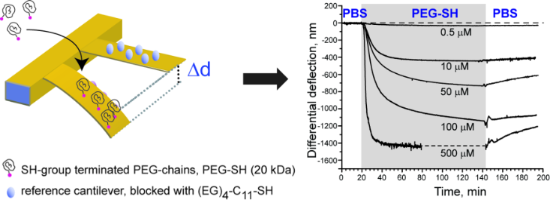
- transition in the layer (see Discussion). To further characterize the conformation of the PEG layer, we repeated our AFM measurements in 20% 2-propanol which is a poor solvent for PEG. This is because polymer brushes are known to form more compact “collapsed” clusters, known as pinned micelles, in poor
- dependent on the applied imaging force. In this case, the AFM image resolution does not change when the imaging force is varied between 30 pN and 120 pN. Here, it is noteworthy that only the underlying Au surface and aggregates of collapsed PEG chains (pinned micelles) are resolved. Sensing the reversible