Search results
Search for "nucleation" in Full Text gives 382 result(s) in Beilstein Journal of Nanotechnology. Showing first 200.
Oxidation of Au/Ag films by oxygen plasma: phase separation and generation of nanoporosity
Beilstein J. Nanotechnol. 2020, 11, 1608–1614, doi:10.3762/bjnano.11.143
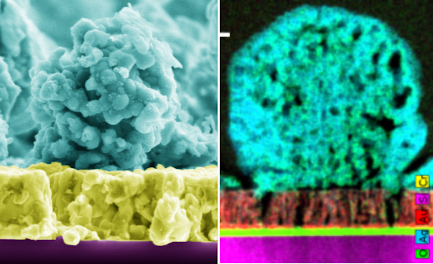
- , resulting in a mobility decrease at the surface; and (2) the high porosity of the film which serves as a support for the surface diffusion of silver. The clusters formed during the early stages of the process serve as nucleation sites which grow into larger spheres as the oxidation process evolves. The


One-step synthesis of carbon-supported electrocatalysts
Beilstein J. Nanotechnol. 2020, 11, 1419–1431, doi:10.3762/bjnano.11.126

- . [28] and Suzuki and coworkers [29]. The reduction of the density of the CNWs results from the etching of the CNWs at the initial nucleation step by atomic hydrogen, effectively reducing the nucleation sites. Increasing the H2 concentration in the plasma finally results in the deposition of an
- 3). As the precursor molecule provides much more carbon than platinum, the reduction in platinum loading likely results from a significant increase in the CNW growth and nucleation rate with substrate temperature (see Figure 4c) above the capability of the surrounding to provide sufficient Pt for




Growth of a self-assembled monolayer decoupled from the substrate: nucleation on-command using buffer layers
Beilstein J. Nanotechnol. 2020, 11, 1291–1302, doi:10.3762/bjnano.11.113
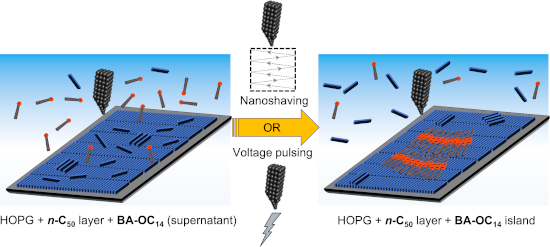
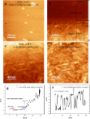
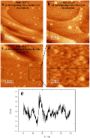
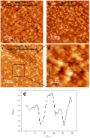
- layer. We discovered that the self-assembly on top of the buffer layer allows better control over the nanoscale manipulation of the self-assembled networks. Using the influence of the STM tip, we could initiate the nucleation of small isolated domains of the benzoic acid on-command in a reproducible
- fashion. Such controlled nucleation experiments hold promise for studying fundamental processes inherent to the assembly process on surfaces. Keywords: benzoic acid; nucleation; self-assembly; solution–solid interface; substrate effect; Introduction The ability of some molecules to crystalize in more
- buffer layer experiments. In order to minimize the influence of the domain borders of the buffer layers on the nucleation and the growth of the BA-OC14 domains, we first optimized the deposition conditions in order to obtain large domains of n-C50. Specifically, we targeted domain sizes of ≥250 nm × 250


Magnetic-field-assisted synthesis of anisotropic iron oxide particles: Effect of pH
Beilstein J. Nanotechnol. 2020, 11, 1230–1241, doi:10.3762/bjnano.11.107
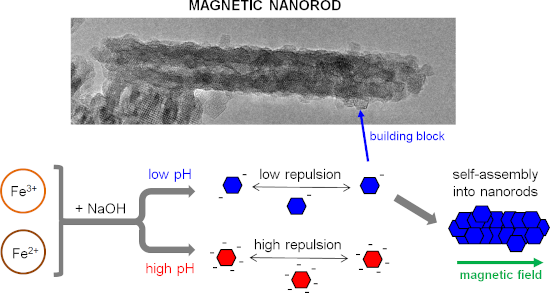
- constant until the end of the synthesis (2–2.5 h). During the first several seconds, the color of the reaction mixture changes to black (Figure 1). This is consistent with the fact that the crystal nucleation happens almost instantly [6][43]. After that, only changes or reorganization of the crystalline
- ). Similar pictures depicting many primary nanoparticles attached to the surface of a larger magnetite particle were recently observed in spherical nanoparticles [9]. This was considered as evidence for magnetite nucleation and the growth mechanism, consisting of the aggregation of primary nanoparticles. As





Gram-scale synthesis of splat-shaped Ag–TiO2 nanocomposites for enhanced antimicrobial properties
Beilstein J. Nanotechnol. 2020, 11, 1119–1125, doi:10.3762/bjnano.11.96
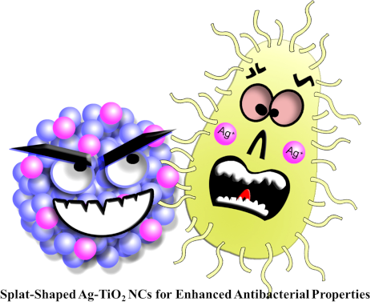
- TiO2 NP nucleation started after adding the urea and PVP surfactant. Then, the aqueously dispersed AgNO3 solution was poured into the prepared TiO2/PVP mixture. It was assumed that the positively charged Ag+ ions interacted with the negatively charged PVP-modified TiO2 NPs due to electrostatic


Straightforward synthesis of gold nanoparticles by adding water to an engineered small dendrimer
Beilstein J. Nanotechnol. 2020, 11, 1110–1118, doi:10.3762/bjnano.11.95
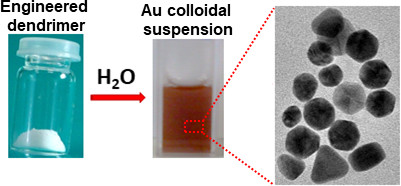
- few studies [62][63][64]. According to these studies none of the nanoparticles were obtained as a resulted of fast nucleation, which in turn should lead to spherical and uniform nanoparticles with a 2–5 nm diameter range. On the contrary, the shapes that were observed here were obtained through a
- quantity of the Girard’s T reagent was sufficient to induce the first nucleation steps. The cleavage of all the hydrazone linkages would generate dendrimers 1 or 2 that are insoluble in water; however, no precipitate was observed. The intact dendrimer 4, on the other hand, acted as a nanoreactor in water


Electrochemical nanostructuring of (111) oriented GaAs crystals: from porous structures to nanowires
Beilstein J. Nanotechnol. 2020, 11, 966–975, doi:10.3762/bjnano.11.81
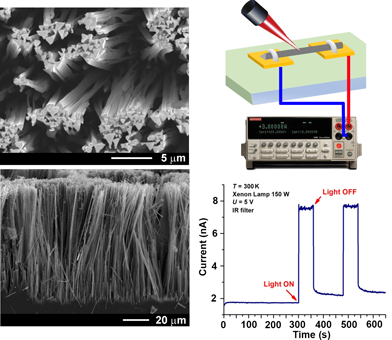
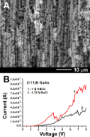
- propagation of pores was observed for the potentiostatic mode of anodization (Figure 1C). Switching the anodization voltage to 1 V stops the formation of the porous layer, since this value is below the pore nucleation potential (1.8 V) established from the I–V characteristic, which is in agreement with the
- KOH electrolyte, and the orientation of the arrays is basically random, while the nanowires produced in HNO3 electrolyte are highly oriented perpendicularly to the wafer surface. No nanowires were reported after GaAs anodization in H2SO4 electrolyte, which was used for uniform pore nucleation in a two
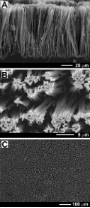
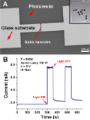
- number of tilted pores. One can conclude that etching in HNO3 electrolyte suppresses the nucleation of tilted pores as compared to anodization in HCl or H2SO4 electrolyte, resulting in the fabrication of non-porous GaAs nanowires, which are better suitable for photodetector applications. High-aspect





Templating effect of single-layer graphene supported by an insulating substrate on the molecular orientation of lead phthalocyanine
Beilstein J. Nanotechnol. 2020, 11, 814–820, doi:10.3762/bjnano.11.66
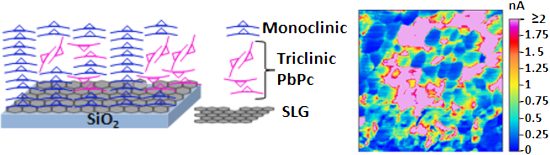
- [6][11][20][21][22]. Studies concerning the orientation of nonplanar MPcs on graphene are rare. Vanadyl phthalocyanine (VOPc) has been reported to attain edge-on configuration on a graphene surface [23]. The nucleation of CuPc on graphene is reported to be influenced by the underlying Ir(111


Evolution of Ag nanostructures created from thin films: UV–vis absorption and its theoretical predictions
Beilstein J. Nanotechnol. 2020, 11, 494–507, doi:10.3762/bjnano.11.40
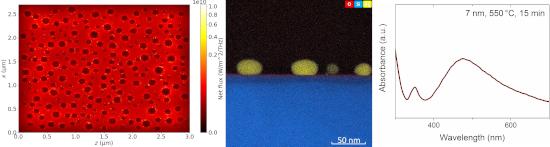
- different processes [9]. In two of them, the formation of nanostructures begins with the nucleation of holes and their subsequent growth. Nucleation can be caused by small thermal density fluctuations (homogeneous nucleation) or defects in the metal film or in the interface between the film and the
- substrate (heterogeneous nucleation). In the third process, voids appear and grow as a result of an amplification of periodical fluctuations of the film thickness, which is known as spinodal dewetting [9][10]. Usually, it is difficult to state clearly whether only one of the abovementioned processes is




DFT calculations of the structure and stability of copper clusters on MoS2
Beilstein J. Nanotechnol. 2020, 11, 391–406, doi:10.3762/bjnano.11.30
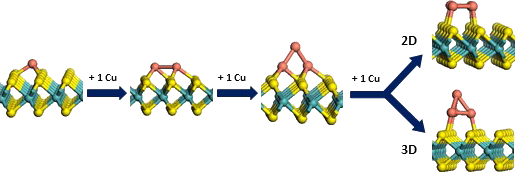
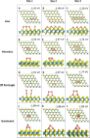
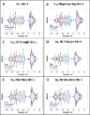
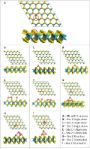
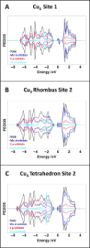
- transition metals, as well as Ag and Au. However, most studies have examined single-atom adsorption or adsorbed nanoparticles of noble metals. This means there is a knowledge gap in terms of thin film nucleation on 2D materials. To begin addressing this issue, we present in this paper a first-principles
- character of Cu nanoclusters is preserved. Keywords: copper (Cu); density functional theory (DFT); 2D materials; molybdenum disulfide (MoS2); thin film nucleation; Introduction Since the successful exfoliation of monolayers of graphene by Novoselov et al., 2D materials have gained a large interest in a
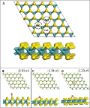
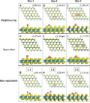
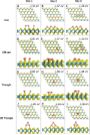
- allows us to investigate the first stages in the nucleation of a Cu film on MoS2 monolayers, as well as the fundamental copper–TMD interactions, and thus gain significant insights into the range of stable configurations for Cu adsorption on MoS2. In addition, we investigate the effect of a single S
Interactions at the cell membrane and pathways of internalization of nano-sized materials for nanomedicine
Beilstein J. Nanotechnol. 2020, 11, 338–353, doi:10.3762/bjnano.11.25
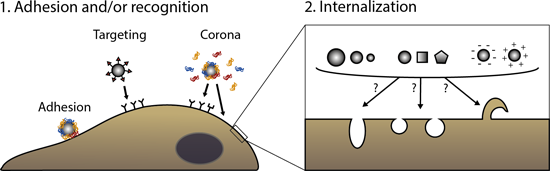
- macropinocytosis, extracellular fluids are engulfed by membrane ruffles and protrusions. Formation of these ruffles requires actin nucleation and in some cells also cholesterol [93][94]. Another frequently studied clathrin-independent pathway is the so-called caveolae-mediated endocytosis. Caveolae are 50–80 nm


High-performance asymmetric supercapacitor made of NiMoO4 nanorods@Co3O4 on a cellulose-based carbon aerogel
Beilstein J. Nanotechnol. 2020, 11, 240–251, doi:10.3762/bjnano.11.18
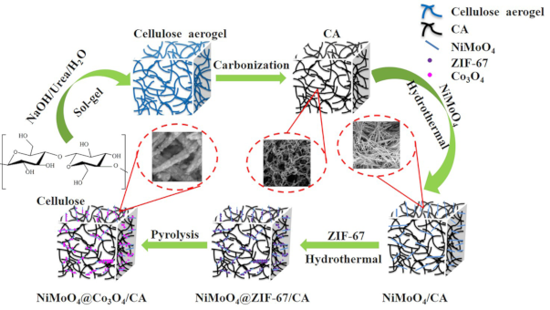
- excellent electrical conductivity and the 3D carbon nanonetwork. Secondly, NiMoO4 nanorods with extremely high specific capacitance are considered ideal spots for the nucleation and the growth of ZIF-67 particles. Lastly, the Co3O4 particles derived from ZIF-67 possess a nest-like structure and a porous




Size effects of graphene nanoplatelets on the properties of high-density polyethylene nanocomposites: morphological, thermal, electrical, and mechanical characterization
Beilstein J. Nanotechnol. 2020, 11, 167–179, doi:10.3762/bjnano.11.14
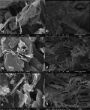
- displayed considerable peak growth with the existence of GnPs, were in the general form of the (00x) type, being crystallographically in line with the GnP (002) plane. It has been indicated that GnPs may act as nucleation sites and that nucleation starts around the GnPs [8]. Figure 3b shows that the size of
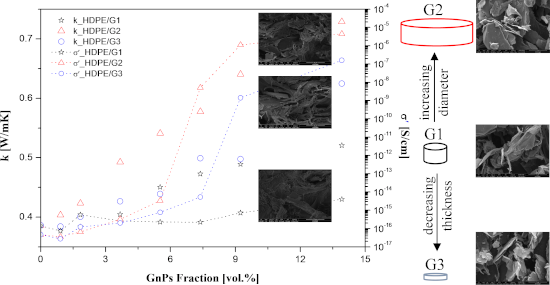
- in Table 2. Tc for pure HDPE was found to be 116.30 °C, whereas for all HDPE/GnP nanocomposites, Tc increased by approximately 5 °C at 13.92 vol % GnP content due to the nucleation effect of the GnPs. It was clearly seen that Tm of all HDPE/GnP nanocomposites ranged from 130.43 °C to 132.17 °C, which


Internalization mechanisms of cell-penetrating peptides
Beilstein J. Nanotechnol. 2020, 11, 101–123, doi:10.3762/bjnano.11.10
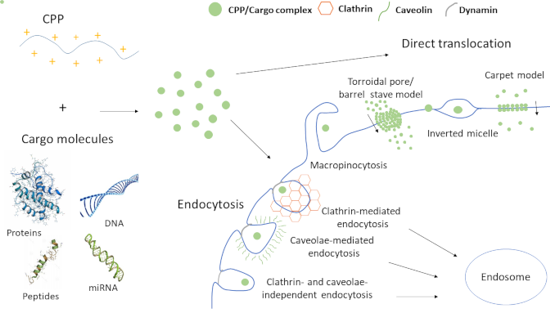
- , arginine-rich CPPs are mainly endocytosed, whereas rapid cytoplasmic entry occurred at higher concentration [41]. The latter is associated with the accumulation of the peptide at certain membrane areas called nucleation zones [42]. New findings of these type could further broaden what is already a very


Influence of the epitaxial composition on N-face GaN KOH etch kinetics determined by ICP-OES
Beilstein J. Nanotechnol. 2020, 11, 41–50, doi:10.3762/bjnano.11.4
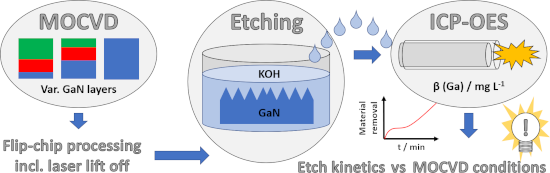
- and Al2O3 leads to a high dislocation density, if no strategy for defect reduction is applied. This spans the entire epitaxial layer. The most common strategy to bridge the structural mismatch is the application of AlN and GaN nucleation layers in between the sapphire substrate and bulk GaN [5][6
- ]. Nucleation layers have the second but very important effect of controlling crystal orientation, which is commonly Ga-polar (0001) [7]. Other than nucleation layers, there are several more strategies for defect reduction. These all require the insertion of additional layers or layer transitions into the
- characteristic of such devices is pixel contrast. The latter is highly affected by the thickness of the unintentionally doped bulk GaN layer (u-GaN), which separates the AlN nucleation layer from the multiple quantum well (MQW) and is needed for dislocation density reduction. By means of etching, this layer can


The different ways to chitosan/hyaluronic acid nanoparticles: templated vs direct complexation. Influence of particle preparation on morphology, cell uptake and silencing efficiency
Beilstein J. Nanotechnol. 2019, 10, 2594–2608, doi:10.3762/bjnano.10.250
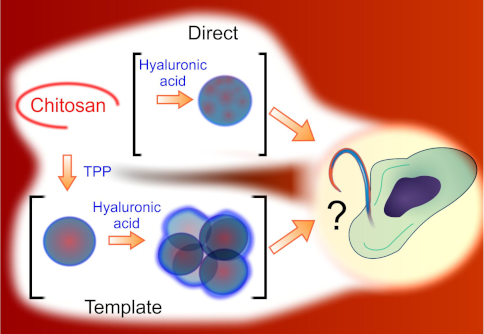
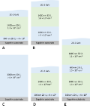
- solution the protonated chitosan amines (cationic species in red) are cross-linked by TPP (anionic species in blue). The complexation leads to the nucleation of the particles that increase in size likely more through the adsorption of additional chitosan and TPP species (growth) than through aggregation of



Antimony deposition onto Au(111) and insertion of Mg
Beilstein J. Nanotechnol. 2019, 10, 2541–2552, doi:10.3762/bjnano.10.245
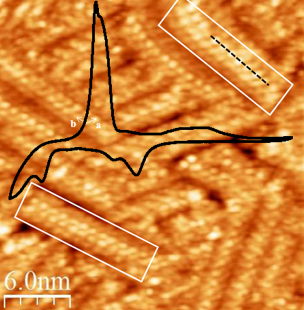
- was scanned negatively, the nucleation on the terraces and epitaxial 2D growth started at ≈0.6 V (see Figure 4b). The Sb monolayer islands were formed with the same height as the step height of the freshly prepared Au(111) which is 0.2 nm (see Figure 4a). With the continuous growth at the potential of
- one at 0.28 V due to the reduction of oxygenous Sb(III) species from bulk electrolyte. The coverage of the Sb monolayer was calculated to be 0.44 whereas the irreversible adsorption accounted for ≈0.3. By observation with STM, Sb nucleation prefers to start at the active sites on the terrace, and then





Abrupt elastic-to-plastic transition in pentagonal nanowires under bending
Beilstein J. Nanotechnol. 2019, 10, 2468–2476, doi:10.3762/bjnano.10.237
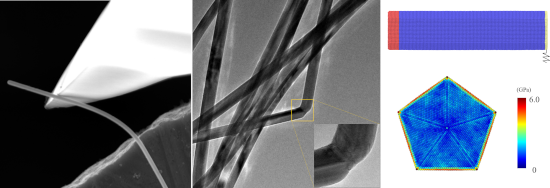
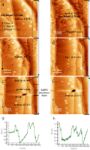
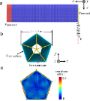
- agrees very well with the transition angles 163 ± 5.6° observed in the experiment. Dislocations nucleate from the free surface as marked by the white circles (Figure 8i). After nucleation, partial dislocations glide toward the core region of the NW and experience the impediment from the existing twin
- boundaries [42]. With the progression of bending deformation, another dislocation source is also activated, and a new dislocation nucleation and propagation lead to the second distinct load drop of the loading curve (Figure 8ii). In the following stage, the bending force gradually becomes stable at
- dislocation nucleation sites because of the stress concentration, and therefore deformation is easier to sustain by new dislocation nucleation rather than cross-slipping of existing dislocation at twin boundaries. On the basis of the conducted experiments, electron microscopy observations and simulations we



Mobility of charge carriers in self-assembled monolayers
Beilstein J. Nanotechnol. 2019, 10, 2449–2458, doi:10.3762/bjnano.10.235
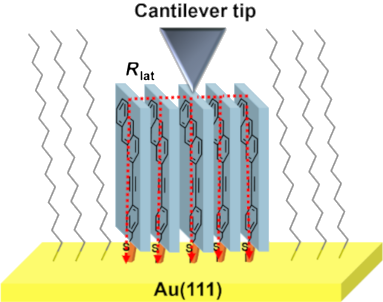
- of the orientation of the spacer group [26]. In a next step, STM images were recorded that demonstrate SAM formation of PAT on an atomically smooth Au(111) surface. As shown in the control STM data (Supporting Information File 1, Figure S3), the initially distributed smaller nucleation centers with a


Coating of upconversion nanoparticles with silica nanoshells of 5–250 nm thickness
Beilstein J. Nanotechnol. 2019, 10, 2410–2421, doi:10.3762/bjnano.10.231
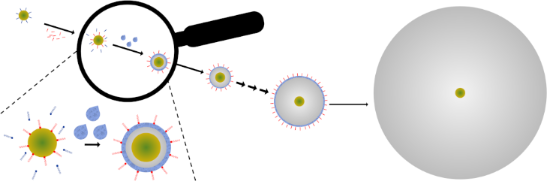
- increases as the amount of TEOS increases, while core-free silica NPs appear when the TEOS content exceeds the threshold of homogeneous nucleation [36][39][47][48][49]. Typically, a maximum diameter <50 nm can be reached with this technique [23]. Microemulsion growth processes are usually slow and laborious
- formation of new micelles [23]. Ding et al. linked these considerations to the theory of LaMer [36]. According to the LaMer theory, heterogeneous nucleation occurs when the supersaturation of the growth species is below the homogeneous nucleation threshold but above the heterogeneous nucleation threshold
- , while a higher supersaturation (above the homogeneous nucleation threshold) leads to simultaneous heterogeneous and homogeneous nucleation. In general, the processes leading to homogeneous and heterogeneous nucleation and growth in such reverse microemulsion systems are complex and depend on numerous


Multiwalled carbon nanotube based aromatic volatile organic compound sensor: sensitivity enhancement through 1-hexadecanethiol functionalisation
Beilstein J. Nanotechnol. 2019, 10, 2364–2373, doi:10.3762/bjnano.10.227
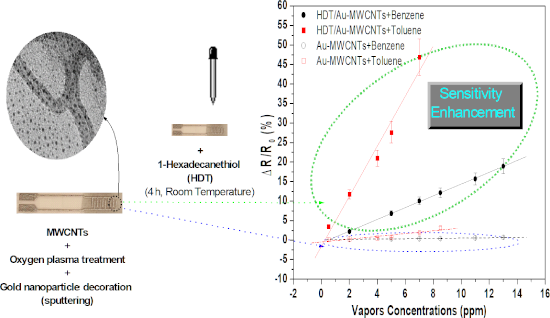
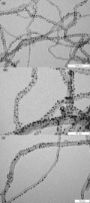
- effect of nucleation. The power and time required for the plasma beam aperture within the cell were optimized and fixed to 30 W and 10 seconds, respectively. Functionalisation with self-assembled monolayers (SAMs) The Au-decorated MWCNT substrate was further functionalized with an alkanethiol self




Microfluidics as tool to prepare size-tunable PLGA nanoparticles with high curcumin encapsulation for efficient mucus penetration
Beilstein J. Nanotechnol. 2019, 10, 2280–2293, doi:10.3762/bjnano.10.220
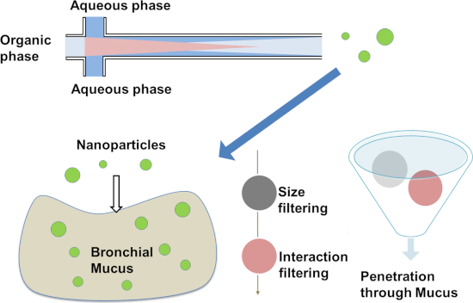
- total flow rate. Furthermore, the influence of the length of the focus mixing channel on the size was evaluated in order to better understand the nucleation–growth mechanism. Surprisingly, the channel length was revealed to have no effect on particle size for the chosen settings. In addition, curcumin
- channel, and stabilizer concentration. Furthermore, as our system allows us to cut different lengths of mixing channels, the impact of the length of the mixing channel on the nucleation–growth mechanism of the nanoprecipitation process was evaluated, which is an underestimated aspect of current
- colloidal system, thus minimizing NP agglomeration and nucleation growth [40]. Pluronic F68 was proven to be a muco-inert material [11][47] and was therefore chosen as a stabilizer. The addition of Pluronic F68 (1%) resulted in a slight decrease of the NP diameter to ≈70 nm at 0.05 flow rate ratio in


Nanostructured and oriented metal–organic framework films enabling extreme surface wetting properties
Beilstein J. Nanotechnol. 2019, 10, 1994–2003, doi:10.3762/bjnano.10.196
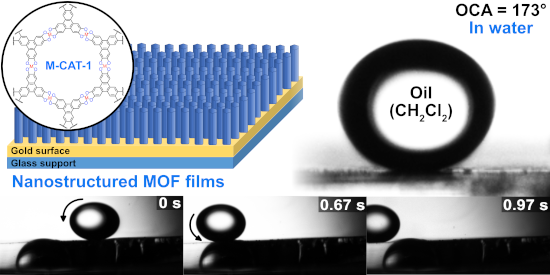
- the VAC process, namely the surface roughness and the crystallite orientation on the substrate. Antifog coating with MOF films Water condensation on surfaces is a known phenomenon occurring at the dew point on substrates such as glass, which serves as a favorable nucleation site for water droplets
- surface is expected to form, hindering the nucleation of water droplets on the glass surface. For this purpose, we employed the newly developed methodology for the synthesis of nanostructured Ni-CAT-1 films on gold substrates with a slightly modified synthesis procedure in order to address larger
- examine the behavior of the antifog coating under extreme temperature differences, the MOF-modified glass substrates were cooled down to −20 °C and subsequently placed on top of the hot water reservoir. Under all examined conditions, clear vision through the glass was maintained and water vapor nucleation


Porous silver-coated pNIPAM-co-AAc hydrogel nanocapsules
Beilstein J. Nanotechnol. 2019, 10, 1973–1982, doi:10.3762/bjnano.10.194
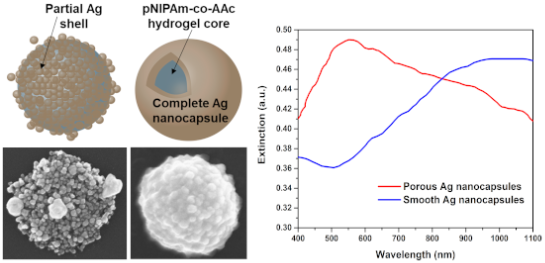
- silver nanocapsules with pNIPAM-co-AAc hydrogel cores. The Au nanoparticles act as nucleation sites (templating agents) for the growth of the Ag shells. Without these templating agents, the core–shell particles fail to form, leading to the exclusive formation of free metal particles and aggregated
- . However, the surface morphology of the porous nanoshells is rough (see Figure 4b). Possible reasons for the roughness include destabilizing intercalation of the salt precursor into the polymer matrix and insufficient nucleation sites, leading to lengthy time periods needed for nanocapsule growth. To


Oblique angle deposition of nickel thin films by high-power impulse magnetron sputtering
Beilstein J. Nanotechnol. 2019, 10, 1914–1921, doi:10.3762/bjnano.10.186
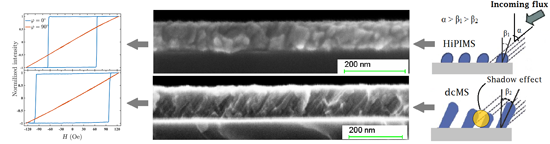
- grow on existing columns or repeated nucleation occurs. As the peak discharge current density was increased further to JD,peak = 4 A/cm2 they observed that a film with a featureless morphology developed. Smaller grain sizes in HiPIMS-deposited films than in dcMS-deposited films have been previously